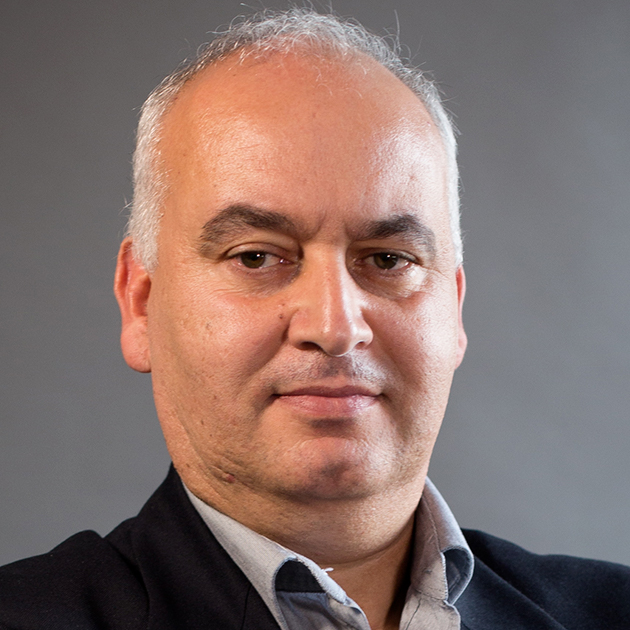
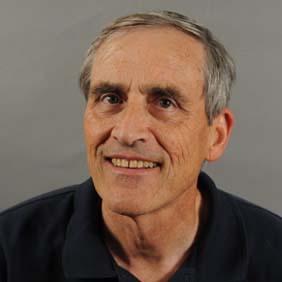
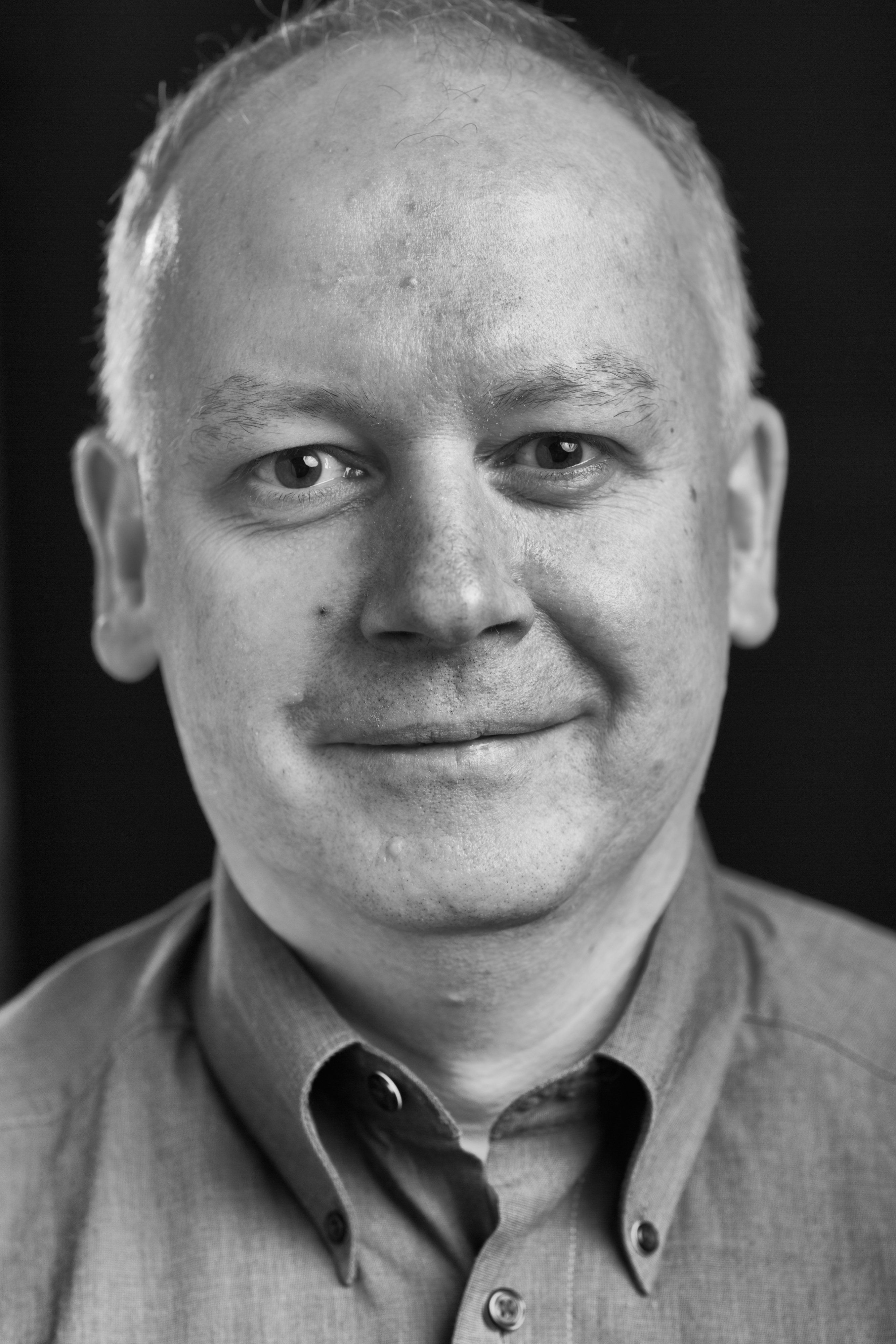
Róbert Tóth is an Assistant Professor at the University of Debrecen's Faculty of Informatics, Department of Information Technology. His work focuses on enhancing spatial abilities through emerging technologies, including gamification and augmented reality. Contact details: toth.robert@inf.unideb.hu, Office: 2nd floor, I228 Faculty of Informatics building. Research interests include: Spatial skill assessment and training using 3D modeling and interactive tools Integration of gamification and augmented reality in educational contexts Development of open-source software frameworks for cognitive training (e.g., viskillz-blender) Analysis of transportation data (GTFS/RT) and geospatial visualization techniques Optimization of educational systems and Smart Campus services Recent publications emphasize spatial reasoning development, gamified learning environments, and efficient handling of geospatial data through Python-based tools and Blender integrations. His work bridges software engineering, educational technology, and human-computer interaction.
Veronique Benzaken is a Full Professor (Professeur de classe exceptionnelle) at University of Paris Sud 11, where she is a member of the LRI (Laboratoire de Recherche en Informatique), UMR 8623 - CNRS. She is currently a member of the VALS (Verification of Algorithms Languages and Systems) research group, a joint team between LRI and the Toccata group at INRIA - Saclay. Her research focuses on data-centric programming languages and systems, with particular expertise in XML processing, type systems, and formal verification of database systems. Her academic background includes: Dec 1996: Habilitation à diriger des recherches, University Paris Sud 11 (UFR des Sciences - Orsay) Jan 1990: PhD in Computer Science, University Paris Sud 11 (UFR des Sciences - Orsay) Sep 1986: DEA d'Informatique fondamentale, University Denis Diderot Paris 7 (Master in Theoretical Computer Science) June 1983: Diplomée de Chant et d'Art-Lyrique, Conservatoire National de Région de Grenoble Professor Benzaken's primary research interests lie at the intersection of database systems, programming languages, and formal methods. She has made significant contributions to XML-centric programming through the design and development of ℂDuce, an XML-centric general purpose functional programming language developed under an MIT license. Her work emphasizes type-safe and fast query and transformation of XML documents. More recently, she has focused on the formalization of data intensive management systems using the Coq proof assistant, particularly in the context of the Datacert project (2016-2021) which aims to certify and verify data intensive systems such as RDBMS's and XML processing engines. Her research spans several interconnected areas including type systems for data languages, formal semantics of query languages, verification of database systems, and language-integrated query processing. She has led significant research projects such as the ANR project Blanc SIMI2 Typex (Typeful certified XML) and has collaborated with Oracle Labs on developing intermediate representations for multi-lingual querying interfaces. Her publication record shows a clear trajectory from XML processing and type systems toward increasingly rigorous formal verification of database technologies. Professor Benzaken has been actively involved in the academic community through service on program committees for major conferences including ESOP, ICDE, VLDB, and others. She has also been an invited speaker at workshops such as the Coq workshop (CoqWS@FLOC) in 2018. Her research is supported by significant grants including the ANR project Datacert (2016-2021) and the ANR project Blanc SIMI2 Typex. She has collaborated extensively with researchers such as Évelyne Contejean, Chantal Keller, and Stefania Dumbrava on formal verification projects, producing notable publications at ITP 2017 and ITP 2018 on Datalog and SQL formalization. Professor Benzaken is a member of the PCRI research group within LRI, focusing on programming, systems, and their applications. Her work bridges theoretical computer science with practical database system implementation, contributing to both the academic understanding and industrial application of data management technologies, particularly in the areas of XML processing, query languages, and formal verification of database systems.
Rohit Babbar serves as an Assistant Professor in the Department of Computer Science at Aalto University, Finland, leading a research group dedicated to advancing large-scale machine learning methodologies. His team specializes in tackling computational challenges inherent in extreme classification problems with massive output spaces while ensuring model robustness. His primary research domains encompass large-scale learning systems, extreme multi-label classification architectures, deep learning integration, sequential data processing, and robustness engineering. This work directly addresses industry pain points like computational inefficiency in massive label spaces and model vulnerability to distribution shifts, with applications spanning natural language processing, information retrieval, and recommendation systems. Publication trends reveal a strategic focus on algorithmic innovation for extreme classification, featuring breakthroughs in dynamic sparsity techniques, large language model integration for zero-shot scenarios, and calibration of extreme classifiers. Recent work demonstrates consistent emphasis on computational efficiency through optimized negative sampling, lightweight frameworks like InceptionXML, and specialized metrics for long-tail performance evaluation. Scientific recognition includes: Outstanding Reviewer Award at ACL 2021 Conference (July 2021) for exceptional contributions to computer science peer review As research group leader, Babbar directs collaborative efforts on next-generation classification systems while mentoring emerging scholars in machine learning. His team maintains active partnerships with industry leaders in search and recommendation technologies. The research group operates at the intersection of theoretical machine learning and practical deployment, developing frameworks that balance computational feasibility with predictive accuracy in extreme-scale environments. Current initiatives focus on integrating foundation models with specialized classification architectures while addressing real-world challenges like data sparsity and concept drift.
Pierre Senellart is a Professor in the Computer Science Department at École normale supérieure (ENS, Université PSL) and deputy director of the DI ENS laboratory, a joint CNRS/Inria/ENS unit. He leads the Valda team at Inria Paris and holds a chair in the PRAIRIE Paris School of AI. University: École normale supérieure (Université PSL) School: Department of Computer Science (DI ENS) Academic Rank: Professor Research Interests: His work bridges theoretical and practical aspects of web data management, including web crawling, archiving, information extraction, uncertainty management, and intensional data systems. He contributes to probabilistic XML data models, provenance tracking, and knowledge base construction. Recent Article Trends: His Google Scholar publications (2025–2023) focus on provability in probabilistic databases, theorem extraction from PDFs, and AI applications in uncertain data analysis. Topics span game theory, knowledge compilation, and multi-modal learning for scientific documents. Scientific Awards: Junior member of Institut Universitaire de France (2020–2025) Distinguished SIGMOD 2017 Program Committee Member ACM HyperText 2014 Douglas Engelbart Best Paper Award Adviser of Clément Genzmer (SIGMOD Programming Contest 2009 winner) Grants & Projects: He secures major funding (e.g., PRAIRIE Paris School of AI: €575k, DesCartes CNRS@CREATE: SGD50M), with roles in research projects like Dissemin (open science platforms) and ARCOMEM (social web archiving).
Matt Gee is a Research Fellow in Corpus Linguistics at Birmingham City University, working within the Research and Development Unit for English Studies. He develops innovative linguistic analysis tools including the WebCorp suite (WebCorp Live and WebCorp LSE), eMargin for collaborative annotation, and XTranscript for transcript conversion, used globally by educators, researchers, and translators. Research Interests: Gee specializes in Corpus Linguistics and Computational Linguistics, creating tools for web-based linguistic data analysis, social media monitoring, and digital humanities applications. His recent work examines pandemic-related Twitter discourse through TRAC:COVID and develops visualization methods for open-text survey responses like the National Student Survey. Advising and Research: He actively supervises postgraduate students while leading grant-funded projects that bridge theoretical linguistics with practical tool development. His work spans educational technology (eMargin for literature studies), policy analysis (political document annotation), and quantitative methods (XML processing of conversational transcripts). Labs and Teams: As core member of the Research and Development Unit for English Studies, Gee collaborates on interdisciplinary initiatives advancing corpus-based research, including WebCorp Learn for language learners and automated analysis of web forums, Twitter phenomena, and lexical change in digital news.
María Nieves Rodríguez Brisaboa is a Professor in the Computer Science and Information Technology Department at the University of A Coruña. She is affiliated with the SUXI research group and has been active in teaching and research since 1994. 2025/2026: Final Degree Project (Computer Science) 2024/2025: Introduction to Databases (Bioinformatics) 2023/2024: Database Modeling (Data Science) Her research focuses on Databases , Data Science , Information Systems , and GIS Applications . She has contributed to the development of spatial and temporal databases, efficient data structures, and web-based GIS solutions. Recent publications include work in Information Sciences , Geo-spatial Information Science , and International Journal of Geographical Information Science , covering topics like spatial query optimization, data compression, and bioinformatics databases. Scientific contributions include: Patent: Eduardo Rodriguez López et al. (2013) Software Registration: Universidad da Coruña (2009) Software Registration: Gándara Portela et al. (2003) She has supervised multiple final degree and master's theses since 2013, including projects on film dubbing industry systems, elderly care organization management, and public transport analysis.
Solomon Berhe serves as an Assistant Professor of Computer Science at the University of the Pacific in Stockton, California, with his office located in Chambers 117. Contactable via sberhe@pacific.edu, he brings over two decades of industry software development experience since 2001, including leadership in Industry 4.0 systems for healthcare, automotive, retail, and e-mobility sectors prior to his academic career. His educational background features: Ph.D. in Computer Science and Software Engineering from the University of Connecticut (2011) Dr. Berhe's research centers on data-driven modeling of software ecosystems with emphasis on risk assessment for maintenance efforts and access control-based secure software engineering. His work extends NIST RBAC standards into adaptive workflow models, addressing real-world challenges in Industry 4.0 contexts through empirical studies of update patterns, dependency tracking, and security frameworks. Teaching responsibilities include foundational courses in Software Engineering, Database Systems, and Mobile Application Development. Analysis of his 2020-2025 publications reveals a strategic evolution toward IoT security applications and AI-driven ecosystem analysis, with notable contributions in UML-based security visualization, software update impact triage, and thermal-imaging animal detection systems. This trajectory demonstrates consistent bridging of theoretical models with industrial implementation challenges across healthcare and emerging technology domains. Scientific Awards: No awards or fellowships documented in provided information While specific advisees and active grants are not detailed, his publication record and industry collaborations indicate substantial engagement in graduate mentorship and potential research funding for projects at the software engineering-cybersecurity intersection, particularly in risk modeling for evolving software ecosystems.
Martin Svoboda is a Lecturer at the Department of Software Engineering , Faculty of Mathematics and Physics, Charles University, Prague. His work focuses on multi-model data management, social network analysis, and XML/linked data processing. University: Charles University School: Faculty of Mathematics and Physics Department: Department of Software Engineering Role: Lecturer Education: Doctoral Thesis: Correction of Invalid Trees with Respect to Regular Tree Grammars (2015) Master's Thesis: Processing of Incorrect XML Data (2010) Bachelor's Thesis: Information System for Small User Group Collaboration (2007) Research Interests encompass: Unified multi-model data processing Influence maximization in social networks Graph data efficiency Big Data and NoSQL systems Querying/indexing linked data XML document correction Publications highlight trends in multi-model data unification, XML correction techniques, and social network analysis, with a strong emphasis on category theory and graph-based approaches. Scientific Recognition: Dean’s Award for Best Master Thesis (2010) Best Poster Award at Reasoning Web Summer School (2012) Projects include grants from the Czech Science Foundation (20-22276S, 2010–2012), Technology Agency of the Czech Republic (TH03010276, 2018–2020), and international collaborations like NoSQL-Net (Germany, 2014).
Jean-Marc Ogier is a Professor and Teacher-Researcher at the University of La Rochelle , where he also serves as President. His research focuses on document image analysis, indexing techniques, and statistical-structural representation of shapes. Research Themes : Document image indexing, heritage digitization, handling noisy/heterogeneous data, and user-interactive semantic analysis. Teaching : Courses in information systems, signal/image processing, computer science, and international research training. Trends in Publications : His recent work explores computer vision , pattern recognition , and structural analysis in document processing. Key subtopics include Fourier-Mellin invariants , Galois lattice for classification, and topological measures for object recognition. Email : jean-marc.ogier@univ-lr.fr
Jose Florez-Arango is a Colombian physician and Associate Professor at the Graduate School of Medical Sciences, Weill Cornell Medicine, with over 20 years of experience as a clinician, educator, and researcher. His work focuses on human factors and technology-human interaction to improve healthcare outcomes in resource-constrained environments, positioning him as a thought leader in Latin American telemedicine. His research spans Health Informatics, Human-Computer Interaction, and Human Factors Engineering, emphasizing minimal-code solutions for clinical decision support, knowledge transfer, and workload reduction. Key areas include telemedicine implementation, visual knowledge representation, personalized health tools, and curricular innovation for 21st-century healthcare providers, utilizing methodologies like community-based research and participatory design. Publications reveal a trend toward immersive simulations (VR for obstetrics training), NLP-driven maternal health analytics, mobile mental health screening in global contexts (e.g., Fiji), and XML-based decision support systems—all targeting low-resource settings and provider-patient experience enhancement. Scientific distinctions include: ADVANCE Administrative Fellow – Texas A&M University (2021-2022) MEEl Fellow – COM (2021) Schull Institute Scholar (2009) MFA Scholarship – UTHSC (2007) Fulbright Scholar (2005-2009) Dr. Florez-Arango mentors students within Population Health Sciences but specific advisees are unlisted; his current augmented reality mental health project implies grant activity though no funding details are provided. He leads initiatives in rapid-deployment health tech, collaborating with interdisciplinary teams on tools for disaster management and prehospital care. Active lab work includes developing dynamic electronic patient authoring systems and visual knowledge representation frameworks, with a strong emphasis on field evaluation in Latin America and Pacific Island nations to ensure real-world applicability.
María Elena De La Cova Morillo-Velarde is a full-time Professor at the Department of Philology and Translation at Universidad Pablo de Olavide in Seville. She has been working at the university since 2010 and is one of the founding researchers of the Interglosia research group (HUM-996), which focuses on Intercultural Communication Processes. Education: Doctorate from Universidad de Sevilla (2017) with thesis "La localización de la ayuda online Categorización de problemas para la traducción" Graduate in English Studies from University of Seville (2001) Graduate in Translation and Interpreting from University of Wales (2004) Postgraduate in Translation and Technology from Universitat Oberta de Catalunya (2008) Her research focuses on web, software, and applications localization , technology applied to translation , and translation processes . She has developed significant expertise in the challenges of translating technical content, particularly in web and software environments, with a special interest in machine-human collaboration in translation contexts. Her work often addresses practical industry challenges while maintaining academic rigor. Analysis of her recent publications reveals a consistent focus on localization problem identification, brand language translation, and the impact of technology formats like XLIFF on translation processes. Her work bridges academic research and industry practice, with particular attention to the evolving relationship between human translators and machine translation systems in collaborative contexts. Professor De La Cova has been actively involved in developing teaching materials for localization studies and has contributed to professional development through workshops on translation networking. Her research methodology often combines qualitative analysis of translation corpora with practical industry insights gained from her professional experience. She currently leads research activities within the Interglosia research group, which examines intercultural communication processes in translation and localization contexts. Previously, she was a member of the JULIETTA research group (HUM547) at the University of Seville from 2011 to 2017.
David Dubin serves as a Teaching Associate Professor at the University of Illinois School of Information Sciences (iSchool), where he teaches courses in information processing, modeling, and analysis. His office is located in room 330 of the LIS Building at 501 E. Daniel Street, Champaign, IL, with contact via (217) 244-3275 or ddubin@illinois.edu. Education : PhD in Information Science, University of Pittsburgh Research Focus : Dubin's work centers on foundational aspects of information representation and description, particularly expression and encoding mechanisms in documents and digital resources. His expertise spans data curation, digital humanities, information retrieval, and knowledge organization, with significant contributions to document identity theory, markup semantics, and text encoding standards for humanities computing. Publication Trends : Analysis of his scholarly output reveals consistent engagement with digital humanities methodologies, especially TEI-based text encoding for fragmentary classical works and ontological frameworks for game studies. His research demonstrates recurring emphasis on the interplay between content, format, and interpretation across scientific data representation, digital library systems, and semantic modeling of information objects. Teaching Activities : Currently instructing Social History of Games & Gaming (IS142A), Independent Study (IS389DSD), and Decision Analysis and Modeling (IS390DAM) for Fall 2025. Office hours are conducted by appointment through direct contact.
Talel Abdessalem is a Professor at Télécom Paris , where he has held leadership roles including Director of LTCI Research Laboratory (since 2017) and Dean of Research (since 2018). He currently serves as Deputy Vice-President for Research at Institut Polytechnique de Paris . PhD in Computer Science from Paris-Dauphine University Habilitation (HDR) from UPMC-Sorbonne University His research spans large-scale data management , recommender systems , social network analysis , and uncertain data modeling . He has participated in numerous national (ANR, FEDER) and European (FP7) research projects, with recent work focusing on stream-based learning , graph analytics , and privacy-preserving systems . His publications include diverse contributions to directed graph centrality algorithms (2021), stream recommender frameworks (River, Scikit-Multiflow), and geospatial recommendation models (ALGeoSPF). He has supervised 14 PhD students and collaborates with researchers in France, Brazil, and Indonesia. Co-leads DIG (Data, Intelligence and Graphs) research team Director of LTCI (Information Processing and Communication) laboratory
Robert Stevenson serves as an Associate Professor in the Biology Department at the University of Massachusetts Boston, where his work bridges physiological ecology and biodiversity informatics with direct conservation applications. His academic foundation includes: PhD in Biology from the University of Washington (1983) MS in Biology from the University of Washington (1979) BS in Biology from Tufts University (1974) Stevenson's research program operates at two critical intersections: conservation physiology focused on butterfly and hawkmoth biomechanics/energetics, and biodiversity informatics for citizen science applications. His physiological work examines feeding behavior, time budgets, and develops field instrumentation for flight pattern analysis in migratory species. The informatics arm, developed with Computer Science's Robert Morris, constructs electronic field guides using object-oriented databases and XML frameworks. Key innovation areas include Citizen Science data validation , trust management systems , and Humboldt Extension standards for ecological inventories. Analysis of his 2016-2023 publications reveals a pronounced shift toward citizen science infrastructure, with 80% of recent work addressing biodiversity data standards, trust frameworks, and iNaturalist validation. Earlier research (pre-2010) centered on insect physiology, particularly butterfly energetics and flight mechanics. The most impactful contributions emerge at the nexus of data interoperability and community science engagement , where his team develops practical solutions for biodiversity monitoring. Stevenson maintains active collaborations with Robert Morris (Computer Science) on electronic field guide development, and partners with institutions like BioCollect for habitat restoration monitoring. His laboratory has secured support for projects including Gigapan technology applications in ecological education and biodiversity informatics standardization initiatives through the Citizen Science Association. The Stevenson Lab operates as a dual-focus unit: the physiological ecology team conducts field studies on insect energetics and conservation physiology, while the informatics team develops data management frameworks. Current projects include the Humboldt Extension implementation for ecological inventories and trust management systems for citizen science biodiversity data.
Stefan Manegold is a Professor for Data Management (0.2 fte) at Leiden University's Faculty of Science within the Leiden Institute of Advanced Computer Science (LIACS), while also serving as a Senior Researcher (0.8 fte) and former Head (2011-2024) of the Database Architectures Research Group at Centrum Wiskunde & Informatica (CWI) in Amsterdam. His career spans over 27 years at CWI and 11 years as a professor at Leiden University, with prior experience at Humboldt-Universität zu Berlin. Professor Manegold's research focuses on innovative database architectures, particularly column-store systems and hardware-aware database technologies. His expertise spans database query optimization, parallel and distributed information systems, XML storage and processing, and scientific data management. He has pioneered work in adaptive indexing, progressive query processing, and main-memory database systems that leverage modern hardware capabilities. His research bridges theoretical database concepts with practical implementations, as evidenced by his involvement in the MonetDB open-source database system. His work shows a clear evolution from foundational database research toward addressing modern challenges in big data management, scientific data processing, and interactive analytics. Recent publications demonstrate his continued leadership in database indexing techniques, GPU-accelerated database operations, and geospatial data management. Professor Manegold has received significant recognition for his contributions to the database community, including the prestigious 2020 ACM SIGMOD Contributions Award, the VLDB'2011 Challenges & Visions Track Best Paper Award, and the VLDB'2009 10-year Best Paper Award. His work has had substantial impact on both academic research and practical database system design. He has been actively involved in the academic community through conference organization, particularly with SIGMOD and VLDB events, and has contributed to numerous workshops including the Data Management on New Hardware (DaMoN) series. His leadership extends to collaborative research projects such as SciLens, PROMIMOOC, and DAMIOSO, which address data management challenges in scientific domains. Professor Manegold leads the Database Architectures Research Group at CWI, which has been at the forefront of database system research for decades. The group's work on MonetDB has influenced modern column-store database systems and continues to push boundaries in areas like progressive query processing and hardware-aware database design.