Dr. Ivan Kaban serves as Group Leader for X-ray Diffraction at the Leibniz Institute for Solid State and Materials Research Dresden (IFW Dresden), where he leads research in advanced materials characterization. With over 112 journal papers since 2010, 4 contributions to proceedings, and 30 invited talks, his work focuses on the structural and thermodynamic properties of metallic glasses, phase transformations, and alloy systems. His research spans Metallic glass formation and crystallization kinetics In situ X-ray diffraction studies of phase transformations Corrosion mechanisms in biomedical metallic glasses Liquid-solid phase separation phenomena Additive manufacturing of advanced alloys His experimental approach combines high-speed imaging, synchrotron radiation, and flash-annealing techniques to investigate non-equilibrium processes in materials. Dr. Kaban's publication record shows consistent output in top journals including Acta Materialia, Nature Communications, and Advanced Science, with recent work (2023-2025) increasingly focusing on additive manufacturing applications and chalcogenide glass systems. His collaborative network includes researchers from Germany, France, China, Japan, and the United States.
Prof. Dr. Nina Maria Huittinen serves as Head of Solid State Chemistry of Radionuclides at the Helmholtz-Zentrum Dresden-Rossendorf (HZDR), specifically within the Institute of Resource Ecology. She has been a research group leader at HZDR since 2020 and a research associate since 2013. Her academic foundation includes a Ph.D. in radiochemistry from the University of Helsinki (2008-2013) and an M.Sc. in chemistry from the same institution (2002-2007). Her educational background includes: Ph.D. in Radiochemistry, University of Helsinki (2008-2013) M.Sc. in Chemistry, University of Helsinki (2002-2007) Prof. Huittinen's research centers on complexation, adsorption, and incorporation reactions of actinides (and their lanthanide analogues) in both aqueous and solid matrices. Her current work emphasizes crystalline secondary phases and ceramics containing actinides, with specialized expertise in luminescence spectroscopy and x-ray absorption spectroscopy. She leads significant research initiatives including the "AcE" project on actinide immobilization in solid phases (since 2021), previously led the "ThermAc" project (2016-2019), and the "Conditioning" project (2014-2016), all funded by BMBF. Her publication portfolio spanning 2010-2025 reveals a consistent research trajectory focused on understanding actinide behavior in complex mineral systems and engineered barrier materials for nuclear waste management. Recent work demonstrates sophisticated applications of multiple spectroscopic techniques to characterize actinide speciation and incorporation in potential waste forms, with particular attention to temperature effects and long-term stability under repository conditions. Her scientific contributions appear in prestigious journals including Nature Communications, Journal of the American Chemical Society, and Inorganic Chemistry, with several papers receiving substantial citations, reflecting significant impact in radiochemistry and nuclear materials science. Prof. Huittinen has actively supervised doctoral researchers including Eya Miladi, Luiza Braga Ferreira dos Santos, Henry Lösch, and Manuel Eibl. She has secured research funding through multiple competitive grants and maintains teaching appointments at Technische Universität Dresden (Radioecology 2017-2022, General and Inorganic Chemistry since 2022) and Dresden University of Applied Sciences (Radiochemistry 2015-2016). Her research group operates within HZDR's Institute of Resource Ecology, utilizing advanced facilities including the Rossendorf Beamline at ESRF for synchrotron radiation studies and the Ion Beam Center for materials analysis. The group maintains extensive international collaborations with institutions in Finland, France, and across Europe, as evidenced by co-authored publications addressing fundamental challenges in nuclear waste management.
Takashi Ida is a Professor at Nagoya Institute of Technology's College of Engineering, Department of Life and Applied Chemistry, Environmental Ceramics Field, leading the Advanced Ceramics Research Laboratory. His academic journey began with a Master of Science (1985) and Doctorate in Science (1989) from The University of Tokyo, where he completed his undergraduate studies in the Faculty of Science. His research focuses on advanced powder diffraction methodologies, particularly developing deconvolution-convolution treatments for X-ray diffraction data. Key contributions include correcting sample transparency aberrations in Bragg-Brentano geometry, modeling equatorial aberrations in silicon strip detector systems, and developing algorithms for removing Cu Kβ contamination and Ni K-edge effects. His work bridges theoretical modeling with practical instrumentation improvements. Analysis of his 15 most recent publications (2011-2024) reveals consistent focus on mathematical treatments of powder diffraction data, with increasing sophistication in modeling instrumental aberrations and developing correction algorithms. His research spans both fundamental theoretical developments and practical applications for ceramic materials characterization. Best Poster Award in ICDD Spring Meetings (2017) Richard and Patricia Spriggs Phase Equilibria Award (2010) ICDD Fellow (2010) Professor Ida has secured significant research funding, including a 2019-2022 Grant-in-Aid for Scientific Research (Category B) for developing powder X-ray diffraction data processing software. His committee memberships reflect his international standing, including Director at Large for the International Centre for Diffraction Data (ICDD) and committee membership in the International Union of Crystallography's Commission on Powder Diffraction. He leads the Advanced Ceramics Research Laboratory, which maintains strong connections with international crystallography organizations and focuses on developing next-generation diffraction analysis methodologies.
Katsuyo Thornton is the L.H. and F.E. Van Vlack Professor in the Department of Materials Science and Engineering at the University of Michigan's College of Engineering. She has held this named professorship since 2018, following promotions from Associate Professor (2010-2015) and Assistant Professor (2004-2010) at the same institution. Prior to joining Michigan, she was a Research Assistant Professor at Northwestern University (2001-2004) and completed her postdoctoral work there (1997-2001), with additional experience as a Visiting Lecturer and Scientist at MIT. Her educational background includes a B.S. with Honors in Physics from Iowa State University (1991), followed by an M.S. (1993) and Ph.D. (1997) in Astronomy and Astrophysics from The University of Chicago. This unique interdisciplinary foundation has informed her distinctive approach to materials science problems. Dr. Thornton's research focuses on computational and theoretical investigations of microstructure and nanostructure evolution during materials processing and operation. Her work employs advanced phase-field modeling techniques to study coarsening in elastically stressed solids, three-dimensional topologically complex systems, electrochemical systems, and self-assembly phenomena during semiconductor heteroepitaxy. Her research group has developed sophisticated computational frameworks that bridge atomistic to continuum scales, enabling predictive modeling of complex materials phenomena. Analysis of her recent publications reveals a strong trend toward energy applications, particularly in solid oxide fuel cells and battery technologies. Her work increasingly integrates experimental data with computational modeling, as evidenced by publications combining phase-field simulations with in situ tomography and other advanced characterization techniques. The research spans fundamental materials science questions to applied engineering challenges in energy conversion and storage. Fellow of ASM, 2018 TMS Brimacombe Medal, 2018 Eschbach Fellow, Northwestern, 2018 Ted Kennedy Family Faculty Team Excellence Award, 2016 NSF CAREER Award, 2008 TMS Early Career Faculty Fellow Award, 2008 Dr. Thornton has secured substantial research funding from NSF, DOE, and AFOSR for projects including the Center for Radiative Shock Hydrodynamics (CRASH), computational materials research, and solid oxide fuel cell development. Her group has developed the PRISMS-PF framework, a general matrix-free finite element method for phase-field modeling. She also leads educational initiatives in computational materials science, including the Summer School for Integrated Computational Materials Education. The Thornton Research Group operates within the Michigan Materials Research Institute and collaborates extensively with researchers at Northwestern University, MIT, and other institutions. Their work combines advanced computational methods with experimental validation, creating a powerful integrated approach to materials discovery and design. Current efforts focus on applying these methodologies to next-generation energy storage and conversion technologies.
Ariadna Verdaguer Ferrer is a Researcher at the Department of Analytical and Applied Chemistry within IQS School of Engineering . Her work focuses on advanced analytical techniques for environmental and biomedical applications. Education: PhD in Chemistry (2012, URL) Chemical Engineering (2006, IQS) Bachelor of Chemistry (2003, URL) Research Interests: Characterization of water, contaminated soils, and industrial waste; development of electrochemical sensors for fusion reactors; analysis of pharmaceutical and environmental samples; and non-invasive cancer diagnostics through extracellular vesicle analysis using ICP-MS. Key Projects: Leading the AVEx project for early cancer detection and contributing to EQBA (Electrochemistry and Bioanalysis Group) and SEMOlMETFUS sensor development initiatives. Collaborations: Works with institutions like AGAUR and Agencia Estatal de Investigación, focusing on proton conductors, dielectric spectroscopy, and gold nanoparticle applications.
David C Paine is a Professor of Engineering at Brown University's School of Engineering and serves as Director of Molecular and Nanoscale Innovation. He leads research in thin films, interfaces, and electronic materials with a focus on oxide electronics, electron microscopy, and physical vapor deposition technology. He also directs the Brown University Electron Microscope Facility, providing critical infrastructure for materials characterization. Dr. Paine received his BS and MS degrees from the University of Toronto in 1982 and 1984, respectively, followed by his PhD from Stanford University in 1988. His educational background provided the foundation for his extensive career in materials science and engineering. Professor Paine's research centers on amorphous metal oxides with (n-1)d 10 ns 0 (n≥4) electronic configuration for thin film transistor applications. His work focuses on transparent conducting oxides like indium zinc oxide (IZO), indium gallium zinc oxide (IGZO), and related materials that offer superior performance compared to amorphous silicon. His laboratory investigates the relationship between processing conditions, microstructure evolution, and electronic properties of these materials, with particular attention to contact resistance, metallization strategies, and defect mechanisms that affect device performance. Key characterization techniques in his research include x-ray diffraction, electron microscopy, and semiconductor device measurements. Analysis of Professor Paine's recent publications reveals a consistent focus on oxide semiconductor materials, particularly indium-zinc-oxide systems. His work spans fundamental materials science investigations of defect mechanisms and doping to applied research on device fabrication and optimization. A significant portion of his research addresses the critical challenge of contact resistance in oxide semiconductor devices, exploring innovative metallization strategies and interface engineering solutions. His publications demonstrate expertise in both experimental materials synthesis and comprehensive device characterization. Professor Paine teaches courses in electron microscopy (ENGN 2400), thermodynamics of materials (ENGN 2410), properties and processing of electronic materials (ENGN 1450), and crystal structures and crystallography (ENGN 2490A). His teaching portfolio reflects his expertise across materials characterization, thermodynamics, and electronic materials science. As Director of the Brown University Electron Microscope Facility, Professor Paine oversees critical infrastructure for materials characterization. His research collaborations, particularly with Alexander Zaslavsky, Shouheng Sun, and Domenico Pacifici, demonstrate interdisciplinary work spanning materials science, electrical engineering, and chemistry. His research has significant implications for display technology, particularly for organic light-emitting displays that require high-performance transparent electronics.
Kenneth Järrendahl is a Professor at Linköping University, currently serving as Head of Division and Head of the Materials Optics unit. His research focuses on polarization phenomena in nanoscale structures using spectroscopic ellipsometry, electron microscopy, and X-ray diffraction. Primary affiliation: Department of Physics, Chemistry and Biology (IFM) Research interests include: Chiral nanostructures (III-nitrides, beetle epicuticles) Photonic crystals and metamaterials Biophotonic materials and natural nanostructures Advanced optical characterization techniques Recent publications highlight work on gallium oxide devices, cellulose nanocrystal films, and polarization properties of biological and synthetic chiral materials. He actively contributes to educational projects in Electromagnetics and Optics.
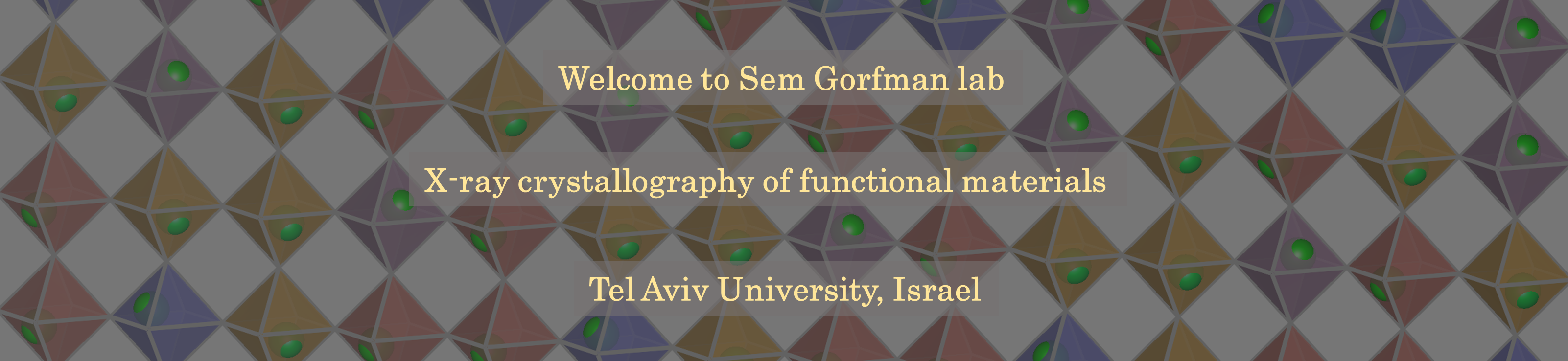
Dr. Semen Gorfman is a Senior Lecturer at the Department of Materials Science and Engineering , Iby and Aladar Fleischman Faculty of Engineering , Tel Aviv University. He obtained his PhD in Crystallography and Solid State Physics from the University of Siegen (Germany), MSc and BSc in Solid State Physics from Chelyabinsk State University (Russia). Research Interests: X-ray crystallography of materials Piezoelectric and ferroelectric materials Advanced materials analytics using synchrotron radiation Time-resolved and high-resolution X-ray diffraction Cleavage plane prediction algorithms Current Projects: Investigation of multidomain crystals with X-ray/neutron scattering Development of time-resolved X-ray diffractometry systems Crystallographic algorithm for cleavage plane prediction in arbitrary structures Grants: Israel Science Foundation (2023-2027): Structural analysis of ferroelectric PbZr1-xTixO3 crystals Joint NSFC-ISF (2021-2024): Phase coexistence in functional ferroic materials DFG (2023-2026): Electromechanical coupling mechanisms in uniaxial ferroelectrics BSF (2020-2024): Local structure mechanisms in oxide ferroelectrics Laboratory Collaborations: Works with Prof. Dov Sherman (brittle fracture lab) and international partners including Dr. Igor Levin (NIST, USA), Dr. Carsten Richter (Leibniz Institute, Germany), and institutions like European Synchrotron, Diamond Light Source, and SESAME.
Xijie Wang is a Professor at the University of Duisburg-Essen, affiliated with Collaborative Research Centre 1242. His research focuses on Ultrafast structural dynamics in nanomaterials Laser-induced phase transitions X-ray diffraction techniques He investigates atomic-scale relaxation processes, non-equilibrium energy flows, and femtosecond laser interactions with thin films and nanoparticles. Recent publications highlight his work on Ultrafast melting pathways in polycrystalline materials Quantum carrier dynamics in Bismuth Terahertz birefringence in anisotropic semimetals His team employs advanced x-ray spectroscopy and simulation methods to study nanoscale phenomena. Collaborations span institutions including Stanford University (via co-author affiliations) and research centers specializing in ultrafast x-ray sources. Ongoing projects examine structural decomposition in laser-ablated materials and element-specific lattice dynamics in magnetic nanoparticles.
Maria Adília Januário Charmier serves as Associate Professor at Lusofona University's Faculty of Engineering in Lisbon, Portugal, while directing the Biotechnology bachelor program and co-leading the Circular Bioeconomy and Technology bachelor program. With over 30 years of teaching experience in General Chemistry, Organic Chemistry, and Natural Products Chemistry through Ciência Viva and Casa da Ciência initiatives, she bridges academic instruction with practical science outreach and campus sustainability as a member of the Faculty's Eco-Schools Council. Her academic credentials include: PhD in Organic Chemistry, Université Blaise Pascal, France (1993) DEA (Diplôme d'études approfondies) in Chemistry, Université Blaise Pascal Maîtrise-ès-Sciences in Chemistry, Université Blaise Pascal Dr. Charmier's research integrates green chemistry principles with biotechnology to develop sustainable solutions. Her primary focus involves microwave-assisted extraction of bioactive compounds from medicinal plants and organic waste streams, and synthesis of metal-coordinated natural product derivatives for pharmaceutical, nutraceutical, and biomaterial applications. This work advances circular bioeconomy models by transforming agricultural and industrial waste into value-added products while minimizing environmental impact. Analysis of her publication history reveals three dominant research trajectories: circular economy applications (particularly waste valorization in food systems), nanotechnology-driven drug delivery systems, and bioinorganic therapeutic development. Recent publications demonstrate increasing interdisciplinary convergence, with 2022-2025 works showing strong integration of sustainability metrics, advanced material characterization, and translational biomedical applications – reflecting evolving priorities in green chemistry and sustainable development. Scientific Awards: No specific awards documented in source materials. Dr. Charmier has supervised multiple Master's and PhD candidates alongside international postdoctoral researchers. Her research funding portfolio includes: International: ERASMUS KA2-STEM Education projects National: FCT grants, P2020 and P2030 innovation programs She maintains dual research affiliations with the Centre of Structural Chemistry (CQE) at IST-UL and Lusofona University's Bioengineering and Sustainability research group (BioRG), where she leads projects on green extraction technologies and metal-based biomaterials. Her industry engagement extends to scientific advisory roles at Cerebio (France) and EXMceuticals Inc. (Canada), including co-founding EXMceuticals Portugal Lda where she served as CEO until 2019.
Simon Grabowsky is a Research Group Leader and Privatdozent at the Department of Chemistry, Biochemistry and Pharmacy at the University of Bern. He leads a vibrant research team including senior researchers, postdocs, PhD students, and technicians focused on quantum crystallography and electron density analysis. His research interests center on method development in quantum crystallography, particularly X-ray Wavefunction Refinement (XWR), which includes Hirshfeld Atom Refinement (HAR) and X-ray constrained wavefunction (XCW) fitting. His work extends to studying relativistic effects in electron density using organo-metallic compounds with heavy elements and investigating electron-density-property relationships in inorganic chemistry through systematic compound arrays. His recent publications demonstrate a strong focus on quantum crystallographic protocols, bonding analysis, and electron density studies across various chemical systems. His work bridges theoretical quantum chemistry with experimental crystallography to extract detailed electronic structure information from diffraction data. Emmy Noether Research Group Leader Australian Postdoctoral Fellow Grabowsky actively mentors PhD, Master's, and Bachelor's students while teaching courses in quantum chemistry, inorganic chemistry, and chemical crystallography. His research group maintains strong international collaborations and has developed software implementations like HARt in Olex2. The group also provides crystallography services for single crystal X-ray diffraction analysis to the broader scientific community.
Balovsyak Serhiy Vasyliovych is an Associate Professor at the Department of Computer Systems and Networks, Faculty of Physics, Yuriy Fedkovych Chernivtsi National University. He holds a Doctor of Technical Sciences degree with expertise spanning computer measurement systems, digital image processing, and X-ray diagnostics. His academic journey began with a Candidate's thesis in solid-state physics (2003) and culminated in a Doctoral dissertation on multilevel methods for processing electron diffraction and X-ray signals (2019). His educational background includes graduation from Chernivtsi State University, Faculty of Physics, Department of Radio Engineering (1995). His professional career evolved from Engineer in Solid State Physics (1995-2003) to Assistant Professor (2004-2006), culminating in his current position as Associate Professor since 2006. Dr. Balovsyak's research interests encompass development of computer measurement and control systems, automation of experimental research, artificial intelligence, pattern recognition, digital image processing, artificial neural networks, and genetic algorithms. His work bridges physics and computer science, particularly in applying computational methods to analyze X-ray and electron diffraction data. His publication record demonstrates a clear progression from fundamental physics research toward increasingly sophisticated computational methods for image processing and analysis. Recent work focuses on Gaussian noise estimation and removal, adaptive image filtering, and computer vision applications, while maintaining connections to his foundational work in materials characterization through X-ray techniques. Certificate of Honor from the Chernivtsi Regional State Administration to the 140th anniversary of the Chernivtsi National University Dr. Balovsyak has developed numerous educational materials including lecture notes and laboratory manuals on Computer Systems of Artificial Intelligence, Digital Image Processing Methods, and other computer science topics. His work demonstrates strong integration between theoretical knowledge and practical implementation, with multiple software systems and patents developed for image processing and materials analysis applications.
Amit Ashok is a Professor of Optical Sciences at The University of Arizona's Wyant College of Optical Sciences and an Assistant Professor in the Department of Electrical and Computer Engineering. His research focuses on computational sensing and quantum-inspired imaging. Education: Ph.D. (2008), University of Arizona; M.S. (2001), University of Cape Town; B.Sc. (1998), University of Swaziland Professional Affiliations: Senior Member of The Optical Society (OSA), Member of IEEE, SPIE Senior Member His research leverages physical optics, machine learning, and information theory to design optical imagers and sensors. Key areas include inverse problems, compressive imaging, and quantum-limited resolution. The Intelligent Imaging and Sensing Lab (I2SL), led by Professor Ashok, develops computational sensing frameworks using reconfigurable optics and parallel computing architectures for applications in high-dimensional imaging and X-ray anomaly detection. Scientific Awards: SPIE Best Paper Award (2010), University of Cape Town Scholarships (1999, 2000), University of Swaziland Dean's, Vice-Chancellor, and Sino-Swazi awards (1995-1998)
Nenad Stojilovic is a Professor at the University of Wisconsin Oshkosh, where he has been employed since 2009. Prior to this position, he served as a Visiting Assistant Professor at John Carroll University in Cleveland from 2007 to 2009 and as a Postdoctoral Research Scientist at Columbia University in New York from 2005 to 2007. His educational background includes a Bachelor of Science in Theoretical Physics from the University of Belgrade, Serbia, and a Ph.D. from the University of Akron, where his dissertation research investigated the interaction between zirconium surfaces and simple gases under ultra-high vacuum conditions. Professor Stojilovic's research program spans two distinct domains: Materials Science: He specializes in electrospun metal-oxide nanofibers, with emphasis on composite systems including titania-alumina, titania-zinc oxide, and titania-ceria. His group utilizes advanced characterization techniques such as X-ray diffraction (XRD), scanning electron microscopy (SEM), Brunauer-Emmett-Teller (BET) surface area analysis, UV-visible spectroscopy, and Raman spectroscopy to analyze structural and functional properties. Physics Education Research: He investigates the cognitive impact of frequent informal testing (testing effect) on physics learning and develops pedagogical frameworks for integrating research-like activities into undergraduate laboratories to enhance data visualization and scientific reasoning skills. No scientific awards or major grants are documented in the provided text, though his dual expertise demonstrates significant contributions to both nanomaterials innovation and physics pedagogy.
Vilko Smrečki is a Senior Researcher and Assistant Director at the NMR Centre of Ruđer Bošković Institute in Zagreb, Croatia. He holds a Ph.D. in Chemistry from the University of Zagreb (1998) and has maintained continuous academic engagement through teaching and research collaborations with the University of Zagreb and University of Split. His research spans NMR spectroscopy applications in biochemistry, material science, and quantum chemical modeling. Key interests include structural analysis of bioactive molecules, DNA/RNA secondary structures, zeolite nanomaterials, and machine learning applications in NMR data interpretation. His work demonstrates strong interdisciplinary collaboration across chemistry, physics, and computational science. Analysis of his 15 most recent publications reveals a consistent focus on advancing NMR methodologies for complex systems, with increasing integration of computational approaches since 2015. His research bridges fundamental NMR physics with practical applications in petroleum analysis, glycobiology, and nanomaterial characterization. Ruđer Bošković Institute Award for best scientific papers (2020) Smrečki has mentored numerous graduate students across chemistry programs at the University of Zagreb and supervised multiple doctoral theses. His current leadership of the Horizon Europe R-NMR project demonstrates ongoing grant acquisition success. The NMR Centre under his direction maintains active collaborations with international research groups and provides essential infrastructure for structural analysis across multiple scientific disciplines.