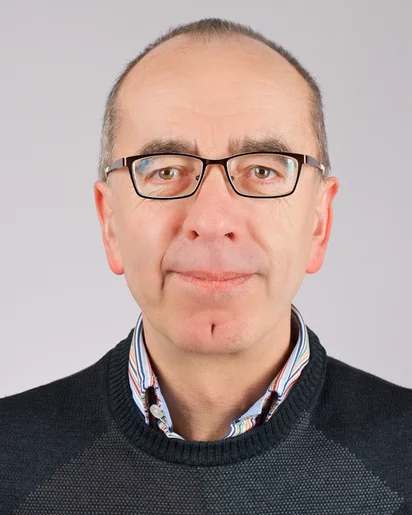
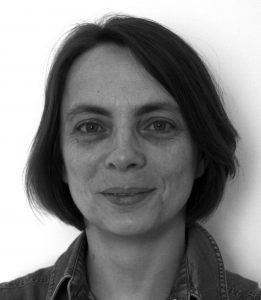
Dr. Rolf Follath is a senior Researcher at the Paul Scherrer Institute (PSI) within the Center for Photon Science , Laboratory for Non-linear Optics . He has led major projects including the ATHOS soft X-ray beamlines at SwissFEL, focusing on beamline design, alignment strategies, and commissioning procedures for hard/soft X-ray systems. Education: PhD in X-ray Interferometry from University of Ulm Key Contributions: Development of collimated plane grating monochromators, X-ray induced damage analysis, and high-resolution spectrometer systems His research spans X-ray optics , beamline engineering , and free-electron laser (FEL) technology , with emphasis on soft/hard X-ray interaction , photon diagnostics , and multi-layer grating applications . Recent publications highlight advancements in tender X-ray spectromicroscopy , stochastic X-ray spectroscopy , and beamline transmission efficiency . Scientific Recognition: Innovation Award on Synchrotron Radiation (with Friedmar Senf) Dr. Follath's work supports SwissFEL and SESAME projects, advancing ultrafast X-ray science and third-generation synchrotron applications . His team's developments enable element-specific 3D imaging and high-brightness FEL operation .
Christopher M. Orban is an Associate Professor at The Ohio State University Marion Campus in the Department of Physics. His research spans plasma physics, cosmological simulations, and innovative physics education methods. He leads the STEMcoding Project and develops free VR apps through the BuckeyeVR Initiative . Academic Rank: Associate Professor Department: Physics University: The Ohio State University Campus: Marion Campus Research Interests: Orban investigates high-intensity laser-plasma interactions for ion acceleration, develops computational tools for astrophysical simulations, and pioneers the use of virtual reality and programming exercises in physics education. His work bridges theoretical modeling with experimental validation. Laser-Produced Plasmas Cosmological Perturbation Theory Virtual Reality Education Computational Thinking Code Validation (FLASH, Gadget2) Electromagnetic Field Simulations Notable Contributions: He developed open-source educational tools like the Arduino-based pressure sensor and created browser-based physics simulations using classic video games. His 2020 High Energy Density Physics paper validated FLASH code for astrophysical jet modeling, while 2019 Physics Education work explored computational thinking in introductory courses.
Dr. Philip MacInnes serves as a Research Fellow in the Department of Physics within the Faculty of Science at the University of Strathclyde. His work focuses on advanced microwave and terahertz technologies, with particular expertise in electron beam physics and plasma interactions. He maintains active collaborations across multiple international research groups and contributes to major projects funded by EPSRC and the Office of Naval Research. His research interests center on microwave physics and electron beam dynamics , with specific applications in terahertz radiation generation , corrugated waveguide systems , and plasma-microwave interactions . His work bridges fundamental physics with practical engineering applications in high-power microwave sources and particle acceleration. Analysis of his recent publications reveals a strong trend toward developing efficient terahertz sources using structured surfaces and energy recovery systems, with significant contributions to gyrotron technology and plasma-based microwave amplification. His work consistently addresses challenges in high-frequency wave generation and beam-wave interactions. Dr. MacInnes actively supervises research projects including EPSRC-funded internships and international collaborations. His current projects focus on compact microwave oscillators, folded waveguide traveling wave amplifiers, and novel particle accelerators for portable x-ray sources. He contributes to the Strathclyde research ecosystem through the SUPA (Scottish Universities Physics Alliance) network and participates in major international conferences including IEEE IVEC and EPS Plasma Physics conferences. His laboratory work involves advanced characterization of helicon plasma devices and development of specialized microwave components.
Dr. Adam Noble is a SUPA Research Fellow in the Department of Physics at the University of Strathclyde, Faculty of Science. His research is centered on laser-plasma interactions, relativistic electron beams, and coherent radiation sources. He is actively involved in major projects such as 'Lab in a Bubble' and Doctoral Training Partnerships, funded by EPSRC. His research interests include laser-plasma physics, radiation reaction, particle acceleration, and high-field physics. He applies theoretical and computational models to study electron dynamics in extreme conditions, particularly within plasma bubbles generated by intense laser pulses. His work contributes to the development of compact X-ray sources and advanced particle accelerators. The recent publications highlight a strong trend in plasma-based acceleration, coherent radiation generation, and fundamental electrodynamics. Topics span from attosecond electron bunches to geometric formulations of physics, indicating both applied and theoretical depth. His work bridges experimental planning with advanced numerical modeling. Radiation Physics Electron Beam Dynamics Laser-Plasma Interactions Relativistic Effects Coherent X-ray Sources High Field Physics Dr. Noble has served as a co-investigator on multiple EPSRC-funded doctoral training and research projects, contributing to the supervision and training of PhD students. While no direct advisees are listed, his role in DTPs indicates active mentorship. He collaborates extensively within the ALPHA-X team and other international groups. He is a key contributor to the 'Lab in a Bubble' project, which investigates the physics of relativistic plasma bubbles, radiation reaction, and quantum effects in high-intensity laser-plasma interactions. The project integrates advanced diagnostics, theoretical modeling, and experimental validation to develop next-generation compact radiation sources.
Clotilde Policar is a Professor at the Ecole Normale Supérieure—University Paris Sciences et Lettres (ENS-PSL) where she serves as Dean of Sciences Education since 2020. She leads the research group METROX (Metals in Biology and Redox Homeostasis) within the Department of Chemistry at ENS. Dr. Policar is internationally recognized in bioinorganic chemistry, having served as President of the International Society of Bioinorganic Chemistry (SBIC) from 2022-2024 and currently as Past President Elect (2024-2025). Dr. Policar's research spans bioinorganic chemistry and inorganic chemical biology, with specific focus on designing manganese-based antioxidants and metal-carbonyl probes for multimodal imaging. Her work bridges chemistry, biology, and medicine, particularly in studying oxidative stress and developing therapeutic applications. She has established herself as a leader in studying metal complexes directly in cellular environments, a field she helped pioneer. Her publication record shows consistent high-impact contributions, with recent work focusing on superoxide dismutase mimics for inflammatory bowel disease, metal speciation analysis in cells, and advanced imaging techniques using metal-based probes. The research demonstrates a clear trajectory from fundamental chemical design to therapeutic applications, with increasing interdisciplinary collaboration. Co-laureate of the Gay Lussac Federation Prize from the French Academy of Sciences (2022) First prize "Creation" from the French Ministry of Research (1997) As an educator and mentor, Dr. Policar supervises multiple PhD students working on various aspects of bioinorganic chemistry. She has secured substantial research funding from ANR, FRM, CNRS, and international sources. Beyond her research, she actively promotes equity in science and has contributed to science communication through theater, podcasts, and public lectures, including the prestigious Legrain conference at Pasteur Institute.
Kovács Katalin is a Leading Researcher at the National Institute for Research and Development of Isotopic and Molecular Technologies (INCDTIM) in Cluj-Napoca, Romania, within the Department of Isotopic and Molecular Technologies and the Laser Induced Processes research team. She holds a PhD in Physics from Babeș-Bolyai University (2007) and an MSc in Computational Physics from the same institution (2003). Her work is centered on advanced computational modeling in ultrafast optics and attosecond science. Her research interests span Nonlinear Optics , Laser-Matter Interaction , Attosecond Physics , and Modeling of High-Order Harmonic Generation (HHG) . She develops numerical tools to simulate laser pulse propagation in gaseous media and to control the generation of attosecond pulses. Her expertise includes femtosecond pulse shaping, relativistic laser intensities, and quasi-phase matching techniques. She integrates artificial neural networks into pulse reconstruction software for facilities like ELI-NP, demonstrating a strong interdisciplinary approach combining physics, modeling, and machine learning. Kovács has played key roles in numerous national and international research projects. She has served as Project Coordinator for grants such as Obtaining single attosecond pulses through high-order harmonic generation by terahertz assisted infrared pulses (PD-2011) and Femtosecond pulse shaping to control attosecond pulse generation (RUTE-2014). She has been a Key Expert in major initiatives including Attosecond Chemistry (CA18222), eXtreme ultraviolet to soft-X-ray Photonic Integrated Circuits (X-PIC), and several ELI-related projects. Her collaborations include institutions such as Universidad Autónoma de Madrid, Seconda Università di Napoli, University College Dublin, and IFIN-HH. Her work contributes to the development of compact, high-flux EUV and soft X-ray sources for scientific and industrial applications. She has participated in peer-review activities for international programs and holds a Web of Science ResearcherID (B-5629-2011). Her research has strong implications for fundamental physics, materials science, and next-generation photonic technologies. She is actively involved in modeling coherent beam combining, characterizing laser propagation effects, and exploring the photochemical behavior of nanomaterials using time-resolved spectroscopy and DFT/TDDFT methods.
Edward Doomes serves as Associate Professor of Chemistry and Chemistry Program Chair at Southern University. He earned his Bachelor's from Morehouse College (1993) and Ph.D. from Louisiana State University (2002), establishing expertise in physical chemistry and materials characterization. His research focuses on synchrotron radiation techniques for spatial and electronic characterization of novel materials, including optical coatings, functionalized nanoparticles, and fuel-cell components. Primary methodologies involve EXAFS, XANES, and XRF spectroscopy combined with computational modeling using FEFF software for simulating X-ray absorption spectra. Key application areas span catalysis, hydrogen energy systems, and gravitational wave detector development. Publication analysis reveals strong interdisciplinary collaboration, particularly with the LIGO Scientific Collaboration. His work bridges experimental physics and chemistry, with recent outputs emphasizing materials for advanced instrumentation. The 2004-2008 publications demonstrate consistent contributions to both nanomaterials science and gravitational wave astronomy. No scientific awards were documented in the source materials. Dr. Doomes maintains active research grants through LIGO collaborations and NSF-EPSCOR initiatives, focusing on synchrotron-based characterization. His advising activities include mentoring students in materials science projects, though specific student names were not provided in the source text. His experimental work utilizes facilities at the Center for Advanced Microstructures and Devices (LSU) and national synchrotron laboratories, collaborating with teams specializing in X-ray physics, nanofabrication, and computational modeling for materials design.
Dr. Christopher S. Kim serves as Interim Dean and Professor of Chemistry at Chapman University's Schmid College of Science and Technology. With a Ph.D. from Stanford University (2010) and BA from Princeton, he leads research on metal(loid) behavior in contaminated environments. Princeton University, Bachelor of Arts (Latin) Stanford University, Ph.D. His work focuses on: Distribution, transport, and transformation of trace metals in mine wastes Bioaccessibility of toxic metals in soils Nanoparticle growth and reaction mechanisms Synchrotron-based spectroscopic methods Article trends include metal adsorption dynamics, environmental impacts of mining, and nanoparticle reactivity. Awards span pedagogical innovation, mentorship, and national research recognition. Chapman University Wang-Fradkin Senior Professorship Award (2014) Henry Dreyfus Teacher-Scholar Award (2010) Emerging Investigator (Journal of Environmental Monitoring, 2012) Dr. Kim mentors undergraduate researchers and leads NSF workshops on early-career faculty development. He serves on editorial boards and national scientific committees.
Toti Larson is a Researcher at the University of Texas at Austin ’s Bureau of Economic Geology and Principal Investigator of the Mudrock Systems Research Laboratory (MSRL) consortium since 2019. His work focuses on subsurface geology characterization using geochemistry, geology, and machine learning tools, including the development of the open-source CorePy package for geological workflows. Education: PhD in Geochemistry (2003), University of New Mexico MS in Geology (1999), University of New Hampshire BA in Geology (1993), Albion College Research interests span mudrock sedimentology , computational geosciences , core-petrophysics integration , oceanic anoxic events , and carbon capture . Recent publications highlight machine learning applications in subsurface modeling, shale reservoir analysis, and carbon sequestration studies. Scientific Contributions: Developed CorePy for chemofacies classification and core data visualization Coordinated MSRL industry collaborations to address subsurface knowledge gaps Integrated noble gas isotopes with geochemical data to study reservoir compartmentalization
Robert Weatherup is Professor of Energy Materials in the Department of Materials at the University of Oxford, where he leads the Energy Materials Interfaces Group. Based in the Rex Richards building, his group pioneers interface-sensitive characterization techniques to study reactions critical to electrochemical energy storage, catalysis, and materials synthesis, with strong collaborations at Harwell Campus facilities including Diamond Light Source and ISIS Neutron and Muon Source. His research focuses on understanding interfacial reactions in functional materials under operational conditions. Key interests include solid-gas, solid-liquid, and solid-solid interfaces in Li-ion batteries, solid-state batteries, and catalytic systems for sustainable reactions. The group develops operando X-ray and electron spectroscopy methods to probe buried interfaces, aiming to link interfacial structure to material function for designing advanced energy materials through specialized reaction environments and membrane-based techniques. Recent publications demonstrate a concentrated trend toward operando studies of battery interfaces (cathode stabilization, SEI formation) and catalytic CO2 conversion, utilizing advanced spectroscopic techniques to reveal mechanistic insights under realistic electrochemical and thermal conditions across energy storage and sustainable chemistry domains. Scientific Awards: Royal Society of Chemistry Joseph Black Prize Professor Weatherup supervises a research team of six postdoctoral researchers, nine DPhil students, and two MEng students. His group secures substantial research grants for projects on energy storage and catalytic materials, with close partnerships at Harwell Campus facilities enabling cutting-edge in-situ experiments and methodology development for industrial and academic collaborators. The Energy Materials Interfaces Group operates specialized laboratories in Oxford and maintains deep integration with Harwell Campus infrastructure. They design custom reaction cells for operando studies across electrochemical, gas, and liquid environments, with active beamtime allocations at Diamond Light Source and Alba Synchrotron, fostering cross-institutional collaborations to advance characterization capabilities for next-generation sustainable technologies.
Christoph Sahle is a Research Fellow at the European Synchrotron Radiation Facility (ESRF), working in the Experiments Division and part of the ID20 team since early 2014. His career spans academic and research roles, including a PhD at TU Dortmund University and postdoctoral work at the University of Helsinki. Education: PhD in Physics from TU Dortmund University (completed December 2011), supervised by Metin Tolan and Christian Sternemann. Research Interests: Investigating materials under extreme conditions using non-resonant inelastic X-ray scattering to link spectral properties to atomic-scale structure. Developing instrumentation, sample environments, and open-source analysis tools for X-ray spectroscopy. Exploring new methods for spectrum calculations and advanced data analysis, including direct tomography techniques. Professional Background: PhD research focused on disordered condensed matter under extreme conditions at TU Dortmund. Postdoctoral work at the University of Helsinki extended his expertise to theoretical predictions of absorption edges and interactive data analysis software. At ESRF, he balances user support with independent research in experimental physics and materials science.
Hani Elsayed-Ali is a Professor and Batten Endowed Eminent Scholar in the Department of Electrical & Computer Engineering at Old Dominion University (ODU). He earned his BS (1979), MS (1982), and PhD (1985) in Electrical Engineering from the University of Miami and the University of Illinois at Urbana-Champaign. His career includes roles as a Visiting Assistant Professor at the University of Illinois and a Scientist at the University of Rochester's Laboratory for Laser Energetics before joining ODU in 1992. Research Interests : Laser-solid interactions, ultrafast laser probing of solid-state processes, thin film fabrication, laser-plasma ion sources, and surface analysis of nanomaterials. Grants & Collaborations : Over $6 million in funded research, including major projects like the Acquisition of an Electron Probe Microanalyzer ($500,000) and Development of a Femtosecond Time-Resolved Electron Diffraction System ($191,752) . Awards : Recipient of the ODU Doctoral Mentoring Award (2012), Excellence in Innovation in Hampton Roads (2006), ODU Faculty Research Award (2000), and Cairo University Medal (1996). Publications : Over 160 peer-reviewed articles on topics spanning quantum dot infrared photodetectors , laser-induced surface melting , and ultrafast electron dynamics , with significant contributions to thin film modeling and laser safety systems.
Subburaj Karupppasamy is an Associate Professor at Aarhus University's Department of Mechanical and Production Engineering, leading interdisciplinary research focused on medical device design, biomechanics, and computational modeling for aging-related musculoskeletal disorders including osteoarthritis, osteoporosis, and scoliosis. His work integrates engineering methodologies with clinical applications to develop diagnostic tools and treatment systems. Research interests span biomechanics, medical device innovation, diagnostics, computational modeling, and AI-driven design tools. His team employs medical imaging, 3D geometric analysis, finite element modeling, and mechanobiology principles to address bone and spine health challenges, emphasizing translational outcomes through industry and clinical collaborations. Publication trends reveal a dominant focus on computational biomechanics for vertebral fracture prediction, with significant contributions to finite element analysis optimization, medical device manufacturing, and design cognition studies. Recent works also explore VR/AR/MR systems for medical training and additive manufacturing of fabrics, demonstrating cross-disciplinary applications. Scientific Awards: No specific awards, fellowships, or medals listed in source text He actively supervises PhD candidates as evidenced by his participation in the Foundational Course in PhD Supervision (November 2023) and membership on PhD examination boards. His research has generated 4 patents and 2 technology transfers but grant details remain unmentioned. The team operates within Aarhus University Engineering facilities, utilizing medical imaging, finite element simulation, and AI tools for musculoskeletal health research. Collaborations with clinical institutions and industry partners drive their mission to translate engineering solutions into practical healthcare technologies for improving quality of life in chronic conditions.
Professor William Harrison is a distinguished academic in the Department of Chemistry at the University of Aberdeen, within the School of Natural and Computing Sciences. He holds the title of Personal Chair, reflecting his status as a full Professor. He currently serves as Director of Education and is actively involved in numerous university committees, showcasing his leadership and administrative contributions. His teaching spans all levels of the Chemistry programme, where he has received multiple teaching excellence awards. MA, University of Oxford DPhil (PhD), University of Oxford Professor Harrison's research is centered on synthetic and structural inorganic chemistry, with a strong emphasis on crystallography, metal-organic frameworks (MOFs), coordination polymers, and functional materials. His work often explores the design and characterization of novel inorganic and hybrid materials, frequently in collaboration with Dr. Michael Plater. His research group investigates reaction mechanisms, supramolecular assemblies, and the development of building blocks for porous materials. The recent publications highlight a consistent focus on nucleophilic aromatic substitution, crystal engineering, hydrogen bonding, and the structural characterization of coordination compounds. His work spans from fundamental reaction mechanisms (e.g., in mauveine synthesis) to the development of materials with potential catalytic, medicinal, or electronic applications. The use of X-ray crystallography as a key analytical tool is evident across his publication record. Scientific Awards and Recognition: Most Accessible Lecturer (2015) Best Lecturer (2017) Most Supportive Lecturer (2020) Professor Harrison has supervised numerous undergraduate research projects and has been deeply involved in educational leadership as Director of Education. His research has resulted in over 600 publications and an h-index of 52, indicating significant scholarly impact. He is a Fellow of the Higher Education Academy (FHEA), recognizing his commitment to teaching excellence. His research group is active in areas such as solid-state chemistry and photoactive materials, contributing to the broader research ecosystem of the School of Natural and Computing Sciences. He is a member of several research groups including the Solid State Chemistry group and the Ab-Elektro Research Group, and his work is supported by access to advanced facilities within the university. His collaborations extend internationally, as evidenced by his postdoctoral experience in the USA and ongoing research partnerships.
Dr. Paul J. Sideris is an Associate Professor in the Department of Chemistry at CUNY Queensborough Community College, where he has worked since 2012. His research focuses on synthesizing and characterizing materials for energy storage devices (e.g., lithium-ion batteries, supercapacitors) and environmental remediation, utilizing nuclear magnetic resonance (NMR) spectroscopy, powder X-ray diffraction (PXRD), and scanning electron microscopy (SEM). He collaborates with the Greenbaum Laboratory at CUNY Hunter College and utilizes facilities at the New York Structural Biology Center and the Advanced Science Research Center. Ph.D. in Chemistry from Stony Brook University (2009) B.Sc. in Chemistry and B.A. in Mathematics from Binghamton University (2003) His research group investigates structure-property relationships of energy storage materials through ionothermal synthesis, surfactant-assisted hydrothermal reactions, and solid-state characterization. Recent work includes laser-induced graphene capacitors, Fe-O-P bond analysis in LiFePO 4 , and lithium ion dynamics in garnet-like electrolytes. Publications span topics in solid-state chemistry, battery technology, and NMR methodology. Scientific Awards : 2020 American Chemical Society New York Section Outreach Volunteer of the Year Award 2018 American Chemical Society New York Section Outstanding Service Award 2015 Chairperson, American Chemical Society Long Island Subsection GAANN Fellowship recipient Dr. Sideris has advised numerous undergraduate researchers through collaborations with Brookhaven National Laboratory and CUNY faculty, including the Developing Next Generation Radiation Safety Professionals (DNGRSP) program. His group has contributed to advancements in ionic liquid synthesis, cation clustering in layered hydroxides, and lithium ion dynamics in solid electrolytes.