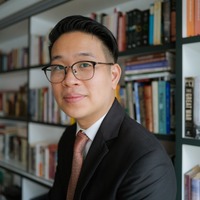
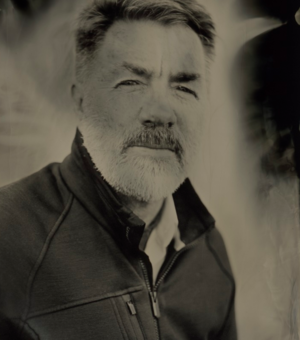
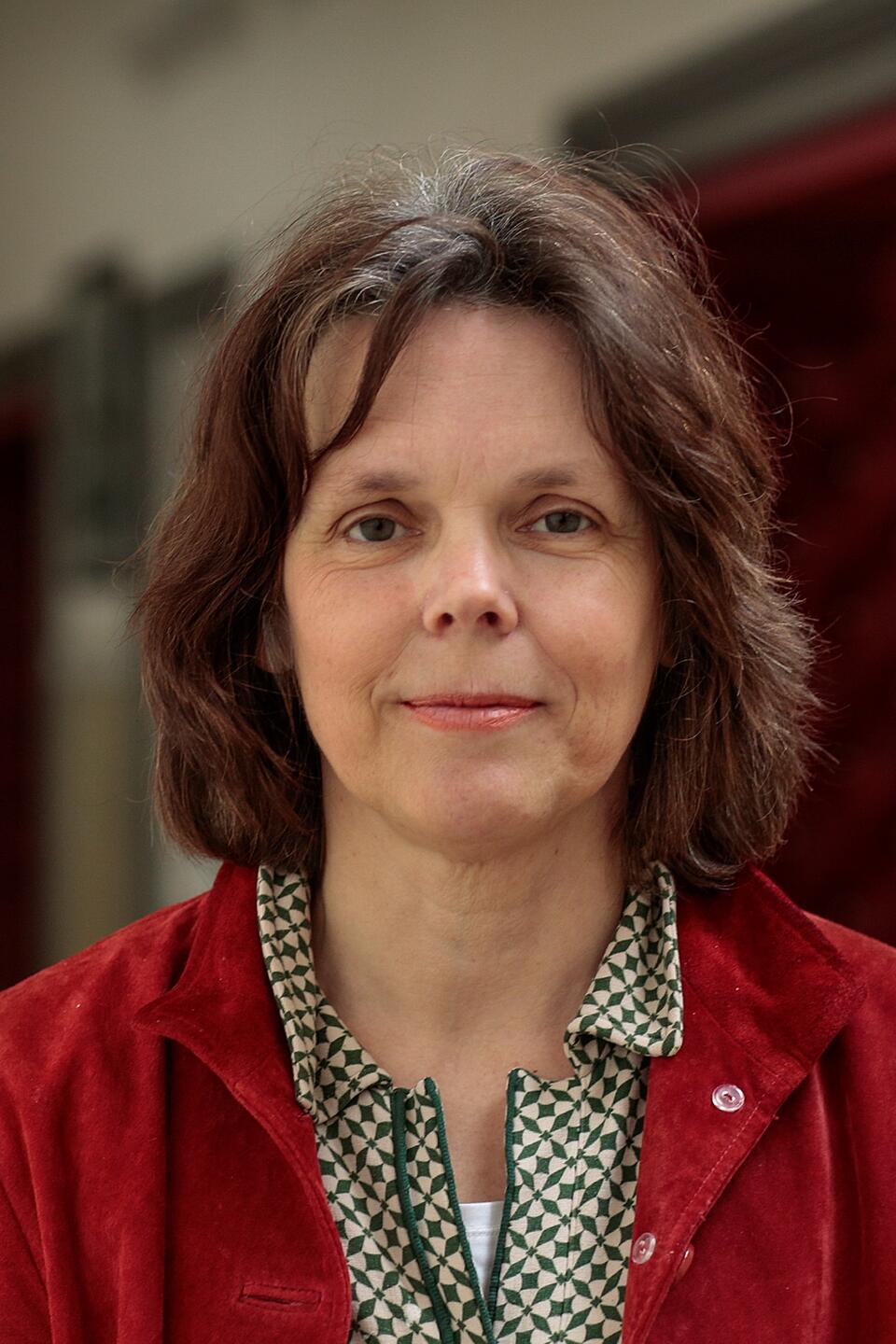
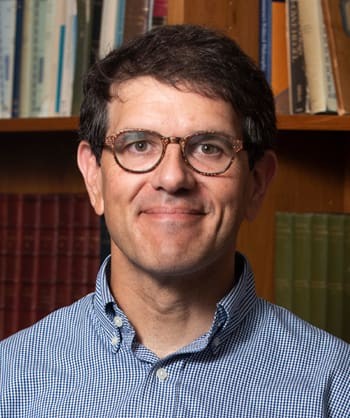
David Brydan is Senior Lecturer in the History of Modern International Relations at King's College London and current Senior Tutor in the History department. His research examines twentieth-century internationalism, intelligence history, and modern Spanish history, with current book projects on the history of intelligence and international humanitarianism. Key research areas: Right-wing and fascist international cooperation networks History of intelligence and ideas about cognitive elites Spanish humanitarianism and international engagement Religious dimensions of international cooperation His monograph Franco's Internationalists (2019) received international attention, and he co-edited Internationalists in European History (2021). Brydan writes for public audiences in outlets including El País and engages with history teachers through the Historical Association.
Bénédicte Savoy (born May 22, 1972 in Paris) is a renowned French art historian and Professor of Modern Art History at the Technical University of Berlin since 2009. Since 2016, she has also held positions at the Collège de France in Paris (2016-2021) and in November 2024 was appointed to the 'Cátedra del Prado' visiting professorship at the Prado Museum in Madrid. She is internationally recognized as a leading expert on cultural property restitution, particularly regarding colonial-era art theft and looted artifacts. Her research focuses on the complex histories of cultural displacement, with particular emphasis on European museums' colonial collections. Savoy has pioneered critical approaches to provenance research and has been instrumental in reshaping global debates about museum ethics and restitution practices. Her work bridges art history, postcolonial studies, and cultural policy, challenging traditional museum narratives and advocating for more transparent and ethical approaches to cultural heritage. Savoy's publications form a cohesive intellectual trajectory examining how cultural property has been transferred, often forcibly, across borders and continents. Her recent work increasingly focuses on African cultural heritage in European collections, with detailed case studies of Cameroon and broader analyses of restitution politics. The themes of historical justice, museum transparency, and decolonization of cultural institutions run consistently through her scholarship. Gottfried Wilhelm Leibniz Prize (2016), Germany's most prestigious research award TIME 100 most influential people in the world (2021) Ritterin der französischen Ehrenlegion (2022) Deutscher Kulturpolitikpreis (2022) Berliner Wissenschaftspreis (2023) Clark Prize for Excellence in Arts Writing (2024) Prix Européen de l'Essai 2025 (2025) As co-author of the groundbreaking 2018 report on African cultural restitution commissioned by French President Emmanuel Macron, Savoy has significantly influenced international policy. Her work has secured major research funding, including collaborative projects with African scholars. She has led influential research teams examining colonial collections, most notably the seven-member team that produced the 'Atlas der Abwesenheit' documenting Cameroonian cultural heritage in Germany. Her advocacy continues to shape museum practices worldwide, pushing institutions toward greater accountability regarding their colonial-era acquisitions.
Claire Robins serves as Professor of Museology and Art at University College London's Institute of Education, leading the Art, Design & Museology Academic Group and acting as Department Graduate Tutor for the Department of Culture, Communication and Media. Her work critically bridges art practice, museum studies, and educational theory to advance democratic engagement in cultural institutions. Education: PhD in Museum Education, University of London (2009) Master's degree in Gallery/Museum Education, University of London Bachelor's degree in Fine Art, St Martins School of Art (now University of the Arts London) Research Focus: Robins investigates the intersection of artists' practices with critical pedagogy, emphasizing progressive education and avant-gardist strategies in twentieth-century knowledge production. Her scholarship examines how contextual forces shape learning definitions in museums, with particular attention to materialities, pedagogic forms, and democratic potential within institutional frameworks. This work consistently challenges conventional museum narratives through artist-led interventions. Publication Trends: Her 15 most recent publications (2012-2025) reveal sustained exploration of museology-art education synergies, highlighting pedagogic innovation through artists' interventions, critical assessment frameworks, and democratic museum practices. Key thematic threads include narrative disruption in galleries, sustainability in art education assessment, and the transformative role of fiction in reimagining museum epistemologies. Advising & Leadership: Robins has supervised PhD/EdD students since 2010 and directed the MA Art Education, Culture and Practice program (2011-2023). She currently teaches MA modules in Museums and Galleries in Education and leads the Education and Curation component, while mentoring MA dissertations. Her leadership extends to developing gallery-based short courses with Engage. Professional Engagement: As editorial board member for Arts & Communication and Engage , and active participant in ICOM and NSEAD, Robins shapes global discourse through international keynotes (e.g., Korean Society for Education in the Arts, 2019) and curated seminars like Soft Subjects: Material Practice in Gallery Education (2024). Her review work for Routledge and Intellect Books further demonstrates scholarly stewardship.
Kathryn Lanouette is an Assistant Professor of Learning Sciences and Science Education at William & Mary’s School of Education. She holds faculty affiliate appointments in the Arts & Sciences (ENSP, IIC). Her research explores place-based pedagogies, emerging technologies, and their roles in fostering joyful, ethical science and data science learning for K-8 students. She collaborates with schools, museums, and youth-serving organizations to design curricula and outdoor learning experiences. Education: Ph.D. in Learning Sciences and Human Development, University of California, Berkeley (2017) M.A. in Museum and Childhood Education, Bank Street Graduate School of Education B.A. in Politics, Oberlin College Research Interests: Lanouette focuses on intersections between emotion, place, and data literacy, emphasizing participatory approaches to environmental and socio-ecological education. Her work bridges theory and practice, advocating for equitable, interdisciplinary STEM+ curricula that connect students to local ecosystems and global challenges. Recent Trends in Publications: Her articles emphasize participatory methodologies (e.g., digital mapping, data storytelling), socio-political dimensions of learning, and ethical frameworks for data science education. Recent work highlights collaborations between educators and community organizations to co-create knowledge about climate change and socio-ecological systems. Awards: Outstanding Short Paper Award (2025), International Society of the Learning Sciences NSF-funded ‘Writing Data Stories’ postdoctoral research (2017–2020) Teaching & Mentorship: Lanouette teaches courses on education research, science pedagogy, and applied conservation sciences. She mentors students through interdisciplinary projects, such as the NSF-funded ‘Writing Data Stories’ initiative and NOAA’s Teacher at Sea program. Labs/Teams: Collaborations include partnerships with UC Berkeley’s Science Education Lab, museums, and K-12 schools to develop place-responsive curricula and community-driven data projects.
Dr. Darren O'Byrne is a historian of modern Germany at the Department of German and Dutch , affiliated with Wolfson College at the University of Cambridge . His academic journey includes a PhD in History from Cambridge and prior degrees in History and Politics (BA) and International Relations (MA) from University College Dublin. Research focuses on German politics, administration, and bureaucracy from 1871 to the present Specializes in civil service under Weimar and Nazi regimes Co-edited Handbook Ideologies in National Socialism (2024) and a critical edition of sports journalist Willy Meisl’s writings Recent projects include a monograph on senior Nazi civil servants ( Hitler's Mandarins , forthcoming) and a biography of Willy Meisl. His publications span journal articles, book chapters, and interviews on topics like Nazi ideology, interwar sports journalism, and contemporary debates about memory. He is a Fellow at Wolfson College and teaches Modern German History.
Andrew Campana is an Assistant Professor of Asian Studies at Cornell University's College of Arts and Sciences, specializing in modern and contemporary Japanese literature and media. His research explores the possibilities and limitations of expression during media transitions, with particular focus on poetry, digital media, and disability studies. His academic journey includes a Ph.D. in East Asian Languages and Civilizations from Harvard University and an Honors B.A. in East Asian Studies from the University of Toronto. Campana's first book, Expanding Verse: Japanese Poetry at the Edge of Media , published by the University of California Press in 2024 as an open access work, examines Japanese poetic practice from the 1920s to the present as poets engaged with evolving media technologies including film, tape recording, television, and the internet. As a researcher, Campana's work bridges literary studies, media studies, game studies, and disability studies, with current projects exploring how poetry became a key site of digital experimentation in Japan. His research methodology combines traditional literary analysis with hands-on creative practice, informed by his experiences at MIT's Trope Tank laboratory. His scholarly interests span Japanese media history, disability representation in literature and gaming, digital poetics, and gender studies. His research has received significant media attention, including features in the Cornell Chronicle ('Poets in Japan Experiment at the Edge of Media' and 'Japanese Poets Open New Ways of Thinking About Media'), The Statesman, and interviews on NPR's Academic Minute and the Curiosity Daily podcast discussing his work on gaming and accessibility. As an educator, Campana teaches courses including 'Introduction to Japan,' 'Japanese Poetry,' and 'The Glitch: Errors, Disability, and the Edges of Digital Media' (ASIAN 4703/6703), guiding students through interdisciplinary explorations of Japanese literature, media, and digital culture. His teaching reflects his commitment to understanding media transitions through both theoretical and practical lenses.
Ana Paulina Lee is an Assistant Professor of Writing and Digital Humanities in the Comparative Literature, English, and Creative Writing Department at the American University of Paris. She joined AUP in 2025 after teaching Latin American literature and culture at Columbia University for eight years and serving as a Mellon Postdoctoral Fellow at Tulane University. Her interdisciplinary scholarship bridges literature, history, law, and urban studies with particular focus on marginalized narratives in the Americas. Ph.D. from University of Southern California M.A. from New York University B.A. from Binghamton University Professor Lee's research examines how stories—archival, fictional, oral—shape legal imagination, social life, and urban experience in the Americas. She specializes in the intersections of magic, law, and literature in Latin America, with particular focus on Asian and African diasporas in Brazil. Her work traces how narrative functions as both historical record and catalyst for social transformation, exploring themes of slavery, emancipation, colonial legacies, and urban memory. She approaches these topics through interdisciplinary lenses combining literary analysis with histories of labor, migration, and performance. Lee's recent publications reveal a consistent focus on marginalized narratives and their impact on social structures. Her scholarship connects legal history with cultural production, showing how magical thinking and narrative practices shape urban spaces and social relations. Works like 'Urban Sorcery, Segregation, and Spectacle in Twentieth-Century Rio de Janeiro' and 'Black Magic City' demonstrate her innovative approach to understanding the relationship between occult logics and legal frameworks in Brazilian contexts. Her research on diasporic communities, particularly Chinese and Japanese experiences in Latin America, contributes significantly to transnational and comparative race studies. David B. Larson Fellowship in Health and Spirituality, Kluge Center, United States Library of Congress (2025-2026) National Endowment for the Humanities Fellowship (2025) Social Sciences Research Council, Inaugural Recipient of Interdisciplinary Projects in the Social Sciences (2020-2023) Institute for Ideas and Imagination Fellowship, Columbia University in Paris, France (2021-2022) Provost's Tsunoda Senior Fellowship, Visiting Scholar, Waseda University, Tokyo, Japan (2019) Heyman Center Fellow, The Heyman Center for the Humanities, Columbia University (2017-2018) Fulbright, Lisbon, Portugal (2013-2014) Professor Lee's scholarly activities have been generously supported by major research grants from the National Endowment for the Humanities, the Social Sciences Research Council, and the Library of Congress. Her work demonstrates a commitment to interdisciplinary approaches that bridge humanities and social sciences, particularly through projects examining intersections of race, migration, and cultural production in the Americas. Her publication 'Socially Engaged Oral History Pedagogy Amid the COVID-19 Pandemic' indicates a strong commitment to innovative teaching methods and community-based research. While specific details about current advisees aren't provided, her research program suggests engagement with graduate students interested in diaspora studies, urban history, and literary-cultural analysis. Though not explicitly mentioned in the available information, Professor Lee's research on urban spaces, magic, and law in Brazil likely involves collaborative work with scholars across disciplines. Her participation in centers like the Institute for Ideas and Imagination at Columbia University suggests engagement with interdisciplinary research communities focused on global cultural production and social transformation. Her work contributes to ongoing conversations about how narrative practices shape legal frameworks and social structures in the Americas, particularly regarding racial formation and diasporic experiences.
Dr. Hongxuan Lin serves as an Assistant Professor in the Department of Southeast Asian Studies at the National University of Singapore (NUS), Faculty of Arts and Social Sciences. His academic work centers on the complex relationship between Islam and Marxism in Indonesia, with broader interests in progressive Islamic discourses across the Muslim world. As a faculty member at one of Asia's premier research universities, Dr. Lin contributes significantly to Southeast Asian studies through his research, teaching, and publications. Dr. Lin earned his Doctor of Philosophy in History from the University of Washington, Seattle, between 2015 and 2020. His doctoral research focused on Indonesian intellectual history, examining how Muslim identity and Marxist analytical frameworks coexisted in the minds of Indonesian nationalists during the anti-colonial struggle and early republic period. His supervisors were Laurie J. Sears, Christoph Giebel, and Vicente L. Rafael, all prominent scholars in Southeast Asian studies. Dr. Lin's research primarily investigates the intersection of Islam and Marxism in Indonesia from 1915 to 1965, exploring conciliatory discourses where Marxist ideas were theorized as compatible with Islam within frameworks of anti-colonial resistance. He examines how Indonesian intellectuals adapted global political currents to local contexts, challenging state-driven narratives that position Islam and Marxism as mutually exclusive. His work also considers women's contributions to these discourses and is expanding to study the circulation of progressive Islamic ideas across the Indian Ocean region connecting Egypt, Arabia, Iran, South Asia, and the Malay Archipelago. His research reveals how progressive Islamic thinkers addressed socio-economic inequity, women's rights, intercommunal tolerance, and religious governance. Dr. Lin's publications demonstrate a consistent focus on Southeast Asian political history, particularly Indonesia's intellectual landscape during the colonial and post-colonial periods. His scholarship reveals patterns of creative adaptation where Indonesian thinkers engaged with global political currents while transforming them for local contexts. A notable trend across his work is the examination of transnational intellectual networks that connected Southeast Asia with broader global movements, showing how ideas traveled and were transformed across borders. His research challenges simplistic narratives about religious and political identity, revealing instead complex intellectual traditions that defy easy categorization. Dr. Lin is multilingual with proficiency in Indonesian (reading, writing, speaking, and understanding), Chinese (Mandarin) (reading, writing, speaking, and understanding), Dutch (reading), and French (reading). This linguistic capability supports his research across multiple archives and sources in different languages, enhancing the depth and authenticity of his historical analysis. His work bridges multiple disciplinary approaches including history, political science, religious studies, and post-colonial theory.
Natalia Molina is a Distinguished Professor and Dean’s Professor of American Studies and Ethnicity at the University of Southern California, where she is a leading scholar in U.S. history, Latinx studies, immigration, race, and public health. She is Vice President and President-Elect (2028) of the Organization of American Historians and a 2020 MacArthur Fellow, recognized for her transformative work on racial formation. Her education includes a B.A. in History and Women’s Studies from UCLA, and an M.A. and Ph.D. in U.S. History from the University of Michigan, Ann Arbor. Molina’s research centers on the interconnected histories of race, place, gender, and citizenship. She is best known for her theory of racial scripts , which explains how racial categories are constructed relationally across groups and time. Her work spans public health history, foodways, and immigrant placemaking, with a deep commitment to community-centered storytelling and public engagement. Her recent publications explore Latinx cultural identity through food, sports, and media, reflecting a shift toward personal and public narratives that connect historical scholarship with contemporary life. Her books have received numerous accolades, including a James Beard Award nomination and the PROSE Award finalist status. MacArthur Fellowship (2020) James Beard Award Media Nominee (2023) PROSE Awards Finalist (2023) Pacific Coast Branch of the AHA’s Norris & Carol Hundley Award Susanne M. Glasscock Humanities Book Prize LA Times Essential Book New York Times Best Books About California Molina is a dedicated mentor and public intellectual, having advised university diversity initiatives and served on the boards of the Huntington Library and the Library of Congress Scholars Council. She has held leadership roles at UC San Diego, including Associate Vice Chancellor for Faculty Diversity and Equity. Her current research focuses on the immigrant workers who built and sustained the Huntington Library, reclaiming their overlooked contributions. She is also a Distinguished Lecturer for the Organization of American Historians and has been a fellow at the Huntington Library and the National Endowment for the Humanities. Her public writing in outlets like the Los Angeles Times , Washington Post , and Inside Higher Ed demonstrates her commitment to bridging academic scholarship with broader societal conversations.
Geoffrey Batchen holds the Professorship of the History of Art at the University of Oxford, situated within the Department of the History of Art in the Faculty of History. He is additionally a Fellow of Trinity College, where he contributes to academic governance and tutorial instruction. His career spans teaching, scholarly writing, and international curatorial practice focused exclusively on photographic history. Education: BA, University of Sydney PhD, University of Sydney Batchen's research interrogates photography's cultural embeddedness across temporal and technological shifts, emphasizing its theoretical frameworks, memorial functions, and ethical complexities. His scholarship bridges art historical analysis with material studies, examining how photographic practices shape human experience from the 19th century to digital eras. Curatorial projects extend this investigation through exhibitions at major institutions worldwide, including the Van Gogh Museum, International Center of Photography, and National Media Museum. His publication trajectory reveals evolving engagement with photography's ontological status, moving from foundational studies like Burning with Desire (1997) to comprehensive historical syntheses in Negative/Positive (2020). Recurring themes include technological materiality, memory construction, and crisis representation, with recent works addressing digital dissemination and cameraless techniques. This body of work establishes photography as both artistic medium and cultural catalyst across diverse sociopolitical contexts. Information regarding doctoral students, research grants, laboratory facilities, or award recognition was not provided in the source material.
Elise Kleivane is an Associate Professor in Written Culture at the Department of Norse and Celtic Philology, Faculty of Humanities, University of Oslo. She has served as Head of Teaching at ILN (Institute of Language and Literature) from 2021 to 2024 and maintains an active research and teaching profile in Norse philology and related fields. Dr. Kleivane earned her PhD in Norse Philology from the University of Oslo in autumn 2011, following a Master of Arts in Norse Philology completed in spring 2003. Her academic journey has positioned her as a leading scholar in medieval Scandinavian writing culture. Her research focuses on epigraphy, runology, and medieval literacy, with particular emphasis on the intersection of written and material culture in medieval Norway. Kleivane examines how writing functioned in both public and private spheres, analyzing inscriptions in runes and Roman script as evidence of medieval communication practices. Her work bridges philology, archaeology, and cultural history to reconstruct literacy patterns in pre-modern Scandinavia. Recent projects have explored religious texts, biblical translations, and the role of writing in ecclesiastical contexts. Analysis of her publication record reveals a consistent trajectory through medieval epigraphy and literacy studies. Her work demonstrates increasing sophistication in connecting material evidence with textual analysis, moving from specific inscription studies to broader questions about writing culture. The pattern shows strong engagement with interdisciplinary approaches, combining philological expertise with archaeological and historical methodologies. Her research increasingly addresses questions of religious practice, vernacular literacy, and the transmission of knowledge in medieval Scandinavia. Among her significant appointments, she has been appointed to the Language Council's expert council for standardization and language observation (2023-2026) and to the Sources Commission (2023-2026), serving on the editorial board for the National Archives' scientific publication channels. Dr. Kleivane has secured substantial research funding, most notably leading the Norwegian Research Council-funded project 'Letters between runes and manuscripts' (2017-2021) and participating in the NORDCORP-funded 'Retracing the Reformation' project (2013-2017). She currently contributes to the Riksbanken Jubileumsfond-funded research program 'Modes of Modification' (2018-2025) as a member of its steering committee, where her research focuses on 'Texts in the Open and Out of Sight: Public and Private Communication in Epigraphy.' She teaches across multiple institutions including the University of Oslo and Stockholm University, covering subjects ranging from Norse literature and mythology to runology and medieval manuscript culture. Her teaching reflects her research interests in written culture across the medieval Scandinavian world.
Dr. Elisabeth (Lies) Wesseling is an Associate Professor in the Department of Literature and Art at the Faculty of Arts and Social Sciences, Maastricht University. She serves as Director of the Centre for Gender and Diversity and leads the international research network PLACIM (Platform for a Cultural History of Children's Media). Her interdisciplinary work bridges literature, cultural history, and the humanities' engagement with science and identity. Her educational background includes MA degrees in English Language and Literature and Comparative Literature (both cum laude) and a PhD in Comparative Literature, all from Utrecht University. Dr. Wesseling’s research focuses on the cultural construction of childhood, particularly through narrative forms in fiction, life writing, and film. She investigates how global adoption narratives forge kinship across cultural boundaries, drawing on postcolonial theory, literary anthropology, and life writing studies. Her work critically examines implicit cultural assumptions about parenthood, orphanhood, and identity, aiming to enrich ethical discourse on transnational adoption. Her recent publications (2020–2023) reflect a strong trajectory in children’s literature, narrative theory, and cultural critique, with a particular emphasis on mermaid myths, adoption memoirs, and postcolonial family formations. These works span edited volumes and journals, demonstrating sustained scholarly engagement. She is actively involved in academic service as congress convenor of the 21st Biennual IRSCL Conference and board member of the International Research Society for Children's Literature. She also belongs to several learned societies including the International Society for Cultural History and the Society for Literature, Science, and Art. Dr. Wesseling has supervised multiple PhD candidates and coordinates research programs funded by the Dutch Science Foundation (NWO). Her teaching spans BA, MA, and MPhil levels, focusing on arts and culture, postcolonialism, and problem-based learning. She has led major educational innovation projects such as ForUM and TAC, enhancing pedagogical practices across institutions. She leads the externally funded research program Emergent Cultural Literacy: Assimilating Children's Literature and directs the Centre for Gender and Diversity, fostering interdisciplinary collaboration on gender, identity, and cultural inclusion within the faculty.
Ryan Patrick Hanley is the J. Joseph Moakley Professor of Political Science and courtesy Professor of Philosophy at Boston College. He previously held the Mellon Distinguished Professorship at Marquette University and has held visiting roles at Yale, Harvard, and the University of Chicago. His research focuses on Enlightenment political philosophy, particularly the works of Adam Smith, Rousseau, and Montesquieu, with a special emphasis on ethical theory and the intersections of religion and politics. He earned a B.A. (Honors) from the University of Pennsylvania, M.Phil from the University of Cambridge, and Ph.D. from the University of Chicago. His teaching includes courses on Enlightenment political theory, the political philosophy of 1776, capitalism vs. socialism, and the Catholic tradition in political thought. His research explores themes like virtue ethics in Adam Smith, the rethinking of charity in modernity, and the political philosophy of Fénelon. Recent work emphasizes the evolution of love in social progress and the ethical frameworks of Enlightenment thinkers. His book Love's Enlightenment (2017) reinterprets charitable concepts, while Our Great Purpose (2019) examines Smith’s vision of human flourishing. His articles analyze topics ranging from Montesquieu’s Persian Letters as political education to Rousseau’s revolutionary thought and Hume’s theories of passion. He frequently engages with cross-disciplinary debates about the Enlightenment’s legacy in modern political economy and moral philosophy. His academic contributions span edited volumes on Adam Smith’s legacy, histories of love concepts, and translations of Fénelon’s moral writings. He collaborates with interdisciplinary teams exploring the intersections of philosophy, economics, and religious studies in historical contexts.
Anthony Gritten is Head of Undergraduate Programmes at the Royal Academy of Music in London. A distinguished scholar-performer, he completed his doctorate at Cambridge University on Stravinsky's neoclassical music under Alexander Goehr. As a Fellow of the Royal College of Organists, Gritten has given over 400 recitals across the UK, France, and Canada, establishing himself as a leading interpreter of organ repertoire. His academic journey includes positions at the University of East Anglia, the Royal Northern College of Music, and Middlesex University before his current leadership role at the Royal Academy of Music. Gritten's scholarly profile is marked by an interdisciplinary approach that bridges performance practice with philosophical inquiry. Gritten's research interests focus on the intersection of music, philosophy, and performance studies. His work explores musical gesture, the phenomenology of performance, and the philosophical dimensions of musical practice. He has made significant contributions to understanding the works of John Cage, Charles Rosen, and Stravinsky through the lens of performance philosophy. His research reveals how embodied experience shapes musical interpretation and how philosophical concepts manifest in performance practice. His scholarly output demonstrates a sustained engagement with questions of indeterminacy, distraction, and ecological awareness in musical performance. Gritten's work has helped establish Performance Philosophy as a legitimate field of academic inquiry, connecting practical musical concerns with broader philosophical questions about meaning, interpretation, and embodiment. Fellow of the Royal College of Organists Gritten has supervised numerous doctoral students in the field of performance philosophy and artistic research. His administrative leadership as Head of Undergraduate Programmes has shaped curriculum development at the Royal Academy of Music, emphasizing the integration of practical performance with theoretical and philosophical inquiry. He has been instrumental in developing research frameworks that validate practice-based research in music, contributing to the institutional recognition of artistic research as a legitimate scholarly pursuit.
Robert Glenn Howard is a Professor of Communication, Religious Studies, and Folklore at the University of Wisconsin–Madison , directing the Digital Studies program and DesignLab . He holds affiliations with the Information School, School of Journalism and Mass Communication, Religious Studies Program, and Folklore Program. His research explores empowerment through digital expression, focusing on vernacular authority, communication technologies, and firearms discourse. Recent work emphasizes how everyday people use technology to shape identities and challenge institutional authority. Education: Ph.D. in Communication, University of Oregon, 2001 M.A. in Communication, UCLA, 1996 B.A. in Communication, UC Berkeley, 1993 Research Interests: Howard investigates participatory performance, rhetorical theory, and digital ethnography. He examines how vernacular forms of authority interact with institutional frameworks, particularly in discourses around firearms and internet communities. Recent projects include 'GunTalk: Everyday Discourse and Weaponized Expertise.' Publications Overview: His work spans books like Gunlore: American Traditions about Firearms (2024) and Digital Jesus (2011), alongside over 20 peer-reviewed articles analyzing digital networks, vernacular authority, and gun culture. His writing bridges folklore studies, communication theory, and digital humanities. Labs & Initiatives: He leads the Digital Studies Program , fostering interdisciplinary research in digital culture, and oversees DesignLab , which explores human-centered design for communication challenges.