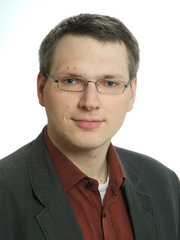
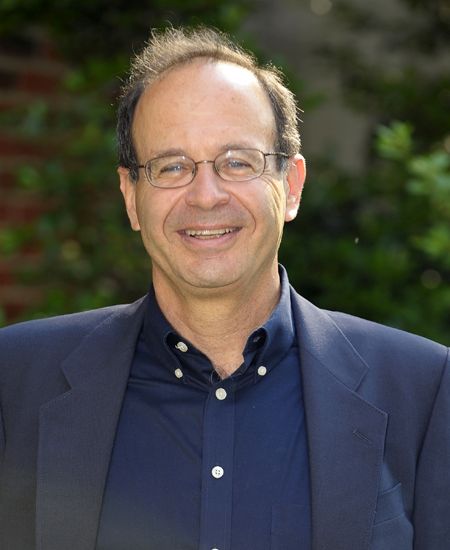
Henrik Sandberg is a Professor at the Division of Decision and Control Systems , KTH Royal Institute of Technology , Stockholm, Sweden. He holds the title of Deputy Head of Division and is affiliated with the School of Electrical Engineering and Computer Science . Education: MSc in Engineering Physics (1999) PhD in Automatic Control (2004) from Lund University Postdoctoral position at Caltech (pre-2007) Research Interests: Focus on cyber-physical systems security , power systems , model reduction , and fundamental limitations of control systems . Key sub-areas include attack detection , networked control , privacy-preserving estimation , and resilient control architectures . Publications: Over 150 papers across IEEE Transactions and Automatica , covering topics like stealthy attacks , distributed control , LQG optimization , and thermodynamic costs in filtering . Recent work includes LWE-based encrypted control and Bayesian deception mechanisms . Scientific Awards: Best Student Paper Award Finalist at IEEE CASE 2014; Best Student-Paper Award at IEEE CDC 2004. Grants & Projects: Leads the DYNACON project (WASP Cybersec cluster) and collaborates on CERCES (critical infrastructure resilience). Serves as examiner for multiple advanced courses in cybersecurity and control systems. Contact: Email: hsan@kth.se Phone: +46 (0)8 790 7294 Room: A:607, Malvinas Väg 10, Stockholm
Daniel Dominic Kaplan Sleator is a Professor of Computer Science at Carnegie Mellon University's School of Computer Science. He maintains an office in the Gates-Hillman Center (7205 Gates-Hillman) and teaches various courses in algorithms and theoretical computer science. Professor Sleator's research spans several areas of theoretical computer science and algorithms. His primary interests include: Algorithms and Data Structures Amortized Analysis and Competitive Analysis Persistent and Self-Adjusting Data Structures Computational Geometry and Combinatorial Optimization Combinatorial Game Theory and Mathematical Games Music Analysis using Computational Methods His extensive publication record shows a consistent focus on efficient data structures and algorithms. Over the years, his work has evolved from foundational data structures like splay trees and skew heaps to applications in diverse areas such as music analysis and combinatorial games. A notable trend in his work is the development of self-adjusting data structures that achieve excellent amortized performance without maintaining explicit structural constraints. His papers on splay trees, skew heaps, and persistent data structures have become classics in the field. Professor Sleator has made significant contributions across multiple domains of computer science. His work on competitive algorithms for paging and list update problems has been particularly influential, establishing fundamental results in online algorithms. His research extends beyond traditional computer science into interdisciplinary areas like computational music theory, demonstrating the broad applicability of algorithmic thinking. He teaches a variety of courses including Algorithms 15-451/651, Competition Programming 15-295, and specialized topics like mathematical games.
Dr. Liang Cheng is the Department Chair and Professor in the Department of Electrical Engineering and Computer Science at the University of Toledo. He leads a department with ~700 students across CS, CSE, and EE programs. His research focuses on Cyber-Physical Systems (CPS), IoT, AI/ML, and intelligent infrastructure, supported by over $30M in funding from NSF, DOE, DOT, and industry. Notable projects include CPS Breakthrough initiatives and underground sensing systems. He co-edited a multidisciplinary book on Underground Sensing and contributed to smart grid cybersecurity. Dr. Cheng has held leadership roles at Lehigh University, shaping faculty governance and equity policies. His 100+ publications span networking, real-time systems, and sensor networks. He advises on funded projects totaling $30M+ and has pioneered pedagogical approaches in computer science education. Research Interests: Cyber-Physical Systems (CPS): Focuses on autonomous drones, energy systems, and real-time infrastructure Networking: Expertise in TSN, DTN, and wireless protocols Cybersecurity: SCADA systems, PLC attack detection, and blockchain energy modeling Underground Sensing: Geo-sensing via wireless signals and subsurface tomography Grants & Projects: Over 20 sponsored projects including NSF CPS Breakthrough (2018-2023), ABB smart grid projects, and DARPA-funded EDIFY systems. Key contributions include reconfigurable wireless architectures and network calculus tools for real-time systems. Teaching: Courses span senior design, compiler design, parallel computing, and wireless sensor networks. Developed pedagogical patterns for non-CS programming education. Awards: Recognized for leadership in academic governance and interdisciplinary research collaboration.
Ali Vakilian is a Research Assistant Professor at the Toyota Technological Institute at Chicago (TTIC), with a strong academic background in theoretical computer science and algorithms. He will join the Department of Computer Science at Virginia Tech as an Assistant Professor in Fall 2025. His research bridges algorithmic theory and machine learning, focusing on scalable, fair, and efficient algorithms for massive data. Education: Ph.D. in EECS, Massachusetts Institute of Technology (MIT), advisors: Erik Demaine and Piotr Indyk M.S. in Computer Science, University of Illinois at Urbana-Champaign (UIUC), advisor: Chandra Chekuri B.S. in Computer Engineering, Sharif University of Technology Research Interests: Ali Vakilian's work centers on the algorithmic foundations of machine learning and data science. He develops streaming, sketching, and sublinear-time algorithms for massive datasets, and pioneers learning-augmented algorithms that use machine learning predictions to improve performance while maintaining worst-case guarantees. His research in trustworthy ML includes algorithmic fairness, fair clustering, and learning with strategic agents. He also contributes to combinatorial optimization and approximation algorithms for network design, set cover, and low-rank approximation. His recent publications (2023–2025) show a consistent focus on fair clustering (individual and group fairness), streaming graph algorithms , learning-augmented methods , and frequency estimation . These works appear in top venues such as NeurIPS, ICML, SODA, and ICALP, often with recognitions like oral or spotlight presentations. Scientific Awards: Outstanding Student Paper Highlight Award, AISTATS 2024 Notable-top-25% paper, ICLR 2023 Oral presentation, AISTATS 2024 Spotlight presentation, NeurIPS 2023 Advising and Grants: Ali Vakilian mentors several students and interns, including summer interns at TTIC and Fatima Fellows. His research is supported by the National Science Foundation (TRIPODS program), as noted in the press coverage of his work on LearnedSketch. He actively contributes to the academic community through advising, organizing workshops (e.g., Algorithms with Predictions, Learning-Augmented Algorithms), and serving on program committees (e.g., NeurIPS, ICML, AISTATS). Labs and Teams: He is affiliated with the theory and algorithms group at TTIC and collaborates with researchers at MIT, UIUC, and other institutions. His work on learning-augmented algorithms has led to influential workshops and collaborations with leading figures such as Piotr Indyk and Erik Demaine.
Debmalya Panigrahi is a Professor and Associate Chair in the Department of Computer Science at Duke University. He holds a PhD in Theoretical Computer Science from MIT and has prior affiliations with Microsoft Research, Bell Labs, and the Simons Institute for Theory of Computing. His research focuses on algorithms, particularly graph algorithms, algorithms under uncertainty, and learning-augmented methods. He has received NSF CAREER and other awards, and his work spans peer-reviewed publications in top venues like STOC, FOCS, and SODA. He advises PhD students and mentors postdocs, emphasizing theoretical contributions with practical applications. His teaching includes courses on approximation algorithms, graph algorithms, and discrete mathematics. Education: PhD (MIT, advised by David Karger), MSc (Indian Institute of Science, advised by Ramesh Hariharan), BSc (Jadavpur University). Research highlights include fastest algorithms for graph connectivity, learning-augmented approximation methods, and online algorithms. Funded by NSF, ARO, Google, and others. Current projects explore network reliability, hypergraph algorithms, and algorithmic fairness. His lab collaborates across theory, AI/ML, and databases at Duke. Recent Grants: NSF CCF-2006512, CCF-1618286, CCF-1350537 Labs/Teams: Duke Algorithms Lab, Theory Group, Collaborations with CS-Econ and AI/ML groups Publications span 150+ papers, with 5+ journal articles in SIAM Journal of Computing and ACM Transactions. Recent focus on integrating machine learning into classical algorithms to improve worst-case performance bounds. Advised 10+ PhD students, many now in academia (e.g., UI Chicago, UT Dallas) and industry (Google, Microsoft).
Björn Brandenburg is a researcher at the Max Planck Institute for Software Systems (MPI-SWS) in Kaiserslautern, Germany. His work focuses on real-time systems, scheduling algorithms, and operating system design, with a particular emphasis on predictable resource allocation and performance guarantees in multiprocessor and cyber-physical environments. His research interests include real-time response-time analysis (e.g., PROSA ), locking protocols for multiprocessor systems, side-channel mitigation in cloud environments, and the verification of real-time scheduling policies. He has contributed to foundational studies on deadline failure probabilities, self-suspending tasks, and predictable real-time Linux implementations. Scientific awards include recognition for outstanding papers on TimerShield (2017) Offline Equivalence (2017) . His work intersects with practical systems like LITMUSRT and ROS 2, aiming to bridge theoretical guarantees with real-world applications in safety-critical and distributed real-time systems.
Helen Xu is an Assistant Professor at Georgia Tech's School of Computational Science and Engineering (College of Computing). She holds a Ph.D. from MIT (2022) under Charles E. Leiserson and was a Grace Hopper Postdoctoral Fellow at Lawrence Berkeley National Lab (2022). Her research focuses on parallel algorithms, cache-efficient data structures, and high-performance computing. Xu has interned at Microsoft Research, NVIDIA Research, and Sandia National Laboratories, and her work has been supported by prestigious fellowships including the National Physical Sciences Consortium and Chateaubriand awards. **Education**: Ph.D., Computer Science, MIT, 2022 Postdoctoral Research, Lawrence Berkeley National Lab (2022) **Research Interests**: Parallel and cache-friendly algorithms Dynamic graph and data structure optimization Algorithm performance engineering Sparse matrix/tensor operations **Awards**: Grace Hopper Postdoctoral Scholar (2022), Best Artifact Award (PPoPP 2024), National Physical Sciences Consortium Fellowship, Chateaubriand Fellowship. **Advising & Teaching**: Advises PhD/M.S. students in parallel computing and high-performance systems. Teaches courses like CSE 6220 (Introduction to HPC) and CSE 6230 (HPC Tools). Supervised MIT M.Eng. projects on BP-Trees and parallel prefix sums. **Labs/Teams**: Active in Georgia Tech's High-Performance Computing community, collaborating with researchers like Aydın Buluç and Prashant Pandey on graph containers and dynamic data structures.
Uzi Vishkin is a Professor at the University of Maryland's Institute for Advanced Computer Studies (UMIACS) and Department of Electrical and Computer Engineering, with additional affiliation in the Department of Computer Science. His work focuses on parallel computing, including the PRAM-On-Chip vision to bridge parallel algorithms and hardware. He holds a D.Sc. from Technion (1981), M.Sc. and B.Sc. in Mathematics from Hebrew University (1975/1974). Research interests span parallel algorithms, PRAM (Parallel Random Access Machine) architecture, machine learning applications, and pattern matching. His PRAM-On-Chip project aims to create a coherent computing stack for many-core processors. Vishkin has contributed to theoretical foundations and practical implementations, including the XMT architecture and compiler. He has been recognized with ACM Fellow (1996), Highly Cited Researcher (2003), and National Academy of Inventors Fellow (2024). Awards highlight his pioneering work in parallel algorithms and computing systems. Teaching spans courses like Parallel Algorithms and Mathematical Foundations for Computer Engineering. He emphasizes parallel algorithmic thinking in education and has developed teaching materials for high school and university levels. Key projects include the XMT architecture, simulations, and tools for parallel programming. His work integrates algorithmic theory with hardware design to address programming challenges in many-core systems.
Immanuel Trummer is a Professor of Computer Science at Cornell University, specializing in database systems, query optimization, and applications of large language models (LLMs) and quantum computing. He leads research projects such as DB-BERT, UDO, and SkinnerDB, focusing on automated database tuning, adaptive query processing, and leveraging LLMs for code synthesis and system optimization. His research interests span quantum computing for database optimization, cost-efficient LLM utilization, and voice-based data exploration. Key contributions include developing systems like CEDAR for claim verification, CodexDB for LLM-driven code generation, and ThalamusDB for multimodal data querying. Trummer has received prestigious awards, including the NSF CAREER Award (2023-2028) and the Best Demonstration Award at BDA 2020. His work has been funded by NSF, Google, Huawei, and others, supporting projects like quantum-index selection and misinformation detection. He advises graduate students in database systems and teaches advanced courses such as CS 6320 (Advanced Database Systems) and CS 7390 (Seminar in Database Systems). His research lab hosts open-source tools like JoinGym and maintains extensive collaborations in industry and academia.
Robert M. Weikle, II is a Professor in the Charles L. Brown Department of Electrical and Computer Engineering at the University of Virginia, with a courtesy appointment in the Department of Physics. He earned his B.S. from Rice University (1986), M.S. (1987), and Ph.D. (1992) in Electrical Engineering from Caltech, followed by postdoctoral work at Chalmers University of Technology (1992). His research focuses on millimeter-wave and terahertz electronics , applied electromagnetics, integrated antennas, low-noise sensors, and heterogeneous integration of compound semiconductors. His work bridges electronics and photonics for spectrum access, with applications in astronomy, spectroscopy, and metrology. He has published extensively on micromachined silicon substrates, superconducting materials, and emerging technologies. Scientific Awards: IEEE Microwave Prize (1993) David A. Harrison III Award (1999) University of Virginia All-University Outstanding Teaching Award (2000) Edlich-Henderson Innovator of the Year (2016) Fulbright Scholar (2001) As Chief Technology Officer and co-founder of Dominion Microprobes, Inc., he commercializes micromachined wafer probes for high-frequency metrology. His lab, located in E220 Thornton Hall and the Jesse W. Beams Physics Building, has produced 15+ recent publications on submillimeter-wave devices, THz probes, and calibration techniques.
Christian Coester is an Associate Professor of Computer Science at the University of Oxford and a Tutorial Fellow at St Anne's College. His research focuses on theoretical computer science, particularly in the design and analysis of algorithms for problems involving uncertainty and incomplete information. His primary research areas include: Online algorithms, with groundbreaking work on the k-server problem (including refuting the randomized k-server conjecture, which earned the STOC 2023 Best Paper Award) Learning-augmented algorithms (algorithms with predictions) that leverage machine learning predictions while maintaining robustness guarantees Fundamental problems such as the k-taxi problem, metrical task systems, and online shortest paths Coester's theoretical work aims to develop algorithms with provable performance guarantees, particularly focusing on competitive ratios that measure worst-case performance against optimal offline solutions. His research often addresses problems that are 'simple to state and hard to solve,' leading to techniques with broad applicability across theoretical computer science. His publications span top venues including STOC, FOCS, SODA, and ICML, showing consistent contributions to both classical online algorithms and the emerging field of learning-augmented algorithms. The publications reveal a strong focus on metric spaces, competitive analysis, and the integration of prediction models into traditional algorithmic frameworks. Coester has received significant recognition including the STOC 2023 Best Paper Award and a substantial ERC Starting Grant (EUR 1.5M) for 'Challenges in Competitive Online Optimisation' (2025-2029). He actively supervises PhD students and welcomes inquiries from mathematically skilled candidates interested in theoretical computer science.
Stefano Grivet-Talocia is a Full Professor at the Department of Electronics and Telecommunications at the Polytechnic University of Turin, where he also serves as Director of the Doctoral School and President of the Doctoral School Council. He is a member of the Interdepartmental Center SmartData@PoliTO - Big Data and Data Science Laboratory, the University Committee for Research, Technology Transfer and Services to the Territory, and the Commission for the Promotion of Library, Archive and Museum Heritage. His academic career spans over two decades at Politecnico di Torino, where he has established himself as a leading researcher in electromagnetic modeling and signal integrity. Grivet-Talocia earned his Laurea degree (summa cum laude) in Electronic Engineering in 1994 and his Ph.D. in Electronic and Communication Engineering in 1998, both from the Polytechnic University of Turin. Between 1994 and 1996, he conducted research at NASA/Goddard Space Flight Center in Greenbelt, Maryland. His educational background laid the foundation for his expertise in electromagnetic modeling, wavelet analysis, and signal processing. His research focuses on behavioral modeling, electromagnetic compatibility, macromodeling, model order reduction, numerical modeling, passivity, power integrity, signal integrity, transmission lines, and wavelets . Grivet-Talocia is particularly renowned for his work on passive macromodeling of interconnect structures, development of the TOPLine technique for transmission line simulation, and pioneering contributions to passivity enforcement algorithms. He has co-authored the first book entirely dedicated to Macromodeling (2016) and developed innovative approaches to waveform relaxation and wavelet-based signal processing. His recent publications (2024-2025) demonstrate continued leadership in model order reduction, with significant contributions to data-driven modeling of linear and nonlinear systems, power integrity analysis, and electromagnetic compatibility. His work spans both theoretical advances in numerical methods and practical applications in circuit design, with strong industry relevance particularly for semiconductor and electronic design automation companies. IEEE Fellow (2018-present) Three Intel SRS Grants (2022-2024) Three IBM SUR Grant Awards (2007-2009) Best Associate Editor Award - IEEE Transactions on Components, Packaging and Manufacturing Technology (2020) Multiple Best Conference Paper Awards (2006-2020) URSI Young Scientist Awards (1999) Ranked among the "top 2% worldwide researchers" (Stanford) since 2019 Grivet-Talocia actively supervises doctoral students including Michele Cusano, Sara Paknezhad Panahi, Antonio Carlucci, and Kun Zhao. He has secured numerous research grants from competitive national calls (PRIN) and commercial contracts with industry partners including Intel, IBM, Nokia, Hitachi, Infineon, and Cadence. His technology transfer activities include co-founding the spin-off IdemWorks (2007-2016), which was acquired by CST in 2016. He also developed the autoCircuits web service for automated circuit problem generation, widely used in electrical engineering education. He leads the EMC Group (Electromagnetic Compatibility) at DET and has been instrumental in establishing the Compact Dynamical Modeling research area. His work has practical applications in high-speed electronics design, with algorithms embedded in commercial tools like IBM PowerSPICE. Grivet-Talocia maintains strong industry connections through his research projects and serves as Associate Editor for IEEE Transactions on Components, Packaging and Manufacturing Technology.
Aliasghar Arabmaldar is an Assistant Professor in Business Analytics and Systems (BAS) at the Hertfordshire Business School, University of Hertfordshire. He holds a PhD in Operations Research from the University of Sistan and Baluchestan (2017), an MSc in Applied Mathematics-Operations Research from the University of Guilan (2011), and a BSc in Applied Mathematics from the same institution (2009). His research focuses on robust optimization, data envelopment analysis (DEA), decision-making under uncertainty, and performance evaluation in complex systems. Key research interests include: Developing robust DEA models to handle uncertainty in data Resilience-efficiency trade-offs in retail logistics Network production processes and efficiency measurement Integration of undesirable outputs in performance evaluation Recent work emphasizes application in retail management, oil industries, and higher education sectors. His 2025 project, 'Enhancing Research Publication Skills Through Writing Retreats,' highlights his commitment to academic development. Peer-reviewed contributions appear in top journals like European Journal of Operational Research and Expert Systems with Applications. He serves as a reviewer for 12+ journals including OMEGA and Operations Research Spectrum, demonstrating his influence in operational research and analytics.
Dr. Andrea Bastoni is a Postdoctoral Researcher and Research Fellow at the Chair of Cyber-Physical Systems in Production Engineering at Technical University of Munich (TUM), Faculty of Mechanical Engineering. He is also the CTO and co-founder of Minerva Systems , developing operating system solutions for AI-ready embedded applications. His expertise spans real-time operating systems, cyber-physical systems, and predictable system design for heterogeneous platforms. His research focuses on enhancing predictability of memory hierarchies in complex SoCs through techniques like memory bandwidth regulation and cache partitioning. This work has industrial applications in safety-critical domains such as avionics and railways, where he contributes to certifiable hypervisors and operating systems. As former Software Architect of the PikeOS hypervisor at SYSGO GmbH (2012-2020), he specialized in DO-178C, IEC 61508, and EN 50128 standards. His academic background includes a Ph.D. in Computer Engineering from the University of Rome Tor Vergata (2007-2011), where he developed LITMUS^RT as part of UNC's Real-Time Systems Group during a visiting researcher period (2009-2010). His publications reflect ongoing work on Multicore Real-Time Scheduling , Mixed-Criticality Task Isolation, and Arm DynamIQ shared unit analysis. He actively participates in program committees for conferences like RTSS, DSN, and DATE.
Chester Rebeiro is an Associate Professor at the Department of Computer Science and Engineering within the Indian Institute of Technology Madras . His work spans hardware and software security with a focus on cryptographic implementations and microarchitectural vulnerabilities. Research interests include hardware security, applied cryptography, side channel analysis, and operating system security. He develops frameworks for automatic vulnerability detection and mitigation in cryptographic systems. Editorial Board: Associate Editor at Journal of Hardware and Systems Security (Springer, 2021-2024) Conference Leadership: General Co-Chair for SPACE 2024, Program Co-Chair for ATS 2024, and Program Co-Chair for INDOCRYPT 2023 Professional Activities: Organizer of e-CTF Embedded Capture The Flag and contributor to cybersecurity workshops across India and abroad Scientific contributions highlight two major awards: a Distinguished Paper Award at USENIX Security 2024 and a Best Paper Award at IEEE HOST 2020. His research focuses on practical security solutions for processors and cryptographic systems. Advising includes mentoring 11 PhD students and 7 MS by Research candidates, with notable co-guided projects in fault attack detection and side-channel mitigation. He actively contributes to educational initiatives through courses on Secure Processor Microarchitecture and Operating Systems.