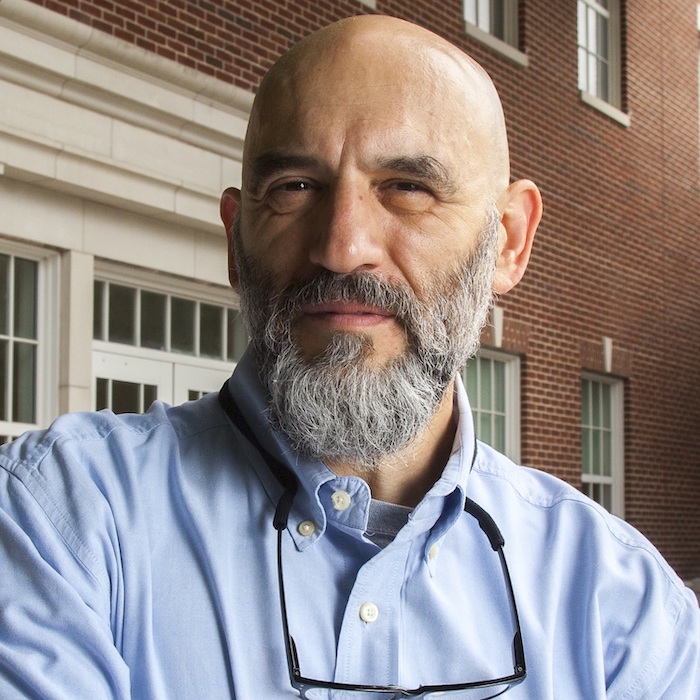
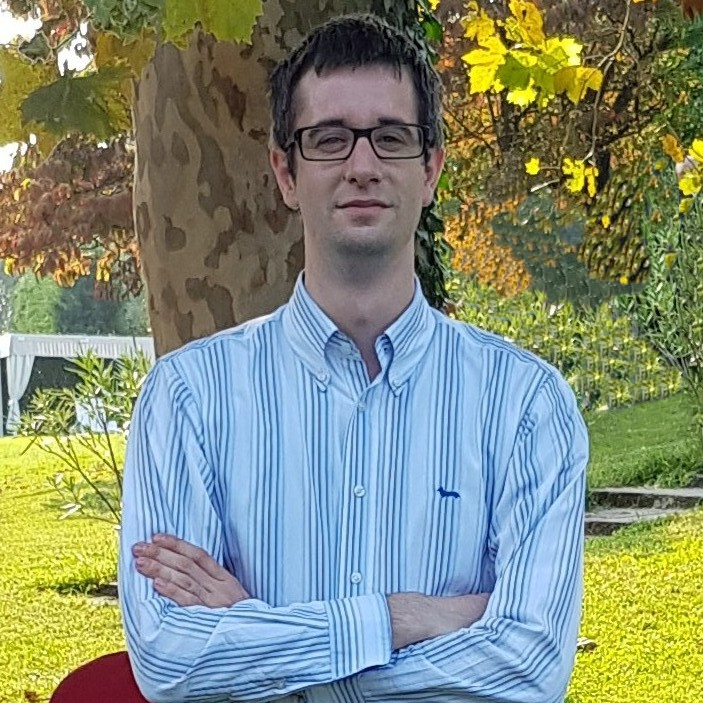
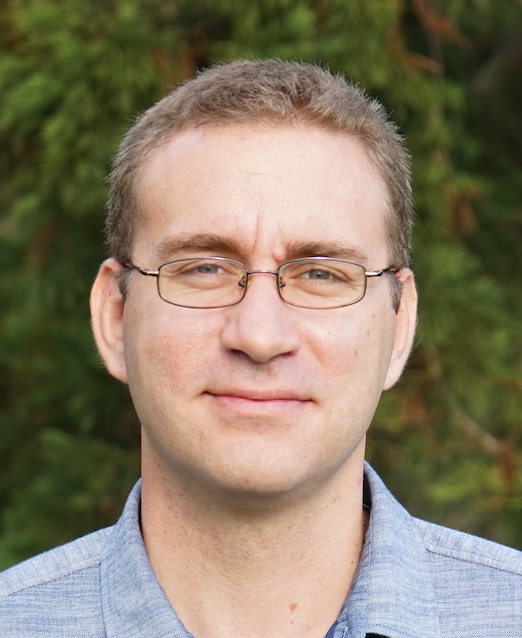
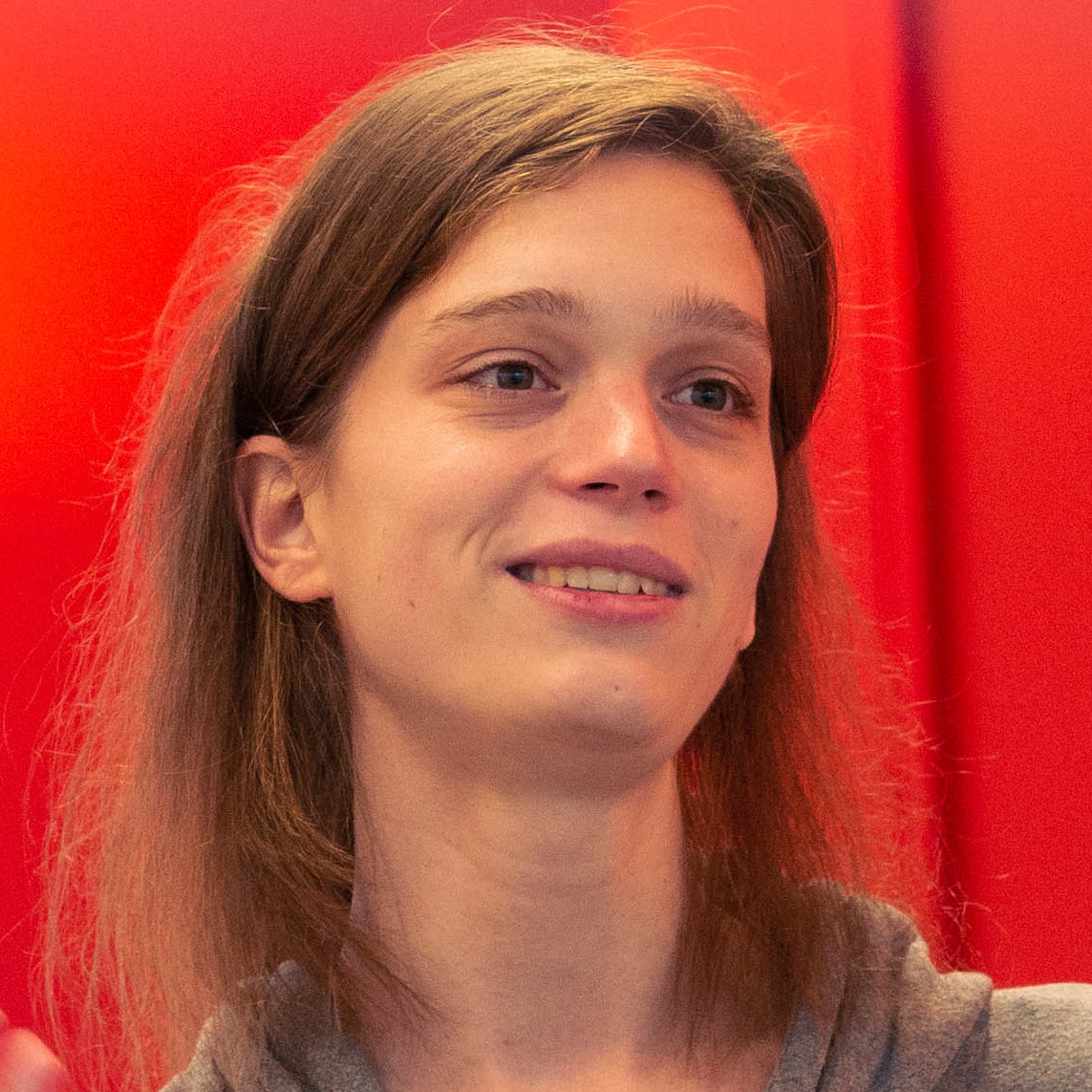
Kartik Nagar is an Assistant Professor at the Department of Computer Science and Engineering, IIT Madras . He specializes in developing verification and analysis techniques to enhance the reliability, security, and efficiency of computer systems, focusing on concurrent and distributed systems, computer architecture, and real-time systems.
Halit Uster is Professor of Operations Research & Engineering Management at SMU’s Lyle School of Engineering and Professor of Civil & Environmental Engineering (by courtesy). A 2025 IISE Fellow, he also serves as Fellow of SMU’s Hunt Institute for Engineering and Humanity, where he leads large-scale optimization research with strong societal impact. Education Ph.D. in Management Science/Systems – McMaster University, Canada M.A. in Business Administration (Production/Operations Management) – Hacettepe University, Turkey B.S. in Mechanical Engineering – Middle East Technical University, Turkey Research Interests Uster develops optimization models and efficient algorithms for the design and analysis of networked systems. His work spans: Electric-vehicle charging and wireless power-transfer networks Emergency logistics and disaster-preparedness planning Bio-energy and biomass supply-chain networks Closed-loop supply chains with recycling and remanufacturing Relay and multi-commodity transportation networks to mitigate driver shortages Wireless sensor networks for environmental monitoring Publication Trends Over the past decade Uster has published extensively in Transportation Science , IISE Transactions , Transportation Research Part E , and Annals of Operations Research . His recent articles collectively advance decomposition-based exact algorithms (notably Lagrangean and Benders schemes), bilevel and robust optimization, and stochastic modeling of supply and demand uncertainty, all applied to socially critical infrastructure systems. Scientific Awards & Honors IISE Fellow (2025) Caterpillar Teaching Excellence Award, Texas A&M University (2011) Eshbach Society Distinguished Visiting Scholar, Northwestern University (2009) Faculty Appreciation Awards, INFORMS Student Chapters (2004, 2009) Multiple research features in IE Magazine (2008, 2010, 2017) Daniel H. Wagner Prize Finalist (2008) Moving Spirit Award, INFORMS (2007) Outstanding Faculty Member – University of Alabama (1999-2000) NSERC Postgraduate Scholarship (1997-1999) Grants & Doctoral Advising Uster has secured over $2 million in funding from NSF, USDA and industry, including four NSF grants since 2015 focused on disaster-preparedness logistics, EV-charging infrastructure, and biomass supply chains. He has graduated 17 PhD students who now hold positions in academia (IIM Udaipur, ITESM Mexico, St. Mary’s University) and industry (ExxonMobil, Norfolk Southern, FedEx, Sabre, NetJets, JD.com, BNSF Railway, etc.). Professional Service & Editorial Roles He is Department Editor of IISE Transactions on Supply Chains and Logistics (2024–present) and Associate Editor of Transportation Science (2018–present), previously serving on the editorial boards of IISE Transactions on Scheduling and Logistics and Sustainability Analytics and Modelling . He has chaired or co-chaired numerous INFORMS committees and conferences, including the upcoming TSL 2026 meeting at MIT.
Phillip Raffeck is a researcher at the Department of Computer Science (INF) within the Chair of Computer Science 4 (System Software) at Friedrich-Alexander-Universität Erlangen-Nürnberg (FAU). His work focuses on real-time systems, embedded systems, and energy-aware computing, with a particular emphasis on worst-case execution time (WCET) and energy consumption (WCEC) analysis. He has contributed to projects like the Invasive Run-Time Support System (iRTSS) and tools for energy-neutral system design. Department: Department of Computer Science (INF) University: Friedrich-Alexander-Universität Erlangen-Nürnberg (FAU) Position: Researcher His research spans real-time systems , multi-core optimization , and power-aware computing . Key contributions include migrative synchronization protocols , energy-neutral operating systems , and code metrics for timing analysis . Recent work explores carbon-aware co-design and predictable migration in embedded environments. Publications highlight collaborations with teams across Germany and international symposia like RTSS, WCET, and EMSOFT. His article trends reflect advancements in intermittent execution models , transactional networking , and static analysis toolchains . He serves as a secondary reviewer for conferences including RTAS and ISORC. Phillip supervises graduate theses on topics such as DMA-based OS offloading , dynamic migration , and interrupt latency analysis . He contributes to teaching courses like Betriebsystemtechnik and Systemnahe Programmierung in C at FAU.
Federico Reghenzani is an Assistant Professor at Politecnico di Milano in the Department of Electronics, Information and Bioengineering. His research focuses on computer science, embedded systems, fault tolerance, high-performance computing, real-time systems, and compiler technology. He leads the HEAP Lab where his team investigates reliability engineering and hardware-software co-design for safety-critical applications. Reghenzani's research examines software-based approaches to hardware fault tolerance, compiler technologies for reliability enhancement, and resource management in high-performance computing environments. His work has significant applications in aerospace systems, real-time embedded platforms, and next-generation computing architectures. His publications demonstrate a consistent focus on improving system reliability through compiler techniques, fault injection methodologies, and hardware-software co-design. The research spans theoretical frameworks, practical implementations, and experimental validation across diverse computing environments.
Jean-Yves Le Boudec is a Professor at École Polytechnique Fédérale de Lausanne (EPFL), affiliated with the School of Computer and Communication Sciences and the Institute of Electrical Engineering. He has been a key figure in advancing the theory and application of network calculus and deterministic networking, contributing significantly to standards such as IEEE Time-Sensitive Networking (TSN) and IETF DetNet. His research focuses on network calculus , time-sensitive and deterministic networking , traffic regulation , worst-case delay analysis , and cyber-physical systems , with cross-cutting applications in smart grids , real-time communication , and network security . He has co-authored foundational texts on network calculus and developed theoretical frameworks for traffic regulators, service curves, and delay bounds in complex networked systems. The recent publications highlight a strong trend in analyzing and improving performance guarantees in deterministic networks, including scheduling mechanisms like Deficit Round-Robin and Cyclic Queuing and Forwarding, traffic shaping via interleaved regulators, and security against time-synchronization attacks in power systems. The work spans theoretical modeling using stochastic and min-plus/max-plus algebra, practical algorithm design, and application to critical infrastructure. IEEE Fellow Le Boudec has advised numerous researchers and PhD students, including Ehsan Mohammadpour, Ludovic Thomas, and Seyed Mohammadhossein Tabatabaee. His collaborative projects often involve grants related to European and Swiss research initiatives in networking and smart grid technologies. He leads a research group focused on networked systems at EPFL, contributing to both theoretical advances and real-world implementations in industrial and energy-critical networks. His lab work centers on modeling and verification of time-sensitive network behaviors, integrating formal methods with practical experimentation. The team investigates regulators, shapers, and synchronization mechanisms, aiming to ensure robustness, predictability, and security in next-generation communication infrastructures. Future work continues to explore the interplay between communication, control, and energy systems in highly reliable environments.
Milos Nikolic is a Lecturer in Database Systems at the School of Informatics, University of Edinburgh. He is a member of the Database Group and the Laboratory for Foundations of Computer Science. Prior to joining Edinburgh, he was a Departmental Lecturer in the Department of Computer Science at the University of Oxford. He holds a PhD in Computer Science from EPFL. Research Interests: Milos Nikolic's research focuses on databases and large-scale data management, with emphasis on incremental computation, in-database learning, stream processing, and query compilation. His work explores how complex analytical queries—such as SQL, linear algebra, and machine learning tasks—can be efficiently maintained and evaluated in dynamic and distributed environments. He develops novel techniques in query optimization and compilation to enable real-time analytics over evolving data. His recent publications demonstrate a strong trend in dynamic query evaluation, particularly around conjunctive and hierarchical queries under updates, incremental view maintenance (e.g., F-IVM), and scalable processing of nested and biomedical data. His work often leverages theoretical foundations to achieve worst-case optimal performance, grounded in conjectures like the Online Matrix-Vector Multiplication (OMv) hypothesis. Scientific Awards: Best Paper Award, ICDT 2019 Advising and Grants: Milos is actively seeking PhD students to work on data management topics. While no formal list of advisees is provided, he collaborates extensively with researchers such as Dan Olteanu, Ahmet Kara, and Haozhe Zhang. His projects, including Adaptive Query Processing , Incremental Maintenance of Complex Analytics , and Declarative Data Pipelines (industry-supported), suggest ongoing grant and industry collaborations. Labs and Teams: He is a key member of the Database Group and the Laboratory for Foundations of Computer Science at the University of Edinburgh, contributing to cutting-edge research in foundational and applied database systems.
Petteri Kaski is an Associate Professor at the Department of Computer Science, School of Science, Aalto University , and a member of the Helsinki Institute for Information Technology (HIIT) . His research focuses on theoretical computer science, particularly in algorithm design, exact and parameterized algorithms, algebraic algorithms, and combinatorics. Doctoral Degree in Engineering and Technology, Helsinki University of Technology (2005) Licentiate Degree in Engineering and Technology, Helsinki University of Technology (2002) Master's Degree in Engineering and Technology, Helsinki University of Technology (2001) His recent work explores tensor scaling, Johnson-Lindenstrauss transforms, Hamiltonian cycles, and computational complexity, with contributions to polynomial-time algorithms, finite field computations, and combinatorial optimization. Notable awards include the Best Paper Award at ICALP 2017 , an ERC Starting Grant (2014) , and the Kirkman Medal (2007) . He has served on scientific committees for conferences like STACS 2025 and ICALP 2024 , and collaborated with institutions such as the IT University of Copenhagen and Universität Regensburg . Key Research Areas : Theoretical Computer Science, Algorithm Design, Exact Algorithms, Algebraic Computation, Graph Theory, Combinatorics
Jacob Holm is a Tenure Track Assistant Professor in the Department of Computer Science at the University of Copenhagen, specializing in the Algorithms and Complexity research section. His work focuses on theoretical computer science with emphasis on graph algorithms and data structures. Dr. Holm's research interests span multiple areas of theoretical computer science: Dynamic graph algorithms, particularly for planar graphs Biconnectivity and triconnectivity in dynamic settings Efficient data structures for graph problems Parallel and distributed algorithms for graph processing Computational geometry and pursuit-evasion problems His publication record shows 25 research outputs including 17 article in proceedings, 6 journal articles, 1 book chapter, and 1 Ph.D. thesis. His work demonstrates consistent contributions to theoretical computer science, with numerous publications in top venues like the ACM-SIAM Symposium on Discrete Algorithms (SODA). Analysis of his recent publications reveals a strong focus on worst-case performance guarantees for dynamic graph problems, particularly in planar graph settings where maintaining efficiency during updates presents significant theoretical challenges. Dr. Holm maintains an active research profile with an ORCID identifier (0000-0001-6997-9251) and collaborates extensively with researchers in the theoretical computer science community, particularly with Eva Rotenberg as evidenced by multiple co-authored publications. His work bridges theoretical computer science with practical applications, developing algorithms that maintain efficiency even as graphs dynamically change.
Anish Sevekari is a Postdoctoral Associate at the University of Pittsburgh. His research focuses on machine learning, algorithms, optimization, and theoretical computer science. He investigates topics such as neural network training dynamics, generative models, algorithmic analysis beyond worst-case scenarios, and efficient inference techniques. His work bridges theoretical foundations with practical applications in areas like probabilistic modeling and combinatorial optimization. Key research interests include normalizing flows, ensemble methods, score-based learning, stochastic optimization, and combinatorial algorithms. His recent publications explore acceleration of NCE convergence, progressive ensemble distillation, and provable benefits of score matching. He has published extensively in top-tier venues, with a focus on theoretical guarantees and practical efficiency. His research trends emphasize bridging gaps between machine learning and traditional algorithmic analysis, particularly in probabilistic frameworks and high-dimensional data problems. No scientific awards or grants are explicitly mentioned in the provided information.
Professor Daniel Axehill is affiliated with the Department of Electrical Engineering (ISY) at Linköping University, specializing in planning and optimization-based control for autonomous systems. His research bridges theoretical developments and industrial applications. His recent work focuses on robust motion planning for autonomous vehicles, optimal task and motion planning algorithms, execution-time analysis for model predictive control, and high-performance solvers for multi-parametric quadratic programming. Key methods include lattice-based planning, disturbance estimation, and real-time optimization. He contributes to the Wallenberg Autonomous Systems Program (WASP), collaborating on advancements in robotics, sensor fusion, and complex network control systems.
Nikolaos Samaras is a Full Professor at the Department of Applied Informatics, School of Information Sciences, University of Macedonia in Thessaloniki, Greece. He has been serving as director of the Computational Methodologies & Operations Research (CMOR) Laboratory since April 2016. His academic career includes positions as Assistant Professor (2007-2012) and Lecturer (2003-2007) at the same institution, and earlier as an adjacent Lecturer at the Technological Institute of Western Macedonia (1998-2000). Dr. Samaras earned his Diploma in Applied Informatics from the University of Macedonia in 1996 and his Ph.D. in Applied Informatics from the same university in 2001. His educational background forms the foundation for his extensive research in computational optimization and operations research. Professor Samaras's research focuses on the interface between computer science and operations research, with particular expertise in linear and nonlinear optimization, network optimization, integer optimization, and scientific computing including HPC and GPU programming. His work has resulted in the development of new algorithmic families for optimization problems, efficient GPU implementations of the revised simplex algorithm, and novel algorithms and software for operations research. His research spans theoretical algorithm development, practical implementation, and real-world applications across various engineering and scientific domains. His extensive publication record includes over 35 journal papers in prestigious venues such as Computers and Operations Research, European Journal of Operational Research, and Journal of Artificial Intelligence Research, more than 85 conference papers, and four textbooks (two in English and two in Greek). His work has been recognized through citations and the Thomson ISI/ASIS&T Citation Analysis Research Grant in 2005. ACM Senior Member (2016) Thomson ISI/ASIS&T Citation Analysis Research Grant (2005) Editorial board member of Operations Research: An International Journal Reviewer for numerous top journals including Mathematical Programming Computation and European Journal of Operational Research Professor Samaras has supervised four current Ph.D. students working on hybrid simplex algorithms, large-scale optimization using Apache Hadoop, algorithmic procedures in matrix theory, and smoothed complexity analysis. He has successfully guided five Ph.D. students to completion, including Nikolaos Ploskas who won the 2014 HELORS Doctoral Dissertation Award. Additionally, he has supervised 45 master's theses and 84 bachelor's theses. His research group has secured funding from diverse sources including the European Union, Greek Secretariat of Research and Technology, and industry partners like Veltio Greece LTD. The Computational Methodologies & Operations Research (CMOR) Laboratory, which he directs, focuses on developing and implementing optimization algorithms with applications in transportation, energy systems, and business process design. The lab has produced notable software tools including Euclides and Visual LinProg, which have educational applications in linear programming.
Amine Mhedhbi is an Assistant Professor at Polytechnique Montréal in the Department of Computer Engineering and Software Engineering. He is affiliated with the Institute for Data Valorization (IVADO) and the Software Engineering for Machine Learning Applications (SEMLA) group. His research focuses on data management systems, particularly graph-structured databases, multimodal data engineering, and AI-driven query optimization. Ph.D. in Computer Science from University of Waterloo Former technical advisor to enterprise companies Prior applied research leadership at Distyl AI and internships at Microsoft Research His recent work explores integrating large language models (LLMs) into database systems, optimizing SQL generation, and advancing graph database architectures. Key projects include GraphflowDB and FlockMTL , addressing scalability and declarative semantic applications. Scientific awards include: NSERC Discovery Grant with Discovery Launch Supplement (2025) Cheriton School Distinguished Dissertation Award (2024) Microsoft Research Ph.D. Fellowship (2020) VLDB Best Paper Award (2018) He supervises graduate students in database systems and machine learning applications and serves on program committees for top-tier conferences like VLDB and SIGMOD.
Sophie Huiberts is a CNRS researcher at LIMOS, Clermont Auvergne University in Clermont-Ferrand since fall 2023. Previously, she was a Simons Junior Fellow at Columbia University in New York City, hosted by Tim Roughgarden. She completed her PhD research at Centrum Wiskunde & Informatica in Amsterdam under Daniel Dadush and received her doctorate in 2022 from Utrecht University. Dr. Huiberts specializes in theoretical aspects of mathematical optimization, particularly focusing on the gap between practical performance and theoretical predictions of linear programming algorithms. Her research examines software implementations like Gurobi, CPLEX, SCIP, and HiGHS to understand why these algorithms perform better in practice than worst-case analysis would suggest. She has made significant contributions to smoothed analysis of the simplex method, establishing both upper and lower bounds on its complexity under perturbations of worst-case inputs. Analysis of her publication record shows consistent focus on bridging theoretical computer science with practical optimization methods. Her work spans linear programming theory, integer programming, combinatorial optimization, and computational geometry, with particular emphasis on understanding the geometric properties of optimization problems and the behavior of algorithms on real-world instances. Simons Junior Fellowship Dr. Huiberts maintains active engagement with the research community through social media platforms including Mastodon and Bluesky, and produces high-quality recordings of her research talks available on YouTube. She has made a conscious decision to stop air travel since 2023 due to climate concerns, demonstrating commitment to sustainable research practices while maintaining scientific connections through digital means. She is affiliated with LIMOS (Laboratoire d'Informatique, de Modélisation et d'Optimisation des Systèmes), a research laboratory at Clermont Auvergne University focused on computer science, modeling, and optimization systems, where she continues her investigations into the theoretical foundations of practical optimization algorithms.
Professor Daniel P. Robinson holds the position of Professor and MS Program Director in the Department of Industrial and Systems Engineering at Lehigh University. Previously, he served as a Postdoctoral Researcher at the University of Oxford and Northwestern University, and as an Assistant Professor at Johns Hopkins University. His research focuses on computational optimization and its applications in data science, machine learning, and computer vision, with a particular emphasis on healthcare and algorithm design. Education: Ph.D. in Mathematics from the University of California, San Diego; postdoctoral training at Oxford University and Northwestern University. Research Interests: Dr. Robinson’s work bridges mathematical optimization and data science, emphasizing algorithm design for continuous optimization problems. His areas include computational optimization, machine learning, data science, and computer vision applications. He has contributed to fair machine learning frameworks, stochastic optimization algorithms, and neural network compression techniques. His publications span top-tier journals and conferences such as Mathematical Programming, SIAM Journal on Optimization, and ICML. Notable grants include NSF funding for optimization research. He co-founded Johns Hopkins’ Mathematical Institute for Data Science (MINDS) and helped establish the JHU Master of Science in Data Science program. Scientific Awards: Twice recipient of the Professor Joel Dean Award for Excellence in Teaching. Advising & Grants: As MS Program Director, he oversees academic programs. His grants include over $1M from the Office of Naval Research and NSF support. He collaborates on projects like scalable subspace clustering and privacy-preserving machine learning. Labs/Teams: Leadership roles in Lehigh ISE’s optimization programs, fostering interdisciplinary research in data science and optimization.
Marc Boyer is a Research Director at ONERA, the French Aerospace Lab, within the Department of Aerospace and Information Systems Technologies (DTIS). He is actively affiliated with the Université de Toulouse, where he teaches at the M2 level in computer science and engineering programs at UPS and ENSEEIHT. His research lies at the intersection of formal methods, real-time systems, and embedded networking, with a strong focus on network calculus and Time-Sensitive Networking (TSN). Institution: ONERA / DTIS Teaching Affiliations: Université de Toulouse (UPS, ENSEEIHT) Doctoral School: MITT (Mathematics, Computer Science, Telecommunications) His research interests include formal verification of real-time networks, worst-case performance evaluation, scheduling models, and deterministic networking. He has made significant contributions to the theoretical and practical application of network calculus in avionics (AFDX), automotive, and space systems. His work bridges theory and industry applications, particularly in safety-critical domains. His recent publications (2020–2024) show a consistent focus on refining network calculus models for TSN, CQF, credit-based shaping, and sporadic traffic integration. These works are published in top-tier venues such as ECRTS, RTAS, ETFA, and IEEE Transactions, indicating high impact and relevance in real-time systems research. Best Paper Award, JRWRTC 2023 Best Paper Award, ICATPN 2007 Co-chair, RTNS 2023 Program Committee Active in ECRTS, RTAS, DATE, ETFA program committees Marc Boyer supervises multiple PhD students and offers internships through the MITT doctoral school. He leads the MOIS doctoral reception team and is involved in industrial challenges like Resilient TSN. He has developed tools like NC-maude for formal analysis and contributes to open research datasets and reproducibility. His work combines theoretical rigor with practical implementation, influencing both academic and industrial standards in deterministic networking. He is also active in educational outreach, delivering lectures on digital transformation and cognitive biases in engineering, and promoting tools like Emacs for productivity.