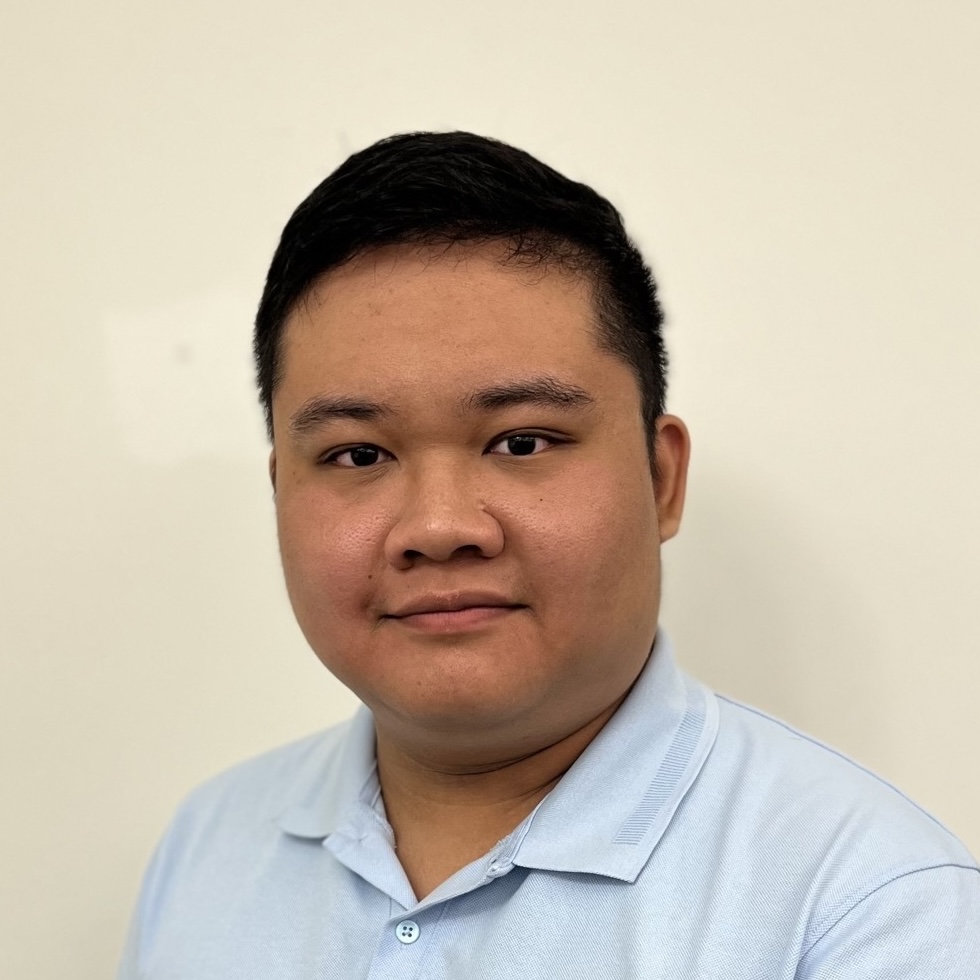
Akash Kumar is a Professor at Ruhr University Bochum, Germany, with affiliations to multiple institutions including TU Dresden and National University of Singapore. His research focuses on computer architecture, hardware acceleration, and approximate computing, with a strong emphasis on FPGA-based systems and neural network optimization. He has contributed extensively to embedded systems, mixed-criticality systems, and security in emerging technologies like reconfigurable nanodevices. His work spans cross-layer approximation methodologies, graph neural networks, and energy-efficient processing for edge AI. Collaborations with industry and academia highlight his leadership in VLSI design and secure hardware implementations. Notable contributions include frameworks for bounding time in mixed-criticality systems and resilient logic locking techniques. Research interests include hardware-software co-design, real-time systems, and efficient neural network architectures. His publications in top-tier conferences (DAC, DATE, FCCM) and journals (IEEE Trans. CAD, ACM TECS) underscore his impact in the field.
Amine Mhedhbi is an Assistant Professor at Polytechnique Montréal , where he leads the Data & AI Systems Lab . He earned his PhD in 2023 from the University of Waterloo. His work bridges data management , graph databases , and AI systems , with a focus on performance, debuggability, and user interface design for data applications. Education : PhD (University of Waterloo, 2023) Research Interests center on modern analytical data systems , including multimodal data management , language model integration , and graph query optimization . His projects like FLockMTL and GraphflowDB aim to combine semantic analysis, AI, and traditional database operations. Scientific Awards include the NSERC Discovery Grant , the Cheriton School Distinguished Dissertation Award , the VLDB Best Paper Award , and fellowships from Microsoft and Meta . Key Collaborations : Semih Salihoğlu, Jimmy Lin, Elena L. Glassman Labs & Teams : Affiliated with DAIS Lab , IVADO , and co-founded the applied research team at Distyl AI in 2023.
Heiko Falk is a Professor and Head of the Institute of Embedded Systems at Technische Universität Hamburg (TUHH). His roles include serving as Workshop Chair for the 2024 Embedded Systems Week (ESWEEK), Scientific Coordinator for the B.Sc. and M.Sc. Computer Science programs, and Deputy Head of the Board of Examiners for Computer Science and Engineering. His research focuses on real-time systems, compiler optimizations, and worst-case execution time (WCET) analysis. Key areas include multi-core architectures, cache management, energy efficiency, and hardware/software co-design. Falk's work emphasizes practical compiler techniques for improving real-time performance, such as WCET-aware memory allocation, dynamic SPM optimization, and event-driven scheduling. His publications analyze shared cache interference, preemptive/non-preemptive scheduling, and DMA-aware optimizations. Recent work explores multi-objective trade-offs between WCET, energy consumption, and code size in embedded systems. No scientific awards are explicitly listed, but his contributions to WCET benchmarking (e.g., haRTStone project) and compiler frameworks demonstrate significant impact in the field. Advising and grants: No formal advisees are listed in the provided texts. Falk's work is supported through projects like teamplay, focusing on cyber-physical systems optimization. Labs/Teams: His group operates within TUHH's Institute of Embedded Systems, collaborating on projects addressing real-time system challenges in multi-core environments.
Vivy Suhendra serves as Associate Professor of Practice and Programme Director for Master Programmes at the National University of Singapore's School of Computing, while also holding the position of Assistant Dean for Graduate Studies. Previously, she led the Singapore Cybersecurity Consortium (SGCSC) as Executive Director from 2016 to 2022, driving collaborative cybersecurity research between academia, industry, and government agencies. Her career at NUS spans over two decades, beginning as a Research Assistant before advancing to her current leadership roles. Her academic credentials include: Ph.D. in Computer Science, National University of Singapore (2009). Thesis: "Memory Optimizations for Time-predictable Embedded Software". Advisors: Abhik Roychoudhury and Tulika Mitra. B.Comp. (Honors) in Computer Science, National University of Singapore (2004). Dr. Suhendra's research integrates Software Assurance, Cybersecurity, Security and Privacy, and Embedded Systems domains. Her work bridges theoretical foundations with practical applications, particularly in national cybersecurity ecosystem development, smart grid security protocols, denial-of-service mitigation techniques, and real-time embedded system optimization. This interdisciplinary approach enables innovative solutions for critical infrastructure protection and time-predictable software execution in multi-core environments. Her 14 selected publications (2004-2020) demonstrate an evolving research trajectory from foundational embedded systems timing analysis to applied cybersecurity solutions. Early work focused on memory optimization for predictable execution in multi-core embedded systems, which naturally transitioned into cybersecurity applications for smart grids, cloud environments, and national infrastructure. This progression highlights her ability to translate low-level system expertise into high-impact security frameworks for complex real-world systems. Scientific recognition includes: Microsoft Research Asia Fellowship (2006) Valedictorian at NUS School of Computing Ph.D. Commencement (2010) While specific graduate student advising details aren't provided, her leadership as SGCSC Executive Director involved extensive mentorship across academic-industry partnerships. She has also contributed significantly to the research community through roles including Conference Chair for ESEC/FSE 2022 and Workshops Committee Member for ICSE 2024. Dr. Suhendra established the Singapore Cybersecurity Consortium as a national platform for collaborative R&D during her directorship (2016-2022). Though no personal laboratory is specified, her research leadership manifests through cross-institutional teams focused on cybersecurity innovation, particularly in critical infrastructure protection and embedded systems security where she maintains active publication records.
Frank E. Curtis is a Professor in the Department of Industrial and Systems Engineering at Lehigh University, where he has been since 2009. He holds a B.S. in Mathematics and Computer Science from the College of William and Mary (2003), an M.S. and Ph.D. in Industrial Engineering from Northwestern University (2004 and 2007), and completed a postdoctoral fellowship at New York University’s Courant Institute (2007–2009). His research focuses on developing numerical methods for large-scale nonlinear optimization, with applications in machine learning, operations research, and energy systems. Key achievements include the 2021 SIAM/MOS Lagrange Prize for Continuous Optimization (with Bottou and Nocedal) and the 2018 INFORMS Computing Society Prize (with Burke, Lewis, and Overton). He has secured significant funding from the NSF, DoE, and ONR, including a TRIPODS grant and ARPA-E awards. His work on the ARPA-E Grid Optimization Competition earned second place in 2020. Curtis’s research interests span mathematical optimization, numerical analysis, and algorithm design. His recent articles emphasize stochastic optimization, fairness in machine learning, and robust algorithm development for constrained systems. He serves as an Area Editor for Mathematics of Operations Research and Associate Editor for multiple top journals, including Mathematical Programming and SIAM Journal on Optimization . Notable grants include DoE ASCR Early Career Awards and NSF TRIPODS funding for collaborative projects with Northwestern, Boston University, and Cornell. His OptML @ Lehigh team develops cutting-edge optimization tools and frameworks for real-world applications.
Pan Xu is a tenure-track assistant professor with joint appointments in the Department of Biostatistics & Bioinformatics, Department of Computer Science, and Department of Electrical & Computer Engineering at Duke University's Pratt School of Engineering. Prior to joining Duke, he was a Postdoctoral Scholar Research Associate at the California Institute of Technology, and he earned his Ph.D. in Computer Science from UCLA. His research bridges theoretical foundations with practical applications in machine learning and artificial intelligence. Dr. Xu's research focuses on developing computationally- and data-efficient machine learning algorithms with strong theoretical guarantees, particularly in reinforcement learning, optimization, and high-dimensional statistics. His work addresses two fundamental challenges in sequential decision-making: efficient exploration with minimal interactions and robustness against distributional shifts. His research spans theoretical algorithm design, practical implementation, and real-world applications in bioinformatics and healthcare. His publication record demonstrates consistent high-impact contributions to top-tier conferences including ICML, NeurIPS, ICLR, AAAI, and AISTATS. The research trends show a progression from foundational work in non-convex optimization and multi-armed bandits toward increasingly sophisticated frameworks for robust reinforcement learning, with particular emphasis on distributional robustness, efficient exploration strategies, and practical applications. His work often bridges theoretical guarantees with empirical validation. NSF award on approximate sampling based exploration for sequential decision making Whitehead Scholar award from Duke University School of Medicine PIMCO Postdoctoral Fellowship in Data Science UCLA Outstanding Graduate Student Research Award Rising Stars in Data Science by University of Chicago Best Paper Award for Queer In AI: A Case Study in Community-Led Participatory AI at FAccT 2023 Featured Certification for Wasserstein Distributionally Robust Policy Evaluation and Learning for Contextual Bandits at TMLR Oral Presentation award at AAAI 2024 Dr. Xu actively mentors students and researchers, seeking highly motivated individuals with strong mathematical backgrounds for Ph.D. programs in Biostatistics & Bioinformatics, Computer Science, and Electrical & Computer Engineering at Duke. He has received multiple research grants including an NSF award on approximate sampling based exploration for sequential decision making. His service to the academic community includes roles as area chair for NeurIPS, ICML, ICLR, and AISTATS, as well as action editor for Transactions on Machine Learning Research. His research group develops algorithms that address fundamental challenges in sequential decision-making, with applications spanning healthcare, bioinformatics, and multi-agent systems. Current research directions include distributionally robust reinforcement learning, efficient exploration strategies, and applications of graph neural networks to biological problems.
Uriel Feige is a Professor in the Department of Computer Science and Applied Mathematics at the Weizmann Institute of Science. Born in Jerusalem, he earned his BSc from the Technion and his MSc and PhD from the Weizmann Institute under the guidance of Adi Shamir. After postdoctoral research at Princeton University and IBM T.J. Watson Research Center, he joined the Weizmann Institute in 1992. From 2004-2007, he worked with Microsoft Research's Theory Group and continues to serve as a visiting researcher there. Education: BSc: Technion MSc: Weizmann Institute of Science (under Adi Shamir) PhD: Weizmann Institute of Science (under Adi Shamir) Professor Feige's research focuses on algorithms, computational complexity, and algorithmic game theory. His work spans approximation algorithms, hardness results, and beyond worst-case analysis of combinatorial optimization problems. He has made significant contributions to the understanding of random walks on graphs, particularly in analyzing cover times and developing approximation algorithms. His research also extends to allocation problems and fairness in algorithmic game theory, while previously working on cryptography and other theoretical topics. Professor Feige's publications reveal consistent contributions to theoretical computer science with a strong emphasis on fundamental algorithmic problems. His work bridges theoretical foundations with practical implications, particularly in approximation algorithms where he has established both upper and lower bounds for various problems. Many papers focus on the interplay between graph structure and algorithmic performance. Scientific Awards: 2001 Godel Prize 2005 SIAM Outstanding Paper Prize Professor Feige has advised numerous students documented in technical reports on his website. His research has been supported by various grants enabling his theoretical contributions. He actively teaches courses including algorithms, linear programming, combinatorial optimization, approximation algorithms, and algorithmic game theory through 2024-2025. Professor Feige maintains an active research program within the Department of Computer Science and Applied Mathematics at the Weizmann Institute, where his work intersects with multiple research groups focusing on theoretical computer science and algorithms.
Ahmed Saeed is an Assistant Professor in the School of Computer Science at Georgia Institute of Technology, specializing in scalable computer networks and systems. His research spans congestion control, operating systems, LEO satellite networks, and formal methods, with a strong record of publications and active mentorship. Education: PhD in Computer Science, Georgia Institute of Technology (2019) Bachelor's in Computer and Systems Engineering, Alexandria University (2010) Postdoctoral Associate, MIT (with Prof. Mohammad Alizadeh) Research Interests: Ahmed's work focuses on the theory, design, and implementation of scalable networked systems. Key themes include: Congestion control algorithms for datacenter and WAN traffic Overload control mechanisms for microsecond-scale RPCs Performance debugging tools for datacenter applications LEO satellite network modeling and policy analysis Formal verification of network protocols and resource schedulers Recent Publications Trend: His 2024-2025 papers emphasize LEO satellite resilience and datacenter performance , with contributions to emergency failover modeling, latency debugging tools, and congestion control protocols. These works combine empirical measurement, formal modeling, and policy recommendations. Awards & Funding: NSF CAREER Award (2024) – LEO satellite variability ($600k) NSF CNS Core Awards (2022) – Edge server stacks & formal verification (total $2.38M) Google Research Award (2022) – Scalable edge systems ($80k) DARPA Risers Top 5 Poster (2022) Spec Tech Award (2023) – Nanomodular electronics routing ($40k) Teaching & Service: He regularly teaches Computer Networking I (CS 3251) and Datacenter Networks & Systems (CS 8803) . Service includes PC roles for SIGCOMM, NSDI, CoNEXT, and Networking area co-chair for JSys. Lab & Students: Ahmed leads an active research group with PhD students Peidi Song, Bhaskar Pardeshi, Sherif Abdelrazek; MS students Dhyey Thummar, Pratyush Sahu, Sammy Kapoor; and undergraduate Demi Lei. Alumni have joined industry leaders like Juniper, Microsoft, and Snowflake.
Raimund Seidel is a Professor in the Department of Computer Science at Universität des Saarlandes, leading the Chair of Theoretical Computer Science. He is actively involved in research and teaching, focusing on foundational aspects of algorithms and data structures, particularly in computational geometry. His primary research interests include theoretical computer science , design and analysis of efficient algorithms , geometric data structures , randomized algorithms , and combinatorial geometry . His work addresses fundamental problems such as planar point location, convex hull computation, and efficient encoding of triangulations. He also investigates geometric algorithms under the transdichotomous model, leveraging word-level parallelism. The selected publications reflect a long-standing contribution to computational geometry and data structure theory , with a focus on randomized methods and exact complexity analysis. His research combines theoretical rigor with practical implications for algorithm design. Award or honor not found in the provided text. Prof. Seidel has advised several students, including Alexander Malkis , Ralf Osbild , Udo Adamy , Christian Sohler , and others, many of whom have gone on to academic and research careers. No explicit information about grants or funding is available in the text. He leads a research group within the Department of Computer Science at Universität des Saarlandes, mentoring current staff such as László Kozma , Giorgi Nadiradze , and Lavinia Dinu . The group maintains active research in theoretical computer science and computational geometry.
Manos Athanassoulis is an Associate Professor in the Department of Computer Science at the College of Arts and Sciences, Boston University. He is the Founder and Director of the BU Data-intensive Systems and Computing (DiSC) lab and a member of the BU MiDAS group. His research focuses on data systems, particularly cloud data management, hybrid transactional/analytical workloads, and integration with emerging hardware such as non-volatile memory and heterogeneous computing. His educational background includes a PhD from EPFL (2014), an MSc in Computer Systems Technology, and a BSc in Informatics and Telecommunications from the University of Athens, Greece. Prior to BU, he was a Postdoctoral Researcher and Research Associate at Harvard University, supported by a SNSF Postdoc Mobility Fellowship. His research interests span data systems, database architectures, LSM trees, indexing, storage systems, and performance optimization. He explores how novel hardware can be leveraged to improve data management efficiency and scalability, especially in cloud environments. His recent publications (2021–2025) predominantly focus on LSM trees, covering topics such as compaction policies, Bloom filter tuning, DPU offloading, adversarial resilience, and sustainable caching. Earlier works include foundational contributions on access methods (RUM Conjecture) and optimal key-value stores (Monkey). The trend shows a consistent focus on data system efficiency, adaptability, and robustness under varying workloads and hardware constraints. Scientific Awards: NSF CAREER Award (2022) Facebook Faculty Research Award (2020) NSF CRII Award (2019) Best of VLDB 2017 and Best of SIGMOD 2017 SIGMOD Most Reproducible Paper Award (2017) Multiple ACM SIGMOD Distinguished PC Member recognitions (2018–2025) VLDB 2023 Best Demo Award RedHat Collaboratory Research Incubation Awards (multiple, 2021–2023) SNSF Postdoc Mobility Fellowship (2015–16) IBM PhD Fellowship (2011–12) Dr. Athanassoulis has advised numerous students and collaborators, evident from his co-authorship on works with researchers such as Niv Dayan, Stratos Idreos, and A. Ailamaki. His grants include major awards from NSF, Facebook, and RedHat, supporting research in robust data systems, hardware-software co-design, and learned cost models. He has also been recognized for teaching excellence at Harvard University. He leads the DiSC lab at Boston University, which focuses on data-intensive computing and systems research. The lab explores next-generation data architectures, particularly in cloud and hardware-aware environments. Collaborations with the BU MiDAS group enhance interdisciplinary research in data science and AI.
Marc Teboulle is a distinguished Professor holding The Eric and Sheila Samson Chair of Optimization in the School of Mathematical Sciences at Tel Aviv University. With a career spanning over three decades, he has established himself as a leading figure in optimization theory and applications. His work bridges theoretical foundations with practical implementations across multiple scientific domains. Professor Teboulle's research focuses on continuous optimization, with particular emphasis on convex optimization, complexity analysis of algorithms, Lagrangian and dual decomposition methods, variational inequalities, and nonconvex nonsmooth large-scale optimization. His work has significant applications in engineering science, machine learning, and finance, demonstrating the interdisciplinary impact of optimization techniques. He has developed novel frameworks for center-based clustering algorithms and contributed to the theoretical understanding of first-order methods beyond traditional Lipschitz gradient continuity assumptions. His publication record shows a clear evolution toward increasingly sophisticated optimization frameworks, with recent work focusing on nonconvex composite optimization, Lagrangian-based methods, and complexity analysis of gradient-based algorithms. The trend indicates growing interest in non-Euclidean geometries for optimization and applications to high-dimensional data problems, reflecting the evolving challenges in modern optimization. As an educator and mentor, Professor Teboulle has supervised numerous PhD and MSc students since 1990, including prominent researchers like Amir Beck, Ron Shefi, and Yoel Drori. His graduate courses include Convex Analysis and Optimization, Advanced Topics in Modern Optimization, Algorithms for Continuous Optimization, and Advanced Seminar in Continuous Optimization. He has been exceptionally active in the academic community, delivering invited lectures at major international conferences from 2003 through 2024 across Asia, Europe, and North America. His book 'Asymptotic Cones and Functions in Optimization and Variational Inequalities' (co-authored with A. Auslender) has become a standard reference in the field, while his edited volume 'Grouping Multidimensional Data: Recent Advances in Clustering' has influenced data science applications.
Alexander Brown is a Lecturer in the Department of Mechanical Engineering at Lafayette College, specializing in dynamic systems and controls. His research bridges robotics, vehicle dynamics, and bio-inspired modeling, with a focus on human-robot and animal-robot interactions. B.S., Pennsylvania State University (2008) M.S., Pennsylvania State University (2012) Ph.D., Pennsylvania State University (2013) Research interests include robotics, vehicle dynamics, and mathematical modeling of physical systems. His work explores interactions between robots, vehicles, humans, and animals, with applications in autonomous driving and ethorobotics. Alexander's recent publications highlight trends in fish-robot interaction studies, autonomous vehicle safety, and simulation platforms like Webots. He emphasizes interdisciplinary collaboration and hands-on student engagement in his research and teaching. Outside academia, he builds and restores motorcycles, surfs in Monmouth County, N.J., and plays music with his band 'Imposters In Rome'.
Koushik Sen is a Professor in the Department of Electrical Engineering and Computer Sciences at the University of California, Berkeley. He holds a B.Tech from IIT Kanpur and M.S./Ph.D. from UIUC. His research focuses on Software Engineering, Programming Languages, and Formal Methods, emphasizing tools like DART, CUTE, and Jalangi for improving software reliability. He leads projects such as CORVETTE and Sky Computing Lab, and collaborates with Samsung Research America on JavaScript analysis. Sen has received prestigious awards including the Sloan Fellowship and ACM SIGSOFT Impact Award. Education: B.Tech, Indian Institute of Technology, Kanpur M.S. and Ph.D., University of Illinois at Urbana-Champaign Research Interests: Software Testing, Verification, Symbolic Execution, Security, and Quantum Computing. His work bridges automated testing (e.g., concolic testing) with machine learning for bug detection and program synthesis. Projects include Hindsight Logging for ML reproducibility and quantum circuit optimization (QFAST). Awards: NSF CAREER, IFIP Manfred Paul, ACM SIGSOFT Distinguished Paper (multiple), and Sloan Fellowship. Advising: Supervised over 30 students/postdocs, leading to faculty roles at UBC, CMU, and industry positions at Google, Facebook, and Samsung. Labs/Teams: Berkeley Center for Responsible, Decentralized Intelligence (RDI), EPIC Data Lab, and Sky Computing Lab. Active in quantum computing and hardware fuzzing (RTL-FuzzLab).
Mehdi Toloo is a Reader in Business Analytics at the University of Surrey's Surrey Business School. He holds a BSc, MSc, and PhD, and is a docent. Previously, he was a Professor at Technical University of Ostrava (Czech Republic) and Sultan Qaboos University (Oman). His research focuses on Business Analytics, Operations Research, Data Envelopment Analysis (DEA), and Decision Analysis. He has supervised over 40 postgraduate students and contributed to top-tier journals like European Journal of Operational Research and Omega. He is an editor for journals including Computers & Industrial Engineering and Decision Analytics. Recognized globally, he ranks in the top 2% of scientists worldwide in Business Analytics & Operations Research (2020-2024). His research projects include performance evaluation with unclassified factors, economies of scope in network DEA, and selective measures in DEA. He collaborates internationally on projects like robust optimization and supply chain sustainability. His teaching spans undergraduate courses in Operations Research, Mathematics for Business, and Programming, alongside postgraduate modules on Quantitative Methods and Advanced DEA. His work bridges theoretical and applied research, with applications in healthcare, renewable energy, and public policy.
Katia Jaffres-Runser is a full Professor at Institut National Polytechnique de Toulouse (Toulouse INP) , affiliated with the ENSEEIHT engineering school and the IRIT laboratory , where she leads the RMESS team. She holds a PhD from INSA Lyon and completed a prestigious Marie Curie postdoctoral fellowship at Stevens Institute of Technology and INSA Lyon. PhD : Institut des Sciences Appliquées de Lyon (INSA Lyon), 2005 M.Sc. : INSA Lyon, 2002 Diplôme d’Ingénieur en Télécommunications : INSA Lyon, 2002 Her research centers on performance evaluation and optimization of networks , particularly in wireless sensor networks, IoT, embedded systems, and complex networks. She applies advanced techniques like Google Matrix analysis, game theory, and deep reinforcement learning to improve network reliability, synchronization, and efficiency. Her work spans theoretical modeling and practical implementations in avionics, automotive, and industrial systems. Her recent publications highlight a strong trend in time-sensitive networking (TSN) , network synchronization , AI-driven optimization , and complex network analysis using Wikipedia and trade data. She has led major projects like MACACO, GOIA, and the Maison du Quantique Occitanie, focusing on real-time, reliable, and intelligent networking solutions. Scientific Awards: Best Paper Award on Propagation, IEE International Conference on Antennas and Propagation, 2003 STIC Innovation Prize, 2005 Marie Curie Outgoing International Fellowship, 2007–2010 Prime d'Excellence Scientifique (2013–2016) PEDR (2017–2021) RIPEC C3 (2022–2025) She has advised PhD students and contributed to national and international scientific service, including committee memberships in CoNRS , HCERES , and ACM N²Women . She has served on award juries and grant review panels. Her leadership extends to being Vice-President for Education at Toulouse INP (2021–2024) and Team Leader of RMESS at IRIT (since 2024) . She is actively involved in research labs and collaborative teams such as: RMESS Team , IRIT Laboratory – leading research on network modeling and embedded systems MACACO Project – international collaboration on adaptive communication networks GOIA and APPLIGOOGLE Projects – applying Google Matrix to AI and complex networks IRT EDEN – evaluating determinism in embedded networking