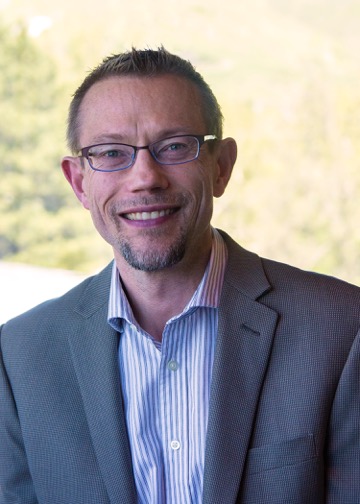
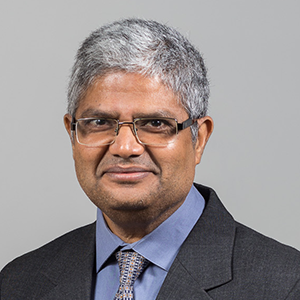
Laurent Mydlarski is a Professor in the Department of Mechanical Engineering at McGill University, affiliated with the Faculty of Engineering. His research focuses on experimental fluid mechanics, particularly turbulent flows and scalar mixing. He holds a Ph.D. from Cornell University and B.A.Sc. from the University of Waterloo. Research interests include turbulence statistics, scalar dispersion, differential diffusion, and industrial cooling applications such as hydroelectric generators and microelectronics. His work combines experimental methods like hot-wire anemometry, laser-induced fluorescence, and particle-tracking velocimetry. Key contributions include studies on multi-scalar mixing in jets, wall shear stress in turbulent flows, and thermal anemometry probe design. His Mydlarski Lab at McGill explores both fundamental fluid dynamics and practical engineering solutions. Recent publications (2023-2025) address multi-scalar mixing metrics, electronic cooling innovations, and drag reduction on porous cylinders. Collaborations with industry focus on applying fluid mechanics principles to real-world thermal management challenges.
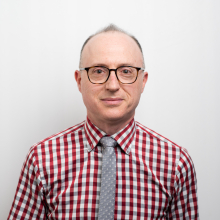
Todd McCallum is an Assistant Professor in the Department of History at Dalhousie University . His research focuses on North American social and cultural history , particularly intersections with Marxism, anarchism, and working-class movements . He also explores themes of gender and sexuality within historical contexts. PhD in History from Queen’s University MA in History from Simon Fraser University BA in History from Queen’s University McCallum’s recent publications analyze transient worker communities, labor activism, and spatial marginalization during economic crises. His work critically examines how categories like “tramp” evolved alongside industrial capitalism and social policy, often incorporating interdisciplinary lenses such as eugenics, documentary photography, and urban sociology. Key trends in his research include the dialectic of mobility and marginality, gendered interpretations of transient life, and the role of radical ideologies in shaping worker identities. He has contributed extensively to journals like Labor/Le Travail and BC Studies , with a particular focus on Vancouver’s Depression-era hobo communities. His teaching portfolio includes courses on the history of the future , conspiracy theories , and gender formation in North America . Office hours are held in the Marion McCain Building, Halifax.
Paolo Ienne is a Professor at the Swiss Federal Institute of Technology in Lausanne (EPFL), where he leads the Processor Architecture Laboratory (LAP) within the School of Computer and Communication Sciences. His research focuses on advancing reconfigurable computing systems through innovative FPGA architectures and high-level synthesis methodologies. His primary research domains include reconfigurable computing, FPGA architecture design, dynamically scheduled dataflow circuits, and hardware acceleration techniques. Recent work emphasizes memory system optimization for FPGAs, formal verification of circuit transformations, and rapid C-to-hardware compilation flows. He has pioneered approaches for handling thousands of outstanding memory misses in FPGA accelerators and developed novel techniques for switch-block exploration without explicit pattern enumeration. Analysis of his 2023-2025 publications reveals a strong trend toward practical FPGA deployment challenges, with increasing focus on HBM integration, virtual memory systems for PCIe-attached devices, and formally verified circuit transformations. His work consistently targets real-world bottlenecks in high-level synthesis toolchains while maintaining theoretical rigor in dataflow architecture design. Professor Ienne's laboratory receives support from the Swiss National Science Foundation and industry partners including Huawei, enabling cutting-edge research in FPGA-based acceleration. His collaborative network spans major semiconductor companies and academic institutions worldwide, with frequent co-authorship on conference proceedings and journal publications in IEEE and ACM venues.
Jundong Li is an Assistant Professor at the University of Virginia with primary appointment in the Department of Electrical and Computer Engineering and secondary appointments in Computer Science and the School of Data Science. He is affiliated with the School of Engineering and Applied Science and conducts research at the intersection of machine learning, data mining, and artificial intelligence. Education: Ph.D. in Computer Science, Arizona State University, 2019 M.Sc. in Computer Science, University of Alberta, 2014 B.Eng. in Software Engineering, Zhejiang University, 2012 His research focuses on graph machine learning , trustworthy and fair AI , and large language models . He investigates how to make deep learning models more interpretable, robust, and equitable, especially in graph-structured data and NLP applications. His work combines causal inference, feature selection, and model explanation techniques to build reliable AI systems. His recent publications (2024–2022) reveal a strong trend toward large language models , with topics including in-context learning, knowledge editing, and collaborative reasoning. Simultaneously, he continues pioneering research on fairness and interpretability in graph neural networks , addressing structural bias, adversarial attacks, and node attribution. His work is highly interdisciplinary, spanning computer science, data science, and social impact. Scientific Awards: SIGKDD Rising Star Award (2024) PAKDD Best Paper Award (2024) NSF CAREER Award (2022) SIGKDD Best Research Paper Award (2022) JP Morgan Faculty Research Award (2021, 2022) Cisco Faculty Research Award (2021) Stanford/Elsevier Top 2% Scientist (2024) Jundong Li actively advises graduate students, as seen in his co-authored papers with researchers like Song Wang, Yushun Dong, and Binchi Zhang. His research is generously funded by the National Science Foundation (NSF) through multiple programs including CAREER, III, SaTC, SAI, and S&CC, as well as by the Department of Energy (DOE) , Office of Naval Research (ONR) , Jefferson Lab , and industry partners including JP Morgan, Cisco, Netflix, and Snap . He leads a dynamic research group focused on advancing the frontiers of graph learning and trustworthy AI, with projects on causal inference, model unlearning, and explainable systems. His lab contributes to both theoretical foundations and real-world applications in public health, transportation, and network security.
Oscar P. Bruno is a Professor of Applied and Computational Mathematics at the California Institute of Technology (Caltech). He holds a Licenciado from the University of Buenos Aires (1982) and a Ph.D. in Mathematics from New York University's Courant Institute (1989). Since 1998, he has been a Professor at Caltech, previously serving as Associate Professor (1995–98) and Executive Officer for Applied Mathematics (1998–2000). His research focuses on developing high-performance numerical methods for solving partial differential equations (PDEs), addressing challenges in complex geometries, singularities, and high-frequency phenomena. Key contributions include the Fourier Continuation (FC) method and integral-equation techniques, enabling solutions to previously intractable PDE problems in science and engineering. Prof. Bruno's expertise spans computational electromagnetics, computational fluid dynamics (CFD), solid mechanics, and mathematical physics. His work integrates numerical analysis, multiphysics modeling, and computational science to solve real-world problems in geophysics, optics, and fluid dynamics. He has received numerous awards, including membership in the National Academy of Sciences of Argentina (2020), the Vannevar Bush National Security Science and Engineering Fellowship (2016), and SIAM Fellow (2013). Bruno serves on editorial boards for journals like SIAM Journal on Scientific Computing and SIAM Journal on Applied Mathematics, and participates in national science advisory roles. His teaching includes advanced courses on applied mathematics methods (ACM/IDS 101 ab), emphasizing theoretical foundations and numerical techniques for PDEs. His research group develops cutting-edge solvers with applications in shock dynamics, optical tomography, and geophysical fluid dynamics.
Professor Ben Goldys is a distinguished academic at The University of Sydney's School of Mathematics and Statistics, where he conducts research at the intersection of pure mathematics and applied sciences. His work spans multiple disciplines including stochastic analysis, partial differential equations, and financial mathematics, with significant contributions to both theoretical frameworks and practical applications in science and finance. Goldys' research interests center on stochastic (ordinary and partial) differential equations and their applications. His specific focus areas include stochastic partial differential equations, stochastic geometric PDEs, stochastic boundary value problems, stochastic fluid dynamics, ergodic theory of infinite-dimensional diffusions, and applications in financial mathematics such as interest rate derivatives, credit risk, and stochastic volatility. His work bridges pure mathematical theory (Functional Analysis, PDEs, Ergodic Theory) with complex real-world problems across multiple domains. His research aligns with the University of Sydney Faculty of Science Research Strengths including Understanding the Universe, Fundamental Laws of Nature, Complex Systems, and Next Generation Materials. Professor Goldys has secured multiple significant research grants from the Australian Research Council, including recent projects such as 'Mathematics for future magnetic devices' (2024), 'Mathematics for breaking limits of speed and density in magnetic memories' (2019), and 'Novel Approaches for Problems with Uncertainties' (2015). His current research projects focus on geometric stochastic partial differential equations and applications in micromagnetism, mean field games in finance, stochastic boundary value problems, and stochastic Navier-Stokes equations on the rotating sphere. He maintains extensive international collaborations with institutions in Germany (University of Tuebingen), Italy (LUISS University), Poland (Institute of Mathematics Polish Academy of Sciences), and the United Kingdom (University of York), working on projects involving optimal control, stochastic systems with memory, and geometric stochastic PDEs. Goldys is an active member of the Applied Mathematics Research Group and The University of Sydney Nano Institute, contributing to interdisciplinary research initiatives that connect mathematical theory with cutting-edge technological applications.
Alexander Wendt is the Mershon Professor of International Security and Professor of Political Science at The Ohio State University. He holds a PhD from the University of Minnesota (1989) and has taught at Yale University, Dartmouth College, and the University of Chicago before joining OSU in 2004. His work is foundational to constructivism in international relations, notably through his 1992 article Anarchy is What States Make of It and his 1999 book Social Theory of International Politics , which earned the Best Book of the Decade Award (2006). He is widely recognized, including as the most influential IR scholar over 20 years (TRIP Survey, 2017) and recipient of the 2023 Johan Skytte Prize for advancing constructivism with Martha Finnemore. Wendt’s research bridges philosophy and social science, exploring quantum theory’s implications for decision-making and social science in works like Quantum Mind and Social Science (2015). His current projects include a book on UAP and human security, responding to the Pentagon’s 2021 confirmation of UAP as a threat. His career spans theoretical innovations in agency-structure interactions, norms, and sovereignty, with a focus on redefining international relations through interdisciplinary lenses. Awards include the prestigious Skytte Prize (2023) and sustained recognition for transforming constructivism into a leading paradigm. His work challenges classical social science frameworks, proposing quantum theory as a revolutionary baseline for understanding human cognition and societal systems.
Hiroshi Ishikawa is a Professor in the Department of Computer Science and Engineering at Waseda University's Faculty of Science and Engineering. He also serves as a Visiting Professor at the National Institute of Informatics since 2016. Previously, he held positions at Nagoya City University from 2004-2010 as Assistant Professor, Associate Professor, and Professor. His academic journey includes being a JST PRESTO Researcher from 2009-2013 and an Associate Research Scientist at New York University's Courant Institute of Mathematical Sciences from 2000-2001. Ph.D. in Computer Science, New York University (2000) Master of Science, Kyoto University Bachelor's degree in Mathematics, Kyoto University Faculty of Science (1991) Hiroshi Ishikawa's research spans perceptual information processing, computer vision, artificial intelligence, deep learning, and discrete optimization. His work focuses on developing algorithms for image restoration, segmentation, and understanding, with significant contributions to energy minimization techniques in computer vision. He has pioneered approaches in sketch simplification, medical image segmentation, and higher-order graph cuts. His research bridges theoretical advances in mathematical optimization with practical applications in medical imaging, computer graphics, and consumer electronics. Ishikawa's recent publications demonstrate a strong focus on leveraging deep learning for image enhancement and understanding. His work spans super-resolution techniques, colorization methods, human avatar generation, and medical image analysis. A notable trend is the increasing integration of attention mechanisms and generative models to solve complex vision problems, with growing emphasis on real-world applications in medical imaging and computer graphics. His research group consistently produces high-impact work that appears in top-tier computer vision conferences. 75th Annual IEICE Best Paper Award (2019) Innovative Technologies 2016 Special Prize for Culture (Ministry of Economy, Trade and Industry) MIRU Nagao Award (Best Paper Award) (2009) Young Author Award (IEEE Computer Society Japan Chapter, 2006) MIRU2006 Excellent Paper Award (2006) Harold Grad Memorial Prize (Courant Institute of Mathematical Sciences, NYU, 2000) As a professor at Waseda University, Ishikawa has mentored numerous students who have become active researchers in computer vision, including Yuya Masuda, Edgar Simo-Serra, and Satoshi Iizuka. His research has been supported by various grants, including JST PRESTO funding from 2009-2013. He has served on editorial boards for prestigious journals including IEEE Transactions on Pattern Analysis and Machine Intelligence and has held leadership roles in major computer vision conferences such as ICCV, CVPR, and ACCV. Ishikawa leads a vibrant research group at Waseda University focused on computer vision and image processing. His laboratory collaborates extensively with researchers at Nagoya City University, National Institute of Informatics, and international institutions. The group maintains strong connections with industry partners, particularly in medical imaging and consumer electronics sectors, translating theoretical advances into practical applications.
Dr. Vincent Fortuin is a tenure-track Assistant Professor at the Technical University of Munich (TUM) and a research group leader at Helmholtz AI in Munich. He leads the Efficient Learning and Probabilistic Inference for Science (ELPIS) group and holds multiple prestigious fellowships including the Branco Weiss Fellowship. His academic affiliations include the TUM School of Computation, Information and Technology, the Konrad Zuse School of Excellence in Reliable AI, and the Munich Center for Machine Learning. Dr. Fortuin earned his BSc in Molecular Life Sciences from the University of Hamburg (2012-2015), followed by an MSc in Computational Biology and Bioinformatics from ETH Zürich (2015-2017), where he received the ETH Excellence Scholarship and the Willi Studer Prize. He completed his PhD in Machine Learning at ETH Zürich (2017-2021) under the supervision of Gunnar Rätsch and Andreas Krause, supported by a Swiss Data Science Center PhD Fellowship. Prior to joining TUM, he was a Research Fellow at St. John's College, University of Cambridge (2022-2023). His research focuses on the intersection of Bayesian statistics and deep learning, specifically developing methods for more robust, data-efficient AI systems with reliable uncertainty estimates. His work addresses critical limitations in standard deep learning approaches, particularly their tendency to be overconfident in predictions and require large datasets for training. He investigates better priors and more efficient inference techniques for Bayesian deep learning, deep generative modeling, meta-learning, and PAC-Bayesian theory, with applications in scientific and biomedical domains. Dr. Fortuin's recent publications demonstrate a consistent focus on improving uncertainty quantification in deep learning systems, with increasing emphasis on practical applications in scientific contexts. His work spans from theoretical foundations of Bayesian deep learning to practical implementations in protein design, materials science, and medical applications. A notable trend is his exploration of how to make Bayesian methods more scalable and applicable to modern large-scale AI systems while maintaining theoretical guarantees. Branco Weiss Fellowship (2023) St John's College Research Fellowship (2022) Swiss National Science Foundation Postdoc.Mobility Fellowship (2022) Swiss Data Science Center PhD Fellowship (2018) ETH Excellence Scholarship (2015) Willi Studer Award (2018) Dr. Fortuin actively supervises PhD and Master's students through his ELPIS research group at Helmholtz AI. He serves as a regular reviewer and area chair for major machine learning conferences and is an action editor for TMLR. He co-organizes the Symposium on Advances in Approximate Bayesian Inference (AABI) and the ICBINB initiative, demonstrating his commitment to advancing the field through community building. His research group receives funding from multiple sources including Helmholtz AI, the Branco Weiss Fellowship, and collaborations with international institutions. Dr. Fortuin leads the Efficient Learning and Probabilistic Inference for Science (ELPIS) group at Helmholtz AI, which focuses on fundamental machine learning research motivated by real-world scientific problems. The group collaborates extensively with researchers across Helmholtz centers and international institutions, particularly in biomedical applications where reliable uncertainty estimates are crucial.
Shang-Tse Chen is an Associate Professor at the Department of Computer Science and Information Engineering and Graduate Institute of Networking and Multimedia , National Taiwan University . He leads the NTU AI Security Lab , focusing on applied and theoretical machine learning with emphasis on cybersecurity, adversarial ML, and ML privacy/fairness. Education: PhD in Computer Science (Georgia Tech, 2019), BSc in CSIE (NTU, 2010) Awards: K. T. Li Young Researcher Award (2025), IBM PhD Fellowship (2018), KDD Best Student Paper Runner-Up (2016), NSF SaTC Grant (2017-2021) His research spans adversarial ML, certified defenses, model inversion attacks, and intersection with differential privacy/fairness. Recent work includes physical adversarial attacks on object detectors and practical defenses using JPEG compression. He teaches courses like Security and Privacy of Machine Learning and Introduction to Medical Informatics . Key publication trends show focus on adversarial robustness (ICML/NeurIPS/ICLR), cybersecurity applications (ACSAC), and ML fairness (ACL/EMNLP). Collaborations include industry partnerships with Intel Labs and Symantec. Scientific Awards: K. T. Li Young Researcher Award (2025) ACM TiiS Best Paper Honorable Mention (2020) IBM PhD Fellowship (2018) KDD Audience Appreciation Award Runner-Up (2018) Symantec Fellowship Runner-Up (2016) KDD Best Student Paper Runner-Up (2016) NSF Grant (2017) He advises 13 current students (PhD/MS/Undergrad) and has mentored alumni now at CMU/UC Berkeley. The lab actively recruits postdocs and students across levels.
Steven Rutt is an Associate Professor of Biblical & Theological Studies and the founding Director of the Master of Arts in Theology, Worldview, and Culture at Arizona Christian University. He has over four decades of experience in pastoral ministry, mission work, and theological education across fourteen countries, including roles in New Zealand, Lithuania, the UK, and the United States. His educational background includes a Ph.D. from the University of Lancaster, an M.A.T. from Fuller Theological Seminary, and a B.Th. from Sweetwater Bible College. Dr. Rutt's research focuses on missiology, particularly the life and theology of Roland Allen, ecclesiology, historical theology, and the intersection of Christian faith with culture. He has taught courses in Systematic Theology, Hermeneutics, Pauline Studies, and Early Christianity. His work emphasizes apostolic principles, church planting, and the priesthood of the laity. His recent publications and presentations reveal a consistent focus on missionary ecclesiology, the legacy of Roland Allen, and the application of historical theological insights to contemporary mission practice. His writings span journals like Transformation and books published by The Lutterworth Press. He remains an active lecturer at the Oxford Centre for Mission Studies and within the Reformed Episcopal Church. He is also a member of The Society of Anglican Theologians and founder of Covenant Renewal Ministries, Inc. Dr. Rutt has supervised Ph.D. candidates and contributed to theological training globally. Though no specific grants are mentioned, his leadership in founding academic programs and non-profit ministry indicates significant institutional and scholarly engagement. He has delivered lectures and seminars across Europe and North America, contributing to clergy training and intercultural theological dialogue. He is affiliated with several academic and ecclesial bodies, including the Yale-Edinburgh Group and the Oxford Centre for Mission Studies, and continues to influence theological education through writing, speaking, and teaching.
Stephen Roberts is a Professor at the Australian National University (ANU) in the College of Science, Department of Mathematics. He is the lead developer of the ANUGA open-source hydrodynamic modeling software, which simulates dam breaks, floods, and tsunamis for governments and engineers. Roberts has made significant contributions to computational mathematics, particularly in numerical methods for partial differential equations, sparse grid data fitting, and finite element approximations scaling to millions of data points. MSc, Flinders University (1980) PhD, University of California, Berkeley (1985) His research interests include: Computational methods for shallow water wave equations Development of Python-based scientific computing frameworks Global sensitivity analysis and uncertainty quantification Adaptive mesh algorithms for fluid dynamics Recent publications focus on energy-stable numerical schemes, multiscale flood simulation, and convergence analysis in sensitivity methods. Roberts actively collaborates with environmental agencies and has led major computational science education programs at ANU. Stephen serves as Treasurer of the Computational Mathematics Group (ANZIAM) and leads projects in: Parallelization of hydrodynamic models CO2 leak detection via atmospheric measurements Optimization of sparse grid combinations His work combines theoretical advancements with real-world applications in disaster risk reduction and climate policy.
Michael Luck is a Professor of Computer Science at University College London, specializing in intelligent agents, multi-agent systems, and trust and reputation frameworks. His work contributes to UN Sustainable Development Goals related to education and innovation. He holds a BSc and PhD from UCL (1988, 1993). Education: BSc (1988), PhD (1993) in Computer Science from UCL Research focuses on formal frameworks for agent systems, norms, trust mechanisms, and applications in genome analysis and grid computing. Recent projects include AQUAREOS (robotics collaboration), SAIS (AI assistants), and TrustATrip (reputation systems). Publications emphasize adaptive service environments, norm enforcement, and Bayesian trust models. He has been awarded Fellow of the British Computer Society (2005). Advising/Grants: Lead/co-investigator on 21 projects including EPSRC-funded initiatives. Supervised 14 students. Active in global conferences like AAMAS and contributed to standards via EPSRC Peer Review College.
Mike Kirby is a Professor at the Kahlert School of Computing, University of Utah. He also holds adjunct professorships in the Department of Bioengineering and the Department of Mathematics. His current roles include leadership in scientific computing and informatics initiatives, including former directorships of the Utah Informatics Initiative (2019-2023) and the Multi-Scale Multidisciplinary Modeling of Electronic Materials (MSME) Collaborative Research Alliance (2016-2022). He has extensive experience in strategic research initiatives, including serving as Assistant Vice President for Research (2024-2025). Education: Dr. Kirby earned a PhD in Applied Mathematics (2002) and MS in Computer Science (2001) from Brown University, and a BS in Applied Mathematics and Computer Science from Florida State University (1997). Research Interests: Focus on large-scale scientific computing, physics-informed machine learning, computational science and engineering, high-order numerical methods, and visualization. His work bridges applied mathematics and computer science to address real-world engineering challenges. Publications: Over 150 peer-reviewed articles, including high-impact contributions in journals like Journal of Computational Physics and SIAM Journal on Scientific Computing . Recent work emphasizes machine learning for differential equations, topology optimization under uncertainty, and multi-fidelity modeling. Awards: Recognized for leadership in computational science and informatics, including contributions to University of Utah’s Clery Compliance Program. Advising & Grants: Supervised over 50 graduate students and postdocs. Secured funding from NSF, DOE, and industry partnerships, totaling millions in research grants. Active in interdisciplinary collaborations across engineering, materials science, and medicine. Labs/Teams: Scientific Computing and Imaging (SCI) Institute, Utah Informatics Initiative, and the Center for Multiscale Modeling of Electronic Materials (MSME).
Sanjay Jain is a Provost's Chair Professor in the Department of Computer Science at the School of Computing, National University of Singapore (NUS). His research focuses on theoretical computer science with particular emphasis on inductive inference, recursion theory, complexity theory, and computational learning theory. Education: B.Tech. in Computer Science from Indian Institute of Technology Kharagpur, India (1986) M.S. in Computer Science from University of Rochester, USA (1988) Ph.D. in Computer Science from University of Rochester, USA (1990) Professor Jain's research spans multiple areas of theoretical computer science. His primary contributions are in computational learning theory, where he has made significant advances in understanding the intrinsic complexity of language identification and the limits of inductive inference. His work on recursion theory explores fundamental questions about computability and complexity, while his research in complexity theory addresses structural aspects of computational problems. A notable achievement was his work on "Deciding Parity Games in Quasipolynomial Time," which won the prestigious STOC 2017 best paper award and later the EATCS-IPEC Nerode Prize. Professor Jain's publication record shows a consistent focus on theoretical foundations of computer science, particularly in learning theory and computational complexity. His recent work has expanded into automatic structures, semiautomatic models, and connections between computational learning and algebraic structures. There is a clear progression from foundational work on language identification to more complex models involving automatic functions, transducers, and connections to mathematical logic. Scientific Awards: STOC 2017 Best Paper Award for "Deciding Parity Games in Quasipolynomial Time" EATCS-IPEC Nerode Prize (2021) Professor Jain has served on the editorial board of Information and Computation and has been actively involved in the academic community through program committee memberships for major conferences including COLT, ALT, LATA, TAMC, and PRICAI. He has held leadership roles as program co-chair for ALT 2000 and ALT 2013, and conference chair for ALT 2005. His work has been supported by various research grants, though specific details are not provided in the available materials. Professor Jain leads research in theoretical computer science at NUS, where he has built a strong research group focused on computational learning theory and related areas. His work often involves collaborations with researchers from around the world, particularly with Frank Stephan, with whom he has co-authored numerous papers. His research group has made significant contributions to understanding the fundamental limits and possibilities of computational learning models.