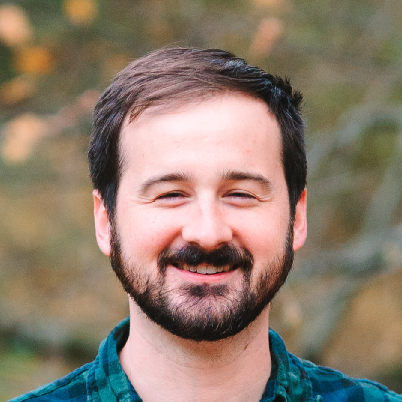
Adam Hollowell is an Adjunct Assistant Professor in the Program in Education at Duke University, where he also serves as Senior Research Associate at the Samuel DuBois Cook Center on Social Equity and Director of the Inequality Studies Minor. His teaching spans ethics, inequality studies, and history across Duke’s Kenan Institute for Ethics, Sanford School of Public Policy, and Department of History. Hollowell holds a Ph.D. from the University of Edinburgh (2009). His research focuses on inequality, higher education, public policy, and ethics, with notable work on pandemic impacts, telemedicine in education, and reproductive health access during crises. In Inequality Studies , Hollowell emphasizes understanding policies to drive social change, as highlighted in recent media coverage. His publications explore topics like student behavior shifts during the pandemic, telemedicine adoption in universities, and James Baldwin’s ethical challenges. He is a finalist for the Judith Deckers Prize (2024). Professionally, Hollowell leads projects such as Bass Connections on college contraception access and Story+ initiatives. His work bridges academia and public engagement, addressing systemic inequities through interdisciplinary approaches.
Chris Donahue is an Assistant Professor in the Computer Science Department at Carnegie Mellon University . He also serves as a part-time Research Scientist at Google DeepMind on the Magenta team. His work focuses on leveraging generative AI to enhance human creativity, particularly in music. Education: PhD in Computer Science (UC San Diego), Postdoctoral Scholar (Stanford University) His research spans controllable generative modeling of music and audio , with a focus on real-time interactive systems. Projects like Piano Genie , Beat Sage , and Copilot Arena demonstrate his commitment to real-world deployment. His Generative Creativity Lab (G-CLef) explores AI applications beyond music, including programming and natural language. Recent publications highlight advancements in multimodal music evaluation , real-time adaptation , and AI-driven sound morphing . He co-developed Magenta RealTime , an open-weight real-time music generation model, and MusicFX DJ Mode . Scientific Awards: Best Paper Award (top 1) at NAACL Student Research Workshop 2025 Best Paper Award (top 1% of submissions) at CHI 2025 Best Paper Runner-up at ISMIR 2021 He co-advises PhD students like Wayne Chi (NDSEG Fellow) and mentors Irmak Bukey . His lab receives support from the AIxArts incubator fund at CMU .
Steven Jackson is a Professor of Information Science and Science and Technology Studies at Cornell University's Bowers College of Computing and Information Science, with additional graduate field appointments in Communication and Public Affairs. Since July 2023, he has served as Vice-Provost for Academic Innovation at Cornell, and previously held leadership positions as Chair of Information Science and Dean of William Keeton House. His work bridges academic research with significant institutional leadership in higher education innovation. Dr. Jackson's research focuses on critical intersections of technology, society, and the environment, with three primary strands: technology ethics, law and policy; maintenance, repair and sustainability; and technology, inequality and global development. His work draws from American pragmatism, political economy, and science and technology studies, integrating methods from sociology, anthropology, philosophy, and media studies. He is particularly interested in how computing practices meet social and material worlds, with implications for infrastructure, collaboration, sustainability, and cultural practice. His recent publications reveal a strong emphasis on repair as both theoretical concept and practical methodology, exploring 'ordinary hope' as a framework for technological engagement and examining unmaking as a necessary counterpart to design. The research spans diverse geographical contexts from the global North to South, addressing caste dynamics in computing, digital authoritarianism, and infrastructure challenges in developing contexts. Dr. Jackson has received significant recognition including an NSF CAREER award and more than twenty paper awards at leading computing and information science venues. His research has been supported by major organizations including the U.S. National Science Foundation, Social Science Research Council, Ford Foundation, Sloan Foundation, World Bank, Intel Research, Atkinson Center for Sustainability, and the Canadian Social Science and Humanities Research Council. As an advisor, Dr. Jackson has mentored numerous graduate students who have gone on to prominent positions at institutions worldwide. He currently advises Jen Liu, Amy Cheatle, Daniel Mwesigwa, Johan Michalove, and Ritik Batra, while his former students include Palashi Vaghela (Assistant Professor at Simon Fraser University), Samir Passi (Responsible AI Researcher at Microsoft), Maggie Jack (Assistant Professor at NYU), and Ranjit Singh (Senior Researcher at Data and Society). Dr. Jackson convenes the Computing On Earth Lab, an experimental collaboration bringing together social scientists, humanists, artists, and engineers to rethink the material and planetary foundations of computing. The lab reflects his commitment to interdisciplinary approaches that address computing's environmental impacts and sustainability challenges.
Roger Giner-Sorolla is Professor of Social Psychology at the University of Kent's School of Psychology, where he has been a faculty member since 2001 after completing his PhD at New York University in 1996. He served as Editor-in-Chief of the Journal of Experimental Social Psychology from 2016-2022 and currently leads a Leverhulme Foundation grant examining moral heroism across professions. His academic journey includes a postdoctoral fellowship at the University of Virginia and has established him as a leading figure in social and moral psychology. Professor Giner-Sorolla's research focuses on the social role of emotions, particularly moral emotions including self-condemning emotions (guilt and shame) and other-condemning emotions (anger, contempt, and disgust). His work extends to intergroup apologies, dehumanization, emotionally driven prejudice, and collective moral roles, with a notable side interest in the ironic enjoyment of music and aesthetic experiences. He is a strong advocate for transparency in scientific reporting, having written extensively on improved reporting guidelines, pre-registration, and open science practices. Analysis of his recent publications reveals a consistent focus on moral psychology with expanding interdisciplinary reach. His work bridges traditional social psychology with emerging areas including cross-cultural emotion research, replication science, and historical memory. The trend shows increasing attention to methodological rigor while maintaining core interests in emotion and morality, with growing emphasis on practical applications in conflict resolution and intergroup relations. Fellow of the Association for Psychological Science Member of Rising Stars selection committee (2023-2024) Promising Scholars Award (University of Kent, 2006) Vacation Research Scholarship (Wellcome Trust, 2005) Multiple ESRC grants totaling over £400,000 European Science Foundation Workshop Award (2004) Professor Giner-Sorolla has supervised an impressive number of PhD students, with 17 doctoral candidates listed in the documentation including both current and past students. His grant portfolio demonstrates significant research impact with funding from major organizations including ESRC, Wellcome Trust, and Leverhulme Foundation. His supervision style appears to encourage students to pursue research that aligns with his core interests in moral emotions while allowing exploration of novel applications and contexts. While the documentation doesn't specify laboratory or research team structures, his extensive collaborative work suggests leadership of research groups focused on moral psychology and emotion research. His numerous international collaborations and invited workshops indicate an active research program with global reach, likely involving multiple research teams working on interconnected projects related to his core interests in moral psychology and scientific methodology.
Bernard (Ben) Arps is Professor of Indonesian and Javanese Language and Culture at Leiden University's Institute for Area Studies within the Faculty of Humanities. His research focuses on the interface of humanities and humanistic social sciences, particularly examining how language, performance, texts, and media contribute to 'worldmaking' - the processes through which people and institutions shape realities for themselves and others. Geographically centered on Southeast Asia with a core focus on Indonesia and the Malay world, Arps specializes in Java and its diasporas. His scholarly interests include religious encounters (particularly between Islam and local vernacular traditions), philological theory as applied to performance and new media, narrativity in song and audio media, and the theoretical foundations of area studies. Arps has conducted extensive fieldwork in Indonesia since 1979, totaling over four years, primarily in Central and Eastern Java regions including Surakarta, Yogyakarta, Banyuwangi, and Cilacap. His current book projects explore the Quest narrative pattern across religious traditions (focusing on Dewa Ruci), the sociopolitical formation of languages through media and performance (using Osing in Banyuwangi as a case study), and the Asian Muslim epic of Amir Hamza. Arps teaches primarily in Leiden's BA programme in South and Southeast Asian Studies, BA in International Studies, and MA programme in Asian Studies. Former chair of the Department of Languages and Cultures of Southeast Asia and Oceania (1995, 1999/2000, 2003-2006, 2008) Previously taught at School of Oriental and African Studies, University of London (1988-1993) Held visiting positions at NIAS (2001/02), ANU (2005), University of Michigan (2006/07), NUS/ARI (2011/12), UNS (2017), and IIAS (2018/19) Arps has supervised doctoral, Master's, and Bachelor's dissertations across Indonesian, Malay, Singapore, Cambodian, and Thai studies, with particular expertise in Javanese, Sundanese, Betawi, Balinese, Sasak, Mentawai, and Minangkabau cultures and languages. His work spans religion, performance, media, literature, sociolinguistics, lexicography, and education.
Min Yen Kan is an Associate Professor and Vice Dean of Undergraduate Studies at the National University of Singapore's School of Computing, Department of Computer Science. With a PhD from Columbia University (2002), he leads the Web Information Retrieval / Natural Language Processing Group (WING.NUS) and serves as ACL Ethics Committee co-chair. His research spans Natural Language Processing , Large Language Models , Digital Libraries , and Information Retrieval , with specific focus on scientific discourse analysis, fact verification, and multimodal systems. Current projects include Scholarly Document Information Extraction (TRL 6), Task-Oriented Dialogue Systems (TRL 4), and Recommendation Systems (TRL 5). Recent publications reveal strong trends in LLM limitations (bias, hallucination, evaluation), conversational recommendation systems , and misinformation detection . His work consistently bridges theoretical NLP with real-world applications in digital libraries and scientific communication. Award highlights include: CIKM 2019 Best Paper Award ACL Distinguished Service Awards Vannevar Bush Best Paper Award (JCDL 2012) ACM Distinguished Speaker designation Kan mentors PhD students with placements at Google and USTC, and serves as associate editor for Information Retrieval and survey editor for Journal of AI Research . His lab WING.NUS develops practical tools like SciWING for scientific document processing and FANG for fake news detection. Media engagements include commentary on AI regulations in Southeast Asia and workforce implications in the AI era.
WANG Ye is an Associate Professor in the Department of Computer Science at the School of Computing, National University of Singapore (NUS). He holds a PhD in Information Technology from Tampere University of Technology, Finland, and has been a tenured faculty member at NUS since 2002, following his industry research role at Nokia Research Center. He is the director of the Sound and Music Computing Lab at NUS, leading cutting-edge research in AI-driven music and health technologies. PhD, Information Technology, Tampere University of Technology, Finland (2002) MSc, Telecommunications, Braunschweig University of Technology, Germany (1993) BSc, Telecommunications, South China University of Technology, China (1983) His research is centered on Sound and Music Computing for Human Health and Potential (SMC4HHP) , with a focus on eHealth, eLearning, mobile/wearable computing, and music information retrieval. His work spans AI for stroke rehabilitation, language learning through singing, singing voice synthesis, and automatic music transcription. He has pioneered systems like SLIONS (language learning via karaoke), CocoLyricist (AI co-creation for stroke recovery), and SinTechSVS (expressive singing voice synthesis). The latest articles highlight a strong trend in AI-driven music and health technologies , particularly in controllable lyric generation, singing voice synthesis, automatic pronunciation assessment, and multimodal music transcription. The research increasingly integrates large language models, explainable AI, fairness, and real-world deployment, reflecting a shift from theoretical exploration to practical, human-centered applications in healthcare and education. Dr. Wang has received numerous scientific honors, including: Best Paper Awards at ACM MM, ISMIR, IEEE ISM, and CHI First Prize, Asia Pacific Assistive, Rehabilitative, and Therapeutic Technologies Challenge (2015) Faculty Teaching Excellence Award, NUS School of Computing (2024) Top Paper Award, ACM Multimedia 2022 AI in Medicine Collaborative Grant for CocoLyricist project He has supervised over 11 PhD and 20 MComp students and is currently guiding six PhD candidates. His grants come from MOE, NRF, A*STAR, Nokia, and Smule. He has served as General Chair of ISMIR2017 and TPC Co-Chair of ICOT2017, and is on the editorial boards of IEEE Transactions on Multimedia and Journal of New Music Research. He has also developed and taught the first course on Sound and Music Computing in Singapore. Dr. Wang leads the Sound and Music Computing Lab (SMC Lab) , a multidisciplinary team exploring the synergy of music computing, AI, mobile technology, and cloud systems for health and education. The lab actively collaborates with medical institutions such as NUS Yong Loo Lin School of Medicine, Singapore General Hospital, and Harvard Medical School, and is currently working on projects in AI-supported language learning, stroke rehabilitation, and intelligent music interfaces.
Associate Professor Kiat Boon, Daniel SENG is a leading academic at the National University of Singapore (NUS), specializing in technology law and infocommunications law. He currently serves as Director of the LLM (Intellectual Property & Technology Law) program and IT Coordinator. Previously, he held roles as Director of Research at the Singapore Academy of Law (2001–2003), partner and head of technology practice at Rajah & Tann, and non-residential fellow at Stanford Law School’s Center for Legal Informatics (CodeX). His education includes a JSD and JSM from Stanford University, BCL (Oxford, Rupert Cross Prize recipient, 1994), and LLB (NUS with first-class honors). His research employs machine learning, NLP, and big data to analyze digital law challenges, particularly in copyright takedown notices and AI governance. Research interests span information technology law, empirical legal studies, quantitative research, and AI’s intersection with legal reasoning. He contributes to global legal reform via advisory roles at the World Intellectual Property Organization (WIPO), focusing on copyright exceptions, music licensing, and intermediary liability. Key awards include the 1994 Rupert Cross Prize. His work bridges law and technology through publications on digital evidence, metaverse legal frameworks, and AI’s impact on private law. He is actively involved in shaping Singapore’s legal infrastructure through government committees and academic initiatives.
Nuno Conceição serves as an Invited Assistant Professor at the Faculty of Psychology, University of Lisbon (FP-UL), where he has taught since 2011. His clinical work focuses on adults with complex trauma, personality disorders, and structural dissociation of the personality. He earned his BA (1999), MA (2006), and Ph.D. in Clinical Psychology (2011) from FP-UL, following his Abitur at the German School of Lisbon (1994). BA: FP-UL (1999) MA: FP-UL (2006) Ph.D.: FP-UL (2011) His research centers on Psychotherapy Integration, examining General Change Processes, Case Formulation, Emotional Change in Trauma Therapy, and Ecological Dimensions in Psychotherapy. He investigates how experiential processing facilitates change in personality pathology through integrative clinical decision-making. Key trends in his 2016-2023 publications reveal consistent focus on transdiagnostic mechanisms, termination processes, and musical interventions for emotional processing, primarily using qualitative case studies to advance psychotherapy integration frameworks. No scientific awards were documented in the source material. Conceição has supervised over 50 master's research projects and designed the Integrative Perspectives in Psychotherapy curriculum. He directs the Paradigmatic Complementarity Lab—a practice-based research network using process coding to train clinical skills—and serves as a therapist trainer/supervisor at OneSession.org. Supervision: >50 master's projects Curriculum Development: Integrative Perspectives in Psychotherapy Professional Training: OneSession.org The Paradigmatic Complementarity Lab drives his research agenda, utilizing process-coding methodologies to study change mechanisms in complex trauma and personality disorders within real-world clinical settings.
Timothy Hampton is a Professor of French and Comparative Literature at the University of California, Berkeley , and serves as Director of the Doreen B. Townsend Center for the Humanities . He was previously the Director of the Designated Emphasis in Renaissance and Early Modern Studies and co-chairs the Democracy, Free Speech, and Values study group. His research explores intersections of literature and politics , poetry and song , and the history of emotion and diplomacy in Renaissance and early modern periods. Recent projects include a 2022 France-Berkeley Fund grant on poetry translation and a Diebold Foundation grant for interdisciplinary cultural studies. Notable publications include Bob Dylan: How the Songs Work (2019) and Cheerfulness: A Literary and Cultural History (2022). Upcoming works address premodern colonialism and American education through memoir and cultural critique. His scholarship appears in MLN , Critical Inquiry , and public venues like Salon and Aeon/Psyche .
David Lindlbauer is an Assistant Professor at the Human-Computer Interaction Institute (HCII) of Carnegie Mellon University, where he leads the Augmented Perception Lab and co-directs the CMU Extended Reality Technology Center. His research bridges human perception, extended reality (AR/VR), and computational interaction techniques, focusing on developing systems that dynamically adapt interface elements based on environmental context, user cognition, and task requirements. He completed his PhD at TU Berlin under Prof. Marc Alexa and held a postdoctoral position at ETH Zurich's Advanced Interactive Technologies lab. His work has been published extensively at top venues including ACM CHI, UIST, and IEEE VR, with research themes spanning gaze tracking, spatial audio optimization, haptic feedback, and multimodal notification systems. Media outlets like MIT Technology Review and Fast Company Design have featured his innovations. Dr. Lindlbauer has received prestigious grants from Meta, NSF, and ETH Zurich, and serves on program committees for CHI, UIST, and ISMAR. He has been recognized with Best Paper awards at ISS 2023 and CHI 2016, and his lab develops tools like MineXR for personalized XR interfaces and RealityReplay for temporal change visualization in mixed reality environments.
Professor Andreas Mildner, born in 1984, serves as Professor of Harp and Deputy Chair of the University Council at the University of Music Würzburg. He is also the spokesperson for the Harp Department at the institution. Mildner is recognized as one of the most interesting harpists of his generation, known for his "technical brilliance" and "incredibly aesthetic play with timbres." He discovered his passion for the harp at age six and began formal training at 14 in Gisèle Herbet's harp class, with further instruction from Ursula Holliger, Frederique Cambreling, and Marie-Pierre Langlamet. After graduating with honors in 2007, he completed his master class studies in 2009. Mildner has established himself as a much sought-after soloist both in Germany and internationally. His solo debut came at age 17 with the Czech Chamber Philharmonic Orchestra in Prague, and he has since performed with renowned orchestras including the WDR and SWR Symphony Orchestras and the Bremen Philharmonic. First prize at the 6th International Harp Contest Arpista Ludovico in Madrid Two special prizes for best interpretation of final concertos Bavarian Cultural Prize Bavarian Art Prize Scholarships from multiple prestigious foundations Mildner maintains an active performance schedule, regularly appearing at major music festivals worldwide including the Mecklenburg-Vorpommern Festival, Ludwigsburg Palace Festival, Schleswig-Holstein Music Festival, Central Europe Festival, World Harp Congress, Lucerne Festival, and International Harp Festival Rio de Janeiro.
Peter A. Flach is Professor of Artificial Intelligence at the Intelligent Systems Laboratory, School of Computer Science, University of Bristol, where he has been faculty since 1997 and was promoted to Professor in 2003. He currently directs the UKRI AI Centre for Doctoral Training in Practice-Oriented Artificial Intelligence and serves as Vice-President of the European Association for Data Science (EuADS), having previously served as its President. His research centers on rigorous evaluation and improvement of machine learning systems, with seminal contributions to classifier calibration (including Beta Calibration and Precision-Recall-Gain curves), explainable AI frameworks, and data science methodology. He pioneered the extension of CRISP-DM to data science trajectories and developed Explainability Fact Sheets for systematic assessment of XAI approaches. His work bridges theoretical foundations with practical deployment in real-world systems. Analysis of his recent publications reveals a dominant focus on interpretable and reliable machine learning, with strong emphasis on performance evaluation metrics, model calibration techniques, and human-centered explainability. His research increasingly addresses healthcare applications through projects like SPHERE and clinical decision support systems, while maintaining core contributions to fundamental ML theory. His scientific recognition includes prestigious fellowships: Fellow of the European Lab for Learning and Intelligent Systems (ELLIS) Fellow of the European Association for Artificial Intelligence (EurAI) Professor Flach has secured major research funding including UKRI Centre for Doctoral Training grants and EU network funding (TAILOR). He leads extensive collaborations across Engineering, Population Health Science, and international institutions (Monash University, Polytechnic University of Valencia), plus over 20 industry partners in the Practice-Oriented AI CDT including LV= and QinetiQ. His work with the SPHERE project demonstrates successful translation of AI research into residential healthcare settings. He leads the Intelligent Systems Laboratory at Bristol, which develops influential open-source tools including the FAT Forensics Python toolbox for algorithmic fairness and the Explainability Fact Sheets framework. His lab maintains strong connections with the European AI community through ELLIS and EurAI, positioning Bristol as a hub for human-centered and methodologically rigorous AI research.
Professor Marcin Ciszewski is a distinguished faculty member at the Stanisław Moniuszko Academy of Music in Gdańsk, where he serves at the Faculty of Vocal and Acting. A graduate of the same institution with distinction in 1999, he has established himself as one of Poland's leading countertenors and vocal pedagogues. His educational background includes studies under Professor Piotr Kusiewicz and additional training with renowned instructors including Kinga Chełmińska, Ryszard Minkiewicz, Kai Wessel, Gerhard Kahry, and Dariusz Paradowski. Graduated with distinction from the Academy of Music in Gdańsk (1999) Habilitated doctor of musical arts (2019) Professor at the Faculty of Vocal and Acting Professor Ciszewski specializes in early music performance and is recognized as one of the first Polish countertenors who made significant contributions to the development of vocal art in the authenticity movement in Poland. His research focuses on the history and physiology of countertenor voices, and he regularly conducts lectures and voice training for professional and academic groups. His artistic output spans several hundred concerts across Poland and Europe, featuring collaborations with renowned ensembles, orchestras, and conductors. He has given over a dozen world premieres of both early and contemporary works, including compositions specifically written for him by modern composers. His recordings include extensive work for Polish Radio and Television, the French music television channel Mezzo, and Radio Classique. Notable Achievements Member of the European artists' association Spedidam based in Paris Nominated for the "Fryderyk" music award in the Early Music category Honored with international titles "Outstanding Teacher" and "Excellent Vocal Teacher" Since 2006, Professor Ciszewski has maintained a successful artistic partnership with organist Ewa Bąk, performing at over one hundred national and international organ festivals. Their collaborations have resulted in numerous CD, radio, and television recordings, including world premieres of works by Polish composers such as Marian Sawa and Jacek Urbaniak.
Duncan Kelly is Professor of Politics at the University of Cambridge, affiliated with the Department of Politics and International Studies (POLIS). He is also a Fellow and Director of Studies in Human, Social, and Political Sciences (Part IIB and Harvard) at Jesus College, currently on leave for 2024-2025 academic year. Education: BA Hons, Glasgow Caledonian University MA, University of York PhD, University of Sheffield His research focuses on intellectual history and political theory, particularly examining the evolution of political and economic ideas from the mid-19th century to the early 20th century. Current projects include studies on the intellectual history of the First World War, global histories of political thought since 1848, and the intersection of political judgment, theory, and the Anthropocene. Professor Kelly has taught at Cambridge since 2007, where he was promoted to full professorship in 2018. He combines his academic role with broader interests in book collecting, music, art, squash, languages, and travel.