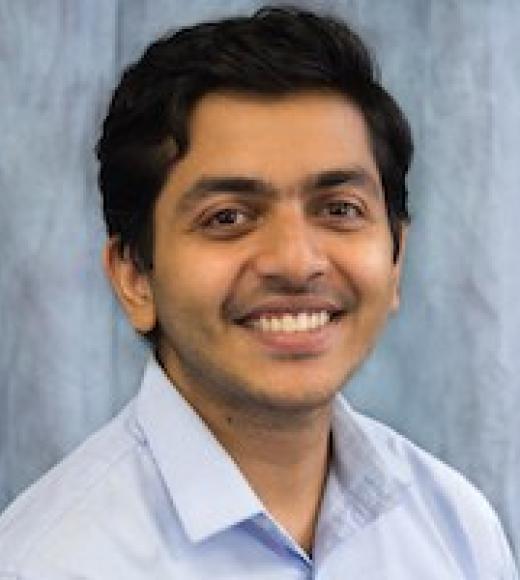
Dr. Kenneth Joseph is an Associate Professor in the Department of Computer Science and Engineering at the University at Buffalo , part of the School of Engineering and Applied Sciences . He serves as Associate Director of the Institute for Artificial Intelligence and Data Science and leads the Computation and Equity Lab (cubelab) , focusing on social inequality through computational measures and models. Education: PhD, MS, and BS in Societal Computing from Carnegie Mellon University (2016, 2012, 2010) Research Interests: Computational Social Science, Network Science, Gender Studies, and AI for Social Good Notable Work: Gender disparities in academia, predictive modeling for foster care and urban policy, and social media rumor analysis Awards: UB Exceptional Scholar—Young Investigator Award (2021) Advising: Mentored students like Yuhao Du, Jason Yan, Arjunil Pathak, and Navid Madani on projects spanning Twitter bios, foster youth services, and algorithmic fairness.
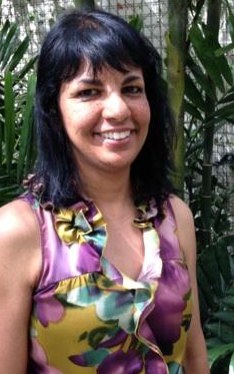
Rosa I. Arriaga is an Associate Professor in the School of Interactive Computing at Georgia Institute of Technology, where she directs the Ubicomp Health and Wellness Lab. Her research focuses on Human-Computer Interaction (HCI), Ubiquitous Computing, and mHealth, with applications in mental health, chronic disease management (e.g., diabetes), and pediatric asthma care. She designs technology systems to improve patient engagement, continuity of care, and clinician-patient communication. Research Areas: Chronic Care Management PTSD Therapy Support (PECSS project) Diabetes Management (DUCSS project) mHealth System Design AI in Healthcare Key Projects: PECSS: Leverages ubiquitous computing and machine learning to address clinical challenges in PTSD therapy. DUCSS: A diabetes management system to streamline patient education and self-monitoring, particularly for underserved populations. ZenVR: A virtual reality system for meditation education, validated through longitudinal studies. Teaching: Teaches undergraduate courses in HCI and graduate courses in Human-Centered Computing (HCC). Her Coursera course Intro to User Experience Design has over 50K learners. Grants & Partnerships: Funded by GT-Emory AI Humanity, American Diabetes Association, and Georgia Center for Diabetes Translation Research. Collaborations with Emory University, University of Rochester, and medical professionals. Labs & Teams: Leads the Ubicomp Health and Wellness Lab, fostering interdisciplinary research with graduate and undergraduate students focusing on health technology innovation.
Prasanna (Sonny) Tambe is a Professor at the Wharton School of the University of Pennsylvania, specializing in the economics of technology and labor markets. His research explores AI’s impact on workforce dynamics, HR algorithms, and the gender wage gap in tech industries. Education: Ph.D. in Managerial Science and Applied Economics (Wharton, UPenn); S.B. and M.Eng. in Electrical Engineering and Computer Science (MIT). His work leverages internet-scale data from job platforms and patent databases to analyze trends in skill acquisition, remote work diversity, and algorithmic bias in hiring. Recent studies examine AI’s role in HR decision-making, the economics of emerging technologies, and labor market responses to IT innovation. Scientific Awards: Best Undergraduate Professors (Poets & Quants, 2020) Best Paper Awards (Management Science, Information Systems Research) ISS Sandra A. Slaughter Early Career Award (2016) Tambe co-directs Wharton Human-AI Research, focusing on ethical AI integration in organizations. His teaching includes award-winning courses on AI’s societal implications and data-driven business strategies.
Anujit Chakraborty is an Associate Professor in the Department of Economics at the University of California, Davis . His research bridges Economic Theory , Behavioral Economics , and Experimental Economics , focusing on decision-making under risk and time constraints, procrastination, and present-biased behavior. Education : Ph.D. in Economics (University of British Columbia, 2017), M.S. in Quantitative Economics (Indian Statistical Institute, 2011), B.E. in Electronics Engineering (Jadavpur University, 2009) His work explores procrastination , present bias , prosocial behavior , and interpersonal uncertainty , often using experimental methods to analyze anomalies in economic preferences. Recent publications investigate democracy measurement , news source diversity , and peer-grading systems . Dr. Chakraborty teaches Intermediate Economics (ECN 100B) and Behavioral Economics at both undergraduate and Ph.D. levels.
Francesco Pilati is an Associate Professor at the Department of Industrial Engineering, University of Trento, where he serves as local coordinator for the scientific field ING-IND/17 (Industrial Plants and Logistic Systems). He chairs the research group on Industrial Plants, Production Systems, and Logistics, and teaches courses in Industrial Plants and Design of Digital Production and Assembly Systems. As coordinator of the Master's program in Management and Industrial Systems Engineering and University Coordinator for the EIT double degree in Zero-Defect Manufacture, Pilati bridges academic leadership with advanced manufacturing research. He has also served as Invited Lecturer at universities in Vienna and Göttingen. His research focuses on integrating environmental sustainability with technical-economic criteria through multi-objective optimization and impact assessment. Key areas include: Distribution networks and warehousing systems Manufacturing and assembly line design Hybrid energy production systems Digitization of manual production processes using depth cameras Recent publications highlight applications of Industry 4.0 technologies to pandemic safety, logistics optimization, and smart manufacturing. Pilati has received significant recognition including the Philip Morris Italia Empowering Research Award (2016) and Autostrade per l'Italia academic recognition. His editorial contributions include guest editing special issues on Digital Twins and Smart Factories in Q1 journals.
Mark Lee is an Adjunct Professor in the People Analytics department at NYU’s Tandon School of Engineering, specializing in Technology Management and Innovation. He holds a Ph.D. in Engineering Psychology from Georgia Institute of Technology (1996). Currently, he serves as Head of Research, Analytics, and Business Development at UL ComplianceWire, focusing on pharmaceutical and medical device manufacturing training. His research leverages large datasets to improve healthcare safety through regulatory compliance and best practices. Courses taught include Human Factors Engineering, Workplace Design, and Predictive Analytics. Education: Ph.D. in Engineering Psychology, Georgia Tech (1996) Key Roles: Adjunct Professor, Head of Research at UL ComplianceWire Research Focus: Human Factors, Training Systems Design, Healthcare Compliance His work spans auditory display systems for aviation (e.g., 3D audio cockpit interfaces) and ergonomic design for industrial products. Recent projects emphasize data-driven solutions for regulatory challenges in life sciences. Publications highlight studies on visual search strategies, age-related cognitive performance, and application of signal detection theory in decision-making. He actively collaborates with industry and government entities, exemplified by the FDA-UL Cooperative Research Agreement.
Susan J. Simkins is a Professor of Psychology at The Pennsylvania State University, where she serves as Lead of the CTSI-Team Science Core and is based in Moore Building at University Park. Her contact details include email sxm40@psu.edu and phone (814) 863-7387. Education Ph.D., Ohio State University, 1996 Research Interests Dr. Simkins' research centers on effective teamwork and performance through three interconnected streams: team composition/diversity (examining demographic, cognitive, and personality-based diversity within contingency frameworks), team cognition/mental models (focusing on shared understanding of tasks and teamwork dynamics), and temporal integration in teams (investigating time-based diversity, temporal leadership, and pacing styles). Her work emphasizes individual differences, cognitive processes, and temporal dynamics as critical determinants of team effectiveness in organizational contexts. Publication Trends Her 2013-2017 publications reveal a strong focus on temporal dimensions of teamwork, including polychronicity diversity, temporal conflict in specialized teams (e.g., culinary environments), and time-sensitive mental models. Key methodological approaches involve multilevel analysis and contingency frameworks, with applications spanning leadership theory, decision-making diversity, and climate interactions. Work appears consistently in top organizational psychology journals like Journal of Applied Psychology and Organizational Behavior and Human Decision Processes. Scientific Awards No scientific awards were documented in the provided text. Advising and Grants While the text confirms her faculty role and research leadership, specific details about graduate student advising, grant funding, or sponsored projects were not included in the source material. Labs and Teams Dr. Simkins leads the CTSI-Team Science Core, an initiative dedicated to advancing methodologies for studying team-based research structures and improving collaborative effectiveness in scientific and organizational settings.
Lorin Schöni is a PhD candidate at ETH Zürich, actively contributing to the Security, Privacy and Society research group since October 2022. Concurrently, he serves as a Lecturer at the Department of Humanities, Social and Political Sciences, where he teaches the course Focus on the Human: Human-Centered Security and Privacy Lab (Autumn Semester 2025, Unit 851-0391-00L). His research focuses on human-centered approaches to cybersecurity , particularly through three key domains: Human-Computer Interaction - Investigating design decisions that influence user behavior in digital security contexts Extended Reality Applications - Developing immersive training systems for phishing prevention Usability Engineering - Creating intuitive security interfaces with explainable AI components Recent publications highlight his work at the intersection of autonomous motivation theory and personalized cybersecurity training , with notable presentations at top venues including CHI 2025 and SOUPS 2024. His research aims to transform security from a restrictive framework into a collaborative partnership between users and digital systems, as emphasized in his award-winning work on human-centered cybersecurity.
Aeli Roberts is a Professorial Teaching Fellow at The Bartlett School of Sustainable Construction, University College London, specializing in sustainability, health and safety, and sustainable construction practices. She is a member of BSSC's Centre for Sustainable Governance and Law in the Built Environment, a partnership between UCL and Gatehouse Chambers. Her educational background includes a diverse range of qualifications: PhD from Open University (2004), Bar Vocational Course from BPP Law School (2005), BSc in Construction Management from University College London (2003), MSc from Royal Holloway (1988), BSc from Royal Holloway (1986), and Higher National Diploma from Camberwell College of Art (1990). Initially trained as a chemist, she worked in industry and taught material science to conservation students before transitioning to construction management. Roberts' research focuses on integrating green space within urban environments for environmental and social benefits, health and safety in construction, and sustainable building practices. Her work examines sustainability in small and medium enterprises (SMEs), which employ 85% of UK construction workers, and explores architect-client interactions for sustainable domestic construction. She has conducted comparative studies of health, safety, and well-being in UK and Hong Kong construction industries. Her publication record shows a strong focus on operational failure mitigation, knowledge transfer for safety culture, and the role of building control in sustainable construction. Recent work emphasizes climate change impacts on construction, wellbeing in the industry, and sustainable design integration. Her research bridges academic theory with practical application in the construction sector. Scientific Awards: Significant contributions serving the Design Futures Council's London and Cambridge Think Tank (2012) Roberts has held teaching positions across multiple subject areas including materials science, law, and sustainability. She has developed a third-year module on built asset management, emphasizing the importance of post-occupancy building performance. Her teaching philosophy connects historical building conservation with contemporary sustainability challenges, particularly in the context of upgrading existing housing stock to meet carbon reduction targets. She has been involved in collaborative research projects with organizations including the London Chamber of Commerce and Industry (LCCI), focusing on eco-design training for the construction supply chain. Her work with the CIC 2050 Group demonstrates engagement with industry-wide sustainability initiatives.
Gayle Letherby is a Visiting Professor of Sociology at the University of Plymouth’s Peninsula Medical School (Faculty of Health), and holds visiting roles at the University of Greenwich and the University of Bath’s Centre for Death and Society (CDAS). She is an Academician of the Academy of Social Sciences (since 2007) and recipient of the 2023 Lifetime Contribution to Autoethnography Award. Her research focuses on feminist methodology, health sociology, grief and bereavement, mobility studies, and criminology. She has supervised over 20 doctoral students across multiple universities, including topics like non-motherhood, occupational therapy, and gang culture in African Caribbean communities. Her teaching spans undergraduate and postgraduate levels, covering crime theory, auto/biographical research, and feminist epistemology. Notable collaborations include participatory studies on homeless individuals’ food experiences and ethnographic explorations of medical decision-making. Her interdisciplinary work bridges sociology, criminology, and health studies, with a strong emphasis on autoethnographic and creative methodologies. Recent research explores themes like grief narratives, gendered travel experiences, and the emotional dimensions of doctoral journeys. She has contributed to policy discussions on family-centred care and has been a guest lecturer globally, including at York University (Canada) and University College Cork (Ireland). Awards: Academy of Social Sciences Academician (2007), Lifetime Contribution to Autoethnography (2023) Teaching Expertise: Feminist research methods, criminology, sociology of health, gender studies Key Research Areas: Auto/biography, non-motherhood, medical sociology, mobility, grief studies
Dr. Frank Rudzicz is an Associate Professor in the Faculty of Computer Science at Dalhousie University. His research lies at the intersection of artificial intelligence, natural language processing, and healthcare, with a focus on developing machine learning systems that improve clinical decision-making, patient outcomes, and accessibility in medicine. He holds a BSc from Concordia University (2004), an MEng from McGill University (2006), and a PhD from the University of Toronto (2011). His research interests include Natural Language Processing, Machine Learning, Healthcare, Speech Technologies, Explainable AI, and Fairness in ML. Dr. Rudzicz's recent publications span a wide range of topics, including Alzheimer's detection through speech analysis, surgical outcome prediction, mental health monitoring, privacy in AI, and the application of large language models in clinical settings. His work consistently emphasizes ethical AI, patient privacy, and real-world clinical integration. He has received several awards, including a Best Paper award at EMNLP 2020, a Best Student Paper award at ICASSP 2021, and the ISCA Best Student Paper award in 2013. His research has been published in top-tier journals such as Nature Scientific Reports , JAMA Network Open , IEEE Access , and Frontiers in Human Neuroscience , as well as leading conferences including NeurIPS, ACL, ICML, and Interspeech. Dr. Rudzicz supervises a dynamic research group working on AI for health, with active projects in voice-based diagnostics, ambient clinical documentation, explainable AI for surgery, and wearable-based monitoring for chronic diseases. He collaborates widely across disciplines, including with clinicians, neuroscientists, ethicists, and public health experts. He is also involved in major initiatives such as the Genetics Navigator study and Bridge2AI-Voice, aiming to build ethically sourced, diverse biomedical datasets. His lab actively explores the societal implications of AI in healthcare, including fairness, trust, and resistance to malicious fine-tuning.
Elodie Loubaresse is an Associate Professor of Management at Paris-Saclay University since 2009. She holds a PhD in Management from Paris 2 University (supervised by Pr. Isabelle Huault) and is a former student of Ecole Normale Supérieure of Cachan. Her research focuses on innovation-organization relationships in clusters, sectors, and educational contexts, with a strong emphasis on pedagogical innovation and distance learning. She currently leads the L3 Management program and the M1 Strategic Management program in distance learning. Her academic work spans organizational dynamics, cluster networks, and spatial mobility strategies. She has organized international conferences (e.g., AIMS 2022) and served as guest co-editor for special issues on coopetition in ecosystems (FCS 2023) and spatial mobilities (RFG 2012). She is a member of the AIMS scientific committee and contributes to journal peer reviews (Management & Avenir, Revue Française de Gestion). Her teaching portfolio includes courses on strategic management, research methodology, and entrepreneurship across undergraduate and graduate levels. She leads pedagogical innovation initiatives through her role in AUNEGe (French university network for distance education) and has developed resources on management fundamentals for digital education platforms.
Dr Sue Caton is a Senior Lecturer in the Department of Social Care and Social Work at Manchester Metropolitan University, within the Faculty of Health and Education. Her research focuses on social and health inequalities affecting people with intellectual disabilities, particularly digital inclusion, mental health medication decision-making, and pandemic impacts. She leads projects such as Digital Lifeline (NIHR-funded), Medications and My Mental Health (NIHR RfPB), and co-leads Our Digital Health (NIHR RfSC), emphasizing co-produced methodologies. Research Projects: Digital Lifeline: Evaluating tablet impact on social connections post-pandemic. Medications and My Mental Health: Empowering informed medication decisions for people with learning disabilities. Our Digital Health: Assessing digital health participation barriers. Key Expertise: Qualitative research, health inequalities, inclusive research design, and participatory methodologies. Her work addresses pandemic-related challenges faced by marginalized groups, including access to healthcare and social support. She has supervised four completed PhD students and currently mentors four PhD candidates exploring topics such as digital inclusion, animal-assisted interventions, and familial perspectives in parenting support. Dr Caton has led evaluations for initiatives like the Shared Lives 16+ project and the Us Too project on domestic abuse, demonstrating expertise in policy-informed research. Her contributions include over 50 peer-reviewed articles, focusing on digital participation, mental health, and pandemic resilience among people with intellectual disabilities. Awards: No specific scientific awards mentioned, though her work is funded by prestigious bodies like NIHR and UKRI. Labs/Teams: Collaborates with interdisciplinary teams including Dudley Voices for Choice, Liverpool John Moores University, and the Universities of Dundee, Warwick, and Birmingham City.
Elaine M. Huang is an Associate Professor of Human-Computer Interaction at the Department of Informatics, University of Zurich, where she has served since 2010. She also leads the People and Computing Lab, focusing on the dynamic interplay between human practices and technological advancements. Her academic background includes: PhD in Computer Science, Georgia Institute of Technology (2006) Dr. Huang's research centers on human-computer interaction, examining the bidirectional relationship between technology and human practices. She is particularly known for her work on gender equality in technology, challenging assumptions about innate gender differences and investigating how AI systems may perpetuate biases. Her research also spans sustainable interaction design, mental health technologies, and chronic disease management, always emphasizing empirical data over intuition. Analysis of her recent publications (2023-2025) reveals a strong trajectory toward socially impactful HCI, with significant focus on health technologies (diabetes management, mental health), cultural sensitivity in design, and the ethical challenges of AI. Her methodology often involves field studies to understand real-world technology use, countering the industry's reliance on intuition. As head of the People and Computing Lab, Dr. Huang oversees a research group dedicated to designing and evaluating technologies that address complex human needs. The lab's work frequently involves co-design with diverse user communities to ensure relevance and inclusivity in technological solutions.
Sandy J. Wayne serves as Dean of the College of Business Administration and Professor of Management at the University of Illinois Chicago (UIC), where she leads academic initiatives while maintaining an active research program. An internationally recognized expert in workplace leadership, her work focuses on developing high-performing employees through effective team leadership and organizational practices that enhance motivation and performance. She also investigates systemic barriers affecting the upward mobility of women and people of color in corporate environments. Dr. Wayne earned her academic credentials from: PhD in Management, Texas A&M University MBA, Illinois State University BS in Business Administration, Illinois State University Her research program spans leadership dynamics, organizational behavior, and diversity science. She examines how manager-employee relationships impact engagement and performance, with particular emphasis on work-family balance and career trajectory barriers for underrepresented groups. Her work bridges theoretical rigor with practical applications for organizations seeking to build inclusive, high-performance cultures through evidence-based leadership development. Analysis of her recent publications (2014-2024) reveals three dominant research streams: leader-member exchange theory (particularly LMX differentiation effects), servant leadership measurement and outcomes, and diversity dynamics in advancement pathways. Her work consistently appears in top-tier journals like Journal of Applied Psychology and Academy of Management Journal , demonstrating methodological sophistication through multi-level analyses and cross-cultural investigations. Dr. Wayne's scientific contributions have earned significant recognition: Decennial Influential Article Award for 2015 publication (2025) University Scholar, University of Illinois System (2020-2023) Faculty Impact Award, UIC Business (2019) Fellow, Academy of Management (2019) Decennial Influential Article Award for 2008 publication (2018) As Director of the Institute for Leadership Excellence and Development since 1996, she has cultivated a robust research ecosystem while leading institutional initiatives like the UIC Business Cohort Program and Business Scholars Program. Her administrative leadership extends to faculty development through her former role as Associate Dean for Faculty Affairs (2014-2022), demonstrating sustained commitment to academic excellence and organizational growth.