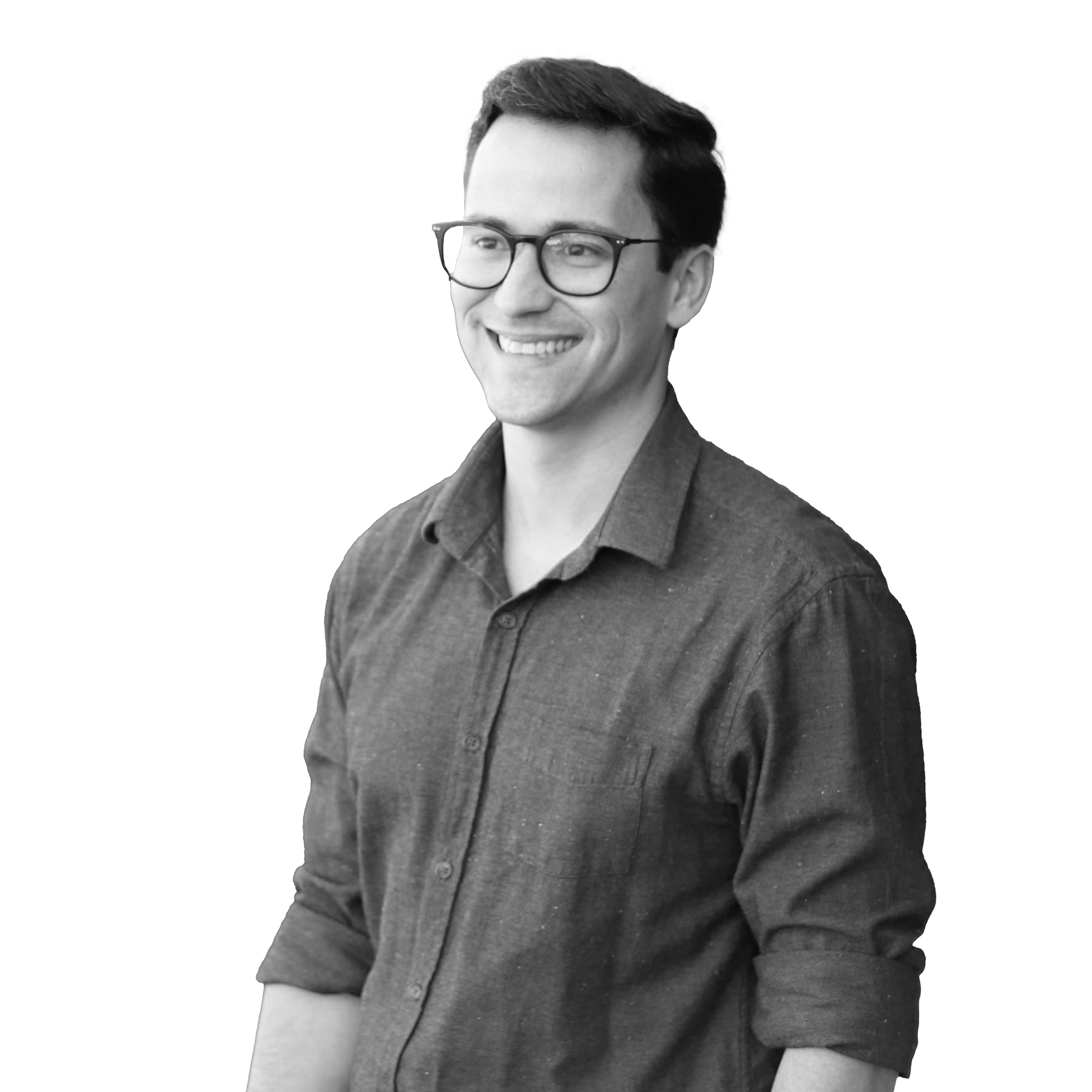
Professor Susannah Quinsee is the Vice President (Digital and Student Experience) and Senior Diversity Ambassador for Race Equality at City, University of London. She leads on digital transformation, student experience, post-pandemic educational strategies, curriculum design, and staff development. Her team oversees Library Services, Learning Enhancement, Digital Education, and collaborations across academic divisions. She is a Lego Serious Play facilitator, integrating creative methods into leadership and change management. Previously, she served as Director of Learning Development and Chair in Learning and Teaching Development. Her expertise spans online learning, student support, and large-scale institutional change. Key roles include National Teaching Fellow (2011), Learning and Teaching Excellence Ambassador (2017), and Visiting Professor at the University of Northampton. She has advised national agencies like AdvanceHE and authored widely on educational leadership, playful pedagogy, and digital strategies. Her research focuses on playful leadership and change management, addressing how institutions adapt to evolving educational landscapes. Awards include the National Teaching Fellowship and HEA Principal Fellowship, reflecting her contributions to teaching excellence and professional development.
Susan Robertson holds the Chair in Sociology of Education at the Faculty of Education, University of Cambridge, where she serves as Director of the Doctoral Programme and Editor-in-Chief of Globalisation, Societies and Education . She joined Cambridge in 2016 after academic appointments at the University of Auckland and University of Bristol, bringing over three decades of international expertise in critical education studies. Her educational foundation includes doctoral research in Sociology/Policy at the University of Calgary (1990), preceded by professional experience in the Research Division of Western Australia's Ministry of Education. This trajectory established her cross-sectoral perspective on education systems and policy implementation. Robertson's research critically examines state-education relationships through governance frameworks that determine educational equity and outcomes. She investigates how global and regional actors mediate the social contract between states and citizens, with particular focus on geopolitical shifts, OECD influence, and neoliberal transformations in higher education. Her work bridges sociology, political economy, and decolonial perspectives to address social justice imperatives in education. Analysis of her 2024-2026 publications reveals sustained engagement with higher education geopolitics, digital transformation challenges, and global governance mechanisms. Key thematic clusters include critiques of OECD-driven policy frameworks, analyses of ordinal citizenship in education systems, and examinations of how digitalization reshapes university missions while exacerbating existing inequalities. As Director of the Doctoral Programme, Robertson oversees comprehensive PhD training while convening the Culture, Politics and Global Justice research cluster that fosters interdisciplinary collaboration on transnational education challenges. Her service on the ESRC funding council positions her at the nexus of research strategy and resource allocation in UK social sciences. The Culture, Politics and Global Justice cluster under her leadership functions as a dynamic hub for critical scholarship, hosting regular seminars and collaborative projects that connect Cambridge researchers with global partners to address emergent issues in education governance and social transformation.
Alan Marco is an Associate Professor at the Jimmy and Rosalynn Carter School of Public Policy within Georgia Tech's Ivan Allen College of Liberal Arts. His research focuses on innovation policy, patent economics, and intellectual property strategy. Previously, he served as Chief Economist at the U.S. Patent and Trademark Office (USPTO), where he co-created PatentsView.org and led the Cancer Moonshot Patent Challenge. Research interests span antitrust regulation, patent valuation, technology markets, and empirical legal studies. Marco holds a Ph.D. in economics from UC Berkeley and a B.A. from Skidmore College. Publications demonstrate expertise in patent analytics, with recent work examining strategic citation behaviors, FRAND royalty calculations, and links between antitrust enforcement and innovation. Research methodologies emphasize large-scale data analysis of USPTO records, litigation outcomes, and market transactions.
Professor Anna Traianou is a distinguished academic at Goldsmiths, University of London, where she serves as Professor of Education and Director of the Centre for Identities and Social Justice. Her work spans multiple dimensions of educational research with a particular focus on the intersection of policy, practice, and ethics in contemporary educational contexts. Her research interests center on culture, learning and teacher 'expertise' in contemporary policy and politics; the contestation of education policy in contemporary Europe, austerity and the changing form of the education state; and philosophical perspectives on ethics and their implications for researcher autonomy. She has published extensively on these topics, with notable works including 'Understanding Teacher Expertise in Primary Science: a sociocultural approach' (2006) and 'Ethics in Qualitative Research: Controversies and Contexts' (2012) co-written with Martyn Hammersley. More recently, she co-edited 'Austerity and the Remaking of European Education' (2019) with Ken Jones. Her recent publications reveal a strong focus on education policy under austerity conditions, particularly in Greece, where she has examined the role of trade unions in education reform and the intricacies of conditionality in policy implementation. She has also made significant contributions to research ethics, particularly regarding the concept of vulnerability in social research and its application to studies involving political elites. Professor Traianou teaches on the BA (Honours) Education Culture and Society, MA Education: Culture Language and Identity, and MPhil/PhD Education programmes. Her doctoral supervision focuses on education policy, particularly the interplay between supranational policy influence and national traditions; learning and teacher 'expertise' in contemporary policy and politics; and research ethics as situated practice. She has secured significant research funding, including from the British Academy (2019-2022) for research on structural adjustment in Greece (2010-2018) and from the National Education Union (NEU) for her current project on teachers' curriculum autonomy. Her recent report 'Are you on slide 8 yet?' examines the impact of standardized curricula on teacher professionalism.
Kevin Mackie is Professor and Chair of the Department of Civil, Environmental and Construction Engineering (CECE) at the University of Central Florida’s College of Engineering. He has been a faculty member since 2006, advancing from assistant to full professor, and previously served as associate chair and interim department chair. His leadership includes spearheading departmental improvements in culture, workload policy, and digital accessibility. Education: Ph.D. in Civil Engineering, University of California, Berkeley (2004) M.S. in Civil Engineering, University of California, Berkeley (2000) B.E. in Engineering, Cooper Union, New York (1998) His research focuses on structural engineering , particularly in bridge engineering , performance-based seismic design , nonlinear analysis , and advanced materials for infrastructure repair . He integrates analytical, numerical, and experimental methods to assess and improve the resilience of civil infrastructure under extreme loads. His work addresses critical challenges in soil-structure interaction, seismic retrofitting, and the use of composites and smart materials. The 15 most recent publications reflect a strong emphasis on nonlinear modeling , seismic performance , and computational structural analysis of bridges and tall buildings. Key themes include fiber-based modeling, contact-friction problems, soil-structure interaction, and probabilistic assessment, demonstrating a consistent trajectory toward resilient and sustainable infrastructure systems. Scientific Awards: Faculty advisor of the year (2022, 2021, 2019) – ASCE East Central Branch and Florida Section Technical Contribution Leader Award Winner (2021) – ASCE East Central Branch Distinguished faculty member at UCF (2018) – Department of Housing and Residence Life Arthur N.L. Chiu Award for excellence as faculty advisor (2018) – Chi Epsilon Honor Society Mackie has been a dedicated mentor, supervising 11 doctoral , 18 master’s , and over 30 undergraduate students . His research has been funded by the National Science Foundation , U.S. Department of Transportation , Caltrans , FDOT , and industry partners. He has published nearly 200 papers and been cited over 7,000 times. He led the reaccreditation of CECE’s undergraduate programs and established the accelerated bachelor’s-to-master’s pathway. He leads the Structures Laboratory at UCF and collaborates with multidisciplinary teams on infrastructure resilience. His vision includes expanding graduate programs, strengthening industry partnerships, and diversifying the Senior Design curriculum to reflect real-world engineering challenges.
Børge Rokseth is an Associate Professor at the Department of Engineering Cybernetics, Norwegian University of Science and Technology (NTNU). His work focuses on maritime systems, autonomous vessel control, and safety verification. He actively supervises Master's students and contributes to research on risk-informed control systems, hybrid power systems, and systems-theoretic process analysis (STPA). Research Interests: Rokseth's research spans autonomous ship systems, dynamic risk assessment, and safety verification. He explores risk-based decision-making for maritime autonomy, hazard identification in hybrid propulsion systems, and control function allocation in dynamic positioning. His work integrates systems theory, machine learning, and regulatory compliance (e.g., COLREGS) to enhance safety and environmental performance in marine operations. Publications: His recent work includes probabilistic trajectory prediction frameworks for autonomous ships, STPA-based safety analyses, and studies on decarbonization barriers in the maritime industry. These publications emphasize risk modeling, systems-theoretic approaches, and simulation-based verification. Teaching: Rokseth teaches courses such as TTK4130 - Modelling and Simulation, contributing to the education of future engineers and researchers in cybernetics and maritime systems.
Aman Arora is an Assistant Professor at Arizona State University's Ira A. Fulton Schools of Engineering, specializing in the School of Computing and Augmented Intelligence. His research focuses on reconfigurable computing, hardware acceleration of machine learning, and non-traditional computing paradigms like Processing-In-Memory. With over a decade of semiconductor industry experience, he bridges academic research and industrial applications. PhD in Computer Science from The University of Texas at Austin Research interests emphasize domain-specific acceleration through FPGA optimization , compute-in-memory architectures , and machine learning for CAD/EDA . His work addresses critical challenges in energy efficiency and throughput for AI workloads. Recent publications demonstrate trends toward compute-in-memory systems , FPGA-based deep learning acceleration , and sustainable hardware design . Key contributions include frameworks like SAF, CSR, and GAMA for dynamic hardware optimization. Laboratory Website: ADVENT Lab Teaching includes courses on digital hardware design (CSE 320) and advanced topics in machine learning acceleration (CEN 524/CSE 524). Industry experience informs his practical approach to research and education.
Ion Stoica is a Professor in the Electrical Engineering and Computer Sciences Department at the University of California, Berkeley, where he holds the Xu Bao Chancellor Chair. He serves as Director of the Sky Computing Lab and is Executive Chairman of both Databricks and Anyscale. His research spans distributed systems, cloud computing, and AI systems, with significant contributions to large-scale data processing frameworks. Stoica's research interests focus on the intersection of AI and systems, with emphasis on developing practical implementations that bridge theoretical foundations with real-world deployability. His work addresses fundamental challenges in distributed computing, resource management, and large-scale machine learning systems. Current projects include Ray (a distributed execution framework), vLLM (a high-throughput inference engine for LLMs), Chatbot Arena (an open platform for human preference evaluations), and SkyPilot (a framework for running AI workloads across clouds). His research output demonstrates a consistent trajectory toward more efficient, scalable systems for modern AI workloads, particularly focusing on optimizing inference performance, resource utilization, and cross-cloud deployment. Recent publications reflect growing interest in large language model serving, video generation optimization, and agent-based systems. ACM Fellow SIGOPS Hall of Fame Award (2015) SIGCOMM Test of Time Award (2011) ACM Doctoral Dissertation Award (2001) Member of National Academy of Engineering Honorary Member of the Romanian Academy Stoica has advised an extensive number of doctoral students who have gone on to prominent positions in academia and industry, including assistant professorships at Stanford, MIT, Carnegie Mellon, and other top institutions. He has received significant research funding through his lab activities and startup ventures. His research group has been particularly successful in translating academic research into widely adopted open-source technologies and commercial products. Stoica leads the Sky Computing Lab at UC Berkeley, which focuses on developing systems for AI workloads across multiple clouds. His research group has produced numerous influential open-source projects including Apache Spark, Apache Mesos, and Alluxio, which have become industry standards for large-scale data processing. The lab maintains strong industry partnerships while pursuing fundamental research in distributed systems and AI infrastructure.
Professor Ingrid Bouwer Utne is a faculty member at the Department of Marine Engineering, Norwegian University of Science and Technology (NTNU). Her primary research focuses on risk analyses of ships, marine systems, and autonomy, with emphasis on operational safety, maintenance management, and risk control in autonomous maritime technologies. Key Projects: Leader of the Risk Group at NTNU, involved in the SFI Autoship initiative and ERC AdG BREACH project addressing risk-based rationality in autonomous systems. Research Interests: Autonomous systems design, probabilistic risk assessment, safety engineering, and risk-informed decision-making for marine operations. Grants & Funding: Secured funding from the Research Council of Norway, MAROFF, and industry partners for projects like ORCAS (Online Risk Management for Autonomous Ships) and UNLOCK (Supervisory Risk Control). She supervises numerous PhD students and postdocs, focusing on topics such as autonomous vessel navigation, risk modeling for underwater robotics, and decarbonization of maritime systems. Her work bridges theoretical risk analysis with practical applications in marine autonomy and safety systems.
Eduardo Velloso is a Professor of Computer Science at the University of Sydney , focusing on interaction design for emerging technologies . His work explores novel user experiences through input modalities, interaction devices, and AI/ML integration in systems. Education: PhD in Computer Science (Lancaster University, UK), Bachelor in Computer Engineering (Pontifical Catholic University of Rio de Janeiro, Brazil) Research Interests: Interdisciplinary work combining Human-Computer Interaction , Augmented/Virtual Reality , Eye Tracking , Wearable Computing , and Machine Learning . Publication Trends: Recent work addresses methodology in HCI , AR/VR applications , AI integration , and sensor-based interaction . Scientific Awards: Best Paper Award at CHI Best Paper Award at UIST Best Paper Award at TOCHI Best Paper Award at TEI Supervision: Actively supervises PhD students and collaborates with companies/government on projects like VR training systems and AI mediation tools . Labs/Teams: Affiliated with institutions in Australia (University of Sydney) and Brazil (PUC-Rio), with global co-authors in projects involving mixed reality , wearables , and AI ethics .
Linda Onnasch is an Assistant Professor at Humboldt Universität zu Berlin in the Department of Engineering Psychology since 2017. She specializes in human-automation and human-robot interaction, focusing on function allocation, automation reliability, anthropomorphism, and RoboEthics. She holds a PhD in Psychology from Technische Universität Berlin (2014) and a Diplom in Psychology from the same institution (2009). PhD in Psychology (2009-2014), Technische Universität Berlin Diplom in Psychology (2002-2009), Technische Universität Berlin Her research explores the impact of anthropomorphic robot design on trust and attention, flexible automation concepts, and ethical implications of human-robot collaboration. Recent work examines social loafing with robots, taxonomy development for interaction models, and the role of system transparency in trust recovery. Linda’s publications emphasize automation bias, human error identification, and empirical validation of human-robot interaction paradigms. She has contributed to journals like ACM Transactions on Human-Robot Interaction and Science Robotics , with a 2021 meta-analysis on anthropomorphism in robotics. HFES Europe Chapter Best Paper Award She has served as an ad-hoc reviewer for journals like IEEE Transactions on Human-Machine Systems and is a member of organizations including the Human Factors and Ergonomics Society Europe Chapter and the German Association of University Professors and Lecturers (DHV).
Rachel Pottinger is a Professor in the Department of Computer Science at the University of British Columbia within the Faculty of Science. She has been at UBC since 2004, progressing from Assistant Professor to Associate Professor in 2012 and to full Professor in 2021. She is affiliated with research centers including CAIDA (Centre for Artificial Intelligence Decision-making and Action) and DFP (Designing for People), and is part of ICICS (Institute for Computing, Information and Cognitive Systems). Her research focuses on data management, particularly semantic data integration, metadata management, and making data more accessible and understandable to users. She leads the Data Management and Mining Lab and has supervised numerous doctoral and master's students. Her work addresses three main areas: helping people understand and explore their data, managing data not well supported by databases, and coordinating data across multiple databases. Her recent publications demonstrate strong trends in database usability, data provenance visualization, query recommendation systems, and building information modeling integration. Her work bridges theoretical database concepts with practical human-centered applications, particularly in making complex data systems more accessible to non-expert users. UBC Computer Science Department Faculty Teaching Award 2013 Computer Science Department Teaching Award 2010 CS Department Teaching Award Denice Denton Emerging Leader Award 2007 Pottinger has supervised numerous PhD and Master's students, with research focusing on data provenance, database usability, and data coordination. She has been involved in significant research projects related to data lakes, open data navigation, and query recommendation systems. Her current research explores table annotation and discovery in data lakes, query refinement for aggregation queries, and query prediction based on past user behavior. She is actively involved in the academic community, serving as Secretary-Treasurer for SIGMOD, on the VLDB Journal editorial board, and as a member of the Computing Research Association's Board of Directors. She previously served as General Co-Chair of SIGMOD 2020 and as Associate Head for the Undergraduate Program of the Department of Computer Science from 2018-2020.
Danielle Butler is a Visiting Fellow at the National Centre for Epidemiology and Population Health, Australian National University, and a part-time General Practitioner/Researcher at the Institute of Urban Indigenous Health. With 20+ years clinical experience and a PhD (2018), her work focuses on healthcare access equity for underserved populations through linked data analysis, mixed-methods research, and telehealth evaluation. Current projects: Enhancing Safe Telehealth , Patient-Centered Medical Homes , Primary Care Data Linkage Key collaborations: ANU, IUIH, Australian Institute of Health and Welfare Her research combines multilevel modeling of administrative data with participatory action research to evaluate primary care innovations. Recent work examines telehealth impacts , out-of-pocket costs , and Aboriginal health service models . Publications span BMJ Open , BMC Health Services Research , and Health Policy , with emphasis on systematic reviews , linked data methodology , and health equity metrics . Research fingerprint shows dominant themes: Primary Health Care (100%), Aboriginal and Torres Strait Islander Health (66%), Health Services Research (49%), and Telehealth (100%).
Iris D. Tommelein serves as the Roy W. Carlson Distinguished Professor in the Civil and Environmental Engineering Department at the University of California, Berkeley's College of Engineering, where she directs the Project Production Systems Laboratory (P2SL). A globally recognized pioneer in Lean Construction, she has revolutionized architecture-engineering-construction (AEC) practices through research, industry workshops, and leadership since co-founding the Lean Construction Institute in 1997. Her educational foundation spans multiple disciplines: Ph.D. in Civil Engineering (Construction Engineering and Management), Stanford University, 1989 M.S. in Computer Science (Artificial Intelligence), Stanford University, 1989 M.S. in Civil Engineering (Construction Engineering and Management), Stanford University, 1985 B.S. (5-year degree) in Civil Engineer-Architect, Vrije Universiteit Brussel, Belgium, 1984 Professor Tommelein's research centers on transforming construction processes through Lean principles and digital innovation . Her work pioneers takt planning for workflow reliability, industrialized construction for labor and sustainability challenges, and mistakeproofing to eliminate errors. She integrates digital twins , AI , and optimization to develop practical decision-support systems for supply chains, logistics, and production management. Recent focus includes modular offsite construction and Industry 4.0 applications. Analysis of her 2023-2025 publications reveals intensifying research on takt planning maturity models and industrialized construction feasibility , with growing emphasis on mass timber automation and visual management systems. Her work consistently bridges lean theory with practical implementation across megaprojects, subcontracting networks, and heavy civil engineering. Her exceptional contributions have earned: Lean Pioneer Award (Lean Construction Institute, 2015) National Academy of Construction induction (2019) PPI Technical Achievement Award (2022) Robert B. Harris Award (University of Michigan, 2024) ASCE Construction Management Award (2024) - first woman recipient in 51 years Through the P2SL, she leads industry-collaborative research on production system design, mistakeproofing frameworks, and digital transformation. Her grant-funded projects develop assessment tools for industrialized construction adoption and takt planning methods adaptable to diverse project types. She actively mentors graduate students and drives knowledge transfer via workshops and the annual Construction Innovation Day. The Project Production Systems Laboratory (P2SL) operates as a global hub for construction innovation, partnering with owners, contractors, and suppliers to implement lean production systems. Current initiatives include developing serious games for mistakeproofing training, optimizing work density methods for heavy civil projects, and creating digital twins for real-time construction management.
Wang Jianmin serves as Professor and Doctoral Supervisor at Tongji University's School of Art and Media, concurrently holding the position of Vice Dean since 2014. With a computer science PhD from Sun Yat-sen University, he bridges engineering and media arts through pioneering research in intelligent communication systems and digital media interfaces. His work focuses on human-centered design for emerging technologies, particularly in automotive and virtual environments. His academic foundation includes: PhD in Engineering (Computer Software and Theory), Sun Yat-sen University (2003) Master's in Computational Mathematics, Sun Yat-sen University (1999) Bachelor's in Computational Mathematics, Nankai University (1996) Professor Wang's research centers on intelligent communication systems and digital media art, with significant contributions to automotive human-machine interfaces (HMI), virtual reality applications, and user experience methodologies. His investigations into driver-robot transparency, augmented reality navigation, and mixed-reality educational platforms demonstrate interdisciplinary innovation connecting computer science, cognitive psychology, and design theory. Current projects explore AI-driven media systems for urban environments and safety-critical interaction frameworks. Analysis of his recent publications reveals a cohesive research trajectory focusing on automotive HMI (40% of output), human-robot interaction (30%), and mixed reality applications (30%). His work consistently emphasizes experimental validation through driving simulators and user studies, yielding practical design guidelines for industry implementation. The interdisciplinary nature spans computer science, cognitive ergonomics, and media studies, with increasing emphasis on AI integration in communication systems. His scientific recognition includes national and provincial awards for innovation in human-computer interaction and educational technology: 2019 China Industry-University-Research Innovation Award for automotive HMI systems 2020 China User Experience Alliance Excellence Award 2012 Guangdong Dingying Science and Technology Award Multiple national/provincial science progress awards (2001-2009) 2020 Tongji University Teaching Achievement Award for curriculum development As an educator, Professor Wang mentors graduate students in national design competitions including the 'Core Cup' Future Automotive HMI Challenge and International User Experience Innovation Competition. His research program is supported by substantial funding from diverse sources: National Grants: National Natural Science Foundation projects on driver behavior modeling and cognitive testing Ministry of Education: 15+产学合作 projects for virtual simulation labs and curriculum development Shanghai Municipal: Publicity Department funding for smart city media research Industry Partnerships: Huawei (intelligent vehicle HMI), SAIC Motor (AR-HUD design), and automotive electronics firms He directs Tongji's Media Experiment and Practice Teaching Center and the All-Media Research Institute, leading teams developing virtual simulation platforms for emergency news reporting, intelligent vehicle interaction testing systems, and mixed reality educational tools. Current initiatives focus on AI-enhanced media art for urban applications and next-generation HMI frameworks for autonomous mobility solutions.