Tom Gatehouse is a Senior Writer and researcher at Tobacco Tactics, part of the Tobacco Control Research Group (TCRG) at the University of Bath. He contributes to academic research, media outputs, and knowledge platform development while serving as a partner in the global watchdog network STOP. University of Sussex (BA in Philosophy and English, 2009) University of Cambridge (MPhil in Latin American Studies, 2012) His research focuses on harmful industries, tobacco control, Latin American social movements, and public health policy. He employs qualitative methods and open-source intelligence to analyze corporate influence, particularly in tobacco and mining sectors. Recent publications highlight tobacco product design strategies, wartime public health challenges in Palestine, and global governance under the WHO Framework Convention. He co-authored the 2023 UK Tobacco Industry Interference Index and contributed to STOP project outputs. Gatehouse maintains the Tobacco Tactics website, participates in media engagements (e.g., AFP interview on e-cigarettes), and collaborates internationally across the UK, South Africa, and Palestine. His work aligns with Sustainable Development Goals related to health and reduced inequalities.
Dr. Anna Heuer is a Researcher at the Humboldt University of Berlin, affiliated with the Institute of Psychology within the Faculty of Life Sciences. Her role is part of a DFG-funded project focusing on Active Perception and Cognition in General Psychology. She is based at Rudower Chaussee 18, Room 2.205, and can be reached via anna.heuer@hu-berlin.de. Her research emphasizes spatial and temporal reference frames in visual working memory, attentional control, and cognitive processes related to perception and action. Her work explores how predictable motion and feature-based attention influence memory retention, as well as the neural mechanisms underlying distractor suppression and decision-making. Notable studies include investigations into impaired attentional disengagement in Internet Gaming Disorder and the integration of spatiotemporal information in visual events. Her research bridges cognitive psychology, neuroscience, and clinical applications. Labs/Teams: Active participant in the 'Active Perception and Cognition' research group at the Institute of Psychology. Collaborates with interdisciplinary teams studying visual cognition and neural mechanisms of attention.
Laura Šukarov-Eischer is a Researcher affiliated with the University of Vienna's Department of Economic and Social History. She previously served as Grant Holder Manager for the research network „Worlds of Related Coercions in Work“ (COST Action WORCK, 2019-2023) under Assoc.-Prof. Dr. Juliane Schiel. Her work focuses on Media History, (Pop) Culture History, and Youth Organizations in Totalitarian Societies. She holds a BA in History (2021) and is pursuing an MA in History (since 2021). Her research explores intersections between cultural production, youth mobilization, and power structures in authoritarian contexts. Notable projects include her role in the 'Kooperatives Wirtschaften - Neue Genossenschaften' research initiative (2018-2020) under Prof. Ralph Grossmann. She has contributed to interdisciplinary studies on cooperative economics and historical memory. Her professional trajectory includes administrative and research coordination roles within academic networks, reflecting her dual capacity as scholar and project manager. Current research trends emphasize digital media's role in reconstructing 20th-century youth movements. She remains engaged with the WORCK network (www.worck.eu), maintaining collaborative ties in transnational labor history studies. No scientific awards have been noted in her profile.
Natasha Maurits is Professor of Clinical Neuroengineering and Chief Scientific Information Officer (CSIO) at the University Medical Center Groningen (UMCG), Faculty of Medical Sciences. Her research focuses on clinical neuroengineering, particularly biomedical signal analysis, multimodal neuroimaging, high-density EEG recording, and visualization of high-dimensional data for home-based diagnosis and monitoring. Her work applies to neurology (movement disorders, neuromuscular disorders, dementia, stroke) and cognition (healthy ageing, dyslexia). As CSIO, she contributes to data sharing initiatives (GO FAIR), personal health environments, and ethical data coupling. Maurits' publications demonstrate strong interdisciplinary collaboration, with recent studies examining cognitive reserve in brain injury, AI-driven movement disorder classification, and pediatric cardiology. Her 254 publications show consistent innovation in merging engineering solutions with clinical neurology. Visiting Professor at University of Lincoln (UK) Member of Scientific Advisory Boards for mathematics and physics Chair of Clinical Neurophysiology Technology committees She leads research groups focused on neuroengineering and data science, collaborating internationally to develop diagnostic tools and therapeutic monitoring systems.
Annelies Brocken is a Research Associate at the Faculty of Behavioural and Movement Sciences and the LEARN! - Learning sciences group at Vrije Universiteit Amsterdam. Her research focuses on physical education, child development, and the intersection of motor skills with cognitive and social outcomes. She has contributed to projects like the 'BeweegWijs' schoolyard intervention aimed at enhancing motor, social, and cognitive development in primary school children. Her academic work spans topics such as the validity of athletic skill assessments, the relationship between motor skills and prosocial behavior, and the impact of recess activities on physical activity levels. Brocken has presented her findings at academic conferences and published in journals like the Journal of Sports Sciences and Journal of Teaching in Physical Education . She collaborates with researchers on projects such as 'The effect of BeweegWijs on cognitive and social development' (2022–2025), serving as a Project Researcher. Ancillary roles include serving as Verenigingsmanager for HC AMVJ since 2018.
Dr. Stefan de Jong is an Assistant Professor at the Erasmus School of Social and Behavioural Sciences (Governance and Pluralism Department) and a Research Fellow at the Centre for Research on Evaluation, Science and Technology. His research focuses on societal impact of research, academic governance, professional staff roles in universities, and science policy. He has contributed to over 22 peer-reviewed publications, including influential works on professional staff influence, societal impact evaluation frameworks, and SSH research strategies. External Affiliation: Centre for Research on Evaluation, Science and Technology (since May 2021) Key research interests include analyzing how non-academic staff reshape academic norms, evaluating societal impact strategies in EU-funded projects, and improving research evaluation methodologies for social sciences. His work bridges organizational studies with policy analysis, emphasizing the interplay between global scientific communities and national science policies. Recent articles highlight trends in professional staff agency, debates over societal impact metrics, and cross-country comparisons of research valorisation practices. He co-authored major policy briefs (e.g., ENRESSH initiatives) advocating for better impact evaluation standards in SSH disciplines.
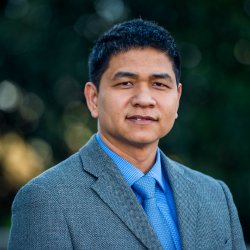
Hung Viet Nguyen is a Research Fellow at the 5G Innovation Centre, University of Surrey, UK, within the Institute for Communication Systems. He holds a PhD in Electronics and Electrical Engineering from the University of Southampton (2013), an MEng in Telecommunications from Asian Institute of Technology (2002), and a BEng in Electronics & Telecommunications from Hanoi University of Science and Technology (1999). His research focuses on quantum communications, including quantum error correction, quantum algorithms, and quantum key distribution (QKD), alongside classical domains like cooperative communications, channel coding, and network coding. He has contributed to EU-funded projects such as CONCERTO and OPTIMIX, and his work bridges quantum and classical information systems. Key research areas include: - Quantum error correction codes and topological codes (e.g., surface codes, color codes) - Quantum network coding and quantum channel capacities - Network-coding aided cooperative communications - Applications in 5G-NR and future wireless systems Publications highlight advancements in QKD protocols over free-space optics, quantum turbo codes for memory channels, and quantum-assisted routing optimization. His work on classical-to-quantum coding isomers and Pareto-optimal routing algorithms underscores interdisciplinary innovation. Nguyen’s contributions also extend to MIMO systems, antenna optimization, and energy-efficient ad hoc networks. Labs/Teams: Active member of the 5G Innovation Centre and collaborator with the School of Electronics & Computer Science, University of Southampton.
Dr. Lisa M. Soederberg Miller is a Professor and Director of the Adult Development Lab at the University of California, Davis, in the Department of Human Development & Family Studies. Her research focuses on cognitive aging, health literacy, food insecurity, and interdisciplinary health interventions. She holds a Ph.D. and two M.A. degrees from the University of New Hampshire and Teacher's College, Columbia University. Her work spans aging psychology, nutrition literacy, and public health disparities. Notable studies include investigating digital literacy training for older adults, mechanisms of preterm birth via primate models, and the intersection of acculturation and dietary patterns among Latino populations. She teaches courses such as 'Adult Development and Aging' and 'Applied Cognitive Aging.' Dr. Miller's publications emphasize practical interventions (e.g., nutrition label education tools) and translational research, often using innovative methods like single-nucleus RNA sequencing and community-engaged learning. Her lab addresses complex health challenges across the lifespan, with a focus on vulnerable populations.
Mana Biabani is a Research Fellow in Psychology at Monash University's Turner Institute for Brain & Mental Health. Her research focuses on perceptual decision-making, neurophysiological mechanisms underlying ADHD, and advanced EEG/TMS-EEG methodologies. She leads projects like 'Human perceptual decision-making: bridging molecules, systems and behaviour' and co-investigates the 'Transcranial focused ultrasound neuromodulation system' initiative. Her expertise includes EEG data processing (via the RELAX pipeline), cerebellar-cortical connectivity, and brain stimulation techniques. She has received prestigious awards including the ACNS Emerging Researcher Award (2021) and the Monash Bridging Postdoctoral Fellowship (2020). She actively supervises PhD students through Monash's SupervisorConnect program. Awards: 5 major prizes including thesis/poster awards and fellowships Projects: 2 active grants focusing on decision-making and neuromodulation Collaborations: International networks in cognitive neuroscience and neuroimaging Her work contributes to UN Sustainable Development Goals related to health and well-being through advancements in mental health research.
Margaret Simmons is an Associate Professor and Deputy Director at Monash Rural Health, Monash University, located in Gippsland, Australia. She focuses on rural health education, teaching first-year graduate-entry medical students a social perspective on health, and coordinates the Community Based Practice Program to enhance students' interprofessional understanding of community health contexts. Her research integrates narrative analysis, poetic representation, and qualitative methodologies to explore themes such as gender, ageing, migration, and the impact of climate change on healthcare. She has held leadership roles in multiple interdisciplinary projects, including curriculum development for planetary health and remote patient monitoring program evaluations. Education: Margaret holds a PhD in Sociology, where she used poetic representation to analyze the experiences of Gippsland women evacuated from WWII Britain who later immigrated to Australia. This work forms the foundation of her research on narrative analysis and migration narratives. While the specific institution for her PhD is not explicitly stated, her academic position at Monash University underscores her advanced qualifications. Research Interests: Her expertise spans narrative analysis (including creative methods like poetry), gender and rural health disparities, ageing, migration, and medical education pedagogy. She emphasizes integrating contemporary issues such as climate change into health curricula and has advocated for sustainability in healthcare professions through initiatives like the 'Teach Green Hackathon.' Her work also addresses interprofessional education and the psychosocial dimensions of healthcare, particularly in disaster recovery contexts. Scientific Awards: Margaret has been recognized for her contributions, including the Inaugural Emerging Researchers in Ageing Helen Bartlett Prize (2009), MNHS Dean's Award for Excellence (2020 and 2024), and Vice Chancellor's Excellence Awards (2020 and 2024). These accolades reflect her innovative approach to qualitative research and her leadership in advancing healthcare education. Advising and Grants: As a Chief Investigator in five research projects, Margaret has contributed to initiatives such as 'Co-designing planetary health curriculum for health professions education' (2023–2024) and 'Implementation of faculty evaluation strategy' (2019–2020). These projects highlight her focus on curriculum innovation, rural healthcare workforce development, and climate change preparedness in education. She has also served on program committees for sustainability-focused events and organized workshops on flipped pedagogy in medical education. Labs/Teams: Margaret collaborates with interdisciplinary teams across multiple departments at Monash University and external organizations like the Royal Flying Doctor Service. Her work aligns with UN Sustainable Development Goals, particularly those addressing good health and well-being (SDG 3) and climate action (SDG 13). She leads Monash Rural Health’s efforts to embed climate education and interprofessional collaboration into medical training.
Dr. Alexander Beresford is an Associate Professor in African Politics and Director of Research and Innovation at the University of Leeds' School of Politics and International Studies (POLIS). He holds affiliations with the Centre for Social Change at the University of Johannesburg and the Leeds University Business School’s CERIC (Centre for Employment Relations, Innovation and Change). His work focuses on South Africa’s political dynamics, global norm contestation, climate change, and just transition policies. He leads major research projects including a €666,000 Hans Böckler Foundation initiative on just transition in 12 countries. Education: PhD African Studies (Edinburgh), MSc African Studies (Edinburgh), BA Politics with International Studies (Lancaster). Professional memberships include the Royal African Society and British International Studies Association (BISA). Research interests include norm contestation in international relations, South Africa’s role in global vaccine diplomacy, and the interplay of corruption and governance. He conceptualizes 'gatekeeper politics' to analyze power struggles in South Africa. His interdisciplinary approach bridges African agency in global norms and local socio-economic challenges. Recent publications explore populism’s emancipatory potential, Ebola crisis governance, and South Africa’s political crises. He is an associate editor of the British Journal of Politics and International Relations and sits on editorial boards of African Affairs and the Review of African Political Economy. Awards include the POLIS Inspirational Teaching Award (2015, 2017) and recognition for digital education innovation. He supervises postgraduate researchers and teaches modules on African state politics and post-conflict reconciliation.
Dr. David Bridgett is a Professor and Director of the Psychological Services Center at the University of Nevada, Reno (since January 2024). Previously, he spent 14 years at Northern Illinois University, where he founded and directed the Emotion Regulation and Temperament Lab. He holds a Ph.D. in Clinical Psychology from Washington State University, a clinical internship at Yale University, and a postdoctoral fellowship at Yale’s Child Study Center. His research focuses on the intersection of biological and environmental influences on children’s regulatory and affective processes, including executive functioning, emotion regulation, and developmental psychopathology. Collaborations span institutions like Baylor College of Medicine, Temple University, and the University of Turku, Finland. He has served on editorial boards, including as Associate Editor for the Journal of Family Psychology , and contributes to NIH review panels. Bridgett emphasizes mentorship, advising graduate students and early career researchers, and integrates passive assessment methods in studies on media use and child health outcomes. Education: Ph.D. in Psychology (Clinical), Washington State University, 2008 M.A., Stephen F. Austin State University, 2002 B.S., Midwestern State University, 1999 Research Interests: Executive functioning and emotion regulation in children Parenting behavior and family dynamics Health-related behaviors and outcomes in children Influence of digital media on child development His work examines how maternal self-regulation shapes caregiving environments and child outcomes, alongside stress response mechanisms and infant negative affectivity. Grants & Collaborations: Principal investigator on NIH-funded studies linking digital media use to children’s executive functioning and weight status Co-investigator on projects examining appetite self-regulation in preschoolers and maternal responses to infant distress Lab & Teams: Former director of the Emotion Regulation and Temperament Lab at NIU; currently collaborates with international teams on longitudinal studies of child development.
Jehoshua (Shuki) Bruck is the Gordon and Betty Moore Professor of Computation and Neural Systems & Electrical Engineering at the California Institute of Technology. He leads the Distributed Information Systems Group and serves as the founding director of Caltech's Information Science and Technology (IST) program. His work bridges information theory, storage systems, and computational biology. Bruck holds B.Sc. (Summa cum Laude) and M.Sc. degrees from the Technion-Israel Institute of Technology (1982-1985) and a Ph.D. in Electrical Engineering from Stanford University (1989). He has held academic positions at Caltech since 1994, advancing from Associate Professor to Moore Professor. Research Focus: His dual-track research explores Physical implementations of coding schemes for flash memories (rank modulation, rewriting codes) Biological computation mechanisms, particularly DNA sequence evolution via replication Secure distributed storage systems and RAID schemes Awards & Recognition: Recipient of the Feynman Teaching Prize (2008), Sloan Fellowship, NSF Young Investigator Award, and multiple IEEE best paper awards. Holds over 40 patents and authored 350+ publications. Industry Contributions: Co-founder of storage startups Rainfinity (acquired by EMC) and XtremIO, which pioneered flash storage solutions. Collaborates with NASA-JPL on non-volatile memory for space missions.
Jessica Cantlon is the Ronald J. and Mary Ann Zdrojkowski Professor of Developmental Neuroscience/Psychology at Carnegie Mellon University's Dietrich College of Humanities and Social Sciences. She leads the Concepts, Actions, and Objects Lab and the Kid Neuro Lab, focusing on the neural and cognitive foundations of quantitative reasoning in humans and non-human primates. Her research employs behavioral and neuroimaging techniques to explore how numerical and spatial concepts develop in children and how these relate to evolutionary processes. Key research themes include cross-species comparisons of numerical processing (e.g., studies on rhesus monkeys and olive baboons), the role of the intraparietal sulcus (IPS) in numerical cognition, and the impact of environmental and gender factors on mathematical development. She has contributed to debates on core knowledge theories, semantic frameworks, and the evolution of human intelligence. Her work bridges developmental psychology, cognitive neuroscience, and comparative psychology, with implications for education and public health policy. Her labs emphasize interdisciplinary approaches, combining fMRI studies with behavioral experiments to understand how abstract concepts emerge from neural systems. Current projects investigate recursive pattern processing, hierarchical reasoning, and the neural basis of mathematical learning from naturalistic environments like educational videos.
Dr. David Foxe is a post-doctoral researcher at the Brain and Mind Centre, University of Sydney, specializing in neurodegenerative diseases. His work focuses on improving diagnostic accuracy for rare dementias, particularly primary progressive aphasia (PPA), and enhancing clinical care for dementia patients. He holds a PhD from the University of Sydney, where his doctoral research investigated cognitive care for PPA patients. Research interests include dementia subtypes (e.g., Alzheimer’s, frontotemporal dementia), neuroimaging biomarkers, and neuropsychological assessment tools. Key contributions include developing the Box Task for PPA differentiation and validating the Addenbrooke’s Cognitive Examination III for clinical use. His work spans both basic neuroscience and translational clinical applications. Publications emphasize longitudinal studies of behavioral and cognitive changes in neurodegenerative disorders, with recent focus on regional dementia care in the Western Pacific. Awards include the 2025 BMC Emerging Researcher Award. Dr. Foxe collaborates widely in interdisciplinary teams, contributing to global health initiatives addressing dementia priorities. Grants include a 2023 project optimizing early dementia diagnosis and a 2025 award supporting emerging research. His lab, the FRONTIER Research Group, advances understanding of dementia mechanisms and clinical management strategies.