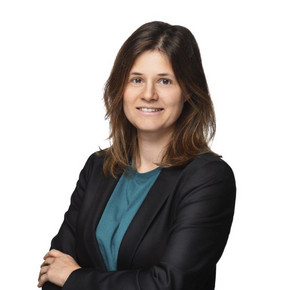
Associate Professor Vera Hemmelmayr is affiliated with the Institute of Transport Economics and Logistics at the Vienna University of Economics and Business . Her research spans Operations Research , Logistics , Supply Chain Management , and Circular Economy , with a focus on vehicle routing , city logistics , and metaheuristics . She has led major projects like CREATE_AT (circular timber supply chains) and Sustainable Urban Deliveries . Research trends in her recent work include real-time optimization algorithms for railway disruptions, sustainable urban freight solutions , and integrated railcar fleet management . Her publications often bridge transport policy with computational methods , emphasizing green supply chains and smart city logistics . 2025: Preis für innovative Lehre 2017: Best Application Paper Honorable Mentions (IIE Transactions) 2012: Dr.-Maria-Schaumayer-Habilitationsstipendium 2012: WU Visiting Fellow 2005: Prämierung ausgezeichneter Diplomarbeiten She has supervised research projects on topics including two-echelon delivery systems , railway disruption management , and digital transformation in logistics, while contributing to policy frameworks for circular economy in transportation.
Patrick Hirsch is an Associate Professor at the Institute of Production and Logistics , part of the Department of Economics and Social Sciences at the University of Natural Resources and Life Sciences, Vienna . He serves as Head of the Institute of Production and Logistics since 2025 and has coordinated doctoral programs in Social and Economic Sciences since 2017. His research focuses on Sustainable Logistics, Operations Research, and Disaster Management , with specializations in Health Care Logistics Humanitarian Supply Chains Urban Mobility Food Security Cybersecurity in Logistics Green Logistics Recent publications highlight his work in 2025-2023 on: Cloud Resource Optimization Disaster Response Logistics Container Terminal Storage Cyberattack Resilience Home Health Care Scheduling His team also explores deep learning for cargo inspection and hybrid simulation modeling for pandemic and climate-related disruptions. Scientific awards include: BOKU Best Paper Award (2024) ITOR runner-up Best Paper (2023) Raiffeisen Science Award (2014) Multiple Early-Career Prizes Dr. Hirsch leads 13 active research projects funded by the Austrian Research Promotion Agency and Oesterreichische Nationalbank , including initiatives on food supply resilience , internet outage cascading effects , and blockchain in logistics security . He supervises collaborative theses and contributes to policy development through institutions like the ITA - Institut für Technikfolgen-Abschätzung .
Sabina Hodzic is a researcher at the Institute of Psychology under the Faculty of Natural Sciences at Karl-Franzens-University Graz. She focuses on work and organizational psychology, business psychology, and work psychology. Research Interests Emotional Intelligence Training Work Psychology Telework and Flexible Work Arrangements Organizational Behavior Work-Life Balance Workplace Stress Article Trends Sabina’s publications span from 2015 to 2024, emphasizing emotional intelligence interventions, telework dynamics, and flexible work structures. Her work includes longitudinal studies, meta-analyses, and scale development for workplace and psychological assessments. Publications Her articles address: Telework’s impact on well-being (2024) Team communication in virtual settings (2024) Meta-analysis of emotional intelligence training (2018) Longitudinal effects of unemployment training (2015)
Philipp Hungerländer is an Associate Professor at the Institute of Mathematics, University of Klagenfurt. He is a member of the combinatorial optimization working group led by Prof. Franz Rendl, focusing on advanced optimization techniques for real-world industrial applications. Research Interests: His work spans three core areas: (1) semidefinite, conic, and polynomial optimization for nonlinear discrete problems, (2) quadratic programming and active-set algorithms for convex/nonconvex models, and (3) exact and heuristic methods for combinatorial optimization in routing and scheduling. Additionally, he explores game theory and dynamic games. Recent Publications: His 15 most recent articles reflect expertise in railway logistics, facility layout, home delivery services, and medical pandemic response. Topics include integrated freight routing, dial-a-ride optimization, and applications of mixed-integer programming. Contact: Email: Philipp.Hungerlaender@aau.at
Michael Affenzeller is a Professor at the University of Applied Sciences Upper Austria, leading the HEAL AIST Center of Excellence for Smart Production with a focus on Digital Transformation. His research spans Genetic Programming, Symbolic Regression, and Evolutionary Algorithms, with applications in optimization, AI, and manufacturing automation. He has authored over 400 publications and led major projects such as HCAI (Human-Centered AI) and HEAL, emphasizing interdisciplinary collaboration. Research interests include developing advanced algorithms for dynamic optimization, prescriptive analytics, and federated learning in industrial contexts. He has contributed to projects like LOISI (Logistics Optimization in Steel Industries) and SimGenOpt2, addressing challenges in production planning and workforce optimization. Key collaborations involve institutions in Austria and beyond, focusing on smart manufacturing, logistics, and AI integration. His work bridges theoretical advancements with real-world applications, driving innovation in energy systems, crane scheduling, and predictive maintenance. Grants and projects include funding from FWF (doc.funds.connect) and Upper Austrian initiatives, emphasizing doctoral training and industry partnerships. He actively participates in conferences such as EUROCAST and PPSN, contributing to algorithmic advancements and computational theory.
Dr. Felix Winter is a PostDoc Researcher in the Databases and Artificial Intelligence group at Vienna University of Technology. He teaches courses including Bachelor Thesis supervision, Project in Computer Science, and Database Systems. His research focuses on optimization algorithms for industrial scheduling problems, including oven scheduling, artificial teeth production scheduling, employee task distribution, and paint shop scheduling. Methodologies include hybrid approaches combining exact methods with metaheuristics. Recent publications demonstrate consistent application of operations research techniques to manufacturing contexts, with emphasis on developing practical solutions for complex scheduling challenges in automotive supply chains and dental production environments. Dr. Winter supervises student research projects including diploma theses on optimization topics. Current projects include the CD Laboratory for Artificial Intelligence and Optimization for Planning and Scheduling (2017-2025).
Prof. Fazel Ansari is a University Professor of Data-Driven Maintenance Management at Vienna University of Technology's Faculty of Mechanical Engineering and Industrial Management. He leads the Production and Maintenance Management Research Department and holds adjunct roles at multiple institutions including Fraunhofer Austria. His research focuses on knowledge-based maintenance strategies, Industry 4.0 transformation, and human-centered cyber-physical systems. Ansari serves on editorial boards for journals like AI and Intelligent Manufacturing, and holds leadership roles in professional organizations such as CIRP and IFAC. Education: Habilitation (venia docendi) in Industrial Engineering, TU Wien (2021) PhD in Computer Science (summa cum laude), Universität Siegen (2014) MSc Mechatronics, Universität Siegen (2008) BSc Mechanical Engineering, Universität Teheran (2005) Research interests emphasize applying AI and data science to optimize maintenance systems, enhance manufacturing sustainability, and develop reciprocal learning frameworks for human-machine collaboration. His work bridges technical systems with workforce development through digital twin applications and competence management solutions. Awards include the 2023 Best Paper Award from the University of Technology Sydney, Theta Award (2015), and multiple best paper recognitions at international conferences. Teaching responsibilities span master's and executive programs in maintenance management, production systems, and data science applications across TU Wien's Mechanical Engineering and Management Sciences faculties.
Stefan Wagner serves as a Professor at the University of Applied Sciences Upper Austria (FH OOE), based at the Research Center Hagenberg Center of Excellence for Smart Production. His academic affiliation resides within the Department of Production and Operations Management under the institution's ICT focal area. Wagner holds the title FH-Prof. DI Dr. and actively serves as Principal Investigator (PI) on multiple research projects including ENPro (Energy Neutral Production) and JRZ adaptOp (Josef Ressel Center for Adaptive Optimization), driving innovation in optimization and smart manufacturing systems. Wagner's research expertise centers on Evolutionary Computation and Optimization , with specialized focus on Genetic Algorithms, Heuristic Optimization, and Dynamic Optimization. As lead developer of HeuristicLab —an open-source optimization environment—he bridges theoretical advances with industrial applications in Symbolic Regression, Production Scheduling, and Energy-Efficient Manufacturing. His work addresses complex challenges in logistics, crane scheduling, and energy-neutral production through evolutionary techniques. Recent publications (2025) reveal a pronounced trend toward distributed and dynamic optimization frameworks. Key themes include diversity management in changing environments, containerization for scalable evolutionary computation, and hybrid cooperative approaches for symbolic regression. Applications span container terminal logistics, energy-neutral manufacturing, and robust unloading bay optimization, demonstrating strong industry-oriented problem-solving. Wagner received the FH OÖ Researcher Award in 2019 for exceptional contributions. He has secured funding for 9 research projects including ENPro (2025-2028) and SMART UNLOAD, frequently serving as PI or Co-PI. His projects tackle production optimization, workforce planning, and energy efficiency in Upper Austrian manufacturing. With 4 supervised students and extensive community engagement through EvoSoft at GECCO and EUROCAST peer review, he actively shapes the evolutionary computation landscape. Leading the HeuristicLab project, Wagner collaborates with industry partners through the Center Hagenberg research team to develop simulation and optimization tools for adaptive scheduling. His current work in the ENPro project targets energy-neutral production via modeling and optimization, positioning him at the forefront of sustainable manufacturing innovation in industrial settings.
Lucas Kletzander is a PostDoc Researcher at the Institute of Logic and Computation within the Faculty of Informatics at Vienna University of Technology. He teaches courses in theoretical computer science and project-based programming while leading research in scheduling optimization through the CD Laboratory for Artificial Intelligence and Optimization for Planning and Scheduling (ARTIS project). Education: Bachelor of Science (BSc) Diplom-Ingenieur (Dipl.-Ing.) in Engineering Doctor of Technical Sciences (Dr.techn.) His research centers on solving complex personnel scheduling problems using artificial intelligence and operations research. Kletzander specializes in hyper-heuristics for cross-domain optimization, multi-objective workforce scheduling, and real-world applications like bus driver rostering and physician shift planning during pandemics. His work bridges theoretical algorithm development with industrial implementation, particularly in transportation and healthcare sectors. Recent publications reveal a strong trajectory toward reinforcement learning for hyper-heuristics and multi-objective optimization in scheduling. He pioneers instance space analysis to characterize problem difficulty and develops hybrid methods combining column generation with large neighborhood search. His research consistently addresses practical constraints like complex break rules in transportation scheduling. Advising and Grants: Supervised master's theses on explainability in rotating workforce scheduling and deep reinforcement learning for hyper-heuristics Principal investigator in the Christian Doppler Laboratory ARTIS (2017-2025) funded by the CDG Collaborates with industry partners on bus scheduling and aircraft maintenance routing systems Kletzander actively contributes to the Databases and Artificial Intelligence research group, where he develops decision support systems for automated scheduling and investigates the integration of constraint programming with metaheuristics for real-world optimization challenges.
Johannes Gärtner is a Senior Lecturer at Vienna University of Technology, affiliated with the Artifact-based Computing and User Research department (E193-04). His work focuses on shift scheduling, working time policies, and the intersection of law with software development. Academic Rank: Senior Lecturer Department: Artifact-based Computing and User Research, E193-04 University: Vienna University of Technology Research interests include Workforce Scheduling , Time Management , Operational Research , Human-Computer Interaction , Data Analysis , and Software Engineering . He applies these to shiftwork optimization, risk modeling, and legal-compliant software design. His key projects include ARTIS (2017–2025), ARTE (2012–2017), and Softnet (2006–2011), focusing on work scheduling systems, risk assessment tools, and data quality frameworks. Publications emphasize AI-driven scheduling algorithms , injury risk estimation , and legal explainability in software . His supervisees include D. Cygan (2012), W. Schafhauser (2010), A. Höfer (2006), and N. Tawil (2003).
Prof. Wolfgang Slany is a Professor in the Institute of Software Technology at Graz University of Technology, Austria, leading the department since 2018. His research focuses on algorithms for optimization, mobile learning systems, and visual programming education. He spearheads the open-source Catrobat/Pocket Code project, enabling children to create mobile apps via visual programming. Active in gender mainstreaming initiatives and computational thinking education, he emphasizes agile software practices and open-source collaboration. Teaching includes courses on software development and project management, with a strong emphasis on practical, industry-relevant training. Research Interests Optimization algorithms for scheduling and resource allocation Mobile-based educational technologies Gender-inclusive STEM education Agile software development methodologies Open-source ecosystems and collaboration frameworks Recent Work Trends Recent publications highlight mobile learning applications in Ghana, gender equity in STEM, and innovative STEAM education through embroidery programming. His work bridges technical innovation with educational accessibility, emphasizing interdisciplinary approaches. Advising & Projects Oversees student theses across bachelor/master levels in areas like app development, cybersecurity, and educational technology. Leads the Catrobat project involving over 100 contributors, focusing on FOSS development and educational impact.
Florian Mischek is a researcher affiliated with TU Wien's Forschungsbereich Databases and Artificial Intelligence department. His work focuses on optimization problems in industrial scheduling, particularly in test laboratories and healthcare environments. He holds a BSc, Dipl.-Ing (engineer's diploma), and a Dr.techn (doctorate) in technical sciences. Research interests include scheduling algorithms, hyper-heuristics, constraint programming, reinforcement learning, and their applications to real-world challenges like test laboratory operations and pandemic-era healthcare staffing. His contributions span both theoretical advancements in optimization frameworks and practical system implementations for automated scheduling. Notable publications explore problem-independent hyper-heuristics, reinforcement learning for cross-domain optimization, and local search frameworks for industrial scheduling. He has collaborated extensively with Prof. Nysret Musliu on projects involving test laboratories and nurse rostering problems. His work often bridges mathematical programming and heuristic approaches, emphasizing practical applicability.
FH-Prof. Dr. Thomas Felberbauer is a Professor and Head of the Department of Media and Digital Technologies at the University of Applied Sciences St. Pölten. He serves as Academic Director of the Smart Engineering (BA) program and is a member of the University's Board (2023-2026). His roles include overseeing the Institute of Creative Media/Technologies and coordinating interdisciplinary programs in Data Science & AI and Digital Innovation & Research. Prof. Felberbauer’s career spans academia and industry: since 2016, he has held academic positions at FH St. Pölten, focusing on Industry 4.0 and Smart Engineering. Earlier roles include Assistant Professor (2015–2016) and Research Associate (2011–2015) at FH-OÖ. He is also a self-employed IT consultant (FeTh eU since 2011) and previously worked in electrical systems and production at BMW Motoren GmbH (2000–2006). His research emphasizes simulation-based optimization for production planning, supply chain dynamics, and Industry 4.0 applications. Notable projects include aquaponics data-sharing frameworks and energy-cost balancing in manufacturing. He employs advanced simulation techniques to address stochastic demand, forecast accuracy, and inventory management challenges. Prof. Felberbauer contributes to applied industry partnerships, including projects on circular economy systems and production planning gamification. His work bridges theoretical models with real-world implementations, particularly in automotive and small-batch production sectors. He advocates for decentralized production control and data-driven decision-making in smart manufacturing systems.
Hubert Missbauer is a Full Professor for Production and Logistics Management at the University of Innsbruck. He holds a Diploma (1982) and Doctorate (1986) in Business Administration from the University of Linz, with a Habilitation in Business Administration (1994) focusing on manufacturing planning systems. His research emphasizes production planning concepts, workload control, and optimization in manufacturing systems, particularly in steel production. He co-organizes the International Working Seminar on Production Economics and serves on the editorial board of the International Journal of Production Economics . Research interests include order release optimization, production scheduling in steel industries, and quantitative methods in operations management. Recent work focuses on Lagrangian decomposition algorithms, behavioral perspectives in workload control, and integrated scheduling in steel production processes. He has published extensively in top-tier journals like International Journal of Production Research and European Journal of Operational Research . Education: University of Linz (Diploma 1982, PhD 1986, Habilitation 1994) Affiliations: Institute for Information Systems, Production and Logistics Management at University of Innsbruck Key Projects: Steel production scheduling, iterative LP-simulation algorithms, behavioral studies in manufacturing control Editorial Roles: Guest Editor for International Journal of Production Economics since 2020 His work bridges theoretical models (e.g., clearing functions, transient analysis) with practical applications in industries like steelmaking and construction. Recent presentations include discussions on Lagrangian approaches at the INFORMS Annual Meeting (2024) and EURO conferences.
Univ.-Prof. Mag.rer.nat. Dr.phil. Martin Arendasy serves as a Professor at the Institute of Psychology, Faculty of Natural Sciences, University of Graz. His research focuses on applied psychometrics, innovations in psychological test design, intelligence and personality diagnostics, and methodological advancements in multivariate analysis and machine learning applications. 2021-2023: Deputy Director of the Institute 2019-2021: Director of the Institute 2012-present: Expert group MedAT-H/MedAT-Z admission procedure 2020-present: Member of CUKO Doctoral Studies in Natural Sciences His research networks include Brain and Behavior and Dimensions of Europe , with significant contributions to automated item generation and medical school admissions testing. He received the 2011 Specialist Group award for computer-assisted diagnostics. Recent publications analyze automated test generation, measurement fairness, cognitive underpinnings of computational thinking, and pandemic impacts on education. His work combines psychometric rigor with technological innovations in testing frameworks.