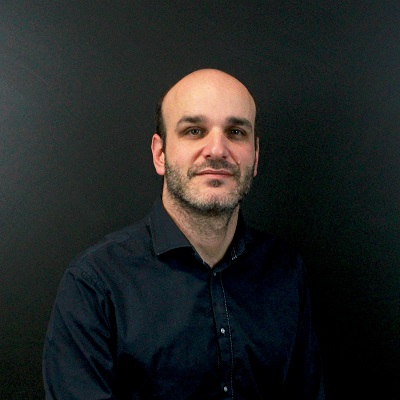
Professor Paolo Volpin holds the rank of Professor of Finance at Bayes Business School, part of City St George's, University of London. He is a Research Fellow at the Centre for Economic Policy Research (CEPR) and a Research Associate at the European Corporate Governance Institute (ECGI). Prior to his current position, he served as an Associate Professor at the London Business School. His research focuses on corporate finance and governance, with notable contributions to understanding mergers & acquisitions, financial reporting impacts, labor market dynamics, and the political economy of financial systems. Volpin earned a PhD in Economics from Harvard University and a Doctorate in Political Economy from Bocconi University. His work has been published in top-tier journals including the American Economic Review, Journal of Finance, and Journal of Financial Economics. He has been recognized with multiple awards for his research in corporate governance and finance. His recent studies explore topics such as the interplay between financial crises and right-wing populism, the role of labor protection laws in corporate leverage decisions, and how institutional debt holders influence governance structures. Volpin’s interdisciplinary approach bridges finance, labor economics, and political science, offering insights into systemic risks and policy implications. Professional contributions include directorship at the European Finance Association (2010–2013) and active participation in shaping academic and policy discourse through his affiliations. His research agenda emphasizes the societal and economic consequences of financial policies, making him a leading voice in global corporate finance studies.
Tammy Schirle is a Professor of Economics at Wilfrid Laurier University, located within the Lazaridis School of Business and Economics. Her research focuses on labour economics, public economics, and the economics of aging and gender, with particular emphasis on Canadian policy implications. She has co-authored the textbook Labour Market Economics and frequently addresses topics such as retirement decisions, caregiving roles, and health economics. Her work explores how public policies influence retirement choices, gender dynamics in the workforce, and the financial well-being of seniors. Recent research includes analyses of age-earnings profiles across Canadian provinces, the impact of minimum wage policies, and the design of income support programs like the Canada Pension Plan (CPP) and Old Age Security (OAS). In her Substack blog, she discusses contemporary issues such as the Grocery Rebate, CPP/OAS benefits, and poverty measurement. Her articles reflect a focus on evidence-based policy analysis, emphasizing real-world applications of economic principles. Despite her extensive publications, no specific scientific awards are mentioned in the provided texts. Her advising and grants sections remain unpopulated, though her active research agenda suggests ongoing collaborative projects. No specific lab or team affiliations are detailed.
Susan Averett is a Professor in the Economics Department, specializing in gender economics and health economics. She joined the faculty in 1991 and teaches courses such as Fundamentals of Econometrics and Women and the Economy. Her research explores intersections between gender, health, and policy, with notable publications in journals like the Review of Economics and Statistics and Journal of Health Economics . A co-author of over 50 scholarly articles and co-editor of The Oxford Handbook of Women and the Economy , she also serves as co-editor of Economics and Human Biology . Dr. Averett holds a Ph.D. and M.A. in Economics from the University of Colorado and a B.S. in Economics from Colorado State University. Her work frequently addresses topics such as the gender wage gap, childcare tax credits, and immigration policies. Media outlets including the Wall Street Journal and Vox have featured her research findings. Her research interests include the economic impacts of public policies on health outcomes, labor market dynamics, and social equity. Notable projects have examined the effects of minimum wage laws on immigrant children’s health, the long-term consequences of China’s one-child policy, and the relationship between obesity and labor market performance. As an educator, she contributes to interdisciplinary programs like Women’s, Gender, and Sexuality Studies via courses such as Gender and Economics. Her textbook Women and the Economy: Family, Work, and Pay remains a foundational resource in the field.
Assoc. Prof. Dr. Emine ŞENER is a faculty member at the Department of Management and Organization, Faculty of Economics and Administrative Sciences, Kırşehir Ahi Evran University since 2015. She earned her PhD in Management and Organization from Süleyman Demirel University (2013), MA in Educational Program Development (Ankara University, 2004) and Health Institutions Management (Ankara University, 2002), and BA degrees in Sociology (Atatürk University, 2019) and Philosophy (Anadolu University, 2020). Her academic career spans roles at Muğla Sıtkı Koçman University's Faculty of Health Sciences (2005-2015) and Ankara Gevher Nesibe Health Education Institute (2002-2005). PhD: Süleyman Demirel University (2009-2013) MA: Ankara University (2000-2002, 2001-2004) BA: Atatürk University (2014-2019), Anadolu University (2020) Her research focuses on Organizational Behavior , Strategic Management , and Technology and Innovation Management . She explores intersections between sociology, history, and philosophy in organizational contexts, with recent works examining: Historical analysis of Republican-era industrial policies Emotion regulation in toxic leadership scenarios Impact of holacracy adoption on innovation Critical perspectives on social Darwinism in management Role of voluntary simplicity in sustainable consumption Her 15 most recent publications span 2022-2025, emphasizing digital transformation, gender dynamics, and cultural management studies. She has served as principal advisor for 6 doctoral and master's theses, including research on dual-career couples and organizational revenge. Scientific contributions include: Editorial work on Industry 4.0 and information management Leadership in institutional quality and accreditation Development of course materials on organizational theory Critical analysis of managerialism ideology Key administrative roles since 2015: Head of Management Department (2023-2026) Deputy Dean (2025-) Director of Research and Application Center (2024-2027) Chair of Academic Incentive Committee (2018-)
Pablo Winant is an Affiliated Member at CREST, associated with the Economics department. His research spans labor economics, income inequality, healthcare economics, and public policy. Institution: CREST (affiliated academic research center) Department: Economics His work focuses on analyzing economic disparities, including gender dynamics in employer training, the impact of child-rearing on income inequality, and healthcare access influenced by financial incentives. He contributes to high-impact journals like the American Economic Review. Trends in his recent publications highlight intersections of taxation, market power, and digital cultural markets, such as francophone music streaming.
Elisabeth Fevang is a Senior Research Fellow at the Frisch Centre, affiliated with the University of Oslo. She completed her PhD at the University of Bergen in 2019 with a dissertation titled "Economic Incentives, Employment and Health." Her research focuses primarily on labor market economics and health economics, with particular attention to welfare systems, disability insurance, sick leave patterns, and elderly care economics. Dr. Fevang's research interests center on the intersection of health and labor economics. She investigates how economic incentives affect work behavior, particularly regarding sick leave, disability, and care responsibilities. Her work often examines the Norwegian welfare system's impact on labor market participation, with specific focus on vulnerable groups such as elderly caregivers and healthcare workers. She frequently employs register-based data analysis to study policy impacts on labor supply decisions. Her publication record shows consistent output with multiple high-impact articles in 2024, indicating active research in current labor market issues. Her recent work has increasingly focused on healthcare sector employment patterns, particularly shift work schedules in municipal care services, and their relationship to sick leave. Earlier publications established her expertise in disability insurance systems and the "sick pay trap" phenomenon where benefit structures may inadvertently encourage prolonged absence from work. Dr. Fevang is actively involved in numerous research projects at the Frisch Centre, including those examining labor market exclusion, social insurance systems, long-term care effects on elderly workers' participation, and effects of welfare system reforms. Her collaborative work with researchers like Knut Røed, Simen Markussen, and Heidi Gautun demonstrates her integration within Norway's economic research community.
Eric French is a Professor at the University of Cambridge, specializing in economics of household behavior over the lifecycle, intergenerational transfers, pensions policy, and health economics. His work examines how public and private pensions influence savings and labor supply, alongside the impacts of health and health insurance on medical spending and economic security in aging populations. His research spans applied econometrics, with recent publications focusing on dementia burden projections in China, gender conformity effects on later-life outcomes, and end-of-life medical expenditure dynamics. Articles highlight cross-national comparisons (US vs UK), policy evaluations, and longitudinal analyses of aging populations. While no formal awards or advisees are listed in the provided data, his work engages deeply with retirement incentives, wealth distribution, and health policy frameworks. Affiliation with institutions like the University of Michigan Retirement and Disability Research Center is evident through collaborative publications.
Kelly Grindrod is an Associate Professor at the University of Waterloo School of Pharmacy and Associate Director of Clinical Education. She works part-time as a clinical pharmacist at the Kitchener Downtown Community Health Centre and is cross-appointed to the School of Public Health & Health Systems at Waterloo. Academic Rank: Associate Professor Part-Time Clinical Practice: Kitchener Downtown Community Health Centre Professional Affiliations: Ontario College of Pharmacists, Ontario Pharmacy Association Research Interests: Dr. Grindrod specializes in leveraging digital technologies to improve medication management. Her work examines clinician-patient communication, technology adoption among older adults and vulnerable populations, and systemic changes in pharmacy practice. Publication Trends: Recent studies focus on mobile health applications ( ClereMed ), pharmacist-led clinical services, and knowledge translation in primary care. Key themes include medication safety, digital health equity, and interprofessional collaboration. Awards & Recognition: 2017 Outstanding Performance Award 2014 Canadian Foundation for Pharmacy Wellspring Leadership Award 2014 & 2013 Canadian Pharmacists Journal Best Paper of the Year CIHR Travel Award (2011), CIHR Summer Institute participant (2010) Teaching & Professional Contributions: Dr. Grindrod teaches culturally safe patient care and professional practice courses. Her research bridges pharmacy practice with digital health innovation, emphasizing patient engagement and healthcare accessibility.
William Schpero is an Assistant Professor of Population Health Sciences at the Weill Cornell Medical College of Cornell University. He is also Associate Director at the Cornell Health Policy Center and Cornell Center for Health Equity , focusing on Medicaid policy, healthcare safety nets, and equity in health outcomes. PhD in Health Policy and Economics, Yale University (2019) M.Phil in Health Policy and Economics, Yale University (2017) MPH in Health Policy, Dartmouth College (2012) AB in Economics, Dartmouth College (2010) His research examines Medicaid's role in reducing racial, ethnic, and socioeconomic health disparities , with particular interest in ACA provisions , ACO performance , and Medicaid managed care networks . He co-founded the Medicaid Data Learning Network and Medicaid Insights Colloquium to bridge policy research and practice. Recent publications in JAMA , Health Affairs , and New England Journal of Medicine focus on Medicaid access , telemedicine during pandemics , ACO spending patterns , and racial disparities in clinical trial participation . His work has received funding from Commonwealth Fund , National Institute on Minority Health , and Robert Wood Johnson Foundation . 2021: Arnold Ventures - Safety-Net Hospital Closures 2024: United Hospital Fund - Medicaid Unwinding Study 2022: RWJF - Medicaid Transportation Benefit Analysis He teaches in Cornell's Executive MBA/MS Healthcare Leadership program and Weill Cornell's MS in Health Policy and Economics , advising students on Medicaid-related topics. Current research explores post-pandemic Medicaid disenrollment , value-based care equity , and Medicaid's role in clinical trial access .
Māris Jurušs is an Associate Professor and Director of Study Programs at the Faculty of Engineering Economics and Management (FEEM) of Riga Technical University . He oversees the study programs in "Customs and Tax Administration" and "Internal Security and Civil Protection." Additionally, he serves as a member of both the RTU FEEM Council and the FEEM Scientific Council. His research focuses on tax policy , customs administration , sustainability , and public administration . He has extensive experience in national and international projects, particularly in fiscal strategies for sustainable mobility and environmental taxation. Jurušs has worked in the Tax Policy Department of the Ministry of Finance and an international audit company . He is an expert of the Latvian Science Council and actively participates in academic conferences and Erasmus+ teaching exchanges. Selected projects include: "D2_DIGITAL2": State budget funding for RTU's digital governance development (2024). "LZP-2022/1-0306": Model development for sustainable last-mile delivery in Latvia (2023–present). ESF 01000-3.1.2.-e/118": Efficient university governance development (2018–2023). "CA21133 - GLITSS": COST Action on globalization, illicit trade, sustainability, and security (2023–). His publications address topics such as excise duty harmonization for tobacco products, environmental taxation in transport, digital transformation of tax systems, and sustainable fiscal strategies . These works often intersect with European Union policy , climate change mitigation , and economic regulation .
Argyro Avgoustaki is a Full Professor of Management and Head of Research at the London Campus of ESCP Business School. Her research focuses on the intersection of human resource management and industrial relations, with notable contributions to understanding flexible work arrangements, telework dynamics, and employee well-being. Her work has been featured in prestigious journals such as the Journal of Management and ILR Review, and has received media coverage from outlets like The Financial Times and Forbes. She co-founded the CYGNA group, a global network of female scholars, and is an MBTI certified practitioner. Additionally, she serves on the research committee of the Chartered ABS Council, demonstrating her leadership in academic governance. Her research explores both micro-level employee motivations and macro-level organizational strategies, bridging theoretical insights with practical implications for modern workplaces. Recent studies emphasize the societal and cultural factors influencing telework adoption and its impact on workforce dynamics. Professor Avgoustaki’s academic contributions span over 20 years, with a focus on human resource practices, work intensity, and sustainable work environments. Her interdisciplinary approach integrates organizational behavior, management strategy, and industrial relations to address contemporary challenges in global labor markets.
Evgenia Dechter is an Associate Professor at the University of New South Wales School of Economics within the UNSW Business School. She earned her Ph.D. in Economics from the University of Rochester and B.A./M.A. from The Hebrew University of Jerusalem. Her research focuses on labor economics and macroeconomics, examining wage structures, technological impacts on employment, and behavioral responses to economic policies. Recent work analyzes automation risks, COVID-19 policy effectiveness, and juvenile crime determinants. Dechter's publications demonstrate a strong focus on empirical analysis of labor market dynamics, with recent examinations of pandemic interventions and skill complementarity in evolving technological environments.
Professor Julie Leask is a social scientist and faculty member at the School of Public Health, Faculty of Medicine and Health, University of Sydney . She co-leads the Social and Behavioural Insights research group and serves as a Visiting Professorial Fellow at the National Centre for Immunisation Research and Surveillance. Her work focuses on vaccination programs, policy, and risk communication , with a particular emphasis on addressing vaccine hesitancy, strengthening community dialogue, and improving health equity. Education: Master of Public Health (USYD, 1998), PhD in Public Health (USYD, 2002) Key Affiliations: Member of the University of Sydney Institute for Infectious Diseases, Affiliate of the Susan Wakil School of Nursing and Midwifery, Co-founder of COSSI (Collaboration on Social Science in Immunisation) Her research integrates psychology, sociology, public health ethics, and implementation science to address critical issues such as low vaccination rates, risk communication during health emergencies, and cultural competence in immunization . She has led initiatives like the Sharing Knowledge About Immunisation (SKAI) package and contributed to global frameworks for vaccine safety communication. Recent articles highlight her work on vaccine hesitancy trends, policy effectiveness, and community-engaged approaches , including studies on Aboriginal health communication and conflict-related vaccination barriers . Her scientific awards include the Australian Financial Review 100 Women of Influence (2019) , Supervisor of the Year (2021) , and Officer of the Order of Australia (2024) . She supervises PhD candidates such as Maria Christou-Ergos and Belinda Bruce , with interests in infectious disease prevention, health disparities, and vaccine communication . Her current projects include international collaborations via the WHO and research on social determinants of vaccine hesitancy .
Dr Luke Kelleher is an Associate Professor in Environmental Policy at University College Dublin (UCD), working within the UCD School of Architecture, Planning and Environmental Policy. He is a member of the UCD Environmental Policy Group, a research-intensive faculty group central to national and international debates and policy action in environmental policy. Kelleher also serves as a Principal Investigator in the UCD Earth Institute and is a member of both BiOrbic, the National Bioeconomy Research Centre funded by Science Foundation Ireland, and the UCD Centre for Irish Towns. Dr Kelleher holds a BA and PhD from Queen's University Belfast, an MSc from the University of Ulster, and a UCD Professional Certificate in Creativity and Innovation for Education. Prior to joining UCD, he was a lead researcher at the University of Hertfordshire in its high-impact transport evaluation group. Before his academic career, he gained nearly 10 years of experience in the public service, including roles in local government, the Land Registers of Northern Ireland, Northern Ireland Water Service, and the global consulting firm RPS Group. Dr Kelleher's research focuses on two main areas: transport policy and environmental performance, and bioeconomy policy. His work applies strong theoretical and methodological expertise in spatial analysis, policy analysis and evaluation, stated preference techniques, and demand-side policy instruments. His research has been published in prestigious journals such as Energy Policy, Atmospheric Environment, Environment and Planning B, and Transport Research Part A, and presented at leading conferences including the World Conference on Transport Research and Transportation Research Board Annual Meeting. Analysis of Dr Kelleher's recent publications reveals a strong focus on the bioeconomy and its policy coherence, transport poverty, and just transition frameworks. His work often employs spatial analysis methodologies to address environmental policy challenges, with a particular emphasis on creating practical tools for policymakers. There's a clear trajectory showing increasing focus on the bioeconomy in his more recent work, while maintaining strong connections to transport policy and environmental justice issues. Dr Kelleher has secured research funding from multiple prestigious sources including the Economic and Social Research Council (ESRC), Northern Ireland Department of Education (DENI), Arts and Humanities Research Council (AHRC), and Science Foundation Ireland (SFI). Current projects include "Enable-BIO Project" funded by the Environmental Protection Agency, "Aerodynamic Design and CFD Analysis of Drag Reducing Appendable Devices for Large Ground Vehicles" funded by Science Foundation Ireland, and "Just Transition for Agriculture in the Circular Bioeconomy" (JusTACE) also funded by the Environmental Protection Agency. Dr Kelleher actively supervises PhD students and contributes to multiple educational programs including the BSc (City Planning & Environmental Policy), MRUP, MSc (Environmental Policy), the Graduate Diploma Bioeconomy with Business, and the BSc in Transport City Planning and Environmental Policy at Chang'an University. His teaching philosophy emphasizes active participation, critical analysis, and the development of informed judgment. Dr Kelleher maintains strong connections with policy makers at multiple levels, having provided expert advice to the European Commission, UK Department of Transport, Department of Education (DENI), Department of Agriculture, Food and Marine (DAFM), Department of Environment, Climate and Communications (DECC), and various city councils. He has been particularly active in the Heritage Council led Collaborative Town Centre Health Check Programme since 2016.
Matthew Johnson is an Assistant Professor at Duke University, holding dual appointments in the Sanford School of Public Policy and the Department of Economics within Trinity College of Arts & Sciences. His research focuses on labor economics, public policy, and regulatory effectiveness, particularly examining how workplace safety regulations, labor market policies, and noncompete agreements impact workers and firms. Johnson received his Ph.D. in Economics from Boston University (2016) and a B.A. from the University of California, Berkeley (2007). Research & Grants: Key projects include analyzing OSHA enforcement strategies, evaluating the impact of noncompete agreements, and studying labor market dynamics. Notable grants include funding from the Alfred P. Sloan Foundation (2023–2025) and the Russell Sage Foundation (2023–2025). He has published in top journals like the Review of Economics and Statistics and Science . Teaching: Recent courses include Microeconomic Policy Tools (PUBPOL 303D), Advanced Topics in Public Policy (PUBPOL 590), and Microeconomics and Public Policy-Making (PUBPOL 810). Labs & Collaborations: Co-leads the Triangle Economists in Applied Microeconomics (TEAM) working group, fostering collaborations among junior faculty in applied economics research.