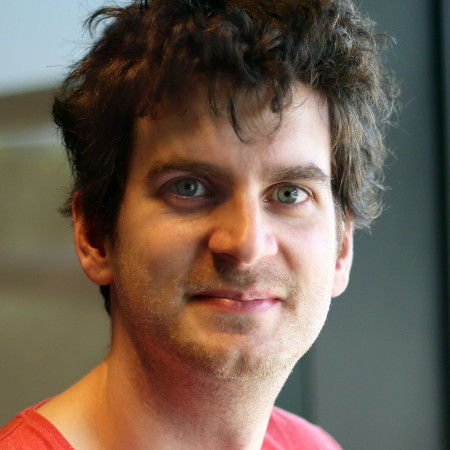
Ruben Verborgh is a Professor of Decentralized Web Technology at the Ghent University – imec and a Visiting Fellow at the Oxford Martin School (University of Oxford). He leads the Internet Technology and Data Science Lab (IDLab) and co-founded the Solid platform with Tim Berners-Lee to re-decentralize the Web. His research focuses on Linked Data Fragments , a paradigm for Web-scale query execution, and explores decentralized data governance , user-controlled data ownership , and rule-based Web agents for policy enforcement. He has co-authored two books on Linked Data and contributed to over 250 publications. Recent articles highlight trends in decentralized data ecosystems , including ODRL policy interoperability , event notification systems , and personal data vaults . His work bridges Linked Data , hypermedia APIs , and privacy-preserving technologies . Verborgh collaborates with institutions like MIT, Oxford, and the European Commission, and advises companies through Inrupt . His labs ( IDLab , Solid Ecosystem ) focus on sustainable data-driven societies.
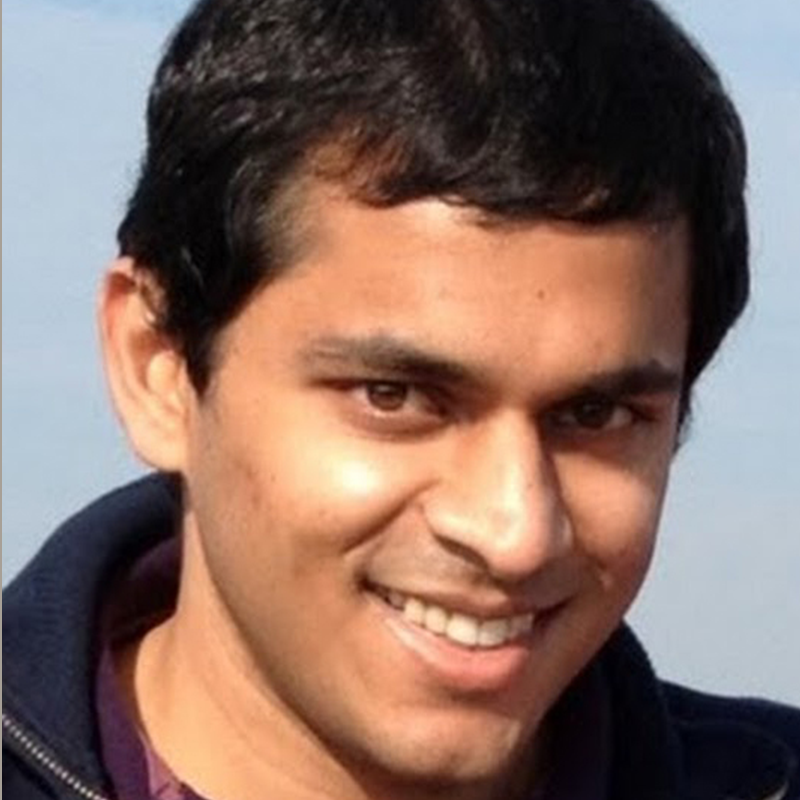
Vyas Sekar is the Tan Family Professor of Electrical and Computer Engineering at Carnegie Mellon University (CMU), with a courtesy appointment in the Computer Science Department. He is affiliated with CyLab and co-directs the Future of Enterprise Security initiative. His research focuses on networking, cybersecurity, distributed systems, and IoT security, with an emphasis on data-driven approaches and network verification. Education: Ph.D. in Computer Science (2010) from CMU; B.Tech. from IIT Madras (President of India Gold Medal recipient). Professional roles include Chief Scientist at Conviva and co-founder of Rockfish Data. Research Interests: Cybersecurity, network security, software-defined networking (SDN), IoT security, DDoS defense, privacy-preserving data sharing, and network performance optimization. Recent work includes developing tools like Pigasus (FPGA-accelerated intrusion detection), Nomad (cloud side-channel mitigation), and frameworks for anomaly detection in IoT networks. Articles Trends: Recent publications address advanced threats like LLM-driven network attacks, stealthy automotive network exploits (CANDid), and optical-layer DDoS defenses. Emphasis on practical solutions (e.g., SketchPlan for telemetry, Pryde for firewall evasion detection). Awards: ACM SIGCOMM Test of Time Award (2022), IIT Madras Young Alumni Achiever Award (2022), Intel Outstanding Researcher Award (2021), and NSF CAREER Award (2016). Recognized for contributions to intrusion prevention, network security, and IoT resilience. Grants & Projects: Led NSF-funded ONSET project (optical-layer DDoS defense), CyLab's Secure IoT Initiative, and collaborations with industry partners like Intel, Facebook, and Nokia Bell Labs. Advises graduate students in cybersecurity and networking. Labs & Teams: Active contributor to CyLab, co-developer of frameworks like Lumos (hidden IoT device detection) and KalKi (IoT security platform). Engages in interdisciplinary research across CMU’s Robotics Institute and Software Engineering Institute.
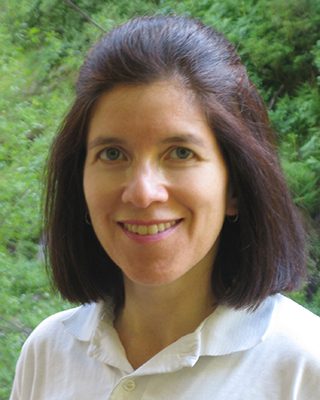
Dr. Natalie Simpson is Professor and Associate Dean for Graduate Programs at the University at Buffalo's School of Management, Department of Operations Management and Strategy. She holds a PhD and MBA from the University of Florida, and a BFA from North Carolina School of the Arts. Her research explores emergency response systems , supply chain logistics , and educational technology , with particular focus on operational challenges in crisis management. She investigates hyper-project coordination in emergency contexts and resource allocation frameworks for incident commanders. Simpson's scholarly contributions show strong emphasis on: Modeling emergency response operations and supply chain vulnerabilities Developing pedagogical innovations for operations management education Analyzing healthcare workflow efficiency and disaster management systems Her extensive recognition includes: Decision Sciences Institute's Best Case Studies Award (2005) National Instructional Innovation Award (2004) SUNY Chancellor's Award for Excellence in Teaching (2002) Grinter Fellowship and Matherly Scholarship As Academic Director of Digital Access Education, she leads technology-enhanced learning initiatives and advises graduate programs. Administrative responsibilities include heading the Digital Access Working Group and serving on editorial boards for Decision Sciences.
Professor Tim Dodwell holds a personal chair in Machine Learning at the University of Exeter, spanning the Department of Mechanical Engineering and the Institute of Data Science and AI. He leads the Data Centric Engineering Group and serves as co-founder and CTO of digiLab, a deep tech startup. His prestigious appointments include a 5-year Turing AI Fellowship from the Alan Turing Institute and the Romberg Visiting Professorship at Heidelberg University in Scientific Computing. His academic foundation includes a 1st class BSc in Mathematics from the University of Bath (2004-2008) and a PhD in Applied Mathematics from the Bath Institute of Complex Systems (2009-2012), where he researched variational models for complex materials under Professors Giles Hunt and Mark Peletier. Dodwell's research pioneers the intersection of applied mathematics, probabilistic machine learning, and high-performance computing, with signature contributions to Multilevel Methods in Bayesian Inverse Problems , Generative Hybrid Modelling , and Machine Learning in Safety Critical Engineering . His work bridges theoretical data science with industrial applications across nuclear fusion, aerospace materials, air traffic control, nuclear decommissioning, water treatment, and urban solar energy systems. His major recognitions include: Turing AI Fellowship (2019-2024) Romberg Visiting Professorship at Heidelberg University Visiting Professorship at MIT Prize Fellowship in Engineering Mathematics (2013-2015) Pro Vice Chancellors Fellowship (2015-2018) Through competitive fellowships and digiLab initiatives, Dodwell secures funding for uncertainty quantification research while driving real-world impact in sustainability sectors. His dual academic-industry roles enable rapid translation of theoretical advances into engineering solutions, particularly through digiLab's twinLab platform which delivers 60,000x acceleration in simulation workflows. He directs the Data Centric Engineering Group at Exeter and co-founded digiLab's multidisciplinary team comprising AI specialists, domain experts, and educators. The organization operates through three synergistic pillars: developing AI solutions for critical infrastructure, building the twinLab platform for industrial ML deployment, and running an ML academy for practitioner training through datacamps, internships, and specialized courses.
David Lindlbauer is an Assistant Professor at Carnegie Mellon University's Human-Computer Interaction Institute (HCII), where he leads the Augmented Perception Lab and co-directs the CMU Extended Reality Technology Center. His research focuses on advancing Mixed Reality (MR) and Extended Reality (XR) interfaces through computational interaction methods that optimize spatial, temporal, and multimodal feedback.
Austin Rovinski is an Assistant Professor in the Department of Electrical and Computer Engineering at New York University’s Tandon School of Engineering. He specializes in chip design, electronic design automation (EDA), and open-source hardware methodologies. His research focuses on VLSI design, domain-specific accelerators, and chiplet-based systems. Prior to NYU, he held a postdoctoral position at Cornell University and earned all his degrees (Ph.D., M.S., and B.S.) from the University of Michigan. Education: Ph.D., Electrical Engineering, University of Michigan - Ann Arbor Master’s, Electrical Engineering, University of Michigan - Ann Arbor Bachelor’s, Electrical Engineering, University of Michigan - Ann Arbor Research Focus: Developing open-source EDA frameworks like OpenROAD Optoelectronic interconnect systems for 2.5D packaging Agile hardware design methodologies Reconfigurable sparse matrix accelerators RISC-V-based manycore processors (e.g., Celerity project) Key Contributions: Austin led the development of the OpenROAD RTL-to-GDS flow and contributed to the Sirius and Celerity projects. His work emphasizes reproducibility, democratizing chip design through open-source tools. Awards: IEEE Micro Top Picks (2015) Michigan EECS Outstanding Research Award (2016) NSF Graduate Research Fellowship Honorable Mention (2017, 2018) Advising & Grants: Actively mentors graduate students in chip design and EDA. His research is supported by NYU’s Tandon School of Engineering and collaborations with industry partners. Labs & Teams: Core contributor to the OpenROAD project, part of NYU’s hardware design and EDA initiatives, and collaborator on the Celerity manycore processor project.
Cecilia R. Aragon is a Professor in the Department of Human Centered Design & Engineering at the University of Washington, where she also serves as an Adjunct Professor in Computer Science & Engineering, Electrical and Computer Engineering, and the Information School. She is additionally a Senior Data Science Fellow at the eScience Institute. Aragon directs the Human-Centered Data Science Lab and has made significant contributions at the intersection of human-computer interaction and data science. Her research interests focus on human-centered data science, human-centered artificial intelligence, human-centered machine learning, human-computer interaction (HCI), computer-supported cooperative work (CSCW), visual analytics, aviation and astronautics sociotechnical systems, and emotion in informal text communication. Aragon's work bridges technical and social aspects of data science, particularly examining how humans interact with and gain insight from large datasets through both quantitative and qualitative methods. Aragon's recent publications demonstrate a strong focus on understanding online communities, sentiment analysis, distributed mentoring systems, and the ethical implications of AI. Her work spans multiple disciplines including social computing, data visualization, and astrophysics data analysis, showing her interdisciplinary approach to human-centered data science. Presidential Early Career Award for Scientists and Engineers (PECASE) 2008 Fulbright Fellowship 2017-18 HCDE Faculty Innovator in Research Award, University of Washington, 2015 Distinguished Alumni Award, Computer Science, University of California, Berkeley, 2013 Top 25 Women of the Year, Hispanic Business Magazine, 2009 Aragon has secured over $28 million in research funding from organizations including the National Science Foundation, National Institute of Standards and Technology, Department of Energy, Gordon and Betty Moore Foundation, Alfred P. Sloan Foundation, Washington Research Foundation, and industry partners like Microsoft and Intel. Her educational background includes a Ph.D. in Computer Science from UC Berkeley (2004), an M.S. in Computer Science from UC Berkeley, and a B.S. with Honors in Mathematics from Caltech. She leads the Human-Centered Data Science Lab and is affiliated with the eScience Institute, the Nearby Supernova Factory, and various research groups focused on data-intensive scientific collaborations. Her work on collaborative visual analytics systems like Sunfall has had significant impact in both academic and applied settings.
Professor James Barlow is Co-Director of Imperial College London's Centre for Sectoral Economic Performance and holds a Professorship in the Department of Economics and Public Policy at the Imperial College Business School. He also serves as Academic Director for the MBA programme and Visiting Professor at Halmstad University (Sweden) and Honorary Professor at UCL Bartlett Real Estate Institute. His research focuses on structural challenges in healthcare innovation, housing, and construction sectors, with a particular emphasis on embedding innovations into healthcare systems. Barlow's education includes a background in geography and economics from the London School of Economics. He has held previous roles at the University of Westminster and Policy Studies Institute. His advisory work spans governments, healthcare organizations, and industries including medical technology and pharmaceuticals. He contributes to major initiatives like AGE-WELL (Canada) and the Industry Commons Foundation (Sweden). Research interests include healthcare innovation ecosystems, institutional logics, and frugal innovation. His recent book *Managing Innovation in Healthcare* synthesizes his work. He collaborates across disciplines, addressing challenges in telehealth, AI integration, and regulatory frameworks post-Brexit. Key affiliations include the Centre for Health Economics and Policy Innovation, Policy Innovation Research Unit (PIRU), and the NIHR Health Tech Research Centre. His work bridges academic research with practical policy and industry solutions, emphasizing scalable and sustainable business models.
Thomas Pasquier is an Assistant Professor in the Department of Computer Science at the University of British Columbia, affiliated with the Systopia Lab and UBC Security & Privacy Group. His research focuses on digital provenance, system auditing, intrusion detection, and performance optimization. He investigates systems security through provenance graph analysis, developing practical frameworks for intrusion detection (including PROVNET and Kairos) and provenance summarization tools. His work combines machine learning with systems research to enhance cybersecurity transparency. Recent Publications (2022-2025) Provenance-based intrusion detection systems analysis Whole-system provenance for practical security eBPF kernel extension security enhancements LLM-driven provenance summarization Research code quality assessment Scientific Awards Incredible Instructor Awards Amazon Science Research Award He supervises graduate students in systems security research and teaches courses on security & privacy and operating systems. His lab welcomes diverse students for thesis-based research opportunities.
Duncan Wilson is a Professor of Connected Environments at the Bartlett Centre for Advanced Spatial Analysis (CASA) at University College London. His work bridges academia and industry, focusing on IoT, AI, and spatial analysis to enhance understanding of built and natural environments. Current role: Professor of Connected Environments at UCL Education: PhD in Artificial Intelligence and Machine Vision (UCL, 1997), BEng (Hons) in Electrical Engineering (Loughborough University, 1993) Research interests include: Cognitive computing at the network edge Extraordinary sensory systems for data capture Spatial reasoning and digital twins IoT for healthcare and biodiversity Edge AI and TinyML Recent articles span digital twin development , IoT for biodiversity monitoring , and smart healthcare infrastructure . He has received recognition for collaborative R&D approaches during his directorship at Intel's Sustainable Connected Cities institute. Teaching: Leads MSc Connected Environments and modules on IoT ethics, AI on microcontrollers, and sensor network deployment Projects: IoT Living Lab at UCL, Project Hercules for eye clinic analytics, and Shazam for Bats environmental monitoring Professional activities: Former Director of Intel Collaborative Research Institute (2012-2018), ex-member of Smart London Board (2017-2022)
Professor Inge Hoff is affiliated with the Norwegian University of Science and Technology (NTNU) in the Department of Civil and Environmental Engineering, where he has served since 2009. Prior to this, he held roles as senior researcher and research leader at SINTEF. Research Interests : Materials for road construction, frost protection, laboratory testing, pavement dimensioning, road rehabilitation, state development modeling, ground-penetrating radar surveys, and concrete/natural stone coverings. Students : Mentors active PhD fellows Lisa Hannasvik, Arman Hamidi, Clara Weber, and Shoiab Ahmad. Teaching : Coordinates courses like TBA4204/BYGT1102 Transport Infrastructure , BYGT2204 Road and Railway Construction , and BA8600 Pavement Structure Dimensioning . Recent publications highlight his expertise in granular material behavior, asphalt durability under climate stressors, and advanced structural assessment techniques. Collaborations with international researchers and presentations at major conferences (TRB, International Conference on Bituminous Mixtures) demonstrate his ongoing contributions to road engineering.
Melissa C. Smith is a Professor of Electrical and Computer Engineering and Associate Dean for Graduate Studies at Clemson University. She holds a Ph.D. from the University of Tennessee and degrees from Florida State University. Her research focuses on machine learning, reconfigurable computing, and high-performance systems, with applications in embedded systems and interdisciplinary scientific advancements. Before joining Clemson in 2006, she was a research associate at Oak Ridge National Laboratory (ORNL), contributing to projects like the Spallation Neutron Source and PHENIX experiments. Education: Ph.D., Electrical and Computer Engineering, University of Tennessee M.S., Electrical Engineering, Florida State University B.S., Electrical Engineering, Florida State University Research Interests: Machine Learning and AI High-Performance and Reconfigurable Computing System Performance Modeling Embedded Systems Articles Summary: Her recent work spans machine learning applications, GPU/FPGA architectures, speech enhancement, and medical systems. Key themes include optimizing heterogeneous computing for real-time and scientific workloads, and advancing interdisciplinary solutions through architecture-application co-design. Lab & Collaborations: Leads the Future Computing Technologies Lab and collaborates with ORNL and national labs on projects like GEMmaker and HPC-enabled medical systems.
Shaowu Pan is an Assistant Professor of Aerospace Engineering at Rensselaer Polytechnic Institute (RPI), affiliated with the Future of Computing Institute (FOCI) and the Scientific Computation Research Center (SCOREC). He holds a Ph.D. in Aerospace Engineering and Scientific Computing from the University of Michigan and completed a postdoctoral fellowship at the University of Washington’s AI Institute in Dynamic Systems. Education: Ph.D., University of Michigan, 2021 M.S., University of Michigan, 2015 B.E. & B.S., Beihang University, 2013 Research Interests: His work focuses on the intersection of computational fluid dynamics, data-driven modeling, and scientific machine learning. Key areas include operator-theoretic modeling of fluid flows, generative AI for physical systems, and physics-informed neural networks. He develops novel algorithms for reduced-order modeling and stability-preserving surrogate models, with applications in turbulence, plasma physics, and aerodynamics. Key Contributions: Developed PyKoopman , an open-source Python package for Koopman operator approximation. Pioneered mesh-agnostic representation methods like Neural Implicit Flow for spatio-temporal data. Advanced physics-informed neural networks for solving Grad-Shafranov equations and plasma equilibrium problems. Awards & Recognition: John Tichy Junior Faculty Travel Grant (2024) Chinese Outstanding Student Abroad Award (2021) Richard and Eleanor Towner Prize Nominee (2019) Teaching & Mentorship: He teaches courses like MANE 2110: Numerical Methods and Programming for Engineers and mentors multiple Ph.D., master’s, and undergraduate students. His doctoral committee involvement spans interdisciplinary projects in fluid dynamics and AI. Grants & Software: Lead PI for NSF-funded projects on neural representation learning for turbulent flows. Developed software tools like spKDMD and Warp-DG for dynamics analysis and CFD simulations. Labs & Collaborations: Collaborates with institutions like Los Alamos National Laboratory and actively participates in conferences (e.g., AIAA SciTech, SIAM). His research bridges computational science, machine learning, and fluid dynamics to address complex nonlinear systems.
Alan Sussman is a Professor and Associate Chair of Undergraduate Education in the Computer Science department at the University of Maryland. His research focuses on databases, high-performance computing, parallel systems, and educational curriculum development for computing disciplines. He holds a Ph.D. from Carnegie Mellon University (1991) and a B.S.E. from Princeton University (1982). His educational contributions include integrating parallel and distributed computing concepts into early undergraduate courses, supported by NSF-funded initiatives like the CyberTraining program. He has advised students such as Harshit Soora (Master's) and Xiaolong Tian (PhD). His research spans compiler optimizations for parallel programs, distributed data management systems, and scientific workflow frameworks like DYFLOW. He collaborates with UMIACS and contributes to interdisciplinary projects like the TASCS center. Key innovations include VeloxDFS for distributed dataset streaming, compiler techniques for irregular memory access in PGAS programs, and NetCDFaster for geospatial data optimization. His work emphasizes productivity improvements for high-performance applications and curriculum modernization to address emerging computational challenges. Awards: No individual awards explicitly listed; however, collaborator Jik-Soo Kim received a best paper award in 2006. Grants: NSF CyberTraining, TCPP Curriculum Initiative, and Center for Technology for Advanced Scientific Component Software (TASCS). Labs/Teams: Active in UMIACS and interdisciplinary collaborations, including the TASCS center and InterComm framework development.
Dr. Chien-Ming Huang is the John C. Malone Assistant Professor in the Department of Computer Science at Johns Hopkins University. He leads the Intuitive Computing Laboratory and is affiliated with the Malone Center for Engineering in Healthcare, Laboratory for Computational Sensing and Robotics, Institute for Assured Autonomy, and Data Science and AI Institute. His research focuses on human-robot interaction, human-computer interaction, and artificial intelligence applications in healthcare and education. BS in Computer Science, National Chiao Tung University (2006) MS in Computer Science, Georgia Institute of Technology (2010) PhD in Computer Science, University of Wisconsin–Madison (2015) Postdoctoral Research, Yale University (2015-2017) Dr. Huang's work bridges human-robot interaction, robotics, and AI to develop technologies that enhance social, physical, and behavioral support for diverse populations. His research includes adaptive robot systems for autism intervention, aging care technologies, and explainable AI frameworks for medical decision support. Current projects focus on end-user robot programming, socially aware navigation, and conversational agents for health management. His publications span major venues like Science Robotics , HRI, CHI, and ICRA, with recent emphasis on robot error awareness, small talk in collaboration, and AI explanation design for healthcare. Dr. Huang has received numerous accolades including the NSF CAREER Award and John C. Malone Endowed Chair. 2022 NSF CAREER Award John C. Malone Endowed Chair 2013 RSS Best Paper Runner-Up 2012 Human-Robot Interaction Pioneer Dr. Huang mentors PhD, postdoctoral, and undergraduate researchers, emphasizing interdisciplinary collaboration and technical rigor. He serves as Associate Editor for ACM Transactions on Human-Robot Interaction and has organized key conferences including HRI and ICMI. His lab develops systems for robotic assistance in surgical training, home healthcare, and educational contexts.