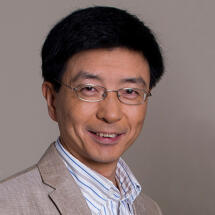
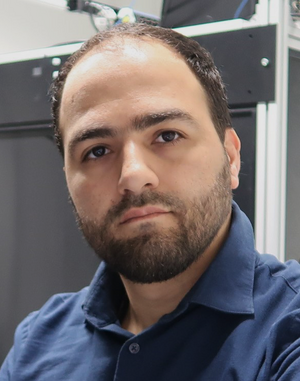
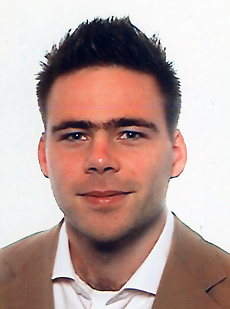
Xiaoyi Jiang is a Professor at the Institute of Computer Science at the University of Münster, leading the Jiang Lab focused on Pattern Recognition and Image Analysis. He holds roles in the CiM-IMPRS Graduate Programme Management Board and participates in projects like the Multiscale Imaging Centre. His research emphasizes biomedical image analysis, machine learning, and medical applications such as tumor segmentation, vessel network extraction, and automated tracking systems for small organisms. Key contributions include FIMTrack software for locomotion analysis, the Voreen visualization framework, and complex-valued neural network architectures. He has authored over 200 papers and holds patents in imaging and segmentation technologies. His work bridges computer science with medical and biological applications, aiming to solve challenges in automated analysis and interpretation of biomedical data.
Prof. Dr. Carla Schmidt is a biochemistry professor at Johannes Gutenberg University Mainz (JGU), leading a lab specializing in mass spectrometry applications for studying protein complexes and neuronal signal transduction. Previously, she held positions as junior professor at MLU Halle-Wittenberg and postdoc at Oxford. Her research focuses on structural biology, lipidomics, and protein interactions using advanced mass spectrometry techniques. Key highlights include developing novel methods for analyzing heterogeneous protein complexes and mentoring early-career researchers. Education: Abitur (2001), University degree (2006), Doctorate (2010). Awards: Not explicitly listed, but recognized for contributions to mass spectrometry methodologies. Professional networks include German and American Mass Spectrometry Societies. Her lab operates advanced instruments like the Q-ToF Ultima and Q Exactive Plus mass spectrometers. Current projects emphasize integrating mass spectrometry with structural biology tools to elucidate biochemical processes linked to disease mechanisms.
Dr. Julian Seifert is a former research associate at Ulm University's Institute of Media Informatics (Department of Media Informatics). His work focuses on Human-Computer Interaction (HCI), particularly in mobile computing, pervasive displays, and collaborative systems. He completed his PhD in 2015 with a dissertation on Mobile Mediated Interaction with Pervasive Displays , recognized for its contributions to the field. Key research areas include autonomous displays (Hover Pad), privacy-respecting mobile interactions (From the Private Into the Public), and hybrid device ecosystems (MobiSurf). His work often explores how mobile devices can seamlessly integrate with interactive surfaces and public displays to enhance collaboration and user experience. Notable achievements include an Honorable Mention Award (2014) for the AMP-D project and a Best Note Award (2013) for the Penbook system. His research bridges theoretical HCI principles with practical applications in domestic environments and healthcare workflows.
Susanne Boll is a Professor in the Department of Computing Science at the University of Oldenburg, Germany. With over 25 years of research experience and more than 400 publications, she is a leading expert in Human-Computer Interaction (HCI), particularly focusing on smart environments, mobile computing, automotive user interfaces, and accessibility. She has served as editor for major conferences including MobileHCI 2020 and ACM Multimedia 2024, and has been actively involved with SIGCHI, the premier organization for HCI research. Her research spans multiple domains of interactive systems, with significant contributions to smart home technologies, augmented reality applications, and human-vehicle interaction. She investigates how people interact with emerging technologies in everyday contexts, with particular attention to user experience, social acceptability, and privacy implications. Her work often bridges theoretical insights with practical applications, focusing on real-world challenges in technology adoption and use. Recent research emphasizes ethical considerations in AI deployment, particularly in public administration contexts and health informatics. Analysis of her recent publications reveals a strong trajectory toward socially responsible computing, with increasing focus on ethical AI deployment in public services, user control over personal health data, and designing for vulnerable road users in automated transportation systems. Her work demonstrates consistent methodological rigor across both qualitative and quantitative approaches, often involving in-the-wild studies and co-design methodologies. Susanne Boll has been instrumental in shaping the HCI research community through leadership roles in major conferences and workshops. She co-organized the Dagstuhl Seminar on Human-AI Interaction for Work (2023) and the Workshop on Inclusive Communication between Automated Vehicles and Vulnerable Road Users (2020). Her editorial work for IEEE Multimedia and other venues has helped define research directions in the field. Her research group at the University of Oldenburg investigates novel interaction techniques for smart environments, with particular expertise in gesture-based interaction, attention guidance in virtual reality, and privacy-preserving technologies. The team frequently collaborates with industry partners and other academic institutions across Europe, contributing to both theoretical advances and practical implementations of interactive systems.
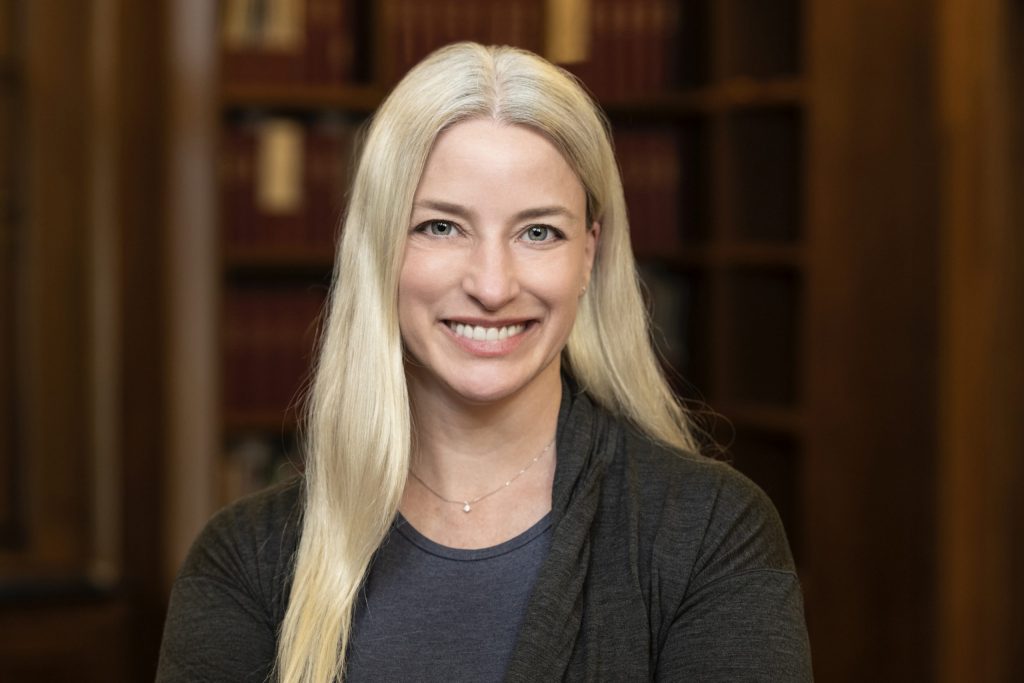
Victoria Stodden is an Associate Professor in the Daniel J. Epstein Department of Industrial and Systems Engineering at the University of Southern California. She specializes in reproducibility in computational and data science, addressing challenges in verifying analytical procedures, data/code sharing standards, and legal barriers to open research. She received the Humboldt Research Award (2024) and serves on the Scientific Advisory Board of the Heidelberg Institute for Theoretical Studies (HITS) and the KIT Graduate School of Computational and Data Science (KCDS). Her interdisciplinary work bridges statistics, computer science, and policy. Education: PhD in Statistics (Stanford University) and Juris Doctor (Stanford Law School). She has contributed to US National Academies committees and the NSF’s Advisory Committee for CyberInfrastructure. Her research emphasizes reproducibility frameworks, open science practices, and ethical scientific communication. Key contributions include advocating for computational transparency, analyzing high-profile research controversies (e.g., Reinhart-Rogoff), and promoting open data policies. She has held visiting roles at KIT and HITS, advancing collaborative research in Germany. Scientific Awards: Humboldt Research Award (2024). Her work is supported by grants from federal agencies and international fellowships, including a KIT International Excellence Fellowship.
Yong Zheng is a Professor in the College of Computing at Illinois Institute of Technology in Chicago, with additional affiliations at DePaul University. His research focuses on intelligent systems with specialization in recommender systems, multi-criteria decision frameworks, and educational technologies. He develops algorithms for context-aware recommendations and explores applications in sustainable investments, educational personalization, and AI-enhanced learning. His primary research interests include: Design of transparent multi-stakeholder recommendation frameworks Context-aware modeling using neural networks and matrix factorization Educational group recommendations with personality-aware adaptations Multi-objective optimization for financial and learning systems Analysis of recent publications (2023-2025) shows strong focus on: Hybrid recommendation approaches combining multi-criteria decision making Open educational datasets and tools for recommender system development Applications of generative AI in data science pedagogy Sustainable investment modeling through portfolio optimization
Sarah Clinch is a Professor at the University of Manchester specializing in pervasive computing and human-computer interaction. Her research explores cognitive augmentation technologies, pervasive display systems, memory enhancement applications, and inclusive HCI methodologies, with recent focus on dementia support systems and queer perspectives in computing. Her extensive publication record spans augmented reality interfaces, IoT workflows, behavioral analysis through mobile devices, and assistive technologies for healthcare. Recent work investigates lifelogging for memory assessment, queer joy expression on social platforms, and reminiscence therapy systems for dementia care. She leads research on cognitive augmentation technologies, examining both technical implementations and ethical considerations of pervasive computing systems that interact with human cognition.
Dr. Frank Niemeyer is a Researcher at the University of Ulm's Ulm Center for Scientific Computing. He has been a Postdoc and UZWR employee since 2005, contributing to computational biomechanics and medical imaging research. His work focuses on fracture healing simulations, spinal disorders, and AI-driven medical analysis. Education: Diploma in Informatics (2007): Thesis on algorithms for fracture healing evaluation (in German) PhD (2013): Dissertation on 'Simulation of Fracture Healing' (English) Research Interests : Computational Biomechanics, Mathematical Biology, Systems Biology, and Scientific Computing. His projects include developing AI models for spinal MRI analysis, predicting bone healing outcomes, and optimizing surgical implants using simulations. Articles Trends : Recent work emphasizes AI applications in musculoskeletal imaging (e.g., automated segmentation of lumbar muscles) and biomechanical modeling of spinal disorders. Key studies address cervical spine degeneration, Modic changes, and fracture healing prediction. Awards : ISSLS Prize in Bioengineering Science (2021) Lab/Teams : Core member of the Ulm Center for Scientific Computing, collaborating on projects like 'InstantSpine' and 'METAmorph' simulation frameworks.
Luciano García-Bañuelos is a researcher at the University of Tartu specializing in Business Process Management (BPM), Blockchain Technology, and Process Mining. His work focuses on decentralized business processes, conformance checking, and entropy-based analysis of process models. He has collaborated extensively with scholars like Marlon Dumas, Artem Polyvyanyy, and Ingo Weber on topics such as blockchain-based execution engines (e.g., Caterpillar), ambiguity characterization in BPM, and privacy-preserving workflow analysis using the Pleak toolset. Institutions: University of Tartu (current), Queensland University (past collaborations) Research Interests: His research bridges BPM with blockchain for flexible collaborative processes, entropy-driven model generalization, and sensor data integration. He explores methods to ensure process conformance in ambiguous environments and develops tools for multi-level privacy analysis in business workflows. Articles: Recent publications highlight conformal prediction in multi-user systems (2025), semi-automated activity detection from IoT sensor data (2024), and ambiguity taxonomies in BPM (2023). Earlier works (2016–2018) focused on blockchain execution optimization, dynamic role binding, and Ethereum-based BPM systems. Collaborations: He frequently works with Marlon Dumas (60 co-publications), Artem Polyvyanyy (18), and Ingo Weber (14), contributing to journals like Information Systems , IEEE Transactions on Software Engineering , and conferences such as BPM and CAiSE.
Vassilis Christophides is a Researcher at INRIA Paris, France, specializing in data management and knowledge systems. His research spans entity resolution, knowledge graphs, anomaly detection, and IoT analytics, with recent focus on fairness-aware algorithms and explainable AI. He maintains active collaborations with institutions across Europe and has published extensively in top-tier venues including VLDB, ICDE, and KDD. His core research investigates: Scalable entity resolution techniques for web-scale data Knowledge graph construction and alignment methodologies Real-time anomaly detection in streaming environments Fairness and bias mitigation in data integration pipelines Edge computing optimizations for IoT analytics Recent publications demonstrate a strong trend toward responsible data science, combining foundational data management with emerging concerns in AI ethics. His work frequently develops novel methods for: (1) improving transparency in automated systems through explainable anomaly detection, (2) ensuring fairness in entity resolution workflows, and (3) optimizing resource-constrained edge environments for continuous analytics. Dr. Christophides leads research initiatives at INRIA and collaborates on European projects involving streaming data processing, knowledge representation, and distributed computing infrastructures. His team focuses on bridging theoretical frameworks with practical implementations for web-scale data challenges.
Roger King is a seasoned researcher with over 40 years of contributions to computer science, particularly in database systems, software engineering, and data integration. His work spans heterogeneous database management, semantic modeling, and distributed systems, often collaborating with leading institutions like University of Colorado and Springer. 1987: Co-authored foundational paper on semantic database modeling in ACM Computing Surveys 1992: Developed FaceKit database interface design toolkit 1994: Pioneered DIRECT query facility for multiple databases Research Interests: King's work focuses on database integration , semantic interoperability , and self-adaptive systems . Notable projects include Sybil for database evolution, Cactis for object-oriented databases, and COIL mediator definition language. Key Trends: His 15 most recent publications (2024-1999) address challenges in smart data systems , autonomous systems performance , and microgrid control , reflecting sustained expertise in data semantics and system architecture.
Christoph Bussler is a prominent researcher with extensive contributions to Semantic Web Services B2B Integration Cloud Computing Workflow Management Enterprise Application Integration His work focuses on semantic technologies, data engineering, and optimization frameworks. Recent publications analyze Cloud storage tier optimization Graph-based cost modeling Taxonomy for cloud storage costs Serverless-container hybrid systems SQL for NoSQL databases These studies emphasize scalable solutions and semantic interoperability. He has collaborated with experts like Dumitru Roman, Radu Prodan, and Dieter Fensel on projects involving Triple Space Computing WSMX Architecture Peer-to-Peer Service Discovery Rule-Based Classification
Claudia Müller is a Professor at Kalaidos University of Applied Sciences and holds the Lehrstuhl IT für die Alternde Gesellschaft at the University of Siegen. She contributes to interdisciplinary research on technology for ageing populations, focusing on human-computer interaction, participatory design, and digital inclusion. Key roles: Professor (Kalaidos), Chair in IT for Ageing Society (Siegen), Member of Ageing at Home Research Team (Careum Zurich) Research spans eHealth, telemedicine, digital social services, gender-specific technology use , and human-robot interaction for care contexts. Her publications include studies on participatory design , robotics in healthcare , and inclusive digital platforms . She organizes workshops on media ethnography and boundary infrastructures , emphasizing user-driven innovation. Projects led include CareComLabs (€375,000, 2019–2022), CoCre-HIT (2021–2024), and ACCESS (EU, BMBF, 2019–2022), addressing digital literacy and assistive technology for older adults. She serves as co-spokesperson for the Committee on Ageing and Technology and is on the jury for the SENovation Award , supporting startups addressing older demographics. Her work integrates qualitative-empirical methods and participatory approaches to bridge technical feasibility with social innovation, particularly in praxis-based design and living labs for community healthcare.
Hisham Mazal is a Research Fellow at the Max Planck Institute for the Science of Light (MPL), part of the group led by Prof. Vahid Sandoghdar. His research focuses on advancing cryogenic super-resolution fluorescence microscopy to study protein structures in native environments. Key objectives include developing workflows for correlative light-electron microscopy using vitrified samples and enhancing detection sensitivity for small proteins via machine learning. Education: BSc in Biotechnology Engineering (ORT Braude College, 2010-2013), MSc in Chemical and Biological Physics (Weizmann Institute, 2013-2015), PhD in Single-Molecule Protein Dynamics (Weizmann Institute, 2016-2020). Joined MPL as a postdoc in 2020. Research interests span cryogenic microscopy innovations, protein dynamics, membrane protein analysis, and machine learning applications in imaging. His work bridges structural biology and biophysics, with recent contributions to PIEZO1 channel studies, α-Synuclein aggregation, and sub-10kDa protein detection. Notable collaborations include work on AAA+ protein machines and enzymatic activity modulation, leveraging single-molecule FRET and advanced microscopy techniques. His lab integrates interdisciplinary approaches to uncover functional protein mechanisms at atomic scales.
Falk May is a Researcher at Merck KGaA, Darmstadt, and an alumnus of the group led by Prof. Denis Andrienko. He holds a Diploma in Physics from Goethe University Frankfurt (2008) and completed his Ph.D. in the theory group at the Max Planck Institute for Polymer Research (MPIP) in 2009. His research focuses on organic electronics, particularly charge transport in organic light-emitting diodes (OLEDs), molecular ordering in thin films, and computational modeling of organic semiconductors. He collaborates with industry partners like BASF on projects such as the "Spitzencluster" initiative for organic electronics. Key contributions include developing coarse-grained methods for predicting molecular orientations and improving OLED efficiency through materials design. His work bridges experimental and theoretical approaches to address challenges in device stability and performance. Education: Physics studies at Universities of Kaiserslautern, Mainz, and Strasbourg, culminating in a Diploma from Frankfurt (2008). Research topics include charge transport through single-molecule magnets (under Prof. Hofstetter) and later, OLED materials via multiscale simulations. His expertise spans computational chemistry, materials science, and optoelectronics. Research interests emphasize optimizing OLED host materials, understanding energy transfer mechanisms (e.g., unicolored phosphor-sensitized fluorescence), and predicting material properties like glass transition temperatures. He has contributed to public libraries of OLED host materials for open-source simulation workflows. Advising/grants: Not explicitly listed, but his work involves collaborative projects with academic and industrial partners. His research has been published in journals like Adv. Energy Mater. , Phys. Rev. Appl. , and Nature Communications . Labs/teams: Formerly part of Prof. Andrienko’s group at the MPIP; currently leading a research team at Merck KGaA. Collaborators include experts in experimental physics, computational modeling, and materials engineering.