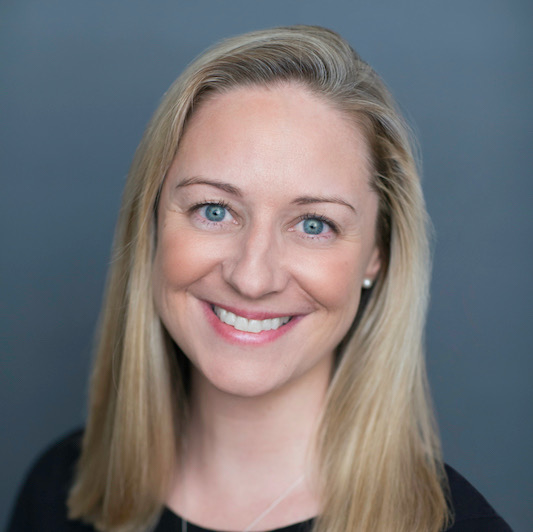
Sarah Collins Rossetti is an Associate Professor of Biomedical Informatics and Nursing at Columbia University’s Vagelos College of Physicians and Surgeons. She focuses on leveraging computational tools to reduce documentation burden in EHR systems and improve patient safety through predictive analytics. PhD in Nursing from Columbia University School of Nursing Post-Doctoral Research Fellowship at Columbia’s Department of Biomedical Informatics Her research emphasizes AI-driven patient deterioration prediction , user-centered design , and interprofessional collaboration to enhance clinical workflows. She co-leads the CONCERN Early Warning System study, which reduced mortality risk by 35% and sepsis risk by 7.5%. Recent publications highlight trends in generative AI limitations in EHRs, equity in predictive systems , and healthcare process modeling . She chairs AMIA’s 25×5 Task Force to reduce documentation burden by 75% by 2025. 2019 PECASE recipient 2024 Donald A.B. Lindberg Award for Informatics Innovation 2019 FAMIA recognition Rossetti collaborates with health analytics centers and trains future researchers through NIH- and AHRQ-funded projects, blending machine learning with clinical expertise in critical care settings.
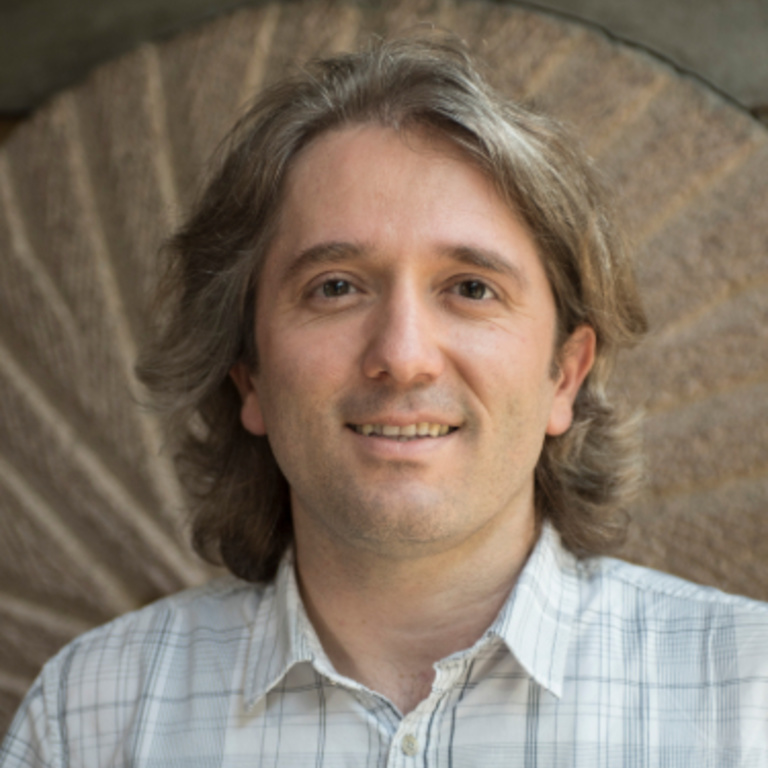
Ibrahim Demir serves as an Adjunct Associate Professor in the Department of Civil and Environmental Engineering at the University of Iowa's College of Engineering, while also holding an Associate Faculty Research Engineer position at IIHR—Hydroscience and Engineering. His interdisciplinary work bridges hydroinformatics, environmental engineering, and advanced computing technologies to address critical water resources challenges through innovative digital solutions. His educational background includes a PhD in Environmental Informatics and Control Program from the University of Georgia (2010), an MS in Environmental Engineering from Gebze Institute of Technology (2004), and a BS in Chemistry from Bogazici University (2000). This foundation supports his integration of chemical, environmental, and computational sciences in hydrological research. Dr. Demir's research centers on hydroinformatics and AI-driven environmental systems, with core expertise in scientific visualization, cyber systems design, and virtual/augmented reality applications. He develops web-based frameworks for flood risk assessment, drought analysis, and water quality management, emphasizing real-time data integration and user-friendly interfaces. Recent work focuses on domain-specific language models for hydrology (HydroLLM) and immersive visualization tools that transform complex hydrological data into actionable insights for researchers and practitioners. Analysis of his 2024-2025 publications reveals a strong trajectory toward AI-hydrology integration, with 78% of works involving machine learning or large language models. Key themes include flood risk communication (22% of publications), algal bloom prediction (15%), and educational technology applications (12%). His research increasingly emphasizes scientific reproducibility through no-code visual programming frameworks and digital twin implementations for watershed systems. Dr. Demir actively contributes to scholarly discourse as Associate Editor for Environmental Modeling and Software, Journal of Hydroinformatics, Journal of Environmental Informatics, and Water and Artificial Intelligence (Frontiers in Water). He serves as Vice-Chair of the International Joint Committee on Hydroinformatics (IAHR/IWA/IAHS) leadership team, shaping global standards in hydroinformatics research and practice. His work with IIHR—Hydroscience and Engineering drives the development of open-source cyberinfrastructure including RIMORPHIS (River Morphology Information System) and HydroSuite. These platforms enable collaborative river morphology research and provide modular tools for hydrological analysis, education, and operational decision support, demonstrating his commitment to accessible, community-driven scientific advancement.
Jilles Vreeken is a Professor of Computer Science at Saarland University and tenured faculty at the CISPA Helmholtz Center for Information Security, where he leads the Exploratory Data Analysis research group. He is also an ELLIS Fellow and Faculty of the Saarbrücken Unit on AI and ML. His work bridges theoretical foundations with practical applications in causal inference, unsupervised learning, and exploratory data analysis. Dr. Vreeken's research focuses on developing theory and algorithms for answering fundamentally exploratory questions about data: "what is going on in my data?", "what causes what and how?", and "what can we learn from this model?" without making unnecessary or unjustified assumptions. He takes a principled approach based on information theory to identify what is worth knowing, then develops efficient algorithms for extracting useful interpretable results. His work spans causal inference under realistic conditions (including hidden confounding, selection bias, and non-i.i.d. data), summarizing complex data and models in understandable terms, and combining these threads to create more robust and useful models across diverse data types. His recent publications demonstrate a strong trend toward causal discovery in increasingly realistic settings, including non-stationary time series, event sequences, and scenarios with hidden confounders. He has made significant contributions to federated learning, interpretable machine learning, and pattern mining. His work consistently applies information-theoretic principles to develop methods that are both theoretically sound and practically useful for extracting insights from complex data. Dr. Vreeken has received numerous prestigious awards including: IEEE ICDM'18 Tao Li Award for Excellence in Research IEEE ICDM'18 Best Paper Award UdS-CS'15 Busy Beaver Teaching Award ACM SIGKDD'11 Best Student Paper Award ACM SIGKDD'10 Doctoral Dissertation Runner-Up Award ECML PKDD'09 Best Student Paper Award As an advisor, Dr. Vreeken has mentored numerous doctoral researchers to completion, including Dr. Osman Ali Mian, Dr. David Kaltenpoth, Dr. Boris Wiegand, Dr. Sebastian Dalleiger, Dr. Janis Kalofolias, Dr. Jonas Fischer, Dr. Alexander Marx, Dr. Panagiotis Mandros, Dr. Kailash Budhathoki, Dr. Roel Bertens, Dr. Koen Smets, and Dr. Michael Mampaey. He has secured significant research funding as PI for multiple projects including "AI for Prediction and Therapy Guidance in Acute Stroke" (HAICU, 2025-2028), "Neuro-Explicit Models of Language, Vision and Action" (RTG, DFG, 2023-2028), and "Crushing Antimicrobial Resistance using Explainable AI" (HAICU, 2021-2024). Dr. Vreeken leads the Exploratory Data Analysis (EDA) research group at CISPA, which focuses on developing theory and algorithms for discovering novel insights from data, learning inherently interpretable models, and drawing reliable causal conclusions. The group has produced numerous influential algorithms and frameworks in causal inference, pattern mining, and exploratory data analysis, with applications spanning healthcare, materials science, and cybersecurity.
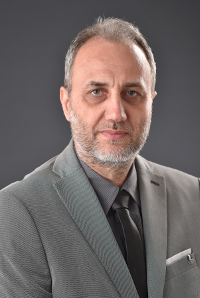
Dr. ir. Gerhard Bruyns is a tenured Associate Professor at the School of Design, The Hong Kong Polytechnic University , where he serves as Associate Dean (Academic Programmes) and Director of RPg Studies . Previously, he held tenured positions at the Delft University of Technology , Netherlands, in both the Delft School of Design and the Department of Urbanism. His expertise spans spatial morphology, volumetric urbanism, and critical environments in dense urban contexts.
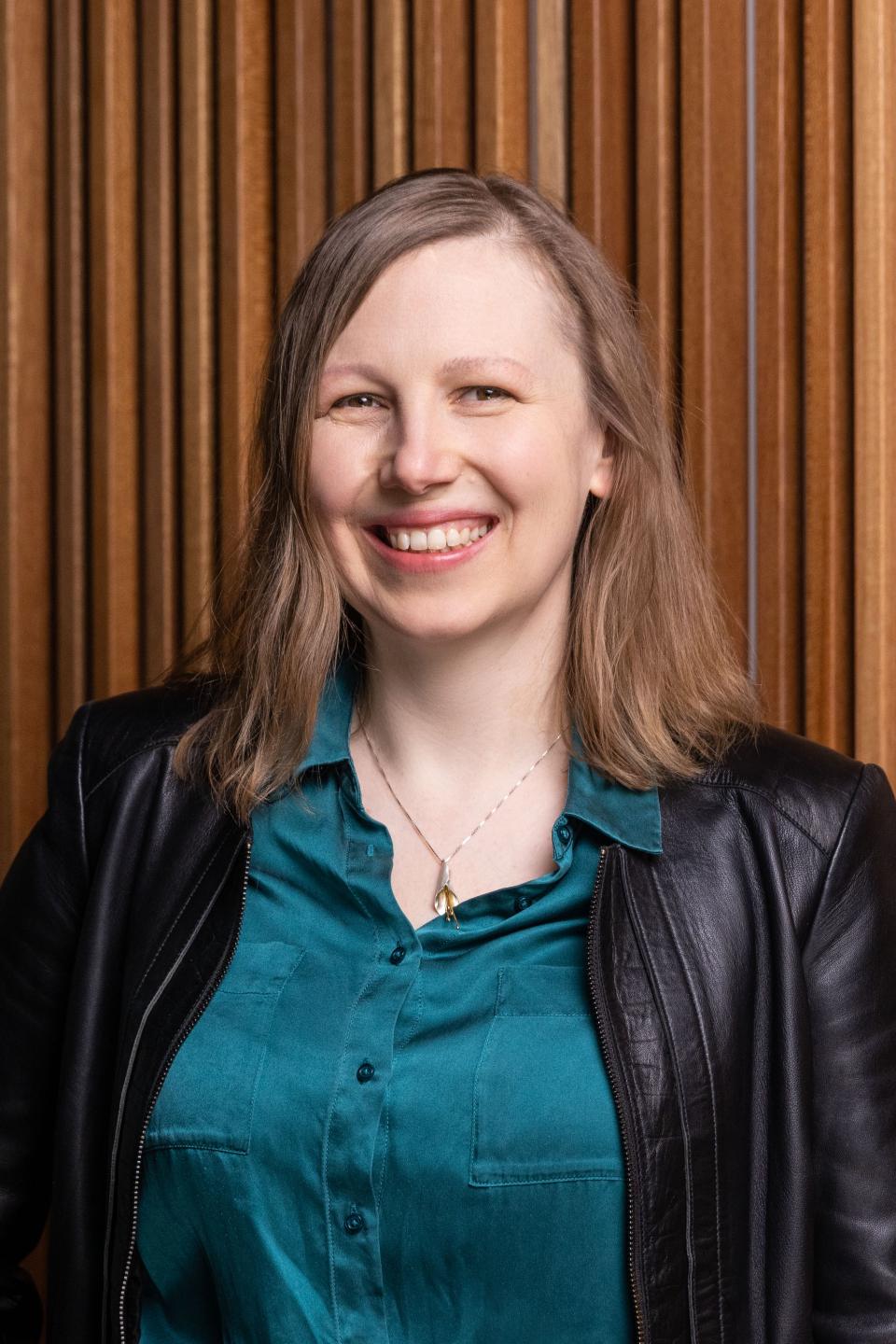
Anna Wilbik is a Professor in Data Fusion and Intelligent Interaction at the Department of Advanced Computing Sciences, Faculty of Science and Engineering, Maastricht University (The Netherlands). Her research bridges data understanding and human-machine synergy in complex systems, focusing on multi-criteria decision making, explainable AI, and data fusion techniques. PhD in Computer Science (with honors), Systems Research Institute, Polish Academy of Science (2010) Postdoctoral Fellow, University of Missouri (2011) Stanford University TOP500 Innovators Program Alumnus Research Pillars: Intelligent human-machine interaction for joint decision making Data fusion methods for heterogeneous data integration Contextualized multi-criteria decision frameworks Fuzzy logic and linguistic summaries for explainability Federated learning systems Article Trends: Recent work focuses on intuitionistic fuzzy sets for knowledge-intensive processes, federated learning with uncertainty handling, and linguistic summarization techniques for interpretable AI. She actively explores explainability , collaborative business models , and driver behavior analysis through attention-based models. Professional Leadership: Vice-chair of IEEE Fuzzy Systems Technical Committee Organizer of IEEE World Congress on Computational Intelligence (2024)
Travis B. Thompson, Ph.D. is an Assistant Professor in the Department of Mathematics and Statistics at Texas Tech University, leading the TM4 (Texas Tech Translational and Theoretical Mathematical Modeling and Machine Learning in Medicine) research group. His academic journey includes postdoctoral work at Rice University, Simula Research Laboratory, and the University of Oxford, focusing on mathematics applied to neurodegenerative diseases. Education: Ph.D. in Mathematics from Texas A&M University (2013) Dr. Thompson develops theoretical mathematical models and applies scientific computing and machine learning to study neurological pathologies, particularly Alzheimer’s disease. His work explores complex biological processes on networks, translational healthcare applications, and nutritional security implications. Current research trends integrate neuroimaging data with finite element simulations to model tau progression , amyloid beta dynamics , and glymphatic clearance in age-related diseases. Scientific awards and honors were not explicitly mentioned in the provided materials. Dr. Thompson’s interdisciplinary approach connects computational neuroscience with biomedical engineering , utilizing techniques like diffusion tensor imaging and level set methods to analyze pathological protein spread and brain tissue mechanics . The TM4 research group focuses on network neurodegeneration , personalized medicine , and machine learning diagnostics . Their work spans from microfluidic cancer detection to computational modeling of brain clearance mechanisms , addressing challenges in both neurodegenerative diseases and biomedical engineering through rigorous mathematical frameworks.
John Castagna is a Professor of Geophysics at the University of Houston. His research centers on geophysics, with specialized expertise in seismic data analysis, amplitude variation with offset (AVO) techniques, rock physics, spectral decomposition, and seismic inversion. He has authored influential publications advancing methodologies for hydrocarbon detection, seismic attribute analysis, and subsurface characterization. His research interests include: Advanced seismic interpretation techniques (AVO crossplotting, spectral decomposition) Rock physics and fluid-property modeling Seismic inversion algorithms for reservoir characterization High-resolution stratigraphic analysis using spectral methods Castagna's publications demonstrate a consistent focus on developing practical geophysical solutions for energy exploration. His work on AVO analysis, spectral decomposition, and thin-bed reflectivity has been widely cited, forming foundational methodologies in exploration geophysics. Articles frequently integrate rock physics principles with seismic data to improve hydrocarbon identification and reservoir modeling. Awards & Honors: No awards explicitly mentioned in the provided text. Advising & Collaboration: Frequent collaborations include researchers from Shell International, University of Oklahoma, and University of Louisiana. No specific students or grants are detailed. Labs & Teams: No laboratory or research group information is provided.
Florian Leiser is a Professor at the Chair of Information Infrastructures (led by Prof. Dr. Ali Sunyaev) at Technical University of Munich's Heilbronn campus. His research focuses on human-AI collaboration, privacy-preserving algorithms, and explainability in machine learning systems. Current research areas include Hybrid Intelligence, Human-centered Generative AI (LLMs), Federated Learning, and Health Information Systems Recent publications demonstrate expertise in Explainable AI for medical imaging LLM hallucination detection Federated learning architectures Human-in-the-loop systems Healthcare data applications He contributes to teaching through Human-Centered Artifact Design courses Collaborative teaching roles in machine learning Supervising student projects
Donald H. Taylor is a Professor at Duke University with dual appointments in the Sanford School of Public Policy and the Department of Family Medicine and Community Health. He serves as the Director of the Social Science Research Institute and is an Executive Core Faculty Member at the Duke-Margolis Institute for Health Policy. Additionally, he holds affiliations as an Associate of the Duke Initiative for Science & Society and an Affiliate of the Duke Global Health Institute. Dr. Taylor's educational background includes: Ph.D. in Public Health, Health Policy and Management from the University of North Carolina, Chapel Hill (1995) M.P.P. from the University of North Carolina, Chapel Hill (1992) B.S. from the University of North Carolina, Chapel Hill (1990) As a leading health policy scholar, Dr. Taylor's research has evolved through several key phases. Initially focusing on rural health and identification of underserved areas, his work expanded to examine the economics of smoking and cessation. For the past two decades, his primary focus has been on elderly care systems and their impacts on individuals, families, public programs, and inter-generational wealth. More recently, he has delved into archival research methods to illuminate the role of race in American history, and is exploring how visual art and fiction might effectively challenge cultural acceptance of various forms of inequality. His extensive publication record shows consistent focus on Medicare, Medicaid, palliative care, and end-of-life care. A significant portion of his recent work examines racial disparities in healthcare, the economics of nursing and palliative care, and the impact of policy changes on vulnerable populations including the elderly and homeless. His research often employs sophisticated economic analyses to evaluate healthcare interventions and policy changes, with particular attention to how policies affect different demographic groups. Dr. Taylor has held significant leadership roles including serving as Chair of the Academic Council (2017-2019) and Director of the Social Science Research Institute since 2019. His grant portfolio demonstrates sustained funding for projects examining palliative care, Medicare/Medicaid policy, and health disparities, with current projects spanning from 2018 to 2025. His ongoing research initiatives focus on community-based palliative care models, racial inequality in healthcare, and innovative approaches to making health policy more effective and equitable. Through his work with the Duke-Margolis Institute for Health Policy, he continues to influence health policy at both state and national levels, particularly regarding Medicare reform, Medicaid expansion in North Carolina, and addressing systemic racial disparities in healthcare delivery.
Casmir Turnquist is a Research Fellow at the Nuffield Department of Clinical Neurosciences, University of Oxford, with concurrent roles as an NIHR Academic Clinical Fellow and Specialty Registrar in Histopathology at OUH NHS Foundation Trust. His work bridges clinical practice and research in pediatric brain/spine cancers and neurodegenerative pathologies. BA, MSc, BM BCh, DPhil His research investigates fusion-driven cancers in young patients using long-read sequencing and single-cell genomics, alongside studying neurotoxicity from cancer therapies through spatial transcriptomics and developmental neuroscience perspectives. Recent work includes characterizing CLIPPERS inflammatory disorders and SLONM myopathy. Publications demonstrate expertise in CNS tumors, inflammatory pathologies, and digital pathology implementation, with methodological focus on genomic heterogeneity and precision diagnostics. NIH Director's Innovation Award Supervises DPhil students Hannah Brooks and Claire Lewis, maintaining collaborations with Oxford Brain Bank and NIH institutions while advancing translational research in neuro-oncology and neuropathology.
Dr. Wai Kiong Oswald Chong is an Associate Professor at Arizona State University's School of Sustainable Engineering and the Built Environment, with a dual affiliation as Senior Global Futures Scientist at the Global Futures Scientists and Scholars program. He holds a PhD in Civil Engineering from the University of Texas-Austin, MSc and BSc in Building from the National University of Singapore, and focuses on integrating artificial intelligence with sustainable engineering systems. PhD (2005): Civil Engineering, University of Texas-Austin MSc (1999) & BSc (1997): National University of Singapore His research bridges lunar construction with Earth-bound sustainable systems, covering topics like: Space habitat modularization Resource circularity systems AI-enhanced building codes Climate-resilient infrastructure Advanced energy modeling Construction supply chain optimization Publications demonstrate consistent focus on: Semiconductor facility HVAC optimization Building energy consumption anomalies Life cycle assessment frameworks Construction risk management Deconstruction and material reuse AI-driven system modeling Current research projects include: Lunar MVI (Moon Village Initiative) Semiconductor fab design optimization Human-AI knowledge interfaces Thermal insulation systems for extreme environments Smart grid energy modeling
Niamh Nic Daeid is Professor of Forensic Science and Director of the Leverhulme Research Centre for Forensic Science (LRCFS) at the University of Dundee, leading the £15m Just Tech Institute for Innovation. She holds fellowships with the Royal Society of Edinburgh, Royal Society of Chemistry, and multiple forensic science bodies while serving on committees for INTERPOL, the International Criminal Court, and the United Nations. Her research focuses on forensic chemistry applications in prison drug analysis, explosives detection, and fire investigation. Recent work emphasizes science communication, particularly using comics to improve juror comprehension of forensic testimony. She leads major projects including Clarus (bias prevention in digital forensics) and the Smart Digital Forensic Advisor initiative. Nic Daeid's publications span forensic methodology development, from quantum dots for fingerprint detection to machine learning for footwear impression analysis. Her team's 2025 research includes prison drug studies using seized Scottish evidence and advanced cartridge case imaging techniques. European Network of Forensic Science Institutes Distinguished Forensic Scientist award (2018) Royal Society of Edinburgh Senior Medal for Public Engagement Peter Ganci Award for fire investigation services Gold Engage Watermark for Public Engagement (2019) Best Short Paper Award, International Conference on eXtended Reality (2022) She supervises 13 research students and early-career academics across forensic chemistry, digital forensics, and science communication projects. Current grants include the Leverhulme Trust's £10m LRCFS (2016-2026), UK government's Tay Cities Regional Deal funding, and Dundee City Council's VR/5G initiative. Her team maintains active collaborations with Scottish prisons, international forensic networks, and law enforcement agencies.
Miloš Racković serves as a full Professor in the Department of Mathematics and Informatics at the University of Novi Sad, Serbia. He maintains active academic engagement through the Laboratory for the development of information systems, with his office located in the Information technologies and systems office (DMI&DF) on the second floor, room 49. Contact is available via telephone (485)-2868 or email rackovic@dmi.uns.ac.rs, and his personal website (http://www.is.pmf.uns.ac.rs/rackovicm/) provides additional resources. His research spans foundational and applied computer science, with seminal contributions in fuzzy database systems including PFSQL query language development and prioritized fuzzy logic for relational databases and XML. He has pioneered deep learning methodologies through innovative classification techniques using negative and missing features in convolutional neural networks. Additional expertise includes high-performance computing implementations of Lattice Boltzmann methods using OpenCL, robotics (symbolic modeling and trajectory planning), and blockchain applications for Industry 4.0 production processes. His sports analytics work applies neural networks to basketball player and referee movement analysis. Analysis of his 2012-2025 publications reveals a strategic evolution toward interdisciplinary applications, particularly in industrial transformation (blockchain-enabled traceability) and sports analytics. His work consistently bridges theoretical computer science with practical implementations, demonstrating increasing focus on real-world problem solving while maintaining strong foundations in database theory and computational methods. Professor Racković leads the Laboratory for the development of information systems, which focuses on advancing information system methodologies through formal modeling extensions (including Petri net innovations) and practical implementations for uncertainty management. The laboratory's work spans from foundational research in fuzzy logic systems to applied projects in high-performance computing and blockchain integration, fostering innovation in information technology development.
Romney M. Humphries, Ph.D., D(ABMM), M(ASCP), is a Professor of Pathology, Microbiology, and Immunology at Vanderbilt University Medical Center, serving as Medical Director of the Microbiology Laboratory. Their research focuses on advancing diagnostic technologies for antibiotic-resistant infections and studying real-time evolution of antimicrobial resistance mechanisms. Academic Rank: Professor Department: Pathology, Microbiology, and Immunology Key research areas include antimicrobial resistance , diagnostic innovation , and clinical microbiology . The Humphries laboratory specializes in evaluating rapid identification methods for multidrug-resistant pathogens and novel antimicrobial development. Recent publications highlight advancements in MALDI-TOF MS, CRISPR diagnostics, and regulatory frameworks for laboratory-developed tests. Scientific contributions appear in journals such as New England Journal of Medicine , Clinical Infectious Diseases , and Journal of Clinical Microbiology . Current work emphasizes integrating genotypic/phenotypic testing for improved patient outcomes and informing federal policies on diagnostic standardization.
Allen Hsiao MD, FAAP, FAMIA is Professor of Pediatrics, Biomedical Informatics and Data Science, and Emergency Medicine at Yale School of Medicine. He serves as Chief Health Information Officer (CHIO) for Yale School of Medicine and Yale New Haven Health System, and as Vice Chair of Clinical Systems in Biomedical Informatics & Data Science. BA in Biomedical Ethics and MD from Brown University Pediatrics residency at Yale-New Haven Children's Hospital Fellowships in Pediatric Emergency Medicine and Medical Informatics at Yale His research focuses on leveraging health information technology to improve care delivery, with emphasis on electronic health records, clinical decision support, natural language processing, and AI applications. He actively explores how informatics can optimize systems, improve transitions of care, and advance health equity through diverse clinical trial participation. His work spans pediatric emergency medicine, gastroenterology, child abuse detection, and opioid safety. Dr. Hsiao's recent publications demonstrate leadership in AI-augmented clinical decision support, EHR-based machine learning models, and pandemic response infrastructure. His team has developed innovative tools for child abuse identification, gastrointestinal bleeding risk prediction, and collaborative research data platforms. 56 Hospital and Health System CMIOs and CNIOs to Know (Becker's Healthcare, 2023) Healthcare Diversity Leader Award (National Diversity Council, 2023) 48 CMIOs and CNIOs to Know (Becker's Hospital Review, 2022) Norman J. Siegel Faculty Award (Yale School of Medicine, 2022) As principal investigator and co-investigator on NIH and AHRQ-funded grants, he examines health information technology's impact on healthcare quality. He co-directs Yale's CTSA Informatics Core, working with Yale Center for Clinical Investigations to equip researchers with EHR (Epic) and clinical trials management (OnCore) tools. His leadership extends to national committees including American Academy of Pediatrics, HIMSS, and Children's Hospitals Association.