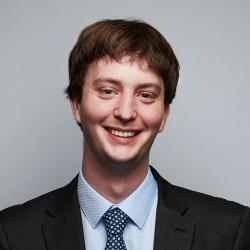
Florian Leiser is a Professor at the Chair of Information Infrastructures (led by Prof. Dr. Ali Sunyaev) at Technical University of Munich's Heilbronn campus. His research focuses on human-AI collaboration, privacy-preserving algorithms, and explainability in machine learning systems. Current research areas include Hybrid Intelligence, Human-centered Generative AI (LLMs), Federated Learning, and Health Information Systems Recent publications demonstrate expertise in Explainable AI for medical imaging LLM hallucination detection Federated learning architectures Human-in-the-loop systems Healthcare data applications He contributes to teaching through Human-Centered Artifact Design courses Collaborative teaching roles in machine learning Supervising student projects
Dr. Sönke Knoch is a researcher affiliated with the Ubiquitous Media Technology Lab (UMTL) at the Saarland Informatics Campus and the German Research Center for Artificial Intelligence (DFKI) GmbH . His work focuses on Human-Computer Interaction , Activity Recognition , Process Mining , and Industry 4.0 technologies. Current Affiliation: DFKI GmbH (Saarland Informatics Campus) Academic Role: Researcher Research Interests span digital twins, augmented reality in manufacturing, and safety-critical systems. He leads projects like RZzKI (AI and Digital Transformation) and BaSySafe (risk assessment via management shells). His work addresses zero-defect manufacturing and cognitive support for impaired workers . Recent Publications focus on digital twins for industrial safety, AR-based task adaptation , and AI quality management in smart factories. Key themes include human-centric AI , real-time process conformance , and context-aware systems . Leadership includes contributing to the WALL-ET project for autonomous logistics and co-developing the PARTAS system for cognitively impaired workers.
Samuel McDermott is an Associate Teaching Professor at the Department of Chemical Engineering and Biotechnology , University of Cambridge. He serves as the Sensor CDT Programme Manager , focusing on interdisciplinary research in healthcare, biotechnology, and open-source hardware. His research spans machine learning applications in medical imaging , laboratory automation , and web-of-things (WoT) integration for scientific equipment. Recent work emphasizes federated learning in healthcare, blood cell morphology classification, and low-cost diagnostic tools. Key article trends include: deep diffusion models for malaria detection , open-source microscopy platforms like OpenFlexure, and AI-driven clinical data generalization . His projects often combine 3D-printed hardware and IoT-enabled laboratory systems .
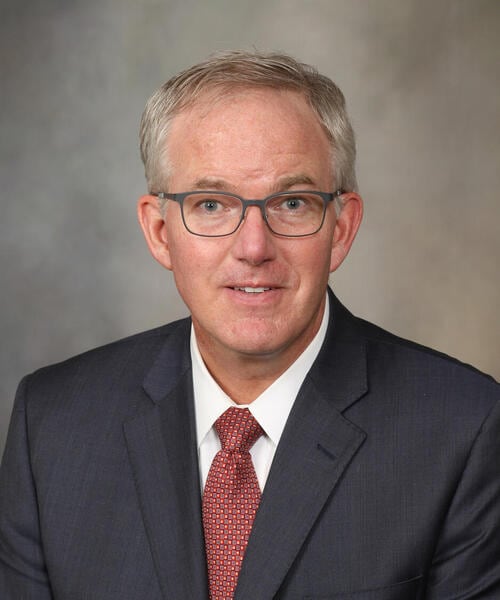
Christopher E. Colby, MD, is a physician scientist at Mayo Clinic's Department of Pediatrics and Critical Care in Rochester, Minnesota. With a medical degree from Medical College of Wisconsin and specialized training in neonatal-perinatal medicine at Stanford's Lucile Salter Packard Children's Hospital, he has dedicated his career to advancing neonatal care through clinical practice, education, and research. 2003: Fellow in Neonatal and Developmental Medicine 2013-2016: Director of Neonatal-Perinatal Medicine Fellowship 2018: Inpatient Medical Director, Mayo Clinic Children's Center His research focuses on neonatal resuscitation , teleneonatology , and quality improvement in NICUs . Key contributions include: Development of 3D-printed CPAP masks Telemedicine applications for newborn resuscitation Regionalized perinatal care optimization Scientific Awards: Multiple 'Teacher of the Year' awards 2020 Minnesota Monthly Top Neonatologist 2013 DPAM Education Leadership Award
Rosental Alves is a Professor at the University of Texas at Austin's School of Journalism and Media, holding the Knight Chair in International Journalism. A former managing editor of Brazil's Jornal do Brasil , he founded the Knight Center for Journalism in the Americas. He earned a BA from Rio de Janeiro Federal University and was a Nieman Fellow at Harvard. His research explores international reporting, Latin American press freedom, digital journalism innovation, and media democratization. He created UT Austin's first online journalism course and advises global media organizations. Recent publications focus on journalist safety in Brazil, media innovation in Latin America, and digital transitions in news. Awards include the Nieman Fellowship and Knight Chair endowment. He leads training initiatives through the Knight Center, impacting thousands of journalists globally. No specific students or labs are detailed.
Sophia Bano is an Assistant Professor in Robotics and Artificial Intelligence at the Department of Computer Science, University College London (UCL), since November 2022. She is affiliated with the Wellcome/EPSRC Centre for Interventional and Surgical Sciences (WEISS), Surgical Robot Vision group, UCL Robotics Institute, and the Centre for Artificial Intelligence. Previously, she was a Senior Research Fellow at WEISS, contributing to the GIFT-Surg project. Her research focuses on AI-driven techniques for context awareness, navigation, and surgical robotics in minimally invasive procedures, including endoscopic workflow analysis, 3D reconstruction, and surgical vision systems. Education: BEng in Mechatronics Engineering (NUST, Pakistan), MSc in Electrical Engineering (NUST), MSc in Computer Vision and Robotics (Erasmus Mundus VIBOT), PhD from Queen Mary University of London and Technical University of Catalonia (Erasmus Mundus Fellowship). Post-doctoral work at University of Dundee (EPSRC ACE-LP project) and Imperial College London (ERC STING project). Research interests include computer vision for surgery, medical imaging, surgical robotics, and AI in healthcare. She leads the UKRI EPSRC-funded 'AI-enabled Decision Support in Pituitary Surgery' project and contributed to the GIFT-Surg and CARES projects. Publications span 3D reconstruction in fetoscopy, surgical workflow recognition, and AI models for medical imaging. Awards include the IJCARS-MICCAI Best Paper Award (2020) and the Best Innovation Award at the 2022 Surgical Robot Challenge. She organizes conferences like EndoVis and serves as a reviewer for journals like IEEE Transactions on Medical Imaging and MICCAI.
Alison Copeland is a Research Postgraduate (PhD) in the Department of Biosciences at Durham University. Her research focuses on Bermuda’s vegetation communities, particularly invasive plant species and their interactions with indigenous flora. Previously, she served as Biodiversity Officer for Bermuda’s Government, leading projects like the IUCN Red Listing of endemic plants and the Governor Laffan’s Fern recovery initiative. She holds an MSc in Geography from Memorial University of Newfoundland (MUN), where her thesis involved seabed habitat mapping in Newman Sound fjord using multibeam sonar and field sampling. Her expertise spans marine and terrestrial conservation, with a focus on endangered species recovery, habitat management, and translating science into policy. Key affiliations include MUN’s Marine Habitat Mapping Group and the Royal Botanic Gardens Kew. Awards include the Durham Doctoral Studentship (Faculty of Science) and a Bermuda Public Service Education Award. Her recent work highlights invasive species dynamics in island ecosystems, biodiversity assessments, and policy frameworks for conservation. She has contributed to over 15 peer-reviewed articles, emphasizing habitat mapping methodologies, invasive species management, and endangered species recovery strategies. Awards: $3000 Garden Club of Bermuda Grant (PhD support) Fellow of MUN’s School of Graduate Studies Grants: Durham Doctoral Studentship (2022–present) Her PhD project investigates the ecological origins and interactions of invasive plants in Bermuda, bridging field research with policy recommendations to enhance biodiversity protection.
Charles Gillan is a Senior Lecturer at Queen's University Belfast's School of Electronics, Electrical Engineering and Computer Science, affiliated with the High Performance and Distributed Computing department and the Institute of Electronics, Communications & Information Technology. His research bridges HPC systems, AI applications in healthcare, and computational physics. Key projects include managing ICU patient care via neural networks, exascale-ready mathematical packages, and edge computing architectures. Research interests focus on high-performance computing (HPC), quantum computing, real-time data analytics, and electron-molecule scattering simulations. Notable contributions include developing microserver architectures for edge analytics and advancing AI-driven clinical decision support systems. Gillan has collaborated on interdisciplinary projects like food authenticity testing using spectroscopy and improving ventilator management in intensive care units. Publications span AI in healthcare, HPC system design, and computational methods for physics problems. He has secured funding for initiatives such as the KTP partnership with Foods Connected Ltd and the HANDHELD olfactory detection project. Gillan's work emphasizes practical applications of advanced computing across healthcare, engineering, and cybersecurity domains.
Prof. Dr. Thomas Ludwig is the Director of the German Climate Computing Center (DKRZ) and a Professor at the Universität Hamburg. He holds a doctoral degree and habilitation from the Technische Universität München, with expertise in High-Performance Computing (HPC), energy efficiency, and data storage systems. His research focuses on optimizing parallel systems, storage technologies, and computational efficiency for climate science applications. He leads projects like AIMES and PeCoH, advancing HPC storage and energy-aware computing. Education: Doctoral degree and habilitation from TU München (1988–2001). Chair in Parallel Computing at Universität Heidelberg (2001–2009). Research Interests: HPC, data reduction techniques, energy-efficient systems, parallel I/O optimization, and climate modeling infrastructure. Recent Research Trends: His work emphasizes storage system efficiency, machine learning in HPC, and convergence between HPC and Big Data. Key contributions include frameworks for portability (Vecpar), automated performance tools, and energy-aware storage solutions. Awards: Some publications received recognition, e.g., a Best Paper award in 2014 for work on energy efficiency. However, no personal awards are explicitly listed. Advising & Grants: Supervised numerous theses in HPC, I/O optimization, and energy efficiency. Leads major projects funded by national and international initiatives. Labs/Teams: Heads the DKRZ team providing supercomputing and data management for climate research, collaborating with global institutions like the University of Hamburg and European research networks.
Paolo Trunfio is a Professor of Computer Engineering at the University of Calabria, Italy, and co-founder of DtoK Lab S.r.l., an academic spin-off focused on data analysis and distributed systems. He holds a Ph.D. and is affiliated with the DIMES Department, specializing in big data, cloud computing, and high-performance computing (HPC). His research emphasizes scalable data analysis frameworks, edge-cloud continuum solutions, and machine learning applications for social media and disaster monitoring. Trunfio serves as an Associate Editor for ACM Computing Surveys and Journal of Big Data , and is on the editorial boards of several journals including Future Generation Computer Systems . He has authored four influential books, including Programming Big Data Applications (2024) and Data Analysis in the Cloud (2015). His work spans distributed systems, IoT-based smart objects, and exascale computing. Notable projects include the EU-funded eFlows4HPC and ASPIDE initiatives, which focus on HPC workflows and exascale programming models. Trunfio’s publications (over 200 papers) address topics like social media analytics, energy-efficient P2P networks, and parallel data mining. He leads research in urgent computing for disaster response, edge-cloud integration for urban mobility, and AI-driven data analysis. His contributions to cloud frameworks (e.g., JS4Cloud, ParSoDA) and HPC libraries (e.g., DCEx) highlight his expertise in bridging theory and practice in distributed computing ecosystems.
Fahad Khan is a Researcher at Cranfield University's Centre for Robotics and Assembly, part of the Aerospace department. He holds an MSc in Robotics Engineering (Cranfield University) and a B.Tech in Mechatronics (NMIMS University). Currently employed full-time as a Research Assistant and part-time PhD candidate, his work focuses on intelligent robotics systems, human-robot collaboration (HRC), and adaptive automation technologies. Education: MSc Robotics Engineering, Cranfield University (UK) B.Tech Mechatronics Engineering, NMIMS University (India) Current Projects: Smart Cobotics (ISCF) project: Developing adaptive HRC systems using physiological and contextual data. EPSRC-funded research on facial emotion recognition for manufacturing robots. Research interests include IoT integration, motion control, and machine learning applications in robotics. He has published on HRC gesture design, emotion recognition systems, and ROS 2-based industrial frameworks. Awards: None explicitly listed. Grants: Supported by Engineering and Physical Sciences Research Council (EPSRC) through the Made Smarter Innovation project. Technical expertise spans ROS, OpenCV, MATLAB, and PLC programming. His LinkedIn and GitHub profiles showcase contributions to robotic systems and machine learning projects.
Kaitlyn Crawford is an Associate Professor of Materials Science and Engineering at the University of Central Florida, with a secondary appointment in Chemistry. She directs the Functional Materials and Sensors Lab, focusing on sustainable soft materials for flexible electronics and biomedical applications. Her research integrates polymer science and engineering to develop wearable sensors for health monitoring, biodegradable materials to reduce e-waste, and natural polymer composites. Current projects include a $1.5M DHS-funded wearable for firefighter heat-stress monitoring and NASA-funded space applications. Her recent publications emphasize sustainable polymers, bionic devices, and AI-driven diagnostics. Awards include the 2024 ACS PMSE Early Investigator Award and a Jewish National Fund fellowship. She leads multiple graduate students in biomedical and materials research. Awards: 2024 ACS PMSE Early Investigator Award Faculty Fellowship Program in Israel, Jewish National Fund Faculty Excellence Honoree, Women’s History Month (UCF)
Denghui Zhang is an Assistant Professor in the School of Business at Stevens Institute of Technology. His research focuses on data science, large language models (LLMs), and business analytics, with particular emphasis on applications in financial systems, knowledge graphs, and spatio-temporal prediction. He is a member of the Stevens Institute for Artificial Intelligence and has held academic roles including reviewer positions for prestigious journals like Nature Communications and conferences such as AAAI and SIGKDD. Dr. Zhang holds a PhD in Information Systems from Rutgers University (2023) and an MS in Computer Science from the University of Chinese Academy of Sciences (2018). His educational background bridges computer science and business analytics, enabling his cross-disciplinary research. His research explores cutting-edge topics like federated learning optimization for LLMs, theory-of-mind reasoning mechanisms, and ethical AI governance. Notable contributions include turbulence forecasting models, traffic prediction frameworks, and venture capital investment strategies leveraging reinforcement learning. Dr. Zhang has received prestigious recognitions including the ICIS 2023 Best Student Paper Award and AAAI-23 Student Scholar distinction. His work frequently addresses practical challenges in AI ethics, financial decision-making systems, and scalable machine learning architectures. He actively contributes to academic communities through program committee roles for top conferences and has pioneered novel methodologies in multi-agent financial systems and graph neural network design.
Marc Sánchez Artigas is an Associate Professor at Rovira i Virgili University, Department of Computer Engineering and Mathematics. He holds a PhD from Pompeu Fabra University (2009) and conducted postdoctoral research at EPFL (Switzerland). His research focuses on distributed computing, cloud storage systems, and serverless architectures. He leads the CloudLab research group and coordinates major EU projects like Horizon Europe's CloudSkin and H2020's IOStack. Education: PhD in Computer Science (2009), Pompeu Fabra University MSc in Computer Engineering (2004), Universitat Rovira i Virgili BSc in Computer Engineering (2002), Universitat Rovira i Virgili Research Interests: Distributed systems, cloud computing, software-defined storage, serverless computing, and privacy-preserving storage solutions. His work emphasizes scalable architectures, data management in heterogeneous environments, and optimizing cloud storage efficiency through novel algorithms and frameworks. Awards: Best Paper (IEEE LCN 2007), Best Dataset (ACM IMC 2015), Serra-Hunter Excellence Professorship, and multiple grants from EU and Spanish funding bodies. Grants & Projects: Coordinated over €5 million in projects including H2020 CloudButton (serverless analytics), FP7 CloudSpaces (personal clouds), and national initiatives like Software-Defined Edge Clouds. Active in coordinating IPCEI-CIS for cloud infrastructure. Teaching: Courses on distributed systems, parallel architectures, and cloud computing. Taught at Universitat Rovira i Virgili and Universitat Oberta de Catalunya.
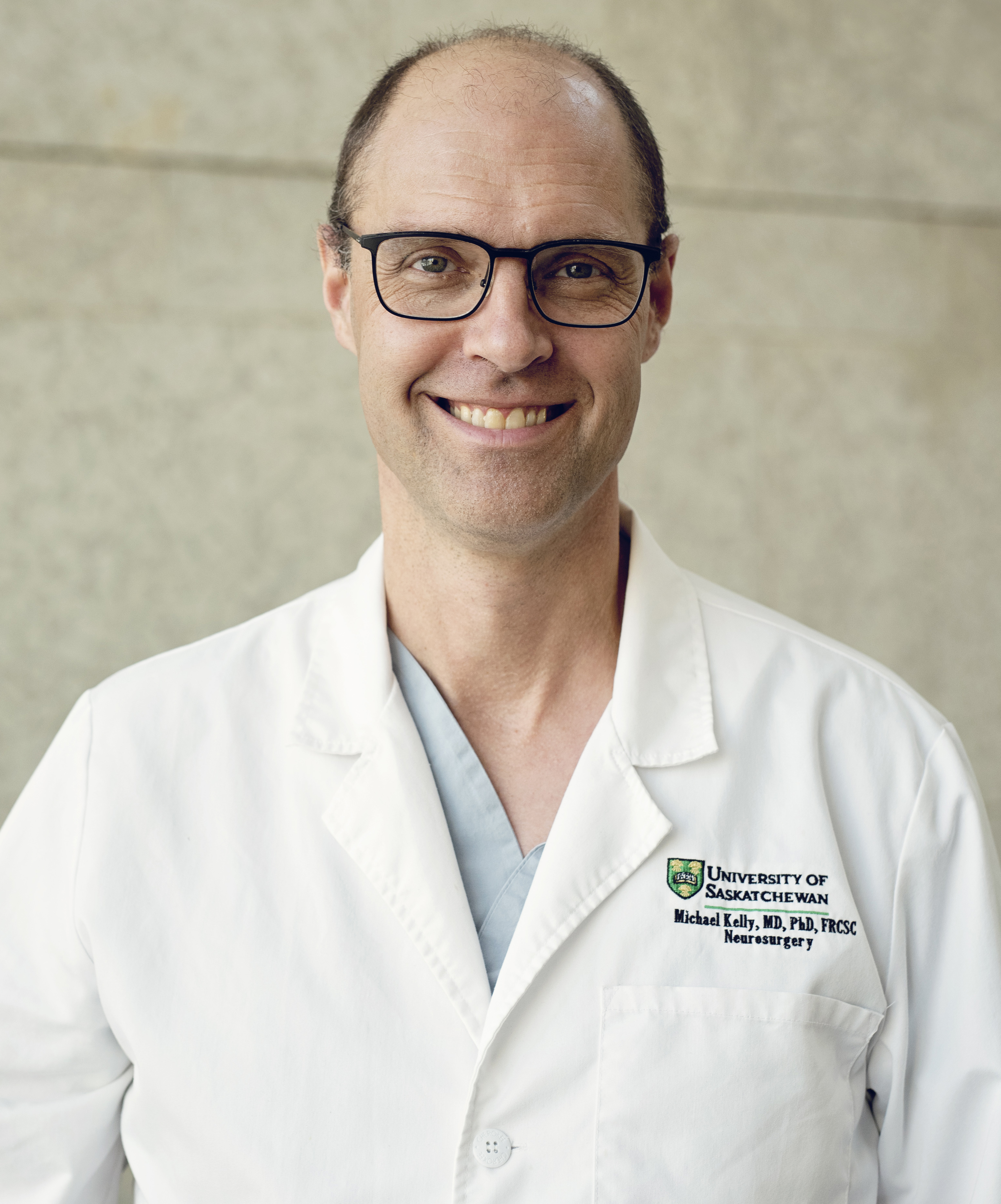
Dr. Michael Kelly is a Professor and Fred H. Wigmore Professor of Surgery at the University of Saskatchewan, serving as Provincial Department Head of Surgery and Knight Family Enhancement Chair in Neurological Surgery. He completed his BSc, MD, PhD, and neurosurgery residency at the University of Saskatchewan, followed by cerebrovascular and endovascular fellowships at Stanford University and Cleveland Clinic. His career spans clinical leadership, including roles as Saskatchewan Chair in Clinical Stroke Research (2012–2022) and program director for neurosurgery. Research Interests : Dr. Kelly specializes in cerebrovascular surgery, endovascular thrombectomy, and stroke management, with a focus on aneurysm treatment, cardiac dysfunction's impact on brain health, and advanced imaging techniques like X-ray fluorescence and FTIR. His work bridges neurosurgery and cardiac tissue engineering, exploring scaffold fabrication for vascular applications. Neurosurgery Stroke Treatment Medical Imaging Cardiac Tissue Engineering Recent Publications : His 2024–2025 studies address thrombectomy anesthesia protocols, long-term aneurysm outcomes, smartphone stroke diagnostics, and trace element dysregulation in stroke. These papers emphasize clinical trials, comparative analyses, and multisystem interactions (e.g., heart failure affecting neurogenesis). Scientific Awards : Fellow of the Royal College of Surgeons of Canada (FRCSC) Fellow of the American College of Surgeons (FACS) Knight Family Enhancement Chair in Neurological Surgery Fred H. Wigmore Professor of Surgery Leadership and Collaborations : Dr. Kelly leads Saskatchewan's provincial stroke pathway and contributes to international stroke registries like OPTIMISE. His research integrates clinical practice, device innovation (e.g., stentrievers), and translational studies on stroke biomarkers.