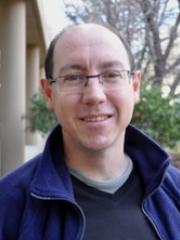
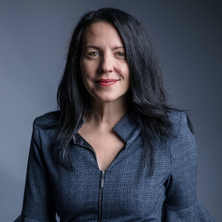
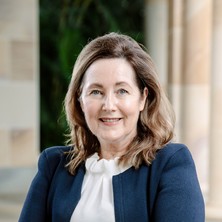
Professor Anthony Richardson is a mathematical ecologist at the University of Queensland , holding a joint position with CSIRO Environment since 2005. He leads the Mathematical Marine Ecology Lab , focusing on marine conservation through mathematical, statistical, and computational modeling. School of the Environment, Faculty of Science, University of Queensland Affiliate, Centre for Marine Science Affiliate, Centre for Biodiversity and Conservation Science Research Interests span marine spatial planning (climate-smart protected areas, 3D ocean zoning), marine ecosystem modeling (lower trophic levels, plankton-dynamics), and climate change impacts (carbon sequestration, fisheries productivity, and marine diseases). His work has been cited in IPCC Assessment Reports and emphasizes international collaboration through projects like the Global Working Group on Climate Change Synthesis . Recent Publications focus on Zooplankton's role in carbon cycling Climate-smart marine protected area design Ecosystem modeling under climate uncertainty Marine megafauna connectivity patterns Supervision is offered for >250 peer-reviewed papers and advanced projects in climate-smart conservation planning, with established funding from ARC Discovery Projects and Norwegian Polar Institute .
Professor Patrick Moss is a leading academic in Physical Geography and Head of School at QUT's School of Earth & Atmospheric Sciences. His research focuses on understanding landscape responses to climate change and human impacts, with expertise in palaeoecology, Quaternary Science, and environmental management. He holds a PhD from Monash University and supervises PhD and undergraduate students in these disciplines. Key research interests include wetland resilience, fire ecology, and the application of palynology to environmental history. His work integrates archaeological perspectives to address contemporary conservation challenges, such as ecosystem restoration and climate adaptation strategies. Publications span over three decades, emphasizing global fire regimes, human-environment interactions, and Quaternary environmental reconstruction. Collaborations include international projects on peatlands, monsoon variability, and volcanic ash stratigraphy.
Tanya Matthan is an Assistant Professor in the Department of Geography and Environment at the London School of Economics and Political Science (LSE). Her research focuses on political ecology, agrarian studies, and the socio-material dimensions of risk in central India. She holds a PhD in Anthropology from the University of California, Los Angeles (UCLA), alongside an M.A. and MPhil in Sociology from the University of Delhi. Her expertise spans political ecology, water resource management, climate change, and South Asian socio-economic dynamics. Prior to LSE, she was a Ciriacy-Wantrup Postdoctoral Fellow at UC Berkeley. Recent work examines speculative practices in agricultural markets and climatic uncertainties affecting rural livelihoods. Her publications in Journal of Peasant Studies and Geoforum reflect this thematic focus. Though no awards are explicitly listed, her postdoctoral fellowship indicates recognition in her field. No advising or grant details are provided in the text. She is affiliated with LSE's Department of Geography and Environment, contributing to its interdisciplinary research on global environmental challenges.
Pablo Fajardo Peña is a Full Professor in the Department of Aerospace Engineering at Universidad Carlos III de Madrid (UC3M). He leads the Plasmas and Space Propulsion Team (EP2) and co-directs the Aerospace Engineering Research Group. His research focuses on advanced propulsion technologies for space applications, including plasma thrusters, electric propulsion, and fluid-thermal systems. Professor Peña's work spans computational modeling of plasma dynamics, experimental characterization of propulsion systems, and development of novel thrusters like Hall effect thrusters and electrospray systems. His recent publications analyze plasma discharge mechanisms, thruster plume behavior, magnetic nozzle effects, and propellant interactions. He leads multiple EU and Spanish-funded projects including HIPATIA (Helicon Plasma Thruster), CHEOPS (Hall Effect Orbital Propulsion), and ADAPT (Advanced Plasma Propulsion). These initiatives focus on developing efficient propulsion systems for spacecraft and addressing challenges in space debris removal. Professor Peña supervises doctoral research on plasma diagnostics and thruster simulation, and has developed simulation tools like HYPHEN (Hybrid Plasma Thruster Holistic Environment). His team collaborates with ESA, Airbus, and SENER Aeroespacial on propulsion technology validation.
Natasha Carver is a Senior Lecturer at the School for Policy Studies, University of Bristol. Her work focuses on migration, gender, and colonial legacies, particularly in the context of FGM-safeguarding policies and their socio-political impacts. She holds an MSc and PhD, though specific disciplinary details are not provided. Her research critiques policy frameworks that marginalize migrant communities, especially those of Somali heritage in the UK. Her research interests include migratory legal frameworks, gendered and racialized power dynamics, and the intersection of colonial history with contemporary policy. She has conducted extensive studies on the over-surveillance of migrant-heritage families and the epistemological injustices embedded in FGM safeguarding procedures. Her publications highlight systemic issues in UK policies, advocating for evidence-based approaches over exaggerated risk narratives. She collaborates with interdisciplinary teams and engages with community perspectives to challenge hegemonic discourses in migration and gender studies. While no grants or lab affiliations are explicitly mentioned, her work frequently intersects with legal and healthcare systems.
Associate Professor Nicole Hartley serves as MBA Director at UQ Business School and Future of Health Research Hub Lead at The University of Queensland. With 19 years of academic experience across institutions in Sydney and Queensland, she holds appointments across multiple faculties including Business, Economics and Law; Health, Medicine and Behavioural Sciences; and Engineering, Architecture and Information Technology. Her academic affiliations span the Centre for the Business and Economics of Health, Centre for Enterprise AI, and Queensland Digital Health Centre. Dr. Hartley is an internationally recognized research academic specializing in services marketing and digital technology. Her research interests encompass service technology, virtualized services, customer preference and adoption, new media, service innovation, and corporate digital responsibility. She particularly focuses on customer perceptions in response to technological disruption in service delivery, with special emphasis on healthcare services. Her work bridges business, technology, and healthcare domains, examining how digital transformation affects consumer behavior and service experiences. Her extensive publication record demonstrates consistent research output across multiple disciplines, with recent work concentrating on telehealth implementation, corporate digital responsibility, consumer trust in digital environments, and healthcare service innovation. The interdisciplinary nature of her research connects marketing theory with practical healthcare applications, particularly in the context of digital transformation and service delivery. Dr. Hartley has successfully supervised numerous PhD candidates to completion and currently mentors several doctoral students working on topics ranging from sustainable consumption to healthcare innovation and digital service experiences. Her research has been supported by significant funding from Queensland Health, NHMRC, and other organizations, focusing on telehealth, digital service transformation, and healthcare innovation. As Director of MBA and Executive Education at UQ Business School, Dr. Hartley combines her academic expertise with practical industry experience, having previously worked as Marketing Manager/Director in tourism, education, and communication industries in Australia and the UK. She is an award-winning educator with expertise in marketing strategy, digital media, consumer behavior, and experiential industry-based projects.
Mazdak Nik-Bakht is an Associate Professor at Concordia University's School of Building, Civil, and Environmental Engineering. His work bridges construction engineering with digital innovation, focusing on smart infrastructure and sustainable development. PhD, Construction Engineering & Mgmt., University of Toronto PhD, Structural Engineering, Iran University of Science & Technology MASc & BASc, Structural and Civil Engineering, Iran University of Science & Technology His research integrates Artificial Intelligence and Social Network Analysis into construction management systems. Key areas include: Smart infrastructure and urban computing Deconstruction and circular economy principles Building Information Modeling (BIM) and digital twinning Process mining in Architecture, Engineering, and Construction (AEC) industry Decision models in construction project management Semantic computing and computational linguistics applications Recent publications show a focus on BIM analytics , urban resilience , and social media's role in infrastructure planning . Papers often combine AI and network theory to solve complex construction challenges. 2015 Outstanding paper award - Built Environment Project and Asset Management journal He teaches courses on: Big Data Analytics for Smart City Infrastructure Building Information Modeling (BIM) for Construction Building Economics Project Cost Estimating
Prof. Dr. Birgit Eickelmann is a Professor of School Pedagogy at the Institute of Educational Science within the Faculty of Arts and Humanities at Paderborn University. She has held this position since October 2012, initially as a W2 professor until January 2014, and then as a W3 professor (full professor) from February 2014 onward. Her research focuses on school and lesson development in the digital age, school pedagogy under digital transformation conditions, empirical school research, teacher education, and school leadership with emphasis on digital learning leadership. Her educational background includes a habilitation in Educational Science in May 2012, a PhD in Educational Science with summa cum laude in July 2009, and state examinations for teaching Mathematics and Physics in December 1996 and January 1999. Prof. Eickelmann's research centers on the digital transformation of educational systems, particularly examining how schools develop digital competencies among students and teachers. Her work emphasizes equitable access to digital learning opportunities, the role of school leadership in digital transformation, and the development of computational thinking skills. She investigates how schools can become resilient in the face of digital challenges, with special attention to organizational factors that support successful digital integration. Her publication record reveals a strong focus on international comparative studies, particularly the IEA's ICILS (International Computer and Information Literacy Study) across multiple cycles (2013, 2018, 2023). Her research spans digital literacy assessment, school-level factors influencing digital competence development, and policy implications for educational systems undergoing digital transformation. Prof. Eickelmann leads several major research initiatives including the National Research Center for the IEA Study ICILS 2023 (2021-2026), the German coordination of the Horizon-2020 project 'DigiGen' (2019-2022), and previous leadership of ICILS 2018 (2015-2021) and ICILS 2013 (2012-2015). She is actively involved in policy advising regarding digital education in Germany. She is a member of numerous scholarly organizations including the World Educational Research Association (since 2021), the Society for Empirical Educational Research (since 2016), and the German Society for Educational Science (since 2014), among others. Her work bridges academic research with practical implementation in schools through projects like 'Navigator Bildung Digitalisierung' and 'schultransformNEXT'.
Sanaa Ahmed is an Assistant Professor at the Faculty of Law, University of Calgary, where she joined in 2021. Prior to her current position, she was a Killam Postdoctoral Fellow at Dalhousie University. Her academic journey spans across multiple institutions and countries, reflecting her international perspective on legal issues. Her educational background includes: PhD from York University (2019) LLM from University of Warwick (2005) LLB from S.M. Law College, University of Karachi (2002) BA from University of Karachi (1998) Sanaa Ahmed's research focuses on the intersection of financial systems and criminal activity, with particular emphasis on money laundering , financial crime , and financial regulation . Her work also extends to criminal law , human rights , and surveillance practices. She examines how regulatory frameworks function in practice, particularly in the Canadian context, while also investigating transnational dimensions of financial crime and regulation in countries like Pakistan. Her approach combines legal analysis with political economy perspectives to understand the complex relationships between state institutions, capital flows, and crime prevention mechanisms. Her recent publications demonstrate a consistent focus on money laundering and financial regulation, with increasing attention to Canadian contexts in her most recent work (2023). She has also maintained a strong interest in Pakistan's regulatory environment and has explored connections between financial crime, human rights, and development in African contexts. Her work appears in diverse venues including academic journals, book chapters, and conference proceedings, reflecting her interdisciplinary approach to these complex legal issues. Her notable awards include: Killam Postdoctoral Fellowship, Dalhousie University (2019) Harley D. Hallet Graduate Scholarship, Osgoode Hall Law School (2018) Peter W. Hogg Graduate Award (2016) Before her academic career, Sanaa Ahmed had significant professional experience in journalism, working as an editor, writer, producer and reporter for several media outlets in Pakistan. This background informs her approach to legal scholarship, particularly in examining the practical implementation of regulatory frameworks and the relationship between law, media, and public understanding of financial crime. Her teaching includes courses on Crime (LAW 410) and Money Laundering (LAW 693), directly connecting her research expertise with her pedagogical responsibilities. While specific information about research labs or teams is not provided in the available materials, her collaborative work on publications like "Presence through absence? Understanding the role of capital in the African Human Rights Action Plan" suggests active engagement with international research networks focused on financial crime, human rights, and development.
Guglielmo Scovazzi is a Professor at Duke University with appointments across multiple departments including the Department of Civil and Environmental Engineering, the Thomas Lord Department of Mechanical Engineering and Materials Science, and as Professor of Mathematics. His interdisciplinary research bridges computational mechanics, scientific computing, and engineering applications. Dr. Scovazzi earned his B.S/M.S. in aerospace engineering (summa cum laude) from Politecnico di Torino (Italy), followed by an M.S. and Ph.D. in mechanical engineering from Stanford University. Prior to joining Duke, he was a Senior Member of the Technical Staff at Sandia National Laboratories' Computer Science Research Institute. His research focuses on developing advanced numerical methods for computational mechanics, particularly finite element methods for fluid and solid mechanics. Key areas include multiphase porous media flows, computational methods for materials under extreme conditions, turbulent flow computations, and instability phenomena. His work emphasizes creating accurate computational approaches that reduce design/analysis costs for complex engineering problems involving fluid-structure interactions and transient phenomena in complex geometries. Dr. Scovazzi's most significant recent contribution is the development of the Shifted Boundary Method, an innovative computational framework that enables efficient simulations on complex geometries without requiring boundary-fitted meshes. This method has found applications in geomechanics, energy systems, and resilient infrastructure design. Kavli Fellow, National Academy of Sciences & Kavli Foundation (2018) Presidential Early Career Award for Scientists and Engineers (PECASE), White House (2017) Early Career Award, U.S. Department of Energy, Advanced Scientific Computing Research Program (2014) Dr. Scovazzi teaches multiple courses in computational mechanics including Nonlinear Finite Element Analysis and Introduction to the Finite Element Method. His research has been supported by substantial federal funding, and he actively collaborates across disciplines to address challenging problems in energy, environment, and infrastructure resilience through advanced computational methods.
Professor Richard Powell is a Cultural, Political, and Historical Geographer with expertise in the Polar Regions. He is currently the Professor of Arctic Studies and Director of the Scott Polar Research Institute at the University of Cambridge, while also serving as a Fellow of Fitzwilliam College. His career spans roles at the University of Oxford and the University of Liverpool, with a focus on the Arctic and its geopolitical, cultural, and environmental complexities. BA Geography, St. John's College, University of Oxford (Double First Class Honours) MA Geography, University of British Columbia (Distinction) PhD Geography, Emmanuel College, University of Cambridge PG Cert. Learning and Teaching in Higher Education, University of Liverpool Richard's research explores historical and cultural geographies, the geopolitics of the Arctic, geographies of science, and the interplay between environment and politics in the Circumpolar Region. His ERC-funded project ARCTIC CULT investigates colonial representations in Arctic studies, while prior work includes ethnographic studies of Arctic scientific practices and the political implications of resource extraction. He has authored a monograph, Studying Arctic Fields , and edited volumes on polar geopolitics. His recent publications emphasize the intersection of Arctic governance, colonial histories, and environmental science. Notable awards include the ERC Consolidator Grant and the Gill Memorial Award , alongside teaching accolades like the Teaching Excellence Award at the University of Oxford. He has supervised over 30 postgraduate students and leads interdisciplinary teams in projects funded by the Leverhulme Trust, AHRC, and ESRC. ERC Consolidator Grant (2016) Gill Memorial Award (2013) Teaching Excellence Award (2012) Environment and Planning A Ashby Prize (2007) RGS-IBG Area Prize (2002) H.O. Beckit Memorial Prize (1998) Gibbs Book Prize (1998) Richard collaborates with institutions like the Royal Society, Royal Geographical Society, and National Museum of Denmark, and has hosted seminars and workshops on Arctic geopolitics. He is a member of the UK Arctic and Antarctic Partnership Steering Committee and contributes to policy discussions on polar governance.
Dr. Zara Ersozlu is a Senior Lecturer in Mathematics Education within the School of Education at the University of Newcastle, Australia. With a distinguished international career spanning multiple continents, she has held academic positions at prestigious institutions including North Carolina State University (USA), Gazi and Gaziosmanpasa Universities (Turkey), National Taiwan Normal University (Taiwan), The University of Western Australia, Murdoch University, and Deakin University. Her academic journey includes tenured positions as an Associate Professor and leadership roles as Department Head and Chair in teacher education disciplines. Currently, she teaches undergraduate and postgraduate courses in mathematics education, including Effective Pedagogies in Primary Mathematics, K-6 Mathematics, K-6 Numeracy, and Digitally Supported Learning. Dr. Ersozlu earned her Doctor of Philosophy from Firat University in Turkey and her Master of Art from Sakarya University. Her extensive academic preparation is complemented by five years of practical teaching experience in public schools prior to entering academia. This blend of theoretical knowledge and practical classroom experience informs her approach to teacher education and educational research. At the broadest level, Dr. Ersozlu's research investigates solutions to real-life problems impacting people's well-being, success, and capacity to achieve. Her scholarly work spans primary and secondary mathematics education, the psychology of mathematics (including metacognition, self-regulation, and anxiety), cross-cultural educational studies, teacher education, virtual simulated learning environments, and educational assessment. She has increasingly focused on the transformative potential of AI and machine learning in education, exploring how these technologies alter teaching, learning, and research processes. Her methodological expertise encompasses both quantitative and qualitative approaches, allowing her to effectively analyze both small and large educational datasets. Analysis of Dr. Ersozlu's recent publications reveals a strong emphasis on mathematics anxiety, teacher education, and the integration of technology in learning environments. Her work demonstrates a consistent focus on practical applications of educational research to address real-world challenges in mathematics education. The interdisciplinary nature of her research connects educational psychology, technology integration, and cross-cultural perspectives, with particular attention to how these elements intersect in teacher preparation and student learning outcomes. 2023 ATEA Research Recognition Award from the Australian Teacher Education Association 2021 Fellow of the Higher Education Academy (Advance HE, UK) 2010 Fellowship Program for Postdoctoral Researchers from the Council of Higher Education of Turkey Dr. Ersozlu is deeply committed to mentoring the next generation of scholars, currently supervising four PhD students and having successfully guided ten students to completion. Her grant portfolio includes significant funding for projects such as Best Practice Guidelines for RPL in Initial Teacher Education Programs ($60,000), Exploring the Reciprocal Relationship Between Mathematics Anxiety and Mathematical Resilience ($2,599), and multiple conference travel awards. She serves as an Associate Editor for several prominent journals including the International Electronic Journal of Mathematics Education and as Editor for Interdisciplinary STEM Education. Her editorial work reflects her standing as a respected voice in mathematics education research. Dr. Ersozlu's academic leadership extends to her role in developing innovative teaching approaches that integrate virtual simulation technology and learning analytics. Her work with TeachLivE™, a mixed-reality classroom simulation platform, demonstrates her commitment to creating authentic learning experiences for teacher education students. Through these initiatives, she bridges the gap between educational theory and classroom practice, preparing future educators to effectively implement evidence-based teaching strategies in diverse learning environments.
Dr. Kai Liu is a University Associate Professor at the Faculty of Economics, University of Cambridge, and a Fellow at Selwyn College. He earned his Ph.D. in Economics from Johns Hopkins University in 2011. His research focuses on labor economics, public economics, applied microeconometrics, and China's economic development, with specific investigations into wage dynamics, human capital formation, and household decision-making under uncertainty. His research interests span: Labor market dynamics including wage risk, job mobility, and gender wage gaps Public policy analysis in education, healthcare, and family support systems Household behavior under economic uncertainty and policy reforms Human capital investments across the life cycle Economic development challenges in China Recent publications (2023-2025) demonstrate strong focus on education policy impacts, health insurance effects on agricultural investments, and family environment dynamics. His work consistently applies advanced microeconometric methods to evaluate policy interventions and economic behaviors. Dr. Liu currently supervises three PhD students: Shengjuan He, Qianya Xu (researching empirical microeconomics and labor economics), and Shania Mustika (researching labor economics, education economics, and racial relations). He has secured significant research funding including: British Academy grant for 'Capital Market Imperfections, Skill Accumulation, and Inequality' (2024-2026) ESRC grant for 'Demand and Welfare Analysis using Micro-data' (2022-2026) British Academy grant for family policy research (2019-2021)
Professor Janet McColl-Kennedy is a leading figure in marketing and service science at The University of Queensland's Business School. She serves as Program Lead for Innovation Pathways (FaBA) and co-founded the Service Innovation Alliance (SIA) research hub, focusing on customer experience, AI, digital transformation, and sustainability. With Fellow status in the Academy of the Social Sciences in Australia and the Australian and New Zealand Marketing Academy, she holds international recognition including Research.com's World's Best Business Scientists ranking and the Christopher Lovelock Career Contributions to the Services Discipline Award (2025). University of Queensland Business School Honorary Visiting Professor, Cambridge Service Alliance Research Collaborator, University of Cambridge Her research spans customer experience management, service ecosystems, digital transformation, and healthcare services. She has pioneered frameworks for customer value co-creation and service recovery strategies, integrating AI and behavioral science. Her 2019 paper on customer experience insights was implemented by a major B2B organization, while her work on value co-creation improved outcomes at Lutheran Community Care. Recent publications focus on AI impacts in food and beverage services, sustainable service ecosystems, and digital health interventions. She has secured over $89 million in competitive grants, including multiple ARC Linkage and Discovery Projects, and leads cross-disciplinary teams with institutions like Cambridge University and Arizona State University. 2024 - ARC College of Experts appointment 2023 - Bo Edvardsson Industry Impact in Services Award 2022 - Elected Fellow of Academy of the Social Sciences in Australia 2021 - Clarivate Highly Cited Researcher 2018 - Ranked most influential marketing academic in Australia With over 220 publications and a Google Scholar H-index of 62, she has mentored 15 PhD students and examined theses at multiple universities. Her teaching spans 30+ years across undergraduate, postgraduate, and executive programs in Australia, USA, Italy, China, and Korea, with awards for blended learning and corporate education.
Minjie Chen is an Associate Professor of Electrical and Computer Engineering and the Andlinger Center for Energy and the Environment at Princeton University, serving as Acting Associate Director for Research at the Andlinger Center. He leads the Princeton Power Electronics Lab (PowerLab), which focuses on developing fundamental and novel power electronics solutions for a wide range of applications from mW-scale energy harvesting to MW systems in renewable energy integration. Dr. Chen received his Ph.D. in Electrical Engineering and Computer Science from MIT in 2015 and his B.S. in Electrical Engineering from Tsinghua University in 2009. Before joining Princeton as an Assistant Professor in February 2017, he was a postdoctoral associate at MIT Research Laboratory of Electronics. His research spans power electronics, magnetics design, and machine learning applications in energy systems. The PowerLab develops advanced power conversion architectures that enable order-of-magnitude higher power density through high-frequency designs, addressing circuit timing, parasitics, magnetics, and thermal management challenges. Their work targets applications ranging from portable devices to data centers and renewable energy systems. The research group has produced a remarkable series of high-impact publications, with seven IEEE Transactions on Power Electronics Prize Papers in seven consecutive years (2016-2023). Their recent work increasingly integrates machine learning techniques with power electronics, exemplified by the MagNet project which redefines how power magnetics are studied and modeled. NSF CAREER Award, 2019 IEEE PELS Richard M. Bass Outstanding Young Power Electronics Engineer Award, 2023 Power of Associations Silver Award from ASAE for MagNet project, 2024 Multiple IEEE Transactions on Power Electronics Prize Papers (2016-2023) Princeton Engineering Commendation List for Outstanding Teaching (2019, 2020) Dr. Chen advises approximately 15 graduate students who have received numerous awards including the IEEE PELS John G. Kassakian Fellowship, Princeton SEAS Honorific Fellowship, and multiple IEEE conference best paper awards. His research is supported by significant grants from NSF, DOE ARPA-E, Princeton Innovation Fund, C3.ai DTI, and industry partners including Intel, Google, and pSemi. The lab's MagNet project has become a major international initiative with a $60,000 prize pool challenge. The PowerLab maintains strong industry connections and has launched several collaborative projects with Intel, Google, and pSemi. Their MagNet project has evolved into an international challenge with participation from over 40 teams worldwide, demonstrating the growing impact of their approach to machine learning for power magnetics modeling.