Veronika Huck-Fries is a researcher at the Technische Universität München (TUM) , affiliated with the Department of Informatics and associated with the KrcmarLab and Wittges Lab . Her work focuses on Agile Information Systems Development , Work Engagement , and IT Workforce dynamics. Educational Background : M.Sc. in Industrial & Organizational Psychology (Ludwig-Maximilians-University Munich), Visiting Graduate Student (University of Alberta), B.Sc. in Psychology (LMU Munich), Entrepreneurship Education via UnternehmerTUM GmbH. Research Interests : Agile Software Development, Work Engagement, IT Workforce Management, Innovation Processes. Projects : ARinFLEX , MACS , Sonderforschungsbereich 768 subprojects. Collaborations : Involved in SAP University Competence Center, OpenPOWER@TUM initiatives, and DIAS project.
Kip Hodges is a Foundation Professor at the School of Earth and Space Exploration, Arizona State University (ASU). He leads the Group 18 Laboratories, focusing on noble gas isotope geochemistry and planetary geology. His work integrates field, laboratory, and theoretical approaches to study mountain formation, planetary processes, and impact events. His research interests span Earth Systems, Planetary Geoscience, Continental Tectonics, Earth Surface Processes, Cosmochemistry, and Planetary Geochemistry. He examines the geodynamic evolution of mountain belts like the Himalaya and Tibetan Plateau, utilizing thermal-kinematic modeling and noble gas isotope data. His planetary research includes lunar and Martian geochronology, impact crater analysis, and strategies for human-robotic collaboration in planetary exploration. Key projects include studies on the thermal evolution of terrestrial/extraterrestrial materials, diffusivity of noble gases, and the dynamics of continental subduction. His work contributes to understanding mountain-building, impact history of the Solar System, and future exploration missions. He directs the Group 18 Laboratories, renowned for innovative noble gas isotope geochemistry techniques to constrain thermal histories of terrestrial and extraterrestrial samples. The lab's work includes studies on noble gas diffusivity in planetary materials.
Young Ho Song is an Associate Professor in the Department of Management at the Odette School of Business, University of Windsor. He holds a Ph.D. in Human Resources and Organizational Behaviour from McGill University (2018), an M.I.L.R. from Cornell University (2011), an M.B.A. from the University of British Columbia (2010), and a B.S. in Mechanical Engineering from Yonsei University (1999). His research focuses on organizational behavior, human resources management, and the psychological and behavioral responses of employees to workplace challenges such as customer mistreatment and AI integration. He has received notable awards including the 2024 Professor of the Year and the Odette New Researcher Award (2021). Education: Ph.D., McGill University (2018) M.I.L.R., Cornell University (2011) M.B.A., University of British Columbia (2010) B.S., Yonsei University (1999) Research Interests: Employee behavior under customer mistreatment, AI adoption in workplaces, negotiation strategies in cross-cultural contexts, and the psychological mechanisms behind workplace deviance and conformity. Grants: SSHRC Insight Development Grant ($67,332) Odette Research Innovation Fund grants totaling $22,000 His recent articles explore themes such as AI tool impacts on employee learning, customer satisfaction in mobile app usage, and ethical negotiation strategies in South Asia. He has presented widely at conferences like the Academy of Management and Society for Industrial and Organizational Psychology.
Brandon Shuck is an Assistant Professor in the Department of Geology & Geophysics at Louisiana State University (LSU), part of the College of Science. His research focuses on solid-earth geophysics, particularly tectonic processes within plate boundaries and mature tectonic settings. He uses active-source seismic reflection and wide-angle ocean-bottom seismometer data to image subsurface lithospheric architecture and integrate interdisciplinary datasets including bathymetry, borehole logs, and geodynamic models. Education: Ph.D. in Geological Sciences (2021) from the University of Texas at Austin; B.S. in Geology (Petroleum Emphasis) and Mathematics (2015) from Western Colorado University. Previously served as a Postdoctoral Fellow at Lamont-Doherty Earth Observatory, Columbia University (2021–2024). Research Interests: Tectonic evolution of the lithosphere at plate boundaries, feedbacks between lithospheric stress and fluid-rock interactions, geologic hazards related to subduction zones, and mantle dynamics during continental breakup. Active projects include studies of subduction initiation in the Tyrrhenian Sea, megathrust fault segmentation in Cascadia, and water content in the Cocos Plate offshore Mexico. Current opportunities include an NSF-funded PhD position (starting Fall 2025) investigating mantle dynamics during early Atlantic seafloor spreading, involving seismic data acquisition on the R/V Langseth. His group emphasizes collaborative, interdisciplinary approaches combining seismic imaging, field geology, and modeling. Awards: None explicitly listed, though his work has been supported through NSF funding and institutional grants. Lab/Team: Directs the LSU Solid-Earth Geophysics Research Group, which integrates geophysical data analysis with field observations to address tectonic questions at multiple scales.
Boris Kaus is a Full Professor and Chair of Geophysics and Geodynamics at the Institute of Geosciences, Johannes Gutenberg University Mainz, Germany. His research focuses on understanding geological processes from grain scale to planetary scale using mathematical and numerical models. Funded by the German Research Foundation, European Research Council, and BMBF, his work spans lithospheric deformation, melt migration, fold-and-thrust belts, and high-performance computing applications in geosciences. His research interests center on geodynamic modeling of lithospheric processes, including subduction zones, mantle convection, and crustal deformation. Kaus develops novel numerical approaches to simulate complex geological phenomena, with emphasis on coupling between erosion, lithosphere dynamics, and mantle flow. His group creates specialized software for high-performance computing systems to tackle multi-scale geophysical problems. His scientific awards include the Paul Niggli Medal, EGU Arne Richter Award, multiple ERC grants (Starting, Proof-of-Concept, Consolidator), and the Carl Friedrich Gauss Lecturer honor. He has received recognition for editorial contributions including G-Cubed's Excellence in Refereeing award. ERC Consolidator Grant MAGMA (2018-2023) ERC Proof of Concept Grant SALTED (2016-2017) ERC Starting Grant MODEL (2010-2015) John von Neumann Excellence Project for HPC ETH Medal for Ph.D. thesis Kaus actively supervises graduate students and leads research projects funded by major European and German agencies. His group develops open-source software like GeophysicalModelGenerator.jl and maintains strong collaborations with international institutions including ETH Zürich and USC. Current projects focus on magma dynamics, lithospheric shear localization, and the development of advanced numerical methods for geodynamic simulations. The research group operates within the Geodynamics & Geophysics team at JGU Mainz, utilizing high-performance computing resources and collaborating with multiple European research initiatives including IMPRS and FORTHEM networks. Their laboratory specializes in numerical modeling of Earth systems with applications to tectonics, volcanology, and crustal evolution.
Robert Falconer serves as Professor of Medicinal Chemistry and Director of the Institute of Cancer Therapeutics (ICT) at the University of Bradford. A registered pharmacist with the General Pharmaceutical Council, he leads a multidisciplinary research team focused on tumor glycocalyx targeting and protease-activated anticancer prodrugs. His academic journey spans from pharmacy training at The School of Pharmacy, University of London to establishing the medicinal chemistry program at ICT in 2005. Pharmacy Degree: The School of Pharmacy, University of London (now UCL School of Pharmacy) PhD in Medicinal Chemistry: London (2000) Professional Registration: General Pharmaceutical Council Professor Falconer's research centers on tumor glycocalyx modulation through polysialyltransferase inhibition and protease-activated drug delivery systems. His work spans osteosarcoma, neuroblastoma, breast, and prostate cancers with emphasis on developing targeted therapies that minimize systemic toxicity. The Falconer group employs computational design, solid-phase synthesis, and advanced biological evaluation techniques to develop novel anticancer agents. His publication portfolio demonstrates consistent focus on tumor-specific activation mechanisms (2023-2025), glycocalyx-targeted metastasis inhibition (2019-2021), and prodrug development (2010-2014). Recent work emphasizes theranostic applications and DNA repair targeting for pediatric cancers. Fellow of the Royal Society of Chemistry Former Honorary Treasurer, RSC Central Yorkshire Local Section Trust (2012-2018) Registered Pharmacist with General Pharmaceutical Council As principal investigator, Falconer has secured substantial funding from Breast Cancer Now, Bone Cancer Research Trust, Worldwide Cancer Research, and Neuroblastoma UK. He leads the £2m ICT Doctoral Training Centre and co-founded spin-out company Incanthera plc, which is advancing the MMP-targeted prodrug ICT2588 to clinical trials. His mentorship includes three PhD students and multiple postdoctoral researchers developing next-generation cancer therapeutics. The Falconer group operates within the ICT's state-of-the-art facilities, collaborating with Stanford University, University of Sheffield, and Ellipses Pharma. Current projects address unmet needs in pediatric oncology while developing platform technologies applicable across multiple cancer types.
Brenda L Bohnsack, MD, PhD is Associate Professor of Ophthalmology (Pediatric Ophthalmology) and Pediatrics at Northwestern University Feinberg School of Medicine, where she serves as Chief of Pediatric Ophthalmology in the Department of Ophthalmology. She also holds the Lillian Sherman Cowen Reiger and Harold L.S. Cowen Research Professorship of Pediatric Ophthalmology. Dr. Bohnsack practices at Ann & Robert H. Lurie Children's Hospital of Chicago. Her educational background includes: BA from Northwestern University (1999) PhD from Baylor College of Medicine (2004) MD from Baylor College of Medicine (2006) Transitional Year Intern at Oakwood Hospital (2007) Residency in Ophthalmology at University of Michigan (2010) Chief Residency in Ophthalmology at University of Michigan (2010) Postdoctoral Fellowship in Orbital and Ocular Development at University of Michigan (2011) Fellowship in Pediatric Ophthalmology and Adult Strabismus at Duke University (2012) As an academic pediatric ophthalmologist and developmental biologist, Dr. Bohnsack focuses on the clinical aspects and underlying basic science of congenital eye diseases. Her clinical expertise includes the medical and surgical management of complex pediatric eye conditions such as primary congenital glaucoma, Peters Anomaly, Axenfeld-Rieger syndrome, aniridia, microphthalmia, and congenital ectropion uvea. Her research spans both clinical and basic science domains, with clinical research concentrating on identifying new genes associated with congenital eye diseases and outcomes in affected individuals, while her basic science research utilizes zebrafish and human embryonic stem cell models to study ocular neural crest cells and their role in eye development. Analysis of Dr. Bohnsack's most recent publications reveals a strong focus on pediatric ocular conditions with particular emphasis on Stickler syndrome, pediatric glaucoma management, and complications of systemic treatments in children. Her work spans clinical studies, surgical technique evaluations, systematic reviews, and investigations into the genetic basis of pediatric eye diseases. The publications demonstrate her commitment to improving diagnostic approaches, surgical outcomes, and understanding the molecular mechanisms underlying congenital eye disorders. Dr. Bohnsack has received numerous scientific awards and honors throughout her career: Honor Award, American Association of Pediatric Ophthalmology and Strabismus (2025) Secretariat Award, American Academy of Ophthalmology (2024) Academic Leadership Development Program, Association of University Professors of Ophthalmology (2024) Alpha Omega Alpha (2023) Gunter von Noorden Young Investigator Award (2022) Dr. Bohnsack actively participates in multi-center research collaborations focusing on the genetics of childhood glaucomas, long-term outcomes of myopia control, socioeconomic influences on eye disease outcomes, and health disparities in global myopia management. Her laboratory research focuses on molecular regulation of neural crest migration and differentiation in the anterior segment of the eye, with applications for understanding and potentially treating congenital eye disorders. She leads research efforts utilizing both in vivo (zebrafish) and in vitro (human embryonic stem cells) systems to model eye diseases, with particular attention to ocular neural crest cells and their contribution to corneal, iris, and aqueous humor drainage system development. Her work bridges basic science discoveries with clinical applications to improve understanding and treatment of blinding diseases in children.
Jan de Jonge is a Visiting Professor of Work and Organisational Psychology at the Faculty of Social and Behavioural Sciences , Utrecht University , Netherlands. He is affiliated with the Department of Social, Health and Organisational Psychology , focusing on future of work and sport and society research areas. His work bridges occupational and sports psychology, emphasizing sustainable performance, recovery, and mental health. Research interests include job stress and recovery , mental health , the DISC-R Model , employee sustainable performance , work motivation , creativity , vitality , and burnout . In sports psychology, he explores athlete performance , recovery and sleep patterns , mental training , and sport injuries . His recent publications analyze employee health , nursing home staff vitality , and theoretical transfers between work and sports psychology . His scientific trends highlight job demands-resources theory , recovery mechanisms , and cross-contextual applications (e.g., work and sports). Key subfields include occupational health , employee performance , stress management , and sustainable employability .
Ali Ansari is a Teaching Assistant Professor in the Department of Bioengineering at the University of Illinois Urbana-Champaign (UIUC), part of the Grainger College of Engineering. He previously served as a Visiting Assistant Professor at Bucknell University’s Bioengineering/Electrical and Computer Engineering departments (2021–2023). Ansari holds a B.S. in Electrical Engineering from Southern Methodist University (2012) and a Ph.D. and M.S. in Bioengineering from UIUC (2018 and 2016, respectively). Education: Bachelor of Science in Electrical Engineering, Southern Methodist University, 2012 Master of Science in Bioengineering, University of Illinois Urbana-Champaign, 2016 Doctor of Philosophy in Bioengineering, University of Illinois Urbana-Champaign, 2018 His primary research focus is in Biomedical Engineering Education, with scholarly contributions spanning biomaterials, microfluidics, and cell isolation technologies. Recent work includes studies on extracellular matrix microparticles for heart regeneration, microfluidic systems for cell co-culture, and surface functionalization techniques. Ansari’s research trajectory reflects advancements in translational biomedical engineering, balancing foundational studies with applied innovations. Ansari’s articles highlight trends in biomaterials for regenerative medicine, microfluidic device design, and cell isolation methodologies. His work emphasizes integrating engineering principles with biological systems to address challenges in tissue repair and biomedical device development. No scientific awards are listed in the provided information. Professional affiliations include membership in the American Society for Engineering Education (ASEE), Biomedical Engineering Society (BMES), and the Biomedical Engineering Education Council (BEEC). His academic roles suggest involvement in teaching, student mentorship, and educational program development. Details about grants or lab affiliations are not explicitly detailed, though his research interests align with UIUC’s bioengineering research ecosystem.
Claire Currie, PhD, is a Professor in the Department of Physics at the University of Alberta and Associate Dean, Graduate, within the Faculty of Science. She holds a B.Sc. from the University of Western Ontario (1999), a Ph.D. from the University of Victoria (2004), and completed a post-doctoral fellowship at Dalhousie University (2005–2007). Her research focuses on lithosphere structure, mantle dynamics, and the evolution of convergent plate margins, employing numerical modeling to explore processes like continental tectonics and subduction zone dynamics. Currie teaches GEOPH 110: Introduction to Earth and Planetary Physics, covering geophysical methods for imaging planetary interiors, resource exploration applications, and geophysical hazards. Her work bridges theoretical modeling with observational data, addressing questions about plate tectonics, mantle flow, and crustal deformation. Her recent publications (2022–2024) emphasize geodynamic modeling of cratonic basins, flat-slab subduction impacts, and mantle dynamics in regions like the Andes, Cascadia, and the Canadian Cordillera. Research trends highlight interdisciplinary approaches linking tectonics, magmatism, and surface processes. While no explicit awards are listed, her extensive publication record reflects sustained academic contribution. Currie’s advising and grant activities are not detailed in the provided texts, but her academic roles suggest leadership in graduate education and research administration within the Faculty of Science.
Dr. Mona Mustafa is an Associate Professor at the University of Birmingham’s Birmingham Business School and serves as the Program Director for the MSc HRM at the Dubai campus. She holds a PhD in Management from the University of London and has over a decade of teaching experience at institutions including the University of London and City Business School. She is a Chartered Member of the Chartered Institute of Personnel and Development (MCIPD) and holds professional certifications in Mental Health First Aid, Cultural Intelligence, and Occupational Health and Safety from the United Nations’ ILO. Her research interests include remote working , employee wellness , workplace health and safety , expatriate management , and the impact of artificial intelligence on education . She is particularly focused on sustainability, inclusivity, and the future of work. Her work has been published in top journals such as the International Journal of Human Resource Management and New Technology, Work and Employment , and she won a best paper award from the Federal Authority for Human Resources and Emiratisation (FAHRE) for her research on remote work and employee happiness. Her recent publications show a strong trend in exploring digital work environments, psychological wellbeing, and policy implications of remote work, especially highlighted during the pandemic. She also contributes to UNESCO reports on language and education in Arab countries. Best Paper Award, Federal Authority for Human Resources and Emiratisation (FAHRE), UAE (2020) Dr. Mustafa supervises postgraduate students in areas such as remote working, AI in education, expatriate management, and workplace wellbeing. She actively links academia with industry through her 'Future of Work' podcast, collaborating with organizations like Microsoft, IBM, PepsiCo, PwC, Unilever, and the Ritz-Carlton. She is involved in current research projects on Chinese expatriates in the UAE, Third Culture Kids, and AI in education promoting equity, diversity, and inclusion. She teaches courses including The Future of Work , Human Resource Development , Organizational Behavior , and Workplace Health and Safety . Her professional engagements reflect a deep commitment to bridging academic research with real-world organizational challenges.
Nelson Sepulveda Alancastro is a Professor and Interim Chairperson of Electrical and Computer Engineering (ECE) at Michigan State University's College of Engineering, with a joint appointment in Mechanical Engineering (ME). He holds a Ph.D. (2005) and M.S. (2002) from Michigan State University, and a B.S. (2001) from the University of Puerto Rico-Mayaguez. His research integrates micro/nano sensors, smart materials, and energy harvesting, with applications in biomedical devices, environmental monitoring, and MEMS. Research Focus: Dr. Sepulveda's work centers on ferroelectret nanogenerators, vanadium dioxide-based reconfigurable devices, flexible sensors, and machine learning for sensor data analysis. His lab develops self-powered systems for biomechanical monitoring, invasive species detection, and concussion prediction. Awards and Honors: MSU Withrow Teaching Excellence Award (2018) MSU Withrow Diversity Excellence Award (2018) Michigan State University Teacher-Scholar Award (2015) NSF Career Award (2010-2015) IEEE Senior Member (2011) Students and Team: He advises Ph.D. candidates including Ian González-Afanador, Gerardo Morales-Torres, and Henry Dsouza. His Advanced Microsystems Group (AMG) focuses on interdisciplinary projects spanning materials science, MEMS, and embedded systems.
Laura Podalsky is a Professor of Latin American Studies and holds a courtesy appointment in Theatre, Film, and Media Arts at Ohio State University. She specializes in Latin American film, youth cultures, urban studies, and visual cultures. Her research explores the intersections of politics, socio-historical formations, and affect in cultural production. Education: PhD from Tulane University and BA from Yale University. Her work bridges interdisciplinary cultural studies with film analysis, focusing on Argentina, Mexico, and Cuba. She has authored influential books such as Specular City: Transforming Culture, Consumption, and Space in Buenos Aires, 1955-1973 and The Politics of Affect and Emotion in Contemporary Latin American Cinema . Research Interests: Her studies emphasize Latin American youth cultures, urban transformations, and the evocation of affect in cinema as responses to postdictatorial politics and neoliberalism. Current projects include a comparative study of youth and modernity in Argentina and Mexico across the 1950s-1960s and 1990s. Publications Trends: Her recent articles analyze affect theory, transnational youth identities, and the representation of violence and modernity in Latin American cinema. She critiques socio-political dynamics through filmic narratives and cultural industries. Scientific Awards: No awards explicitly listed in the provided information. Advising & Grants: No specific advising or grant information provided. She contributes to academic discourse through her research and publications. Labs/Teams: No affiliated labs or research teams mentioned, though her work engages with transnational cultural networks and interdisciplinary collaborations.
Michael R Hudec is a Research Professor at the Bureau of Economic Geology, Jackson School of Geosciences, The University of Texas at Austin. He has been codirector of the industry-funded Applied Geodynamics Laboratory (AGL) since 2002, focusing on salt tectonics and shale tectonics. Previously, he taught structural geology at Baylor University from 1997 to 2000. His research interests include salt tectonics mechanics, kinematic models for salt structures, 3-D computer modeling, and seismic interpretation. Key areas of study involve salt deformation dynamics in passive margins (Brazil, West Africa, Gulf of Mexico), allochthonous salt sheets, and textbook co-authorship on salt tectonics with Martin Jackson. Recent research trends emphasize salt-basement interactions, mobile shale systems, and the evolution of contractional minibasins. His work bridges theoretical models with industry applications, addressing pore pressure prediction, stress analysis, and structural restoration of sedimentary basins. He actively participates in academic committees, including the Initiative Review Committee and Endowment Committee at the Jackson School. AGL's technology transfer initiatives include The Salt Mine resource and partnerships with global energy firms. Laboratory and fieldwork focus on physical modeling, seismic data analysis, and collaborative projects with institutions like Petrobras and BP. His research impacts exploration strategies in deepwater basins and energy transition technologies.
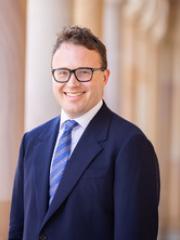
Dr Robert Mullins is a Senior Lecturer at the TC Beirne School of Law, part of the Faculty of Business, Economics and Law at the University of Queensland. He holds a BPhil in Philosophy and a DPhil in Law from the University of Oxford. His research focuses on legal philosophy, the theory of legal reasoning, and the application of formal logic to legal domains. Key areas include deontic language analysis, precedential constraint models, and the intersection of artificial intelligence with legal systems. He currently serves as Reviews Editor for the Law and Philosophy journal and is an Associate Member of the ARC Centre for Excellence for Automated Decision-Making and Society (ADM+S). His work examines explainability in automated legal reasoning and contributes to foundational debates in legal theory. Robert’s educational background includes degrees from the University of Oxford and earlier studies at the University of Queensland (B.A., LL.B.). His research interests are structured around legal semantics, moral conflict in rights frameworks, and the formalization of legal obligations. He has explored how logicians’ and linguists’ theories of deontic language shape interpretations of legal rights and authority relations. His recent articles analyze formal models of common law reasoning, the implications of deontic detachment for legal positivism, and the structural foundations of precedential constraint. While no formal awards are listed, his contributions to legal theory and interdisciplinary work with AI underscore his scholarly impact. Robert is available for academic supervision and has affiliations with the Australian Centre for Private Law.