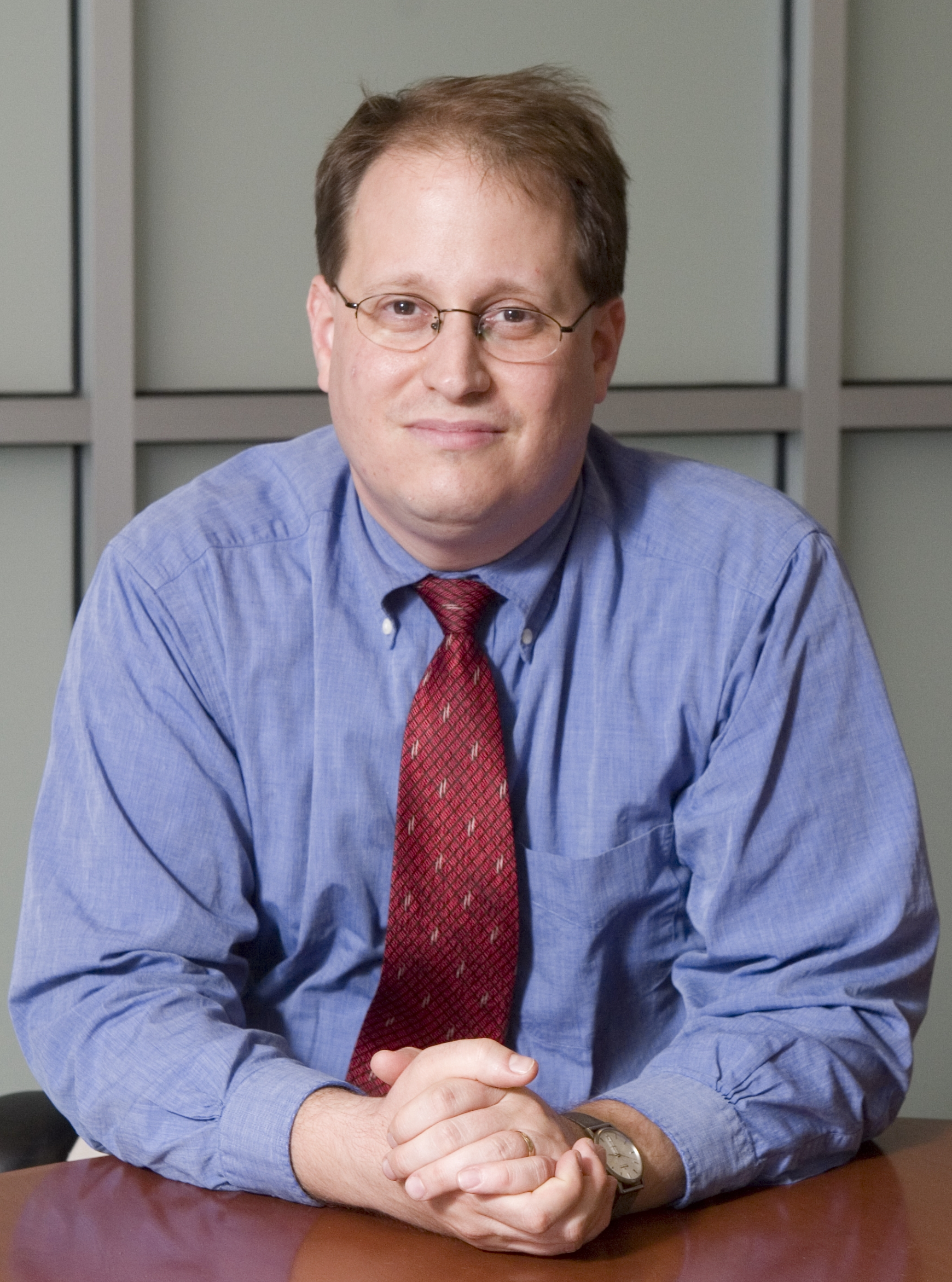
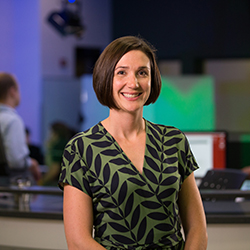
Eric Miller is a Professor of Electrical and Computer Engineering at Tufts University's School of Engineering. He also holds adjunct professorships in Computer Science, Biomedical Engineering, and Mathematics. His academic roles include serving as Chair of the Electrical and Computer Engineering department and leading the Lab for Imaging Science Research (LaISR). Miller earned his SB, SM, and PhD in Electrical Engineering from MIT (1990–1994). His research focuses on signal and image processing, particularly inverse problems, tomographic imaging, and applications in medical imaging, environmental monitoring, and security screening. He has pioneered methods like the parametric level-sets (PaLEnTIR) for reconstruction and shape-based inversion algorithms. His work integrates physics-based modeling with computational techniques, addressing challenges in subsurface sensing, biomedical diagnostics, and materials science. Miller is a Fellow of IEEE and a member of honor societies like Tau Beta Pi and Phi Beta Kappa. Over 489 publications reflect his contributions to imaging science, with recent advancements in AI-driven pedestrian behavior analysis and X-ray anomaly detection.
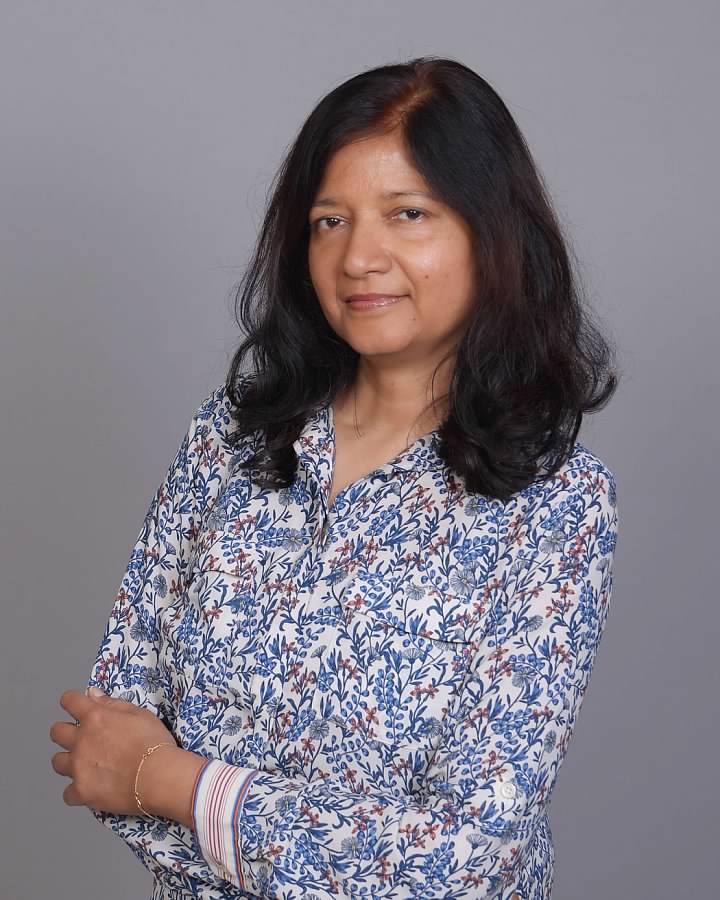
Radhika Grover is a Lecturer in the Electrical and Computer Engineering Department at Santa Clara University's School of Engineering. With over 15 years of teaching experience since 2004, she specializes in hardware and software domains. Education B.S. in Electrical Engineering, Indian Institute of Technology-Roorkee (1991) M.S. in Electrical Engineering, Birla Institute of Technology (1992) Ph.D. in Computer Engineering, Santa Clara University (2003) Her research focuses on Human-Computer Interaction and Accessible Design , exemplified by her work on a digital book for learning Python programming for students with blindness. She has also contributed to Embedded Systems , Machine Learning , and Computer Architecture . Her publications highlight expertise in FPGA Design , Quality of Service in Multimedia Systems , and Educational Technology . She has taught courses on Verilog HDL , Secure Coding , and Java Programming at institutions like Santa Clara University and UC Santa Cruz SV Extension. She authored a Java programming textbook and holds a U.S. Patent 10222870 for a wearable reminder device.
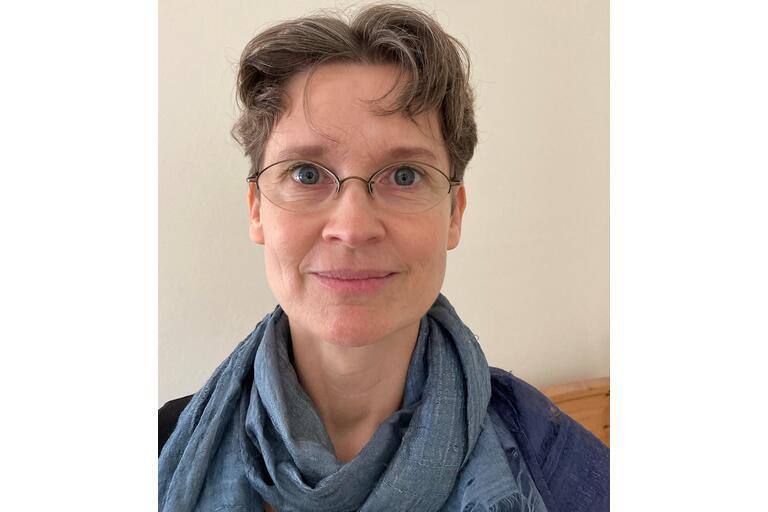
Lei Jiao is a Professor in the Department of Information and Communication Technology at the University of Agder's Faculty of Engineering and Science. Previously serving as an Associate Professor from May 2014 to October 2022, Dr. Jiao has established himself as a leading researcher in artificial intelligence, with particular expertise in Tsetlin Machines and their applications across diverse domains. PhD in Information and Communication Technology, University of Agder (2008-2012) Master of Engineering in Communication and Information System, Shandong University (2005-2008) Bachelor of Engineering in Telecommunication Engineering, Hunan University (2001-2005) Dr. Jiao's research spans multiple cutting-edge areas including interpretable artificial intelligence, wireless communication protocols, network resource allocation, and signal processing. His work on Tsetlin Machines has pioneered new approaches to machine learning that emphasize interpretability while maintaining high performance. The research group he contributes to at the University of Agder focuses on Autonomous and Cyber-Physical Systems (ACPS), Battery recycling, and the Centre for Artificial Intelligence Research (CAIR). Analysis of Dr. Jiao's recent publications reveals a strong emphasis on interpretable AI systems, particularly through Tsetlin Machines. His work spans applications in GNSS jammer detection, crowd anomaly detection, DNA sequence classification, and hardware acceleration of machine learning models. The research consistently demonstrates how logical, rule-based approaches can provide transparent alternatives to traditional neural networks while maintaining competitive performance. Supervised numerous PhD students including Vojtech Halenka, Ahmed K. Kadhim, and Sindhusha Jeeru Mentored over 30 Master's thesis projects covering topics from Tsetlin Machines to signal processing and computer vision Collaborates extensively with Ole-Christoffer Granmo and other leading researchers in the AI field Dr. Jiao actively contributes to advancing the field through supervision of doctoral candidates, collaboration on major research projects, and development of novel machine learning approaches that balance performance with interpretability. His work bridges theoretical foundations with practical applications across telecommunications, computer vision, and natural language processing domains.
Susanne Gahl is a Professor of Linguistics and Cognitive Science at the University of California, Berkeley, affiliated with the Language and Cognition faculty. She is based in 1220 Dwinelle Hall and holds a PhD from UC Berkeley. Her academic work bridges linguistics and cognitive science with a focus on language processing. Research Interests: Her primary research areas include psycholinguistics, language production and comprehension, aphasia, and usage-based models of language. She investigates how phonetic and phonological factors influence speech perception and lexical access, particularly in bilingual and clinical contexts. The recent publications reflect a sustained focus on phonetic cues in code-switching, lexical competition, and models of aphasic comprehension. These works span both theoretical and clinical domains, highlighting a trajectory centered on empirical, data-driven approaches to understanding language as a cognitive system. Scientific Awards: No awards listed in the provided text. Advising and Grants: While specific students and grant funding are not mentioned, her dissertation and multiple publications suggest active mentorship and research leadership. She has collaborated with scholars such as Lise Menn and Keith Johnson, indicating integration within a broader research network. Labs and Teams: No specific lab or research team is mentioned in the text, though her affiliation with the Language and Cognition faculty suggests participation in interdisciplinary research initiatives at UC Berkeley.
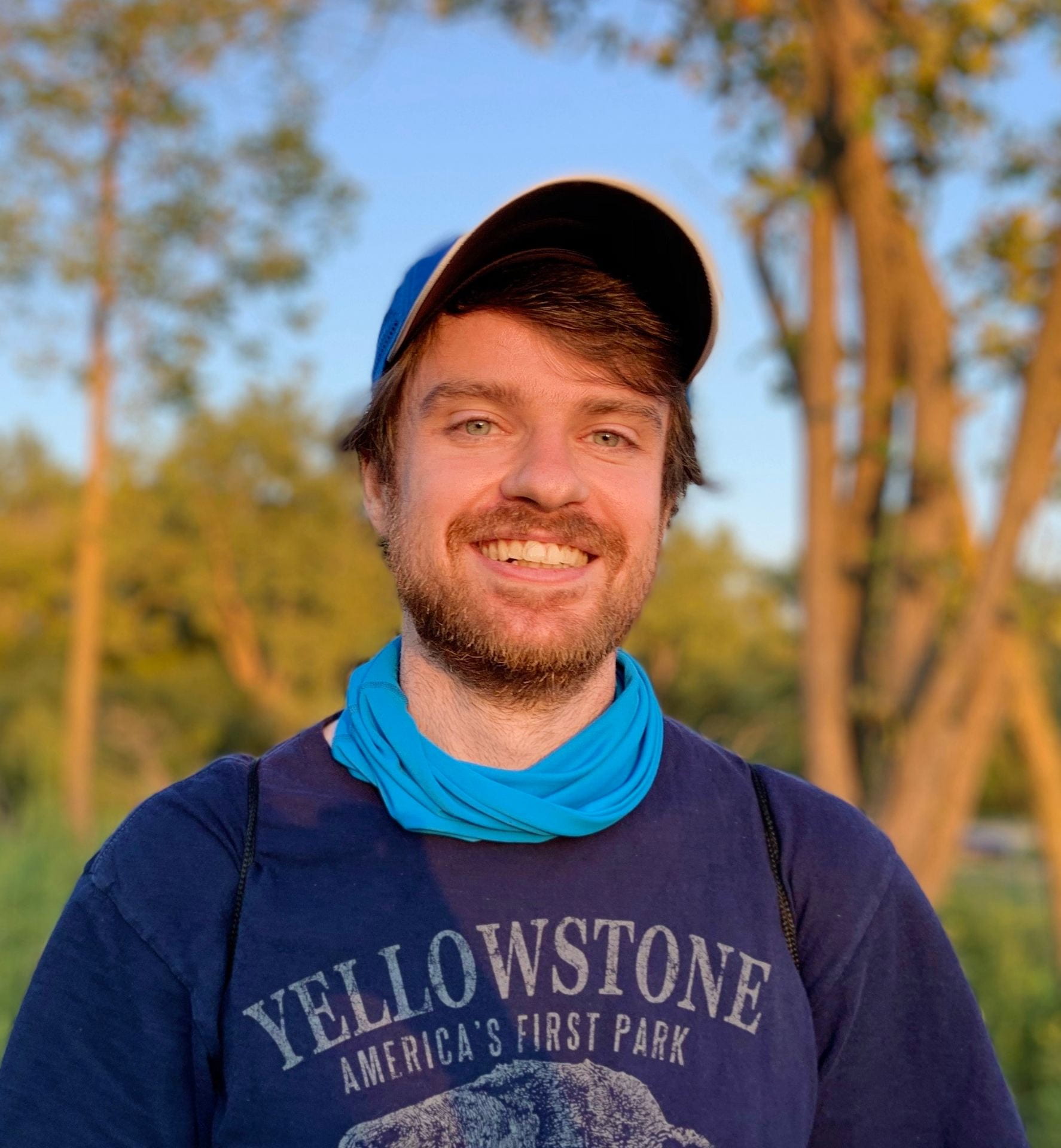
Omid Reza Abbasi is a Research Fellow in Geoinformatics at the University of Salzburg , specializing in the integration of Artificial Intelligence, Machine Learning, and Geographic Information Systems (GIS) to address complex spatial challenges. His work spans diverse domains including spatio-temporal modeling, human mobility prediction, and semantic similarity measures in geospatial contexts. Projects : Collaborated on 'RegioWoodTrain,' a project focusing on sustainable regional wood transport through cooperative supply chain management using simulation and AI technologies. Research Interests : Omid's research emphasizes the application of AI and GIS in urban planning, transportation systems, and social media analysis. Key areas include: Large Language Models (LLMs) for geographical representation Semantic similarity assessment in geospatial data Human mobility pattern prediction using social networks Accessibility in WebGIS via audio interfaces Recommender systems for tourism and retail Spatio-temporal analysis of public services and environmental impacts Publications : His recent work explores the use of LLMs in GIS, novel semantic similarity metrics, and spatio-temporal modeling for urban governance. Articles from 2018-2025 highlight trends in AI-driven spatial analysis, collective mobility prediction, and georeferencing of semi-structured data. Contact : Email: omidreza.abbasi@plus.ac.at
Géraldine Walther is a faculty member in the Department of Linguistics at George Mason University (GMU), joining in August 2019. Her research bridges computational linguistics, linguistic typology, and cognitive science, focusing on system-level patterns in linguistic sub-organization and their implications for cognitive processing, development, and diachronic change. She employs computational and quantitative methodologies on original data, often collected through language documentation projects. Education: Doctorate in Linguistics (2013), Université Paris Diderot; MA in Linguistics (2007), INALCO Paris; BA in Linguistics and German Studies (2004), Université Lumière Lyon 2 & ENS de Lyon. Research Focus: Morphological complexity, canonical typology, language documentation, and computational modeling. Grants: NSF EAGER Grant (2022-2024), Commonwealth Cyber Initiative Grant (2022), NSF DEL/DLI Grant (2021-2024), CAHMP Seed Grant (2021-2022), IXXI/ISH Grant (2016-2018). Her supervised dissertation work includes Yamei Wang’s study on Mandarin classifier systems. She has received prestigious awards, including the ASLAN Postdoctoral Fellowship and Networds Visiting Grant. Walther is establishing GMU’s Computational Linguistics Lab and expanding the curriculum to include computational linguistics.
Orsolya Kolozsvari is a Project researcher at the University of Jyväskylä's Department of Psychology within the Faculty of Education and Psychology. Her work focuses on auditory neuroscience and speech processing, utilizing MEG and the Human Neocortical Neurosolver (HNN) to investigate developmental changes in speech perception and production across adults and children. Research Focus: Neural mechanisms of speech envelope tracking Tools: MEG, HNN modeling Collaborations: Involved in international projects like PredictAble (MSCA ITN) Her recent publications highlight studies on audiovisual integration, grapheme-phoneme associations, and neural oscillations in speech processing. These works span 2017-2021 with Open Access availability.
Sandy LaTourrette is a Post-doctoral researcher in the School of Arts and Sciences at the University of Pennsylvania, investigating the interplay between language and cognition across developmental stages from infancy through adulthood. His work employs eye-tracking methodologies (including gaze location and pupillometry) and behavioral measures to examine cognitive processing in infants as young as 6 months, preschoolers, elementary-age children, and adults. His core research focuses on psycholinguistics and language acquisition, specifically exploring how object labeling influences infant categorization and memory, mechanisms of word meaning learning, semantic mapping to different word classes (nouns/verbs/adjectives), vocabulary expansion through known words, and speech processing variations across accents and populations (bilingual children, late talkers). He collaborates with Dr. John Trueswell and Dr. Charles Yang on computational modeling of word learning mechanisms. Analysis of his recent publications reveals consistent emphasis on developmental trajectories in language-cognition interactions, with methodologies centered on eye-tracking paradigms and experimental behavioral tasks. His work bridges cognitive science, developmental psychology, and linguistics, demonstrating how language structures early cognitive processes. Dr. LaTourrette's contributions have been recognized through prestigious awards: Jean Berko Gleason Award at the Boston University Conference on Language Development National Science Foundation Graduate Research Fellowship National Institutes of Health National Research Service Award His research is supported by competitive federal fellowships and involves collaborative laboratory work with computational modeling teams. While formal student advising roles aren't documented, his methodology development and experimental design likely involve mentoring junior researchers in laboratory settings. Current research occurs in laboratory environments utilizing eye-tracking equipment, with particular focus on developmental advances in cognitive processing as revealed through pupillometry and gaze behavior across age groups.
Courtney E. Venker is an Assistant Professor in the Department of Communicative Sciences and Disorders at Michigan State University's College of Communication Arts and Sciences. She is a licensed and certified speech-language pathologist and serves as director of the Lingo Lab in the Oyer Speech and Hearing Building on campus. Her research focuses on language development in children with autism spectrum disorder (ASD), specifically examining how auditory-visual integration supports word learning. Using standardized assessments, behavioral coding of parent-child interactions, and eye-gaze tracking methodologies, she investigates how adults modify speech for children with language delays. Her work aims to identify optimal communication strategies that enhance language acquisition in ASD populations through visual attention mechanisms and simplified input structures. Her scientific recognition includes: Early Career Research Award from the National Institute on Deafness and Other Communication Disorders (NIDCD/NIH) Dr. Venker leads a 3-year NIH-funded project analyzing visual perceptual salience in word processing among toddlers and preschoolers with ASD, which supports her lab's mentoring of students in communicative sciences research. The Lingo Lab team employs advanced eye-tracking and behavioral analysis techniques to explore neurocognitive communication pathways, with findings featured in publications including JAMA Pediatrics.
Amy E. Booth is a Professor at Vanderbilt University’s Peabody College, Department of Psychology & Human Development, with a research focus on early emerging variability in school readiness, particularly language and science domains. She previously held faculty positions at the University of Texas at Austin and Northwestern University, including roles as Professor, Associate Professor, and Assistant Professor. Ph.D. in Developmental Psychology, University of Pittsburgh M.A. in Developmental Psychology, University of Virginia Sc.B. in Psychology, Brown University Her research explores causal reasoning, vocabulary gaps, and scientific literacy in young children, supported by major NSF grants like Science Sprouts 2.0 and Assessing the Viability of AIDA . Her work examines how causal information, parental interactions, and socioeconomic status influence early learning. Recent publications highlight her contributions to understanding causal stance as a predictor of scientific literacy, with keywords spanning Developmental Psychology, Cognitive Development, and Educational Research. Her awards include the Clarence Simon Award for Outstanding Teaching and being named a Fellow of the Association for Psychological Science. Ph.D. Students: Jihye Bae, Margaret Shavlik, Aubry Alvarez, Gwendolyn Fiske Grants: Multiple NSF and Spencer Foundation awards totaling over $2 million Service: Director of Psychology & Human Development Child Studies Group, NSF panelist, and editorial roles in Child Development and Developmental Science
Nathalie Huet is a Professor of Cognitive Psychology at the CLLE Laboratory (Cognition, Languages, Languages and Ergonomics), UMR 5263-CNRS, University of Toulouse Jean Jaurès. She serves as Director of the Department of Cognitive Psychology and Ergonomics within the Faculty of Psychology and holds leadership roles as Co-Scientific Manager of the CLLE Language and Cognitive Processes team and Co-Facilitator of the Education-Learning theme at CLLE. Her research centers on self-regulated learning models, examining relationships between cognitive, metacognitive, motivational variables and emotions in traditional and digital learning environments. She investigates virtual reality, augmented reality, and mixed reality applications (including Hololens 2) in academic and professional learning contexts, with emphasis on healthcare training for nurses and surgeons. Additional research strands include the use of AI aids like ChatGPT in learning processes and memory optimization factors related to language learning from an embodied cognition perspective. Analysis of her recent publications reveals a strong focus on embodied learning approaches in language education and memory research. Her work on embodied phonology methods for middle school English learners demonstrates significant impacts on pronunciation training and language acquisition. The PAC-PICL project represents a major contribution to embodied language teaching methodology, while her investigations into the "midscale disagreement problem" in psycholinguistic ratings have important methodological implications for cognitive science research. Professor Huet has supervised numerous doctoral students whose research aligns with her interests in self-regulated learning, embodied cognition, and educational technology. Her advisees have explored topics ranging from epistemic emotions in surgical training to cognitive investigations of pedagogical innovations and embodied approaches to language acquisition. She has secured various funding sources for these projects, including CIFRE partnerships with organizations like AFPA and SIMFORHEALTH. As Co-Scientific Manager of the Language and Cognitive Processes team at CLLE, Professor Huet leads interdisciplinary research that bridges cognitive psychology, linguistics, and educational technology. Her leadership in the CLLE Laboratory has fostered collaborations between psychologists, linguists, and ergonomists, creating a research environment focused on understanding human cognition in real-world educational contexts.
Ewa Wszendybył-Skulska is a Professor at the Jagiellonian University , affiliated with the Faculty of Management and Social Communication and specifically the Institute of Entrepreneurship . She teaches subjects including Strategic Human Resource Management, Gastronomy Management, Hospitality Management, and Tourism Marketing. Current Faculty Member Focus on Tourism, Entrepreneurship, and Sustainable Development Active in ResearchGate with 32 publications Her research interests center on entrepreneurship, competitiveness, innovation, value creation, and sustainable development in tourism. She explores quality in services, particularly within hotel and gastronomy management, emphasizing social and environmental responsibility in business practices. Recent publications examine digital transformation in energy procurement , resilience in the hotel industry during crises , and the impact of social capital on tourism competitiveness . Her work often bridges theoretical frameworks with practical applications in hospitality and regional tourism development. She leads postgraduate studies in Procurement Management and contributes to tourism policy analysis in the European Union. Her collaborations span institutions like the National Tourism Development Authority and researchers such as Aleksander Panasiuk and Sebastian Kopera .
Ana Luísa Raposo is an Associate Professor at the Faculty of Psychology, University of Lisbon, serving as Vice President of the Scientific Council and Executive Committee member of the Mind-Brain College of ULisboa. She also contributes to the Scientific Committee for both Master and PhD Programs in Cognitive Science. Her research centers on cognitive psychology with specific focus on long-term memory encoding/retrieval mechanisms, semantic memory organization, and semantic-episodic memory interactions. Methodologically, she employs functional magnetic resonance imaging (fMRI), EEG, and eye-tracking to investigate these processes across healthy and aging populations, with particular emphasis on memory interference phenomena and neural correlates of cognitive control. Recent publications (2021-2024) reveal consistent thematic trajectories in memory research, particularly examining how semantic knowledge influences episodic recall, neural signatures of aging-related cognitive changes, and error-driven memory correction mechanisms. Her work demonstrates strong interdisciplinary collaboration across neuroscience, linguistics, and computational modeling. She actively mentors through Cognitive Science graduate programs and leads significant research initiatives including the CICPSI-funded '50A25A' project on personal/shared memory (2024, PI), FCT project 'Can we learn from errors?' (2020-2022, PI), and 'LOSTME' visual memory study (2018-2022, Co-PI). Raposo's scholarly activities are anchored in the Mind-Brain College of ULisboa where she coordinates multidisciplinary teams integrating experimental psychology, neuroimaging, and computational approaches to advance memory research.
Rebecca Gomez is a Professor in Cognition & Neural Systems at the University of Arizona's College of Science, where she also serves as Associate Dean for Undergraduate Student Success. She directs the Child Cognition Lab, focusing on statistical language learning, semantic integration, and sleep's role in memory formation in infants and young children. Her work bridges developmental psychology, cognitive neuroscience, and clinical applications. Education: B.A. in Philosophy (1985), New Mexico State University M.A. in Experimental Psychology (1989), New Mexico State University Ph.D. in Experimental Psychology (1995), New Mexico State University Research Interests center on statistical language learning in infancy, semantic integration in toddlers, and the interplay between sleep and memory consolidation. Her studies explore how sleep affects retention of learned information across developmental stages. Publication Trends reveal a focus on developmental cognitive neuroscience, with keywords spanning sleep research, language acquisition, and memory mechanisms. Sub-fields include nonadjacent dependency learning, nap effects, dialect-specific rules, and hippocampal development. Scientific Recognition : 2013 Research Paper Award, Journal of Speech and Hearing Research Minority Postdoctoral Research Fellowship (1996) Teaching includes courses like PSY 240 (Child Development), PSY 340 (Cognitive Development), and PSY 596F (Developmental Cognitive Neuroscience), reflecting her expertise at the intersection of psychology and neuroscience.
Alessandro Polli is a confirmed researcher (Ricercatore confermato) in Economic Statistics at the Department of Social and Economic Sciences, Sapienza University of Rome. He teaches three courses: Quantitative Methods for Time Series Analysis (1st semester), Economic Statistics (2nd semester), and Statistical Methods and Models for Time Series and Panel Data (2nd semester). His office is located in room 108 of the department, with weekly office hours held every Wednesday from 2:00 PM to 5:00 PM. Polli holds a PhD in Economic Analysis, Mathematics and Statistics of Social Phenomena from Sapienza University of Rome. His academic foundation combines rigorous statistical training with social science applications, enabling interdisciplinary research at the intersection of data science and socioeconomic analysis. His primary research focuses on Economic Statistics with specialized expertise in Time Series Analysis and Text Mining methodologies. Polli applies these techniques to examine migration patterns, gender statistics, security perception, labor market dynamics, and political discourse. His work bridges quantitative methods with social science inquiry, particularly through the analysis of textual data from social media, official statistics, and political communications to derive actionable socioeconomic insights. Analysis of his recent publications reveals a consistent trajectory in developing and applying text mining techniques to social phenomena. His research demonstrates increasing sophistication in emotional text mining, temporal validity assessment of sentiment analysis, and integration of machine learning with traditional statistical models. Key thematic clusters include migration discourse in European elections, government crisis dynamics, vaccine sentiment analysis, and automation impacts on Italian labor markets, all characterized by methodological innovation in handling complex textual datasets. Professional engagements include: Consultant to the Historical Research Office of the Bank of Italy Consultant to the Presidency of the Council of Ministers - Guarantee Commission for Statistical Information Member of the Istat quality circle for territorial statistics Referee for international scientific journals including Lexicometrica and Social Indicators Research While specific student advising activities are not documented in available sources, his institutional roles indicate significant contributions to national statistical policy and quality assurance. His collaborative work with major Italian institutions demonstrates applied research impact on official statistics and policy development, particularly in migration and territorial statistics.