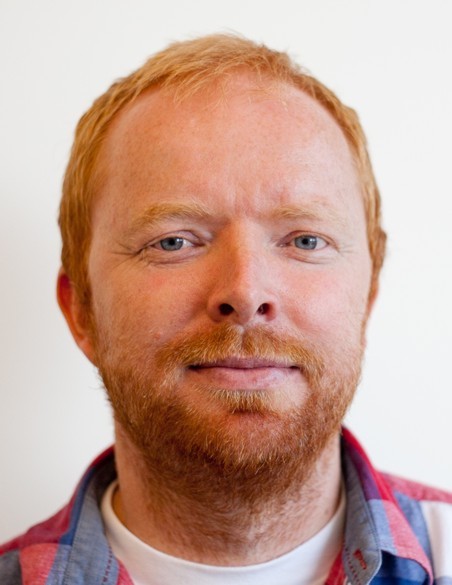
Lauri Rautkari is an Associate Professor in the Department of Bioproducts and Biosystems at Aalto University, Finland. His research focuses on water interactions in biomaterials, particularly wood, with an emphasis on developing advanced analytical methods for water vapor sorption, creating novel low-sorption materials, and investigating hygroscopicity and fungal decay resistance in modified wood systems. Research Highlights: Gas-phase ozone treatment for improved wettability, thermal and chemical wood modification, hyperspectral imaging for moisture prediction, bioinspired coatings for fungal protection, and interlaboratory studies on sorption data quality. Recent Publications: Key contributions to understanding lignin's role in moisture interactions, acetylation reversibility, and the impact of fungal degradation on heat-treated wood. The trend in his publications reflects a strong focus on hygroscopicity, chemical modification techniques (acetylation, melamine-formaldehyde impregnation), advanced imaging methods (hyperspectral, neutron scattering), and the development of sustainable wood-based materials for construction and acoustic applications. Collaborative interlaboratory efforts dominate his work, ensuring standardized methodologies for moisture analysis.
Dr. Katja Wehner is a Postdoctoral Researcher in the Faculty of Biology at the Technical University of Darmstadt, Germany, specializing in soil arthropod ecology with a focus on oribatid mite communities across forest microhabitats including litter, soil, dead wood, and tree bark. Her work examines their role in forest food webs and responses to environmental stressors. Education: PhD in Biology, Technical University of Darmstadt (2009). Dissertation: 'Parthenogenesis and Sexuality in Oribatid Mites' Diploma in Biology, Technical University of Darmstadt (2004). Thesis: 'Variability at the hsp82-locus of the parthenogenetic oribatid mite Platynothrus peltifer' Research Focus: Dr. Wehner investigates biotic interactions and acarological dynamics in Central European forests, emphasizing how land-use intensity, drought, and structural factors shape oribatid mite biodiversity. Her work integrates community ecology, soil science, and microhabitat specialization to understand ecosystem resilience and food-web interactions, with particular attention to parthenogenetic versus sexual reproduction strategies in microarthropods. Publication Trends: Recent publications (2018-2022) reveal a strong emphasis on anthropogenic impacts, including land-use change effects on aboveground-belowground linkages, drought/storm damage consequences for soil communities, and microhabitat-driven variations in mite sex ratios and seasonal dynamics. Her collaborative work in journals like Nature Communications and Global Ecology and Conservation demonstrates methodological integration of field surveys, controlled experiments, and multi-taxon analyses. Collaborative Networks: Dr. Wehner actively participates in large-scale ecological initiatives including the Biodiversity Exploratories project, collaborating with researchers from institutions like the Technical University of Munich and University of Würzburg on cross-taxa biodiversity studies. Her co-authorship on multi-investigator papers indicates strong engagement with Germany's ecological research infrastructure.
Professor Harriet D Allen is a leading academic in Physical Geography at the University of Cambridge, affiliated with the Department of Geography and Girton College. She holds dual roles as Professor of Physical Geography and Fellow/Tutor at Girton College since 2002. Her research focuses on Mediterranean ecosystems, biogeography, and environmental change with particular emphasis on remote sensing applications for landscape ecology and vegetation dynamics. Education: MA (Cambridge/Girton College), MSc (University of Calgary, Canada), PhD (Cambridge, focusing on Quaternary studies in Greece). She has held academic positions since 1986, including Senior Lecturer roles at Homerton College and current roles in Cambridge's Geography Department. Research Interests: Modeling Mediterranean shrubland ecosystems using LiDAR and multisensor data Vegetation response to Holocene and contemporary environmental changes Restoration of Mediterranean mosaic landscapes Ecological impacts of land use changes in Portugal and Greece Palaeoecological reconstruction using sedimentary records Advising & Grants: Supervised 3 PhD students (Amy McGuire, William Fletcher, William Simonson) focusing on Quaternary environments, forest structure, and landscape history. Active in curriculum development as Director of Undergraduate Teaching (2014–2022). Labs/Teams: Member of Climate & Environmental Dynamics and Biogeography & Biogeomorphology research groups. Collaborates with Plant Sciences Department on lidar applications. Leads fieldwork in Portugal, Switzerland, and Greece.
Robert Muscarella is a Senior Lecturer at the Department of Ecology and Genetics, Plant Ecology and Evolution, Uppsala University. His work bridges plant ecology, climate change impacts, and tropical forest dynamics. Research interests include Climate change effects on forest structure Functional trait analysis Species distribution modeling Post-disturbance forest recovery Ecohydrology of tropical systems Remote sensing applications in ecology Recent publications highlight trends in tree mortality , hurricane impacts , drought responses , and functional trait variability across tropical ecosystems. Methodological contributions include open-access species distribution modeling tools.
Professor Allan Rennie serves as Professor in Manufacturing Engineering at Lancaster University's School of Engineering and holds the administrative position of Associate Dean for Engagement within the Faculty of Science and Technology. With a career spanning over 30 years since initiating work in additive manufacturing during the mid-1990s, he has established himself as a leading figure in industrial applications of advanced manufacturing technologies across diverse sectors. His research expertise centers on Additive Manufacturing , Engineering Design , and Manufacturing Process Optimization , with current specializations including design for additive manufacturing (as co-leader of the UK's EPSRC DfAM Network), industrial digitalisation of manufacturing processes, and innovative tooling development using metallic and hybrid approaches. Rennie has significantly contributed to Engineering Education , particularly examining the integration of business and management principles into engineering curricula and analyzing the impacts of online/hybrid delivery modes on student engagement and graduate employability following the COVID-19 pandemic. Recent publication trends reveal Rennie's dual focus on practical manufacturing applications and scholarly analysis of technological evolution. His 2025 bibliometric study maps a decade of Design for Additive Manufacturing research, while his structural analysis of musical instruments demonstrates cross-disciplinary applications of manufacturing techniques. These works reflect his commitment to both advancing manufacturing technology and documenting its academic trajectory through rigorous analysis. Professor Rennie actively supervises PhD candidates including Jenny Roberts, Eunike Sembiring, and Joe Taylor while leading substantial research projects such as the EPSRC DfAM Network (2020-2023), Automating Design for Additive Manufacture with AI (2023-2024), and multiple Engineers in Business Competitions. His extensive grant portfolio spans industrial digitalization, sustainable manufacturing, and educational innovation, with notable projects including RENDER (powder recycling), TecHnology and EntrepreneUrship Education, and Production Capable Additive Manufacturing of Polymers. Rennie contributes to Lancaster's research ecosystem through affiliations with the Centre for Global Eco-innovation, Energy Lancaster initiative, and the Lancaster Product Development Unit. These platforms enable him to bridge academic research with industrial applications across multiple sectors, particularly supporting his work on sustainable manufacturing practices, technology commercialization, and industry engagement strategies that translate research into real-world impact.
Dr. Thomas C Wood is an Associate Professor in the School of Integrative Studies at George Mason University, where he has been since 1996. His roles include directing the Environmental Studies on the Piedmont research station and co-developing the Smithsonian Mason Semester program. He specializes in conservation biology, ecology, and science education reform. Education: PhD in Environmental Science and Public Policy (George Mason University, 2006), MS in Animal Science (Louisiana State University, 1988), BS in Animal Science (UC Davis, 1986) Dr. Wood's research focuses on biodiversity monitoring, environmental DNA applications, population dynamics of species like mole salamanders, and the intersection of science with civic engagement. He leads NSF-funded initiatives like SENCER, aiming to improve science education. His recent publications address global environmental challenges, including Amazon deforestation, climate change impacts on tropical forests, and biodiversity conservation strategies. These works often integrate ecological data with policy recommendations. Scientific Awards: George Mason University Excellence in Teaching Award SENCER Senior Leadership Fellow Dr. Wood advises students on projects ranging from conservation biology to education reform and directs Mason's scientific diving program. His career emphasizes interdisciplinary collaboration and practical applications of ecological research.
Giovanni Giuseppe Vendramin is a Research Director at the Institute of Biosciences and BioResources (IBBR) within Italy's National Research Council (CNR), based in Florence. He holds a magna cum laude degree in Forest Sciences from the University of Florence (1981) and has held research fellowships at institutions including the USDA Forest Service (USA) and University of Göttingen (Germany). His career includes leadership roles as Director of IBBR and recognition as an Honorary Research Fellow at Bioversity International. Vendramin's research focuses on forest genetics, conservation genomics, and phylogeography. He investigates adaptive responses of trees to environmental change, genetic diversity patterns in glacial refugia, and conservation strategies for endangered species. His work employs genomic tools to study local adaptation, gene flow, and demographic history across Mediterranean and European tree species. Recent publications emphasize climate adaptation mechanisms, genomic signatures of selection, and conservation genetics. Articles from 2021-2023 predominantly explore genetic resilience to glacial cycles, microgeographical adaptation in conifers, and biodiversity conservation frameworks. Research integrates molecular ecology, paleoecology, and landscape genetics. Scientific Awards: Medal for distinguished Italian scientists (Accademia Nazionale delle Scienze, 2022) Honorary Doctorate (University of Zvolen, Slovakia, 2012) Vendramin has led over 35 national/international projects and advises graduate students and postdoctoral researchers. He coordinates an IUFRO unit and contributes to EU scientific commissions. His laboratory employs genomic techniques for biodiversity conservation, with collaborations across European research networks.
Håvard Kauserud is a Professor at the Department of Genetics and Evolutionary Biology, University of Oslo. His research spans molecular ecology, evolutionary biology, and fungal genetics with a focus on mycorrhizal and endophytic fungi, climate change impacts, and habitat fragmentation effects. Section of Genetics and Evolutionary Biology Teaches advanced courses in fungal evolution and bioinformatics Research projects include: Molecular ecology of mycorrhizal fungi Speciation mechanisms in forest fungi Climate change effects on mushroom phenology Comparative genomics of Serpulaceae Endophytic fungi in boreal mosses Recent work explores fungal community dynamics across boreal forests, indoor mycobiomes, and genome expansion patterns in Mycena . Collaborative studies investigate arthropod dispersal of fungal spores, climate adaptation signatures, and trait-based fungal ecology databases.
Rupert Wimmer is a Professor at the Institute of Wood Technology and Renewable Resources of the University of Natural Resources and Life Sciences, Vienna. He serves as an Editorial Board Member for journals like Frontiers in Chemistry and Wood and Fiber Science , and has been a Review Editor for ISRN Forestry (2009–2018). His work bridges wood science , renewable materials , and dendrochronology , with a focus on 3D-printed bio-composites , triboelectric wood processing , and climate reconstruction . His research spans Biocomposites: Innovations in lignin-based materials , wood-plastic composites , and fully recyclable wall systems . Wood Technology: Studies on surface activation , mechanical properties , and dust reduction during machining. Dendrochronology: Climate history analysis via tree rings and wood chemistry . The most recent articles explore circular economy in construction, electrostatic wood treatment , and drought proxies , reflecting his interdisciplinary approach. Awards include Rudolf Sallinger S&B Innovation Award nominations (2018, 2019) German Study Prize for Wood Materials Research (2010) Fellow of the International Academy of Wood Science (2005) He has supervised over 74 theses, including Roman Myna (2025) on innovative dust reduction and Raphaela Hellmayr (2024) on wood-based circular bioeconomy . Grants from EU , FFG , and Fonds zur Förderung der wissenschaftlichen Forschung fund his work. Collaborations span institutions in Australia, Germany, and the Czech Republic.
Regina Lindborg is a Professor of Geography at Stockholm University's Department of Physical Geography. Her research bridges landscape ecology, biodiversity conservation, and sustainable land management through interdisciplinary collaborations with economists and human geographers. Focus areas: Semi-natural grasslands, climate change impacts, wetland ecosystems Key projects: Cross-continental studies in Tanzania, Fennoscandian grazing systems analysis Her work demonstrates critical trade-offs between agricultural intensification and biodiversity preservation, with specific emphasis on nutrient transfer dynamics through grazing animals. Systematic reviews of global literature reveal knowledge gaps in long-term ecological impacts of management interventions. Recent publications analyze: Soil carbon sequestration in converted croplands Temperature response gradients in wetland flora Multi-taxa functional diversity in woody pastures Social-ecological feedbacks in smallholder farming systems Her research methodology integrates field experiments (e.g., temperature manipulation chambers), large-scale chronosequence analysis, and stakeholder interviews to inform evidence-based policy.
Christopher Francis is a Professor of Earth System Science and Oceans at Stanford University, and a Senior Fellow at the Stanford Woods Institute for the Environment. He holds affiliations with the Emmett Interdisciplinary Program in Environment and Resources and the Stanford Doerr School of Sustainability. Education: PhD in Marine Biology from Scripps Institution of Oceanography (2000), B.A. in Biology (Highest Honors) from UC Santa Cruz (1994). Research focuses on microbial biogeochemistry, particularly nitrogen cycling in estuaries and floodplains. His work integrates field studies, genomics, and structural biology to understand how microbial communities influence ecosystem processes like nitrification and carbon fixation. Key areas include Thaumarchaeota metabolism, estuarine eutrophication resistance, and subsurface microbial adaptations. Recent studies highlight novel microbial adaptations in low-salinity environments, structural insights into archaeal enzymes, and the role of microbial diversity in maintaining ecosystem function under environmental stress. His work bridges molecular mechanisms with large-scale biogeochemical processes. Awards: None explicitly listed in provided text. Grant-funded projects include studies on San Francisco Bay nitrogen dynamics, floodplain microbiomes, and archaeal ecophysiology. Collaborations span environmental microbiology, structural biology, and geochemistry. Labs/Teams: Leads research groups focused on microbial ecology and environmental systems, affiliated with Stanford's Woods Institute and Doerr School.
Ronald Zirbs is a Research Fellow at the Institute of Colloid and Biointerface Science , University of Natural Resources and Life Sciences, Vienna (BOKU). With a PhD in Polymer Chemistry (Martin-Luther-University Halle/Saale, 2007-2009; TU Wien, 2005-2006), his research focuses on nanoparticle synthesis , surface-active ionic liquids , and thermoresponsive polymer architectures .
Andrey Pranovich is a faculty member at the Faculty of Natural Sciences and Engineering, where he leads the Laboratory of Natural Materials Technology focused on "Technologies for a sustainable future." His research spans multiple areas of wood chemistry, biomass utilization, and sustainable materials development. Dr. Pranovich's research interests center around natural materials, particularly focusing on: Lignin chemistry and applications Wood polysaccharides (especially xylan) Biomass fractionation and biorefinery processes Sustainable materials development Wood chemistry and characterization Nanocellulose and nanomaterials from biomass His recent publication record demonstrates significant contributions to the field of sustainable biomaterials, with particular emphasis on lignin-carbohydrate complexes, xylan-based hydrogels, and biobased materials for industrial applications. His work shows a strong trend toward developing environmentally friendly alternatives for industrial products while maximizing the utilization of biomass components. Notable scientific contributions include: Development of lignin-based CO2 capture materials Innovative extraction methods for wood components using green solvents Creation of xylan-based hydrogels for drug delivery applications Sustainable alternatives for road marking paints Advanced characterization of lignin-carbohydrate complexes Dr. Pranovich's research aligns with multiple UN Sustainable Development Goals, particularly those related to sustainable production and consumption, climate action, and responsible resource management. His work bridges fundamental wood chemistry with practical applications in materials science and environmental sustainability.
Andrea Dorigato serves as an Associate Professor in the Department of Industrial Engineering at the University of Trento, Italy, with his office located at Via Sommarive, 9 - 38123 Povo. His contact information includes telephone 0461 283724 and email andrea.dorigato@unitn.it. He actively teaches courses including Circular Economy for Materials Processing , Engineering Properties of Materials , Recycling and Sustainable Materials , and Laboratory of Polymer Technologies and Sustainability across multiple degree programs in Materials Engineering and Industrial Systems Engineering. Dr. Dorigato's research spans sustainable materials engineering with expertise in biopolymers, carbon nanotube composites, thermo-mechanical characterization, and energy storage systems. His work emphasizes circular economy principles through polymer blend compatibilization, phase separation control, and development of silsesquioxane-enhanced composites. Key focus areas include self-healing structural materials, biodegradable packaging solutions, and agricultural applications of wood-derived topsoil covers. His recent 2025 publications reveal a strong trend toward environmental impact assessment and sustainable material innovation. Dominant themes include life cycle analysis of packaging/building materials, self-repairing composites for structural applications, biopolymer-based agricultural solutions, and furanoate polyester development for biodegradable products. The research consistently integrates experimental characterization with environmental performance metrics. No scientific awards were documented in the provided sources. Information regarding student advisement, research grants, laboratory facilities, or collaborative teams was not specified in the available materials.
Professor David Lamb is a leading academic in Biochemistry and Molecular Biology at Swansea University's School of Medicine, affiliated with the Department of Biomedical Sciences. He joined as a Reader in 2004 and was promoted to a personal Chair in 2005. His research focuses on cytochrome P450 biodiversity, with over 25 years of experience studying P450 genes and enzymes, including work at Vanderbilt University and Woods Hole Oceanographic Institute. He holds prestigious awards such as the UK-USA Fulbright Scholarship and is a Fellow of the Royal Societies of Chemistry and Biology. Education: BSc Pharmacology (University of Liverpool), PhD Molecular Biology/Biochemistry (University of Sheffield), DSc (Swansea University, 2011). Research Interests: Cytochrome P450 structure-function relationships, enzyme evolution, antifungal drug development, and microbial genetics. His work bridges biochemistry, microbiology, and evolutionary biology, with contributions to understanding drug resistance mechanisms and enzyme adaptation in extreme environments. Publications: Over 50 peer-reviewed articles, including studies on P450-mediated biosynthesis, viral enzyme occurrence, and deep-sea organism adaptations. Recent work emphasizes structural biology and evolutionary insights into P450 enzymes. Awards: Royal Society of Chemistry Fellowship, Royal Society of Biology Fellowship, Linnean Society Fellowship, UK-USA Fulbright Scholar (2016/17). Collaborations: Active partnerships with institutions like Woods Hole Oceanographic Institute and Vanderbilt University, focusing on P450 systems in marine and viral contexts.