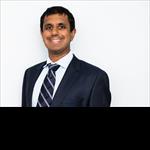
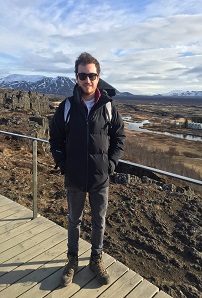
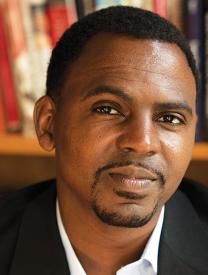
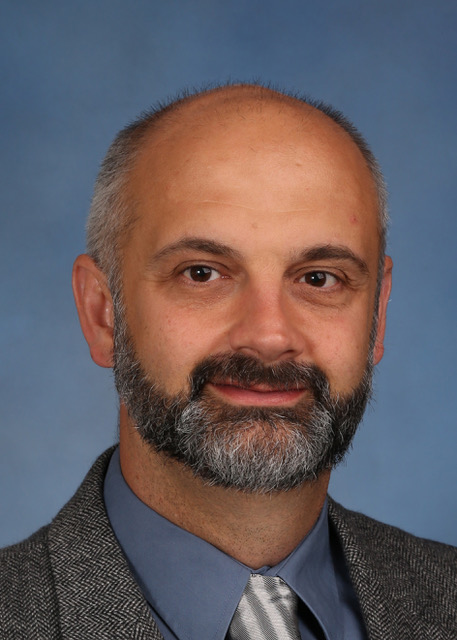
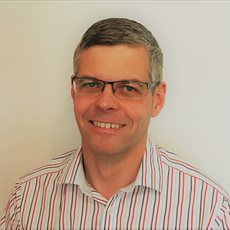
Fredrik Lundell is Professor of Fluid Mechanics at KTH Royal Institute of Technology, where he leads research in fluid physics, biopolymer assembly, and experimental mechanics. His work bridges fundamental fluid dynamics with applications in sustainable materials, utilizing techniques including synchrotron imaging, microfluidics, and optical coherence tomography. Research encompasses nanocellulose processing, protein nanofibril assembly, turbulence modulation, and multiphase flows. Recent work emphasizes flow-directed assembly of hierarchical biomaterials and energy-efficient fabrication methods. Experimental approaches combine advanced imaging with microfluidic platforms to study complex fluid-structure interactions. Publications demonstrate innovations in nanofiber alignment control, sustainable material design, and multiphase flow characterization. Recent articles focus on microfluidic assembly strategies, interfacial phenomena, and non-Newtonian fluid dynamics. Advises doctoral students investigating diverse topics from turbulent suspensions to biopolymer physics. Directs laboratory facilities for flow measurements and materials characterization, collaborating extensively through the Wallenberg Wood Science Center.
Sanket Dhruva, MD, MHS is an Associate Professor in the Department of Medicine at the University of California, San Francisco (UCSF) School of Medicine. He completed his medical training at UCSF, followed by a cardiology fellowship at UC Davis, and an MHS through the Robert Wood Johnson Foundation Clinical Scholars Program at Yale University. Dr. Dhruva's work focuses on medical device and drug safety, regulation, and evidence generation, with particular expertise in cardiovascular devices and Medicare coverage policies. Education BA in Molecular & Cell Biology and Political Science from UC Berkeley (2005) MD from UCSF School of Medicine (2009) Internal Medicine Residency at UCSF Department of Medicine (2012) Cardiology Fellowship at UC Davis Division of Cardiovascular Medicine (2015) MHS through Robert Wood Johnson Foundation Clinical Scholars Program at Yale University (2017) LEAN Champion training at UCSF (2019) Diversity, Equity, and Inclusion Champion Training at UCSF (2021) Research Interests Dr. Dhruva's research spans several interconnected areas centered around medical device and drug safety, regulation, and evidence generation. His work examines FDA approval processes for high-risk medical devices, Medicare coverage determinations, and the generation of real-world evidence to inform clinical practice and policy decisions. A significant portion of his research focuses on cardiovascular devices, including pacemakers, implantable cardioverter-defibrillators, and transcatheter valve technologies. He investigates safety concerns, appropriate utilization, and regulatory pathways for these devices. His work often involves large dataset analyses to evaluate device performance in real-world settings. Dr. Dhruva also studies Medicare formulary coverage policies, particularly how coverage decisions are made for novel drugs and devices, and the implications for patient access and healthcare costs. His research on the Medicare Coverage with Evidence Development program has been particularly influential in understanding how evidence generation requirements impact coverage decisions. Publication Trends Dr. Dhruva's recent publications (2023-2025) demonstrate a continued focus on medical device regulation, safety, and evidence generation. His work spans multiple high-impact journals including JAMA, New England Journal of Medicine, and Journal of the American College of Cardiology. A notable trend is increased attention to remote monitoring of cardiovascular implantable electronic devices, artificial intelligence applications in cardiology, and the implications of Medicare payment policies for medical technologies. His research shows growing interest in health equity considerations for medical device development and use, as evidenced by recent publications on challenges and solutions for advancing health equity with medical devices. There's also a clear pattern of examining how regulatory decisions impact clinical practice, with particular attention to the FDA's Breakthrough Devices Program and Unique Device Identifier implementation. Professional Activities Dr. Dhruva maintains active collaborations with the Veterans Health Administration on research related to cardiovascular device monitoring. His work often involves multi-institutional teams spanning UCSF, Yale, and other academic medical centers. He serves as a reviewer for major medical journals and contributes to policy discussions regarding medical device regulation and evidence generation.
Professor Thomas Adcock is a Professor of Engineering Science at the University of Oxford and Tutorial Fellow at St Peter's College. He currently serves as Senior Proctor for the 2024/25 Proctorial year, with responsibilities spanning University Council, over 50 University committees, OUP delegation, finance committee membership, ceremonial events, and student discipline. Previously, he served as Associate Head (Teaching) during the COVID pandemic and Director of Third Year Studies in the Department of Engineering Science. Professor Adcock received his MEng in Engineering Science from St. Peter's College, Oxford in 2001, followed by a D.Phil. under Paul Taylor at New College, Oxford. After initial post-doctoral work at Oxford, he gained industry experience as a metocean engineer for GL Noble Denton in London before returning to Oxford for research in tidal stream energy, eventually securing a lectureship in 2012 and promotion to Professor in 2022. His research focuses on ocean hydrodynamics for marine energy applications, with expertise in extreme wave statistics (particularly rogue waves in non-equilibrium sea states), wave-structure interactions (especially for offshore wind turbines), tidal stream energy resource assessment, and storm surge analysis. His Environmental Fluid Mechanics group employs analytical, numerical (including machine learning), and experimental methods to analyze ocean data, with strong international collaborations, particularly with the University of Western Australia. The group also explores historical engineering projects like the WWII Mulberry Harbours and innovative applications such as 'flyak' kayaks. Professor Adcock's recent publications reveal a strategic integration of machine learning with traditional fluid dynamics, particularly in tidal prediction (RTide), wave analysis, and offshore structure design. His work bridges fundamental fluid mechanics with practical engineering applications in renewable energy, with numerous publications in top journals spanning from 2006 to the present. 2024 Divisional teaching award for establishing a residential program for underrepresented prospective students Editing the engineering formula book (HLT) Exceptional tutoring and pastoral care recognition Students Tim Tang and Thomas Monahan won the Osborne Reynolds competition Media coverage in The Guardian and The Independent for Pentland Firth research BBC One Show demonstration of Mulberry Harbour engineering As a supervisor, Professor Adcock has mentored numerous doctoral students to completion with a median DPhil time of 40 months (vs. 48 months university-wide). His current research team includes post-doctoral researchers and graduate students working on floating wind turbines, wave-structure interactions, and tidal energy forecasting. He actively seeks students with strong backgrounds in engineering, physics, or mathematics interested in ocean engineering and marine energy. Professor Adcock chairs 'SUTGEF,' a special interest group of the Society for Underwater Technology, and maintains leadership roles in college governance. His Environmental Fluid Mechanics group conducts both fundamental and applied research, maintaining strong industry connections in marine renewable energy and collaborating on tidal and wave energy projects worldwide. The group's recent 'away day' in Wytham Woods exemplifies their collaborative, interdisciplinary approach to ocean engineering challenges.
Hamidreza Ahadian is a Doctoral Student in the School of Chemical Engineering at Aalto University. His research focuses on advanced material science, particularly in cellulose-based materials, nanocellulose applications, and dewatering processes. He contributes to UN Sustainable Development Goals through innovations in sustainable materials. Education: Doctoral Thesis in Chemical Engineering (Aalto University, 2025). Research interests include optimizing mechanical strength and density in paperboard materials, cyclic pressing techniques for cellulose films, and improving dewatering efficiency through innovative methods like micro-nano bubbles. His work bridges material synthesis and environmental applications, such as activated carbon production from pine wood. Collaborations involve international researchers in material science and engineering. His publications address cutting-edge topics in nanocellulose integration and structural material design.
Daniel Bryant is a researcher focused on atmospheric aerosol chemistry and analytical chemistry, particularly investigating organic aerosol composition, health impacts, and methodological advancements. His work addresses global air quality challenges, aiming to quantify and characterize pollutants like PM2.5. He is affiliated with a postdoctoral project under the NERC-funded HIPTox initiative, a cross-disciplinary collaboration exploring pollution's neurological and cognitive effects. His research employs advanced techniques such as LC-ESI-HRMS and atmospheric flow reactors to analyze organic aerosol formation pathways and sources. He has developed methodologies to improve quantification accuracy and links pollutant sources to health outcomes. Bryant's work spans global locations, including Delhi and Beijing, studying both biogenic and anthropogenic contributions to air pollution. Publications highlight innovations in non-target analysis, toxicity predictions via machine learning, and combustion chemistry insights. His collaborative projects integrate atmospheric chemistry, epidemiology, and toxicology, reflecting a commitment to addressing environmental health challenges through multidisciplinary approaches.
Daniel Q. Gillion is the Julie Beren Platt and Marc E. Platt Presidential Distinguished Professor of Political Science at the University of Pennsylvania. He holds affiliations with the Department of Political Science and the Department for Africana Studies. His academic journey includes a Ph.D. from the University of Rochester (as Provost Fellow), Ford Foundation Fellowship, and Robert Wood Johnson Health Policy Scholar positions at Harvard and Princeton Universities. His research focuses on racial/ethnic politics, political protest dynamics, and the interplay between political discourse and public policy. Notable works include The Political Power of Protest (2014, APSA Best Book Award) and Governing with Words (2017, W.E.B. Du Bois Award), which explore how protest and presidential rhetoric shape policy and societal norms. His third book, The Loud Minority (2020), analyzes protest's impact on electoral processes and candidate behavior. Awards include the Andrew Carnegie Fellowship (2018–2020) and recognition from prestigious academic societies. His work appears in journals like the Journal of Politics , Electoral Studies , and Journal of Race, Ethnicity, and Politics . Media outlets such as the New York Times , Washington Post , and Atlantic frequently reference his research. While no advising/grants data is explicitly listed, his scholarship emphasizes racial equity and institutional reform. He advocates for discursive governance as a tool to address systemic inequality.
Dr. David Bressler is a Full Professor at the University of Alberta's Faculty of Agricultural, Life & Environmental Sciences, leading the Bressler Lab. His primary affiliation is with the Department of Agricultural, Food and Nutritional Science. He holds a concurrent role as Special Advisor to the President (VP International and Enterprise). He earned his BSc (Honors Cell Biotechnology), MSc (not explicitly listed), and PhD (Microbiology and Biotechnology) from the University of Alberta. Research focuses on biorefining, converting agricultural and industrial by-products into biofuels, bio-based materials, and value-added commodities. Key projects include a $7M initiative to produce biojet fuel from waste lipids and collaboration with federal/provincial governments and private entities. The lab integrates chemical, thermal, and biological systems for sustainable production. Key areas: Biofuel production, protein recovery from rendering waste, cellulose nanocrystals, and flocculants for oil sands tailings Collaborative projects with Syncrude Research, Edmonton International Airport, and Future Energy Systems Publications emphasize pyrolysis, fermentation optimization, and biorefinery processes. The lab employs state-of-the-art equipment for analytical and bioprocessing research. Dr. Bressler’s work bridges academia and industry, addressing challenges in sustainable resource utilization and circular economy. Funding partners include Prairies Economic Development Canada, Natural Resources Canada, Alberta Innovates, and the University of Alberta’s Future Energy Systems initiative. The lab’s infrastructure supports multidisciplinary projects in biochemical engineering, microbiology, and materials science.
Malin Wohlert is an Associate Professor at Uppsala University's Department of Materials Science and Engineering; Applied Mechanics. Her research focuses on molecular modeling of biomaterials, particularly wood's structural and hygroscopic properties. She investigates lignin behavior, hygroexpansion mechanisms, and wood mechanics using molecular dynamics simulations and experimental methods. Wohlert is a member of the Biophysics Network and contributes to pedagogical initiatives, including teaching Solid Mechanics and supervising the Supplemental Instruction program at the Construction Engineering Bachelor's program. She also supports educational development through the faculty's Council for Educational Development. Research Focus: Wohlert's work bridges molecular-level phenomena with macroscopic material behavior, emphasizing lignin hydration, wood anisotropy, and hygroelastic properties. Her studies employ advanced techniques like microscopic computed tomography and finite element modeling to analyze wood's structural responses under environmental stresses. Recent projects explore compression/ opposite wood in conifer branches and lignin's role in material degradation processes. Teaching & Pedagogy: She teaches Solid Mechanics courses and mentors students in practical engineering education. Her contributions to educational development include curriculum design and pedagogical strategy implementation. Labs & Collaborations: Active within the Biophysics Network, she collaborates on interdisciplinary projects involving material characterization and biomaterials innovation. Her research group integrates computational modeling with experimental validation to advance understanding of natural materials' complex behaviors.
Dr. Medwick V. Byrd Jr. is a Teaching Professor and Undergraduate Coordinator in the Paper Science and Engineering program at North Carolina State University's Department of Forest Biomaterials (College of Natural Resources). He holds a Ph.D. from NC State University. His research focuses on Mechanical/chemical/non-wood pulping Bleaching processes Agricultural residue utilization Biomass applications Key grants include: Corrugated Industry Workforce Development ($15,960) Clean Energy Smart Manufacturing Innovation Institute ($1M+) Banana Stem Absorbent Devices ($77k) EU-US TransAtlantic Paper Science Dual Degree Program ($218k) Tobacco-Based Packaging Research ($165k) He coordinates international academic collaborations and leads initiatives in sustainable materials and smart manufacturing technologies.
Dr. Chijioke Emenike is an Assistant Professor in the Department of Plant, Food, and Environmental Sciences at Dalhousie University's Faculty of Agriculture . His research focuses on environmental remediation, sustainable agriculture, and waste management. He leads the Extraction and Analytical Lab , exploring microbial bioremediation, microplastic degradation, and phytoremediation strategies. His work addresses global challenges such as soil contamination, microplastic pollution, and agricultural sustainability. Recent studies include optimizing bioaugmentation for metal-contaminated soils and evaluating pyroligneous acid effects on grapevines. He has contributed to policy discussions on Canadian oil sands waste management and African environmental degradation trends. Publications span topics like leachate toxicity, food protein recovery, and climate-smart land practices. His research emphasizes interdisciplinary solutions for ecological and agricultural systems, with a focus on developing countries' challenges.
Bryan Mood is a Lecturer and Renewable Resource Management Program Coordinator at the University of Saskatchewan’s College of Agriculture and Bioresources, Department of Soil Science. He holds a PhD in Physical Geography from the University of Victoria (2019), followed by a postdoctoral position at the University of Saskatchewan (2019–2021) and work with Stantec’s Climate Risk, Resilience, and Sustainability team (2021–2023). His research focuses on climate impacts on renewable resources, including tree-climate relationships and paleoclimate reconstructions to inform resource management. Education: PhD in Physical Geography, University of Victoria, 2019 MSc in Physical Geography, University of Victoria, 2015 BSc (Environmental Science, Honors), Mount Allison University, 2013 Research Interests: Climate-growth relationships in trees and their response to extreme weather events Paleoclimate reconstructions of hydrological variability using tree rings Applications of dendrochronology to environmental policy and resource management Recent work emphasizes spatial and temporal analysis of climate impacts on ecosystems, with studies in Saskatchewan prairies, Canadian boreal forests, and British Columbia watersheds. His interdisciplinary approach integrates remote sensing, statistical modeling, and field data to address climate adaptation challenges. Teaching includes courses on renewable resource management (RRM 301.9, RRM 323.2, RRM 421.6) and forest ecology (PLSC 425.3). He is affiliated with the Soil Science Department and collaborates with interdisciplinary teams addressing climate risks in natural systems.
Dr. Alicia Nahmad-Vazquez is an Associate Professor of Architecture at the University of Calgary's School of Architecture, Planning, and Landscape (SAPL), where she co-directs the Laboratory for Integrative Design. As a UCalgary Research Excellence Chair, she focuses on bridging robotics, digital fabrication, and traditional building practices to democratize advanced technologies for community empowerment. Her work emphasizes social innovation through participatory design frameworks that integrate technology, architectural geometry, and sustainable construction methods. Affiliations: University of Calgary (SAPL), Laboratory for Integrative Design Roles: Academic, Artist, Entrepreneur (founder of The Circular Factory, MI Toolbox, and Architecture Extrapolated) Her research explores topics such as decentralized manufacturing systems, robotic-assisted fabrication, and community-driven design strategies. She advocates for architecture that prioritizes humanity and sustainable growth, inspired by the vision of cities functioning as nurturing environments. Her entrepreneurial ventures aim to translate academic innovation into real-world applications, such as custom PPE solutions and timber-based micro-factories. Recent publications highlight her focus on human-robot collaboration, multi-objective optimization in facade design, and the integration of advanced materials into construction processes. While specific awards are not listed, her work has garnered international acclaim for its interdisciplinary impact. Dr. Nahmad-Vazquez’s advising and grants reflect her commitment to empowering communities through technology. Her labs and teams, like the Laboratory for Integrative Design, emphasize hands-on experimentation and cross-disciplinary collaboration. She envisions a future where architecture balances technological advancement with social and environmental responsibility.
Dr. David Wood is a Reader in the Mathematics Institute at the University of Warwick, UK. His research focuses on dynamical systems, bifurcation theory with symmetry, and applications to biology and industry. He has held roles such as Director of Undergraduate Studies (Mathematics, 2006–2024) and chaired numerous university committees, including the Faculty of Science, Engineering and Medicine Education Committee (2012–2016). His work integrates mathematical theory with practical applications, including modeling insect locomotion and industrial optimization problems. Research Interests: Dynamical systems, equivariant bifurcation theory, symmetry applications, and mathematical modeling in biology/industry. Previous Roles: Director of Undergraduate Studies, Chair of multiple educational and governance committees at Warwick. Wood’s publications span topics like feedforward network synchronization, ecological modeling, and industrial spring design. His teaching innovations emphasize online learning and innovative pedagogy, reflecting his commitment to academic excellence and student engagement.
Professor Joe Wood is a Professor in Chemical Reaction Engineering at the University of Birmingham's School of Chemical Engineering, leading the Catalysis and Reaction Engineering research group. He is also part of the interdisciplinary Birmingham Plastics Network, addressing global plastics challenges. His research focuses on catalysis, reactor engineering, and sustainable solutions for energy, environmental issues, and plastics recycling. He has published over 110 articles and secured major grants from EPSRC. Education: BEng (Loughborough, 1995), PhD (Cambridge, 2001). Academic roles include Lecturer (2001–2008), Senior Lecturer (2008–2010), Reader (2010–2012), and Professor (2012–present). He teaches Reactors, Catalysis, and Thermodynamics, and serves as Examinations Officer and IChemE Liaison Officer. Research interests include catalyst development, reactor design, bio-based fuels, CO 2 capture, and plastic recycling. Notable projects include EPSRC-funded work on PET depolymerization and CO 2 capture. Awards include the Junior Research Fellowship (Hughes Hall, Cambridge) and Exxon Mobil Teaching Fellowship.
Karol Wolski is an Assistant Professor at the Department of Physical Chemistry and Electrochemistry, Faculty of Chemistry, Jagiellonian University. His research focuses on conductive polymer nanobrushes, organic mixed ionic-electronic conductors (OMIECs), and nanotechnology-driven applications in energy, electronics, and biomedicine. He completed his PhD in 2016 under Prof. Szczepan Zapotoczny and has held postdoctoral positions, including collaborations at the University of Siegen (Germany) and the Max Planck Institute for Polymer Research (MPG). Education: Bachelor's in Chemistry (2010), Jagiellonian University MSc in Chemistry (2012), Jagiellonian University (supervisor: Prof. Zapotoczny) PhD in Chemistry (2016), Jagiellonian University (thesis: "Synthesis and Characterization of Conductive Polymer Nanobrushes Grafted from Flat Surfaces" ) Completed the interdisciplinary doctoral program "Society – Environment – Technologies" (2013–2016) Research interests span polymer brush synthesis (e.g., ATRP methods), AFM characterization of nanomaterials, and applications in organic electronics (e.g., memristive devices, FETs). His work bridges fundamental polymer chemistry with practical advancements in smart materials, drug delivery systems, and sustainable functional materials. Awards include the START scholarship (2018) and a Minister of Science and Higher Education scholarship (2021–2024) , along with four Rector’s Awards from Jagiellonian University (2021–2024). He has supervised 5 BSc, 4 MSc, and 3 PhD theses (co-supervisor) and currently co-supervises 3 PhD students. Grants: Principal Investigator: SONATA 14 (NCN, PLN 798,654) MAESTRO 15 (NCN, PLN 4,728,700) ADEVASCO Virtual Research Institute (PLN 78,578,024.95) Labs/Teams: Member of the Nanoengineering of Functional Polymeric Materials group. Collaborates internationally, including with MPG’s Prof. Paul Blom. Serves as Topic Editor for Polymers (MDPI) and guest editor for special issues on polymer brushes and biomedical materials.