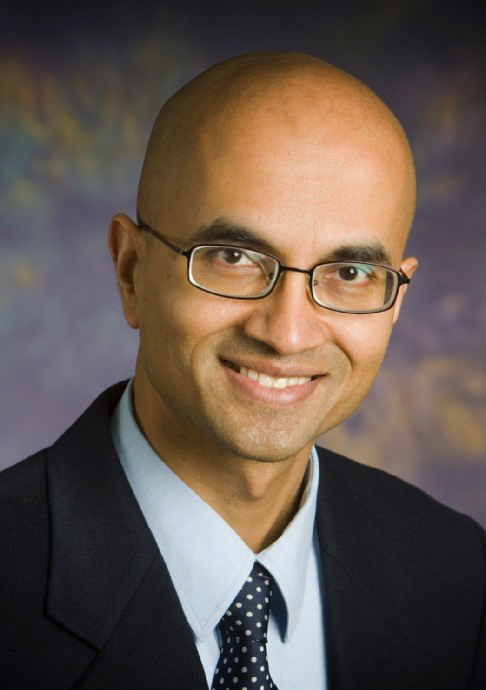
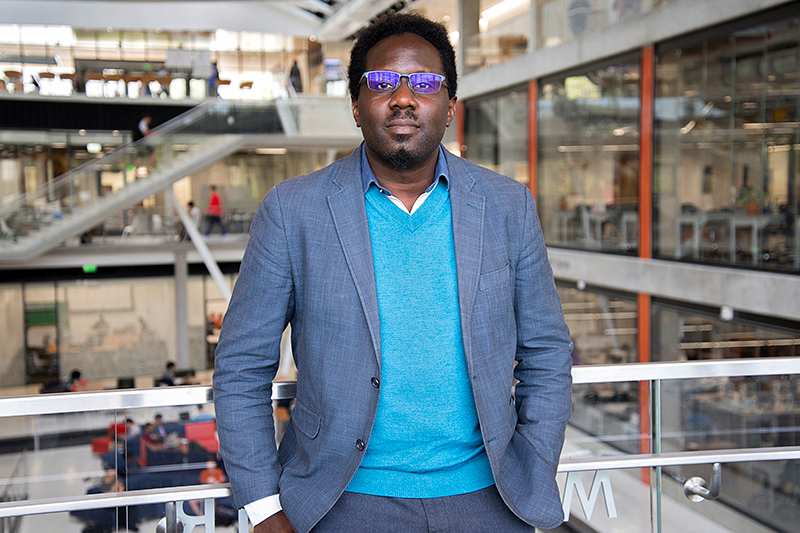
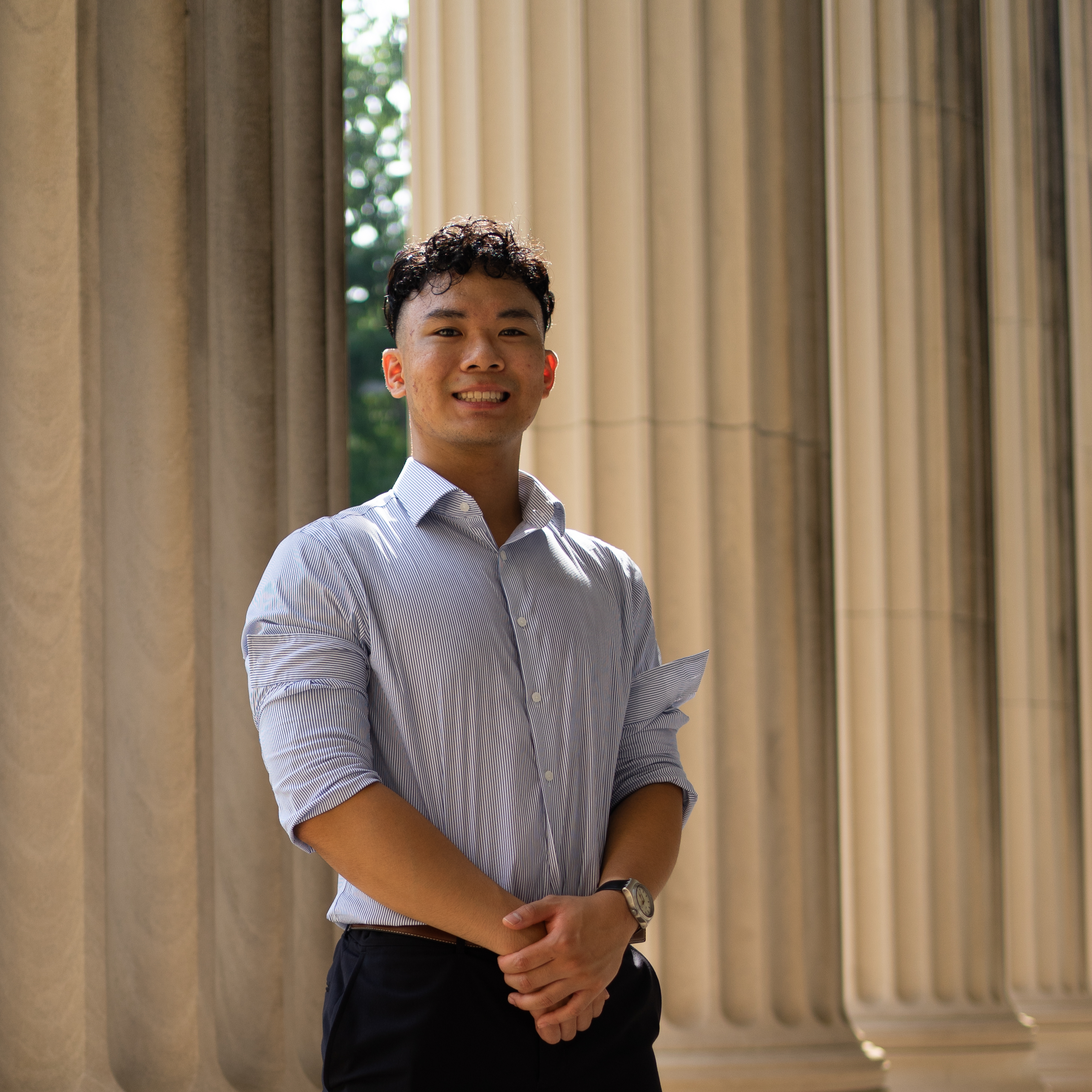
Shreyas Sen is the Elmore Associate Professor of Electrical and Computer Engineering at Purdue University, jointly affiliated with the School of Biomedical Engineering. He directs the Center for Internet of Bodies (C-IoB) and leads the SPARC Lab, focusing on circuits/systems for secure, energy-efficient body-centric communication and biomedical applications. Education: B.E. (Jadavpur University, 2006), M.S. & Ph.D. (Georgia Tech, 2009-2011). His research spans Human Body Communication (HBC), hardware security, IoT/IoB systems, and low-power sensing. Notable innovations include Electro-Quasistatic HBC (EQS-HBC) technology, which enables covert body-wire communication with 100x lower energy than conventional methods. Research Themes: Secure communication for medical wearables Physical layer security in IoT Ultra-low-power biosensors Side-channel attack mitigation in cryptographic ICs Publications: Over 200 papers in top venues (ISSCC, DAC, CICC, HOST) with focus on HBC systems, electromagnetic security, and biomedical circuits. Recent work explores EQS-HBC privacy properties (Nature Scientific Reports, 2019) and 350x current-domain signature attenuation for AES security (ISSCC 2020). Awards: NSF CAREER Award (2020) AFOSR Young Investigator (2016) MIT TR35 India (2018) 9 Best Paper Awards Intel Outstanding Researcher (2020) He advises over 20 students and leads industry collaborations through Ixana Inc. (founded 2020), commercializing EQS-HBC technology. Current efforts include EQS-based authentication systems and radiation dosimetry wearables.
Southern University of Science and Technology (SUSTech)China
Dr. Jiamin Li is an Associate Professor at the School of Microelectronics, Southern University of Science and Technology (SUSTech), Shenzhen, China. She holds a Ph.D. and B.Eng. in Electrical and Computer Engineering from the National University of Singapore (NUS). Her research focuses on biomedical integrated circuits, energy harvesting, and wireless body-area networks. Education: Ph.D. and B.Eng. in Electrical and Computer Engineering from NUS Employment: Associate Professor (2024–Present), Assistant Professor (2022–2024) at SUSTech; Research Fellow at NUS Dr. Li's research addresses wireless body area powering , low-power biosignal interfaces , and intelligent biosignal processors . Her work leverages microsystem design for applications in biomedical engineering , particularly in energy-autonomous medical devices and human body-coupled communication . Her recent publications highlight advancements in concurrent power/data transmission , subharmonic pulse injection , and triboelectric energy harvesting for biomedical systems. Key venues include IEEE JSSC , Nature Electronics , and conferences like ISSCC and BioCAS. Awards: IEEE SSCS Predoctoral Achievement Award, ISSCC Best Demo Award, ASSCC SDC Best Design Award Committees: IEEE SSCS Women-in-Circuit (WiC) Committee, ISSCC Student Research Preview Committee Opportunities: Positions available for Ph.D., Master's, Postdoctoral Fellows, and Visiting Scholars
University of Illinois Urbana-ChampaignUnited States
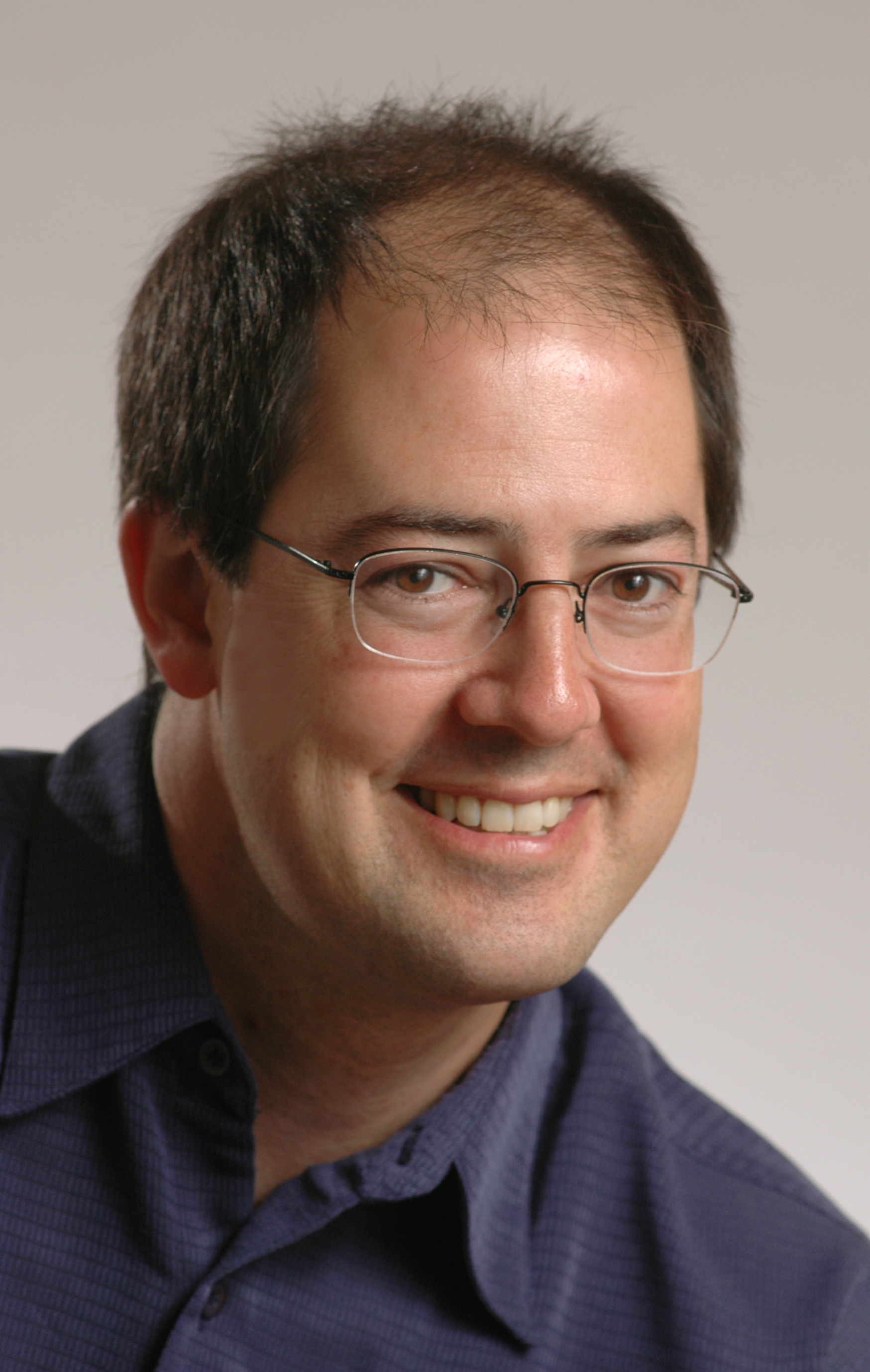
Naresh R. Shanbhag is the Jack Kilby Professor in the Department of Electrical and Computer Engineering and the Coordinated Science Laboratory at the University of Illinois at Urbana-Champaign. He serves as Director of the Systems on Nanoscale Information fabriCs (SONIC) Center and held the D.J. Gandhi Distinguished Visiting Professorship at IIT Mumbai from 2015-2020. Previously, he was a visiting faculty member at National Taiwan University (2007) and Stanford University (2014). Dr. Shanbhag received his doctorate from the University of Minnesota (1993) in Electrical Engineering. From 1993 to 1995, he worked at AT&T Bell Laboratories as the lead chip architect for AT&T's 51.84 Mb/s transceiver chips over twisted-pair wiring for Asynchronous Transfer Mode (ATM)-LAN and very high-speed digital subscriber line (VDSL) chip-sets. His research focuses on the design of energy-efficient machine learning, communications, and signal processing systems on resource-constrained embedded platforms. He explores fundamental trade-offs between energy efficiency, latency and accuracy of decision-making systems implemented in nanoscale technologies, with applications to computer vision, biomedicine, automatic target recognition, and imaging. His work spans four primary focus areas: Resource-efficient Machine Learning for the Edge, In-memory Computing (IMC), Energy-efficient High Data Rate Communications, and Shannon-inspired Statistical Error Compensation (SEC). Analysis of his recent publications reveals a strong emphasis on in-memory computing architectures (SRAM, MRAM, RRAM) for machine learning acceleration. His work consistently addresses energy-accuracy trade-offs, with increasing attention to security aspects of hardware implementations and applications to MIMO signal processing and edge AI systems. His research demonstrates a progression from theoretical foundations to practical silicon implementations. 2024 Semiconductor Research Corporation Innovation Award 2018 Semiconductor Industry Association/Semiconductor Research Corporation University Researcher Award 2018 IEEE International Symposium on Circuits and Systems Best Paper Award 2006 IEEE Fellow 1996 National Science Foundation CAREER Award Professor Shanbhag has mentored over 50 graduate students who now work at leading technology companies including Qualcomm, Amazon, Nvidia, Intel, and Apple. His research has been generously supported by the National Science Foundation, DARPA, AFRL, Semiconductor Research Corporation, Texas Instruments, Sandia National Laboratories, and industry partners including IBM, GlobalFoundries, and Intel Corporation. He led the Alternative Computational Models research theme (2006-2012) and was the founding Director of the SONIC Center (2013-2017), a 5-year multi-university center funded by DARPA and SRC. Currently, he leads research themes in the SRC and DARPA funded JUMP 2.0 Program's Center for Co-Design of Cognitive Systems and the Center for Ubiquitous Connectivity, and in the NSF IUCRC Center for Advanced Semiconductor Chips with Accelerated Performance (ASAP). As Director of the Systems on Nanoscale Information fabriCs (SONIC) Center, Professor Shanbhag leads a multidisciplinary team exploring novel computing paradigms for the nanoscale era. His group has benchmarked an extensive collection of in-memory computing and digital accelerator IC designs, maintaining a publicly available IMC benchmarking repository of metrics extracted from published IC prototypes. His research philosophy integrates concepts from information theory, statistical signal processing, detection and estimation, VLSI architectures, and digital and analog integrated circuits to develop energy-efficient systems from algorithms to silicon implementations.
University of California, Los AngelesUnited States
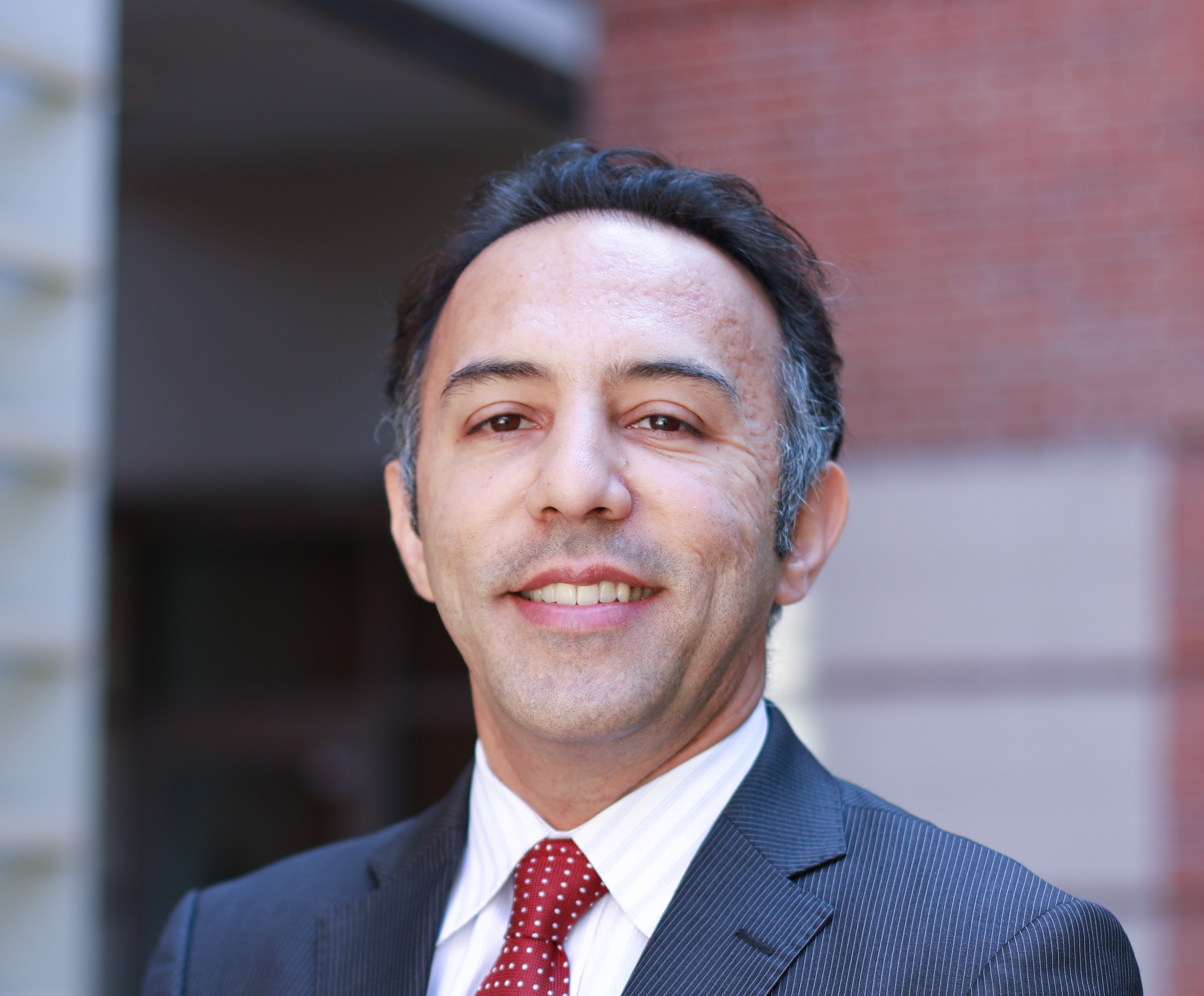
Aydin Babakhani is a Professor in the Department of Electrical and Computer Engineering at the University of California, Los Angeles (UCLA), affiliated with the College of Life Sciences. He directs the Integrated Sensors Laboratory (ISL), which focuses on the design and implementation of integrated sensors and systems. His research spans high-speed wireless communication, terahertz technology, medical implants, radar systems, and industrial monitoring solutions. Research Interests: Prof. Babakhani's work integrates silicon-based technologies with applications across multiple domains. Key areas include: Silicon mm-Wave/THz transceivers and on-chip antennas for communication and sensing Wirelessly powered medical implants for biopotential monitoring and neural stimulation THz radar systems for micrometer-resolution imaging and vibration detection Energy harvesting solutions for batteryless sensors in industrial and biomedical applications CMOS-based optoelectronic systems and photonic computing accelerators His recent publications (2021-2025) demonstrate a strong emphasis on terahertz systems, wireless power transfer, and miniaturized medical electronics. Over 80% of his latest articles involve silicon-integrated solutions for biomedical implants or THz sensing, with emerging focus on AI-accelerated photonic computing and multi-Gbps wireless links.
Shiyu Su is an Assistant Professor in the Department of Electrical and Computer Engineering at the University of Waterloo. His research focuses on high-speed data converters, wireless transceivers, digital phase-locked loops (PLL), and AI-assisted analog/mixed-signal design automation. He holds a Ph.D. from the University of Southern California (2019) and teaches courses such as ECE 340 (Electronic Circuits 2) and ECE 432 (Radio Frequency Integrated Devices and Circuits). Education: B.S. from Beijing University of Post and Telecommunication (China) and Queen Mary, University of London (UK), 2011; M.S. and Ph.D. from USC, 2013 and 2019, all in electrical engineering. Research Interests: High-speed ADCs/DACs RF/mm-wave transceivers Time-approximation filters (TAF) Analog/mixed-signal design automation Memristor-based computing Biomedical interfaces Key Awards: IEEE SSCS Predoctoral Achievement Award (2017–2018) Best Student Paper Award at IEEE RFIC (2022) Ming Hsieh Institute Scholar (2019–2020) Lab Focus: The Shiyu Su Lab develops integrated circuits for communications, sensing, and computing, with a focus on AI-driven methodologies and digital-analog co-design. Collaborations include work with Prof. Wei Wu (USC) on memristor-based systems.
Kristofer Pister is a Professor in the Department of Electrical Engineering and Computer Sciences at the University of California, Berkeley. He co-directs the Berkeley Sensor and Actuator Center (BSAC) and the Ubiquitous Swarm Lab. His career spans groundbreaking innovations in Micro/Nano Electro Mechanical Systems (MEMS), Control Systems, and Low-Power Circuits, with a focus on Smart Dust and synthetic insects. Education: Ph.D. and M.S. in EECS from UC Berkeley (1992, 1989); B.A. in Applied Physics from UC San Diego (1986). His research areas include MEMS , Control Systems , Robotics , and Integrated Circuits , with recent work on self-powered micro-sensors, crystal-free radios, and interplanetary swarm networks. Key awards include the ISA Albert F. Sperry Founder Award (2009) , Alexander Schwarzkopf Prize (2006) , and the NSF CAREER Award (1996) . He has authored numerous influential publications in wireless sensor networks and microrobotics. His lab, Ubiquitous Swarm Lab , explores distributed robotics and swarm intelligence. Pister emphasizes open collaboration in research, ethical conduct in academia, and efficient resource utilization for graduate students.
Dimitra Psychogiou is a Full Professor of Microwave Engineering at University College Cork and Principal Investigator at Tyndall National Institute's CONNECT Centre in Cork, Ireland. She leads the Advanced RF Technology Group, driving innovation in reconfigurable RF systems for next-generation wireless networks. Her academic credentials include: Dipl.-Eng. in Electrical and Computer Engineering, University of Patras (2008) Ph.D. in Electrical Engineering, ETH Zurich (2013) Prof. Psychogiou's research pioneers reconfigurable microwave filters , non-reciprocal RF components , and additive manufacturing for antenna systems . Her work bridges theoretical microwave engineering with practical implementations in 5G/6G front-ends, emphasizing sustainability through hyperflexible filtering architectures that reduce hardware complexity and energy consumption. Key innovations include acoustic-wave resonator filters and 3D-printed RF components enabling unprecedented miniaturization. Analysis of her 2022-2025 publications reveals a strategic shift toward multifunctional RF integration , where filtering coexists with isolation, amplification, and switching in single modules. This trend addresses critical industry needs for compact, software-defined radio front-ends in satellite communications and IoT networks, with increasing emphasis on reflectionless topologies and spatiotemporal modulation techniques. Her scientific recognition includes: 2023 MTT-S Outstanding Young Engineer Award 2021 Roberto Sorrentino Prize 2021 SFI Research Professorship 2020 NSF CAREER Award 2020 URSI Young Scientist Award UC Boulder Junior Faculty Research Award Prof. Psychogiou actively shapes her field through leadership roles as Chair of IEEE MTT-13 Committee and Secretary of USNC-URSI Commission D, while serving as Associate Editor for IEEE MWCL and IJMWT. Her group collaborates extensively with semiconductor foundries and wireless infrastructure companies to transition lab innovations to commercial applications. The Advanced RF Technology Group operates state-of-the-art facilities for GaAs MMIC prototyping, 3D-printed RF component fabrication, and full-wave electromagnetic characterization, supporting Ireland's strategic position in European telecommunications research.
Ambuj Varshney is an Assistant Professor at the National University of Singapore (NUS) School of Computing , leading the WEISER research group . His work bridges electronics, wireless communication, computer science, and AI with a focus on creating ultra-low-power embedded systems for sustainable IoT deployments. University of California, Berkeley: Postdoctoral Scholar (2020-2022) Uppsala University: PhD in Sustainable Networked Systems NXP Semiconductors: Software Engineer (prior to PhD) Bachelors in Information & Communication Technology Research interests center on overcoming wireless systems' energy asymmetry through tunnel diode oscillators , LiFi-RF hybrid networks , and battery-free communication architectures . His group develops STICORS —sticker-like computers for industrial and medical monitoring. Recent publications demonstrate AudioCast 's FM-band utilization for 130m transmission, TunnelSense 's vital monitoring, and PixelGen 's diffusion model cameras. These works combine IoT sustainability, spectrum efficiency, and hardware innovation . 2024: Google Research Scholar Award 2023: MobiSys Best Demonstration 2021: Berkeley FORM+FUND Fellowship 2019: ABB's $300K Research Award As an educator, he teaches CS4222 Wireless Networking and CS5272 Embedded Software Design . Past students include Wenqing Yan (NUS/UCB PhD), Qiao Yukai , and Kunjun Li . His team collaborates with Prabal Dutta (UCB), Christian Rohner (Uppsala), and Prateek Saxena (NUS).
Olav Tirkkonen serves as a Full Professor in the Department of Communications and Networking at Aalto University, Finland, a position he has held since August 2006. He leads the Communication Theory research group, driving innovation in wireless communication systems. His academic journey includes a distinguished career spanning industry and academia, with significant contributions to 3G, 4G, and 5G technologies. His educational qualifications are: Doctor of Science (Ph.D.) in Theoretical Physics, Helsinki University of Technology, 1994 Master of Science (M.Sc.) in Theoretical Physics, Helsinki University of Technology, 1990 Professor Tirkkonen's research interests are centered on wireless communications, with a focus on physical layer processing, coding theory, and quantum information processing. His group explores advanced topics including 5G and beyond wireless networks (spectrum management, large-scale MIMO, ultra-reliable low-latency communication), network-level interference coordination, collaborative caching, machine learning applications for wireless channel geography, coding on manifolds, and quantum communication systems. This research bridges fundamental theory with practical implementation in next-generation wireless networks. Analysis of his recent publications (2024-2025) indicates a predominant focus on machine learning techniques for wireless channel modeling (channel charting), pilot allocation in MIMO systems, and quantum error correction. His work is instrumental in addressing key challenges in 5G/6G networks, particularly in scenarios demanding ultra-reliability, low latency, and efficient resource utilization. His scientific contributions include: Co-inventor of approximately 80 families of patents and patent applications Co-author of the book "Multiantenna transceiver techniques for 3G and beyond" Throughout his career, Professor Tirkkonen has mentored numerous graduate students and secured substantial research funding from various sources. His industry experience at Nokia Research Center (1999-2010) and visiting position at Cornell University (2016-2017) have enriched his research perspective and fostered strong industry-academia collaborations. The Communication Theory group, under his leadership, maintains active collaborations with leading institutions and companies worldwide, positioning Aalto University at the forefront of wireless communications research.
Marco Di Renzo is a CNRS Research Director (Professor) and Head of the iPhyCom group at the Laboratory of Signals and Systems (L2S) at Paris-Saclay University, France. He is affiliated with both CNRS and CentraleSupélec. His roles include: Member of L2S Management Committee and Board Council Member of the Ph.D. School Admission Committee Academic Vice Chair, ETSI Industry Specification Group on RIS Editorial and leadership roles in IEEE communications journals Education: Laurea (cum laude) and Ph.D. in Electrical Engineering from University of L’Aquila (2003, 2007) Habilitation à Diriger des Recherches from Paris-Saclay University (2013) Research focuses on 6G networks , reconfigurable intelligent surfaces (RIS) , and integrated sensing and communications (ISAC) . He explores electromagnetic theory, machine learning applications, and energy-efficient wireless systems. His work addresses challenges in near-field communications, multi-user MIMO, and holographic beamforming. He advocates for physics-driven design principles in next-gen networks. Key awards include IEEE/IEE Fellowships, the Michel Monpetit Prize, and multiple IEEE Best Paper Awards. He holds international visiting professorships at institutions like the University of Oulu (Finland) and Nanyang Technological University (Singapore). Active in standardization via ETSI ISG RIS and contributes to global initiatives like the ITU 6G Vision. His research bridges theoretical models with practical implementations, emphasizing interdisciplinary collaboration between physics, signal processing, and AI.
Professor Athanassios Manikas holds the Chair of Communications & Array Processing in the Department of Electrical & Electronic Engineering at Imperial College London, part of the Faculty of Engineering. He is a Fellow of both the IET and IMA, and has held significant editorial roles including Associate Editor for IEEE Transactions on Aerospace and Electronic Systems. His research focuses on wireless communications, radar systems, antenna array processing, and applied mathematics, with over 50 supervised PhD students and 150+ Masters projects. He leads Imperial's research group in array processing and has extensive industry collaborations, including technical leadership of the University Defence Technology Centre in Signal Processing (2008-2013). Awards include the IEEE PIMRC 2022 Best Paper Award and recognition as an IEEE COMSOC Distinguished Lecturer (2016-2017). His work integrates differential geometry principles with array processing, as detailed in his monograph Differential Geometry in Array Processing . Professor Manikas has served as an expert witness in high-profile cases and contributes to academic governance roles such as the Royal Society's International Fellowship Committee. His research group is affiliated with the Space Lab at Imperial, focusing on innovative applications of array signal processing in aerospace and defense systems.
Prof. Dr. Amelie Hagelauer holds a professorship in Micro- and Nanosystem Technology at the TUM School of Computation, Information and Technology, Technical University of Munich. Her work focuses on advanced electronics and systems integration across quantum computing hardware, resistive memory technologies, and high-frequency RF systems. She has contributed to innovations in superconducting qubit readout architectures, multi-level RRAM designs, and 3D-integrated CMOS-compatible quantum devices. Research interests span quantum hardware design, nanoelectronic devices, RF front-end systems, and emerging memory technologies. Her work emphasizes practical implementation challenges such as low-power operation, high-voltage handling in RF switches, and wafer-scale fabrication processes. Recent projects include D-band radar systems, energy-efficient 60 GHz transceivers, and antenna tuning solutions for 5G applications. Publications from 2023-2025 showcase advancements in resistive switching device characterization, mitigation of TLS losses in superconducting qubits, and reconfigurable AI accelerators using RRAM-based digital twins. Her work bridges theoretical device physics with practical integrated circuit design, addressing scalability and reliability in next-gen electronics. Awards and grants: None explicitly listed in provided texts. Active collaborations include EU-funded projects on quantum computing platforms and TUM's Electronic Photonic Integration initiatives. Leads research teams in microsystem technology with emphasis on cross-disciplinary approaches combining CMOS processes, MEMS, and quantum engineering.
Deji Akinwande is a Professor and holds the Cockrell Family Regents Chair in Engineering #8 at The University of Texas at Austin's Chandra Family Department of Electrical and Computer Engineering. He earned his PhD in Electrical Engineering from Stanford University (2009) and an MS in Applied Physics from Case Western Reserve University. His research focuses on 2D materials, nanotechnology, and flexible electronics, with breakthroughs in atomristors, graphene-based biosensors, and wearable electronic tattoos. Key achievements include pioneering work on silicene, being elevated to IEEE Fellow (2021), and receiving the PECASE Award (Obama administration). His lab, the Akinwande Nano Research Group, explores nanoelectronics, bioelectronics, and RF systems for societal applications like health monitoring and 6G communications. Education: PhD, Electrical Engineering, Stanford University, 2009 MS, Applied Physics, Case Western Reserve University Awards: 2021 IEEE Fellow APS Fellow (2017) PECASE Award Moore Inventor Fellowship His research spans neuromorphic computing, flexible sensors, and energy-efficient memory devices. Over 100+ publications highlight his work on graphene, MXenes, and 2D material applications. He co-authored a textbook on carbon nanotubes and graphene (Cambridge University Press, 2011) and serves as an IEEE Distinguished Lecturer and editor for Nature NPJ 2D Materials . Lab and Collaborations: The Akinwande Nano Lab develops scalable 2D electronics, wearable health monitors, and next-gen RF components. Recent grants include NSF CHIPS Act funding and DoD support for 6G switches and neuromorphic hardware.
Massachusetts Institute of TechnologyUnited States
Ruonan Han is a Professor of Electrical Engineering and Computer Science at MIT and serves as Associate Director of the Microsystems Technology Laboratories (MTL) and Director of the MIT-MTL Center for Integrated Circuits and Systems . His research focuses on ultra-high-frequency microelectronic circuits , particularly addressing the 'terahertz gap' in sensing, metrology, security, and communication. He leads the Terahertz Integrated Electronics Group at MIT's MTL, established in 2014. Education: B.S. in Microelectronics, Fudan University (2007) M.S. in Electrical Engineering, University of Florida (2009) Ph.D. in Electrical and Computer Engineering, Cornell University (2014) Research Interests: Terahertz (THz) integrated circuits and systems High-frequency CMOS technologies Quantum sensing and magnetometry RF systems for imaging, radar, and molecular sensing Energy-efficient communication systems His work bridges electronic circuits , electromagnetics , and quantum physics , with applications in defense, healthcare, and environmental monitoring. Awards & Recognition: 2023 IEEE SSCS New Frontier Award 2020 NSF CAREER Award 2019 Intel Outstanding Researcher Award 3× IEEE RFIC Best Student Paper Awards (2012, 2017, 2021) Advising & Leadership: Ph.D. advisor to over 10 students (many recipients of MIT MTL Dissertation Awards) Co-advises with Prof. Anantha Chandrakasan and Prof. Tomás Palacios Editorial roles at IEEE Transactions on Quantum Engineering and VLSI Systems Technical committee member for ISSCC, RFIC, and IMS Labs & Teams: Terahertz Integrated Electronics Group at MIT MTL: Focuses on chip-scale THz systems, quantum devices, and next-generation RF circuits Collaborations with industry (e.g., Apple, MediaTek) and academic groups (e.g., D. Englund's lab at MIT)
Sayfe Kiaei is a Professor in the School of Electrical, Computer and Energy Engineering at Arizona State University (ASU), where he also directs the Connection One Center, an NSF I/UCRC Center. He holds the Motorola Chair in Analog and RF Integrated Circuits. Previously, he served as a professor at Oregon State University (1987–1993) and worked at Motorola’s Wireless Technology Center (1993–2001), contributing to wireless communications and broadband systems. Education: Ph.D. in Electrical and Computer Engineering from Washington State University (1987). Research focuses on RF/analog/digital integrated circuits, transceiver design, sensors, and power management. His work is funded by agencies like DARPA, NSF, DOE, and industrial partners. Key achievements include establishing two Industry-University Cooperative Research Centers (CDADIC and Connection One) and over 200 publications. He is an IEEE Fellow and has led technical committees for major conferences (RFIC, ISCAS, MTT). Industry collaborations span companies like Intel, Samsung, Texas Instruments, and Motorola, with expertise in 3G-4G wireless, bioelectronics, Bluetooth, GPS, and MEMS sensors. Awards include IEEE Fellow status (2002–present) and leadership roles in IEEE editorial and conference committees. Grants and projects include the NSF I/UCRC for Power Management Circuits, DARPA-funded research, and international initiatives like the Pakistan Centers for Advanced Studies in Energy. His lab develops cutting-edge technologies in full-duplex radios, MEMS-based sensors, and energy-efficient IC design.