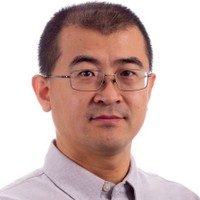
Zhibo Pang is an Adjunct Professor at KTH Royal Institute of Technology's Department of Intelligent Systems (EECS) and Senior Principal Scientist at ABB Corporate Research Sweden. His work focuses on digital transformation in industry and healthcare, spanning robotics, AI, control systems, and wireless communication. He leads projects in embodied intelligence, Industry 4.0, and Healthcare 4.0, with 23 granted patents and over 120 journal papers. Education: PhD in Electronic and Computer Systems (KTH, 2013), MBA in Innovation & Growth (University of Turku, 2012). Key Roles: IEEE Technical Committee Chair, Editor of 6 IEEE journals, ABB Inventor of the Year (2016, 2018, 2021). Research Interests: Robotics safety, wireless automation, federated learning, digital twins, and IoT security. Recent Projects: Cloud-fog automation frameworks, robot skin systems for healthcare, and latency-aware industrial control. His work bridges academia and industry through cross-functional collaborations.
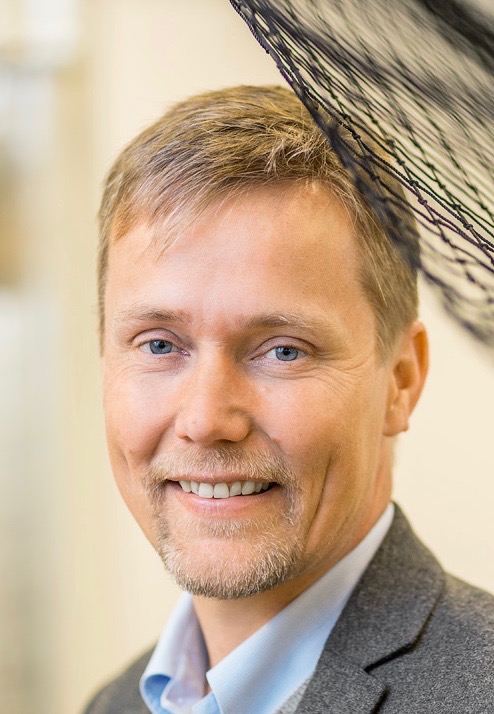
Karl Henrik Johansson is a Professor at the School of Electrical Engineering and Computer Science, KTH Royal Institute of Technology in Stockholm, Sweden, where he also serves as the Founding Director of Digital Futures. He is a Fellow of both IEEE and the Royal Swedish Academy of Engineering Sciences, and has held leadership positions including Immediate Past President of the European Control Association and IEEE Control Systems Society Vice President Diversity, Outreach & Development. Dr. Johansson earned his MSc in Electrical Engineering and PhD in Automatic Control from Lund University. His academic journey includes visiting positions at prestigious institutions such as UC Berkeley, Caltech, and NTU. His research focuses on networked control systems and cyber-physical systems with applications in transportation, energy, and automation networks. His work investigates fundamental challenges in connecting physical world systems through communication networks, exploring how wireless communication and sensor technology can enhance system robustness, reliability, energy efficiency, and safety. Current research directions include security of cyber-physical systems, distributed optimization, multi-agent systems, and applications to intelligent transportation and energy networks. Analysis of his recent publications reveals a strong focus on distributed optimization algorithms, secure networked control, multi-agent systems, and applications to transportation and energy networks. His work increasingly integrates machine learning techniques with traditional control theory, addressing challenges in privacy-preserving distributed computation, resilient state estimation, and resource allocation in complex networked systems. IEEE Control Systems Society Hendrik W. Bode Lecture Prize (2024) Swedish Research Council Distinguished Professor (2018-2027) Wallenberg Scholar (2009-2026) IFAC Young Author Prize IEEE CSS Distinguished Lecturer (2017-2019) IFAC Outstanding Service Award IEEE Fellow Dr. Johansson has supervised over 100 postdocs and PhD students, with many now holding prominent positions at institutions worldwide. His research has been supported by significant grants including the Swedish Research Council Distinguished Professor Grant (2018-2027), multiple Wallenberg Foundation grants, and numerous EU and national research projects. He has directed major research centers including ACCESS Linnaeus Centre (2009-2016) and Strategic Research Area ICT TNG (2013-2020). His research group operates within the Digital Futures initiative and maintains strong connections with industry partners through projects like the Integrated Transport Research Lab (supported by Scania and Ericsson) and Smart Mobility Lab. The group actively collaborates with international institutions and participates in major EU-funded projects addressing challenges in cyber-physical systems, transportation, and energy networks.
Kalle Åström is a Professor at Lund University's Centre for Mathematical Sciences within the Faculty of Engineering. He coordinates Lund University's Natural and Artificial Cognition profile area and the AI Lund network. His affiliations include ELLIIT (Linköping-Lund IT initiative), eSSENCE (e-Science Collaboration), Stroke Imaging Research group, and Computer Vision and Machine Learning research groups. His research spans computer vision, machine learning, and mathematical modeling with applications in medical imaging, autonomous systems, and cognitive vision. Key interests include geometry of multiple views, structure from motion using heterogeneous sensors, medical image analysis, and handwriting recognition. His work contributes to UN Sustainable Development Goals through AI applications in healthcare and engineering. Recent publications (2025) demonstrate strong trends in medical AI (Alzheimer's diagnostics, breast cancer classification) and autonomous systems (safety testing, sensor fusion). His work bridges theoretical mathematics with practical applications across healthcare and robotics domains. Best Nordic Ph.D. Thesis in Pattern Recognition (1995-1996) Innovation Cup 1991 for Autonomous Guided Vehicles EU IST Grand Prize 2003 (Decuma startup) Åström supervises graduate students and leads multiple active research projects including machine learning for Parkinson's disease analysis, audiovisual drone detection (Vinnova-funded), and Alzheimer's disease modeling. He co-founded startups Decuma (1999), Cognimatics (2003), Spiideo (2012), and Neuromathics (2015), and serves on boards of the Royal Swedish Physiographic Society and Swedish AI Society (SAIS). His research integrates mathematical rigor with real-world AI applications through extensive industry-academia collaborations.
Jonas Sjöberg is a Full Professor of Mechatronics at Chalmers University of Technology, where he leads the Mechatronic research group in the College of Engineering. His research spans multiple aspects of mechatronic systems with a strong focus on automotive applications. Sjöberg holds leadership roles in numerous research projects related to autonomous vehicles, vehicle control systems, and transportation safety. His research interests encompass a broad spectrum of mechatronics applications, with particular emphasis on model-based methods, signal processing, control systems, system identification, and optimization for design and product development of mechatronic systems. Sjöberg's work bridges theoretical control engineering with practical automotive applications, especially in the domains of Automotive Active Safety and Hybrid Electric Vehicles. Analysis of Sjöberg's recent publications reveals a strong research trajectory focused on autonomous vehicle technologies, with particular attention to vehicle dynamics control, intersection safety, road surface condition estimation, and optimization of vehicle maneuvers. His work demonstrates a consistent approach of applying advanced control theory to solve real-world transportation challenges, with increasing emphasis on machine learning techniques integrated with traditional control systems. Sjöberg actively supervises research and education at both undergraduate and graduate levels while leading multiple research projects funded by VINNOVA, the European Commission, and other organizations. His research group collaborates extensively with both academic institutions and industry partners in the automotive sector. His laboratory work focuses on mechatronic systems development, particularly for automotive applications including autonomous bicycles, bus docking systems, and vehicle control algorithms. The research group maintains strong connections with the automotive industry, particularly in Sweden's robust vehicle technology ecosystem.
Wlodek Kulesza is a Senior Professor in the Department of Mathematics and Natural Sciences at the Blekinge Institute of Technology in Karlskrona, Sweden. He has held academic positions since 2001, including a Professorship in Multi-sensor Systems since 2007. Research: Multisensory systems for health and security applications Teaching: Research Methodology, Philosophy of Science, and Sensors Signals and Systems Expertise: Systems engineering, sensor fusion, IoT, and measurement data handling Research Focus : His work in systems engineering emphasizes multisensor integration for applications spanning healthcare, security, wind energy safety, and subsea cable monitoring. He has pioneered approaches to stereovision calibration, localization algorithms, and real-time safety systems. Awards : Andy Chi Best Paper Award (2009, IEEE Transactions in Measurement and Instrumentation) Collaborations : Visiting Professor at Chinese and Polish universities, with extensive cross-border educational workshops and remote lab federations (e.g., PILAR/VISIR projects).
Jonas Sjoberg is a Professor of Mechatronics at Chalmers University of Technology and leader of the Mechatronics research group. His work spans over 30 years with 143 publications and leadership in 29 research projects. His current research focuses on autonomous vehicle systems, vehicle dynamics, and traffic safety applications. Dr. Sjoberg's research interests center on mechatronic systems for transportation applications. His work bridges theoretical control systems with practical automotive implementations, particularly in autonomous vehicle technology. His research group investigates vehicle dynamics, path planning, intersection management, and safety systems, with growing emphasis on micromobility applications including autonomous bicycles and pedestrian interaction. Recent work demonstrates strong focus on real-world applications of control theory to improve vehicle safety and performance. His publication record shows consistent output with 15+ papers annually, demonstrating sustained research activity. The work spans fundamental control theory (system identification, nonlinear control) to applied transportation problems (intersection management, road surface estimation, autonomous docking). Recent publications show increasing focus on micromobility applications, particularly autonomous bicycles, and integration of machine learning techniques with traditional control approaches. Dr. Sjoberg leads multiple significant research projects including MicroSIM (2026-2027), Mintox (2025-2026), and MicroITS, with funding from VINNOVA, EU, and industry partners. His projects address critical challenges in autonomous vehicle safety, micromobility integration, and traffic management. As leader of the Mechatronics research group, Dr. Sjoberg oversees research on vehicle control systems, autonomous driving technologies, and safety applications. His laboratory work focuses on practical implementation of theoretical control concepts, with recent emphasis on bicycle dynamics and micromobility safety systems.
Ibrahim Orhan serves as a Lecturer at KTH Royal Institute of Technology within the Division of Health Informatics and Logistics. His primary responsibilities include teaching core courses such as Communication Networks (HE1033), Mobile Communications and Wireless Networks (HI1035), and Routing in IP Networks (HI2002), while also supervising first-cycle degree projects in Computer and Electrical Engineering. His research centers on wireless sensor networks with specialized applications in healthcare and education. Key focus areas include time synchronization protocols for multi-sensor systems, performance monitoring in contention-based networks, and data fusion techniques for health monitoring applications like fall detection. Recent work demonstrates a strategic expansion into educational technology through serious games for engineering education. Analysis of his 15 most recent publications (2006-2023) reveals an evolving research trajectory: initial work concentrated on fundamental wireless network performance (2008-2011), shifting toward healthcare applications (2012-2016), and culminating in educational technology innovations (2023). Persistent themes include Bluetooth synchronization, mobile sensor integration, and quality-of-service management in resource-constrained environments. Dr. Orhan actively supervises undergraduate degree projects in computer and electrical engineering, though specific student names aren't publicly listed. His research has been supported through KTH institutional channels, with publications spanning IEEE conferences, specialized journals like the International Journal of Serious Games, and collaborative projects focused on ambient assisted living solutions.
Mariusz Wzorek is an Assistant Professor and Head of Unit at the Department of Computer and Information Science (IDA) at Linköping University, Sweden. He is affiliated with the Artificial Intelligence and Integrated Computer Systems (AIICS) division, which focuses on advancing research and education in artificial intelligence, robotics, and collaborative systems. Dr. Wzorek holds a PhD from Linköping University (2023) and has expertise in autonomous systems, unmanned aerial vehicles (UAVs), and robotics. His research emphasizes safe navigation, collaborative robotics, and applications in emergency response and public safety scenarios. Key areas include UAV-based collision avoidance, geolocation using aerial imagery, and distributed systems for multi-agent coordination. His recent work involves developing systems like the RGS⊕ (RDF Graph Synchronization) for collaborative robotics, secure remote ID protocols for UAVs, and algorithms for autonomous search and rescue missions. These projects address challenges in sensor fusion, real-time decision-making, and robust communication in dynamic environments. Publications highlight contributions to UAV navigation, wireless mesh networks in emergencies, and 3D reconstruction using heterogeneous UAV teams. His research bridges theoretical foundations in AI with practical applications in robotics and safety-critical systems. While no specific scientific awards are listed, his active role in the AIICS division and numerous peer-reviewed publications reflect his significant contributions to the field.
Ali Hassan Sodhro is a Senior Lecturer in Computer Science at Kristianstad University's Faculty of Natural Science, Department of Computer Science. With over 80 publications in top-tier journals and conferences, Dr. Sodhro has established himself as a prominent researcher in healthcare technology and networking systems. His educational background includes a PhD in Computer Applications Technology from Shenzhen Institutes of Advanced Technology, Chinese Academy of Sciences and University of Chinese Academy of Sciences (2016), an M.E in Communication Systems and Networks (2011), and a B.E in Telecommunication (2008) from Mehran University of Engineering and Technology in Pakistan. Dr. Sodhro's research focuses on the intersection of AI, healthcare technology, and networking systems. His primary areas include AI/ML for Edge/Cloud Computing, Smart Healthcare IoT, Physical Layer Security in 5G applications, and Energy Harvesting for Healthcare Systems. His work bridges theoretical computer science with practical healthcare applications, particularly in wireless sensor networks and medical data transmission. Analysis of his recent publications reveals a strong trend toward healthcare-focused IoT systems, particularly Internet of Medical Things (IoMT) applications. His research spans from foundational networking technologies like 5G and digital twins to practical implementations in medical equipment and patient monitoring systems, with increasing emphasis on AI integration for cybersecurity and efficiency. IEEE Senior Member Dr. Sodhro serves as Associate Editor for several prestigious journals including IEEE Transactions on Intelligent Transportation Systems (T-ITS) and IEEE Transactions on Industrial Informatics (TII). His research has secured multiple projects including the EU COST Action Project on Physical layer security for 6G systems (6G-PHYSEC), Smart and Pervasive Healthcare for Elderly Patients, and Energy-efficient Video Transmission in Wireless Body Sensor Networks. His collaborative network spans multiple institutions including Luleå University of Technology, Mid Sweden University, Linköping University, Chinese Academy of Sciences, and University of Glasgow, reflecting the international scope of his research in healthcare technology and networking systems.
Neda Maleki is a Senior Lecturer at the Faculty of Technology, Department of Computer Science and Media Technology, Linnaeus University, starting in September 2024. Her research focuses on Applied IoT, Edge-Cloud Computing, Distributed Systems (Hadoop/Spark), Artificial Intelligence, and Machine Learning for data analysis. PhD in Computer Engineering (2014–2021), Science and Research Branch of Islamic Azad University, Tehran, Iran Master of Science in Computer Engineering (2009–2013), Ghazvin Islamic Azad University Bachelor of Science in Hardware Engineering (2004–2008), Ghazvin Islamic Azad University Her research explores IoT applications in energy forecasting, environmental conservation, and SME digital transformation. Key contributions include frameworks for power-aware Hadoop acceleration, energy-efficient IoT data formats, and predictive models for fuel consumption and city load forecasting. Recent publications highlight collaborations with industry partners in Sweden and international conferences across Qatar, Italy, Denmark, and the Netherlands. She teaches courses in Data Structures, Algorithms, IoT, and programming at the bachelor's and master's levels. 1DV018: Data Structures and Algorithms 1DV501: Introduction to Programming 4DV119: Applied IoT Competence (Master level) Final Thesis supervision
Najeem Lawal is a Senior Lecturer at the Department of Computer and Electrical Engineering (DET) at Mid Sweden University. His research focuses on FPGA-based systems, real-time video processing, and wireless vision sensor networks. He is affiliated with the STC Research Centre and has contributed extensively to hardware architecture optimization for smart cameras and volumetric surveillance systems. Doctoral Thesis: Memory Synthesis for FPGA Implementation of Real-Time Video Processing Systems (2009) Licentiate Thesis: Memory Synthesis for FPGA Implementation of Real-Time Video Processing Systems (2006) Lawal's research explores cost-effective multi-camera dome designs, real-time component labeling, and energy-efficient wireless vision sensor nodes. His work spans architecture exploration, hardware-software partitioning, and memory optimization for FPGA platforms. He has published in journals like IEEE Sensors Journal and conferences including the International Conference on Distributed Smart Cameras. Recent publications highlight advances in volumetric surveillance coverage, calibration of multi-camera systems, and low-power embedded vision architectures. Lawal's projects emphasize practical deployment of smart camera networks for outdoor monitoring applications. He has collaborated with researchers such as Muhammad Imran, Benny Thörnberg, and Mats O'Nils. His expertise includes designing hardware architectures for vision systems, optimizing processing pipelines, and modeling sensor network configurations.
Jerry Eriksson is an Associate Professor at the Department of Computer Science , Umeå University. He is also affiliated with the High Performance Computing Center North (HPC2N) at the same institution, focusing on computational methods and applications. Academic Rank : Associate Professor Primary Affiliation : Department of Computer Science, Umeå University Secondary Affiliation : High Performance Computing Center North (HPC2N) Email : jerry.eriksson@umu.se Dr. Eriksson's research spans interdisciplinary domains where computer science intersects with applied physics and network engineering . His work includes: Medical Imaging : Fluorescence optical tomography and electromagnetic shape tomography using advanced mathematical models Computational Methods : Implicit radial basis function techniques, Gauss-Newton optimization, and regularization schemes Network Engineering : Collision detection algorithms in wireless networks and peer-to-peer streaming protocols 3D Measurement : Bundle adjustment formulations for photogrammetry and robotics applications Article trends show a focus on applied inverse problems (2003-2017) with emphasis on: Medical imaging reconstruction algorithms Wireless network optimization techniques Geometric computing for 3D modeling Mathematical methods in computational engineering
Sebastian Bader is an Associate Professor at Mid Sweden University 's Department of Computer and Electrical Engineering (DET). His research focuses on energy harvesting for autonomous sensor systems, particularly in Industrial IoT contexts. He leads the Master of Science in Electrical Engineering programs and teaches Embedded Systems Programming , Embedded Machine Learning , and Sensor Networks . Diplom-Ingenieur (Information Technology), University of Applied Sciences, Wilhelmshaven Licentiate of Technology (2011) and Doctor of Technology (2013), Mid Sweden University Research interests include: Self-powered systems utilizing ambient energy sources Tiny Machine Learning (TinyML) on resource-constrained devices Variable Reluctance Energy Harvesting Sustainable IoT architectures Acoustic Emission Analysis for industrial monitoring Scientific roles and honors: Senior Member of IEEE PSMA Energy Harvesting Committee member Associate Editor for Sustainable Computing: Informatics and Systems Topic Editor for MDPI Sensors Journal IEEE Sensors Applications Symposium steering committee His work spans energy-autonomous embedded systems, with applications in rotating machinery, environmental monitoring, and structural health assessment. He supervises PhD students and collaborates internationally with institutions like CSIRO and University of Southampton.
Saikat Chatterjee is a Professor in the Department of Information Science and Engineering at the School of Electrical Engineering and Computer Science, Royal Institute of Technology (KTH). He is also a Fellow of Digital Futures and maintains visiting researcher positions at Karolinska Institute, Karolinska Hospital (specializing in 'AI for Health Care'), and Oslo University Hospital in Norway. His primary research interests span Signal Processing and Machine Learning, with specific focus on signal modeling (sparsity, compressive sensing, dynamical systems), statistical signal processing, statistical machine learning, deep learning, speech/audio/image processing, medical data analytics, life science data analysis, perception for autonomous systems, distributed machine learning, and explainable AI (XAI). He particularly emphasizes explainable machine learning, having a strong background in signal processing and statistical machine learning, with growing passion for medical data analysis due to its societal importance. SSF - Swedish Foundation for Strategic Research Region Stockholm European Union Digital Futures Vinnova WASP Companies: Ericsson, Scania, Saab Professor Chatterjee is actively involved in teaching, serving as examiner and course responsible for various degree projects and courses including Machine Learning and Data Science, Pattern Recognition and Machine Learning, and Speech and Audio Processing. His research group has produced significant work across multiple domains, with notable publications in Bioinformatics and smart city applications, demonstrating the breadth of his research impact from healthcare to urban systems.
Piotr Rudol is a Researcher at Linköping University's Department of Computer and Information Science (IDA), part of the Artificial Intelligence and Integrated Computer Systems (AIICS) division. His work focuses on advancing artificial intelligence, robotics, and their applications in collaborative systems, autonomous navigation, and UAV technology. Research interests include: Robotics mission planning and coordination Unmanned aerial vehicle (UAV) systems for search and rescue RDF graph synchronization for collaborative robotics Computer vision for object detection and geolocation Multi-agent systems integration His recent articles emphasize autonomous systems, sensor fusion, and distributed robotics frameworks. Notable contributions include frameworks for UAV-based human detection and collaborative mission planning systems. Piotr collaborates with senior researchers like Patrick Doherty and Mariusz Wzorek, contributing to projects funded through institutional research programs. He is actively involved in the IDA department's research initiatives, bridging theoretical AI advancements with practical robotic implementations.