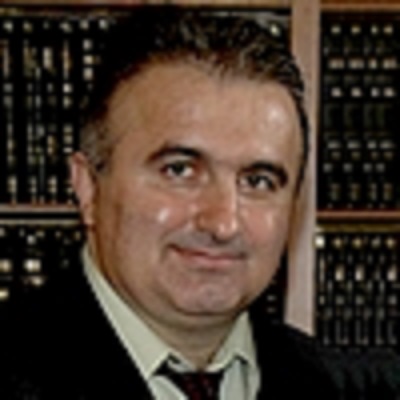
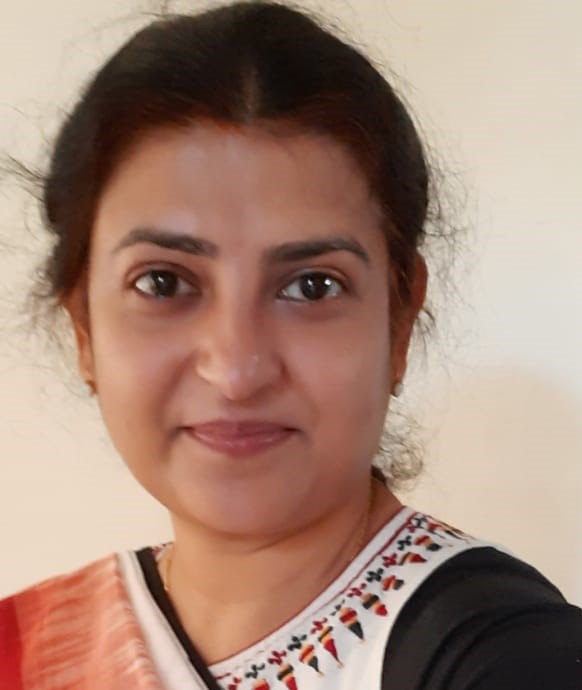
Professor Dominic O'Brien is a Professor of Engineering Science at the University of Oxford and Senior Research Fellow at Balliol College. He serves as Director of the UK National Hub in Quantum Computing and Simulation. His research focuses on optoelectronics, optical wireless communications, and quantum key distribution. He leads the optical communications group and has authored over 200 publications in these areas. His work emphasizes high-speed free-space optical systems, UV-based secure communication, and beam-steering technologies. Education: MA and PhD from the University of Cambridge, followed by a DPhil from the University of Oxford. His research interests include quantum networks, photonics, and energy-efficient optical systems. Notable projects include handheld low-cost quantum key distribution systems and terabit-per-second fiber-wireless links. He collaborates on initiatives like the WORTECS project for virtual reality applications using optical wireless. Publications span topics from UV solar-blind OWC to liquid crystal beam steering. His work bridges academic and industrial applications, addressing challenges in both classical and quantum communication systems. He contributes to standards for visible light communications and next-generation wireless infrastructure.
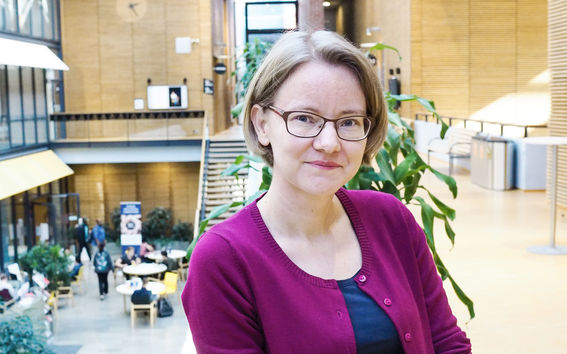
University Lecturer Anu Lehtovuori is affiliated with the Department of Electronics and Nanoengineering at Aalto University, where she actively bridges teaching and research. Her roles encompass academic teaching, project leadership, grant writing (e.g., Academy of Finland applications), and collaboration with doctoral students. She specializes in cutting-edge topics such as antenna design for 5G/6G systems, reconfigurable MIMO architectures, and RF technology for mobile devices. Her research focuses on optimizing antenna performance in compact environments, mitigating interference, and enhancing wireless communication efficiency. Notable areas include wideband antenna systems, decoupling techniques for multi-element arrays, and adaptive antenna-amplifier integration. Lehtovuori emphasizes practical applications, addressing challenges like user interaction effects on mobile antenna performance and minimizing electromagnetic emissions. Research Trends: Dominant themes include 6G IoT antenna solutions, mmWave component integration, and reconfigurable systems leveraging mutual coupling. Grants: Actively pursuing funding through initiatives like the Academy of Finland. Her contributions span both theoretical advancements (e.g., bandwidth optimization algorithms) and industrial applications (e.g., antenna cluster techniques for full-screen smartphones). While no specific awards are documented, her work reflects a strong focus on impactful, industry-relevant innovations.
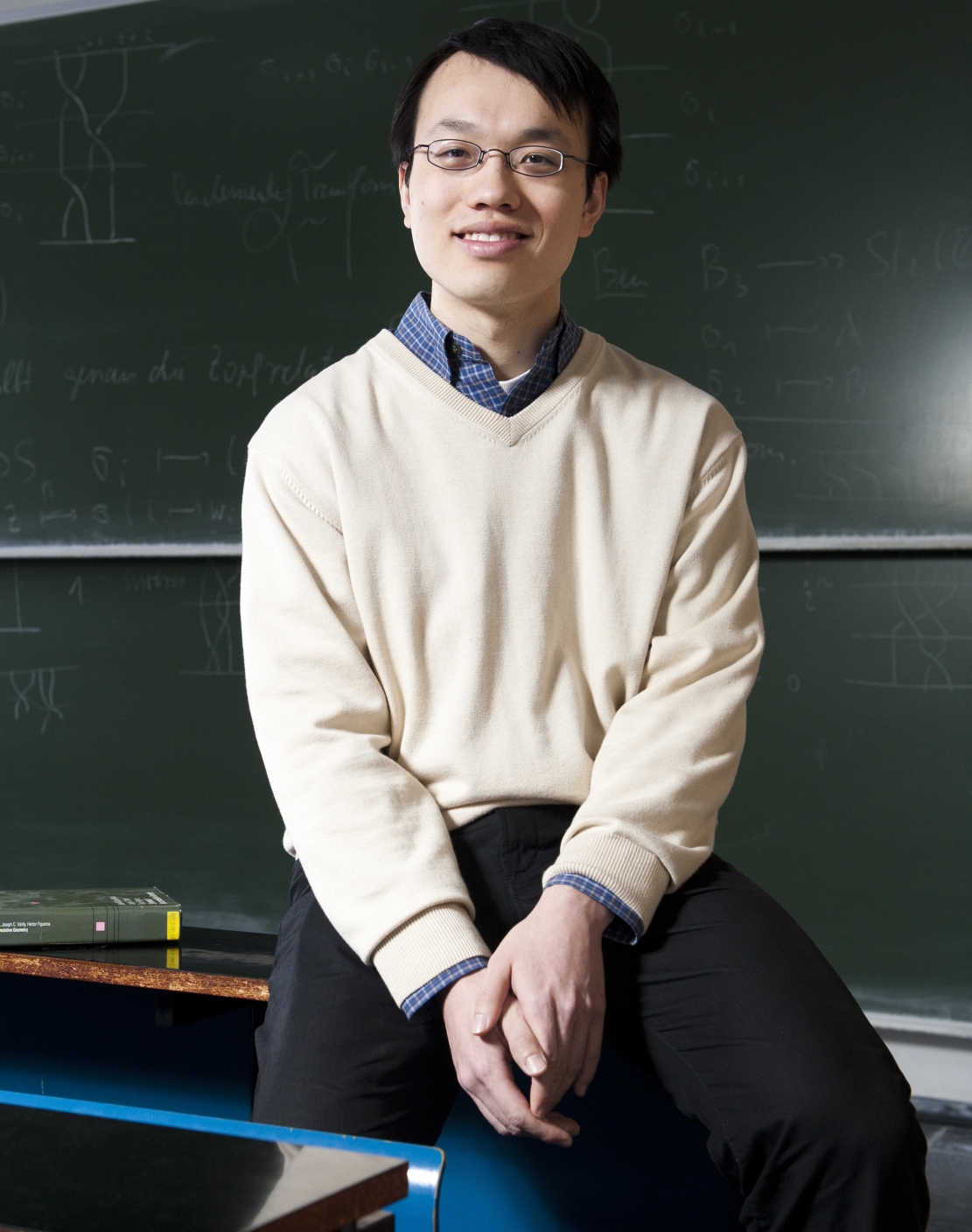
Professor Xin Li is the Chair of Mathematical Analysis at the School of Mathematics & Statistics, University of Glasgow. His research focuses on interdisciplinary areas at the intersection of mathematical analysis, wireless communication systems, and blockchain technology. He holds a faculty position with expertise in reconfigurable intelligent surfaces (RIS), signal processing, and network optimization. Recent publications highlight his work on RIS-aided information-sensing integrated systems (ISAC), blockchain-based consensus networks in cellular environments, and adaptive beamforming techniques for multipath communication. His research emphasizes practical applications of theoretical mathematical models in telecommunications and distributed systems. Prof. Li's work demonstrates trends in integrating mathematical analysis with emerging technologies like millimeter-wave systems and Byzantine fault tolerance mechanisms. His contributions bridge pure mathematical rigor with real-world communication challenges, addressing both theoretical and applied aspects of modern wireless networks. He currently oversees academic activities within the School of Mathematics & Statistics and maintains an active research program supported by interdisciplinary collaborations. His contact information includes Xin.Li@glasgow.ac.uk and ORCID 0000-0002-2243-3742.
Dr. Geerten van de Kaa is an Associate Professor of Standardization and Business Strategy at Delft University of Technology (TU Delft), affiliated with the Faculty of Technology, Policy and Management. He holds a PhD from Rotterdam School of Management, Erasmus University. His research focuses on understanding standardization processes to enable complex innovations and address societal challenges, emphasizing collaboration, market mechanisms, and strategic firm behaviors. He teaches courses on strategic management, technology strategies, and standards battles. His work has been published in high-impact journals like Organization Studies and IEEE Transactions on Engineering Management . Research Interests: Design for values, responsible innovation management, sustainable energy systems, and strategic management. He leads the Journal of Standardisation as Editor-in-Chief and collaborates on EU and NWO-funded projects. Teaching: Courses include 'Strategic Management', 'Technology and Strategy', and 'Standards Battles', emphasizing practical applications in business and policy. His research explores factors influencing standard dominance, ethical considerations in innovation, and geopolitical aspects of technology standards. Grants: Active in EU-funded initiatives and Dutch National Science Foundation (NWO) projects. Research spans semiconductor industry standards, maritime energy transitions, and blockchain standardization geopolitics. Labs/Teams: Engaged with TU Delft's Values, Technology and Innovation department and Economics of Technology and Innovation section. Collaborates with industry and policy stakeholders globally.
Dr. Wanja Hofer is a former research staff member at the Department of Computer Science 4 (Distributed Systems and Operating Systems) at Friedrich-Alexander-Universität Erlangen-Nürnberg (FAU). She specialized in embedded systems, real-time operating systems, and aspect-oriented programming. Her research focused on optimizing hardware-centric systems like Sloth and CiAO, addressing challenges in interrupt handling, scheduling, and software product line variability. Her academic journey includes a PhD in 2014 titled Sloth: The Virtue and Vice of Latency Hiding in Hardware-Centric Operating Systems . She contributed to key projects such as Sloth (time-triggered RTOS) and CiAO (aspect-oriented OS family), emphasizing scalability and configurability for automotive and embedded domains. Hofer also held roles like Web chair for EuroSys 2009 and co-maintained the EuroSys Research Directory. Her teaching involved Basics of Systems Programming in C and OS-related seminars. She advised over 15 graduate students on topics ranging from MPU-based task isolation to filesystem-level variability management. Notable contributions include hardware-accelerated interrupt handling, aspect-oriented OS design, and embedded system energy optimization. Hofer currently works at Brose Fahrzeugteile, applying her expertise in embedded systems and real-time computing to automotive technologies. Her work bridges academic innovation with industrial applications, particularly in safety-critical and resource-constrained environments.
Paul Franzon is the Cirrus Logic Distinguished Professor and Associate Department Head for Graduate Affairs at the Department of Electrical and Computer Engineering, North Carolina State University. He holds a PhD and Bachelor's in Electrical Engineering and a Bachelor's in Physics/Mathematics from the University of Adelaide, Australia. His research focuses on quantum information science, machine learning-driven hardware design, 3D integration, and high-speed systems. Education: PhD in Electrical Engineering, University of Adelaide (1988) Bachelor's in Electrical Engineering, University of Adelaide (1984) Bachelor's in Physics and Mathematics, University of Adelaide (1982) Research Interests: Quantum computing and algorithm optimization AI-driven design automation for 3D integrated circuits High-speed communication systems Hardware security and FPGA acceleration Awards & Honors: IEEE Fellow (2006) Alcoa Foundation Distinguished Engineering Research Award (2005) NC State Alumni Distinguished Undergraduate Professor Award (2003) NSW Australia Expatriate Scientist Award (2003) Advising & Grants: Advised PhD student Priyank Kashyap (2023 graduate) Recipient of NSF Young Investigators Award (1993) Labs & Collaborations: Center for Advanced Electronics Through Machine Learning (CAEML) IEEE EPS Society (Associate Editor)
Dr. Sabin Tabirca is a Senior Lecturer at the School of Computer Science and Information Technology, University College Cork (UCC). He holds a BSc from Bucharest University and a PhD from Brunel University. His research focuses on Artificial Intelligence, Data Analytics, Algorithmics, Interactive Media, and HCI, with applications in computational cancer modeling, mobile health (mHealth), and parallel computing. He coordinates MPT Activities and is affiliated with the CRR Group and BCRI Centre. Notable awards include UCC's President Award for Innovation in Teaching (2007), IT@Cork Leader Award (2008), and UCC Staff Recognition Award (2013). His teaching includes modules like Parallel and Grid Computing, Mobile Application Design, and Graphics for Interactive Media. Dr. Tabirca has supervised over 70 MSc students and numerous PhD candidates, many of whom now hold academic and industry roles globally. His research includes developing mHealth apps for cystic fibrosis patients, 3D cancer visualization tools, and frameworks for mobile parallel computing. Publications span mHealth design pipelines, cancer prediction models, and mobile gaming for health education. He actively engages in interdisciplinary projects, blending computer science with medical and biological applications.
Mehdi Adibi is a Research Fellow at Monash University's Department of Physiology and the Biomedicine Discovery Institute. He leads the Neurodigit Lab, focusing on neural coding and sensorimotor processing in rodents and humans. Previously, he held NHMRC CJ Martin and ARC DECRA fellowships. He earned his PhD in Neuroscience (2014, UNSW), MSc in Telecommunications Engineering (2008, Iran University of Science and Technology), and BSc in Electrical Engineering (Isfahan University of Technology). His research integrates electrophysiology, optogenetics, and behavioral paradigms to study tactile perception and sensorimotor integration. Key areas include whisker-mediated touch in rodents, cortical dynamics, and translational applications like stroke rehabilitation. Technological innovations include tactile stimulators and modular behavioral setups. He supervises PhD/Masters students and has received awards such as the ARC DECRA Fellowship (2019) and NHMRC CJ Martin Fellowship (2015). Community contributions include CSIRO's Scientists in Schools program and neuroscience outreach.
Petar Popovski is a Professor at the Department of Electronic Systems within the Technical Faculty of IT and Design at Aalborg University, Denmark. His research focuses on next-generation wireless communication systems, with a strong emphasis on ultra-reliable low-latency communication (URLLC), Internet of Things (IoT), multiple access, and 6G technologies. He leads several high-impact research projects, including the Classique - Center for Classical Communication in the Quantum Era funded by the Danish National Research Foundation and WATER (Wireless Architectures for intelligent and Trusted connectivity in the posT-5G ERa) supported by Villum Fonden. His research interests span key areas in modern communication theory and systems, including random access , non-terrestrial networks , satellite communication , and machine learning for reliable communication . He is actively involved in advancing the integration of sensing and communication, digital twin technologies, and quantum-era classical communication frameworks. The recent publications highlight a strong trend toward deterministic and reliable access in wireless networks, integration of sensing and communication for industrial automation, and novel physical-layer techniques using reconfigurable intelligent surfaces. These works are published in top IEEE journals such as IEEE Transactions on Communications , IEEE Transactions on Haptics , and IEEE Transactions on Vehicular Technology . Award highlights include the Best Student Paper Award (2021) , recognizing his mentorship and collaborative research excellence. Prof. Popovski serves as a principal investigator (PI) and supervisor in multiple research projects, securing significant funding from national and international bodies such as the Danish National Research Foundation and the European Space Agency (ESA). He hosts visiting researchers regularly and contributes to scientific leadership through editorial roles and conference participation. He is a key figure in the Connectivity section at Aalborg University and leads cutting-edge research in future wireless systems, contributing to both theoretical foundations and practical implementations in smart infrastructure, space communication, and dependable 6G networks.
Yan Kyaw Tun is a Tenure Track Assistant Professor in the Department of Electronic Systems at Aalborg University's Technical Faculty of IT and Design, located in Copenhagen, Denmark. His research lies at the intersection of wireless communications, edge computing, and artificial intelligence, with a strong focus on next-generation networks (5G/6G), UAV-assisted systems, and intelligent resource management. His educational background includes a Ph.D. in Computer Engineering from Kyung Hee University, South Korea, where he was awarded the Best Ph.D. Thesis Award in 2021, and a Bachelor of Engineering in Marine Electrical Systems and Electronic Engineering from Myanmar Maritime University. Dr. Tun's research interests span Edge Computing , Multi-Access Edge Computing (MEC) , Resource Allocation , Unmanned Aerial Vehicles (UAVs) , Reinforcement Learning , Energy Efficiency , and Integrated Sensing and Communication (ISAC) . His work leverages AI and optimization techniques to enhance the performance of wireless networks, particularly in space-air-ground integrated systems and satellite-HAP environments. The recent publications highlight a clear trend toward intelligent and sustainable networking: the integration of STAR-RIS (Simultaneously Transmitting and Reflecting Reconfigurable Intelligent Surfaces), Federated Learning for satellite-HAP systems, and AI-driven optimization for UAV trajectories and beamforming. These works are published in high-impact venues such as IEEE Transactions on Mobile Computing and IEEE ICC , showcasing his leadership in cutting-edge communication technologies. His scientific accolades include: IEEE ComSoc Outstanding Young Researcher Award for EMEA Region (2024) Best Ph.D. Thesis Award (2021) Student Best Paper Award at APNOMS 2019 Korea Network Operation and Management Conference Award (2020) Korea Computer Congress 2018 Award Dr. Tun is actively engaged in the academic community as an advisor and grant participant. Though no direct advisees are listed, his involvement in large collaborative projects—evidenced by co-authorship with senior researchers like Prof. Choong Seon Hong—indicates mentorship and team leadership. He has served on the editorial boards of IEEE Internet of Things Journal , IEEE Open Journal of the Communications Society , and IEEE Network , and has secured research support through participation in IEEE-organized workshops and special issues. He is a key organizer of upcoming workshops, including the 'Sustainable AI for Next-Generation Wireless Communications and Networking' at IEEE GLOBECOM 2025 and the 'Digital Twin Networks' workshop at IEEE/CIC International Communications in China 2025, reflecting his role in shaping future research directions in intelligent and green networking.
Sotirios K. Goudos is a Professor at the Department of Physics, Aristotle University of Thessaloniki (AUTH), Greece, and Director of the ELEDIA@AUTH lab within the ELEDIA Research Center Network. His research focuses on antenna design, evolutionary algorithms, wireless communications, machine learning, and IoT applications. He holds a B.Sc. in Physics (1991), M.Sc. in Electronics (1994), Ph.D. in Physics (2001), and additional qualifications in Information Systems and Electrical Engineering. Prof. Goudos is a Senior Member of IEEE and serves as Editor-in-Chief of the Telecom open access journal (MDPI) and Associate Editor for IEEE Transactions on Antennas and Propagation, IEEE Access, and IEEE Open Journal of the Communication Society. He has organized multiple special issues in journals like EURASIP Journal on Wireless Communications and Networking and has authored/edited books on antennas and AI in networks. His awards include multiple IEEE Access Outstanding Associate Editor recognitions (2019–2023) and inclusion in Stanford University's top 2% scientists list (2020–2024). He teaches courses on telecommunications, Java programming, and microwave systems, and has supervised over two dozen master's students since 2009. His work spans antenna optimization, AI-driven communications, and IoT security, with contributions to 5G/6G, RIS systems, and smart agriculture. Prof. Goudos actively contributes to IEEE Greece Section leadership roles, including Secretary (2022) and Vice-Chair (2023–2024). His labs and teams focus on ELEDIA's research in electromagnetics, optimization, and AI applications.
Sandra M. Đosić is an Associate Professor at the Faculty of Electronics in Niš, University of Niš, Serbia, specializing in Electronics and Embedded Systems. She has been actively contributing to research in real-time systems, fault tolerance, wireless sensor networks, and indoor localization technologies. Research Interests: Her work spans fault-tolerant real-time systems, energy-efficient computing, UWB-based indoor localization, and communication protocols for wireless sensor networks. She explores techniques such as dynamic voltage and frequency scaling (DVFS), tone-based contention resolution, and deflection routing in networks-on-chip to enhance system reliability and efficiency. Publication Trends: Her recent publications (2009–2022) demonstrate a strong focus on improving robustness and performance in embedded and distributed systems. The research integrates signal processing, network optimization, and energy-aware design, primarily applied in industrial and indoor environments. Scientific Awards: No awards are mentioned in the provided text. Advising and Grants: While no specific students are listed, she is currently participating in two national research projects, indicating active involvement in funded research. Her collaborations with researchers such as Igor Stojanovic and Milica Jovanovic suggest a strong team-based research approach. Labs and Research Teams: Although no formal lab or team name is specified, her repeated co-authorship with colleagues from the Faculty of Electronics implies active participation in a research group focused on electronics, communications, and real-time systems.
Dr. Dipanwita Thakur serves as Assistant Professor at the Department of Computer Engineering, Modeling, Electronics and Systems (DIMES) at the University of Calabria, Italy since July 2023. She is an active member of the European Cooperation in Science & Technology (COST Action CA22104) focusing on cybersecurity and serves in the IEEE Future Networks Working Group for Artificial Intelligence/Machine Learning. Previously, she held a 15-year Assistant Professor position at Banasthali University, Rajasthan, and has industry experience at TechMahindra and C-DAC. Education: Ph.D. in Smart Healthcare from West Bengal University of Technology, Kolkata M.Tech. in Software Engineering from Banasthali Vidyapith MCA from NIELIT, Government of India B.Sc. from University of Calcutta Her research pioneers Green Artificial Intelligence with emphasis on energy-efficient federated learning and smart healthcare applications. She develops privacy-preserving human activity recognition systems using multimodal data fusion, focusing on performance evaluation and environmental sustainability. Her work bridges theoretical machine learning with practical healthcare solutions, optimizing AI systems for reduced carbon footprint while maintaining clinical efficacy through hardware-algorithm co-design and quantization techniques. Recent publications reveal a strong trajectory toward sustainable AI, with increasing focus on energy-aware federated learning frameworks, multimodal medical segmentation, and non-IID data handling. Her work consistently addresses the critical balance between model accuracy, convergence speed, and energy consumption across edge devices, with growing emphasis on quantization techniques and hardware-algorithm co-design for real-world deployment. Scientific Awards: Elevated to IEEE Senior Member (2024) Dr. B.C. Roy Memorial Scholarship for outstanding 10th Board results (1992) Student Science Seminar Award by West Bengal Government (1990) Dr. Thakur actively mentors students as evidenced by her congratulations to advisee Farwa for paper acceptances. She serves as Associate Editor for Information Fusion (Elsevier) and IEEE Sensors Journal, and holds editorial roles at Scientific Reports. Her research is advanced through COST Action CA22104 and IEEE working groups, though specific grant details aren't listed in the source material. She has organized key workshops including Green-Aware AI 2024 and Green Federated Learning at IJCNN 2025. She leads research within the MONAI community on data quality and federated learning, and contributes to IEEE IoT and Future Networks initiatives. Her work with the COST Action CA22104 Behavioral Next Generation in Wireless Networks connects cybersecurity with sustainable AI development, while her Missouri S&T visiting scholar position focuses on energy optimization for federated learning systems.
Mohammad Kamrul Hasan is an Associate Professor and Head of the Network and Communication Technology Research Lab at the Center for Cyber Security, Faculty of Information Science and Technology, Universiti Kebangsaan Malaysia (UKM). He holds a Ph.D. in Electrical and Communication Engineering from the International Islamic University Malaysia (IIUM) and has over a decade of prior industry experience in communication systems and network design. He has held academic positions at Universiti Malaysia Sarawak and IIUM, and is currently active in research and leadership at UKM. Ph.D. in Engineering (Electrical and Computer Engineering), International Islamic University Malaysia, 2016 M.Sc. in Communication Engineering, International Islamic University Malaysia, 2012 His research focuses on cutting-edge areas in network and communication technologies. Key interests include Wireless Communication and Network Security , Industrial Internet of Things (IIoT) , Cyber-Physical Systems , 5G and Beyond (6G) Networks , Smart Grids , and AI-driven security . He explores machine learning, federated learning, blockchain, and optimization algorithms to enhance network resilience, privacy, and efficiency in critical infrastructure and consumer electronics. His recent publications (2023–2025) demonstrate a strong trend toward intelligent and secure next-generation networks. Topics include intrusion detection in IIoT, passwordless authentication, federated learning for healthcare IoT, 6G security, and digital twins for SCADA systems. His work is frequently published in high-impact IEEE and Springer journals, reflecting a consistent and influential research output. Gold Medal for research excellence Young Scientist Award Fulbright Scholarship (Ministry of Higher Education Malaysia) Senior Member, IEEE (since 2013) Member, Institution of Engineering and Technology (IET) Member, Internet Society Dr. Hasan has served as an editorial member for prestigious journals including IEEE, IET, and Elsevier. He has led funded research projects such as the design of a two-way wireless communication system for medium-voltage electrical networks at Universiti Malaysia Sarawak. He has mentored students and collaborated widely, with co-authors from Malaysia and international institutions. He has also contributed to professional service as Chairperson of the IEEE IIUM Student Branch and as a peer reviewer for over 13 journals including Computer Networks , Internet of Things , and Soft Computing . He leads the Network and Communication Technology Research Lab at UKM, focusing on secure, intelligent, and scalable communication systems for smart cities, industry, and healthcare. His team works on AI-powered intrusion detection, blockchain for critical infrastructure, and privacy-preserving data fusion in IoT environments.
Taehyung Kim is an Associate Professor at the University of Michigan-Dearborn in the Department of Electrical and Computer Engineering , College of Engineering and Computer Science. His research focuses on power electronics , motor drives , and electric/hybrid power systems for vehicles and aircraft , with an emphasis on renewable energy integration and fault-tolerant control . Education Ph.D., Electrical & Computer Engineering, Texas A&M University M.S., Electrical Engineering, Korea University B.S., Electrical Engineering, Korea University His research interests include energy conversion systems, power electronics for electric vehicles, evaluation and diagnosis of AC motors, and position sensorless control of permanent magnet motors. He leads the KIM Laboratory , which explores unmanned aerial vehicles (UAVs) , battery systems , and powertrain reliability . The 15 most recent articles (2024-2021) highlight his work on hybrid UAVs , fault detection algorithms , cost-effective converters , and powertrain optimization . These publications span power electronics , renewable energy integration , and electric propulsion systems , with applications in transportation electrification and industrial power systems . Scientific Awards NSF Mid Career Advancement Award, 2023 IEEE-IAS Prize Paper Award (2nd Place), 2012 Best Paper Award, IEEE Transportation Electrification Conference, 2021 Listed in "World Top 2% Scientists" (Stanford University, 2020-2024) Listed in Marquis Who’s Who in America Technical Program Co-Chair, 2009 IEEE Vehicle Power and Propulsion Conference Prof. Kim has advised numerous PhD and Master’s students , including Feng Zhou , Sreekanthreddy Chalapala , and Sahithya Parvathareddy . He has secured significant grants from the NSF , Department of Energy , and industry partners like Ford, focusing on smart monitoring , fault identification , and energy management for electrified systems. His lab’s facilities include advanced power electronics labs and hybrid powertrain testing environments .