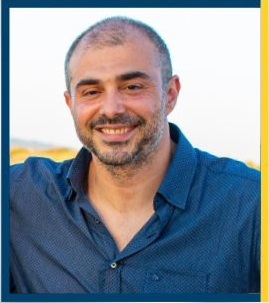
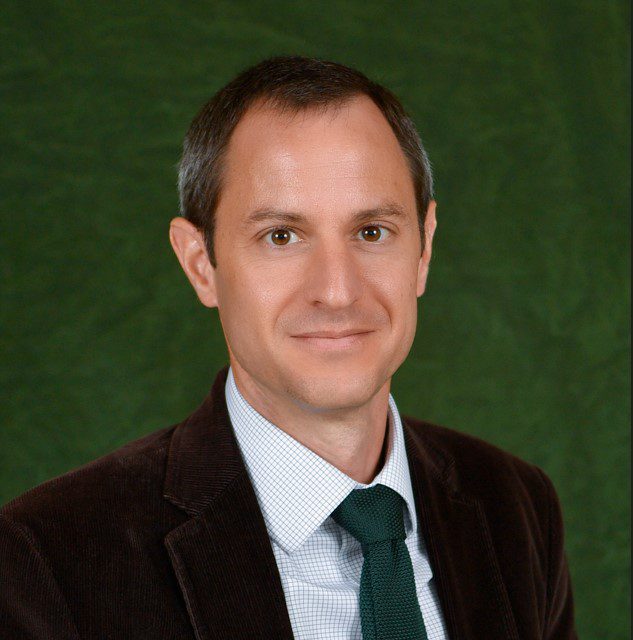
Laura Belli is a Researcher at the Department of Engineering and Architecture , University of Parma, with a focus on interdisciplinary projects bridging IoT, Machine Learning, and Smart Systems . Her work spans smart agriculture, vehicular networks, and urban mobility. Research Interests: Internet of Things (IoT) in agriculture and transportation Machine Learning for predictive modeling and data analysis Edge Computing and network optimization Blockchain applications in data integrity Driver health and stress monitoring Recent Publications highlight her contributions to privacy-preserving vehicular systems , smart farming datasets , and adaptive IoT protocols . She collaborates on projects like OPEVA and DistriMuse , emphasizing data-driven innovation.
Ahmed Ahmed, an associate professor in the Department of Computer Science at Prairie View A&M University (PVAMU) , shapes tech leaders through innovative teaching and research. His work spans IoT, AI, and ML applications across agriculture, infrastructure monitoring, and healthcare. Key research areas include: IoT and AI for sustainable agricultural practices LoRa-based location tracking in constrained environments Secure blockchain-federated learning systems Geofencing for community safety With over 50 peer-reviewed publications and a $300k NSF grant (2023), Ahmed develops hands-on learning tools like a Special Interest Group for IoT and live programming demonstrations. His global journey—from Cairo University to a PhD at the University of Saskatchewan—fuels his commitment to empowering underrepresented students. Scientific awards include the PVAMU Faculty Service Award . He advises students like Kritika Singh (2022 graduate) and advocates for continuous refinement of teaching as a craft.
Dr. Lydia Ray is a Professor at the TSYS School of Computer Science , Columbus State University, with a Ph.D. in Computer Science from Louisiana State University (2005) and an M.Stat in Statistics from Indian Statistical Institute (1998). She specializes in Wireless Sensor Networks , Wireless Network Security , RFID Systems , and Computer Science Education . Research Interests: Secure energy-efficient data transmission in Wireless Sensor Networks RFID security and privacy mechanisms Virtual network labs for online education Teaching: Graduate courses: Advanced System Security, Computer Forensics, Wireless Security Undergraduate courses: Data Structures, Introduction to Programming, Information Technology Education Outreach: Active8 Summer Camps (Scratch, Pico Cricket, Alice, Lego Robotics) Future Teachers’ Academy (Cybersecurity, Computer Networks) Computer Science Academy workshops Contact: ray_lydia@columbusstate.edu | Office: CCT Building Room 429
Nikos Giatrakos is an Assistant Professor at the School of Electronic & Computer Engineering, Technical University of Crete, and a core member of the Software Technology and Network Applications Lab (SoftNet) . His work bridges Big Data systems, IoT, and advanced analytics, with a focus on real-time processing and scalable architectures. Previously, he served as a postdoctoral researcher at the same laboratory. Education PhD in Computer Science, University of Piraeus (2012) Postgraduate Diploma in Information Systems, Athens University of Economics and Business (2008) BSc in Computer Science, University of Piraeus (2006) Research Focus : Nikos specializes in software architectures for Big Data streaming, including Distributed Big Data Processing , Federated Machine Learning , Cloud-to-Edge Data Management , and Approximate Query Processing . His work has also advanced Complex Event Processing and Outlier Detection in decentralized environments. Scientific Contributions : His research has led to the DAG* workflow optimizer for IoT, the SuBiTO framework for real-time neural learning, and the INFORE approach for cross-platform analytics. He received the Best System Demonstration Award at ACM CIKM 2020 for INforE. Academic Leadership : Nikos teaches Object-Oriented Programming, Data Science, and Distributed Systems. He has supervised numerous European and national grants as Principal Investigator and served on program committees for top-tier conferences like SIGMOD, VLDB, and DEBS.
Prof. Dr.-Ing. Robert Baumgartl is a faculty member at the Dresden University of Applied Sciences , affiliated with the Faculty of Computer Science/Mathematics . He teaches courses on Operating Systems , Real-Time Systems , and Information Security , with a focus on practical implementations and system-level programming. Research Interests: Real-time task scheduling and resource management Operating system design and optimization Embedded systems and hardware-software co-design Security protocols for distributed systems Low-level programming with Rust and safety-critical applications Contact: Room Z357, HTW Dresden. Office hours: Thursdays, 10:00-11:00 a.m. (SS 2025). Email: robert.baumgartl@htw-dresden.de .
Alexander Yarovoy is a Full Professor at the Faculty of Electrical Engineering, Mathematics and Computer Science at Delft University of Technology (TU Delft), specializing in Radar Systems, Antenna Design, and mm-Wave Technology. His research bridges theoretical and applied domains, with a focus on automotive radar, weather radar, and machine learning integration in radar signal processing. Active in radar, antennas, and microwave engineering Key contributions to automotive radar and human activity recognition Collaborates on datasets like RaDelft for autonomous driving Recent work explores OTFS radar for communication integration, polarimetric calibration, and high-resolution imaging algorithms. His research often addresses challenges in real-world applications, such as urban meteorology and vehicular safety. In 2023, he received the outstanding paper award at IEEE MetroAeroSpace for radar waveform coexistence studies. He participates in conferences and editorial activities, advancing radar metrology and phased array technologies.
Dr. Cungang Yang serves as an Associate Professor in the Department of Electrical, Computer, and Biomedical Engineering at Toronto Metropolitan University, specializing in cybersecurity for emerging technologies. His work addresses critical vulnerabilities in robotics, cloud infrastructure, and wireless communications, driven by the proliferation of IoT devices and e-commerce platforms where data privacy remains paramount. Academic credentials include: PhD in Computer Science from University of Regina (2003) MS from Jilin University (1992) Research focuses on developing efficient authentication mechanisms and security protocols across three core domains: AI-integrated robotics security, cloud computing vulnerabilities, and wireless network protection. Yang emphasizes that "security always follows new technologies," with current projects targeting power system networks and smart grid infrastructures where sensor communication exposes consumer data to potential breaches. His approach balances cryptographic rigor with practical implementation for real-world systems. Publication analysis reveals consistent emphasis on lightweight authentication and key management solutions between 2017-2018, spanning power systems, IoT, and cloud environments. These works demonstrate strategic adaptation to evolving threats in mission-critical infrastructure, particularly optimizing security protocols for resource-constrained devices while maintaining robust data protection standards across heterogeneous networks. Award recognition includes: New Opportunities Fund grant from Canada Foundation for Innovation (CFI) Departmental Teaching Excellence Awards Dr. Yang actively supervises graduate researchers and secures external funding for security infrastructure development. His teaching portfolio covers advanced network security (COE 817, EE 8213) and software systems (COE 318), with research grants specifically enabling experimental validation of authentication protocols for industrial control systems. Within the department, Yang leads a specialized research collective investigating sensor communication security across IoT ecosystems. The team develops novel cryptographic methods for mission-critical wireless networks, with current projects focused on securing energy grid communications and cloud-based data sharing architectures through efficient group authentication frameworks.
Michael M. Zavlanos is the Yoh Family Professor in the Thomas Lord Department of Mechanical Engineering and Materials Science at Duke University's Pratt School of Engineering. He also holds secondary appointments in the Department of Computer Science and the Department of Electrical and Computer Engineering. Currently serving as the Director of the Healthcare Systems Optimization program with Duke AI Health and as an Amazon Scholar with Amazon Robotics, his academic career spans control theory, optimization, and artificial intelligence with applications across multiple domains. Dr. Zavlanos received his educational foundation from prestigious institutions: Diploma in Mechanical Engineering from the National Technical University of Athens (NTUA), Greece (2002) M.S.E. in Electrical and Systems Engineering from the University of Pennsylvania (2005) Ph.D. in Electrical and Systems Engineering from the University of Pennsylvania (2008) His research program spans multiple interconnected domains, with a strong foundation in control theory, optimization, and learning methodologies . This theoretical work directly enables applications in robotics and autonomous systems , where his team develops algorithms for multi-robot coordination, motion planning under complex constraints, and network connectivity maintenance. A significant portion of his work addresses networked and distributed control systems , focusing on how multiple agents can coordinate effectively with limited communication. More recently, he has expanded his research into cyber-physical systems with healthcare applications, leveraging his expertise to optimize healthcare delivery systems through the Duke AI Health initiative. Dr. Zavlanos' work demonstrates a consistent trajectory from theoretical foundations to real-world applications. His early work established fundamental principles for maintaining connectivity in mobile robot networks, which evolved into more sophisticated approaches for temporal task planning and risk-averse decision making in uncertain environments. The most recent phase of his research integrates machine learning with traditional control theory to address complex healthcare system optimization problems. His significant contributions to the field have been recognized through prestigious awards: Office of Naval Research Young Investigator Program (YIP) Award (2014) National Science Foundation Faculty Early Career Development (CAREER) Award (2012) National Science Foundation Faculty Early Career Development (CAREER) Award (2011) Duke University Distinguished Faculty Rank (2019) Duke University Distinguished Professor designation (2018) As an educator, Dr. Zavlanos has taught courses including ME 627: Linear System Theory, ME 592: Research Independent Study, ECE 391/291: Projects in Electrical and Computer Engineering, and CEE 627: Linear System Theory. His research program has been supported by multiple grants from the National Science Foundation and the Office of Naval Research, enabling him to mentor numerous graduate students and postdoctoral researchers in the development of cutting-edge control and optimization algorithms. Dr. Zavlanos leads research efforts at the intersection of control theory, optimization, and artificial intelligence, with particular focus on translating theoretical advances into practical applications. His recent work with Duke AI Health represents a strategic expansion of his research portfolio into healthcare systems optimization, where he applies his expertise in algorithmic decision making to improve patient scheduling, resource allocation, and operational efficiency in medical settings. Through his Amazon Scholar role, he also contributes to advancing robotics technologies for real-world applications.
Asier Perallos Ruiz is a Professor in the Faculty of Engineering at the University of Deusto, specializing in the Department of Computing, Electronics and Communication Technologies. His research focuses on RFID technology, wireless sensor networks, and computational intelligence applications with significant contributions to intelligent transport systems and antenna design. Dr. Perallos Ruiz's research interests span multiple domains with a focus on RFID technology , Wireless sensor networks , Internet of Things (IoT) , Computational intelligence , Evolutionary algorithms , and Intelligent transport systems . His work bridges theoretical advancements with practical applications, particularly in transportation systems, healthcare, and industrial automation. His research often involves interdisciplinary collaboration across engineering disciplines. His publication portfolio shows a consistent trend toward improving RFID systems, developing efficient anti-collision protocols, and applying computational intelligence to real-world problems. Recent work has focused on polarization-diversity rotation sensing, customizable RFID platforms, and the integration of RFID with IoT applications. His research demonstrates a progression from foundational RFID technology to more complex system integration and application-specific solutions. Dr. Perallos Ruiz has supervised several graduate students including Muralter Florian (2021), Arjona Aguilera Laura (2018), Cmiljanic Nikola (2018), Lopez Garcia Pedro (2016), and Moreno Emborujo Asier (2016). His research has been supported by various projects focusing on RFID technology, intelligent transportation systems, and wireless communication applications. He leads research teams focused on RFID systems development, wireless sensor networks, and computational intelligence applications. Current work appears to be advancing RFID sensing capabilities, energy-efficient protocols, and system integration for practical applications in transportation and industry.
Jukka Kortela is a Lecturer at Aalto University's Department of Chemical and Metallurgical Engineering. He specializes in process control, industrial automation, and energy systems, with a focus on model predictive control and fault detection in industrial environments. Aalto University Department of Chemical and Metallurgical Engineering His research interests include: Model predictive control systems Industrial automation architectures Biomass energy plant optimization Signal path diagnostics Flexible operation of thermal systems Service-oriented automation Recent publications demonstrate expertise in: Three-tank pilot system optimization CHP plant control Industry 4.0 implementation 5G-enabled automation Combustion process monitoring Drum boiler flexibility
Dr. Matthew Whelan is an Associate Professor and EPIC Assistant Director of Research for Energy Infrastructure at the University of North Carolina at Charlotte. He is affiliated with the Department of Civil and Environmental Engineering and specializes in structural health monitoring, sensing technologies, and infrastructure resilience under dynamic loads. Current roles: Associate Professor, EPIC Assistant Director of Research for Energy Infrastructure Department: Civil and Environmental Engineering Research Interests: Dr. Whelan focuses on full-scale structural testing, ambient vibration monitoring, and the application of wireless sensor networks for bridge and building diagnostics. His work addresses deterioration modeling, blast and impact load responses, and digital twin integration for infrastructure management. Key Trends: Recent publications highlight advancements in concrete constitutive modeling, blast testing of cold-formed steel systems, and digital twins for construction quality monitoring. His work bridges computational simulations (e.g., LS-DYNA) with experimental validation using high-rate wireless sensors. Professional Background: He obtained all his degrees (B.S., M.S., Ph.D.) in Civil and Environmental Engineering from Clarkson University and has been a faculty member at UNC Charlotte since 2010. Dr. Whelan is a licensed Professional Engineer.
Oum El Kheir Aktouf is a Professor in Computer Science at Grenoble Institute of Technology (Esisar Engineering School) and a member of the LCIS laboratory, France. She previously served as a Visiting Professor at San José State University, USA, during a sabbatical leave. Education : Master and PhD in Computer Science from Grenoble Institute of Technology Her research focuses on dependability, safety, and security of embedded and interconnected systems, including sensor-based applications and multi-agent architectures. She employs runtime testing, diagnosis, and monitoring approaches. Her work spans mobile application testing, fault diagnosis in RFID and wireless sensor networks, and security frameworks for autonomous systems. Recent publications highlight trends in Android security benchmarking , decentralized cryptography , and multi-agent resilience . She has participated in 12 funded national and international research projects and supervised courses in operating systems, real-time systems, distributed computing, and system dependability.
Sinead O'Keeffe is a Research Fellow at the University of Limerick in the Faculty of Science and Engineering , specifically within the Department of Electronic and Computer Engineering . Her research bridges the technical domain of optical fiber sensor development with critical applications in radiation therapy and sports medicine. Primary Research Themes Medical radiation dosimetry using optical fiber sensors Brachytherapy dose monitoring systems Sports injury prevention in Gaelic football and running Mental health literacy in rural farming communities Key Technical Contributions Development of scintillation-based dosimeters Characterization of perfluorinated polymer fibers 3D printed sensor systems for clinical and rehabilitation applications Interdisciplinary Applications Prostate cancer radiotherapy dose measurement Mental health intervention programs for athletes Work-family conflict analysis in Irish farming Email: sinead.okeeffe@ul.ie
Dr. Narges Arastouei serves as a postdoctoral researcher at the Chair of Mobile Business & Multilateral Security, Goethe University Frankfurt since 2019. With over 12 years of industry experience including leadership of security operations at Iran's largest mobile provider (MCI), she specializes in cybersecurity for next-generation mobile networks and critical infrastructure protection. Her educational background includes: Ph.D. in Computer System Networking and Telecommunications from Amirkabir University of Technology (AUT), Tehran Research focuses on network security, 5G/6G communications, IoT security, and Security Operations Center (SOC) frameworks. Current work bridges theoretical networking with practical incident handling, emphasizing human factors in cybersecurity and privacy-preserving healthcare applications. Her projects address evolving threats in mobile ecosystems through both technical solutions and policy frameworks. Publication trends reveal progression from foundational work in opportunistic network routing (2013-2019) to cutting-edge 6G security research (2022-2025), with consistent emphasis on real-world implementation challenges. Key themes include risk-aware protocols, botnet detection, and secure healthcare systems. Scientific recognition includes: First-place doctoral student award She leads coordination of EU-funded CyberSec4Europe and CyberSecPro projects while spearheading human factor components in the ECCO initiative. Secured Goethe-Corona-Fonds grant funding for longitudinal study on Germany's Corona Warning App adoption. Hosts the SECMGT workshop on information security management since 2023. Active within Goethe University's security research ecosystem, she contributes to multilateral security frameworks and mentors junior researchers through student assistant programs.
Evangelia (Eva) Kalyvianaki is a Senior Lecturer (equivalent to Associate Professor) in the Department of Computer Science and Technology at the University of Cambridge , where she is also a member of the Systems Research Group / netos group . Previously she held faculty positions as Lecturer at City University London and as post-doctoral researcher at Imperial College London. Education Ph.D. in Computer Science, Computer Laboratory (SRG/netos group), University of Cambridge M.Sc. in Computer Science, University of Crete, Greece B.Sc. in Computer Science, University of Crete, Greece Research Interests Her research spans the broad areas of Cloud Computing , Big Data Processing , Autonomic Computing , and Distributed Systems . A central theme is the design and management of next-generation, large-scale cloud applications, with an emphasis on applying mathematical reasoning—particularly control-theoretic techniques such as Kalman and H-infinity filtering—to address the complexity and uncertainty inherent in modern distributed infrastructures. Topics of active investigation include adaptive CPU and resource provisioning for virtualized servers, fairness and overload management in federated stream-processing systems, explicit state management for big-data frameworks, and distributed optimization algorithms for large-scale networked systems. Publications & Research Impact Across more than thirty peer-reviewed papers, her work demonstrates a consistent trajectory toward bridging rigorous control theory with practical systems challenges in the cloud. Signature contributions include the THEMIS framework for fair federated stream processing, dynamic block-sizing algorithms for data-stream engines, and robust resource-provisioning schemes based on advanced filtering techniques. Recent publications extend these ideas to fully distributed, finite-time coordination protocols that operate under quantized communications and time-varying delays, reflecting an expanding scope toward large-scale networked control systems. Scientific Awards No specific awards or fellowships are listed in the provided material. Advising & Funding While individual student names are not disclosed, her extensive publication record with numerous co-authors indicates active supervision of doctoral and master’s researchers. Funding acknowledgements in papers suggest support from UK research councils, EU projects, and industrial partnerships, although explicit grant details are not provided. Labs & Teams She is affiliated with the Systems Research Group (netos) within the Cambridge Computer Laboratory, a leading collective focused on networked and operating systems research, providing a collaborative environment for experimental cloud and distributed-systems work.