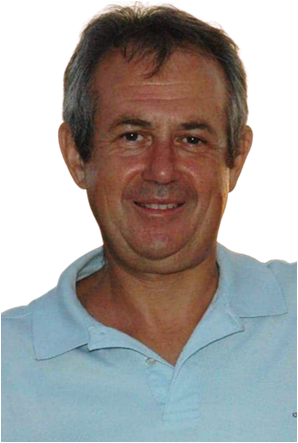
Petros Spachos is a Professor at the University of Guelph, affiliated with the School of Engineering Systems and Computing and the Department of Computer Engineering. His research focuses on Wireless Sensor Networks (WSNs), network protocols, security, and related areas such as multi-hop routing, cognitive radio, and opportunistic networks. He teaches undergraduate courses including ENGG*4650: Integrated Sensors and Photonic Devices and ENGG*3210: Communication Systems . He is part of the AI Affiliated Faculty and contributes to interdisciplinary research in network systems and computing. His work emphasizes practical implementation and simulation of network technologies, with a strong emphasis on both theoretical and applied aspects of communication systems.
Pedro M. Ruiz Martinez is an Associate Professor at the Department of Information and Communications Engineering (DIIC) within the Faculty of Computer Science at the University of Murcia, Spain. He served as Dean of the Faculty from 2013 and previously as Head of DIIC (2011-2012). Ruiz holds a Ph.D. in Telematics (2002) from the University of Murcia and has held research roles including Ramón y Cajal fellowship, visiting positions at ICSI Berkeley, UC Santa Cruz, and King's College London. Ph.D. in Telematics, University of Murcia (2002) Ramón y Cajal Research Fellow Visiting Researcher at ICSI, UC Berkeley Research Associate at UC Santa Cruz Visiting Fellow at King's College London His research focuses on efficient communication protocols for distributed and heterogeneous wireless networks , including VANETs , sensor networks , and mesh networks . Key contributions involve energy-efficient routing , multicast protocols , and gateway load-balancing mechanisms. He has received quality awards for the MARTA project and positive evaluation under Spain's I3 research trajectory program . Recent publications highlight trends in vehicular network optimization , mesh network resource management , and beaconless geographic routing for sensor networks. Awards include the MARTA project quality award and MEC I3 program recognition . Ruiz has advised numerous Ph.D. students including Juan A. Sanchez , Francisco J. Ros , and Rafael Marin , with research spanning VANET security , multicast routing , and energy-efficient protocols . He serves as guest editor for journals including Ad Hoc and Sensor Wireless Networks and International Journal of Smart Home . Professional roles include chairing IEEE INFOCOM 2011, ACM MobiCom 2008, and IEEE MASS 2012. Current teaching includes Wireless Networks (M.Sc.) , Networking Architectures , Mobile Computing , and Advanced Telematic Services at the University of Murcia.
Rajesh M. Hegde is a Professor in the Department of Electrical Engineering at the Indian Institute of Technology Kanpur. His research spans multiple domains within artificial intelligence, signal processing, and communication systems. He has established himself as a leading researcher in multimodal information processing and has contributed significantly to speech and audio processing techniques. Education: PhD in Computer Science and Engineering, IIT Madras (2005) ME in Electronics Engineering, Bangalore University (1988) BE in IT Engineering, Mysore University Professor Hegde's research focuses on the intersection of machine learning, artificial intelligence, and signal processing, with particular emphasis on multimodal information fusion. His work bridges theoretical foundations with practical applications in speech recognition, wireless communication, and pervasive computing. He has made significant contributions to group delay analysis in speech processing and developed innovative approaches for speaker segregation and multimodal system design. His research has practical implications for improving human-computer interaction through more natural and context-aware interfaces. Analysis of his recent publications reveals a consistent focus on multimodal systems and speech processing, with increasing attention to federated learning approaches and wireless network applications. His work demonstrates a strong theoretical foundation combined with practical implementation expertise, particularly evident in his prototyping of multimedia acquisition systems. Scientific Awards: P.K Kelkar Research Fellowship (2009-2013) Mentor for best undergraduate engineering design project award at UC San Diego (2005-06) ISCA Grant for INTERSPEECH 2004 IIT Madras PhD thesis recommended for IBM best thesis award (2005) Programme Committee member for ISCA Winter schools Commendation by IIT Kanpur for teaching excellence Professor Hegde has supervised multiple research projects and mentored students in developing innovative multimedia systems. His work on multimodal situation awareness systems has received recognition for its interdisciplinary approach. He has secured research funding through fellowships and institutional support, enabling his laboratory to maintain cutting-edge research facilities. His laboratory is located in ACES 203 and 204 at IIT Kanpur, where his research team works on multimodal information processing, wireless communication systems, and speech/audio processing applications. The lab maintains strong connections with international research institutions, particularly through his involvement with ISCA and previous collaborations with UC San Diego.
Muhammad Khalil Afzal is a faculty member at COMSATS University Islamabad within the Department of Computer Science . His career focuses on Internet of Things (IoT) , Wireless Sensor Networks , and Machine Learning applications in network optimization. Key collaborations with researchers like Byung-Seo Kim and Sung Won Kim Published extensively in IEEE Access , Sensors , and Future Generation Computer Systems Research spans data-driven intelligence , QoS in IoT , and smart transportation systems : Developed graph convolutional GRU frameworks for traffic prediction Explored NOMA for low-latency communications in 5G Innovated blockchain-based privacy preservation in vehicular networks
Dr. Bentley Oakes is an Assistant Professor in the Department of Computer and Software Engineering at Polytechnique Montréal, affiliated with Université de Montréal and Mila. His research focuses on knowledge engineering for complex cyber-physical systems, particularly digital twins, ontological reasoning, and model-driven approaches. He teaches LOG6310E - Digital Twin Engineering and organizes the SEMTL meetings. Previously, he held postdoctoral positions at the University of Montréal and the University of Antwerp, and completed his PhD at McGill University in 2019 on model transformation verification. Education: PhD in Computer Science, McGill University (2019) Postdoctoral Researcher, University of Montréal (2017–2019) Postdoctoral Researcher, University of Antwerp (2014–2017) Research Interests: Digital twins (structure, validation, reporting) Ontologies and domain-specific knowledge representation Formal verification of cyber-physical systems Machine learning applications in systems engineering Model-driven engineering and transformations Awards: EDTConf 2024 Best Short Paper Award SoSyM/MODELS Journal-First Award (2023) Best Student Paper Award at SIMULTECH 2019 Advising & Labs: Advisor to PhD/Master’s students in digital twin engineering and related topics Oakes Lab focuses on accelerating knowledge engineering for complex systems Recruiting for PhD and internship positions (e.g., MITACS Globalink) Labs/Teams: The Oakes Lab collaborates with global experts and focuses on semantic integration, DT reporting frameworks, and LLM-based DT construction.
Visham Ramsurrun is a Senior Lecturer and Programme Coordinator of the MSc Cyber Security programme at Middlesex University Mauritius. He holds a Ph.D. and B.Sc. in Computer Science & Engineering from the University of Mauritius, and a Postgraduate Certificate in Higher Education from Middlesex University (UK). His research focuses on cybersecurity, IoT, network design, machine learning, and smart agriculture. Education: Ph.D. in Computer Science & Engineering (2007-2010), University of Mauritius Postgraduate Certificate in Higher Education (2017-2018), Middlesex University (UK) BSc (Hons) Computer Science & Engineering (2000-2003), University of Mauritius Research interests include: Cybersecurity frameworks for IoT and autonomous systems Blockchain applications in healthcare and data management Network defense mechanisms (e.g., SDN-based moving target defense) Energy-efficient sensor networks and transmission optimization Smart agriculture systems and environmental monitoring Recent publications emphasize cybersecurity in autonomous vehicles, IoT-enabled healthcare systems, and sensor-based home security solutions. He has secured grants from the Mauritius Research and Innovation Council (MRIC) and collaborates with industry partners on innovation projects. His work includes developing augmented reality control platforms and low-cost air quality monitoring systems. As a member of the IPv6 Forum Mauritius, he advocates for network architecture advancements. His research spans academic collaborations across disciplines, with a focus on underserved regions' technological challenges.
Moussa Ayyash is a Professor in the Department of Computer Science at Chicago State University (CSU), within the College of Arts & Sciences. He serves as the Director of the Center for Integrated Networked Systems and Emerging Research (CINSER), leading cutting-edge research in wireless and networked systems. His research focuses on wireless communications , particularly visible light communications (VLC) , Internet of Things (IoT) , network security , and the integration of artificial intelligence in networking. His work explores coexistence strategies for heterogeneous networks, edge computing for cyber-physical systems, and next-generation 6G indoor flying networks. He has published extensively in top-tier IEEE journals, with a recent emphasis on AI-driven network optimization, hybrid RF-VLC systems, and secure, jamming-resilient IoT communications. Analysis of his recent publications reveals a strong trend toward intelligent, secure, and energy-efficient network architectures. His work bridges theoretical innovation with practical applications in education, healthcare, and transportation, often leveraging machine learning and deep reinforcement learning to solve complex networking challenges in dynamic environments. Fulbright Scholar Program Application (2023) Fulbright Specialist Award (Jordan, 2022) Fulbright Specialist Award (Iceland, 2018) Dr. Ayyash is a principal or co-principal investigator on multiple major federally funded grants, including projects sponsored by the National Science Foundation (NSF) , U.S. Department of Transportation , National Security Agency (NSA) , and the Department of Defense . His grants support initiatives in semiconductor education (Mic2ExL), broadband equity (ABELINC), navigation security (CARNATIONS), and cybersecurity education (GenCyber, SFS). These projects highlight his leadership in both research and educational outreach, often involving student training and community engagement. He leads the Center for Integrated Networked Systems and Emerging Research (CINSER), a research hub focused on advancing technologies in networked systems, cybersecurity, and emerging communication paradigms. His team collaborates on interdisciplinary projects involving AI, IoT, and resilient network design.
Gabriel Mujica is an Assistant Professor at the Technical University of Madrid (UPM), where he is affiliated with the Centre of Industrial Electronics. His research focuses on Networked Embedded Systems and the Internet of Things (IoT), with particular expertise in Wireless Sensor Networks (WSN) and urban mesh networking for smart city applications. His educational background includes: BE in Electrical and Electronics Engineering, Federal University of Paraíba (UFC/FRP), 2008 MSc in Industrial Electronics Engineering, Technical University of Madrid, 2012 PhD in Industrial Electronics Engineering, Technical University of Madrid, 2017 Dr. Mujica's research interests center on multi-hop distributed networks, hardware-software co-design for intelligent platforms, and communication protocols for embedded sensing systems. He has extensive experience in the development and optimization of Wireless Sensor Networks, integration of heterogeneous hardware and software, and performance evaluation of sensor platforms. His current work targets urban mesh networking for smart applications, with a focus on sustainable cities and leveraging collaborations from his doctoral research at Trinity College Dublin. His publications reveal a strong emphasis on practical implementations of Wireless Sensor Networks and IoT. Key themes include deployment strategies, performance evaluation, and tool development for WSN commissioning and maintenance. His work often bridges hardware and software, addressing challenges in energy efficiency, dynamic reprogramming, and multi-experimental capabilities in distributed embedded systems. No scientific awards were mentioned in the provided text. Dr. Mujica has co-supervised undergraduate projects and internships for international students, and has contributed to several national and European research projects. He has also organized research tutorials and seminars at UPM and served as a reviewer for international conferences and journals including IEEE and Springer. His doctoral research stay at Trinity College Dublin strengthened collaborations in distributed systems for smart and sustainable cities. He is an active member of the Centre of Industrial Electronics at UPM, where his team has developed integrated toolsets for WSN application planning, development, and maintenance, notably within the ARTEMIS-JU project. His lab focuses on implementing embedded platforms for urban mesh networking and smart application scenarios.
Thomas Peter Plagemann is a Professor in the Department of Informatics at the University of Oslo , specializing in Data and Knowledge Systems . His research focuses on data stream processing , sensors and AI for health , Internet of Things , and mobile network applications . Current projects: Parrot (Privacy Engineering for IoT), Respire (Explainable ML for Sleep Disorders), and TRAMP (Real-Time Application Mobility) Editorial leadership: ACM Transactions on Multimedia Computing and past roles at Computer Communications and Multimedia Systems Recent publications analyze operator migration in stream processing , explainable AI for pediatric sleep apnea , and privacy-preserving healthcare systems . His work combines distributed computing , sensor networks , and machine learning applications in medical and mobile environments.
Kasım Sinan Yildirim is an Assistant Professor in the Computer Engineering Department at Ege University, Turkey. His work focuses on embedded systems, operating systems, and time synchronization in wireless sensor networks (WSNs). He previously worked as a software engineer at Beko Electronics R&D (2003-2007) and as a research assistant at Ege University (2007-2013). B.Sc. in Computer Engineering, Ege University (2003) M.Sc. in Computer Engineering, Ege University (2006) Ph.D. in Computer Engineering, Ege University (2012) His research introduces adaptive-value tracking for energy-efficient time synchronization in WSNs, achieving 97% less CPU overhead and 80% reduced memory allocation compared to flooding-based methods. This work addresses critical challenges in distributed algorithms and network protocol optimization.
Dr. Anas Amjad is the Course Director for Electrical and Electronic Engineering at Staffordshire University's School of Digital, Technologies and Arts. He holds a Senior Lecturer academic rank. His expertise spans smart systems, digital signal processing, and IoT applications in healthcare, cities, and telecommunications. He previously served as a part-time lecturer (2012–2017) and Senior Lecturer (2017–2020). Dr. Amjad is a Fellow of the Higher Education Academy (FHEA) and actively contributes to IEEE/IET journals as a reviewer. Education: PhD (Electronic and Telecommunication Engineering, Staffordshire University), PGCert in Research Methods, and BEng(Hons) with First Class in Electronic Engineering – all from Staffordshire University. Research focuses on resource optimization in wireless networks, IoT infrastructure, and smart city technologies. His work contributed to Staffordshire University’s REF2021 submission, where 87% of Engineering research was rated internationally excellent/world-leading. Notable contributions include energy-efficient protocols for visual sensor networks and cloud federation resource allocation. Publications span IEEE/IET journals and conferences, addressing topics like sensorless motor control for EVs, cognitive edge computing, and EEG artifact removal via CNNs. He organized UPEC 2015 and participated in postgraduate research conferences. Awards: Fellow of the Higher Education Academy (FHEA). Professional memberships include IET, Energy Institute, and HEA. Teaching includes undergraduate modules like Real-time Embedded Systems with DSP Applications and postgraduate courses such as Advanced Digital Signal Processing. He integrates digital tools for blended learning, including distance education for Armed Forces students.
Prof. Petru Adrian COTFAS holds a position as Professor in the Department of Electronic and Computers at the Faculty of Electrical Engineering and Computer Science, Technical University of Brașov (UNITBV). His work focuses on advancing renewable energy systems, hybrid energy technologies, and IoT-based monitoring solutions. He leads research on photovoltaic cell optimization, thermoelectric generator performance, and cybersecurity in smart energy systems. His contributions include developing virtual instrumentation frameworks (e.g., LabVIEW-based tools) and experimental setups like the RELab system for studying solar/wind energy dynamics. Research Interests: Characterization of renewable energy systems (hybrid photovoltaic-thermoelectric configurations) IoT integration for remote energy monitoring and control Metaheuristic algorithms for parameter extraction in solar cells Cybersecurity resilience for smart energy infrastructure Energy efficiency in industrial systems (e.g., AHU optimization) Key Contributions: Prof. COTFAS has pioneered studies on dust impact mitigation for solar panels, developed novel methods for concentrated solar power systems, and addressed cybersecurity vulnerabilities in IoT-enabled energy grids. His work bridges theoretical models (e.g., multi-junction solar cell theory) with practical implementations like FPGA-based remote laboratories. Over 60 peer-reviewed articles since 2016 showcase his interdisciplinary approach to energy sustainability and technological innovation.
Hsiao-Chun Wu is a Professor and holder of the Michel B. Voorhies Professorship at Louisiana State University (LSU), affiliated with the Division of Electrical & Computer Engineering within the School of Electrical Engineering and Computer Science. He earned his Ph.D. in 1999 from the University of Florida. His research focuses on statistical learning, embedded algorithms, digital signal processing, and wireless communications. Key areas include optimization techniques for detection and estimation, image/speech processing, and networked systems design. He has contributed to advancements in sensor deployment strategies, tensor-based signal processing, and machine learning applications for posture recognition and multimedia classification. Notable technical interests span computational photography, robust multichannel decorrelation, and energy-efficient data collection in wireless sensor networks. His work often integrates tensor analysis and graph convolutional networks to address challenges in high-dimensional data processing. Dr. Wu's academic contributions include pioneering methods for indoor line-of-sight coverage optimization and developing novel modulation recognition techniques. His research also addresses industrial IoT performance optimization and biomedical applications such as noninvasive activity recognition using mmWave radar.
Papageorgas Panagiotis is a tenured Professor in the Department of Electrical & Electronics Engineering at the University of West Attica, where he directs the Laboratory of Smart Technologies, Renewable Energy Sources and Quality. He holds a B.Sc. in Physics (1984) and a Ph.D. in Physics (1995) from the National and Kapodistrian University of Athens (NKUA). His career includes research roles at NKUA's Departments of Electronics and Applied Physics (1985–1994) and Informatics and Telecommunications (1994–2002), followed by a professorship at the Piraeus University of Applied Sciences (PUAS) until 2018. Research focuses on embedded systems, wireless sensor networks (WSNs), IoT, smart grids, and cyber-physical systems (CPS). He has authored/co-authored over 100 publications addressing topics like energy efficiency, smart cities, and environmental monitoring. His work spans applications in renewable energy systems, sensor network architectures, and low-power wide-area networks (LPWAN). Teaching responsibilities include undergraduate courses in Electronics I, Modern Microcomputer Systems, and Mechatronics, as well as postgraduate modules on Embedded Systems, Cyber-Physical Systems, and Wireless Sensor Networks. He actively participates in international conferences like the Technologies and Materials for Renewable Energy, Environment and Sustainability (TMREES) series. Key projects include developing low-cost PV I-V curve tracers, smart LED lighting platforms (LEDWIRE), and emergency communication systems using SD-WAN and LPWAN technologies. His lab emphasizes practical implementations of IoT and CPS for sustainability and resilience, with recent contributions to smart agriculture, emergency ventilators via 3D printing, and blockchain-based energy metering.
Dr. Christiana Ioannou is an Assistant Professor in Cybersecurity and Course Leader of the MSc Cybersecurity and MSc Cybersecurity Distance Learning programs at University of Central Lancashire Cyprus (UCLan Cyprus). She holds a PhD in Computer Science from the University of Cyprus (2017) and has extensive experience in academia and industry, including roles as Research Associate at CYENS Center of Excellence and NCC Team Leader at the Digital Security Authority of Cyprus. Education: PhD in Computer Science, University of Cyprus (2017) MSc in Computer Science, Florida Institute of Technology (2006) PGDiploma in Management, Mediterranean Institute of Management (2004) BSc in Computer Science, San Diego State University (2003) Research Interests: Her research focuses on Cybersecurity , Internet of Things (IoT) , and Intrusion Detection Systems (IDS) . She explores secure data management in industrial IoT and WSN environments, attack classification, and decentralized security agents. Her work emphasizes practical applications in constrained networks and industrial settings. Grants & Awards: Recipient of the Onisilos Postdoctoral Fellowship (2022) Winner of the Cyprus Entrepreneurship Competition (3rd Prize, 2021) Recipient of the Cyprus-America Scholarship for Graduate Studies (2004–2006) Professional Activities: She serves on the Technical Program Committees of conferences like WiOpt and MedComNet, and reviews for journals including IEEE Access and Computers & Security. Her work bridges academic research with real-world cybersecurity challenges in IoT and industrial systems. Labs & Collaborations: Active in the CYENS Center of Excellence and collaborates on projects like METACITIES (EU-funded) and BluePark (smart parking system for disabled persons).