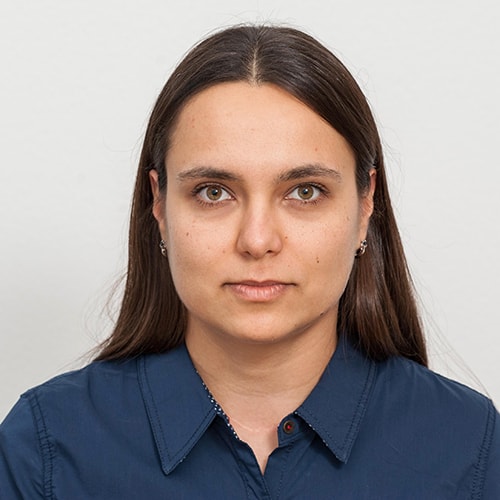
Jan Madsen is a Professor at DTU Compute, Technical University of Denmark, and Head of the Embedded Systems Engineering section. His research focuses on system-level modeling and design of embedded computing systems, particularly cyber-physical systems, microfluidic biochips, and synthetic biology applications. Develops design automation tools and methodologies for embedded systems Supervises numerous PhD students and leads major research projects Research Interests Key areas include: Embedded systems-on-a-chip Cyber-Physical Systems (Internet-of-Things) Microfluidic Lab-on-Chip devices Synthetic biology with molecular computing Design, modeling, and optimization of complex systems Scientific Awards DATE Fellow (2019) IEEE CEDA Outstanding Recognition (2019) DTU Scientific Advise Award (2013) Best Paper Awards at MECO (2013) and CASES (2009) Jorck’s Foundation Research Award (1995) Publications His 14+ journal papers and 115+ conference papers demonstrate expertise in: SystemC-based modeling frameworks Energy-aware sensor networks Self-healing eDNA architectures Microfluidic biochip synthesis RTOS modeling and MPSoC exploration
Olga Saukh is an Associate Professor at the Institute of Technical Informatics, Graz University of Technology (TU Graz), and a Faculty member at the Complexity Science Hub Vienna (CSH). She leads the Embedded Learning and Sensing Systems research group, which operates across both institutions, focusing on the design and deployment of efficient AI-based systems on edge and mobile platforms. Her work bridges deep learning and embedded systems, with applications in environmental monitoring, precision agriculture, and digital health. Ph.D. in Computer Science, University of Bonn (2009) Habilitation in Embedded Systems, TU Graz (2020) Postdoctoral Training, ETH Zurich (2010–2016) B.Sc. in Applied Mathematics, Taras Shevchenko National University of Kyiv (2002) M.Sc. in Applied Computer Science, University of Freiburg (2004) Her research centers on efficient machine learning, particularly model optimization, neural network pruning, and contrastive learning for resource-constrained devices. She is deeply engaged in solving real-world challenges in IoT, sensor networks, and cyber-physical systems. Her work emphasizes data privacy, sustainability, and practical deployment of AI at the edge. The 15 most recent publications highlight a strong trend in efficient deep learning, including model compression, pruning, and transfer learning, applied to diverse domains such as environmental sensing (air quality, pollution tracking), digital agriculture (cattle farming), and embedded AI (sensor calibration, on-demand sensing). Her work frequently appears in top-tier venues like NeurIPS, ICLR, and IEEE/ACM IPSN, reflecting her leadership at the intersection of machine learning and embedded systems. Scientific awards include: CONET Ph.D. Academic Award (2010) Multiple Best Paper Awards at IEEE PerCom, ACM/IEEE IPSN, IEEE ICPADS, IEEE SECON, and UrbCom Spotlight and Oral presentations at ICML and CoLLAs workshops Ph.D. scholarship from IPVS, University of Stuttgart (2004–2005) Prizes in Ukrainian national mathematics competitions (1996–1998) Olga Saukh actively serves on program committees of leading international conferences in machine learning and embedded systems. She has advised multiple students and leads a collaborative research group spanning TU Graz and CSH Vienna. Her group develops practical AI systems for real-world deployment, with a focus on sustainability and privacy. She co-organizes the public EfficientML reading group and has secured recognition through numerous grants and awards. Her future work continues to explore the theoretical and practical challenges of deploying efficient, trustworthy AI in mobile and embedded environments. Her research group, Embedded Learning and Sensing Systems, operates jointly between TU Graz and CSH Vienna, fostering interdisciplinary collaboration across institutions. The team develops AI solutions for edge computing, sensor networks, and cyber-physical systems, with a strong emphasis on environmental sustainability and data privacy. Members work on joint challenges using advanced collaboration tools, reflecting the distributed nature of modern academic research.
Frede Blaabjerg is a Professor at Aalborg University (AAU Energy) , affiliated with the Faculty of Engineering and Science . Since 1998, he has pioneered power electronics research in applications such as wind turbines , photovoltaic (PV) systems , reliability engineering , and Power-2-X technologies. Education : PhD in Electrical Engineering (1995, Aalborg University) Honorary Degrees : Honoris Causa at University Politehnica Timisoara (2017) and Tallinn Technical University (2018) His research focuses on power electronics control , system optimization , and reliability for renewable energy and electric mobility . Recent work includes grid-forming converters , virtual synchronous generators , and smart EV charging systems. Key publication trends span 15+ years , with over 3,733 peer-reviewed articles and 900+ journal papers in power electronics , renewables , and energy storage . Notable book series: Control of Power Electronic Converters and Systems (4 volumes, Elsevier). Scientific Awards : 46 IEEE Prize Paper Awards 2020 IEEE Edison Medal 2019 Global Energy Prize 2014 IEEE William E. Newell Power Electronics Award Leadership Roles : Editor-in-Chief, IEEE Transactions on Power Electronics (2006–2012) Chairman, Danish Council for Research and Innovation Policy (2020–) President, IEEE Power Electronics Society (2019–2020)
Remus Teodorescu is a Professor at AAU Energy , Aalborg University , specializing in Power Electronics System Integration and Materials . His work bridges Lithium-Ion Batteries , Modular Multilevel Converters , and Smart Battery Systems . Education : Not explicitly mentioned in the text. Research Interests focus on Battery Management Systems , AI-Driven Energy Optimization , and Power Electronics for renewable energy integration. Key projects include Digital Twin for Lithium-Ion Batteries and BMS-DC for Data Centers . Recent Publications (2025) emphasize Finite Set MPC , Gradient Descent Optimization , and AI in Battery Parameter Estimation . His 2024 work explores Physics-Informed Neural Networks and Fault-Tolerant Converters . Scientific Awards : Villum Foundation Grant (313 million kroner, 2021) Named world's best in electrical engineering (2023) Advising includes supervising PhD projects on AI-Accelerated Battery Twins and Data-Driven SOH Estimation . Collaborations span Energy Cluster Denmark and Villum Fonden .
Qiongxiu Li is a Tenure-Track Assistant Professor in the Cyber Security group at Aalborg University's Copenhagen campus, part of the Technical Faculty of IT and Design. Her research focuses on cybersecurity, distributed optimization, privacy/security, and federated learning. She has authored/co-authored 38 papers in top-tier venues including IEEE Transactions on Information Forensics and Security, ICLR, and EUSIPCO. Education: PhD in Privacy and Security from Aalborg University (2018-2021). Notable achievements include winning the EUSIPCO 2020 3MT Contest and co-delivering a tutorial on privacy-preserving distributed optimization at EUSIPCO 2024. She actively reviews for conferences like NeurIPS, ICLR, and journals such as TPAMI and TIFS. Research Themes: Privacy-preserving distributed algorithms, federated learning security, differential privacy, and adversarial machine learning. Recent Trends: Focus on securing AI systems (e.g., LLM vulnerabilities, federated clustering privacy), quantization for privacy, and theoretical bounds in decentralized learning. Awards: 2020 EUSIPCO 3MT Winner (outstanding finalist in EURASIP's annual doctoral research competition). Grants/Projects: Co-PI of the AI:SECURITY project (2025-2029) addressing AI security threats like phishing and malicious actors. Labs/Teams: Leads the Cyber Security group at Aalborg's Copenhagen campus, focusing on theoretical and applied research in secure distributed systems.
Bissan Ghaddar is a Professor in the Department of Technology, Management and Economics at Technical University of Denmark (DTU). Her work focuses on robust optimization, edge computing, and sustainable energy systems, contributing to UN Sustainable Development Goals related to affordable and clean energy. She supervises PhD projects on sector coupling in energy models and quantum computations for power systems. Her research interests include optimizing energy consumption in electric vehicle routing and application placement in edge computing under uncertainty. She has published influential papers in journals like Transportation Research Part C and Omega , addressing latency and efficiency challenges in dynamic systems. Current projects include modeling large-scale sectoral energy systems using smart-linking approaches (2024–2027) and secure power system operation leveraging quantum computations (2021–ongoing). She collaborates internationally with experts in operations research and telecommunications.
Martin Nordal Petersen is an Associate Professor at the Department of Electrical and Photonics Engineering , Technical University of Denmark (DTU) . His work spans Internet of Things (IoT) , optical networking , and wireless communication systems, with notable contributions to LoRa , NB-IoT , and LPWAN technologies. He actively supervises PhD projects on topics such as machine learning in IoT edge devices , secure 5G communication , and smart community architectures . Active projects (2024–2027): Machine Learning in IoT Edge Devices , Deterministic and Secure 5G Communication Finished projects (2021–2024; 2018–2021; 2015–2018): Reliable M2M/IoT Communication , Smart Communities , IoT 100% , Network Slicing His research explores: IoT Reliability : Multi-RAT communication, backup systems, and signal propagation Optical Networks : Alien wavelength integration, SDN control, and network emulation platforms Wireless Innovation : GPS-free geolocation, maritime NB-IoT use cases, and multimode fiber distribution Current collaborations emphasize cross-disciplinary applications of IoT in healthcare , industrial ergonomics , and smart environments .
Kim Bjerge serves as Associate Professor and Group Leader in Aarhus University's Department of Electrical and Computer Engineering, specializing in computer vision and machine learning applications for ecological monitoring. His research bridges engineering and environmental science to develop innovative solutions for insect biodiversity assessment and sustainable agriculture. His core research interests include computer vision, deep learning, and edge computing systems for real-world ecological monitoring. Dr. Bjerge develops time-lapse camera pipelines and deep learning models specifically for insect population tracking in natural environments, with emphasis on agricultural applications like black soldier fly farming and biodiversity conservation. His work integrates signal processing techniques with biological data to create field-deployable monitoring systems. Recent publications reveal a strong trend toward practical implementations of computer vision in entomology, particularly focusing on edge processing for camera traps, automated trait prediction in insect farming, and biodiversity monitoring systems. Key research areas include nocturnal insect monitoring, floral environment analysis, and developing specialized datasets like AMI for insect identification in wild settings. He leads multiple significant research projects funded through competitive grants: MAMBO: Modern Approaches to Monitoring Biodiversity (2022-2026) FLYgene: Sustainable Insect Production for Livestock Feed (2022-2026) Automatisk monitering af nataktive insekter: Automatic nocturnal insect monitoring (2024-2029) Pilotprojekt for automatisk registrering af invasive plantearter: Invasive species monitoring (2020-2021) As head of the Signal Processing and Machine Learning research group, Dr. Bjerge directs interdisciplinary teams developing computer vision solutions for biological monitoring systems. His laboratory focuses on creating robust field-deployable technologies including scanner-based arthropod imaging systems, time-lapse camera networks for floral environments, and edge AI processors for real-time insect monitoring in agricultural settings.
Nicola Dragoni is a Professor in Cybersecurity Engineering at the Department of Applied Mathematics and Computer Science, Technical University of Denmark (DTU). As Deputy Director and Head of Section, he leads research initiatives focused on securing emerging technologies. Key Research Areas : Internet of Things (IoT) security, machine learning for intrusion detection, cyber-deception techniques, fog computing, malware analysis, blockchain applications, and wireless sensor network security. Supervision : Actively supervising multiple PhD students in projects related to cyber-deception, moving target defense, and bio-inspired security mechanisms. Recent Publications : Contributions to IoT honeypots, drone identification via RF signals, passkey adoption challenges, and cyber range taxonomies.
Hao Hu is a Senior Researcher at the Department of Electrical and Photonics Engineering at the Technical University of Denmark (DTU). He leads the Photonic Integrated Circuit based Systems Group and is active in the field of silicon photonics for optical communications. His research focuses on integrated photonic systems, including optical phased arrays, LiDAR, and neural network applications. Research Interests: Hao Hu's work spans optical beam steering , integrated photonics , silicon photonics , and optical wireless communications . He explores energy-efficient photonic components and optical computing platforms for machine learning, contributing to advancements in LiDAR and optical signal processing. Recent Publications: His recent articles highlight innovations in digital optical computing , thermo-optic phase shifters , and solid-state beam steering , reflecting expertise in silicon photonics and machine learning applications. The ACS Photonics 2025 article emphasizes ultra-low loss design methodologies, while the Journal of Lightwave Technology 2025 paper addresses 2D beam steering for LiDAR systems. Students: Hao Hu supervises multiple PhD students, including T. E. Rude, X. Zhu, Y. Han, X. Long, and P. Nay, across projects like integrated optical phased arrays and silicon photonics for neural networks.
Farshad Moradi is a Professor at the Department of Electrical and Computer Engineering at Aarhus University, specializing in neuromorphic engineering, spintronics, and biomedical device design. His work focuses on integrating advanced materials and circuits for applications in neural interfaces, energy-efficient computing, and wireless biomedical systems. Research Interests include: Spintronic-based neuromorphic computing architectures Ultra-low power analog/mixed-signal integrated circuits Ultrasonically powered implantable medical devices Neural signal processing and seizure detection systems Wireless energy transfer and structural health monitoring Key Projects (2016-2026): SPICE: Spintronic-Photonic Integrated Circuit Platform PHOTON-NeuroCom: Photonic-assisted Neuromorphic Computing Neuro-Sense: Flexible bioinspired neuroprostheses CorroSense: Self-powered corrosion monitoring HERMES: Hybrid Enhanced Regenerative Medicine Systems Recent innovations include: Ultrasonically powered optogenetic implants Low-power neural amplifiers for deep-brain interfaces Spin-torque nano-oscillator-based neuromorphic hardware Energy harvesting systems for structural monitoring
Shashi Raj Pandey serves as Assistant Professor in the Department of Electronic Systems at Aalborg University's Technical Faculty of IT and Design, Denmark. His research is anchored in the Connectivity section and Connectivity Classique-Center for Classical Communication in the Quantum Era, with office location at Fredrik Bajers Vej 7C, C1-111, 9220 Aalborg Øst. His core research spans Network Economics, Game Theory, and Wireless Networks, with specialization in Decentralized Machine Learning and Semantic/Goal-oriented Communications. Current work integrates Digital Twin technologies with 6G systems for industrial automation and earth observation, emphasizing resource-efficient protocols for Internet of Things and edge intelligence applications. Recent publications (2024-2025) reveal a clear trajectory toward AI-6G convergence, featuring semantic communications for satellite imaging, game-theoretic network resource allocation, and digital twin implementations for autonomous systems. Key themes include communication efficiency in distributed learning and physical-digital world integration. Notable recognitions include: Best PhD Thesis Nominee (2021) Excellent Paper at Korea Software Congress, KIISE 2021 Student Best Paper Award at APNOMS 2019 Best Paper at Korea Software Congress, KIISE, 2018 Brain Korea 21st Century Plus Fellowship Academic service includes external PhD examination for EU SNS projects and peer review for premier conferences (AAAI, ICLR, ICML). His lab work within the Connectivity Classique-Center explores classical communication frameworks applicable to quantum-era networks, with focus on semantic information theory and decentralized network architectures.
Petar Popovski is a Professor at the Department of Electronic Systems within the Technical Faculty of IT and Design at Aalborg University, Denmark. His research focuses on next-generation wireless communication systems, with a strong emphasis on ultra-reliable low-latency communication (URLLC), Internet of Things (IoT), multiple access, and 6G technologies. He leads several high-impact research projects, including the Classique - Center for Classical Communication in the Quantum Era funded by the Danish National Research Foundation and WATER (Wireless Architectures for intelligent and Trusted connectivity in the posT-5G ERa) supported by Villum Fonden. His research interests span key areas in modern communication theory and systems, including random access , non-terrestrial networks , satellite communication , and machine learning for reliable communication . He is actively involved in advancing the integration of sensing and communication, digital twin technologies, and quantum-era classical communication frameworks. The recent publications highlight a strong trend toward deterministic and reliable access in wireless networks, integration of sensing and communication for industrial automation, and novel physical-layer techniques using reconfigurable intelligent surfaces. These works are published in top IEEE journals such as IEEE Transactions on Communications , IEEE Transactions on Haptics , and IEEE Transactions on Vehicular Technology . Award highlights include the Best Student Paper Award (2021) , recognizing his mentorship and collaborative research excellence. Prof. Popovski serves as a principal investigator (PI) and supervisor in multiple research projects, securing significant funding from national and international bodies such as the Danish National Research Foundation and the European Space Agency (ESA). He hosts visiting researchers regularly and contributes to scientific leadership through editorial roles and conference participation. He is a key figure in the Connectivity section at Aalborg University and leads cutting-edge research in future wireless systems, contributing to both theoretical foundations and practical implementations in smart infrastructure, space communication, and dependable 6G networks.
Yan Kyaw Tun is a Tenure Track Assistant Professor in the Department of Electronic Systems at Aalborg University's Technical Faculty of IT and Design, located in Copenhagen, Denmark. His research lies at the intersection of wireless communications, edge computing, and artificial intelligence, with a strong focus on next-generation networks (5G/6G), UAV-assisted systems, and intelligent resource management. His educational background includes a Ph.D. in Computer Engineering from Kyung Hee University, South Korea, where he was awarded the Best Ph.D. Thesis Award in 2021, and a Bachelor of Engineering in Marine Electrical Systems and Electronic Engineering from Myanmar Maritime University. Dr. Tun's research interests span Edge Computing , Multi-Access Edge Computing (MEC) , Resource Allocation , Unmanned Aerial Vehicles (UAVs) , Reinforcement Learning , Energy Efficiency , and Integrated Sensing and Communication (ISAC) . His work leverages AI and optimization techniques to enhance the performance of wireless networks, particularly in space-air-ground integrated systems and satellite-HAP environments. The recent publications highlight a clear trend toward intelligent and sustainable networking: the integration of STAR-RIS (Simultaneously Transmitting and Reflecting Reconfigurable Intelligent Surfaces), Federated Learning for satellite-HAP systems, and AI-driven optimization for UAV trajectories and beamforming. These works are published in high-impact venues such as IEEE Transactions on Mobile Computing and IEEE ICC , showcasing his leadership in cutting-edge communication technologies. His scientific accolades include: IEEE ComSoc Outstanding Young Researcher Award for EMEA Region (2024) Best Ph.D. Thesis Award (2021) Student Best Paper Award at APNOMS 2019 Korea Network Operation and Management Conference Award (2020) Korea Computer Congress 2018 Award Dr. Tun is actively engaged in the academic community as an advisor and grant participant. Though no direct advisees are listed, his involvement in large collaborative projects—evidenced by co-authorship with senior researchers like Prof. Choong Seon Hong—indicates mentorship and team leadership. He has served on the editorial boards of IEEE Internet of Things Journal , IEEE Open Journal of the Communications Society , and IEEE Network , and has secured research support through participation in IEEE-organized workshops and special issues. He is a key organizer of upcoming workshops, including the 'Sustainable AI for Next-Generation Wireless Communications and Networking' at IEEE GLOBECOM 2025 and the 'Digital Twin Networks' workshop at IEEE/CIC International Communications in China 2025, reflecting his role in shaping future research directions in intelligent and green networking.
Naeem Ayoub is an Assistant Professor in the Department of Technology and Innovation at the University of Southern Denmark (SDU), affiliated with SDU Technology Entrepreneurship and Innovation. His research bridges computer science and engineering, focusing on intelligent systems and automation. Research Interests: His work spans machine learning, computer vision, robotics, and cyber-physical systems. He explores applications in autonomous drones, digital twins, power line inspection, and environmental monitoring. His research emphasizes real-time decision-making, energy efficiency, and anomaly detection in complex systems. The recent publications highlight a strong trend in deploying AI-driven robotics for industrial and environmental applications, particularly in infrastructure inspection and predictive maintenance. His work integrates neural networks, sensor networks, and autonomous navigation to solve practical engineering challenges. Scientific Contributions: Active contributor to 19 research outputs including journals and conference proceedings. Creator of an open-source dataset for pylon component and fault detection using machine learning. Involved in interdisciplinary collaborations across engineering, environmental science, and computer science. Advising and Grants: While no formal students are listed, he has participated in academic supervision as a censor in internal examinations. His projects suggest involvement in research grants related to autonomous systems and industrial digitalization, though specific funding details are not provided. Labs and Teams: He collaborates within research teams focused on robotics and intelligent systems at SDU, particularly in drone technology and cyber-physical systems. His work involves close collaboration with researchers in environmental monitoring, power systems, and industrial automation.