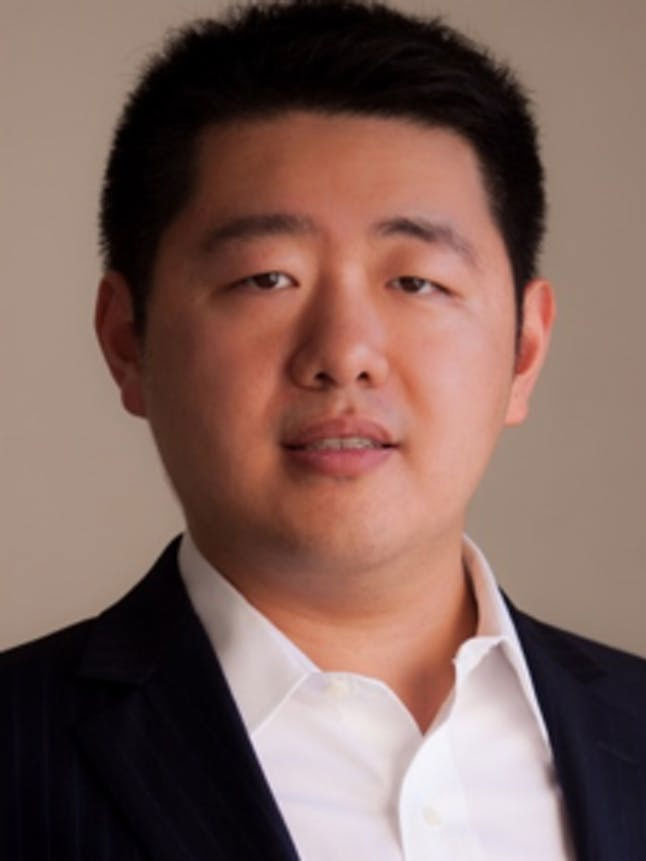
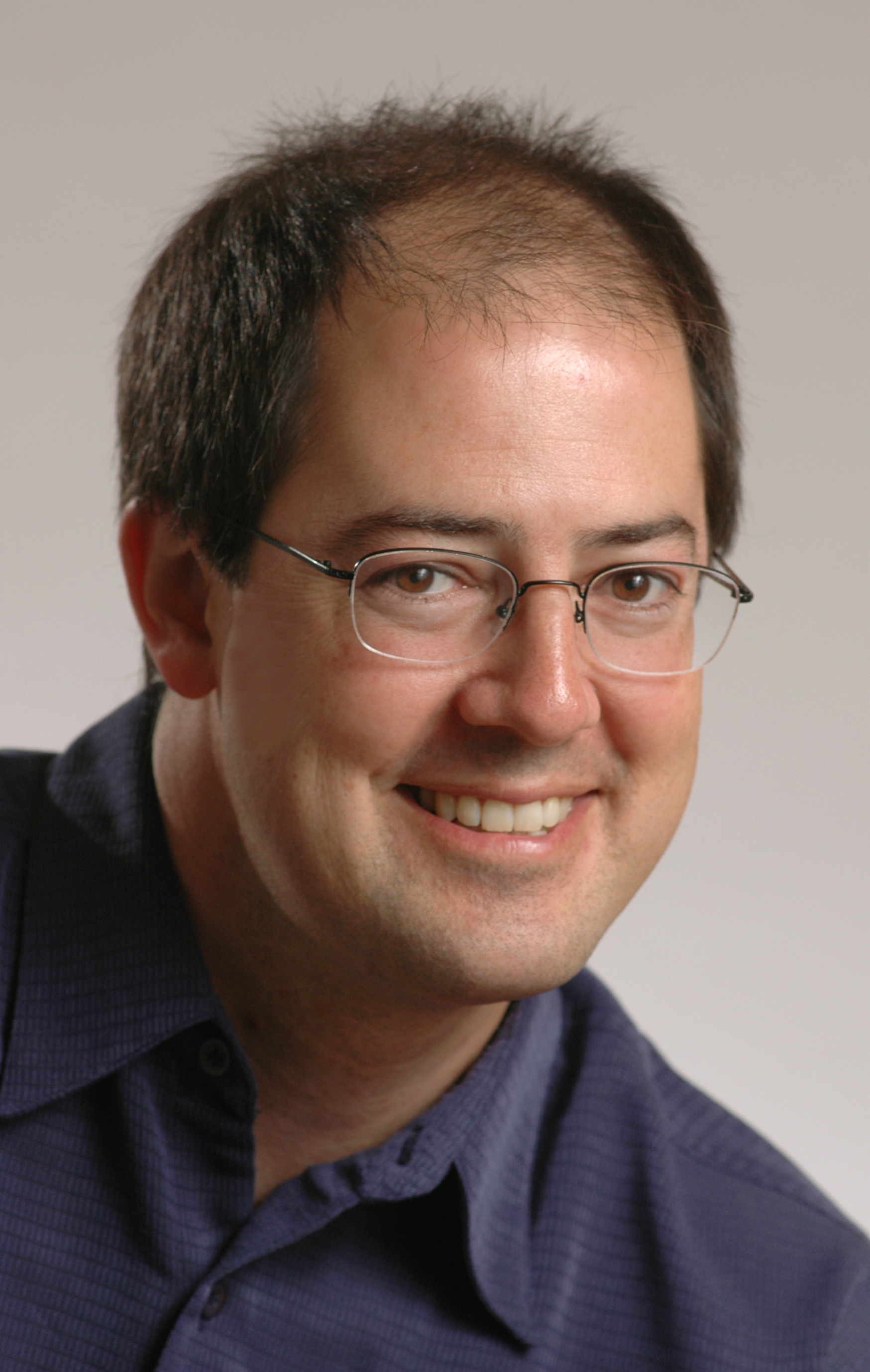
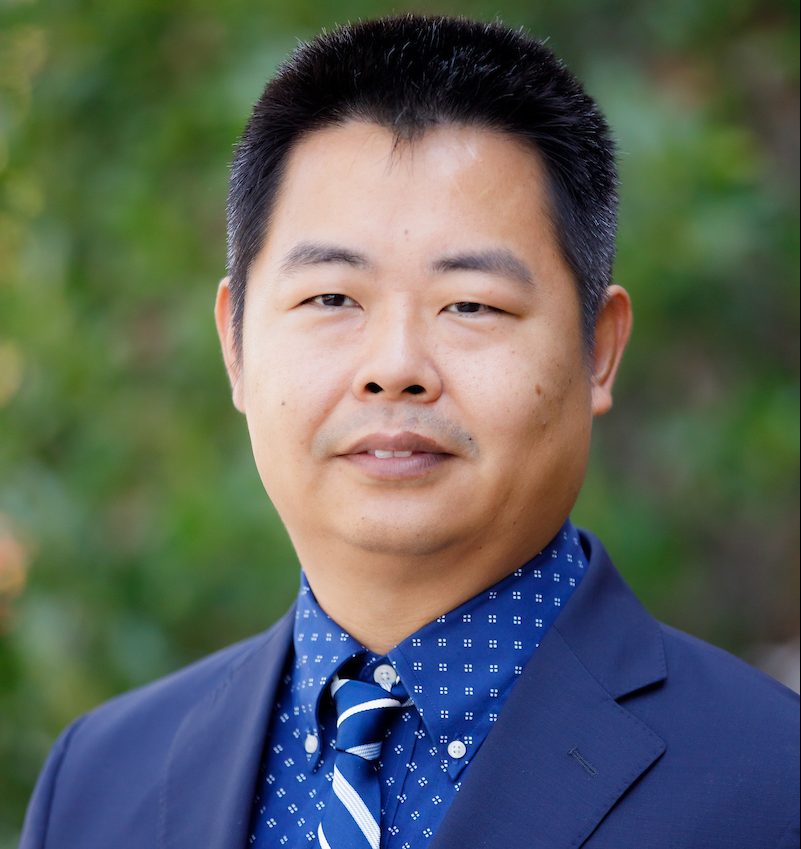
Yanzhi Wang is a Professor in the Department of Electrical and Computer Engineering at Northeastern University , affiliated with the Institute for Experiential AI and the Institute for the Wireless Internet of Things . He holds a PhD from the University of Southern California (2014). His research focuses on real-time AI systems, deep neural network compression, neuromorphic computing, and non-von Neumann architectures. Notable projects include NSF-funded initiatives on age-inclusive urban design, superconducting computing (DISCoVER), and edge device optimization (PatDNN). He has received prestigious awards such as the Army Research Office Young Investigator Award and the Constantinos Mavroidis Translational Research Award. His work emphasizes algorithm-hardware co-design for energy efficiency, with grants from NSF, ARO, and industry partners like Google. Recent research trends reflect his focus on accelerating vision transformers, diffusion models, and large language models for edge computing. He has pioneered methods like AutoViT and Fastcar, addressing latency and resource constraints in mobile platforms. Collaborations span academia and industry, driving innovations in superconducting circuits and neuromorphic systems.
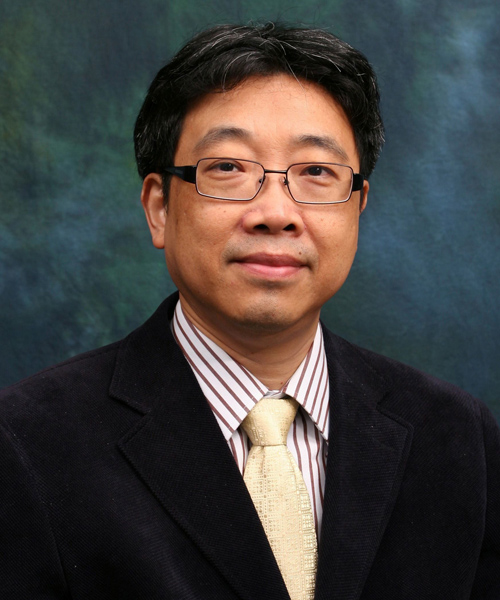
Cao Jiannong is currently a Chair Professor and Director of the University Research Facility in Big Data Analytics at Hong Kong Polytechnic University . He has held academic roles including Assistant Professor at City University of Hong Kong and University Lecturer at the University of Adelaide and James Cook University. His research spans Cloud and Edge Computing , Parallel and Distributed Systems , Big Data Analytics , and Wireless Sensing . Ph.D. in Computer Science, Washington State University (1990) MSc in Computer Science, Washington State University (1986) BSc in Computer Science, Nanjing University, China (1982) His work focuses on solving theoretical and practical challenges in distributed computing , mobile cloud systems , and wireless sensor networks . Recent projects include coupled network embedding models for heterogeneous networks and SDN architectures for vehicular communication. His research also pioneers WiFi-based non-invasive health monitoring and fault-tolerant sensor deployment for structural health applications. Dr. Cao's publications highlight advancements in network embedding , edge computing , and WSN optimization . Key papers address multi-user computation partitioning , energy-efficient SHM systems , and consensus protocols for mobile networks. These works have been cited over 15,000 times, with an h-index of 60. Ministry of Education (China) Natural Science Award (2018) Distinguished Member, ACM (2017) Fellow, IEEE (2014) Best Paper Awards at IEEE DSAA, SMARTCOMP, and WCNC Dr. Cao has advised multiple PhD students, including Linchuan Xu and Weigang Wu , whose research on WSN-based SHM and coupled network embedding has practical impact. His leadership includes directing Hong Kong Polytechnic University's Big Data Research Facility and serving on technical committees for IEEE INFOCOM and ACM/IEEE conferences.
Shiyu Su is an Assistant Professor in the Department of Electrical and Computer Engineering at the University of Waterloo. His research focuses on high-speed data converters, wireless transceivers, digital phase-locked loops (PLL), and AI-assisted analog/mixed-signal design automation. He holds a Ph.D. from the University of Southern California (2019) and teaches courses such as ECE 340 (Electronic Circuits 2) and ECE 432 (Radio Frequency Integrated Devices and Circuits). Education: B.S. from Beijing University of Post and Telecommunication (China) and Queen Mary, University of London (UK), 2011; M.S. and Ph.D. from USC, 2013 and 2019, all in electrical engineering. Research Interests: High-speed ADCs/DACs RF/mm-wave transceivers Time-approximation filters (TAF) Analog/mixed-signal design automation Memristor-based computing Biomedical interfaces Key Awards: IEEE SSCS Predoctoral Achievement Award (2017–2018) Best Student Paper Award at IEEE RFIC (2022) Ming Hsieh Institute Scholar (2019–2020) Lab Focus: The Shiyu Su Lab develops integrated circuits for communications, sensing, and computing, with a focus on AI-driven methodologies and digital-analog co-design. Collaborations include work with Prof. Wei Wu (USC) on memristor-based systems.
Rong Zheng is a Professor in the Department of Computing and Software and a member of the School of Biomedical Engineering at McMaster University, Canada. She holds a Tier-1 Canada Research Chair in Mobile Computing and serves as Acting Chair of the Computing and Software department from July to December 2025. She is also an Associate Member of the Electrical & Computer Engineering department. Education: Ph.D. in Computer Science, University of Illinois, Urbana-Champaign, USA Master of Engineering (thesis) in Electrical Engineering, Tsinghua University, Beijing, China Bachelor of Engineering in Electrical Engineering, Tsinghua University, Beijing, China Dr. Zheng's research lies at the intersection of mobile computing, wireless networking, and machine learning, with a strong focus on applications for aging populations. She directs the NSERC Smart Mobility for the Aging Population CREATE program. Her work encompasses sensor development, wireless network design, and mobile data analytics to address real-world challenges in healthcare, mobility, and data center monitoring. She has developed innovative solutions like the MacQuest campus navigation app and has captured first prize in indoor localization competitions. Her recent publications demonstrate a clear trajectory toward applying wireless sensing technologies (particularly acoustic, Wi-Fi, and mmWave) to health monitoring and mobility assessment for older adults. There's a strong emphasis on developing efficient edge computing solutions that can process data in real-time on resource-constrained devices, as exemplified by her TeamNet framework for collaborative inference on the edge. Her work bridges theoretical advances with practical applications that have social impact. Scientific Awards: Tier-1 Canada Research Chair in Mobile Computing US National Science Foundation CAREER Award (2006) Joseph Ip Distinguished Engineering Fellow (2015-2018) Dr. Zheng leads the Wireless System Research Group (WiSeR) at McMaster University, which has secured significant funding including a $1.65M NSERC CREATE grant for smart mobility research for older adults. Her research has been supported by multiple funding agencies including NSERC, NSF, UH GEAR, and DURIP. She actively mentors graduate students and has developed specialized courses including CAS 772 (Mobile Data Analytics) and CAS 781 (Mobility in the Aging Population). The WiSeR group conducts impactful research on communication, networking, and data analytics issues in Cyber Physical Systems, with applications spanning healthcare, smart infrastructure, and data center monitoring. Their work on data center infrastructure monitoring networks has been featured in EurekAlert and Data Center Dynamics, and they've made significant contributions to indoor localization technology.
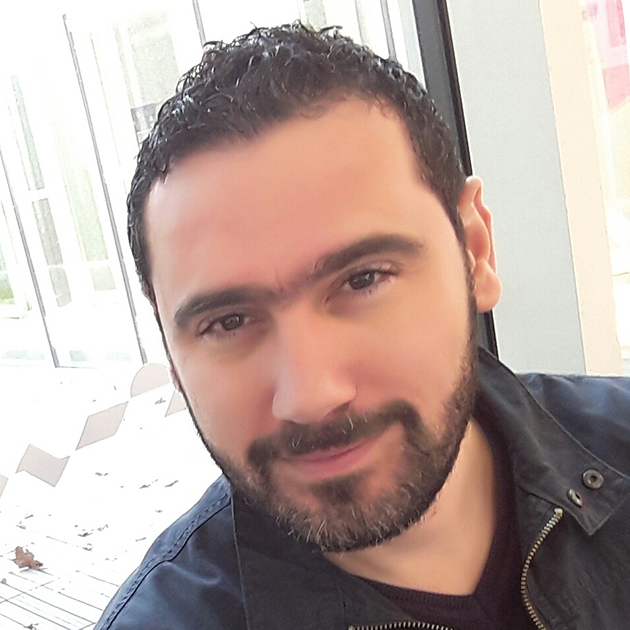
Rida Khatoun is a Professor in Cybersecurity at the Computer Sciences and Networks (Infres) Department at Télécom Paris. He holds a M.Sc. in Computer Engineering and a Ph.D. from the University of Technology of Troyes (UTT), France, awarded in 2004 and 2008, respectively. His research focuses on cybersecurity in networks, including cloud computing security, IoT security, vehicular networks security, intrusion detection systems, and blockchain technology. He has taught at Telecom Paris since 2014, Shanghai Jiao Tong University (SJTU) since 2016, and other institutions in China and France since 2005. His work spans theoretical frameworks and practical solutions for network security challenges. Key research areas include DDoS attack detection, vehicular communication security, and cryptographic protocols. He leads the Cybersecurity and Cryptography (C²) research team and is affiliated with the Laboratoire Traitement et Communication de l'Information (LTCI). His contributions include developing secure routing protocols (e.g., ASROP), statistical trust systems in wireless networks, and blockchain-based authentication for IoT. He has authored over 115 publications, including peer-reviewed articles and conference proceedings, with recent work addressing vehicular platooning security, TLS handshake optimization for C-ITS, and machine learning for cyberbullying detection. Rida’s academic activities include teaching courses on network security protocols, wireless network fundamentals, and QoS mechanisms. He collaborates internationally, contributing to smart city cybersecurity architectures and 6G programmable communications. His research emphasizes practical cybersecurity solutions for emerging technologies, ensuring robust protection against evolving threats in vehicular, IoT, and cloud environments.
Dr. Binbin Xie is an Assistant Professor in the Department of Computer Science and Engineering at The University of Texas at Arlington (UTA). She holds a Ph.D. from the Manning College of Information and Computer Sciences at the University of Massachusetts Amherst, where she was a recipient of the prestigious Google PhD Fellowship in Mobile Computing. Her research focuses on wireless sensing, mobile health, cyber-physical systems, smart IoT, and wireless networking. Dr. Xie’s academic journey includes a tenure-track position at UTA since September 2024. She has received notable awards such as the Emerging Rockstar (IEEE Pervasive Computing, 2025), Rising STARs Award (UT System, 2024), and multiple scholarships including the Krithi Ramamritham Computer Science Scholarship (2023). Her work spans innovative applications in wireless sensing, leveraging LoRa, mmWave radar, and RFID technologies for real-world challenges like in-vehicle sensing and indoor localization. Her recent publications highlight advancements in LoRa sensing coexistence with communication, mmWave radar human sensing using secondary reflections, and combating interference in multi-target localization. She actively contributes to the academic community through service roles, including Technical Program Committee memberships for MobiSys 2025 and EWSN 2025, and as a reviewer for top-tier conferences like IMWUT/UbiComp and journals such as ACM Transactions on Sensor Networks. Dr. Xie’s teaching includes courses like CSE 4321 (Software Testing & Maintenance). Her research and educational efforts aim to bridge theoretical innovations with practical implementations in wireless and IoT systems.
Robert W. Heath Jr. is the Charles Lee Powell Chair in Wireless Communications at the University of California, San Diego (UCSD), part of the Jacobs School of Engineering's Electrical and Computer Engineering Department. Previously, he held the Lampe Distinguished Professorship at North Carolina State University (2020–2023) and the Cockrell Family Regents Chair at The University of Texas at Austin (2002–2020). He is also the President and CEO of MIMO Wireless Inc. His research focuses on MIMO (multiple-input multiple-output) wireless communications, millimeter wave/terahertz systems, and next-generation cellular networks (5G/6G). Key contributions include pioneering work on hybrid beamforming architectures (widely adopted in 5G) and machine learning-driven MIMO configurations. He explores emerging areas like quantum communications and reconfigurable antennas. Education & Career: Extensive academic and industry collaborations; authored/co-authored over 800 papers and 65 patents. Research Interests: MIMO theory, massive MIMO, millimeter wave applications, and interdisciplinary innovations at the intersection of communications, circuits, and photonics. Recipient of prestigious awards including the IEEE Kiyo Tomiyasu Award and multiple best paper honors. His work bridges theoretical advancements and practical implementations through prototyping and industry partnerships. Labs/Teams: Leads a research group advancing MIMO systems for future networks. Future Work: Expanding MIMO into terahertz spectra and quantum communication domains.
Kristofer Pister is a Professor in the Department of Electrical Engineering and Computer Sciences at the University of California, Berkeley. He co-directs the Berkeley Sensor and Actuator Center (BSAC) and the Ubiquitous Swarm Lab. His career spans groundbreaking innovations in Micro/Nano Electro Mechanical Systems (MEMS), Control Systems, and Low-Power Circuits, with a focus on Smart Dust and synthetic insects. Education: Ph.D. and M.S. in EECS from UC Berkeley (1992, 1989); B.A. in Applied Physics from UC San Diego (1986). His research areas include MEMS , Control Systems , Robotics , and Integrated Circuits , with recent work on self-powered micro-sensors, crystal-free radios, and interplanetary swarm networks. Key awards include the ISA Albert F. Sperry Founder Award (2009) , Alexander Schwarzkopf Prize (2006) , and the NSF CAREER Award (1996) . He has authored numerous influential publications in wireless sensor networks and microrobotics. His lab, Ubiquitous Swarm Lab , explores distributed robotics and swarm intelligence. Pister emphasizes open collaboration in research, ethical conduct in academia, and efficient resource utilization for graduate students.
Morteza Fayazi is an Assistant Professor in the Department of Electrical and Computer Engineering at the University of Utah, with an adjunct position in the Kahlert School of Computing. His research focuses on Electronic Design Automation (EDA), applying machine learning to automate analog and mixed-signal circuit design, and developing high-performance computing systems. He holds a B.Sc. from Sharif University of Technology, and M.S.E./Ph.D. degrees from the University of Michigan. His research interests include AI-driven EDA, RF/circuit automation, and energy-efficient processors. Key achievements include the MEDAL lab’s work on terahertz radars, systolic-array processors (e.g., DAP and Versa), and open-source frameworks like FASCINET and Tablext. He has received awards such as the 2024 College of Engineering Dean’s ETR Fund and the 2017 Outstanding Undergraduate Thesis Award. Teaching responsibilities include multiple iterations of the Digital System Design course (ECE/CS 3700). His work spans over 15 peer-reviewed articles in IEEE Transactions, ACM, and top conferences like ICCAD and VLSI-SOC, emphasizing automation, efficiency, and AI integration in hardware design.
Gene Tsudik is a Distinguished Professor of Computer Science at the University of California, Irvine (UCI), with a career spanning over two decades. He obtained his Ph.D. in Computer Science from the University of Southern California (USC) in 1991, focusing on access control in the Internet. His research spans multiple areas including computer and network security, applied cryptography, and digital privacy, with a recent emphasis on database privacy, genomic privacy, and usable security. His notable contributions include the Inter-Domain Policy Routing (IDPR) protocol, KryptoKnight for network security, and Tree-Based Group Key Agreement protocols. He has over 210 publications and 8 patents. From 2002 to 2007, he served as Associate Dean of Research and Graduate Studies at UCI's School of Information and Computer Sciences and currently directs the UCI Secure Computing and Networking Center (SCONCE). Research Keywords : Cybersecurity, Cryptography, Privacy, Network Security, Digital Signatures, Genomic Data Protection. Scientific Awards : IEEE Fellow (2012), ACM Fellow (2014), AAAS Fellow (2016), Fulbright Senior Scholar (2007), and IFIP Fellow (2020). Professor Tsudik has supervised 18 PhD students and held visiting positions at universities across Europe and Asia. His recent publications focus on secure hardware attestation, biometric authentication, and social media data privacy.
Dr. Jiaqi Gong serves as Associate Professor in Computer Science and Adjunct Associate Professor in Mechanical Engineering at The University of Alabama's College of Engineering, while directing the Alabama Center for the Advancement of Artificial Intelligence. His academic foundation includes: B.S. in Engineering, China University of Geoscience (2004) Ph.D. in Engineering, Huazhong University of Science and Technology (2010) Dr. Gong's research pioneers human-AI convergence through cyber-physical systems and smart health technologies, developing mobile/wearable platforms to enhance human perceptual, cognitive, and physical capabilities. His work spans artificial intelligence, machine learning, computer vision, and IoT with applications in healthcare, environmental monitoring, and education. The Sensor-Accelerated Intelligent Learning (SAIL) laboratory he founded drives innovation in behavior change interventions, human movement modeling, and educational data mining. Recent publications reveal strong interdisciplinary trends: healthcare AI dominates with medication adherence prediction and surgical classification systems, while environmental applications feature flood-risk communication and drought analysis. His work increasingly integrates generative AI and LLMs across domains, demonstrating methodological innovation in federated learning, knowledge graphs, and explainable storytelling frameworks. Notable recognitions include: Best Student Paper Award, IEEE/ACM Connected Health Conference (2022) Best Student Paper Award, Body Sensor Networks Conference (2019) Data Challenge Win, IEEE Biomedical Health Informatics (2018) Best Paper Award, Body Area Networks Conference (2014) Best Demonstration Award, IEEE Wireless Health Conference (2014) Dr. Gong leads significant funded projects including a $2M CDC/NIOSH grant for first responder safety and $3M NSF funding for hydrologic research. As SAIL laboratory director, he mentors students in developing clinically deployed technologies for multiple sclerosis, dementia, and mental health. Future work focuses on scaling AI applications in chronic disease management and climate resilience through the Alabama AI Center. The SAIL laboratory (founded 2017) operates as a multidisciplinary hub developing wearable/mobile systems for health applications, with active collaborations across medical clinics and engineering departments for real-world deployment of behavior change interventions and movement analysis tools.
Wenyao Xu is a Professor and Associate Department Chair in the Department of Computer Science and Engineering at the University at Buffalo, School of Engineering and Applied Sciences. His research focuses on embedded systems, body sensor networks, biomedical signal analytics, telemedicine, and human-computer interaction. He leads the Embedded Sensing and Computing (ESC) Lab, pioneering innovations in wearable health monitoring and non-invasive medical technologies. Dr. Xu holds a PhD in Electrical and Electronics Engineering from UCLA (2013), an MEng in Embedded Systems from Zhejiang University (2008), and a BEng in Electrical Engineering from Zhejiang University (2006). He has received multiple accolades, including the UB Exceptional Scholar—Sustained Achievement Award (2021) and SEAS Senior Career Researcher of the Year (2020). His research spans cutting-edge areas like mmWave-based sensing for health monitoring, mHealth applications for behavioral interventions (e.g., Sense2Quit app for smoking cessation), and wearable devices for gait analysis and vital sign detection. Recent work includes advancements in through-clothing wound monitoring, voice- and gesture-based authentication systems, and AI-enhanced medical imaging. Publications reflect his interdisciplinary impact, with over 150 peer-reviewed papers in top venues. His lab collaborates closely with clinical partners to translate technologies into practical healthcare solutions. Dr. Xu also emphasizes mentorship, having been honored with the President Emeritus and Mrs. Meyerson Award for teaching excellence (2020).
Dimitra Psychogiou is a Full Professor of Microwave Engineering at University College Cork and Principal Investigator at Tyndall National Institute's CONNECT Centre in Cork, Ireland. She leads the Advanced RF Technology Group, driving innovation in reconfigurable RF systems for next-generation wireless networks. Her academic credentials include: Dipl.-Eng. in Electrical and Computer Engineering, University of Patras (2008) Ph.D. in Electrical Engineering, ETH Zurich (2013) Prof. Psychogiou's research pioneers reconfigurable microwave filters , non-reciprocal RF components , and additive manufacturing for antenna systems . Her work bridges theoretical microwave engineering with practical implementations in 5G/6G front-ends, emphasizing sustainability through hyperflexible filtering architectures that reduce hardware complexity and energy consumption. Key innovations include acoustic-wave resonator filters and 3D-printed RF components enabling unprecedented miniaturization. Analysis of her 2022-2025 publications reveals a strategic shift toward multifunctional RF integration , where filtering coexists with isolation, amplification, and switching in single modules. This trend addresses critical industry needs for compact, software-defined radio front-ends in satellite communications and IoT networks, with increasing emphasis on reflectionless topologies and spatiotemporal modulation techniques. Her scientific recognition includes: 2023 MTT-S Outstanding Young Engineer Award 2021 Roberto Sorrentino Prize 2021 SFI Research Professorship 2020 NSF CAREER Award 2020 URSI Young Scientist Award UC Boulder Junior Faculty Research Award Prof. Psychogiou actively shapes her field through leadership roles as Chair of IEEE MTT-13 Committee and Secretary of USNC-URSI Commission D, while serving as Associate Editor for IEEE MWCL and IJMWT. Her group collaborates extensively with semiconductor foundries and wireless infrastructure companies to transition lab innovations to commercial applications. The Advanced RF Technology Group operates state-of-the-art facilities for GaAs MMIC prototyping, 3D-printed RF component fabrication, and full-wave electromagnetic characterization, supporting Ireland's strategic position in European telecommunications research.
Christof Paar is a Professor of Embedded Security at Ruhr University Bochum's Faculty of Computer Science. His work focuses on hardware security, cryptography, and embedded systems security. He leads the Embedded Security Group within the CASE Cluster of Excellence (Cyber Security in the Age of Large-Scale Attacks), addressing cutting-edge challenges in hardware Trojans, side-channel attacks, and cryptographic engineering. His research spans FPGA and IoT security, with contributions to physical-layer security, wireless jamming defenses, and tamper-resistant systems. Research Interests: Paar's expertise lies in hardware-software co-design for security, with a focus on embedded systems. His work includes analyzing vulnerabilities in FPGAs, developing countermeasures against side-channel attacks, and exploring physical-layer security mechanisms. He also investigates the human factors in hardware reverse engineering and the implications of adversarial machine learning on security systems. Notable Work: Recent publications highlight breakthroughs in detecting hardware Trojans across CMOS generations, breaking industry-standard IP protection mechanisms (IEEE 1735), and proposing novel defenses like IRShield against adversarial wireless sensing. His group actively contributes to standards for secure embedded systems and IoT devices, emphasizing practical implementations.
Chita R. Das is a Professor at Pennsylvania State University, known for extensive contributions in computer architecture, machine learning, and high-performance computing. Their research focuses on optimizing hardware-software co-design for edge computing, cloud infrastructure, and energy-efficient systems. Key areas include FPGA acceleration, GPU optimization, and serverless computing frameworks. Das collaborates frequently with institutions like AMD and Intel, addressing challenges in parallel computing and distributed systems. Their work bridges theoretical advancements with practical applications in recommendation systems, bioinformatics, and real-time video processing. Research interests span across hardware acceleration techniques, cloud resource management, and sustainable computing. Notable projects include adaptive training frameworks for intermittent power environments and neural-augmented game streaming for mobile platforms. Das's publications often address performance bottlenecks in modern architectures and propose novel solutions for latency and energy efficiency. Recent articles highlight innovations in serverless computing cost optimization, low-bandwidth VR streaming, and FPGA-based bioinformatics tools. Their contributions are characterized by interdisciplinary approaches combining computer architecture with machine learning and embedded systems.