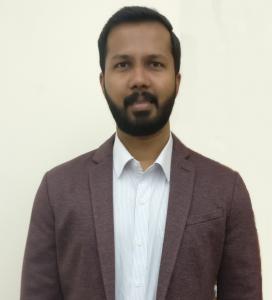
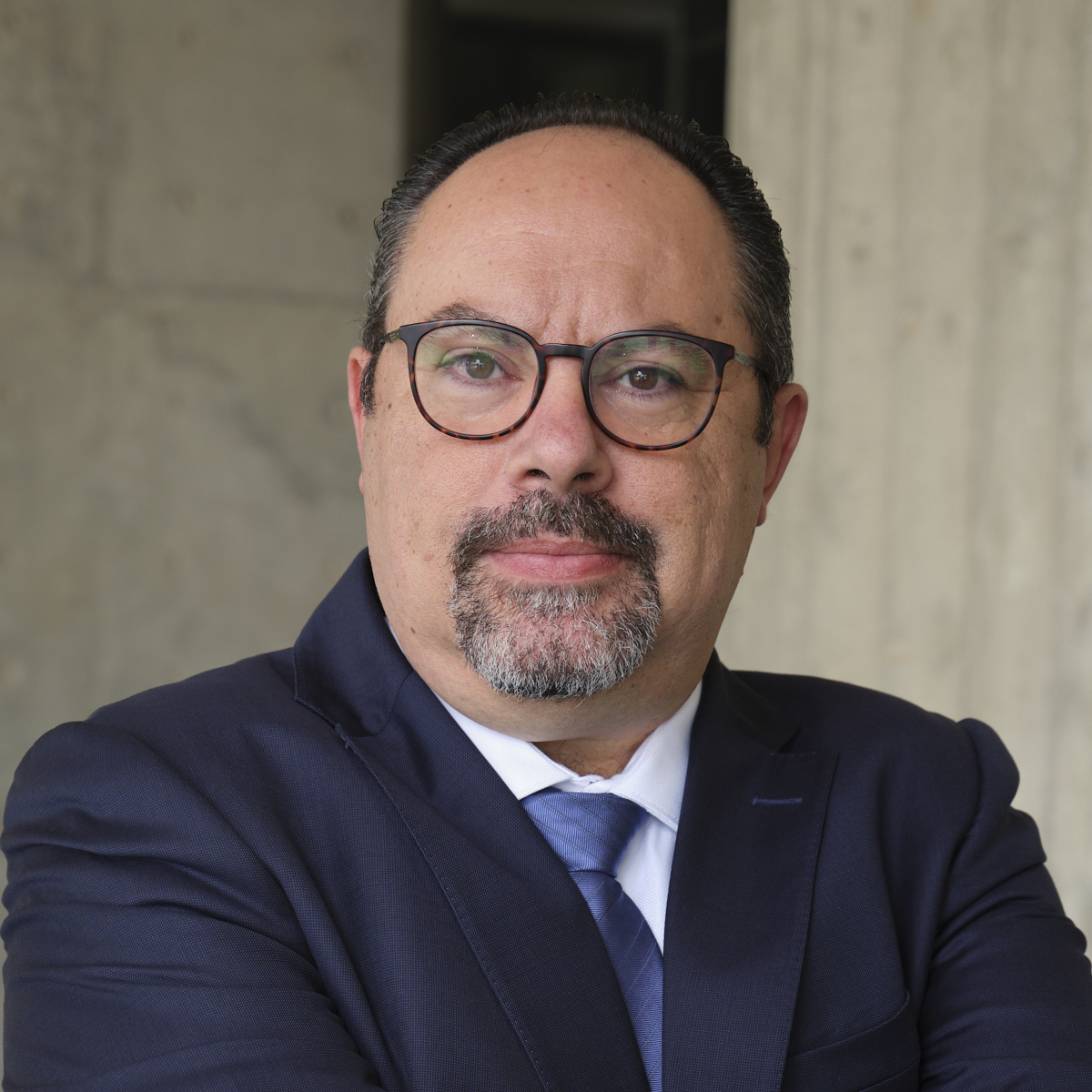
Ramakrishnan Durairajan is an Associate Professor in the School of Computer and Data Sciences at the University of Oregon, where he co-directs the Oregon Networking Research Group (ONRG). He holds a Ph.D. and M.S. in Computer Sciences from the University of Wisconsin-Madison and a B.Tech in Information Technology from Anna University. His research employs data-driven approaches to enhance internet robustness, focusing on: Network infrastructure measurement using AI/ML and statistical methods Mitigation of intrinsic threats (e.g., terabit-scale DDoS attacks) Resilience against extrinsic threats (e.g., climate disasters) Innovations in programmable optics and multi-cloud systems Recent publications explore satellite-based internet resilience, optical topology programming, and dynamic telemetry systems, reflecting a strong emphasis on cybersecurity and network efficiency in high-stakes environments. Notable scientific honors include: NSF CAREER Award and CRII Award Best Paper Awards at ACM CoNEXT/SIGCOMM Popular Science's 'Best of What's New in Security' Ripple Faculty Fellowship He leads federally and industry-funded research projects totaling over $5M, advises graduate/undergraduate researchers, and consults for startups on network security and cloud architecture challenges.
Vasos Vassiliou is an Associate Professor in the Department of Computer Science at the University of Cyprus and Founding Academic Member & Research Group Leader at the Smart Networked Systems (SNS) Multidisciplinary Research Group within the CYENS Research Center. His work focuses on systems and protocols for improving network performance, reliability, and security in next-generation communication systems (5G/6G), with a strong emphasis on distributed AI/ML techniques, device-to-device (D2D) networking, IoT security, programmable metasurfaces, and intelligent network resource management. Department of Computer Science, University of Cyprus CYENS Research Center, Cyprus His research spans multiple subfields including D2D communication (interference management, device discovery), IoT security (blockchain solutions, intrusion detection), network optimization (traffic prediction, power management), and programmable metasurfaces for advanced beam steering. Recent projects like ERMIS (3D Indoor Positioning), ADROIT-6G (DAI-driven architecture), and METACITIES (digital twins/metaverse) demonstrate his leadership in cutting-edge research. His publications reveal a strong focus on distributed intelligence , machine learning applications , and security protocols across wireless systems. He has supervised multiple PhD students to completion and actively contributes to IEEE/ACM as Senior Member. IEEE Senior Member ACM Senior Member Teaching responsibilities include core courses like Computer Networks and specialized postgraduate modules on IoT Networks .
Greta Vallero serves as a Fixed-term Assistant Professor in the Department of Electronics and Telecommunications (DET) at the Polytechnic University of Turin, affiliated with the College of Computer, Film, and Mechatronics Engineering. She actively contributes to multiple degree programs including Communications Engineering, Computer Engineering, and Electronic and Communications Engineering. Her research focuses on telecommunications infrastructure innovation , particularly in wireless network optimization, energy efficiency, and resilience. Key areas include HAPS integration for traffic management, AI-driven environmental impact reduction in network operations, and microgrid applications for maintaining network functionality during power disruptions. Her work bridges theoretical advancements with practical implementations to address modern telecommunications challenges. Recent publications reveal a strong trend toward sustainable network architectures , combining machine learning techniques with power system innovations. Her 2024 works demonstrate significant advancements in LSTM-based environmental impact reduction, HAPS offloading strategies, and microgrid integration for RAN resilience, reflecting a cohesive research direction focused on environmentally conscious network design. Vallero supervises four active PhD students in Electrical, Electronics, and Communications Engineering: Maoquan Ni, Jun Yin, Mohammadreza Jokar, and Aurora Martiny. Her collaborative network includes prominent researchers like Michela Meo, with whom she has co-authored multiple high-impact publications. She teaches core networking courses across multiple engineering programs, including Computer Networks and Communication Networks, while contributing to specialized labs like the Internet Performance and Troubleshooting Lab. Her research group operates within the Department of Electronics and Telecommunications, focusing on next-generation network technologies with emphasis on sustainability metrics and resilience engineering. Current projects integrate telecommunications infrastructure with renewable energy systems and AI-driven optimization frameworks.
Aamir Mahmood is an Associate Professor at the Department of Computer and Electrical Engineering at Mid Sweden University and an Adjunct Professor at NUST, Pakistan. His research focuses on 5G/6G wireless communication , Industrial IoT , RF interference management , and time synchronization . Education: B.Sc. NUST (2002), M.Sc. and Ph.D. Aalto University (2008, 2014) Collaborations: Nokia Research Center, IEEE Sweden VT-COM-IT His recent work explores STAR-RIS for 6G IoT, NOMA for industrial networks, and deep reinforcement learning in MEC systems. Key trends include ultra-reliable communication for industrial automation and interference management in heterogeneous networks. Awards : IEEE WCNC’13 Best Paper Ericsson Research Foundation Grant Nokia Foundation grant STINT grants IEEE Sweden VT-COM-IT Best Student Journal Paper Award Swedish Institute funding Interreg Aurora funding Awarded 80+ peer-reviewed publications and active in IEEE leadership roles.
Qi Luo is an Assistant Professor in the Department of Business Analytics at Tippie College of Business, University of Iowa. His research focuses on developing data-driven decision-making models in supply chain management, emerging mobility services, and healthcare systems, alongside designing efficient algorithms for online learning, dynamic games, and nonlinear optimization. Education: While specific educational background details are not provided in the text, Dr. Luo's extensive research portfolio and academic position suggest advanced training in operations research, business analytics, or related quantitative fields. Research Interests: Core Areas: Data-driven decision making, supply chain optimization, urban transportation systems, healthcare operations Methodological Focus: Online learning algorithms, dynamic game theory, stochastic optimization, nonlinear programming Application Domains: Emerging mobility services (ride-sharing, autonomous vehicles), multimodal transit systems, inventory management with fixed costs, clinical trial optimization Research Impact: Dr. Luo's work spans from theoretical algorithmic developments to practical applications in transportation and healthcare. His publications demonstrate a consistent focus on solving real-world problems through advanced optimization techniques, with particular emphasis on stochastic modeling and learning-based approaches. The research addresses critical challenges in modern transportation systems including ride-pooling, multimodal transit, and autonomous vehicle operations, as well as healthcare applications like clinical trial design and robotic surgery optimization. Scientific Recognition: TRB Kikuchi-Karlaftis Best Paper Award INFORMS APS Best Student Paper (finalist) IEEE I-Sim Best Student Paper Award Research Funding & Support: Principal Investigator: "Early-Stage Clinical Trials with Patient Choice" - National Science Foundation (NSF), funded June 2023 - August 2026 ($XXX,XXX) Investigator: "Exploring Passenger-Parcel Comodality Transportation in Rural Regions" - Tippie College of Business, funded March 2025 - February 2026 Professional Affiliations: Dr. Luo maintains active memberships in leading professional organizations including the Association for Computing Machinery (ACM) since 2020, Institute of Electrical and Electronics Engineers (IEEE) since 2019, and Institute for Operations Research and the Management Sciences (INFORMS) since 2015.
Mauricio ITURRALDE serves as a Teacher-researcher at CESI La Rochelle Campus, France, within the Engineering and Digital Tools Research Team. His expertise bridges telecommunications engineering and cybersecurity, with significant contributions to mobile network optimization and security protocols. His academic credentials include: Doctorate in Networks, Telecom, Systems and Architecture from National Polytechnic Institute of Toulouse and ENSEEIHT (2012) Master's Degree in Computer Systems Security from Télécom SudParis and Paris EST University (2009) ITURRALDE's research centers on 5G/LTE networks, quality of service optimization, digital twin implementation for Industry 5.0, and cyber security solutions. His work addresses critical challenges in resource allocation using game theory, energy-efficient network design, and security mechanisms for mobile communications and transportation systems. Analysis of his 15 publications (2011-2020) reveals a consistent focus on mobile network performance, with evolving emphasis from LTE resource allocation (2011-2013) to 5G sleep strategies (2019) and transportation applications (2020). His methodologies frequently integrate machine learning and game theory to solve real-world network optimization problems. No scientific awards are documented in the provided materials. Information regarding student advising and research grants is unavailable in the source text. He actively contributes to the Engineering and Digital Tools Research Team at CESI La Rochelle, which develops digital innovation solutions for engineering contexts with particular focus on network technologies and security applications.
Iñaki Vazquez Gomez is a Lecturer and Researcher at the University of Deusto , affiliated with the College of Engineering and Department of Computing, Electronics and Communication Technologies . He holds a PhD in Computer Science and Artificial Intelligence (University of Deusto and Lancaster University) and served as Director of Deusto Institute of Technology (2020-2023). His research focuses on Reinforcement Learning , Internet of Things , and Cognitive Robotics , with applications in human-robot interaction and ambient intelligence. Member of European Internet of Things Council Founder of technology startups Editorial board member of International Journal of Ambient Computing and Intelligence His 15 most recent publications (2005-2024) span themes of Autonomous Systems , Context-Aware Computing , and Smart Environments , with subtopics including semantic device communication, adaptive positioning algorithms, and collaborative robotics architectures. 2024: Adaptive Robot Behavior via Reinforcement Learning 2021: Gesture Recognition for Resource-Constrained Devices 2015: Context-Aware Service Matching in AAL Scientific honors include: X Premio UD-Banco Santander de Investigación (2015) Sexenio de Investigación (2018-2025) Profesor Doctor de Universidad Privada (2009-2025) He supervised PhD students like Asier Gonzalez Santocildes and Ignacio Fidalgo Astorquia, while leading grants such as AI-Driven Cognitive Robotics (2021-2024) and Quantum Technologies (2021-2022). His work includes developing middleware for smart spaces and founding the Sentient Things project for self-adapting environmental systems.
Carla Fabiana Chiasserini is a Full Professor and Deputy Director at the Department of Electronics and Telecommunications (DET) at the Polytechnic University of Turin. She serves as a Component of the CARS@PoliTO Interdepartmental Center - Center for Automotive Research and Sustainable Mobility and acts as a Spoke leader for research and innovation activities. Her academic career spans multiple prestigious institutions and she maintains active collaborations worldwide. Professor Chiasserini's research interests span algorithm design and analysis, cellular networks, connected cars, edge computing, heterogeneous wireless networks, Internet of Things, machine learning, mobile networks, mobile services, and performance evaluation. Her work bridges theoretical algorithm development with practical applications in next-generation telecommunications systems. She leads the TNG research group at DET and focuses on Machine Learning for Networking, with specific research lines in Network Slicing in 5G, Connected autonomous cars, and Opinion dynamics in social networks. Her research aligns with Sustainable Development Goals including Industry, Innovation and Infrastructure; Sustainable Cities and Communities; and Climate Action. Her recent publications demonstrate a strong trend toward integrating machine learning with edge computing, 5G/6G systems, and automotive applications. The research spans from theoretical algorithm development to practical implementations for XR offloading, distributed service provisioning, reliability assessment of AI-based automotive systems, and satellite networking. Her work shows increasing focus on practical implementations with industry applications, particularly in the automotive sector and next-generation telecom infrastructure. Best Paper Award - Wireless Telecommunications Symposium (WTS) 2018 Best Paper Award - IEEE WoWMoM 2016 Best Paper Award Runner-up at ACM MSWiM 2016 Top Paper Award at the ACM CoNEXT 2016 Cloud-Assisted Networking (CAN) Workshop Best Paper Award at SPACOMM 2014 Best Paper Award at AD HOC NOW 2014 2010 Editor of the Year Award for the Ad Hoc Networks journal (Elsevier) IEEE Fellow (2018-) ACM Fellow (2024-) Professor Chiasserini actively advises numerous PhD students working on cutting-edge topics in network systems, with recent graduates focusing on edge services in 5G networks, resource-aware learning in mobile networks, and deployment of microservices at the network edge. She leads multiple significant research grants including O-RAN (2024-2027), CSI-Future (2023-2025), RESTART - Spoke 4 (2023-2025), PREDICT-6G (2023-2025), and several others funded by PNRR, EU Horizon programs, and industry partnerships. Her work has substantial practical impact through numerous patents including OffloaDNN and SEM-O-RAN. She leads the TNG research group within the Department of Electronics and Telecommunications and participates in the CARS@PoliTO Interdepartmental Center for Automotive Research and Sustainable Mobility. Her laboratory work focuses on practical implementations of theoretical concepts, particularly in the areas of connected vehicles, edge computing, and 5G/6G systems. She maintains strong industry connections through projects with Intel Corporation and other technology partners, ensuring her research has direct real-world applications.
Keivan Navaie is a Professor of Intelligent Networks at Lancaster University’s School of Computing and Communications. He serves as a member of the Independent Scientific Advisory Committee at the Alan Turing Institute, overseeing the £100 million BridgeAI programme, and previously as Principal AI Technology Advisor to the UK Information Commissioner’s Office (ICO). He is recognized with Fellowships from the Institution of Engineering and Technology (IET), Chartered Engineer status in the UK, Senior Fellowship of the Higher Education Academy (HEA), and the IEEE Young Investigator Award. Research Focus: Wireless communications, mathematics, artificial intelligence, 6G networks, blockchain technology, edge computing, cognitive radio networks, and non-orthogonal multiple access (NOMA). Supervision: Actively supervises PhD students in areas like wireless communications and mathematical modeling. Projects: Involved in distributed learning, blockchain integration, 6G research, and spectrum sharing systems. Awards: IEEE Young Investigator Award, Fellow of IET, Chartered Engineer, Senior Fellow of HEA.
Audun Jøsang is a Professor of Cybersecurity at the University of Oslo and holds a Visiting Professor position at Queensland University of Technology (QUT) . His work focuses on trust and reputation systems in digital environments, with notable contributions to subjective logic —a mathematical framework for reasoning under uncertainty. Education : MSc in Information Security from Royal Holloway, University of London , MSc and PhD in Telecommunications from Norwegian University of Science and Technology (NTNU) Books : Subjective Logic: A Formalism for Reasoning Under Uncertainty (2016), Cybersecurity: Technology and Governance (2011) His research spans cybersecurity , artificial intelligence , and risk assessment , with applications in online marketplaces , social media , and decision-making under uncertainty . He has developed mathematical models for uncertainty-aware influence propagation and competitive information spread using subjective logic. Audun Jøsang’s work bridges theoretical foundations and industrial applications of computational trust and security analytics . His recent publications explore ethical AI , fair federated learning , and dynamic intelligence assessment for artificial general intelligence development.
Lena Wosinska is a Research Professor at Chalmers University of Technology, specifically in the field of Optical Networks since June 2019. Prior to her current position, she served as a Professor of Telecommunications at KTH Royal Institute of Technology, where she established and directed the Optical Networks Lab.
Yao Zhu is a Visiting Professor at the Chair of Information Theory and Data Analytics, RWTH Aachen University . His research focuses on advanced wireless communication systems, particularly in Edge Computing , Ultra-Reliable Low-Latency Communication (URLLC) , and Physical Layer Security , leveraging Finite Blocklength Codes for next-generation network optimization. Key research areas include: Optimization of resource allocation and task scheduling in distributed edge learning and fog computing environments Reliability and energy efficiency trade-offs in Industrial IoT and V2X networks Novel applications of NOMA (Non-Orthogonal Multiple Access) and short-packet communication for secure and fresh data transmission Integration of physical layer deception with semantic reliability models His work explores the interplay between telecommunications and computer science principles to address challenges in low-latency, high-reliability networked systems. The Chair of Information Theory and Data Analytics serves as his academic base, focusing on theoretical and practical advancements in data-driven communication frameworks.
Hossein Saidi is a Professor in the Department of Electrical and Computer Engineering at Isfahan University of Technology, Iran. His research spans High Speed Switching Networks, QoS Algorithms in Broadband Networks, Internet Security, Cryptography, Wireless Networks, Information Theory, and Coding. Research Interests: High Speed Switching Networks, QoS Algorithms, Internet Security, Cryptography, Wireless Networks, Information Theory, Coding Email: hsaidi@iut.ac.ir His recent publications focus on Software-Defined Networking (SDN), Blockchain Consensus, Wireless IoT, and Energy Management Systems. Key themes include network optimization, security protocols, distributed systems, and hardware design.
Dr. Yi Pan is a Distinguished University Professor and Chair of the Department of Computer Science at Georgia State University. He holds a B.Eng. and M.Eng. from Tsinghua University (China) and a Ph.D. from the University of Pittsburgh (USA). His research focuses on parallel computing, wireless networks, bioinformatics, and machine learning, with over 330 publications and 39 authored/edited books. Dr. Pan has organized international conferences and delivered over 40 keynote speeches globally. Education: B.Eng., Computer Engineering, Tsinghua University, 1982 M.Eng., Computer Engineering, Tsinghua University, 1984 Ph.D., Computer Science, University of Pittsburgh, 1991 Research Interests: Dr. Pan’s work spans parallel and cloud computing, wireless networks, and bioinformatics. His contributions include scalable algorithms for functional module discovery in protein networks, self-defense mechanisms for cyber threats, and efficient routing protocols for sensor networks. Recent efforts integrate AI into healthcare, such as lesion localization in OCT imaging and autism spectrum disorder diagnosis via EEG analysis. Awards & Recognition: IEEE Distinguished Speaker (2000–2002) Yamacraw Distinguished Speaker (2002) Listed in Who’s Who in America and Who’s Who in Computational Science Awards from NSF, AFOSR, IBM, and Mellon Foundation Advising & Leadership: As department chair, Dr. Pan oversees interdisciplinary collaborations between Computer Science and Computer Information Systems. He has advised numerous students and holds editorial roles in 15 journals, including several IEEE Transactions. His grants focus on advancing AI-driven healthcare, cybersecurity, and computational biology. Labs & Teams: Leads research initiatives in bioinformatics, medical AI, and parallel computing, collaborating with industry partners like IBM and Shell Oil. Active in organizing conferences such as the IEEE International Conference on Bioinformatics and Biomedicine.
Dejan Filipovic is a Professor and holds the Hudson Moore Jr. Chair in Engineering at the University of Colorado Boulder, where he leads the Antenna Research Group (ARG) in the Department of Electrical, Computer, and Energy Engineering. His research focuses on advanced antenna systems for applications including communications, radar, and electronic warfare, with particular emphasis on antenna theory and design. Professor Filipovic's research specializes in antenna theory and design with emphasis on applications of electrically small antennas (ESAs) , simultaneous transmit and receive (STAR) , and wideband microwave and millimeter wave communication systems. His work addresses challenging problems in electronic warfare front-ends, spectrum sensing, and direction finding applications, often incorporating innovative fabrication techniques including 3D printing for rapid prototyping. Analysis of Professor Filipovic's recent publications reveals a consistent focus on wideband antenna systems spanning from HF through millimeter-wave frequencies (0.5-110 GHz). His research group demonstrates expertise in retrodirective and direction-finding arrays , full-duplex communication systems , and the application of additive manufacturing to antenna design. A notable trend is the integration of machine learning techniques to enhance traditional antenna system performance, particularly in direction finding applications. Key scientific recognition includes: NSF Graduate Fellowship Award (awarded to students in his group) Honorable Mention by the NSF Graduate Research Fellowship committee Silver medal in Student Paper Competition at the 2021 ACES Conference Excellence in Outreach Award for departmental and community contributions Professor Filipovic has mentored numerous graduate students to completion of their degrees, with recent thesis defenses including Gabriel A. (MSc on Deployable Electrically Small Folded Cylindrical Helix HF Antenna), Dong-Chan Son (PhD on Wideband, Highly Directional Antennas), and Songyi (PhD on Unconventional Arrays for HF and Other Applications). His research group maintains strong industry and defense connections, as evidenced by visits from notable figures such as Dr. Heidi Shyu, Under Secretary of Defense for Research and Engineering. The ARG laboratory operates a sophisticated research facility featuring an NSI 700S-30 Spherical near-field/far-field measurement system (1-110 GHz), multiple vector network analyzers including Agilent PNAx with OML extensions, and advanced 3D printing capabilities for rapid antenna prototyping. Current research projects include the Signal Processing Electronic Attack RF (SPEAR) Front-End, Flexible and Modular RF Systems for Space Constrained Decoys, and Circulator In Aperture (CIA) research.