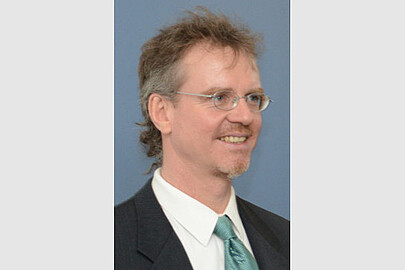
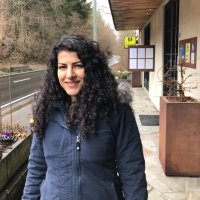
Prof. Dr. Haris Gačanin is a faculty member at RWTH Aachen University, affiliated with the Institute for Distributed Signal Processing under the College of Electrical Engineering. His research focuses on integrating machine learning with wireless communication systems, particularly in industrial IoT, edge computing, and network optimization. Current academic rank: Professor Contact: harisg@dsp.rwth-aachen.de Research Interests: Wireless systems, machine learning, signal processing, and network optimization. Key contributions include: Adaptive resource allocation in IIoT and vehicular networks AI-driven channel estimation and feedback mechanisms Security-oriented emitter identification via metric learning Federated/transfer learning for edge environments Hardware-efficient deep learning models for mmWave and THz communications Methodological Focus: Combines reinforcement learning, attention mechanisms, and robust neural architectures with practical implementations on FPGA and vehicular systems.
Choong Seon Hong is a Professor at Kyung Hee University's Department of Computer Science and Engineering in Yongin, South Korea. He earned his PhD in Instrumentation Engineering from Keio University, Japan, in 1997. His research focuses on next-generation wireless networks, with emphasis on 6G systems, federated learning, edge computing, and network optimization. Recent collaborative work explores semantic communication, UAV deployment, and multimodal learning frameworks. His publications highlight technical innovations in: Wireless network optimization for terrestrial, aerial, and satellite systems Federated learning architectures with knowledge distillation and prototype transfer Energy-efficient resource allocation in IoT and vehicular networks Security frameworks for EV charging stations and Open RAN systems Current trends show strong collaboration with Zhu Han, Walid Saad, and younger researchers like Apurba Adhikary and Yan Kyaw Tun. The work spans technical solutions for 6G non-terrestrial networks, holographic MIMO systems, and semantic communication frameworks.
Martin Henze is a tenure-track Assistant Professor at RWTH Aachen University's Department of Computer Science, where he leads the Security and Privacy in Industrial Cooperation (SPICe) research group. Additionally, he co-leads the Secure Production & Energy Networks research group at the Fraunhofer Institute for Communication, Information Processing and Ergonomics FKIE in Bonn, Germany. His work bridges academic research with practical industrial security applications, focusing on critical infrastructure protection. Dr. Henze's research interests center on technical security and privacy aspects of industrial networks and data sharing, with special emphasis on energy and production sectors. His work spans industrial intrusion detection, 5G security for industrial applications, IoT security in constrained environments, and blockchain security. He develops practical security solutions that balance protection needs with the resource constraints and operational requirements of industrial systems, particularly focusing on making security both effective and comprehensible for operators. His recent publications demonstrate a strong focus on industrial security challenges, with particular emphasis on intrusion detection systems that maintain operator control, TLS optimization for resource-constrained industrial IoT, 5G security for production systems, and novel approaches to securing legacy industrial protocols. His work consistently addresses the tension between security requirements and operational constraints in industrial settings. Nachwuchsförderpreis Verbraucherforschung NRW Borchers-Plakette ICT Young Researcher Award Dr. Henze actively contributes to the academic community through service on numerous prestigious program committees including ACM CCS, IEEE S&P, NDSS, and USENIX Security. His teaching portfolio includes graduate courses on Industrial Data Security, Industrial Network Security, and specialized seminars on 5G/6G Security and IoT Security. His research is highly collaborative, frequently involving partnerships across institutions and with industry to address real-world security challenges in critical infrastructure. He heads the SPICe research group at RWTH Aachen, which focuses on developing practical security and privacy solutions for industrial cooperation scenarios. The group's work emphasizes creating security mechanisms that are not only technically sound but also comprehensible and usable by industrial operators, recognizing that the human element is critical in maintaining security in complex industrial environments.
Matthias Becker is a Professor at the Institute for Practical Computer Science within the Faculty of Electrical Engineering and Computer Science at Leibniz University Hannover, where he has been a core member of the Human-Computer Interaction group since 2019. He serves as Internship Coordinator for Computer Science and Computer Engineering and holds key roles in the Computer Science Examination Board and Selection Committee, actively shaping academic governance and student development. His academic journey began with PhD studies at the University of Bremen (1996-2000) supported by a DFG grant, followed by a postdoctoral permanent position at Leibniz University Hannover (2000-2019), an Associated Assistant Professor role at École des Mines de Nantes (2000), and a Habilitation in Computer Science in 2013. This foundation enabled his transition to a full professorship in 2019. Becker's research spans Human-Computer Interaction, Simulation and Modeling, and Bio-inspired Computing, with applications in agriculture, renewable energy, and manufacturing. His work integrates distributed systems, optimization algorithms, and wireless sensor networks to solve complex real-world problems, such as greenhouse monitoring, wind farm logistics, and tire noise reduction. Recent publications reveal a strategic focus on practical validation of simulation models and cross-domain applications of nature-inspired algorithms. His 15 most recent publications (2018-2024) demonstrate consistent innovation in applying simulation techniques to offshore wind farm installation, agricultural pest management, and sports science. These works emphasize real-world validation, collaborative problem-solving, and the development of domain-specific optimization frameworks that bridge theoretical algorithms and industrial implementation. As Internship Coordinator, Becker facilitates critical industry-academia connections for students, while his examination board responsibilities ensure rigorous academic standards. His leadership in the Human-Computer Interaction group drives research on interactive systems for agriculture, energy, and health, with particular emphasis on user-centered design in complex operational environments like wind farm logistics and greenhouse automation.
Evgeny Khorov is a Full Professor and Deputy Chair at Moscow Institute of Physics and Technology (MIPT) and Head of the Wireless Networks Lab at the Institute for Information Transmission Problems of the Russian Academy of Sciences (IITP RAS) and the Telecommunication Systems Lab at Higher School of Economics (HSE). His research focuses on 5G/6G systems , next-generation Wi-Fi , Wireless IoT , and QoS-aware optimization. Ph.D. (2012) and D.Sc. (2022) in Telecommunications from IITP RAS and MIPT Visiting Research Fellow at King's College London (2015) His work includes mathematical modeling of networking protocols, Wi-Fi standardization (IEEE 802.11), and contributions to Wi-Fi 6 (802.11ax) and Wi-Fi 7 (802.11be) . He supervises students and has co-authored over 200 papers. Recent articles highlight advancements in Wi-Fi 7/8 , URLLC , 5G multi-connectivity , and machine learning for traffic classification . Scientific Awards: Best Demo Award, ACM Mobihoc (2022) Best Paper Awards: IEEE ISWCS (2012), Elsevier Computer Communications (2018), IEEE PIMRC (2019) Moscow & Russian Government Prizes for Young Scientists (2013, 2016) Scopus Award Russia (2018) Best Cooperation Project Leader (multiple times) He serves as Editor-in-Chief of Problems of Information Transmission (since 2024) and chairs major IEEE conferences (Globecom 2018 Workshop, BlackSeaCom 2019).
Christian Wietfeld is a Professor at TU Dortmund, Germany, specializing in telecommunications, 5G/6G networks, and robotics. His research focuses on network slicing, machine learning for communications, vehicular networks, and intelligent reflecting surfaces. Affiliations: TU Dortmund Key Collaborations: Stefan Böcker, Benjamin Sliwa, Manuel Patchou His work spans 6G multi-X communications, private industrial networks, and disaster response robotics. Recent projects include mmWave reflector systems, predictive uplink slicing, and AI-driven network planning. 2024-2025 publications highlight advancements in 6G IRS, energy-efficient 5G, and vehicular connectivity. Sub-fields include beam management, digital twins, and non-terrestrial networks. He contributes to experimental frameworks like Open RAN and ns-3 simulations, emphasizing scalable solutions for industrial and emergency applications.
Umer Farooq is a Professor at Dhofar University's College of Engineering, specializing in Electrical and Computer Engineering. His research spans interdisciplinary areas including artificial intelligence, nanotechnology, educational technology, and cybersecurity. He has contributed to over 90 publications since 2002, focusing on topics such as neural networks, federated learning, IoT security, and biomedical applications. His work bridges theoretical advancements with practical implementations in fields like medical imaging, renewable energy systems, and smart education platforms. Research interests emphasize innovative solutions at the intersection of engineering and computing. Notable contributions include federated learning frameworks for education, neural network-based medical diagnostics, and secure IoT systems. Recent trends in his publications highlight advancements in machine learning for healthcare, nonlinear dynamics in electronic systems, and sustainable energy solutions. No scientific awards or grants are explicitly listed in the provided texts. Collaborations span global institutions, reflecting his active role in international academic networks.
Thomas D. C. Little is a Professor at Boston University, USA, specializing in Visible Light Communication (VLC), Optical Wireless Communication, and Mobile Ad Hoc Networks. His research focuses on hybrid RF/VLC systems, interference mitigation, and dynamic network optimization under illumination constraints. Recent work includes 3D localization via zone-based positioning Dynamic FOV receiver optimization Multi-tier transmission for 5G Li-Fi Security-aware OFDM modulation Research interests center on integrating optical wireless with traditional RF networks, developing energy-efficient communication protocols, and creating positioning systems for smart spaces. Publications analyze spectral efficiency, channel modeling, and coexistence strategies in dense optical environments. Collaborations span institutions in the USA and Germany, with applications in Industry 4.0 and coastal monitoring systems. His team has contributed to ns-3 simulator extensions for VLC, beam control in FSO systems, and interference analysis in optical networks. Current projects address reconciling SNR models and optimizing handover parameters via Q-learning for heterogeneous deployments.
Sandra Geisler is a Junior Professor for Data Stream Management and Analysis at the Department of Computer Science, RWTH Aachen University, a position she has held since September 2021. She is also the leader of the Digital Health Spaces group at the Fraunhofer Institute for Applied Information Technology (FIT) in St. Augustin, reflecting her dual expertise in academic research and applied digital health solutions. Bachelor/Master: Diploma in Computer Science, RWTH Aachen University (2008) PhD: Doctoral degree in Computer Science, RWTH Aachen University (2016) Her research focuses on data stream systems, real-time analytics, data quality, and their applications in digital health and industrial processes. She has made significant contributions to ontology-based data quality management, edge computing for stream processing, and FAIR data principles. Recent work explores the integration of large language models into data management workflows and the development of privacy-preserving platforms for industrial data exchange. Her recent publications demonstrate a strong trend in distributed and edge-based stream processing, interdisciplinary applications in healthcare and supply chains, and the use of AI for data discoverability and quality. Topics include in-network computing, simulation of edge queries, self-tonometry for glaucoma, and cross-company data sharing with privacy awareness. She has served as Associate Editor for the Data & Knowledge Engineering Journal (Elsevier), Public Relation Chair for QDB Workshop (VLDB 2016), and Workshop Chair for IMMoA and HIMoA workshops. She has also edited a special issue on Information Management in Mobile Applications in the Pervasive and Mobile Computing Journal. Geisler has supervised multiple theses on topics including LLM-based ontology integration, edge anomaly detection, and data ecosystem modeling. She has been actively involved in research grants and projects related to industrial data processing, digital health, and sustainable production. She teaches courses such as Data Stream Management and Analysis and Data Ecosystems Lab. She leads the Digital Health Spaces research group at Fraunhofer FIT, focusing on innovative solutions for health data management and patient-centric digital tools. Her work bridges computer science, healthcare, and industrial applications, promoting secure, efficient, and intelligent data ecosystems.
Mitra Baratchi is an Associate Professor at the Leiden Institute of Advanced Computer Science (LIACS) , Leiden University. She leads the Spatio-temporal data Analysis and Reasoning (STAR) research group, co-leads the Automated Design of Algorithms (ADA) group, and founded the Special Interest Group on Spatio-Temporal Data Mining (SIG-SDTM) . PhD from University of Twente (Mobility Data) Master’s/Bachelor’s in Computer Engineering, Iran Research Interests focus on automated pattern extraction from spatio-temporal data across urban, environmental, and industrial domains. Key applications include: Automated Machine Learning (AutoML) for Earth Observations Time-Series Forecasting for public health (e.g., pandemic modeling) Urban Mobility Optimization with ESA, Honda, and municipalities Reliable Vehicular Communication Systems Smart Garments for Health Risk Detection Geocast Protocols for Internet-wide Communication Grant Highlights include €120K NWO-Aspasia, €2.9M Marie Skłodowska-Curie, €350K NWO-KLEIN, and €135K Center for BOLD Cities funding. She has supervised 12 PhD students and 4 current Master’s students since 2011, with notable best paper award at WWIC'16. Teaching includes Machine Learning (2020-present) and Urban Computing (2018-present) at Leiden, plus past courses in Data Visualization, Software Engineering, and Research Methods.
Randy Verdecia-Peña is a researcher specializing in wireless communication and 5G technologies, focusing on millimeter-wave (mmWave) systems, software-defined radio (SDR), and network protocols. His work emphasizes practical experimentation with advanced signal processing techniques, including machine learning for channel estimation and hardware prototyping for integrated access and backhaul (IAB) architectures. Key contributions include phased array-aided 5G prototypes, flexible layer 2 protocols, and cooperative relay node design in both indoor and outdoor environments. Collaborations frequently involve hardware validation and performance analysis across frequencies like 26 GHz and 60 GHz.
Pan Pan is a Professor in the Department of Biomedical Engineering at Huazhong University of Science and Technology, with extensive research contributions spanning medical image analysis, computer vision, and underwater wireless communications. Their work demonstrates strong interdisciplinary collaboration between biomedical engineering and computer science, with significant industry partnerships including Alibaba. Research interests focus on medical image analysis (particularly automatic breast ultrasound systems), deep learning applications in healthcare diagnostics, and secure underwater communications . Their work bridges theoretical advances with practical clinical applications, developing innovative segmentation algorithms, tumor detection systems, and secure communication protocols for specialized environments. Analysis of recent publications reveals a strong trend toward integrating multi-modal data fusion techniques with uncertainty-aware deep learning models for medical diagnostics. The research spans both fundamental algorithm development (novel segmentation networks, feature matching optimization) and domain-specific applications (ABUS tumor detection, ICU mortality prediction, underwater sensor networks). Pan Pan maintains active collaborations with major Chinese technology companies and academic institutions, evidenced by the consistent publication record in top-tier conferences including CVPR, ICCV, and NeurIPS. While specific awards aren't documented in the provided materials, the research impact is demonstrated through numerous high-impact publications across computer vision and biomedical engineering venues. The research program shows particular strength in translating computer vision techniques to medical applications, with significant contributions to semi-supervised learning approaches for medical image segmentation where labeled data is scarce. Recent work also demonstrates growing interest in secure communications for specialized environments like underwater sensor networks.
Ermeson Carneiro de Andrade is a Professor at the Department of Systems and Computer Engineering within the Center of Informatics at the Federal University of Pernambuco (UFPE) in Brazil. His research focuses on dependability engineering, performability analysis, and fault tolerance in distributed and embedded systems. Over his career spanning more than 15 years, he has established himself as a prominent researcher in the field of system reliability through numerous publications in top-tier journals and conferences. Dr. Andrade's research interests primarily center on the analysis and modeling of system dependability, with particular expertise in UAV-based monitoring systems, cloud computing environments, and IoT architectures. His work bridges theoretical modeling with practical applications, particularly in environmental monitoring, disaster recovery solutions, and mission-critical systems. He has made significant contributions to understanding software aging phenomena in various computing environments and developing performability-aware solutions for real-time systems. The analysis of his recent publications reveals a strong focus on UAV systems for environmental monitoring, particularly deforestation detection, with increasing attention to weather impacts and vehicle density-aware traffic monitoring. His research demonstrates a consistent pattern of applying stochastic modeling techniques to solve practical problems in distributed systems, with recent work expanding into NoSQL database performance, satellite constellation dependability, and the performance-interpretability trade-offs in machine learning models. This evolution shows his ability to adapt to emerging technologies while maintaining core expertise in system reliability. Dr. Andrade has been actively involved in mentoring students and collaborating with researchers across Brazil and internationally. His work often involves interdisciplinary teams addressing complex system challenges. While specific awards aren't detailed in the available publication records, his consistent output in high-impact venues demonstrates recognition within the dependability engineering community. His laboratory work appears to focus on system modeling and analysis, with particular emphasis on experimental validation through simulation and real-world testing. Current projects suggest involvement in UAV-based monitoring systems for environmental applications, with strong connections to public sector institutions in Pernambuco state.
Sio Kei Im is an active researcher with a focus on computer science, machine learning, and human-computer interaction. His recent work spans multiple domains including image processing, quantum computing, and virtual reality. Publications address advanced data augmentation (LogicMix), multi-modal quantum watermarking (MMQW), and efficient neural decoding algorithms (TRHyper). Research interests include time series optimization, dialogue summarization, and haptics in VR environments. Collaborations with experts in linguistics, electrical engineering, and software development indicate interdisciplinary expertise. Key contributions involve adaptive algorithms for AI model protection, speaker recognition systems, and real-time 3D rendering techniques.
Nadhir Ben Rached serves as a Lecturer at the School of Mathematics, University of Leeds, specializing in stochastic simulation methodologies with applications spanning wireless communications and stochastic differential equations. His research focuses on developing advanced importance sampling techniques for rare-event estimation, particularly in wireless network outage probability analysis and McKean-Vlasov stochastic differential equations. Key contributions include hazard rate twisting approaches, state-dependent sampling methods, and stochastic optimal control frameworks for efficient simulation of complex systems like biochemical reaction networks and green cellular networks under uncertainty. Recent publications (2023-2025) reveal a concentrated research trajectory toward integrating optimal control theory with Monte Carlo methods for rare-event probability estimation, alongside significant work on renewable energy integration in wireless networks. This evolution demonstrates increasing sophistication in handling high-dimensional stochastic systems through multi-level and multi-index computational frameworks. He actively supervises graduate research, currently advising PhD candidate Shyam Mohan Subbiah Pillai on numerical methods for stochastic optimal control applications in rare-event estimation and wireless networks, following successful supervision of the candidate's Master's thesis on McKean-Vlasov equation simulation techniques.