Umer Farooq is a Professor at Dhofar University's College of Engineering, specializing in Electrical and Computer Engineering. His research spans interdisciplinary areas including artificial intelligence, nanotechnology, educational technology, and cybersecurity. He has contributed to over 90 publications since 2002, focusing on topics such as neural networks, federated learning, IoT security, and biomedical applications. His work bridges theoretical advancements with practical implementations in fields like medical imaging, renewable energy systems, and smart education platforms. Research interests emphasize innovative solutions at the intersection of engineering and computing. Notable contributions include federated learning frameworks for education, neural network-based medical diagnostics, and secure IoT systems. Recent trends in his publications highlight advancements in machine learning for healthcare, nonlinear dynamics in electronic systems, and sustainable energy solutions. No scientific awards or grants are explicitly listed in the provided texts. Collaborations span global institutions, reflecting his active role in international academic networks.
Vuk Gajić is an Assistant Professor at the Faculty of Applied Ecology, Singidunum University, where he has held academic roles since 2016. His career progression includes positions as a teaching associate (2016), assistant (2019), and current role (2023). He earned a Ph.D. in Environment and Sustainable Development from Singidunum University (2019–2022), following prior studies in environmental protection and risk management at the same institution. Research interests span environmental science, sustainable development, GIS applications, and radiation technology for waste and food treatment. He has contributed to interdisciplinary studies, including soil contamination analysis in Libya, microbial decontamination via ionizing radiation, and machine learning applications for software defect prediction and agricultural weed detection. His work bridges environmental engineering with technological innovation, emphasizing sustainability and ecological conservation. Publications reflect a focus on environmental monitoring, pollution assessment, and eco-technologies. Key themes include GIS-based environmental databases, forest fire prevention through sensor networks, and agricultural waste reuse. His research often integrates quantitative methods with geospatial tools, addressing both local and global environmental challenges. Teaching responsibilities include courses on geodiversity, sustainable development, and natural hazards. He actively participates in academic conferences, contributing to peer-reviewed journals and presenting at events like Sinteza and SETI. Current projects likely explore emerging technologies in environmental management and sustainable practices.
Dr. Martin Reisslein is a Professor in the School of Electrical, Computer, and Energy Engineering at Arizona State University (ASU), where he also serves as Program Chair of Computer Engineering. He earned his Ph.D. in Systems Engineering from the University of Pennsylvania (1998) and holds degrees from the University of Pennsylvania and Fachhochschule Dieburg, Germany. His research focuses on communication networks (e.g., 5G, optical networks, software-defined networking) and engineering education, with over 200 journal articles and 60 conference papers. He has led NSF-funded projects on network architecture optimization and K-12 engineering education. Education : Ph.D. (Systems Engineering, UPenn, 1998), M.S.E. (Electrical Engineering, UPenn, 1996), Dipl.-Ing. (FH) (Electrical Engineering, Fachhochschule Dieburg, 1994) Awards : NSF Career Award (2002), IEEE Fellow (2014), Bessel Research Award (2015), DRESDEN Fellowship (2016) Editorial Roles : Co-Editor-in-Chief of Optical Switching and Networking , Associate Editor for multiple IEEE journals His research spans communication networks (e.g., multimedia networking, optical systems) and engineering education (e.g., K-12 outreach, instructional design). Recent articles address cloud computing, 5G architectures, and cybersecurity in satellite systems. He teaches courses such as Communication Networks and oversees graduate research.
Hayrettin Karayaka is a Professor in the Department of Electrical Engineering at the College of Engineering and Technology, Western Carolina University. He leads initiatives to establish electric power engineering as a formal discipline within the institution, focusing on outreach, curriculum development, and recruitment. His research emphasizes renewable energy systems, smart grid technologies, and engineering education innovation. Dr. Karayaka holds a PhD in Electrical Engineering from The Ohio State University and prior industry experience in smart grid and wireless communication sectors. Education: PhD, Electrical Engineering, The Ohio State University MS, Control Systems/Electrical Engineering, Istanbul Technical University BS, Control Systems/Electrical Engineering, Istanbul Technical University Research Focus: Renewable Energy Integration (wave, nuclear, solar) Smart Grid Optimization and Control Advanced Energy Storage Solutions Engineering Education Methodologies His work combines machine learning applications with traditional engineering principles to enhance energy system efficiency and sustainability. Key Projects: Nuclear workforce development programs Mobile lab initiatives for sustainability education Wave energy converter hardware-in-the-loop simulations
Dwight Makaroff is a Professor in the Department of Computer Science at the University of Saskatchewan . He leads the DISCUS research group , focusing on distributed systems, networking, and performance analysis. Makaroff holds a Ph.D. from the University of British Columbia (1998), an M.Sc. (1988), and a B.Comm. (1985) from the University of Saskatchewan. Research Interests: Distributed Data Processing & Hadoop Network Support for Multiplayer Games Information-Centric Networking Energy Efficiency in Mobile Devices Multicore Architectures Wireless Network Security Sensor Networks & Data Aggregation Teaching: Courses include Operating Systems Principles , Topics in Parallel & Distributed Systems , and advanced systems courses. He coordinated the ACM ICPC programming contest teams for over a decade. Committees: Graduate Committee Chair (2013-2015) University Council Member (2006-2014) Program Committee roles at IEEE/ACM conferences (IPCCC, CASCON, etc.) Recent Research Highlights: IoT security via blockchain Wearable device communication challenges Caching strategies for information-centric networks
Sergiy Vorobyov is a Professor at the Department of Signal Processing and Acoustics , Aalto University , Finland. He has held academic and research positions at multiple institutions, including the University of Alberta (Canada), Kharkiv National University of Radio Electronics (Ukraine), RIKEN (Japan), McMaster University (Canada), Duisburg-Essen University and Darmstadt University of Technology (Germany), and Heriot-Watt University (UK). His expertise spans optimization, signal processing, and multi-antenna systems. Dr. Vorobyov holds a Doctoral degree in Natural Sciences from the National Technical University Kharkiv Polytechnical Institute, awarded on January 15, 2002. His research interests focus on optimization and multi-linear algebra applied to signal processing challenges, including statistical and array signal processing, sparse signal processing, estimation and detection theory, and sampling theory. He explores multi-antenna, large-scale, cooperative, and cognitive systems, contributing to advancements in wireless communications and radar engineering. His work aligns with UN Sustainable Development Goals, emphasizing education and innovation. In recent years (2025), his publications emphasize cutting-edge advancements in wireless communications and signal processing. Topics include millimeter-wave MIMO channel estimation, optimization algorithms with momentum-based techniques, vehicular network communications, and robust covariance matrix estimation in challenging noise environments. These contributions highlight his expertise in developing efficient and adaptive methods for modern communication systems. He has received prestigious awards, including: 2004 IEEE Signal Processing Society Best Paper Award 2007 Alberta Ingenuity New Faculty Award 2011 Carl Zeiss Award for teaching and innovative methods 2012 NSERC Discovery Accelerator Award 1st Price Best Paper Award (2015) 1st Price Best Student Paper Award at CAMSAP 2015 As a researcher, Vorobyov has supervised seven theses and led multiple funded projects, such as: AI Based RAN (2023–2025): Scalable AI solutions for 5G/6G networks. MASSIVE AND SPARSE ANTENNA ARRAY PROCESSING FOR MILLIMETERWAVE COMMUNICATIONS (2019–2021): Advanced antenna design and processing techniques. M-CUBE SPA (2017–2021): EU-funded sparse antenna array research. Transmit beamspace for active compressive sensing and communication with multiple waveforms (2016–2020): Radar and MIMO system optimization. He leads the Sergiy Vorobyov Group , focusing on real-time signal processing algorithms and their applications in next-generation wireless systems. His research addresses practical challenges such as efficient channel estimation, robust detection in massive access scenarios, and improving network performance in urban environments.
Iain Collings is a Professor in the School of Engineering at Macquarie University, Sydney, Australia since 2014. He previously held roles as Head of Department and Deputy Dean of School. With a PhD in Systems Engineering from the Australian National University (1995), he spent nine years at CSIRO in leadership roles such as Deputy Chief of Division and Theme Leader, followed by academic positions at the Universities of Melbourne and Sydney. His research focuses on wireless communications, including MIMO systems, satellite communications, and millimeter-wave technologies. He has published over 350 papers and co-founded the Australian Communications Theory Workshop (AusCTW). Awards include the Engineers Australia Neville Thiele Award (2009), IEEE Stephen O. Rice Award (2011), and multiple teaching excellence awards. Education: PhD in Systems Engineering, Australian National University (1995) Previous academic and research roles at CSIRO, University of Melbourne, and University of Sydney Research Interests: Pioneering contributions to adaptive multiple-user and antenna systems in wireless communications, including MIMO, satellite networks, IoT, UAV communications, and RFID technologies. His work bridges fundamental research, prototype development, and education through channels with over 80,000 YouTube subscribers. Recent Projects: DP23: Enabling wide-area mm-wave mobile broadband networks (2023–2025) LP20: Scaling Up Satellite Communications for IoT (2021–2024) Advanced Satellite Communications for High-Rate Service Delivery (2020) Publications: Over 350 papers, with recent focuses on UAV-based IoT data collection, satellite IoT feasibility, and mm-wave beamforming. His YouTube channel provides educational content viewed over 7 million times. Awards and Roles: Fellow of IEEE Member of Australian Academy of Science's National Committee for Information and Communication Sciences Associate Editor for Sensors and IEEE Transactions on Wireless Communications
Professor Sarah Johnson is a distinguished academic in the School of Engineering at the University of Newcastle, specializing in Electrical and Computer Engineering. She holds a PhD in Electrical Engineering from the same institution and has been awarded prestigious fellowships including an ARC Future Fellowship. Her research applies engineering solutions to digital information processing and error correction coding, with significant applications in secure communications and biomedical technologies. Her research interests span: Signal processing for secure data transmission Error correction codes for reliable communication systems Biomedical applications of digital signal processing Quantum-enabled secure communications Internet of Things communication protocols Her publications primarily focus on information theory, wireless communication systems, and biomedical engineering. Recent work shows strong emphasis on index coding optimizations, quantum cryptography implementations, and biomedical signal processing techniques for neuroimaging applications. Significant awards include: NSW Premier's Prize for Excellence (2017) Pro Vice-Chancellor's Research Excellence Award (2007) Professor Johnson has secured multiple ARC Discovery grants and industry-sponsored projects, including collaborations with Quintessence Laboratories on quantum key distribution. She co-founded HunterWISE to promote women in STEM fields and has supervised numerous graduate students across engineering disciplines. She leads interdisciplinary collaborations with biomedical researchers on rehabilitation technologies and neuroimaging analysis, developing systems to monitor recovery processes and brain activity patterns.
Juan Carlos Torres Zafra is a Visiting Professor at Universidad Carlos III de Madrid. His research focuses on optoelectronics, liquid crystal technologies, visible light communication (VLC), and sensor systems. His work spans interdisciplinary areas including energy-harvesting IoT nodes, indoor positioning systems, and optical communication interfaces for high-definition media transmission. Torres Zafra has contributed to advancements in semiconductor materials (e.g., perovskites), low-cost sensor networks, and hybrid RF-VLC positioning systems. His research also extends to educational technology, exploring tools like Telegram and Google Workspace for improving student engagement in cybersecurity engineering programs. Notable projects include the GUTI group's work on optical vortices using liquid crystal devices and the development of tunable resonators based on liquid crystal capacitance. His publications from 2020–2025 highlight trends in VLC system optimization, AI-driven disinformation detection (SmartVote-AI initiative), and medical studies on amyloidosis therapy outcomes. Torres Zafra’s work often emphasizes practical applications in robotics, automotive systems, and sustainable energy solutions. While no formal awards are listed, his extensive publication record (over 80 entries from 2004–2025) reflects sustained contributions to photonics, sensor engineering, and liquid crystal device innovation. His research integrates hardware design, algorithm development, and material science to address challenges in modern communication systems and assistive technologies for visually impaired patients.
Zhang Yan is a Full Professor at the Department of Informatics, University of Oslo, Norway. He previously served as Head of Department and Chief Scientist at Simula Research Laboratory (2014–2016). His research focuses on advanced communication technologies including Internet of Things (IoT), 5G/6G networks, mobile edge computing, and blockchain applications. He has held significant roles such as IEEE VTS Distinguished Lecturer (2016–2020) and Chair of IEEE TCGCC (2019–2021). His honors include IEEE Fellow (2020), election to Academia Europaea (2020), and recognition as a Web of Science Highly Cited Researcher (2018–2019). Research interests span interdisciplinary areas like network dynamics, socio-economic systems, and algorithmic design. His work bridges theoretical foundations with practical applications in smart grids, vehicular networks, and global trade systems. Recent publications emphasize network science methodologies applied to economic complexity and information diffusion. Professional contributions include editorial roles for top journals and leadership in EU-funded projects. His awards reflect impactful contributions to both technical innovation and scientific leadership in informatics and communications.
Wenwu Zhu is a Professor and Vice Chair of the Department of Computer Science and Technology at Tsinghua University. He has held prominent positions at Microsoft Research Asia, Intel Research China, and Bell Labs, establishing himself as a leading figure in multimedia computing and networking with international recognition as a FOREIGN member of the Academy of Europe (elected 2018). His educational background includes: Ph.D. in Electrical and Computer Engineering from New York University (1996) Professor Zhu's research focuses on the intersection of multimedia systems, networking, and big data. His work has pioneered advancements in internet video streaming, multimedia cloud computing, and social-aware content distribution. He has made significant contributions to understanding how multimedia content can be efficiently delivered across diverse network environments, from traditional wired networks to modern mobile and social platforms. His research bridges theoretical computer science with practical applications, with his work on social-aware video content distribution being transferred to Tencent company. His publication record shows a clear evolution from foundational work on internet video streaming in the early 2000s, through multimedia cloud computing in the early 2010s, to more recent work on social-aware multimedia and network embedding using deep learning approaches. This progression reflects the changing landscape of multimedia computing from infrastructure-focused to socially-aware and AI-driven systems. Professor Zhu has received numerous prestigious honors: AAAS Fellow (2016) SPIE Fellow (2013) IEEE Fellow (2010) Minister of Education's Natural Science Award, 1st prize (2017) Chinese Institution of Electronics's Natural Science Award, 1st prize (2015, 2012) National Natural Science Award, 2nd prize (2012) Chief Scientist for NSFC Major Project (2016) Chief Scientist for Ministry of Science and Technology's 973 Project (2014) Multiple Best Paper Awards including ACM Multimedia 2012 As Editor-in-Chief of IEEE Transactions on Multimedia since 2017 and through leadership roles as General Co-Chair for ACM CIKM 2019 and ACM Multimedia 2018, Professor Zhu has significantly shaped the multimedia research community. His research has been supported by major grants including NSFC Major Projects and Ministry of Science and Technology's 973 Projects, demonstrating both academic and national strategic importance. He has published over 300 referred papers with an H-Index of 55, including 6 Best Paper Awards and 7 books or book chapters. Professor Zhu leads a research group at Tsinghua University focused on multimedia big data computing, with strong industry connections. His team has made pioneering contributions to structural network embedding using deep learning and social contextual recommendation systems, bridging theoretical advances with practical applications in social media platforms.
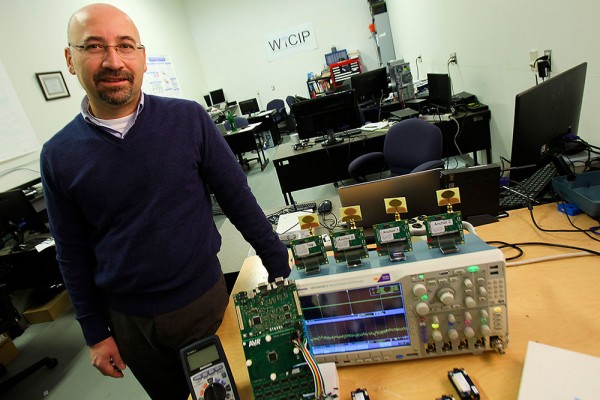
Professor Kemal Tepe is a faculty member in the Faculty of Engineering at the University of Windsor, specializing in wireless communication and information processing. His research focuses on vehicular networks, cognitive radio systems, and smart grid technologies. He leads the Wireless Communication and Information Processing Lab , where he develops solutions for autonomous driving systems, cybersecurity in vehicle-to-infrastructure communication, and spectrum sensing techniques. In 2016, he was awarded the Medal of Excellence by the Faculty of Engineering for his dedication and service. Tepe’s work bridges theoretical advancements and practical applications, addressing challenges in autonomous systems, machine learning for anomaly detection, and IoT security. His contributions include pioneering methods for detecting adversarial behavior in vehicular networks and improving spectrum utilization through probabilistic modeling. Collaborations with industry partners like Ford Motor Company and involvement in initiatives such as the Perspective Magazine automotive research highlight his industry-relevant research. His research interests span a wide range of domains including: Autonomous vehicle safety and communication protocols Cognitive radio networks and spectrum management Machine learning for network security and anomaly detection Wireless sensor networks and energy-efficient protocols Smart grid integration and communication architectures Tepe’s publications emphasize practical implementations, such as real-time routing protocols for wireless sensor networks and hardware designs for cognitive radio systems. His lab’s innovations have been showcased in industry-relevant platforms, demonstrating the real-world impact of his work.
Gruia Calinescu is an Associate Professor of Computer Science at Illinois Institute of Technology (IIT), affiliated with the College of Computing's Computer Science Department. He joined IIT in 2000 and has held visiting positions at the University of Bonn and the University of Wisconsin-Milwaukee. His research focuses on approximation algorithms, combinatorial optimization, and theoretical computer science, with contributions to graph theory, network design, and algorithmic problems in wireless networks. Education includes a PhD from Georgia Tech's Algorithms, Combinatorics, and Optimization program (1998) under Howard Karloff. He also holds a diploma from the University of Bucharest in scheduling theory. Key research interests include algorithms for Steiner trees, network connectivity, scheduling, and power optimization. He has published extensively on topics like minimum power covering, relay placement, and LP rounding techniques. His work often bridges theoretical foundations with practical applications in wireless networks and distributed systems. Recent work includes advancements in combination algorithms for Steiner tree variants (2022), energy-aware scheduling (2016), and improved approximation algorithms for relay placement (2014). He is also involved in teaching, such as CS 530 - Theory of Computation.
Sven Schewe is a Professor in the Department of Computer Science at the University of Liverpool, affiliated with the School of Electrical Engineering, Electronics and Computer Science. He leads the AI Section and is a founding member and former leader of the Verification Group. He also has secondary affiliations with the Algorithms, Complexity Theory and Optimisation Group and the Institute for Risk and Uncertainty. Research Interests: His research centers on automata theory and game theory, particularly their applications in the verification and synthesis of reactive and safety-critical systems. He investigates infinite-duration games, automata over infinite words and trees, and develops algorithms and tools for automated verification, synthesis, and learning of optimal control strategies. His work extends to reinforcement learning with formal guarantees, cyber-physical systems, and AI safety. Recent Research Trends: His recent publications demonstrate a strong integration of formal methods with machine learning, particularly in adversarial training, neural network robustness, and model-free reinforcement learning under omega-regular objectives. He also applies formal reasoning to interdisciplinary domains such as chemical space exploration and materials science. Scientific Awards: Finalist for the ERCIM Cor Baayen Award 2010 Dr. Eduard Martin Preis 2009 GI Dissertation Award 2008 Advising and Grants: He actively supervises numerous PhD students and postdoctoral researchers. He is Principal Investigator (PI) or Co-Investigator (CI) on multiple major grants, including EPSRC Programme Grants, Royal Society Fellowships, and Horizon Europe projects. His funded research spans topics such as game theory, verification, synthesis, reinforcement learning, and risk analysis. He has hosted visiting researchers and collaborated internationally with institutions in Germany, France, India, Taiwan, and the US. Labs and Teams: He co-founded and led the Verification Group and previously led the AI Section at the University of Liverpool. These groups focus on formal methods, automata, games, and their applications in AI and safety-critical systems.
Simone Ferlin is an Adjunct Senior Lecturer at Karlstad University and a Senior Performance Engineer. She holds a PhD in Computer Science from Simula Research Lab and Universitetet i Oslo (2017), focusing on robustness in multipath transport protocols like MPTCP. Her research spans network performance, security, and congestion control in mobile/5G networks and the Internet. She collaborates actively with academia and industry, co-supervising students in areas such as edge computing, container orchestration, and distributed systems. Affiliations: Department of Informatics, Karlstad University; Red Hat Research; Ericsson R&D. Education: PhD (2017), Simula/UiO; Master’s and Undergraduate studies emphasized networking and electronics. Her work includes projects like AIDA (AI-driven edge networking) and DRIVE (latency-sensitive mobile services). She has published over 50 papers on topics like QUIC, eBPF, and containerized microservices. Awards include the Best Paper at IEEE ICIN 2021 and ANRP 2025 Prize. Teaching responsibilities include Future Internet Design and Service Quality . Advising spans 15+ students across institutions like TU Berlin, KTH, and Unifesp. She chairs conferences (e.g., ACM SIGCOMM 2025) and serves on editorial boards (IEEE Communications Magazine). Key interests: network observability, low-latency protocols, and sustainability in networking.