
Christian Jandl is a Researcher and Head of the Digital Technologies Research Group at the Institute of Creative Media/Technologies, University of Applied Sciences St. Pölten. He holds a Master's in Media Technology (specializing in Mobile Internet) from FH St. Pölten (2010–2016) and has been a researcher there since 2016. His work focuses on IoT, Industry 4.0, digital healthcare, and usability. Research & Projects: Leading 20+ projects including DPP4Food (digital supply chain), SensiTrack (privacy-aware IoT tracking), and IoT4LAC (community IoT solutions) Explores tracking systems in manufacturing, healthcare usability, and industrial asset management Develops privacy-by-design frameworks for industrial IoT applications Publications & Impact: Over 15 peer-reviewed articles on topics like privacy in tracking systems, industrial quality control, and AR in production Key contributions to Bluetooth-based asset tracking (BlueDAT framework) and auditory process monitoring Labs & Collaboration: Immersive Media Lab for VR/AR applications Focus on Industry 4.0 initiatives and enterprise asset tracking solutions
جستوجوی استاد و پژوهشگر
استاد راهنما، استاد دانشگاه یا پژوهشگر مناسب برای مسیر پژوهشیتان را پیدا کنید و با او ارتباط بگیرید.
نمایش ۲۸۶-۳۰۰ از ۳۱۱ استاد راهنما
اطلاعات این پروفایلها از صفحات عمومی دانشگاهها جمعآوری شده و ممکن است بهروز نباشد.
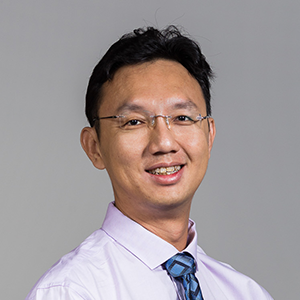
Dr. Ben Leong is an Associate Professor of Computer Science at the National University of Singapore (NUS), holding roles as Assistant Dean, Director of the Centre for Computing for Social Good and Philanthropy (CCSGP), and Director of the AI Centre for Educational Technologies (AICET). He earned his S.B., M.Eng., and Ph.D. from MIT (Computer Science, 2006). His research focuses on computer networking and distributed systems, including low-latency TCP, mobile cellular networks, and software-defined networks. He has published extensively at top venues like SIGCOMM and CoNEXT. Dr. Leong is a recipient of the NUS Outstanding Educator Award (2015) and multiple teaching excellence awards. He has supervised numerous PhD students and contributed to educational initiatives, including Coursemology, a gamified learning platform. Beyond academia, he serves as Chief Data Officer at AI Singapore and leads software development for the Ministry of Education. His research group explores modern network protocols, congestion control, and distributed systems. Notable projects include improving TCP performance in cellular networks and mitigating packet loss in datacenters. He has also pioneered innovations in educational technology, blending gamification with programming feedback systems.

Pu Wangمشاهده پروفایل
دانشیار
Pu Wang is an Associate Professor in the Department of Computer Science at the University of North Carolina at Charlotte (UNC Charlotte), part of the College of Computing and Informatics (CCI). His research focuses on networked systems, generative AI, computer vision, and computational biomechanics. He holds a Ph.D. from Georgia Institute of Technology (2013) and previously served as an Assistant Professor at Wichita State University (2013–2016). Education: B.E. in Electrical Engineering, Beijing Institute of Technology, 2003 M.E. in Electrical and Computer Engineering, Memorial University of Newfoundland, 2008 Ph.D. in Electrical and Computer Engineering, Georgia Tech, 2013 Research interests include modeling of networked systems (e.g., Software Defined Networking, IoT), AI-driven human mesh recovery, and biomechanically accurate 3D pose estimation. His work is supported by NSF grants and has led to advancements in federated learning, motion synthesis, and underwater communication systems. Awards and Honors: John A. See Innovation Award (Wichita State, 2016) BWN Lab Researcher of the Year (Georgia Tech, 2012) Best Student Paper Runner-Up (IEEE SCC 2016) Fellow of Memorial University’s School of Graduate Studies (2008) Key publications span top venues like ICCV, CVPR, AAAI, and IEEE journals, addressing topics such as masked motion control, vision-language models, and federated learning optimization. He actively mentors graduate students in AI/ML, computer vision, and network systems.

- Robotics
- Multi-robot Systems
- Control Systems
- +۷ مورد دیگر
Christopher Kitts is the William and Janice Terry Professor of Mechanical Engineering at Santa Clara University's School of Engineering, where he also serves as Associate Dean of Research and Faculty Development and Faculty Director of the Ciocca Center for Innovation and Entrepreneurship. His external appointments include Associate Researcher at the Monterey Bay Aquarium Research Institute (MBARI) and Visiting Researcher at Lawrence Livermore National Laboratory, reflecting his interdisciplinary work in field robotics. He earned his Ph.D. and M.S. in Mechanical and Aerospace Engineering from Stanford University, M.P.A. in International & Defense Policy from the University of Colorado, and B.S.E. in Mechanical & Aerospace Engineering from Princeton University. Prof. Kitts' research centers on field robotics for scientific discovery and education, with key focus areas: Multi-robot systems design and coordination Collaborative Human/Cobot Control architectures Model-Based Anomaly Management for spacecraft Advanced robotic platforms for underwater, terrestrial, aerial, and space environments His recent publications (2022-2025) demonstrate growing emphasis on human-robot interaction through transformer networks and emotion detection, alongside continued innovation in marine robotics and adaptive navigation for environmental monitoring. Scientific recognition includes: ASME Fellow and AIAA Associate Fellow Multiple Santa Clara University awards across teaching, research, and service NASA Group Achievement Awards (8 total) Industry honors including Edison Innovation Award and AIAA National Award His program has secured tens of millions in funding from government agencies and industry partners for student-operated NASA spacecraft missions and MBARI marine robotics projects, resulting in documented scientific discoveries like tsunami wave evidence in Lake Tahoe. He directs the Robotic Systems Laboratory and Santa Clara's Maker Lab, creating hands-on educational frameworks that integrate entrepreneurial thinking with engineering practice.
Thomas Heide Clausen is a Professor at École Polytechnique (France) and leads its computer networking research group. He holds the Cisco Endowed Chair in 'Internet of Everything' and serves as Academic Director for the interdisciplinary Master's program 'IoT: Innovation and Management'. His work focuses on protocols and architectures for maintaining internet connectivity in dynamic environments, particularly through the development of the OLSR and LOADng routing protocols. Education: M.Sc. and PhD from Aalborg University (Denmark) Research: IoT networking, Smart Grid communication, wireless mesh networks, routing protocol design, network load balancing, and security in MANETs Recent Article Trends: Explored machine learning for load balancing (2022), zero-trust architectures (2023), and wireless optimization for IoT/SmarGrid (2016-2022) Scientific Awards: IEEE Senior Member (2016), IEEE Computer Society Distinguished Contributor (2021) Industrial Collaborations: Hitachi (Japan), Fujitsu (USA), Toyota (Japan), Cisco (USA/France), EDF (France), and others
Qingyang Song is a professor in the field of Computer Science and Engineering, focusing on wireless networks and vehicular communications. His research spans topics such as network selection, resource allocation, and fault-tolerant routing mechanisms across heterogeneous systems, including UMTS, wireless LAN, and vehicular networks. While his institutional affiliations are not explicitly stated in the provided text, his collaborative work with researchers like A. Jamalipour and Lei Guo highlights his contributions to next-generation network optimization. His research interests include Network Coding , Software Defined Networking (SDN) , 5G Systems , and Energy Efficiency . He has pioneered techniques to balance user preferences with network conditions, reducing handoffs and improving connectivity. Recent work explores UAV-assisted networks, quantum-inspired reinforcement learning for wireless VR, and secrecy rate optimization in IRS-aided SWIPT systems. Qingyang Song's publications reflect a strong emphasis on Engineering and Computer Science disciplines, particularly in vehicular communications, spectrum sharing, and hybrid routing frameworks. His work has been featured in IEEE journals and conferences, including IEEE Transactions on Vehicular Technology and IEEE Wireless Communications .

Dina Šimunić is a Full Professor at the Department of Communication and Space Technologies , Faculty of Electrical Engineering and Computing, University of Zagreb. Her work focuses on wireless communication systems, electromagnetic field analysis, and applications in smart homes and transportation. Her research spans: Optimization of wireless networks (LTE, cognitive radio, mesh networks) Machine learning applications in network design and crime rate prediction Intelligent home and transport systems (eCall, vehicle communication) Electromagnetic dosimetry and safety standards (SAR, exposure assessment) Key projects include energy-efficient telecommunication networks, RFID integration, and e-health platforms like eWALL. She contributes to education through textbooks and laboratory experiments in microwave communications.

Derek C Nealمشاهده پروفایل
استادیار
- Power Systems
- Microgrids
- Smart Grids
- +۷ مورد دیگر
Lt Col Derek C. Neal is an Assistant Professor of Electrical Engineering at the Air Force Institute of Technology (AFIT), Wright-Patterson Air Force Base, Ohio. He is affiliated with the Department of Electrical Engineering within the Graduate School of Engineering and Management. His career combines military aviation expertise with academic research in advanced power and communication systems. Education: BS in Electrical Engineering, United States Air Force Academy, CO (2004) MS in Electrical Engineering, University of Idaho, Moscow, ID (2013) DPhil in Engineering Science, University of Oxford, UK (2024) Derek Neal's research focuses on modern power infrastructure, particularly microgrids, smart grids, demand-side management, and powerline communication . His work emphasizes reliable and efficient energy systems in isolated and rural environments. He also explores remote sensor networks, integrating energy generation and storage for autonomous data collection. His research bridges engineering and real-world deployment in challenging environments. His recent publications show a strong trend in communication systems for islanded microgrids , combining power engineering with data transmission. Topics include broadband powerline communication, performance prediction models, and techno-economic analysis of microgrid networks. Earlier work includes rural energy management and sensor arrays for climate monitoring, indicating a long-standing interest in off-grid and remote applications. Scientific Awards: No awards listed in the provided text. Derek Neal has served as a research director in unmanned aerial vehicles at the U.S. Air Force Academy and has operational experience influencing his applied research. While no formal grants or student advisement are mentioned, his leadership roles in both academic and military domains suggest mentorship and project oversight. He served in key planning and operations roles, including Chief of Tanker Plans and Exercises and Deputy Chief of Special Operations Air Refueling. He is associated with research in power systems and sensor networks, particularly through projects like the Mountain Ecosystem Sensor Array (MESA) and integrated energy systems for isolated data collection. These reflect a lab-like or team-based approach to field-deployable and resilient energy solutions, though no formal lab name is provided.
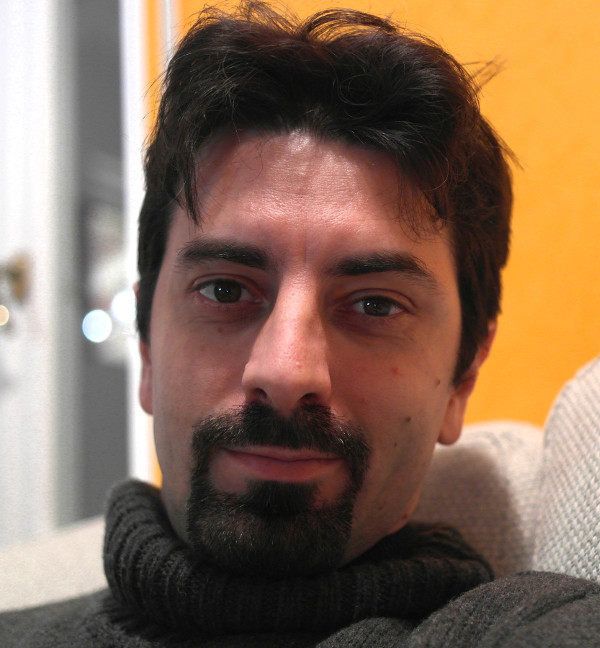
Leonardo Maccari is an Associate Professor at Ca' Foscari University of Venice in the Department of Environmental Sciences, Computer Science and Statistics. His research focuses on network security, wireless mesh networks, community networks, and next-generation wireless backhaul systems. He leads projects like netCommons (EU Horizon2020) and OR2AN2G, advancing scalable and resilient network infrastructures. Notable contributions include centrality-based routing protocols (pop-routing) and analysis of digital contact tracing during the pandemic. Teaching includes courses on Network Security, Computer Networks, and Lab of Computer Security across Computer Science and Data Management programs. Awards include the 2024 Best Paper Award at CNMS for optimizing BGP convergence. Research spans 20+ years with 50+ peer-reviewed publications. Collaborations include Northeastern University, BarcelonaTech, and CNRS. Active in open-source projects like Augustus (programmable CCN router) and NePA TesT (network testing toolchain). Key projects: netCommons (transdisciplinary community networks), OR2AN2G (5G/6G backhaul), and PAF-FPE (Marie Curie security research). Consultancies with Alcatel-Lucent and Telecom Italia Lab produced patents in network security and programmable systems.
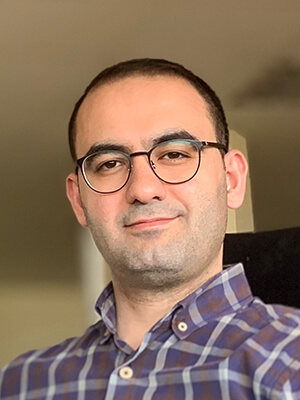
Muhammed Ali Bingolمشاهده پروفایل
مدرس ارشد
Dr. Muhammed Ali Bingol is a Senior Lecturer in Cyber Security and Programme Leader for the BSc in Computer Networks and Security at De Montfort University, UK, within the School of Computer Science and Informatics, Faculty of Computing, Engineering and Media. He is affiliated with the Cyber Technology Innovations and Digital Future Institute research groups. Education: Ph.D. in Computer Science and Engineering, Sabanci University, 2019 M.Sc. in Electronics and Communication Engineering, Istanbul Technical University, 2012 B.Sc. in Telecommunications Engineering, Istanbul Technical University, 2008 His research focuses on cryptography , information security , blockchain , secure multi-party computation , private function evaluation , authentication systems , and e-voting . He has contributed significantly to RFID security, distance-bounding protocols, and cryptographic protocol design. His work bridges theoretical cryptography and practical security implementations in wireless, cloud, and mobile environments. His recent publications (2022–2025) span topics from flexible threshold signatures and homomorphic encryption to blockchain-based voting and pedestrian safety analysis , indicating an interdisciplinary reach while maintaining a core in cryptographic protocol development. Trends show increasing focus on blockchain integration, privacy-preserving technologies, and real-world security applications. Scientific Awards and Memberships: Fellowship of the Higher Education Academy (FHEA) Member, Institute of Electrical and Electronics Engineers (IEEE) Cisco Networking Academy (CNA) Dr. Bingol has advised on multiple EU, public, and government cybersecurity projects and has served as a visiting scientist at Université Catholique de Louvain and a visiting lecturer at Istanbul City University. He has held industrial research roles at TÜBİTAK BİLGEM (Chief Researcher, 2008–2020), TSSG, and AOL. He leads curriculum development for undergraduate cybersecurity programs and teaches courses in cryptography, networks, malware analysis, and security management. He is actively involved in the Cyber Technology Innovations research group, where he contributes to advancing secure communication protocols, blockchain applications, and privacy-preserving technologies.
Дејан Д. Ранчић је редовни професор на Електронском факултету у Нишу (Универзитет у Нишу), где је изабран 2015. године након дугогодишњег рада као доцент од 2005. године. Дипломирао, магистрирао и докторирао је на истом факултету у области Електротехника и рачунарство. Његово образовање укључује: Дипломирани инжењер електротехнике и рачунарства (1993) Магистар електротехнике и рачунарства (1997) Доктор електротехнике и рачунарства (2004) Ранчићев истраживачки фокус је на ГИС технологијама , 3D визуелизацији терена и обраги радарских сигнала . Кључни доприноси укључују развој алгоритама за мобилне ГИС апликације, паралелно рендеровање великих терена и радарску обраду података за сузбијање града. Његов рад комбинује теоријску рачунарску геометрију са практичним инжењерским решењима. Анализа његових радова показује еволуцију од радарских система (1997-1999) ка иновативним ГИС решењима (2000-2006), са посебним нагласком на визуелизацију терена и мобилне платформе. Најзначајнији радови објављени су у часописима као што су Computer and Geosciences и WSEAS Transactions on Computers . Тренутно учествује у 3 национална и 1 интернационални истраживачки пројекат, а као рецензент ради за WSEAS серију часописа. Иако детаљи о менторству нису наведени, његова публикацијска активност и пројекти указују на значајну улогу у развоју геопросторних технологија у Србији.

- Computer Networks
- Wireless Networks
- Mesh Networks
- +۵ مورد دیگر
Llorenç Cerdà-Alabern is an Associate Professor in the Department of Computer Architecture at the Universitat Politècnica de Catalunya (UPC), specifically affiliated with the School of Computer Science of Barcelona (FIB). He is a member of the CNDS - Computer Networks and Distributed Systems research group (TECNIO/CIT UPC network). His academic career spans over two decades since joining UPC in 1994, with a focus on network technologies and protocols. Dr. Cerdà-Alabern earned his Engineering degree in Telecommunications from UPC in 1993 and completed his PhD in Telecommunications Engineering in January 2000 with a thesis titled "Traffic Management of the ABR Service Category in ATM Networks". His academic journey reflects a deep commitment to network engineering and computer science. His research interests span multiple areas in networking, with particular expertise in Computer Networks , Wireless Networks , Mesh Networks , Community Networks , TCP/IP , Routing Algorithms , and MAC Protocols . Dr. Cerdà-Alabern's work emphasizes performance evaluation, analytical modeling, and the design of layer two and three network protocols. His current research primarily focuses on Wireless Community Networks, where he investigates network resilience, reliability, and innovative architectures for decentralized connectivity solutions. His work often intersects with sustainability, rural connectivity, and community-driven network models, particularly through his involvement with the Guifi.net community network. Analysis of Dr. Cerdà-Alabern's recent publications (2019-2024) reveals a strong emphasis on wireless community networks, with particular focus on anomaly detection, network reliability, and economic models. His research demonstrates a clear trajectory toward making community networks more robust, efficient, and accessible, with increasing attention to machine learning applications for network monitoring and optimization. The publications show consistent collaboration with international researchers and a practical approach to solving real-world networking challenges, especially in underserved areas. Dr. Cerdà-Alabern has successfully advised six PhD students to completion, including Gabriele Gemmi (2024), Javad Manzoor (2019), Axel Neumann (2017), Maryam Amiri Nezhad (2013), Amir Darehshoorzadeh (2012), and Rafael Paoliello-Guimarães (2008). His research has been supported by numerous competitive projects, including EU-funded initiatives like EXPERT, COST-257, MOEBIUS, WIDENS, COST-279, EuroNGI, and CONFINE, as well as collaborations with industry partners like Nokia. His work has resulted in over 200 academic activities. As a key member of the CNDS research group, Dr. Cerdà-Alabern contributes to several network-related initiatives, particularly those focused on community networks and wireless mesh technologies. His work with the Guifi.net community network represents a significant practical application of his research, where theoretical concepts are implemented in real-world settings to provide connectivity to underserved communities. He has also developed various software tools, including the Topology Generator of Guifi.net and Shapley value Monte Carlo simulation tools for network analysis.
Jorjeta Jetchevaمشاهده پروفایل
استادیار
Jorjeta Jetcheva is an Assistant Professor in the Computer Engineering Department at San José State University, part of the Charles W. Davidson College of Engineering. She brings extensive industry experience from leadership roles at Accenture, Fujitsu Laboratories of America, Itron, and Firetide, where she led innovations in AI, smart grids, and wireless networking. Her research focuses on Artificial Intelligence-based Personal Assistants, Natural Language Processing, and Knowledge Management . Her work bridges human-centered AI and enterprise applications, with emphasis on intelligent agents, knowledge platforms, and ethical AI systems. She explores how AI can enhance user productivity, decision-making, and system security across domains such as healthcare, energy, and customer service. The recent publications highlight a strong trend in Natural Language Processing applied to real-world problems like fake health news detection, agent assist systems, and knowledge graph integration. Her research also spans Smart Grid analytics, cybersecurity, and AI ethics , reflecting a multidisciplinary approach grounded in both theoretical rigor and practical deployment. Scientific Awards: Best Application Paper Award at IEEE Big Data Service 2022 Best Paper Award at SmartGridComm 2014 Top 10 Finalist, Fujitsu Next Generation Product Idea Contest 2016 ('Robo Butler') CSU STEM-NET Faculty Fellow (2023) Advising and Grants: Professor Jetcheva is the Principal Investigator of a $2.5 million NSF S-STEM grant titled 'Empowering Students to Succeed in Engineering and Computer Science'. She actively mentors graduate students, including Master’s student Garima Chaphekar, with whom she co-authored an award-winning paper on fake health news detection. She serves on the SJSU AI Advisory Committee and leads the AI Research Cluster, fostering interdisciplinary collaboration and student success. Labs and Teams: She leads the AI Research Cluster at SJSU, promoting innovation in artificial intelligence across departments. Her work involves close collaboration with students, industry partners, and interdisciplinary teams focused on deploying scalable, ethical AI solutions.
Ivan Milovanović is a researcher at the Department of Postgraduate Studies , University of Singidunum, Belgrade, Serbia. He holds a doctoral degree in Advanced Protection Systems from Singidunum University (2015) and has previously completed master's and bachelor's studies in Contemporary Information Technologies and Graphics and Design at the same institution. His career spans roles in software development, wireless communication research, and neural network applications for electromagnetic signal processing. B.Sc. in Graphics and Design (2008), Singidunum University M.Sc. in Contemporary Information Technologies (2009), Singidunum University Ph.D. in Advanced Protection Systems (2015), Singidunum University Milovanović's research focuses on applying neural networks to solve complex problems in wireless communications, particularly in direction-of-arrival (DOA) estimation for stochastic electromagnetic sources. His work addresses challenges in localization accuracy, signal correlation, and power variation. He has contributed to advancements in 2D/1D DOA estimation using hybrid neural models, experimental validation of antenna array measurements, and noise interference analysis in wireless systems. Publications span topics like wireless sensor networks, channel modeling, and MESH network security. Recent publications highlight a strong interdisciplinary focus combining neural networks with electromagnetic signal processing , antenna array optimization , and wireless communication systems . His work explores stochastic source tracking, coherent signal resolution, and noise mitigation techniques, often collaborating with researchers like Z. Stanković and N. Dončov. While no scientific awards are explicitly mentioned in the provided text, his extensive publication record indicates active contributions to applied electromagnetics and telecommunications engineering.
Enrique Costa Montenegro serves as a full-time Professor in the Department of Telecommunications Engineering at the School of Telecommunications Engineering, University of Vigo, with active affiliations in the TC1 Group of Information Technologies and the Research Center for Telecommunication Technologies at the Vigo campus. His academic credentials include: PhD in Telecommunications Engineering, University of Vigo (2007), dissertation: 'Planning and sharing of resources in wireless mesh networks', supervised by Dr. Francisco Javier González Castaño and Dr. Juan Carlos Burguillo Rial Professor Costa Montenegro's research specializes in Telecommunications Engineering with concentrated expertise in Wireless Networks, Resource Allocation algorithms, Mesh Networking architectures, and Information Technologies, addressing critical challenges in network optimization and scalability. He contributes to ongoing projects within the TC1 research group at the Research Center for Telecommunication Technologies, focusing on innovative telecommunications solutions and infrastructure development.