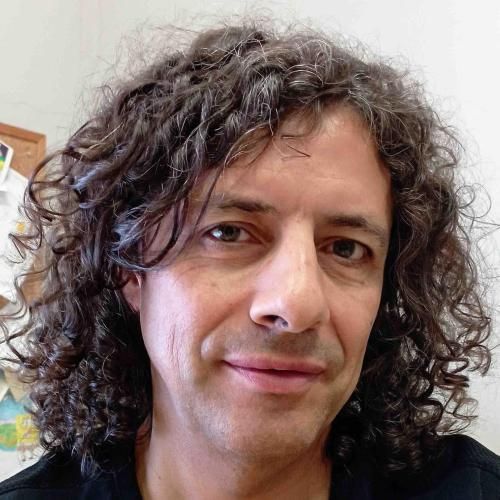
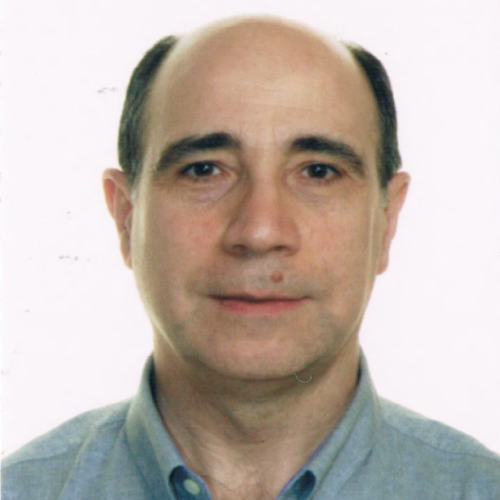
Amjad Hussain is a researcher at the Faculty of Engineering , University of Deusto , specializing in geolocation technology and sensor fusion systems. His work focuses on improving smartphone navigation through advanced algorithms like Factor Graph Optimization (FGO) and Kalman Filtering (KF). Email: amjad.hussain@deusto.es Research Interests : - GNSS-PDR fusion for high-precision positioning - Comparative analysis of filtering algorithms - Mobile computing for real-time navigation systems Publication Trends : His recent works (2023-2024) explore optimization techniques for pedestrian navigation, emphasizing accuracy under diverse movement patterns and sensor error conditions.
Miroslav Minović is a Full Professor and Head of the Laboratory for Multimedia Communications at the University of Belgrade's School of Business Administration. He holds a PhD in Information Technology and has extensive experience in academia and research. His roles include Director of the Laboratory for Multimedia Communications and guest editor for the International Journal of Engineering Education . Education: PhD in Information Technology (2010), University of Belgrade M.Sc. in Information Technology (2002), University of Belgrade Visiting Researcher at University of the Balearic Islands (2015) and EBS Business School (2013) Research Interests: Human-Computer Interaction (HCI), Multimedia Systems, Biometric Technologies, Blockchain Applications, Computer Networks, and Gamification in Education. Notable Projects: TRAILER EU Project (2012–2013): Focused on informal learning recognition AI4WorkplaceSafety (2020–2022): AI-driven workplace safety solutions Blockchain Technology Research: Explored applications beyond cryptocurrencies Publications: Over 50 peer-reviewed articles in journals like IEEE Multimedia , Computers in Human Behavior , and Sensors . Key themes include gamification ecosystems, biometric systems, and e-learning analytics. Awards & Memberships: Member of IEEE and ACM National Contact Point for Serbia, European Association for Biometrics Grants & Labs: Directed multiple EU-funded and Serbian government projects Lab focuses on multimedia communications, blockchain, and biometric technologies
Elena Aparicio Esteve is a Lecturer in the Department of Electronics at the University of Alcalá. She holds a PhD in Electronics from the same institution, awarded in 2022 for her thesis on '3D positioning system with optical sensors using encoding techniques', supervised by Dr. Jesús Ureña Ureña and Dr. Álvaro Hernández Alonso. She is a core member of the GEINTRA research group, which focuses on Electronic Engineering applied to Intelligent Spaces and Transport. Her research interests center on optical positioning systems, sensor technology, and embedded systems design. Key areas include infrared and visible light positioning, multi-sensor fusion, and high-rate data acquisition architectures. Recent work emphasizes system-on-chip (SoC) design for positioning systems and optimization of quadrant photodiode-based receivers. Notable contributions include developing datasets for visible light positioning systems (QUAPOS), infrared local positioning architectures, and hybrid infrared-ultrasonic positioning solutions. Her publications span 2018–2025, with strong focus on practical implementations and hardware-software co-design. Active collaborations include contributions to the NEWFOCUS COST Action on optical wireless communication technologies. Her technical expertise spans signal processing, embedded system implementation, and sensor calibration. Current research trends involve integrating machine learning techniques with traditional positioning algorithms to enhance accuracy and robustness in dynamic environments.
Rubén Ferrero Guillén is an Assistant Professor at the University of León in the Department of Mechanical Engineering , affiliated with the College of Industrial, Informatics and Aerospace Engineering . He is actively involved in the SINFAB - Intelligent Systems for Manufacturing research group, focusing on optimization algorithms, localization systems, and smart manufacturing technologies.
Ignacio Bravo Muñoz is a Professor at the Department of Electronics, Universidad de Alcalá (Spain), affiliated with the GEINTRA research group focusing on Electronic Engineering applications in Intelligent Spaces and Transport. He holds a PhD from Universidad de Alcalá (2007) with a thesis on FPGA-based object detection using computational vision and PCA techniques. His research spans indoor positioning systems (using LED/PSD sensors), sustainable energy frameworks for smart communities, FPGA-based hardware design , and remote laboratory platforms . Key contributions include real-time metrology for ESA's PLATO mission, cooperative demand response algorithms, and innovative pedagogical approaches integrating sustainability into digital electronics education. Recent work emphasizes edge computing for video surveillance , machine learning in human action recognition , and non-cooperative target identification using radar signatures. His interdisciplinary projects bridge electronics engineering with energy systems, biomedical applications, and educational technology. He actively collaborates with industry and academic institutions on EU-funded projects, contributing to advancements in aerospace instrumentation (PLATO FPA qualification), smart grid technologies, and STEM education innovation.
Manuel Blanco Velasco is a Professor at the Department of Signal Theory and Communications, Universidad de Alcalá. His research focuses on biomedical signal processing, particularly in electrocardiogram (ECG) analysis, machine learning applications in healthcare, and communication systems. He holds a PhD from Universidad de Alcalá (2004) with a thesis on ECG compression using modulated filter banks. His work bridges signal processing theory and practical biomedical engineering, addressing challenges in ECG noise classification, T-wave alternans detection, and telemedicine systems. Research interests include: Medical signal processing for arrhythmia detection Deep learning models for clinical data interpretation OFDM-based communication systems ECG compression and denoising algorithms His recent publications emphasize interpretable deep learning methods for ECG analysis, noise characterization in long-term monitoring, and ensemble approaches for T-wave alternans detection. Contributions span both biomedical and communication engineering domains, reflecting his interdisciplinary expertise.
Fernando Cruz Roldán is a **Professor** at the Universidad de Alcalá (UAH) , affiliated with the Department of Signal Theory and Communications . He holds a PhD from UAH with a thesis on filter bank design for minimal amplitude distortion. His research focuses on signal processing, communications engineering, and biomedical applications. Key areas include OFDM systems , power line communications , filter design , and machine learning in healthcare . His work spans theoretical advancements in multicarrier modulation (e.g., DCT-based systems) and practical applications like ECG/EEG signal compression and T-wave alternans detection. Recent contributions address AI-driven solutions in education and medical diagnostics. He has published extensively on topics such as channel estimation, intersymbol interference mitigation, and biomedical signal analysis. Notable achievements include pioneering work on α-spline digital filters and innovative approaches to signal processing in noisy environments. His research bridges theoretical signal theory with real-world applications in telecommunications and healthcare.
Óscar Gutiérrez Blanco is a Professor at the Universidad de Alcalá , affiliated with the Department of Computer Science within the School of Computer Science and Artificial Intelligence . He is a member of the GTNA Group of Advanced Numerical Techniques , focusing on computational methods and wireless communication systems. He holds a Doctorate in Computer Science from Universidad de Alcalá (2002), with a thesis titled Contribución a la mejora de la óptica física para el cálculo del campo radiado y dispersado por cuerpos complejos , supervised by Dr. Manuel Felipe Cátedra Pérez and Dr. Francisco Manuel Sáez de Adana Herrero. His research emphasizes natural and hybrid localization algorithms , numerical simulation techniques , and wireless communication systems . He has pioneered work in ray-tracing methods for indoor/outdoor localization, real-time kinematic positioning in agriculture, and electromagnetic compatibility in healthcare environments. His interdisciplinary work spans computational biology (avian morphometrics, tick-borne pathogens) and medical research (IGF-I gene therapy for glioblastoma). Key contributions include the FASPRO and FASANT software tools for propagation analysis and antenna modeling. His web-based simulation tool integrates OpenStreetMap data for outdoor path loss estimation. Recent work explores precision agriculture through low-cost RTK systems and high-precision airport safety algorithms. No scientific awards are explicitly listed, but his extensive publication record reflects sustained innovation in computational and applied research. He has advised numerous graduate projects (theses listed in institutional portal) and collaborates internationally on sensor networks and biomedical applications.
Vicent Girbés Juan is an Associate Professor in the Department of Electronic Engineering at the School of Engineering, Universitat de València. His research is centered in the HRI Human-Robot Interaction Group, where he contributes to advanced robotics, intelligent vehicles, and human-centered automation systems. He earned his PhD from Universitat Politècnica de València in 2016 with a thesis on clothoid-based planning and control in autonomous and manual-assisted driving systems, supervised by Dr. Josep Tornero Montserrat and Dr. Leopoldo Armesto Ángel. His research interests span robotics, control systems, path planning for UAVs, visible light communication, haptic feedback in teleoperation, and educational innovation in engineering. He has published extensively on smooth trajectory generation, dual-arm robot control, sensor fusion, and V2V communications. His recent work shows a growing emphasis on integrating pedagogical innovation with engineering education, including flipped evaluation, peer assessment, and hackathon-based programming learning. His publications from 2021 to 2024 reveal a dual focus: advancing industrial robotics and intelligent transportation systems, while simultaneously innovating in teaching methodologies and student engagement in higher education. Key technical areas include clothoid-based 3D path planning, cautious Bayesian optimization, VLC positioning, and haptic-assisted teleoperation. He actively collaborates on interdisciplinary projects involving human-robot cooperation, industrial automation, and educational technology, reflecting a commitment to both technological advancement and pedagogical excellence. His email is vicent.girbes@uv.es .
Eva María Arias de Reyna Domínguez serves as a Full Professor in the Department of Signal Theory and Communications at the University of Seville. Her research is centered within the Signal Processing and Communications research group (TIC-155), where she has led numerous national and international projects focused on advanced signal processing techniques for wireless communications and localization systems. Her research interests span Signal Processing , Wireless Communications , and Ultra-Wideband Localization , with particular expertise in Expectation Propagation algorithms, UWB signal processing, and crowd-based learning for IoT applications. Her work bridges theoretical signal processing with practical implementations in digital communications and indoor positioning systems. Analysis of her 15 most recent publications reveals a consistent focus on Expectation Propagation techniques for digital communications (constituting 40% of recent work), UWB localization algorithms (30%), and channel equalization methods (20%). Her research demonstrates a progression from fundamental signal processing algorithms toward IoT-integrated spatial field estimation and machine learning applications. She has advised doctoral student Irene Santos Velazquez (2018 thesis on Expectation Propagation for digital communications) and participated in significant research projects including ATENEA (Artificial Intelligence for Art Fabric Analysis), Finite-Length Iterative Decoding, and multiple national grants under Spain's TEC and CSD programs. Her laboratory work centers on the Signal Processing and Communications research group, which has received continuous consolidation funding from 2005-2017.
Dr. Emilio García Fidalgo is an Associate Professor at the University of the Balearic Islands (UIB) within the Department of Mathematics and Computer Science. He earned his B.Sc., M.Sc., and Ph.D. in Computer Science from UIB in 2007, 2011, and 2016 respectively. Ph.D. in Computer Science (2016), UIB M.Sc. in Computer Science (2011), UIB B.Sc. in Computer Science (2007), UIB His research focuses on mobile robotics , visual and LiDAR SLAM , appearance-based scene recognition , and unmanned aerial vehicles . He develops algorithms for robust loop closure detection, hierarchical topological mapping, and maritime inspection applications. The 15 most recent publications analyze frontier-based exploration strategies, trajectory planning for aerial robots, UWB calibration methods, and visual SLAM in low-textured environments. These works demonstrate his consistent contributions to Robotics , Computer Vision , and Autonomous Systems disciplines. Robust Loop Closure Detection (2020-2024) Visual Inspection Frameworks (2015-2021) Topological Mapping Solutions (2016-2022) LiDAR and Visual Odometry (2017-2023) He contributes to academic education through teaching roles in courses like Computer Structure I , Digital Systems , and Advanced Perception for Mobile Robotics . His work integrates with the Systems, Robotics, and Vision (SRV) research group.
Luis Enrique Díez Blanco is an Assistant Professor at the University of Deusto's Faculty of Engineering, Department of Mechanics, Design and Industrial Management. He holds a PhD in Engineering for the Information Society and Sustainable Development (2019), a Master's in Communications Technologies from Polytechnic University of Madrid (2012), and a Telecommunications Engineering degree from Deusto (2005). His research focuses on signal processing and data fusion for intelligent transport systems, ambient assisted living, and wearable-based navigation. His work advances localization technologies through inertial sensors, UWB systems, and machine learning, with applications in healthcare, mobility, and resource-constrained environments. Research trends show consistent focus on hybrid positioning systems, error mitigation in wearable sensors, and practical implementations of IoT solutions. Awards: Best PhD Thesis Award (2020) First Prize in Pedestrian Dead Reckoning Competition (2016) Research recognition (Sexenio 2015-2020) He currently supervises two doctoral theses in localization systems and has led over 10 research projects including EU-funded initiatives (e.g., REACH, Modelling Emerging Transport Solutions) and industry collaborations with Mercedes-Benz and E PROCESS MED. As principal investigator of Deusto Smart Mobility research group, he coordinates work on intelligent transport and wearable technologies.
José Luis Lázaro Galilea is a Professor in the Department of Electronics at the University of Alcalá. He is affiliated with the GEINTRA research group, focusing on Electronic Engineering applied to Intelligent Spaces and Transport. His doctoral thesis (1998) explored infrared modeling for mobile robot guidance. Key research areas include visible light positioning systems, FPGA-based hardware architectures, and remote laboratory development. He has contributed to vehicular VLC systems, indoor navigation algorithms, and biomedical applications like closed-loop insulin delivery systems. Notable projects include the ALCOR initiative for optimizing robot guidance in smart environments and the Helpresponder system for emergency intervention safety. Education: PhD in Electronics from University of Alcalá (1998). Supervised by Dr. Manuel Ramón Mazo Quintas. Academic focus spans digital electronics, embedded systems, and sensor networks. Active in educational innovation, including adapting digital electronics practices for blended learning models. Research emphasizes practical applications of electronic systems in smart spaces, with over 70 publications since 1998. Recent work addresses multipath effects in optical positioning, reconfigurable hardware platforms, and human-centered lighting systems. His interdisciplinary approach integrates robotics, telecommunications, and biomedical engineering. Notable contributions include: Development of high-precision indoor positioning systems using PSD sensors Optimization of sensor deployment via evolutionary algorithms Design of FPGA-based real-time processing architectures Innovative remote laboratory frameworks for STEM education Current projects explore vehicular visible light communication, wearable medical devices, and intelligent transportation systems. His work bridges theoretical advancements with practical implementations in both academic and industrial contexts.
Francisco Javier Meca Meca is an Associate Professor in the Department of Electronics at the Universidad de Alcalá. He holds a Ph.D. from the same institution (2001), with a thesis titled Medida de temperatura sin contacto con alta velocidad de respuesta supervised by Dr. Manuel Ramón Mazo Quintas and Dr. Francisco Javier Rodríguez Sánchez. His research focuses on electronics engineering applied to renewable energy systems, sensor technology, and control systems, particularly in thermal measurement, infrared systems, and robotics localization. He is a member of the GEISER research group, dedicated to electronic engineering for renewable energy applications. Key research interests include developing sensor systems for industrial monitoring, thermal infrared sensing for aerospace applications (e.g., Mars 2020 mission), and FPGA-based control systems for power electronics. His work integrates signal processing techniques with hardware implementation, emphasizing real-time systems and embedded electronics. Notable contributions span thermal drift compensation in transimpedance amplifiers, phase-based positioning for mobile robots, and optimal anchor placement algorithms for wireless networks. Publications highlight advancements in infrared positioning systems, predictive current control for power converters, and stability analysis of active power filters. His research bridges theoretical modeling with practical applications in renewable energy, industrial automation, and space technology. Ongoing work likely explores sensor fusion, energy-efficient control systems, and smart environmental monitoring.
Pedro Alfonso Revenga de Toro is an Associate Professor at the Department of Electronics of the Universidad de Alcalá. His research focuses on robotics, autonomous systems, computer vision, and real-time embedded systems. He holds a Ph.D. from Universidad de Alcalá with a thesis on real-time image processing architectures (2017), supervised by Dr. José Luis Lázaro Galilea and Dr. Alfredo Gardel Vicente. His work integrates advanced AI techniques like deep learning and reinforcement learning into autonomous vehicle systems, emphasizing safety and efficiency. He leads the Robesafe research group, dedicated to service robotics and road safety technologies. Key research areas include autonomous driving decision-making, 3D object detection in dynamic environments, and energy-efficient embedded systems. His contributions span both theoretical advancements (e.g., GAN-based driver attention models) and practical implementations (e.g., ROS-based autonomous vehicles). He has developed educational robotics workshops (Depecabot) to enhance student engagement in electronics and robotics. His publications address challenges in sensor fusion, path planning, and real-time positioning systems for autonomous applications. No scientific awards or grants are explicitly listed, but his extensive publication record reflects sustained contributions to robotics and transportation engineering since the 1990s. His work bridges academic research and real-world applications, particularly in improving road safety and vehicle automation.