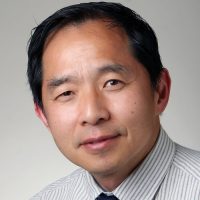
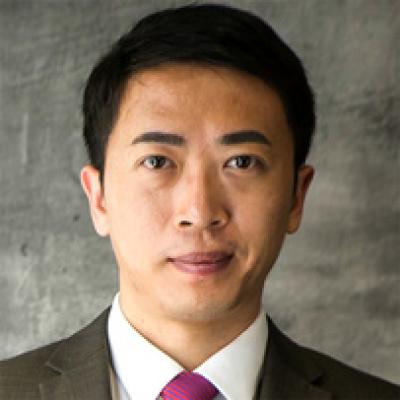
André B.J. Kokkeler is a Full Professor at the Digital Society Institute and affiliated with the Radio Systems department at the University of Twente. His research focuses on wireless communication systems, signal processing, and mmWave technology, particularly in applications like beamforming, cognitive radio, and error-resilient algorithms. Recent research outputs highlight his work on: Hybrid beamforming techniques for full-duplex integrated sensing and communication (ISAC) systems Energy-efficient iterative algorithm implementations Single-bit angle-of-arrival (AoA) localization methods mmWave channel characterization in reverberation chambers Radar-driven human gait modeling His work contributes to advancements in wireless systems for IoT, automotive radar, and energy-constrained environments. Collaborations span multiple institutions and focus on propagation modeling, antenna characterization, and sensing applications.
Shashank Vatedka is an Assistant Professor in the Department of Electrical Engineering at the Indian Institute of Technology Hyderabad . His research focuses on information theory , coding theory , and their applications to data compression , statistical inference , and security . He holds a PhD from IISc, Bengaluru and has postdoctoral experience at Institut Polytechnique de Paris and The Chinese University of Hong Kong . Education : PhD and MSc (Engg) in Electrical Communication Engineering, IISc, Bengaluru (2011-17) Academic Positions : Assistant Professor, IIT Hyderabad (2019-present) Postdoctoral Fellow, Telecom Paris (2018-19) Research Assistant/Postdoctoral Fellow, Institute of Network Coding, CUHK (2016-18) His research spans three main areas: distributed inference (federated learning, wireless sensor networks), compression with locality constraints (local decoding, low-complexity algorithms), and communication in adversarial environments (jamming, list decoding). Recent work includes distributed mean estimation with limited communication and adversarial channel coding with partial information. He has received several honors including the Seshagiri Kaikini Medal for best PhD thesis at IISc in 2017, Best Paper Awards at NCC 2023 and Stanford Compression Workshop 2021, and the TCS Research Fellowship (2014-17). He serves as a Faculty Placement Coordinator at IIT Hyderabad and organizes international conference tracks. His research group advises students across PhD, MTech, BTech , and internships , with alumni pursuing advanced degrees at institutions like UCSD , Columbia University , and TU Delft . Collaborations include theoretical work with colleagues like Yihan Zhang and Sidharth Jaggi .
Dr. Craig Hancock is a Research Professor in Geospatial Engineering with 15 years of research experience in Surveying and Geodesy. His expertise spans GNSS error mitigation, structural monitoring, and geospatial techniques for digital construction. He has supervised 10 PhD students and published over 80 academic papers. Education: BSc and PhD in Surveying/Geomatics Key Projects: Principal Investigator for projects on GNSS error mitigation, structural health monitoring, and marine economy technology. His research focuses on three core areas: GNSS error categorization and mitigation (particularly ionospheric effects), structural and environmental change monitoring, and geospatial data acquisition for BIM and digital construction. Recent work includes improving 3D modeling accuracy, UAV-based GNSS spoofing detection, and BIM-enabled facility management in healthcare infrastructure. His articles explore topics like sensor optimization, structural dynamics, and geospatial data fusion. Grants include £150k for bridge deformation studies and £9k for ionospheric error analysis. He actively contributes to teaching and enterprise initiatives, integrating geospatial technologies with industry needs.
Wout Joseph is a Professor in the domain of Experimental Characterization of wireless communication systems at Ghent University (Belgium), where he has been working since October 2009. He is also an IMEC Principal Investigator since 2017. His research is conducted within the wireless, acoustics, environment & expert systems (WAVES) research unit at the Department of Information Technology (INTEC). Dr. Joseph was born in Ostend, Belgium on October 21, 1977. He received his M.Sc. degree in electrical engineering from Ghent University in July 2000. From September 2000 to March 2005 he was a research assistant at the Department of Information Technology (INTEC), where his scientific work focused on electromagnetic exposure assessment around base stations for mobile communications related to health effects. This work led to his Ph.D. degree in March 2005. Professor Joseph's research expertise spans multiple domains within wireless communications and bioelectromagnetics. His primary research interests include electromagnetic field exposure assessment, in-body electromagnetic field modeling, electromagnetic medical applications, propagation for wireless communication systems, IoT, antennas and calibration. He also specializes in wireless performance analysis, industry 4.0 applications, wireless localization, and Quality of Experience metrics. His work is particularly notable for its focus on dosimetric studies in the radiofrequency range, where his research is ranked first in number of peer-reviewed studies. His research has practical applications in wireless network planning, occupational safety, and public health policy related to electromagnetic fields. His extensive publication record (over 886 publications with an h-index of 45 in ISI Web of Science and 66 in Google Scholar) demonstrates a clear trajectory from fundamental electromagnetic field measurements to applied research in industrial wireless networks and bioelectromagnetic applications. Recent work shows a strong emphasis on 5G exposure assessment across multiple European countries, millimeter-wave channel modeling, and the application of machine learning techniques to exposure assessment and wireless localization. EBEA council board member (2015-2018) EBEA board member at large (2019) Bioelectromagnetics Society board member (2022) Bioelectromagnetics Society board member (2024) 24 research awards Professor Joseph leads significant research efforts in electromagnetic field exposure assessment, with particular emphasis on developing measurement methodologies and computational models for real-world exposure scenarios. His work bridges theoretical electromagnetic modeling with practical applications in wireless communications and bioelectromagnetics. His research group within the WAVES unit is highly active in both theoretical and experimental aspects of wireless communications and bioelectromagnetics, with current projects focusing on 5G exposure assessment across Europe, millimeter-wave channel modeling for data centers and industrial environments, and the development of novel exposure assessment methodologies using advanced signal processing and machine learning techniques.
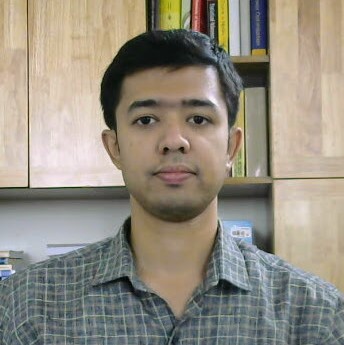
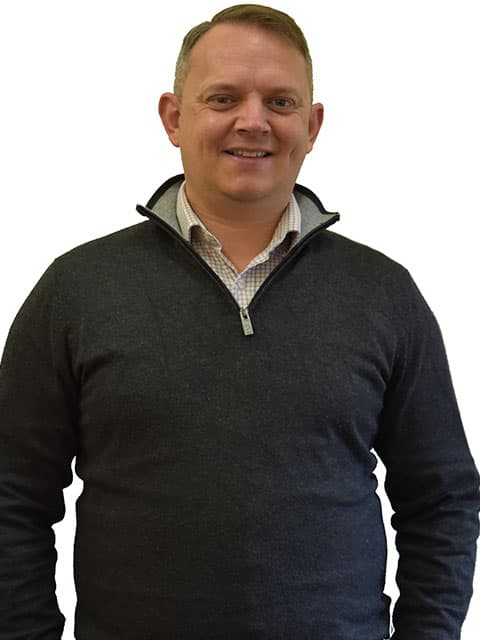
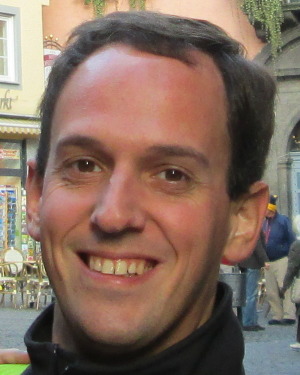
Hans Jonas Fossum Moen is an Associate Professor with a 20% appointment at the Department of Technology Systems, University of Oslo (UiO), and holds a 100% position as a researcher at the Norwegian Defence Research Establishment (FFI). His primary affiliation is with the Section for Autonomous Systems and Sensor Technologies. He is based at the Kjeller campus, with a visiting address at Gunnar Randers Road 19 and a postal address at Postboks 70. His research focuses on advancing autonomous systems and sensor technologies, particularly in the domains of swarm robotics, multi-agent coordination, and optimization algorithms. Key areas include UAV navigation, distributed localization in IoT networks, radar detection enhancement, and adaptive control systems for multi-functional swarms. He emphasizes the integration of biological principles into robotic systems, as evidenced by his participation in the ICRA 2018 Workshop on Swarms. His publications consistently highlight contributions to swarm intelligence, with a focus on improving data quality and efficiency in robotics applications. He has collaborated extensively with colleagues such as Kyrre Glette, Oleg Yakimenko, and Jan Dyre Bjerknes, exploring topics ranging from task allocation in multi-agent systems to evolutionary algorithms for filter optimization. His work bridges theoretical computer science with practical engineering challenges in autonomous systems. No scientific awards have been explicitly mentioned in the provided texts. Moen’s advising and grants narrative indicates no listed advisees or active grant projects, though his 20% UiO position suggests potential involvement in academic supervision. His primary research activities are embedded within FFI and the Autonomous Systems section at UiO, contributing to interdisciplinary efforts in sensor technologies and robotic systems.
Dr. Ramsey Faragher is a Senior Research Associate at the Computer Laboratory , University of Cambridge, and a Bye-Fellow at Queens' College. His work focuses on infrastructure-free indoor positioning systems, sensor fusion, and improvements to smartphone sensing capabilities. Academic Affiliation : University of Cambridge (Computer Laboratory) Professional Roles : Bye-Fellow at Queens' College, Senior Research Associate His research spans multiple disciplines within computer science and engineering, emphasizing innovative navigation solutions and signal processing techniques. Key areas include GNSS robustness, wireless security, and machine learning applications for positioning systems. Recent publications highlight advancements in supercorrelation for automotive GNSS, sensor data calibration, and motion-compensated signal processing. Articles frequently address challenges such as spoofing mitigation, urban navigation, and infrastructure-free localization. Scientific Recognition Fellow of the Royal Institute of Navigation Chartered Physicist (CPhys)
Roberto Garello is a Tenured Associate Professor at the Department of Electronics and Telecommunications (DET) of Politecnico di Torino . He specializes in Communication Systems , Satellite Networks , and Channel Coding , with a focus on 5G/6G Technologies and Non-Terrestrial Networks . His work aligns with the School of Master’s Programmes and Lifelong Learning . Research Interests: Satellite communications systems, Direct-to-Satellite IoT constellations, Mega-constellation services in space, and physical layer advancements for 5G/6G. Teaching: Offers courses like Information Theory for Data Science , Communication and Network Systems , and Space Exploration and Resources , while supervising Applied Signal Processing Laboratory . Projects: Leads initiatives such as DitDSSS (satellite localization), RESTART (future telecommunications), and TESL@ (ICT energy efficiency). Scientific Awards: Received Best Paper Awards at CTRQ 2010 and COCORA 2013. Students: Supervises PhD candidates including Alessandro Compagnoni, Agbotiname Lucky Imoize, and Riccardo Tuninato, focusing on topics like Wireless Communication, Machine Learning, and Non-Terrestrial Networks. Publications: His recent work explores OTFS vs. OFDM, spectrum sensing algorithms, MIMO with cylindrical arrays, and 5G NTN synchronization, reflecting trends in satellite IoT and machine learning integration.
Professor Cem Evrendilek is a faculty member in the Department of Computer Engineering at Izmir University of Economics, Turkey, holding the rank of Professor with current active status. His institutional email is cem.evrendilek@ieu.edu.tr. His research spans algorithmic complexity and geometric computation, with primary focus areas including: Computational Geometry (specializing in orthogonal polygon covering problems) Wireless Sensor Network Localization (energy-efficient methods and trilateration) NP-hard Problem Analysis (proving complexity for geometric and network problems) Approximation Algorithms for combinatorial optimization Analysis of his 2008-2018 publications reveals consistent work on geometric covering problems and sensor network localization. Key trends include proving NP-completeness for orthogonal polygon covering variants, developing energy-efficient mobile beacon localization techniques, and analyzing trilateration with noisy measurements. His work frequently intersects computational geometry with practical wireless network applications, demonstrating strong theoretical foundations applied to real-world constraints. Collaborative patterns show frequent co-authorship with Hüseyin Akcan (on localization algorithms), Burkay Genç, and Brahim Hnich (on computational geometry problems).
Nicola Dragoni is a Professor in Cybersecurity Engineering at the Department of Applied Mathematics and Computer Science, Technical University of Denmark (DTU). As Deputy Director and Head of Section, he leads research initiatives focused on securing emerging technologies. Key Research Areas : Internet of Things (IoT) security, machine learning for intrusion detection, cyber-deception techniques, fog computing, malware analysis, blockchain applications, and wireless sensor network security. Supervision : Actively supervising multiple PhD students in projects related to cyber-deception, moving target defense, and bio-inspired security mechanisms. Recent Publications : Contributions to IoT honeypots, drone identification via RF signals, passkey adoption challenges, and cyber range taxonomies.
Dr. Jose Manuel Sánchez Peña is a Full Professor at Universidad Carlos III de Madrid (UC3M), affiliated with the Grupo Universitario de Tecnologías de Identificación (GUTI). His research focuses on precision agriculture technologies, optoelectronics, and neuroscientific interfaces. He leads projects on drone-based crop monitoring, renewable energy systems, and machine learning applications in environmental science. Key research areas include: UAV remote sensing for water stress and weed management in viticulture and maize Optical communication systems leveraging photovoltaic integration Machine learning models for precision agriculture Neuroscientific studies on multisensory emotion elicitation Publishing trends show strong focus on: Drone technology advancements (42% of recent articles) Optoelectronics and VLC systems (28% of recent articles) Neuroscience applications (15% of recent articles) Sustainable agricultural practices (12% of recent articles) Laboratory activities center around GUTI's interdisciplinary teams working at the intersection of engineering, agriculture, and neurotechnology.
Zoran J. Stankovic is a Full Professor at the Faculty of Electronics, University of Niš, Serbia, in the Department of Telecommunications. He has been an integral part of the institution since earning his PhD in 2007, progressing from Assistant to Associate Professor (2020) and Full Professor (2024). He is actively involved in research, education, and academic leadership. Education: PhD in Telecommunications, Faculty of Electronics, University of Niš (2007) Master's in Telecommunications, Faculty of Electronics, University of Niš (2002) Bachelor's in Electronics and Telecommunications, Faculty of Electronics, University of Niš (1994) His research focuses on applying artificial neural networks to solve complex problems in electromagnetics and wireless systems. Key areas include antenna design optimization , direction-of-arrival (DoA) estimation , microwave cavity modeling , and smart textile antennas . His work bridges machine learning with electromagnetic theory, enabling efficient and adaptive RF system design. The analysis of his recent publications reveals a strong trend in using deep and hybrid neural networks for electromagnetic modeling and signal processing. His research emphasizes real-world applications such as wearable antennas, mobile source tracking, and intelligent antenna systems, often published in high-impact IEEE and Wiley journals. Scientific Awards: Commemorative Plaque from the Yugoslav Society for Microwave Techniques and Technologies (2005) for outstanding scientific results in microwave engineering Advising and Grants: While specific students are not listed, he has supervised numerous academic works. He has participated in 17 research projects (13 national, 4 international including DAAD, NATO, COST) and 8 educational development projects (including ERASMUS+, TEMPUS, WUS). These reflect sustained funding and academic collaboration. Labs and Teams: He is the founder and head of the Laboratory for Antennas and Propagation at the Faculty of Electronics, Niš. He is actively involved in organizing and leading the international conferences TELSIKS and ICEST , serving on their program and organizational committees, demonstrating strong leadership in the academic community.
E. Veronica Belmega is a Full Professor at ESIEE Paris (Université Gustave Eiffel) and a researcher at the LIGM laboratory in Marne-la-Vallée, France. Previously, she served as an Associate Professor at ENSEA graduate school and Deputy Director of the ETIS laboratory in Cergy. She holds an Engineer Degree from the University Politehnica of Bucharest, M.Sc. and Ph.D. from Université Paris-Sud 11, and an HDR habilitation from Université de Cergy-Pontoise. Her research focuses on AI-driven communication systems, energy efficiency, online optimization, and cyber-physical security, with a strong emphasis on applications in smart grids and IoT. Her work spans securing wireless communications against adversarial attacks, optimizing resource allocation in cognitive radio networks, and leveraging machine learning for GNSS localization and MIMO systems. Notable contributions include game-theoretic frameworks for PMU deployment and energy-efficient NOMA systems. Belmega has received prestigious awards such as the 2021 CY Alliance Award and the L’Oréal-UNESCO fellowship, and serves as an Area Editor for IEEE Trans. on Machine Learning in Communications and Networking. Current projects include a CEA LETI postdoc position on AI localization and a PEPR 5G project. She actively contributes to special issues like the EURASIP JASP on sustainable wireless communications. Belmega’s advising includes PhD student S. Maleki, co-author of her 2024 IEEE SmartGridComm Best Paper Award-winning work.
Changcheng Huang is a Professor at Carleton University's Department of Systems and Computer Engineering, part of the Faculty of Engineering and Design. He holds a Ph.D. from Carleton University and is licensed as P.Eng. His research focuses on Machine Learning, Network Architecture, and Optical Networks, emphasizing resource optimization and protocol design. Dr. Huang leads the Advanced Optical Network Laboratory (AONL), funded by CFI and OIT, which explores optical network technologies and interworking with electronic networks. His lab includes state-of-the-art equipment like Nortel switches and photonic switches. Recently, he advised PhD students Qiao Lu, Khoa Nguyen, and others, and completed postdoc Eslam G. AbdAllah. RA positions are available at both master's and PhD levels. His work spans publications in journals like IEEE Transactions and conferences such as Globecom and ICC. Research areas include intelligent network control mechanisms, wireless networks, and network protocol implementation. Education: Ph.D. (Carleton University). Research interests also include modeling/simulation techniques and reliability mechanisms for optical networks. He teaches courses like SYSC 5108 (Deep Learning) and SYSC 4602 (Computer Communications). Grants funded by CFI and OIT support his lab's optical networking projects. Over 150+ publications highlight his contributions to virtual network embedding, edge computing, and optical data center networks. Lab facilities include OMM photonic switches, Nortel routers, and Dell servers. Collaborative projects involve industry and academic partnerships, advancing interworking technologies between optical and electronic networks. His work bridges theoretical research with practical implementations, addressing challenges in network scalability, energy efficiency, and reliability.
Johan Sidén is a Lecturer and Associate Professor at Mid Sweden University , employed in the Department of Computer and Electrical Engineering (DET) . His work focuses on RFID technology , antenna design , and printed/flexible electronics , with a particular emphasis on industrial IoT and welfare technology applications. Research Keywords : Radio Frequency Identification, Antenna Design, Flexible Electronics, Wireless Sensor Networks, Microwave Engineering, Electronic Design Key Projects : DRIVEN (data-driven industrial transformation), SmartArea (functional surfaces), Pressure (ulcer monitoring), MakeSense! (welfare technology) Publications : 15+ recent works on wearable antennas, smart packaging, UWB antenna design, and RFID sensor integration Collaborations include partnerships with industrial and academic institutions, focusing on sustainable electronics, sensor systems, and smart infrastructure. His technical expertise spans antenna optimization , printed circuits , and edge computing for harsh environments.
Jie Xiong is an Associate Professor at the University of Massachusetts Amherst, affiliated with the Department of Computer Science within the College of Information and Computer Sciences. He holds a PhD from University College London (2015) and has been a faculty member since 2018. His research focuses on wireless sensing, mobile health, and IoT, with notable contributions to sensor-free systems and long-range sensing. He leads the Center for Smart and Connected Society and has been recognized with awards like the SIGMOBILE Test-of-Time Award (2024) and MobiCom Best Paper Award (2024). Education: PhD in Computer Science, University College London (2015) Research Interests: His work spans wireless sensing (e.g., acoustic, RF, LoRa), mobile health monitoring, and IoT applications. He explores sensor-free techniques, long-range through-wall sensing, and leveraging ambient signals for novel applications. Grants & Awards: NSF CAREER Award NIH R01 Grant (Smart and Connected Health) Google European Doctoral Fellowship BCS Distinguished Dissertation Award (Runner-Up) MobiCom '22 Best Paper Award (Runner-Up) Advising & Students: Supervises PhD students including Minhao Cui, Yuda Feng, Binbin Xie, and Dong Li. His students have received accolades like the Google Ph.D. Fellowship (Binbin Xie, 2022). Labs & Teams: Leads research in the Center for Smart and Connected Society, focusing on wireless systems and health applications. Collaborates with industry and academia on projects like EVLeSen (in-vehicle sensing) and SoilCares (agricultural monitoring).


/hjmoen/j.png)