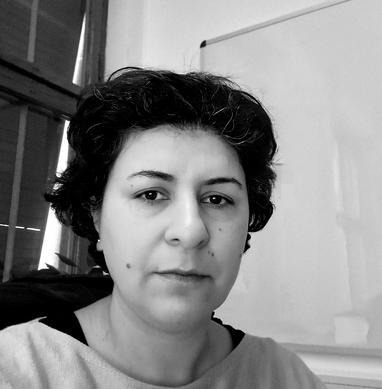
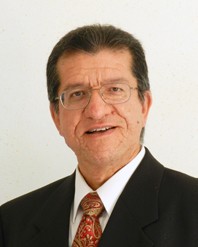
Hebatallah Shoukry is an Assistant Professor at the School of Engineering & Physical Sciences, Heriot-Watt University, United Kingdom. Her research focuses on antenna engineering, wireless communication, and network performance analysis, contributing to advancements in directional antennas, femtocell networks, and hybrid wireless backhaul systems. Current affiliation: Heriot-Watt University Academic role: Assistant Professor Research Interests: Specializing in antenna design and wireless network optimization, her work addresses challenges in spectral efficiency, interference management, and energy conservation. Recent projects explore collaborative frameworks between engineering academics and third-space professionals to enhance educational outcomes. Key areas: Antenna Engineering, Wireless Communication, Network Performance SDG contributions: Sustainable infrastructure, Innovation in education Selected Publications: Spanning from 2016 to 2025, her work includes studies on ESPAR antennas for indoor femtocell networks, wireless backhaul optimization, and educational innovations in engineering curricula. Activities: Actively participates in conferences like IEEE EDUCON (2025) and Sensor Signal Processing for Defence (2017). Organized workshops on Data Science and Engineering Education (2024).
Professor Wen Hu is a distinguished academic at the School of Computer Science and Engineering at the University of New South Wales (UNSW), where he holds a professorship focusing on cutting-edge research in cyber-physical systems and the Internet of Things (IoT). With extensive experience in both academia and industry, Professor Hu has established himself as a leading researcher in sensor network systems, low-power communications, security, and compressive sensing. His work bridges theoretical research with practical applications, as evidenced by his active commercialization efforts through roles as Chief Technology Officer at Parking Spotz and former Chief Scientist at WBS Tech. Professor Hu's research interests span multiple domains within cyber-physical systems and IoT. His work particularly focuses on low-power wireless communications , sensor network security , compressive sensing techniques , and novel applications of IoT technologies . His research group explores how these technologies can be applied to solve real-world problems in areas such as smart buildings, environmental monitoring, and human-computer interaction. The research integrates hardware design, communication protocols, security mechanisms, and data analytics to create efficient and robust IoT systems. Professor Hu's publication record demonstrates a consistent focus on advancing the state-of-the-art in wireless sensor networks and IoT. His recent work shows increasing integration of machine learning techniques with traditional sensor systems, exploring applications in areas ranging from healthcare monitoring to agricultural technology. There's a clear trend toward more sophisticated signal processing approaches, particularly using mmWave technology and visible light communications, while maintaining the core focus on energy efficiency and security that has characterized his earlier work. CSIRO Office of Chief Executive (OCE) Julius Career Award (2012-2015) Professor Hu has successfully secured multiple research grants from the Australian Research Council, CSIRO, and industry partners, enabling his team to pursue ambitious research projects with both theoretical significance and practical applications. His editorial leadership as Editor-in-Chief of ACM TOSN and organizational roles in major conferences like CPS-IoT Week 2020 and ACM/IEEE IPSN 2023 demonstrate his significant contributions to the research community. As a senior member of both ACM and IEEE, he actively mentors students and early-career researchers while fostering collaborations across academia and industry. Professor Hu leads a vibrant research group at UNSW that combines theoretical research with practical implementation. His team works closely with industry partners to ensure research relevance and facilitate technology transfer. The group maintains strong connections with international research communities and participates in collaborative projects that address global challenges in IoT and cyber-physical systems.
Muhammad Shafi serves as a Lecturer in the School of Computing at Ulster University, Belfast campus, with his office located in Room BA-02-005 at 2-24 York Street, Belfast, BT15 1AP. His research focuses on cutting-edge applications of artificial intelligence and machine learning across multiple domains. Dr. Shafi's research interests span Machine Learning , Neural Networks , and Computer Vision , with particular emphasis on medical applications. His work bridges computer science with healthcare through innovative approaches to ECG interpretation, pediatric radiology, and arrhythmia diagnosis. His fingerprint analysis reveals significant contributions to Convolutional Neural Networks (100%), Neural Networks (64%), Machine Learning (48%), and specialized areas like Vision Transformers and Gated Recurrent Units. Analysis of Dr. Shafi's recent publications (2023-2025) reveals a strong research trajectory with 11 total outputs, including multiple high-impact journal articles. His work demonstrates a consistent focus on applying advanced machine learning techniques to solve real-world problems, particularly in medical diagnostics and wireless communications. The research shows increasing publication output from 3 articles in 2023 to 6 in 2025, indicating growing research productivity. Dr. Shafi's work contributes to UN Sustainable Development Goals, particularly those related to good health and well-being through his medical AI research. His h-index of 3 with 93 citations (based on Scopus data) reflects his emerging impact in the field. As a Lecturer, Dr. Shafi maintains an active research program with collaborations across multiple institutions. His work on neuromorphic models for medical applications represents an innovative intersection of neuroscience-inspired computing and healthcare diagnostics. His recent publications in journals like PLoS ONE and IEEE Access demonstrate his ability to publish in reputable, high-impact venues. Dr. Shafi maintains research activity across multiple laboratories and teams focused on computer science and medical informatics. His work with neuromorphic models suggests involvement with specialized computing architectures that mimic biological neural networks, representing a cutting-edge research direction with significant potential for medical applications.
Pau Closas is an Associate Professor in the Department of Electrical and Computer Engineering at Northeastern University , leading the Information Processing Lab and co-directing the SPIRAL Group . He has held leadership roles including Editor-in-Chief of the IEEE Aerospace and Electronic Systems Magazine and Head of Statistical Inference for Communications and Positioning at CTTC in Barcelona. MS (2014), Universitat Politècnica de Catalunya: Advanced Mathematics and Mathematical Engineering PhD (2009), Universitat Politècnica de Catalunya: Electrical Engineering MS (2003), Universitat Politècnica de Catalunya: Electrical and Computer Engineering His research lies at the intersection of statistical signal processing and computational statistics , focusing on robust filtering over complex systems. Key application areas include satellite-based navigation , indoor positioning , wireless communications , and mathematical biology . Current projects involve AI-based sensor fusion for ionospheric dynamics and distributed AI for secure navigation systems. Notable awards include the 2023 Harry Rowe Mimno Award , 2019 NSF CAREER Award , and EURASIP Best PhD Thesis Award (2014) . He has secured over $15 million in grants from NSF, DARPA, and the U.S. Army Research Laboratory for projects like RESILIENT and CAREER: Secure Positioning. His leadership roles extend to Chief Scientist at Albora Technologies and co-director of Northeastern's SPIRAL research group.
María Soledad Escudero Hernanz is a Full Professor in the Electronics Department at the University of Alcalá's School of Engineering. With extensive experience in both teaching and research, she has been actively contributing to the university community since at least 2005. Her research focuses on several cutting-edge areas within robotics and electronics, with particular emphasis on service robotics and transportation safety applications. Professor Escudero Hernanz is an active member of the 'Robótica de Servicios y Tecnologías para la Seguridad Vial - Service Robotics and e-Safety' research group, where she contributes to multiple research lines including autonomous driving systems, intelligent control for robotics, driver monitoring technologies, and mobile robot navigation. Her scholarly output shows a consistent pattern of research focused on practical applications of robotics and computer vision technologies. The analysis of her publications reveals a strong emphasis on transportation safety systems, with numerous projects related to driver monitoring, distraction detection, and advanced driver assistance systems. She has also made significant contributions to assistive robotics and multi-robot navigation systems. Professor Escudero Hernanz has been involved in numerous research projects funded by various entities including: Spanish Ministry of Economic Affairs and Digital Transformation Community of Madrid University of Alcalá Spanish Foundation for Science and Technology (FECYT) Her work demonstrates a strong commitment to both fundamental research and practical applications, particularly in the areas of transportation safety and assistive technologies. As an educator, she teaches Circuit Electronics and Digital Electronics across multiple engineering programs, contributing to the development of future engineers in various specializations. Her collaborative approach is evident through her long-standing research partnerships with colleagues at the University of Alcalá, particularly with Rafael Barea Navarro, María Elena López Guillén, and Luis Miguel Bergasa Pascual, with whom she has worked on multiple projects spanning more than a decade.
Mike Danilovic serves as Professor at Halmstad University's Academy of Entrepreneurship, Innovation and Sustainability in Sweden. His academic career focuses on the intersection of business innovation and sustainable technological transformation, particularly in transportation and energy systems. Professor Danilovic's research centers on business model innovation for sustainable systems, with particular emphasis on transportation electrification and smart grid technologies. His work examines multidimensional readiness for electrifying transportation systems, with extensive comparative analysis of China, Norway, and Sweden. He investigates organizational change patterns in new forms of organizations and barriers to collaborative innovation in supply chains, taking an empirical approach to understanding how stakeholders influence core intermediary activities. His publication record demonstrates consistent output in high-impact areas, with recent work focusing on specific technological aspects of transportation electrification including battery swapping for heavy trucks, hydrogen technology, inductive charging, and electric road systems integrated with local renewable energy sources. This research follows earlier foundational work on business model innovation in wind energy and corporate social responsibility. Professor Danilovic's work bridges theoretical innovation frameworks with practical implementation challenges, providing valuable insights for both academic researchers and industry practitioners working on sustainability transitions. His approach emphasizes the interconnectedness of technological, organizational, and policy dimensions in successful innovation implementation.
Dr. Salam Traboulsi is a Researcher at Stuttgart University of Applied Sciences (HFT Stuttgart), affiliated with the Competence Center for Digitalization in Research, Teaching & Economics since 2019. She holds a PhD in Computer Science from the University of Toulouse, France (2008). Her work bridges technology and urban innovation, with a focus on developing scalable solutions for modern cities. Research Focus: Dr. Traboulsi specializes in: Smart City ecosystems integrating IoT and 5G Precision technologies for urban positioning and navigation Data management frameworks for large-scale sensor networks Open-source IoT platforms for building efficiency and environmental monitoring Cloud and grid computing infrastructures Key Projects: She leads/contributes to: iCity 2: UDigiT4iCity – Developing urban digital twins using IoT building data and 5G sensor networks iCity 1 – Foundational research on intelligent urban infrastructure systems Publication Trends: Her recent work (2020-2024) emphasizes 5G-enabled urban solutions, including fleet management optimization, indoor positioning systems, and IoT analytics for smart buildings. Earlier research (2005-2013) focused on distributed computing, storage virtualization, and information retrieval systems, demonstrating consistent expertise in large-scale data infrastructure. Academic Engagement: She serves as a scientific reviewer for journals and conferences and teaches in the surveying study area at HFT Stuttgart.
Gul Agha is a distinguished Professor of Computer Science at the University of Illinois at Urbana-Champaign and Director of the Open Systems Laboratory. His career spans over three decades of pioneering research in concurrent and distributed computing systems. Professor Agha's research focuses on the actor model of computation, formal methods, and statistical model checking. His work bridges theoretical foundations with practical applications in distributed systems, programming languages, and verification techniques. He has made seminal contributions to understanding concurrent computation through his development of the actor model framework. His publication record shows consistent contributions from the 1980s through the present, with recent work focusing on verification of safety-critical systems, serverless computing optimization, and advanced techniques for distributed actor systems. The trend in his research demonstrates a progression from theoretical foundations to practical applications in modern computing environments including cloud infrastructure and IoT systems. His scientific achievements have been recognized with numerous prestigious awards: Fellow of the IEEE (2002) IEEE Computer Society Meritorious Service Award Golden Core Member of the IEEE Computer Society International Lecturer for the ACM (1992-1997) ACM Fellow (2018) for research in concurrent programming and formal methods Professor Agha has supervised numerous graduate students and postdoctoral researchers through the Open Systems Laboratory. His laboratory has secured substantial research funding for projects in distributed systems, formal verification, and wireless sensor networks. His work on the actor model has influenced both academic research and industry practices in concurrent and distributed computing. As Director of the Open Systems Laboratory, Professor Agha leads a research group focused on advancing the state of the art in distributed and concurrent systems. The laboratory serves as an intellectual hub for theoretical and practical research in open distributed systems, with projects spanning from foundational theory to real-world implementations in areas like structural health monitoring and cloud computing.
Fereydoun Daneshgaran is a Professor and Chairman of the Electrical & Computer Engineering Department at California State University, Los Angeles, where he has served since 2006. He also directs the fiber and nonlinear optics research laboratory and has held various academic leadership positions including chairman of the Communications group and acting chairman of the ECE Department. Dr. Daneshgaran's educational background includes: Ph.D. in Communications, VLSI, and Optimization from UCLA (1992) M.S. (Magna Cum Laude) in Communications, Solid State Electronics, and Control Systems from Cal State LA (1985) B.S. (Magna Cum Laude) in Electrical and Mechanical Engineering from Cal State LA (1983) Dr. Daneshgaran's primary research interests focus on wireless communications, digital communications, and information theory. His work spans multiple specialized areas including coding theory (particularly Turbo Codes and LDPC codes), quantum key distribution, cognitive radio, and network localization. His research has significant applications in wireless networking protocols, particularly IEEE 802.11 standards, with numerous publications analyzing throughput performance under various network conditions. He has also made substantial contributions to optical communications and signal processing techniques. Dr. Daneshgaran's publication record shows a progression from foundational work in Viterbi decoding and turbo codes to more recent applications in quantum communications and advanced wireless network protocols. His research consistently bridges theoretical communications theory with practical implementations, as evidenced by both his extensive journal publications and industry experience. His scientific achievements include: Best Paper Award at First International Conference on Advances in Satellite and Space Communications (SPACOMM 2009) U.S. Patent No. US 2007/0079223 A1 for "A method and system for Information processing" Dr. Daneshgaran has supervised numerous Ph.D. students and visiting scholars, primarily from Politecnico University of Turin (POLITO), Italy, fostering international research collaborations. His academic leadership extends to developing and teaching the entire graduate sequence in digital communications at Cal State LA, along with specialized courses in wireless communications, cognitive radio, and optical communication systems. He has also maintained industry connections through various consulting roles and entrepreneurial ventures in communications technology. As director of the fiber and nonlinear optics research laboratory from 1994 to 2015, Dr. Daneshgaran led research in optical communications and related technologies. His work has bridged theoretical communications research with practical implementations, as evidenced by both his academic publications and industry experience founding companies like EuroConcepts S.r.l. and Quantum Bit Communications, LLC.