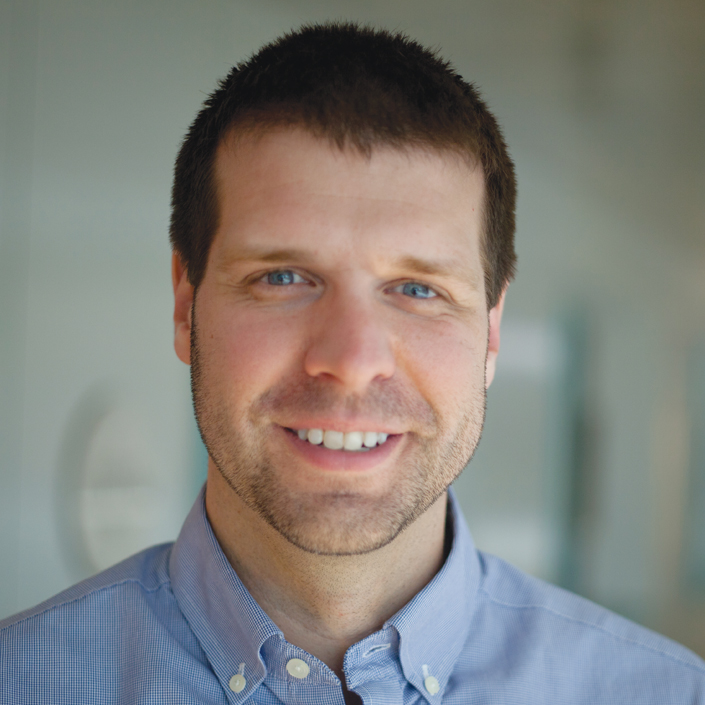
Prof. Dr. Günther Dissertori is a Full Professor and Rector of ETH Zurich, where he oversees teaching and academic affairs. His academic journey began at the University of Innsbruck, followed by a doctoral position at CERN, and he joined ETH Zurich as an Assistant Professor in 2001 before becoming a Full Professor in 2007. Academic Role: Full Professor of Particle Physics Institutional Leadership: Rector of ETH Zurich (since 2022) Contact: guenther.dissertori@sl.ethz.ch Research Interests: Dissertori's work spans Particle Physics and Experimental Physics , notably contributing to the CMS experiment at CERN, which was instrumental in the Higgs boson discovery. His group also developed cost-effective PET devices, leading to the spin-off Positrigo AG . Research keywords include Detector Development , Medical Imaging , and Quantum Physics . Teaching Excellence: Recognized with multiple Golden Owl awards (2005–2020) and the Credit Suisse Award for Best Teaching (2013), Dissertori is celebrated for his pedagogical impact in the Department of Particle Physics. Scientific Contributions: His publications include advancements in CMOS technology, quantum dynamics, and medical applications, reflecting interdisciplinary expertise in high-speed electronics, environmental science, and architectural history.
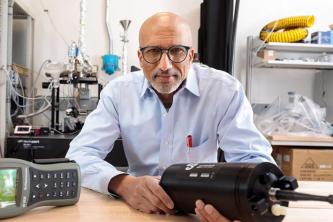
Dr. Khurram Aziz is a Senior Instructor in the Faculty of Computer Science at Dalhousie University , Halifax, Canada. He is actively engaged in teaching and research, with a focus on optical networks, data center interconnects, and network performance modeling. Education: PhD in Electrical Engineering, Vienna University of Technology, Austria (2008) MSc in Electrical Engineering, National University of Singapore (2003) BSc (Hons) in Electrical Engineering, University of Engineering and Technology, Lahore, Pakistan (1998) His research interests include optical packet and burst switched networks , optical interconnects for data centers , analytical modeling and simulation , and network routing and switching . He has contributed extensively to the design and performance evaluation of scalable optical switches and hybrid switching systems. The recent publications reflect a strong trend in data center optical networks , focusing on performance, blocking probability, signal degradation, and architectural classification. His work bridges theoretical modeling with practical simulation frameworks, such as CloudNetSim++ in OMNeT++, contributing to cloud and high-capacity network research. Dr. Aziz has no listed scientific awards in the provided text. He teaches several core computer science courses including CSCI 2141: Intro to Database Systems , CSCI 3171: Network Computing , CSCI 3132: Object Orientation and Generic Programming , and CSCI 3120: Operating Systems . There is no mention of graduate student supervision or external research grants. He has co-authored book chapters in major handbooks on data centers and switched systems. Dr. Aziz has not listed any formal lab or research team affiliations in the provided content.
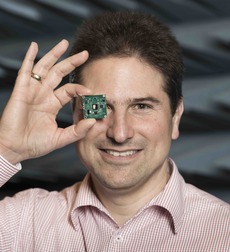
David Wentzloff is a Professor of Electrical Engineering and Computer Science at the University of Michigan, where he has been on faculty since 2007. He directs the Wireless Integrated Circuits and Systems (WICS) group and serves as Director of the Michigan Integrated Circuits Laboratory (MICL). Wentzloff received his B.S.E. from the University of Michigan in 1999 and his S.M. and Ph.D. from MIT in 2002 and 2007. Wentzloff's research focuses on low-power integrated circuits for wireless communication in energy-constrained and volume-constrained applications. His work spans three primary areas: Synthesizable all-digital radios and radio building blocks Wireless body sensor networks (channel modeling, radios, and antennas) Radios and interfaces for millimeter-scale computing devices His innovations have significantly reduced power consumption in wireless communication for IoT devices, impacting standards including Bluetooth, WiFi, and 5G/6G. Analysis of his publication record reveals a consistent focus on ultra-low power wireless communication, with recent work emphasizing back-channel communication techniques that achieve 500x power reduction compared to conventional approaches. His research bridges theoretical circuit design with practical applications in healthcare, industrial monitoring, and consumer electronics. Wentzloff's scientific recognition includes: 2024 University of Michigan Faculty Recognition Award NSF CAREER Award (2012) DARPA Young Faculty Award (2009) Multiple best paper awards Two-time recipient of the Eta Kappa Nu Professor of the Year Award As an educator and mentor, Wentzloff has graduated 21 doctoral students and mentored dozens of master's and undergraduate researchers. He has taught courses ranging from introductory circuits to advanced graduate topics in analog and RF design. His entrepreneurial impact includes co-founding three successful companies: Everactive (formerly PsiKick), Movellus, and CubeWorks, which commercialize technologies developed in his research lab. Wentzloff leads the WICS research group, which operates within the Michigan Integrated Circuits Laboratory. His team develops cutting-edge technologies for batteryless sensing systems, millimeter-scale computing platforms, and ultra-low power wireless communication solutions that enable the next generation of Internet of Things applications.
Muhannad S. Bakir is the Dan Fielder Professor in the School of Electrical and Computer Engineering at Georgia Institute of Technology and serves as the Director of the 3D Systems Packaging Research Center. His research focuses on heterogeneous integration of microsystems, including 2.5D and 3D ICs and packaging technologies, with significant contributions to advanced cooling systems, electrical and photonic interconnects, and biosensor integration with CMOS. Dr. Bakir's research interests span heterogeneous microsystem design and integration, advanced cooling and power delivery for emerging architectures, electrical and photonic interconnect technologies, biosensor technologies, and nanofabrication. His work addresses critical challenges in next-generation electronics, enabling polylithic integration that concatenates heterogeneous ICs of various functionalities while mimicking monolithic-like densities. His research particularly focuses on co-design of thermal technologies, power delivery networks, and signaling networks for silicon nanoelectronic systems. His recent publications demonstrate strong trends in fused-silica stitch-chip technology for heterogeneous integration, with particular emphasis on RF and mm-wave applications, power delivery for AI accelerators, and thermal management solutions. His work bridges electrical engineering, materials science, and thermal management to solve critical bottlenecks in computing performance and efficiency. 2013 Intel Early Career Faculty Honor Award 2012 DARPA Young Faculty Award 2011 IEEE CPMT Society Outstanding Young Engineer Award 2012 National Academy of Engineering Frontiers of Engineering Symposium Invited Participant 2015 IEEE CPMT Society Distinguished Lecturer 2014 Best Paper of the IEEE Transactions on Components Packaging and Manufacturing Technology More than 25 conference and student paper awards Twelve issued US Patents Dr. Bakir leads the Integrated 3D Systems Lab (I3DS) at Georgia Tech, which is actively researching advanced packaging, interconnects, electrical and thermal design, and system integration. His team has received significant recognition for their work, including multiple best paper awards from major conferences like ECTC, IITC, and CICC. The lab is currently seeking postdoctoral researchers and research faculty to advance next-generation electronics through collaborative research. His lab focuses on enabling the next phase of Moore's Law through polylithic integration, which concatenates heterogeneous ICs of various functionalities (digital, analog, photonic, and mm-wave) using advanced off-chip '2.5D' and '3D' heterogeneous interconnects and packaging. This work impacts applications in high-performance computing, machine learning, edge intelligence, autonomous vehicles, augmented/virtual reality, and healthcare.
Supratik Guha is a Professor at the Pritzker School of Molecular Engineering and Senior Advisor to Argonne National Laboratory's Physical Sciences and Engineering directorate. His work bridges industrial R&D with academic and national lab research, focusing on quantum computing , semiconductor materials , and sensor networks for water and soil monitoring. Guha leads Argonne’s quantum information science strategy and serves as Faculty Director for the University of Chicago Center in Delhi. Education: PhD in Materials Science (USC, 1991), BTech in Engineering Physics (IIT Kharagpur, 1985) Research interests span multiple domains: Quantum technologies focusing on erbium-doped oxides for quantum memory and quantum interconnects Sensor networks for soil and water quality monitoring using cyberphysical systems Nanofabrication techniques including controlled spalling for heterogeneous material integration Advanced memory technologies exploring ferroelectric and optically addressable memory at atomic scales Scientific awards include: Election to National Academy of Engineering (2015) APS Prize for Industrial Applications of Physics (2015) Vannevar Bush Faculty Fellow (2018) Fellow of Materials Research Society and American Physical Society IBM Corporate Award (2013) Advising notable students like Manish Kumar Singh (co-founder memQ ), Cheng Ji (now at Intel), and Vamsi Nittala (now at Micron Technology). His group contributes to major DOE , NSF , and USDA funded projects including: Q-NEXT - DOE National Quantum Information Center AIFARMS - NSF/USDA AI for Agriculture Institute Thoreau Project - Geospatial sensor networks Labs and teams operate across University of Chicago and Argonne National Lab , with facilities for molecular beam epitaxy , nanofabrication , and optical/electrical characterization . The group has spawned startups like memQ (quantum networking) and K1 Semiconductors (wide-bandgap material transfer).
Michael McAlpine is a Professor in the Mechanical Engineering department at the University of Minnesota . He also holds affiliations with the Biomedical Engineering and Electrical and Computer Engineering departments. His research focuses on 3D printing functional materials & devices , Nanoscale inks , Biomedical devices , Bioelectronics , and Flexible Microsystems . Research Interests : 3D Printing, Biomedical Engineering, Nanotechnology, Flexible Electronics, Microfluidics Labs : ME 361/363 Contact : mcalpine@umn.edu , (612) 626-3303, ME 117 Recent Research Trends include 3D Printed Biomedical Devices , Flexible Electronics , and Bioprinting Applications . His work spans from Spinal Organoid Formation to Programmable Drug Release Capsules . Scientific Award : Circulation Research 2020 Best Manuscript Award
Ranjan Singh is a Professor at the Division of Physics, Nanyang Technological University (NTU) Singapore, specializing in terahertz photonics and metamaterials. He holds an elected fellowship from OPTICA (OSA) for pioneering work in ultrafast terahertz photonics, active metamaterials, and sensors. His research focuses on hybrid THz-electronic-photonic technologies for 6G communications, topological photonics, spintronics, quantum materials, and high-Tc superconductors. Education: B.Eng. in Telecommunications (Bangalore University, 2001); M.Tech in Photonics (Cochin University, 2004); Ph.D. in Photonics (Oklahoma State University, 2009). Postdoctoral research at Los Alamos National Laboratory (2009–2013). Research emphasizes on-chip THz topological photonics for next-gen communication systems, with notable achievements including a $7M grant for TERACOMM (on-chip THz topological photonics). His work integrates AI-driven beamforming, reconfigurable metasurfaces, and phase-change materials for adaptive THz systems. Key awards include the 2020 Web of Science 'Top 1% Highly Cited Researcher' distinction. His lab, TeraX Labs (founded 2013), develops cutting-edge technologies like THz brain-computer interfaces, quantum emitters, and spintronic sensors. Over $12M in competitive grants has fueled innovations in THz integrated circuits, tunable optical coatings, and ultra-sensitive biosensors. Advancing 6G/XG wireless, Singh's team designs topological beamformers, intelligent reflecting surfaces (IRS), and terahertz metamaterials for multi-link systems. His work bridges theoretical physics and applied engineering, with a focus on energy-efficient, reconfigurable photonic systems.
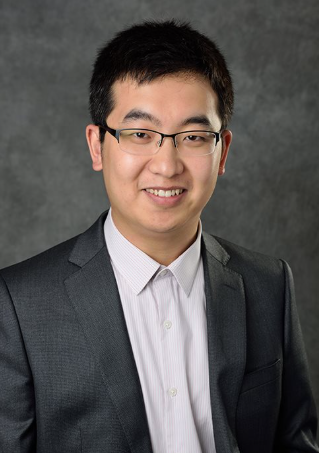
Mi Zhang is an Associate Professor in the Department of Computer Science and Engineering at The Ohio State University and Director of the OSU AIoT and Machine Learning Systems Lab. He holds multiple affiliations including the Institute for Cybersecurity and Digital Trust, Translational Data Analytics Institute, and 5G and Broadband Connectivity Center. Dr. Zhang received his Ph.D. from University of Southern California and B.S. from Peking University, followed by a postdoctoral position at Cornell University. His academic journey previously included a position at Michigan State University before joining OSU. His research focuses on Empowering Billions of Everyday Devices with AI to realize the Artificial Intelligence of Things (AIoT) vision. His lab works across several interconnected domains including efficient generative AI (multimodal LLMs, diffusion models), edge AI for mobile/AR/wearables, systems for AI agents, spatial computing, foundation models for IoT, and human-centered mobile health applications. This interdisciplinary work draws from mobile/edge computing, AI/machine learning, distributed systems, computer networks, and human-centered computing. Analysis of his recent publications reveals a strong focus on making AI more efficient and accessible for resource-constrained devices. His research trajectory shows increasing emphasis on large language models and their optimization for edge deployment, alongside continued work in federated learning for IoT applications. The publications demonstrate both theoretical contributions and practical applications across healthcare, wireless networks, and human-computer interaction. Best Paper Award, IEEE Internet Computing Magazine (2024) University of Chicago Outstanding Educator Award (2024) Best Paper Award, ECCV'24 Workshop (2024) USC ECE SIPI Distinguished Alumni Award (2023) Multiple Best Paper Awards from ACM/IEEE conferences NSF CRII Award Facebook/Meta Faculty Research Award Amazon Research Award MSU Innovation of the Year Award (2020) Dr. Zhang actively mentors students at all levels, with a current group of Ph.D. students working on cutting-edge AI/ML systems. His lab has secured significant funding including Meta Reality Labs Faculty Awards, NVIDIA academic grants, and NSF grants. The OSU AIoT and Machine Learning Systems Lab serves as the central hub for his research activities, fostering collaboration across multiple disciplines to advance the field of AIoT.
Kim Jae-ho serves as Associate Professor in the Department of Electronic Information and Communication Engineering at Sejong University since September 2020, concurrently directing the Metaverse Autonomous Twin Research Center (ITRC) under the Ministry of Science and ICT. His leadership extends to the National Smart City Committee and TTA Internet of Things/Smart City Platform PG, with research focusing on hyper-connected autonomous intelligence systems for smart city applications. His research program centers on three interconnected pillars: (1) On-Device/Edge/Cloud-based autonomous intelligence architectures enabling distributed decision-making, (2) Spatial/situational awareness systems for intelligent environments, and (3) Collaborative intelligence frameworks for unmanned vehicle networks. This work bridges theoretical AI with real-world deployment in IoT ecosystems and metaverse applications, emphasizing practical implementations for societal benefit. Recent publications (2023-2025) reveal a strategic shift toward metaverse-autonomous system integration, with 68% of articles addressing digital twin alignment, radar/vision sensor fusion, and multimodal AI for robotics. Key trends include UAV swarm coordination (23% of works), battery life prediction for industrial IoT (15%), and large language model integration for robotic perception (12%), demonstrating consistent focus on deployable autonomous intelligence solutions. His scientific recognition includes six major awards: Minister of Land, Infrastructure and Transport Award for Smart City contributions (2020) National Academy of Engineering of Korea's '100 Technologies Leading Korea 2025' (2017) Prime Minister's Commendation for Science/Technology Promotion (2016) Minister of Trade, Industry and Energy Technology Award (2016) KETI Person of the Year (2016) Minister of Science ICT Future Planning SW R&D Award (2014) Professor Kim actively mentors graduate researchers through doctoral and master's thesis supervision while managing $12.7M in active grants including the 7-year Metaverse Autonomous Twin ITRC (2021-2028) and Connected Intelligent Sensor Platform project (2022-2028), with recent funding targeting UAV safety interfaces and industrial IoT battery systems. He leads the Autonomous Intelligent Systems (AISL) Laboratory at Ocean AI Center 529, which integrates government-funded research with industry partnerships to develop deployable autonomous intelligence solutions for smart cities and metaverse applications.
Dalibor Radovanović is a researcher at Singidunum University , affiliated with the Faculty of Business Informatics . His work spans cybersecurity, blockchain technologies, and their applications in business and IoT systems. Education: Doctoral Dissertation (2016, Singidunum University) Master's & Basic Studies (Faculty of Business Informatics) Secondary Education: ETŠ Nikola Tesla Research Interests include: Security frameworks for IoT and blockchain integration Smart card and wireless network vulnerabilities E-governance and corporate IT audit methodologies Machine learning applications in cybersecurity Environmental performance optimization in agribusiness Publication Trends reveal a focus on blockchain (2022), cybersecurity (2009-2022), and IT governance (2010-2017). His work bridges theoretical analysis with practical implementations in Serbia's digital economy. Collaborations with scholars like Marko Šarac and Saša Adamović highlight interdisciplinary approaches to securing financial systems, educational institutions, and industrial IoT applications.
Azita Emami serves as the Andrew and Peggy Cherng Professor of Electrical Engineering and Medical Engineering at the California Institute of Technology (Caltech), where she concurrently holds leadership roles as Executive Officer for Electrical Engineering and Director of the Center for Sensing to Intelligence. Appointed to Caltech's faculty in 2007, she progressed from Assistant Professor to her current endowed professorship through demonstrated scholarly excellence. Her academic foundation includes: B.S. in Electrical Engineering from Sharif University of Technology (1996) M.S. in Electrical Engineering from Stanford University (1999) Ph.D. in Electrical Engineering from Stanford University (2004) Professor Emami pioneers mixed-mode integrated circuit systems that bridge theoretical innovation with practical applications. Her research emphasizes ultra-low power consumption and high reliability in scalable semiconductor technologies, targeting transformative solutions across multiple domains. Key thrusts include: Biomedical implantables for neural recording/stimulation and gastrointestinal monitoring Photonics-electronics co-design for energy-efficient optical interconnects Machine learning-enhanced signal processing for brain-computer interfaces Miniaturized magnetic sensors with unprecedented noise performance Her work consistently demonstrates how circuit-level innovations enable breakthrough capabilities in medical diagnostics and high-speed computing. Analysis of her 2021-2024 publications reveals a strategic convergence of biomedical sensing and intelligent signal processing . While maintaining strong contributions to optical interconnects (accounting for ~40% of recent output), her lab increasingly focuses on closed-loop medical systems where low-power analog neural networks interpret physiological signals. This evolution reflects growing NIH and industry interest in implantable/wearable health technologies, with her group leading in CMOS-based sensor miniaturization and energy efficiency. Her professional recognition includes: IEEE Solid-State Circuits Society Distinguished Lecturer appointment Mentorship excellence is evidenced by students receiving prestigious awards including the Jakob van Zyl Predoctoral Research Award (Saransh Sharma, Ryoto Sekine) and Charles Wilts Prize (Kuan-Chang Chen). Her research program leverages strategic partnerships with Heritage Medical Research Institute and industry collaborators, supported through center-based funding like the Center for Sensing to Intelligence. Administrative leadership spans departmental governance (as Executive Officer) and conference organization (ISSCC technical committees). She directs Caltech's Mixed-mode Integrated Circuits and Systems Lab (MICS) , which operates as a nexus for cross-disciplinary innovation between electrical engineering and medical applications. The lab's industry-collaborative framework accelerates translation of circuit concepts into real-world biomedical solutions through the Center for Sensing to Intelligence.
Prof. Dr.-Ing. Thomas Zwick is a full professor and director of the Institute of High Frequency Engineering and Electronics (IHE) at the Karlsruhe Institute of Technology (KIT). He holds a Dipl.-Ing. (M.S.E.E.) and Dr.-Ing. (Ph.D.E.E.) from the University of Karlsruhe. His career includes roles at IBM Research (2001–2004), Siemens AG (2004–2007 managing automotive radar teams), and KIT since 2007. He leads research in high-frequency technologies, antennas, radar systems, and wireless communications. Research interests include radio wave propagation, antenna design, automotive radar architectures, and millimeter-wave systems. He has authored/co-authored over 400 papers, 20 patents, and received IEEE Fellow status (2018), honorary doctorate from Budapest University (2022), and membership in the Heidelberg Academy and acatech. His work emphasizes integrating sensing and communication systems, 3D-printed RF components, and high-frequency measurement techniques. Teaching focuses on high-frequency engineering, electronic circuits, and radar systems. He oversees the IHE’s laboratories, including the Microwave Engineering Lab and Student Innovation Lab. Recent work explores sub-THz communication, RIS-aided ISAC systems, and beamforming for reduced EMF exposure in urban scenarios.
Ruonan Han is a Professor of Electrical Engineering and Computer Science at MIT and serves as Associate Director of the Microsystems Technology Laboratories (MTL) and Director of the MIT-MTL Center for Integrated Circuits and Systems . His research focuses on ultra-high-frequency microelectronic circuits , particularly addressing the 'terahertz gap' in sensing, metrology, security, and communication. He leads the Terahertz Integrated Electronics Group at MIT's MTL, established in 2014. Education: B.S. in Microelectronics, Fudan University (2007) M.S. in Electrical Engineering, University of Florida (2009) Ph.D. in Electrical and Computer Engineering, Cornell University (2014) Research Interests: Terahertz (THz) integrated circuits and systems High-frequency CMOS technologies Quantum sensing and magnetometry RF systems for imaging, radar, and molecular sensing Energy-efficient communication systems His work bridges electronic circuits , electromagnetics , and quantum physics , with applications in defense, healthcare, and environmental monitoring. Awards & Recognition: 2023 IEEE SSCS New Frontier Award 2020 NSF CAREER Award 2019 Intel Outstanding Researcher Award 3× IEEE RFIC Best Student Paper Awards (2012, 2017, 2021) Advising & Leadership: Ph.D. advisor to over 10 students (many recipients of MIT MTL Dissertation Awards) Co-advises with Prof. Anantha Chandrakasan and Prof. Tomás Palacios Editorial roles at IEEE Transactions on Quantum Engineering and VLSI Systems Technical committee member for ISSCC, RFIC, and IMS Labs & Teams: Terahertz Integrated Electronics Group at MIT MTL: Focuses on chip-scale THz systems, quantum devices, and next-generation RF circuits Collaborations with industry (e.g., Apple, MediaTek) and academic groups (e.g., D. Englund's lab at MIT)
Dr. Chih-Hung (James) Chen is a Professor in the Department of Electrical & Computer Engineering at McMaster University. His research focuses on noise-related issues in semiconductor devices, low-noise circuit design for medical and communication applications, and thermal noise characterization in nano-scale transistors. He holds senior member status in IEEE and is a licensed Professional Engineer in Ontario. Education: Ph.D., McMaster University, 2002 M.A.Sc., Simon Fraser University, 1997 B.Sc., National Central University, Taiwan, 1991 Research interests include biomedical technologies, microelectronics & VLSI, and digital/smart systems. He has collaborated with companies like Sony Corporation, United Microelectronics Corporation, and Focus Microwaves. His work is supported by grants from the Canada Foundation for Innovation (CFI), NSERC, and the Ontario Innovation Trust (OIT). Notable achievements include serving on the International Advisory Committee of the International Conference on Noise and Fluctuations (2015) and as an editor for the Journal of Low Power Electronics and Applications since 2022. Teaching includes courses like Analysis and Design of RF ICs for Communications and Electronic Devices and Circuits 2. His research lab focuses on advancing noise measurement techniques and designing ultra-low-power analog circuits for emerging applications.
Hui Wu is a Professor of Electrical and Computer Engineering at the University of Rochester, affiliated with the Hajim School of Engineering & Applied Sciences. He leads the Laboratory for Advanced Integrated Circuits and Systems. Educations: BSc (Electrical Engineering), Tsinghua University (1996) MSc (Microelectronics), Tsinghua University (1998) PhD (Electrical Engineering), California Institute of Technology (2003) Research Interests: Focuses on high-speed electronics, RF/microwave circuits, silicon photonics, electronic-photonic integration, ultra-wideband radios, and nanoelectronics. Specializes in optical/electrical interconnects, high-performance clocking, and spintronics. Labs & Teams: Directs the Laboratory for Advanced Integrated Circuits and Systems, advancing research in integrated circuits and systems.