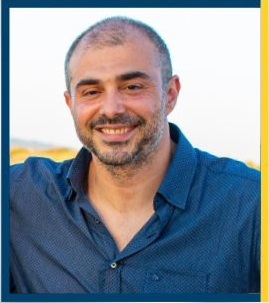
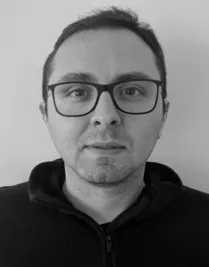
Ahmed Ahmed, an associate professor in the Department of Computer Science at Prairie View A&M University (PVAMU) , shapes tech leaders through innovative teaching and research. His work spans IoT, AI, and ML applications across agriculture, infrastructure monitoring, and healthcare. Key research areas include: IoT and AI for sustainable agricultural practices LoRa-based location tracking in constrained environments Secure blockchain-federated learning systems Geofencing for community safety With over 50 peer-reviewed publications and a $300k NSF grant (2023), Ahmed develops hands-on learning tools like a Special Interest Group for IoT and live programming demonstrations. His global journey—from Cairo University to a PhD at the University of Saskatchewan—fuels his commitment to empowering underrepresented students. Scientific awards include the PVAMU Faculty Service Award . He advises students like Kritika Singh (2022 graduate) and advocates for continuous refinement of teaching as a craft.
Ramon Canal is a Professor at the Universitat Politècnica de Catalunya (UPC), affiliated with the Barcelona School of Informatics and the Computer Architecture Department. He has served as Vice Dean of postgraduate studies and leads the VirtuOS (Virtualization and Operating Systems) research group. His academic background includes BSc, MSc, and PhD from UPC, with thesis supervision by Antonio González (UPC) and James E. Smith (University of Wisconsin-Madison). He completed sabbaticals at Harvard University (2006-2007) and University of Cyprus (2019-2020). Education: PhD, MSc, BSc in Computer Engineering (UPC) Research focus: Microarchitecture security, reliability across circuit/system levels, cloud optimization Recent publications address privacy in IoT, secure hardware accelerators, and safety-critical systems. His work contributes to the DRAC project (2019-2022), Red-RISCV network, and Horizon's Vitamin-V project. Awards include HiPEAC Paper Awards, IEEE Senior Member status, Fulbright recognition, and multiple education excellence accolades. Scientific Honors HiPEAC Paper Award (ISCA-44, 2017) IEEE Senior Member (2016) Best Paper Nominee (ICCD-32, 2014) UPC Outstanding PhD Award supervision (2011) He advises current MSc students and has mentored multiple PhD graduates. Professional activities span academic leadership, research collaborations with Barcelona Supercomputing Center (BSC), and technical contributions to reliability analysis frameworks like RECIPE and FRACTAL.
Philip Ginzboorg is a Professor of Practice at the Department of Computer Science, Aalto University. His research focuses on advanced security and privacy challenges in modern networking systems, with a particular emphasis on 5G, edge computing, and disruption-tolerant networks. His recent work explores AKMA (Authentication and Key Management for Access) protocols for secure mobility in 5G edge computing environments, privacy-preserving authentication mechanisms , and fragmentation algorithms for disrupted links . Collaborations with Valtteri Niemi, Jörg Ott, and other researchers highlight his interdisciplinary approach. Key publication trends span 5G security , privacy in pervasive networks , DTN (Disruption-Tolerant Networking) , and cryptographic protocols for constrained systems . Notable contributions include defenses against downgrade attacks on identity privacy and novel approaches to IMSI-based routing.
Dr. Lydia Ray is a Professor at the TSYS School of Computer Science , Columbus State University, with a Ph.D. in Computer Science from Louisiana State University (2005) and an M.Stat in Statistics from Indian Statistical Institute (1998). She specializes in Wireless Sensor Networks , Wireless Network Security , RFID Systems , and Computer Science Education . Research Interests: Secure energy-efficient data transmission in Wireless Sensor Networks RFID security and privacy mechanisms Virtual network labs for online education Teaching: Graduate courses: Advanced System Security, Computer Forensics, Wireless Security Undergraduate courses: Data Structures, Introduction to Programming, Information Technology Education Outreach: Active8 Summer Camps (Scratch, Pico Cricket, Alice, Lego Robotics) Future Teachers’ Academy (Cybersecurity, Computer Networks) Computer Science Academy workshops Contact: ray_lydia@columbusstate.edu | Office: CCT Building Room 429
Pierre Duhamel is a researcher affiliated with the Signals and Systems Laboratory, focusing on digital signal processing, communication systems, and multimedia security. His work spans theoretical and applied research in network coding, image compression, and channel coding. Primary affiliation: Signals and Systems Laboratory Research roles: Academic researcher, inventor (patents in image coding) Research interests: Duhamel's work addresses challenges in signal processing (e.g., wavelet transforms, L∞ norm compression), communication systems (e.g., robust decoding, WiMAX MAC protocols), and multimedia security (asymmetric watermarking, screen content coding). He explores optimization techniques for wireless networks and error resilience in multimedia transmission. Recent publications (2024–2025) reflect trends in image and signal processing , network optimization , and communication security , with applications to hyperspectral imaging, turbo coding, and cooperative wireless systems.
Nikos Giatrakos is an Assistant Professor at the School of Electronic & Computer Engineering, Technical University of Crete, and a core member of the Software Technology and Network Applications Lab (SoftNet) . His work bridges Big Data systems, IoT, and advanced analytics, with a focus on real-time processing and scalable architectures. Previously, he served as a postdoctoral researcher at the same laboratory. Education PhD in Computer Science, University of Piraeus (2012) Postgraduate Diploma in Information Systems, Athens University of Economics and Business (2008) BSc in Computer Science, University of Piraeus (2006) Research Focus : Nikos specializes in software architectures for Big Data streaming, including Distributed Big Data Processing , Federated Machine Learning , Cloud-to-Edge Data Management , and Approximate Query Processing . His work has also advanced Complex Event Processing and Outlier Detection in decentralized environments. Scientific Contributions : His research has led to the DAG* workflow optimizer for IoT, the SuBiTO framework for real-time neural learning, and the INFORE approach for cross-platform analytics. He received the Best System Demonstration Award at ACM CIKM 2020 for INforE. Academic Leadership : Nikos teaches Object-Oriented Programming, Data Science, and Distributed Systems. He has supervised numerous European and national grants as Principal Investigator and served on program committees for top-tier conferences like SIGMOD, VLDB, and DEBS.
Luis Castedo Ribas is a Professor at the Faculty of Informatics , University of A Coruña (UDC) , Spain, since 2001. Previously held research positions at the University of Southern California (USC) and École supérieure d'électricité (SUPELEC). PhD in Telecommunications Engineering (1993), Technical University of Madrid Department of Computer Engineering Research Group: Electronic and Communications Technology Group Research Interests: Specializing in Signal Processing and Information Theory for Wireless Communications Engineering , with focus on MIMO Communication Systems , 5G Radio Interfaces , Joint Source-Channel Coding , and High-Speed Wireless Communications . His work bridges theoretical advancements with practical prototyping of digital communication systems. Recent Article Trends: Publications span Massive MIMO , Beamforming , AI/ML for Wireless , and Quantum-Inspired Coding , reflecting his leadership in evolving telecom standards (5G→6G). Collaborative work with institutions like IEEE and European consortia. Scientific Awards: Best Student Paper (2007, 2013, 2017) General Co-Chair, IEEE Sensor Array Workshop (2014) General Co-Chair, European Signal Processing Conference (2019) Grants & Collaborations: Principal Investigator in over 50 projects funded by Spanish Ministry of Science, EU programs, and companies like Atos Origin. Key roles in national and international research consortia.
Dr David Walker is a Senior Lecturer in Computer Science at the University of Exeter and a member of the Institute for Data Science and Artificial Intelligence . He also contributes to the Environmental Intelligence @Exeter research network. Education: PhD in Computer Science, University of Exeter (2008–2013) BSc (Hons) in Computer Science, University of Exeter (2004–2007) Research Interests Dr Walker’s work sits at the intersection of multi-objective optimisation , evolutionary computation , explainable AI and hyper-heuristics . He develops algorithms and visual analytics that help engineers and scientists understand complex optimisation landscapes, with recent emphasis on renewable-energy planning (especially offshore wind farms) and trustworthy AI systems. Publication Trends Between 2022 and 2025 he produced a prolific stream of articles on explainable optimisation , many-objective wind-farm design and visual analytics for evolutionary algorithms . These works combine rigorous algorithmic innovation with real-world case studies, demonstrating a clear trajectory toward transparent, human-centred AI for engineering decision-making. Scientific Awards No specific awards or fellowships are mentioned in the provided material. Advising & Funding No explicit list of PhD students, post-docs or grant awards is supplied. Laboratory & Teams Dr Walker is affiliated with the Institute for Data Science and Artificial Intelligence and the Environmental Intelligence @Exeter network, indicating collaborative, interdisciplinary research environments.
Prof. Dr.-Ing. Robert Baumgartl is a faculty member at the Dresden University of Applied Sciences , affiliated with the Faculty of Computer Science/Mathematics . He teaches courses on Operating Systems , Real-Time Systems , and Information Security , with a focus on practical implementations and system-level programming. Research Interests: Real-time task scheduling and resource management Operating system design and optimization Embedded systems and hardware-software co-design Security protocols for distributed systems Low-level programming with Rust and safety-critical applications Contact: Room Z357, HTW Dresden. Office hours: Thursdays, 10:00-11:00 a.m. (SS 2025). Email: robert.baumgartl@htw-dresden.de .
Chigo Okonkwo is Full Professor and Chair of Secured Ultra High Capacity Transmission at the Department of Electrical Engineering , Eindhoven University of Technology. He leads the high-capacity optical transmission laboratory at the Institute for Photonics Integration and contributes to the Center for Quantum Materials and Technology Eindhoven (QT/e) . Academic Qualifications: MSc in Telecommunications and Information Systems, University of Essex (2002) PhD in Optical Signal Processing, University of Essex (2010) Research Interests: Professor Okonkwo focuses on: Maximizing capacity of single-mode fiber systems through advanced-coded modulation and Probabilistic/Geometrically shaped signals Developing Space Division Multiplexing (SDM) systems for Petabit/s transmission using multi-mode/multi-core fibers Quantum secure communications and cryptographic protocol development Optical vector network analyzer (OVNA) technology for SDM fiber characterization Free-space optical link deployment in urban environments Low-complexity digital signal processing algorithms Recent Publications Trends: His 15 most recent articles (2023-2025) demonstrate active research in: Quantum-classical network integration Extreme capacity fiber transmission (Petabit/s systems) Machine learning for optical diagnostics SDM fiber measurement technologies Hybrid QKD-PQC security frameworks Free-space optical urban communication Scientific Awards: Asia Communications and Photonics Conference (ACP) 2018 Best Paper Award European Conference on Optical Communications (ECOC) 2018 Student Paper Award Optica Student Paper Awards (2022) Corning Outstanding Student Paper Competition Finalist (2025) Advisory & Collaborations: Advisor to 8+ researchers including Menno van den Hout, Vincent van Vliet, and Thomas Bradley Technical Program Committee Member, European Conference on Optical Communications (ECOC) since 2014 Sub Committee Chair for Digital Signal Processing track at ECOC 2018 General Chair for OSA Advanced Photonics Congress on Signal Processing for Photonics Collaborates with EU projects (HOMTech, PhotonDelta) and industrial partners Co-founder and Chief Technology Officer of CUbIQ Technologies Laboratory & Infrastructure: Maintains the world-class High Capacity Optical Transmission Lab at TU/e, featuring: Advanced SDM fiber testing equipment Quantum communication research infrastructure Free-space optical link experimental setups Multi-core fiber amplification systems Coherent transmission testbeds Machine learning-enabled diagnostic tools
Alexander Yarovoy is a Full Professor at the Faculty of Electrical Engineering, Mathematics and Computer Science at Delft University of Technology (TU Delft), specializing in Radar Systems, Antenna Design, and mm-Wave Technology. His research bridges theoretical and applied domains, with a focus on automotive radar, weather radar, and machine learning integration in radar signal processing. Active in radar, antennas, and microwave engineering Key contributions to automotive radar and human activity recognition Collaborates on datasets like RaDelft for autonomous driving Recent work explores OTFS radar for communication integration, polarimetric calibration, and high-resolution imaging algorithms. His research often addresses challenges in real-world applications, such as urban meteorology and vehicular safety. In 2023, he received the outstanding paper award at IEEE MetroAeroSpace for radar waveform coexistence studies. He participates in conferences and editorial activities, advancing radar metrology and phased array technologies.
Dr. Cungang Yang serves as an Associate Professor in the Department of Electrical, Computer, and Biomedical Engineering at Toronto Metropolitan University, specializing in cybersecurity for emerging technologies. His work addresses critical vulnerabilities in robotics, cloud infrastructure, and wireless communications, driven by the proliferation of IoT devices and e-commerce platforms where data privacy remains paramount. Academic credentials include: PhD in Computer Science from University of Regina (2003) MS from Jilin University (1992) Research focuses on developing efficient authentication mechanisms and security protocols across three core domains: AI-integrated robotics security, cloud computing vulnerabilities, and wireless network protection. Yang emphasizes that "security always follows new technologies," with current projects targeting power system networks and smart grid infrastructures where sensor communication exposes consumer data to potential breaches. His approach balances cryptographic rigor with practical implementation for real-world systems. Publication analysis reveals consistent emphasis on lightweight authentication and key management solutions between 2017-2018, spanning power systems, IoT, and cloud environments. These works demonstrate strategic adaptation to evolving threats in mission-critical infrastructure, particularly optimizing security protocols for resource-constrained devices while maintaining robust data protection standards across heterogeneous networks. Award recognition includes: New Opportunities Fund grant from Canada Foundation for Innovation (CFI) Departmental Teaching Excellence Awards Dr. Yang actively supervises graduate researchers and secures external funding for security infrastructure development. His teaching portfolio covers advanced network security (COE 817, EE 8213) and software systems (COE 318), with research grants specifically enabling experimental validation of authentication protocols for industrial control systems. Within the department, Yang leads a specialized research collective investigating sensor communication security across IoT ecosystems. The team develops novel cryptographic methods for mission-critical wireless networks, with current projects focused on securing energy grid communications and cloud-based data sharing architectures through efficient group authentication frameworks.
Tracy Camp is a Professor in the Department of Computer Science at Colorado School of Mines, College of Applied Science and Engineering. With a distinguished career spanning over three decades, she has established herself as a leading researcher in wireless networking, mobility modeling, and computing education. Her work has evolved from foundational research in mobile ad hoc networks to impactful contributions in broadening participation in computing. Dr. Camp's research interests span wireless networking, mobility modeling, machine learning applications in networking, and computer science education. Initially focusing on mobility models for ad hoc networks, she published seminal work including the widely cited survey 'A survey of mobility models for ad hoc network research' (2002). More recently, her work has shifted toward computing education, particularly broadening participation in computing, K-12 teacher preparation, and supporting underrepresented students through scholarship programs like S-STEM. Her recent publications reveal a strong emphasis on machine learning applications for network security, particularly in analyzing encrypted messaging applications and smart device traffic. Simultaneously, she has become a national leader in departmental strategies for broadening participation in computing, developing frameworks for BPC (Broadening Participation in Computing) plans that are now required by the NSF. Dr. Camp has been instrumental in developing the CS@Mines program, creating successful scholarship ecosystems for low-income and underrepresented students, and leading Colorado's strategic approach to prepare K-12 computer science teachers. Her work bridges technical research with practical educational initiatives that address critical challenges in the computing field. She has served in leadership roles for major computing education conferences including SIGCSE, where she has contributed to shaping the national conversation about computing education, enrollment surges, and diversity in the field. Her collaborative work with organizations like CRA-W (Computing Research Association-Women) demonstrates her commitment to addressing systemic issues in computing.
Professor Parastoo Sadeghi is a distinguished academic in the School of Engineering and Information Technology at the University of New South Wales (UNSW) Canberra, where she serves as Professor of Electrical Engineering. She joined UNSW Canberra in October 2020 after spending 15 years at the Australian National University (2005-2020). Professor Sadeghi received her bachelor's and master's degrees in electrical engineering from Sharif University of Technology, Tehran, Iran, in 1995 and 1997, respectively, and completed her Ph.D. in electrical engineering from UNSW Sydney in 2006. Professor Sadeghi's research spans several cutting-edge areas in information theory and communications, with particular emphasis on information theory , data privacy , network and index coding , wireless communications theory and systems , and spherical signal processing . Her work has resulted in over 200 refereed journal articles and conference papers, plus a book on Hilbert Space Methods in Signal Processing published by Cambridge University Press in 2013. Her recent publications demonstrate a strong focus on differential privacy mechanisms, information leakage analysis, and network coding optimization, with significant contributions to the theoretical foundations of these fields. Professor Sadeghi has held several prestigious positions in the academic community, including serving as Associate Editor for coding techniques for the IEEE Transactions on Information Theory (2016-2019), General Co-chair of the 2021 IEEE International Symposium on Information Theory in Melbourne, and as an elected member on the Board of Governors of the IEEE Information Theory Society (2019-2020). She has been a Senior Member of the IEEE since 2007 and has conducted research visits at leading institutions including the Technical University of Munich (2008) and MIT (2009, 2013, 2020). Her recent work shows increasing focus on privacy-preserving technologies and the theoretical foundations of secure communications, with numerous publications in top-tier venues. Senior Member of IEEE (since 2007) General Co-chair of 2021 IEEE International Symposium on Information Theory Associate Editor for IEEE Transactions on Information Theory (2016-2019) Elected member, IEEE Information Theory Society Board of Governors (2019-2020) Professor Sadeghi actively supervises graduate students in fundamental problems related to information theory, wireless communications, data privacy, and network coding. She offers competitive scholarships of $35,000 AUD for high-achieving PhD students with strong mathematical backgrounds. Her research group maintains strong international collaborations, as evidenced by her frequent research visits to top global institutions and numerous co-authored publications with international researchers. She continues to be an active contributor to the advancement of information theory and its applications to modern communication and privacy challenges.
Leonardo Tonetto is a researcher at Technical University of Munich (TUM) within the Chair of Connected Mobility, working under Prof. Jörg Ott. His office is located in FMI 01.05.038 and he maintains an active presence in both academic research and open-source development with significant GitHub contributions (19 repositories, 73 stars). His work bridges theoretical research and practical implementation in mobility systems. Dr. Tonetto's research spans Mobile User Modeling , Deep Learning & Data Analysis , Signal Processing , and Complex Networks . His work demonstrates particular expertise in extracting meaningful patterns from human mobility data while addressing critical privacy concerns. Recent publications show increasing focus on ethical implications of location-based data and energy-efficient computing for augmented reality applications. Analysis of his publication record from 2014-2025 reveals a consistent research trajectory evolving from fundamental mobility pattern analysis toward more complex systems integrating privacy considerations and energy efficiency. His work increasingly intersects computer science with social implications, particularly in location-based services and epidemic modeling. The research shows strong methodological diversity, employing machine learning, network analysis, and signal processing techniques across various application domains. Through his GitHub profile and open-source contributions, Tonetto demonstrates commitment to reproducible research and community engagement. His technical skills span multiple programming languages and systems, supporting both theoretical research and practical implementation of mobility-aware systems. While specific grant information isn't publicly available, his consistent publication output suggests successful research funding.


.JPG)