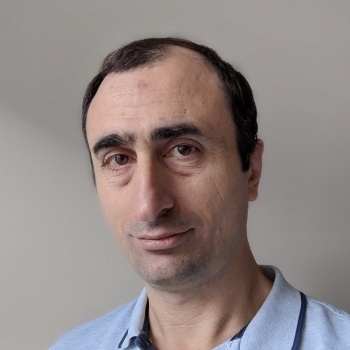
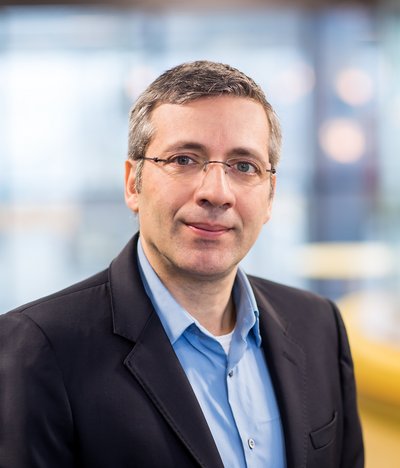
Hailong Jiao is an Assistant Professor in the Department of Electrical Engineering at Eindhoven University of Technology (TU/e) and an Associate Professor at Peking University Shenzhen Graduate School's School of Electronic and Computer Engineering. He is also a Visiting Assistant Professor with TU/e's Electronic Systems group. His research focuses on low-power and variations-resilient VLSI circuit and system design , including error-resilient systems, approximate computing, machine learning in VLSI, ultra-low voltage circuits, and emerging devices like 3D integration and carbon electronics. Education : BSc (highest honor, 2004, Shandong University), MSc (2008, Institute of Microelectronics, Chinese Academy of Sciences), PhD (2012, HKUST). Collaborations : BrainWave project (TU/e and Radboud University Nijmegen) developing wearable brainwave processing for epilepsy/Parkinson's healthcare. Editorial Roles : Associate Editor for Elsevier Microelectronics Journal and World Scientific Journal of Circuits, Systems, and Computers. Committee Memberships : HiPEAC, MemoCiS, ACM/SIGDA, and six IEEE committees. Research Trends : Recent articles emphasize energy-efficient IoT networks , voltage stacking , sensitivity control , and scan flip-flop design , aligning with UN SDGs for energy engineering and healthcare innovation. Scientific awards include highest honor at BSc .
Leonardus Cornelis Nicolaas de Vreede is a Professor at Delft University of Technology in the Faculty of Electrical Engineering, Mathematics and Computer Science. With over 237 research publications and extensive conference activities, he is a leading researcher in RF and microwave engineering with specialization in power amplifiers, digital transmitters, and mm-wave circuits for wireless communications applications. Dr. de Vreede's research focuses on the intersection of circuit design and signal processing for next-generation wireless systems: Advanced Power Amplifier Architectures including Doherty and Out-phasing techniques Energy-Efficient Digital Transmitters with high linearity and power efficiency mm-Wave Circuit Design for 5G/6G applications Machine Learning Applications for Digital Predistortion CMOS RF Integrated Circuit Implementation Wideband Signal Processing Techniques His recent publications demonstrate a clear research trajectory toward integrating machine learning with traditional RF circuit design to solve the efficiency-linearity tradeoff in wireless transmitters. This work is particularly relevant for current and future wireless infrastructure requiring high spectral efficiency across wide bandwidths while maintaining energy efficiency. Dr. de Vreede has received significant recognition for his contributions to the field: EuMC Microwave Prize (2024) for groundbreaking work on wideband Doherty amplifiers Recognition for innovative characterization techniques for high-power RF transistors (2015) As an active researcher and educator, Dr. de Vreede has supervised 16 students and regularly participates in major international conferences including serving on program committees for the IEEE MTT-S International Microwave Symposium. His work bridges theoretical advances with practical implementations for wireless infrastructure applications, with numerous patents and industry collaborations evident from his research portfolio.
Dusan Milosevic is an Assistant Professor at Eindhoven University of Technology (TU/e) in the Electrical Engineering department. He is affiliated with the Mixed-Signal Microelectronics research group and the RF Sensing & Communication Lab. His research focuses on analog and RF electronics, particularly in power amplifiers, ultra-low-power RF systems, and energy harvesting. He holds an MSc from the University of Niš and a PhD from TU/e. Education: MSc in Electronics and Telecommunications Engineering (University of Niš, 2001) PhD in Electrical Engineering (TU/e, 2009) Research Interests: Design of RF power amplifiers and mm-wave circuits Ultra-low-power communication systems RF energy harvesting technologies High-efficiency analog circuit design His work emphasizes circuit techniques for wireless communication and integrates analog methods with digital control for improved performance. Teaching: Electronic Circuits 1 RF Transceivers 1: Fundamentals Electronics: Selected Topics Collaborations: Active in mm-wave communication, satellite links, and sensor networks. His recent work includes inter-satellite link front-ends and optoelectronic modulation systems. Labs/Teams: Leads the RF Sensing & Communication Lab, focusing on mm-wave systems and energy-efficient RF design.
Chigo M. Okonkwo is a Full Professor and Chair of Secured Ultra High Capacity Transmission at the Department of Electrical Engineering, Eindhoven University of Technology (TU/e). He leads the high-capacity optical transmission laboratory within the Electro-Optical Communications Group at the Institute for Photonics Integration, focusing on next-generation photonic networks. Education: PhD in Optical Signal Processing, University of Essex (2009) Appointments: Since 2014 (tenured), 2010 as Post-Doctoral Researcher Key Research Areas: Space Division Multiplexing, Quantum Secure Communications, Advanced Modulation Formats His work spans optical transmission systems, including probabilistic signal shaping , low-complexity digital signal processing , and multi-mode/multi-core fiber components . Recent publications highlight breakthroughs in Petabit/s transmission and quantum cryptography use cases . Scientific recognition includes: ACP 2018 Best Paper Award ECOC 2018 Student Paper Award Optica 2022 Student Paper Awards Corning Outstanding Student Paper Competition Finalist 2025 He actively contributes to standardization efforts as a Technical Program Committee member for ECOC and serves as Senior Member of IEEE. Current projects include FIQCS (Fieldlab Quantum Cryptography Solutions) and NGF-ECO1 (Netherlands Quantum Flagship), advancing quantum-secure protocols and petabit/s capacity scaling.
Maurice Heemels is a Full Professor at Eindhoven University of Technology (TU/e), leading the Control Systems Technology group. He holds additional professorships in EAISI Mobility, EAISI Foundational, EAISI Health, and EAISI High Tech Systems. His research focuses on hybrid and networked systems, emphasizing resource-aware control, event-triggered strategies, and cyber-physical systems integration. He is an IEEE Fellow and chairs the IFAC Technical Committee on Networked Systems. Academic Background: MSc and PhD in Mathematics (TU/e, 1995 and 1999, both summa cum laude ) Visiting Professorships: ETH Zurich (2001), UC Santa Barbara (2008) Industry Experience: Research & Development at Océ NV Research Interests: Hybrid Systems, Networked Control, Event-Triggered Control Model Predictive Control (MPC) in healthcare and high-tech systems Cyber-Physical Systems for applications like lithography and precision agriculture Key Contributions: Developed Hybrid Integrator-Gain (HIGS) systems and Projection-Based Control methodologies Recipient of a VICI Grant for wireless control systems research Oversaw over €7M in research funding from NWO, EU, and industry Awards & Recognition: Automatica Outstanding Service Award (2014) Best Paper Awards (EBCCSP 2017, etc.) Invited Keynote Speaker at ECC, CDC, and others Grants & Projects: Current Projects: COMEDI (Cost-effective Mechatronics), PROACTHIS (Projection-based Control) Past Projects: Fault Detection in Wafer Scanners, Drone-based Farming Labs & Teams: Active in TU/e’s Cyber-Physical Systems and Systems Engineering research groups, collaborating globally on nonsmooth dynamics and hybrid systems.
Güneş Acar is a tenured Assistant Professor in the Digital Security group at Radboud University's Faculty of Science. He is also affiliated with iHub, Radboud's interdisciplinary research hub on digitalization and society. His research focuses on security and privacy threats from websites, mobile apps, and IoT devices, with special emphasis on online tracking mechanisms, anonymous communication networks like Tor, and deceptive design patterns. Dr. Acar completed his PhD at KU Leuven under the supervision of Claudia Diaz and Bart Preneel. Prior to joining Radboud University, he was a Postdoctoral Research Fellow at KU Leuven's COSIC group and a Postdoctoral Research Associate at Princeton University's Center for Information Technology Policy. His research spans web security, privacy, online tracking, IoT security, Tor network analysis, and dark patterns. He investigates how websites, mobile apps, and IoT devices compromise user privacy through various tracking mechanisms and deceptive interface designs. His work combines large-scale measurements with user studies to understand both technical vulnerabilities and their real-world impact on users. Dr. Acar's publications reveal an evolving research trajectory from foundational web tracking mechanisms to increasingly sophisticated privacy threats. His work has expanded from browser fingerprinting to IoT privacy, children's online safety, and manipulative design patterns in subscription interfaces. A consistent theme across his research is the examination of how third-party trackers operate and circumvent privacy protections. 2022 CNIL-Inria Award for Privacy Protection (for Leaky Forms paper) Top Reviewer Award, Privacy Enhancing Technologies Symposium (2022) Future of Privacy Forum's Annual Privacy Papers for Policymakers Award (2020) Runner-up for multiple Caspar Bowden Awards for Outstanding Research in Privacy Enhancing Technologies Dutch Research Council (NWO) Vidi Grant (2025-2030) for "A Web Security and Privacy Observatory" Dr. Acar actively supervises PhD students including Zahra Moti, Tim Vlummens, and Luqman Zagi, with Asuman Senol recently completing her PhD in 2024. He has secured significant research funding including the NWO Vidi Grant and a project grant from armasuisse for the Mobile Web Inspector project. His research has influenced policy discussions with organizations including the OECD, US Federal Trade Commission, and European consumer protection authorities. As part of the Digital Security group at Radboud University, Dr. Acar contributes to a vibrant research ecosystem focused on practical security and privacy solutions. His work bridges technical security research with human-centered perspectives, often collaborating across disciplines to address complex privacy challenges in real-world contexts.
A. Asadi is an Assistant Professor at the Faculty of Electrical Engineering, Mathematics and Computer Science at TU Delft. He leads the Wireless Communication and Sensing (WISE) Lab within the Embedded Systems Group, focusing on the integration of wireless communication and sensing systems for Beyond-5G and 6G networks. His research leverages machine learning to develop practical solutions for next-generation wireless networks, with strong industrial collaborations from companies such as Nokia, NEC, and National Instruments. Research Themes : Wireless Sensing, 6G Networks, Physical Layer Security, Reconfigurable Intelligent Surfaces (RIS), mmWave Communication Key Collaborations : Industry partnerships with Nokia, National Instruments, and NEC Recent research outputs highlight his work on Reconfigurable Intelligent Surfaces (RIS) for 6G systems, including liquid crystal-based designs for fast beam switching and temperature compensation. His publications emphasize practical implementations in mmWave communication, security protocols, and experimental validation. Scientific Awards : Athene Young Investigator Prize (2017) Educational Fellowship (2025) Asadi contributes to the academic community through committee roles at major conferences like IEEE INFOCOM , IEEE ICNP , and ACM CoNEXT , and his work on D2D communication has been cited as an ESI highly cited paper.
André B.J. Kokkeler is a Full Professor at the Digital Society Institute and affiliated with the Radio Systems department at the University of Twente. His research focuses on wireless communication systems, signal processing, and mmWave technology, particularly in applications like beamforming, cognitive radio, and error-resilient algorithms. Recent research outputs highlight his work on: Hybrid beamforming techniques for full-duplex integrated sensing and communication (ISAC) systems Energy-efficient iterative algorithm implementations Single-bit angle-of-arrival (AoA) localization methods mmWave channel characterization in reverberation chambers Radar-driven human gait modeling His work contributes to advancements in wireless systems for IoT, automotive radar, and energy-constrained environments. Collaborations span multiple institutions and focus on propagation modeling, antenna characterization, and sensing applications.
Eugenio Cantatore is a Full Professor in the Integrated Circuits group at Eindhoven University of Technology (TU/e), where he leads the Emerging Technologies Lab. His research focuses on the design and characterization of electronic circuits fabricated with emerging technologies, as well as the design of ultra-low power micro-systems for biomedical applications. Education: MSc in Electrical Engineering (1993) - Politecnico di Bari, Italy PhD in Electrical Engineering (1997) - Politecnico di Bari, Italy Cantatore's research primarily centers on flexible electronics fabricated on plastic foil, including sensors interfaces, analog-digital converters and transceivers. His work enables the integration of sensors in wearables for improved well-being and seamless medical diagnostics, and can even be embedded in food packaging to measure grocery quality and reduce waste. His research spans multiple disciplines including semiconductor physics, circuit design, and biomedical engineering, with a strong focus on practical applications of emerging electronic technologies. He has made significant contributions to organic thin-film transistor amplifiers and printed flexible electronics. His publications demonstrate a consistent progression from fundamental circuit design with organic transistors to increasingly sophisticated integrated systems with practical healthcare applications. Recent work emphasizes biomedical applications like ECG monitoring systems and ultra-low power sensor interfaces, showing his commitment to translating research into real-world solutions that address societal challenges in healthcare and sustainability. Scientific Awards: IEEE Fellow (2016) - for contributions to the design of circuits with organic thin film transistors Cantatore has been actively involved in professional service, having chaired the Technology Directions subcommittee of ISSCC from 2013 to 2016 and served as ISSCC program chair in 2019. He is currently a member of the ISSCC Executive Committee, member at large of the SSCS AdCom, Associate Editor of TCAS1, and Editor in Chief of the Open Journal of the Solid-state Circuits Society. He has authored or co-authored more than 200 papers in journals and conference proceedings, and 13 patents or patent applications. He leads the Emerging Technologies Lab at TU/e, which works closely with the Center for Care & Cure Technology Eindhoven and the Center for Quantum Materials and Technology Eindhoven. His research bridges fundamental semiconductor physics with practical applications in healthcare technology, environmental sustainability, and next-generation flexible electronic systems.
Ivana Nikoloska is an Assistant Professor at the Department of Electrical Engineering, Eindhoven University of Technology (TU/e). She is affiliated with the Center for Quantum Materials and Technology Eindhoven and BIASlab (Bayesian Intelligence and Stochastic Agents Lab). Her academic career includes prior roles as a Research Associate at King’s College London and a Visiting Researcher at Aalborg University. PhD: Monash University, Australia (2023) MSc & Dipl.-Ing.: University of Ss. Cyril and Methodius, North Macedonia Research Interests span foundational and applied machine learning, quantum computing, and information/communication engineering. Her work focuses on integrating Bayesian inference, variational methods, and quantum technologies for tasks like signal processing, channel estimation, and power control optimization. Quantum Machine Learning Bayesian Simulation-Based Inference Meta-learning for Wireless Systems Hybrid Quantum-Classical Architectures Stochastic Signal Processing Quantum Sensing & Metrology Notable Trends in Publications include quantum recurrent neural networks with adaptive gating, Bayesian frameworks for quantum sensing, and meta-learning applications in communication systems. She explores variational inference for planning and robust algorithms for channel estimation under non-ideal conditions.
Marc C.W. Geilen is an Associate Professor at the Electronic Systems group , Eindhoven University of Technology. He leads the Model-Based Design Lab and contributes to the CompSOC Lab and High Tech Systems Center . His work focuses on model-based design methods, design automation, and optimization for real-time and embedded systems. Research Keywords: Cyber-Physical Systems, Real-Time Systems, Embedded Systems, Performance Analysis, Design Automation Key Collaborations: EU ECSEL TRANSACT project, SAM-FMS project, Arrowhead Tools initiative His recent publications address weakly-hard timing constraints in server-based systems, hybrid performance modeling for cyber-physical systems, and neural network optimization for communication. Article trends span Real-Time Scheduling , Trustworthy Modeling , Neural Network Efficiency , and Resource Allocation in distributed environments. Scientific Awards : Partial-Order Reduction for Performance Analysis (2018) Teaching activities include courses in Computational Modeling , Embedded Signal Processing , and Discrete Mathematics . He collaborates across projects like TRANSACT, SAM-FMS, and Arrowhead Tools, focusing on flexible manufacturing and cloud-to-edge transitions.
Peter Baltus is Full Professor of High-Frequency Electronics in the Department of Electrical Engineering at Eindhoven University of Technology. With industry experience at Philips/NXP and academic credentials from TU/e, his research focuses on high-frequency integrated circuit and system design. Research domains include: Ultra-low power transceivers Millimeter-wave wireless power transfer Efficient wideband beamforming Sensor swarm networks RF system architecture His educational contributions feature innovative RF laboratory designs for remote learning environments. Current projects include photonic-electronic integration and satellite communication systems.
O.J. Luiten is Full Professor in the Coherence and Quantum Technology group at Eindhoven University of Technology. His research focuses on fundamental quantum physics, materials science, nanotechnology, and life sciences, with emphasis on improving temporal resolution in electron microscopy and developing ultracold electron sources. He leads the Coherence and Quantum Technology group and is a core member of ICMS. His research interests center on quantum materials, ultrafast electron microscopy, and coherent light-electron interactions. Key areas include: Ultracold plasma applications for high-coherence electron sources Coherent manipulation of electron beams using laser light X-ray generation via electron beams His publications demonstrate a consistent focus on advancing charged particle beam technologies and light-matter interactions, with recent work emphasizing compact X-ray sources, ultrafast microscopy, and quantum electron manipulation. Scientific Awards: Smart*Light: Een tafelmodel synchrotron (2016) He leads multiple research projects including 'ICS-SAXS: Hard X-ray metrology' and 'Smart*Light 2.0', collaborating with institutions like ASML. Manages labs for ultrafast electron microscopy and quantum beam technology.
Dr. Wim Korevaar serves as a part-time university researcher at the Signal Processing Systems (SPS) Group of Eindhoven University of Technology (TU/e), while concurrently working as a Senior Telecommunications System Engineer at TNO (Dutch Applied Research Institute) in Delft since April 2019. At TNO, he designs optical and quantum satellite communication systems for ground-to-satellite and satellite-to-satellite links, contributing to standardization efforts at CCSDS and ESA. He earned his PhD, cum laude, from Eindhoven University of Technology for pioneering work on Hermite-based multi-user communication schemes as an alternative to Fourier-based systems. During his doctoral studies, he founded two companies subsequently acquired in 2007 and 2019. Dr. Korevaar's research centers on optical satellite communications, quantum communications, and signal processing for telecommunications, with specific expertise in end-to-end system performance analysis, modem design, and signal processing techniques for space-based systems. His work actively bridges academic research and industrial applications through collaborations between universities, research institutes, and private sector partners. Analysis of his 2022-2024 publications reveals a concentrated focus on advancing space communication technologies, particularly in channel modeling under atmospheric turbulence, latency-constrained fading mitigation, end-to-end performance of coherent optical feeder links, and high-speed channel coding architectures. These contributions target robust high-capacity systems for next-generation satellite networks with dual-use government and commercial applications. He currently participates in the LaiQa project (2024-2026) advancing quantum key distribution space components, and maintains active engagement with students on groundbreaking communication system innovations despite no formal advisee listings.
Sjoerd Dirksen is a Professor of Mathematics for Data Sciences at Utrecht University since May 2025, having previously served as an Associate Professor for Applied Mathematics (2019-2025) and Junior Professor at RWTH Aachen University (2014-2019). He is affiliated with the Mathematical Institute within the Faculty of Science at Utrecht University, where his office is located in the Hans Freudenthal Building. His research interests focus on high-dimensional probability theory and its applications in data science, machine learning, and signal processing. Specifically, he investigates randomized data dimension reduction methods using structured random matrices, theory for deep learning including random neural networks, high-dimensional covariance estimation for wireless communication systems, and statistical postprocessing of weather forecasts in collaboration with the Royal Netherlands Meteorological Institute (KNMI). Previously, he worked on compressed sensing, sharp estimates for stochastic processes in Banach spaces, and noncommutative analysis. Analysis of his recent publications (2018-2024) reveals a strong focus on quantization effects in high-dimensional data processing, particularly one-bit compressed sensing and covariance estimation under coarse quantization. His work bridges theoretical mathematics with practical applications in signal processing, wireless communications, and meteorological forecasting, demonstrating a consistent trajectory from foundational mathematical research to applied data science problems. Dirksen's academic career shows progression from postdoctoral work at the Hausdorff Center for Mathematics in Bonn to independent research positions. His publication record demonstrates significant contributions to the mathematics of data science, with papers appearing in top journals across mathematics, statistics, and signal processing. His research combines deep theoretical insights with practical applications, particularly in the areas of dimensionality reduction and high-dimensional statistics.