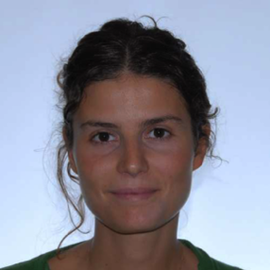
Laura Toni is an Associate Professor in the Department of Electronic & Electrical Engineering at University College London (UCL). She serves as Director of the MSc in Telecommunications and Internet Engineering and the MRes in Telecommunications. Additionally, she is a Turing Fellow at the Alan Turing Institute and a member of ELLIS (European Lab for Learning and Intelligent Systems). Her research focuses on coding, streaming technologies, machine learning for immersive communications, decision-making under uncertainty, and large-scale signal processing. She leads the LASP (Learning And Signal Processing) group at UCL. Education: MSc (2005) and PhD (2009) from the University of Bologna, followed by postdoctoral research at UC San Diego and EPFL under Professors L. Milstein, P. Cosman, and P. Frossard. Key roles include Technical Program Chair at ACM MM 2022, Keynote Co-Chair at ACM MMSys 2022, and leadership in organizing workshops on graph-based machine learning and emerging technologies in performing arts. She is a Senior IEEE Member and holds editorial roles in IEEE Multimedia Magazine and EURASIP Journal on Signal Processing. Her work bridges communication systems and machine learning, with contributions to adaptive streaming, network optimization, and graph signal processing. She actively promotes diversity and inclusion in technical conferences, including roles as Diversity Chair at MMSys 2021 and PIMRC 2020.
Aggelos Bletsas is a Professor at the School of Electrical and Computer Engineering, Technical University of Crete. He holds a PhD from MIT (2005) and has expertise in wireless communication, backscatter networks, and RFID systems. His research focuses on scalable wireless networks, ultra-low-cost sensor technologies, and signal processing. Education: PhD, MIT Media Lab (2005) MSc, MIT Media Lab (2001) Diploma in Electrical & Computer Engineering, Aristotle University of Thessaloniki (1998) Research Interests: His work spans wireless transmission techniques, backscatter sensor networks, and RFID systems. Key areas include: Ultra-low-cost sensor deployment RFID localization and multi-static systems Energy-efficient hardware implementations Probabilistic inference in distributed networks Awards: IEEE Marconi Prize Paper Award (2008) Technical University of Crete Research Excellence Award (2012-2013) Multiple best paper awards at RFID-TA, ISWCS, and SENSORS Academic Contributions: He advises students who have won IEEE best thesis awards and leads projects funded by ERC grants. His laboratory focuses on practical implementations of wireless sensor networks and backscatter systems. Labs & Affiliations: Director of the Telecommunications Laboratory and affiliated with the Telecommunication Systems Institute (TSI).
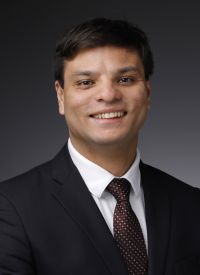
Per Lynggaard is a Professor of Electronics at the Technical University of Denmark (DTU) , leading the B.Eng. program in Electronics. Previously, he held an Associate Professor role at Aalborg University, combining academic excellence with a robust industrial career in technical-scientific research and development. Education: M.Sc. in Electrical Engineering and Information Technology (EE and IT) Ph.D. in Electronics from Aalborg University Research Interests: Focus on Integrated Circuit Design, Wireless Sensor Networks (WSN), Machine Learning, IoT, and Smart City Technologies . His work emphasizes energy-efficient systems, cybersecurity in IoT, AI-driven interference mitigation, and sustainable energy harvesting solutions. He has contributed to UN Sustainable Development Goals through projects addressing smart infrastructure and environmental monitoring. Projects & Collaborations: Leads and participates in EU-funded initiatives such as InnoTech (2023–2025) for green transition solutions and TransportTech (2023–2026) for Industry 4.0 logistics. Active in cybersecurity research via projects like Jamming Against Critical Wireless Communication , aiming to protect critical infrastructure. Awards: Recognized with multiple honors and rewards during his industrial career, though specific names are not listed. His work has been cited widely, with notable impact in IoT security and energy-efficient systems. Advising & Grants: Supervises Turnip T.N. in a PhD project on 6G security protocols. Engaged in securing funding for projects like F2D2: The Community for Dynamic Data (2021–2030), focusing on dynamic data systems and cybersecurity. Labs & Teams: Collaborates in interdisciplinary teams such as the InnoTech TaskForce and F2D2 Community , advancing IoT and AI integration. His research bridges academia and industry, with outputs spanning smart cities, healthcare IoT, and sustainable energy systems.
Dr. Davi V. Q. Rodrigues is an Assistant Professor in the Department of Electrical and Computer Engineering at the University of Texas at El Paso (UTEP). His research focuses on microwave/millimeter-wave circuits and signal processing for radar, communication systems, and smart living applications. He holds a B.S. in Communications Engineering from the Military Institute of Engineering (Brazil) and a Ph.D. in Electrical Engineering from Texas Tech University. Prior to academia, he served in the Brazilian Navy and Army, and worked at Uhnder, Inc., Abbott Laboratories, and Dell Technologies. His work emphasizes radar-based smart home, healthcare, and autonomous systems, with contributions in structural health monitoring, human activity recognition, and joint communication-sensing technologies. Dr. Rodrigues has received prestigious awards including the 2022 IEEE MTT-S Tom Brazil Fellowship and the 2023 Texas Tech Horn Distinguished Professors Award. His research group, the Microwave Circuits & Sensing Systems Group, develops algorithms and hardware for biomedical sensing, non-contact health monitoring, and 6G-enabled applications. He actively seeks motivated graduate students interested in radar systems, signal processing, and wireless technologies. Education: B.S., Communications Engineering, Military Institute of Engineering (2017) Ph.D., Electrical Engineering, Texas Tech University (2023) Research Interests: Microwave/mm-wave radar systems Human activity monitoring and gesture recognition Structural health monitoring 6G/ B5G communication-sensing fusion Passive and opportunistic RF sensing His publications span radar-based smart living solutions, biomedical sensors, and reconfigurable intelligent surfaces (IRS). He is an IEEE MTT-S member and has contributed to industry partnerships through collaborations with Uhnder and Dell Technologies. Current projects integrate AI-driven radar signal analysis and low-cost sensor networks for healthcare and infrastructure monitoring.
Y. Charlie Hu is the Michael and Katherine Birck Professor of Electrical and Computer Engineering and Professor of Computer Science (by courtesy) at Purdue University, where he leads the PurNET Lab and contributes to the Systems and Networking Group. His research spans Mobile Systems, Distributed Systems, Operating Systems, and Computer Networks , with a focus on energy-efficient AI systems and edge computing. His groundbreaking work on smartphone energy management has been widely adopted by the mobile industry and recognized with multiple test-of-time awards , including from ACM SIGOPS and ACM SIGMOBILE . He has received prestigious honors like the NSF CAREER Award , Honda Initiation Grant , and industry accolades from Google Research and Qualcomm . Notable Funded Projects: NSF's NeTS: Black-box Optimization of White-box Networks (2023-2026) Intel -NSF's SPLICE initiative His research has produced 15+ PhD graduates now in academia (University of Arizona, Virginia Tech) and industry (Google, Apple, Qualcomm). The articles reflect a career-long focus on edge computing , 5G network optimization , and energy-aware systems , with recurring themes in mobile AR/VR , video analytics , and network protocol design . Scientific Awards Honda Initiation Grant NSF CAREER Award Purdue Early Career Research Award Google Research Award Qualcomm Faculty Award ACM SIGOPS EuroSys Best Student Paper Award ACM MobiCom Best Community Paper Award IEEE Fellow ACM Distinguished Scientist Purdue PRF Innovator Hall of Fame
Dong S. Ha is a Professor in the Bradley Department of Electrical and Computer Engineering at Virginia Tech. As Founding Director of the Multifunctional Integrated Circuits & Systems (MICS) Lab, he focuses on advanced circuit design for energy harvesting, RF systems, and high-temperature electronics. His work spans analog/RF ICs, power management circuits, and wireless IoT solutions with machine learning integration. Education: PhD (1986) and MS (1984) in Electrical and Computer Engineering from the University of Iowa; B.S. (1974) in Electrical Engineering from Seoul National University. Research interests include energy harvesting (piezoelectric, thermal, RF), high-temperature RF circuits for oil/gas/spacecraft applications, and smart IoT systems. He actively seeks students for projects in RF design, energy harvesting, and embedded systems. His lab develops cutting-edge solutions for harsh environment communication, sustainable energy systems, and smart agriculture monitoring. Awarded IEEE Fellow (2008) for contributions to VLSI design/test. Key publications span energy harvesting circuits, GaN-based high-temperature systems, and low-power IoT architectures. Current projects include self-sustaining smart farm networks using federated learning and attack-resistant sensor systems. Labs/Teams: Leads MICS Lab focusing on integrated circuits and systems. Collaborates on cross-disciplinary projects involving machine learning, embedded systems, and sustainable energy. Active in industry partnerships for aerospace and automotive applications.
Dr ASM Kayes serves as Senior Lecturer in Cybersecurity and Cyber Curriculum Lead at La Trobe University's Department of Computer Science and Information Technology, where he shapes cybersecurity education programs including Master's, Bachelor's, and Double Degrees. His academic journey began with a PhD from Swinburne University of Technology in 2015, followed by postdoctoral research at La Trobe before joining as Lecturer in 2019 and promotion to Senior Lecturer in 2022. His research spans critical cybersecurity domains including data security, privacy preservation, context-aware access control, malware/ransomware defense, and IoT/fog/cloud security leveraging AI/ML techniques. Dr Kayes has established himself as a leading voice in blockchain security frameworks, privacy policy analysis, and cyber incident response through publications in top-tier venues like ACM Computing Surveys, IEEE Internet of Things Journal, and Computers & Security. His recent publications reveal a strong trajectory toward integrating AI with traditional security frameworks, particularly in blockchain risk assessment (2025), cross-domain access control (2025), and IoT behavior prediction (2024). The research demonstrates consistent focus on practical security solutions addressing ransomware mitigation, privacy breaches, and emerging threats in decentralized systems. Over $880,000 secured as Chief Investigator for cybersecurity projects Australian Government Department of Social Services grant (2023-2026) for cyberbullying prevention AustCyber research funds with industry partners (2020-2023) SmartSat CRC and ASCRIN PhD scholarship grants (2021) Dr Kayes has successfully supervised 5 PhD candidates to completion and currently mentors 5 doctoral students across diverse topics including AI-driven threat hunting, satellite network security, and blockchain risk frameworks. His collaborative network spans UK, USA, Europe, and Asia, with active industry partnerships through Westpac, BHP, and Quantum Victoria. He serves on editorial boards for leading cybersecurity journals and has examined HDR dissertations globally, reflecting his significant standing in the academic community.
Amitabh Mishra is an Adjunct Professor at the University of Delaware. His research focuses on three core areas: computer-communication networks (wireless architectures, cross-layer design, mobile cloud computing), network performance analysis (stochastic models, numerical optimizations), and network security (vulnerability assessments, authentication protocols). He has contributed to interdisciplinary fields including IoT security, smart healthcare frameworks, and socio-technical systems analysis. His work spans technical domains like wireless sensor networks, tactical network management, and quantum dot material studies, alongside applied research in tourism economics, healthcare data analytics, and educational technology. Notable contributions include frameworks for energy-efficient physiological monitoring, secure IoT configurations, and machine learning-driven security protocols. Recent research highlights include: Developing secure mobile cloud computing paradigms Modeling Multipath TCP capacity bounds using stochastic theory Investigating AI applications for deepfake ethics and tourism marketing His publications span technical journals in computer networks, medical IoT systems, and interdisciplinary studies in cultural tourism and climate change resilience.
Twan Basten is a Full Professor in the Electronic Systems group at Eindhoven University of Technology (TU/e). He leads research on embedded and cyber-physical systems, focusing on model-driven design, computational models, and system dependability. He holds an MSc (1993) and PhD (1998) in Computing Science from TU/e, advancing from Assistant to Full Professor by 2009, and became the Electronic Systems group chair in 2013. His research spans international projects (FP5-7, H2020, ECSEL) and Dutch initiatives (STW, NWO, RVO), with over 200 publications and seven best paper awards. He has co-supervised 21 PhD students and actively participates in program committees and conferences. His work contributes to UN Sustainable Development Goals through innovations in smart systems. Education: MSc in Computing Science, TU/e (1993) PhD in Computing Science, TU/e (1998) Research Interests: Explores design methodologies for embedded systems, including scenario-based design, real-time scheduling, and performance analysis. Specializes in model-driven engineering and computational models to ensure system dependability. Active in projects like TRANSACT (real-time systems) and SAM-FMS (flexible manufacturing). Key Contributions: Co-author of 1 book and over 200 scientific publications Recipient of seven best paper awards Co-supervised 21 PhD degrees Senior member of IEEE and lifetime member of ACM Labs & Teams: Leads the Model-Based Design Lab and contributes to EAISI High Tech Systems initiatives. Collaborates on tools like TRACE4CPS for execution trace analysis and CReTS for vehicle platooning simulation.
Benoit Champagne is a Full Professor in the Department of Electrical and Computer Engineering at McGill University, Montreal. His research focuses on statistical signal processing, with applications in wireless communications, multi-antenna systems, and adaptive filtering. He has held academic positions since 1990, including roles at INRS-Telecom before joining McGill in 1999. He teaches graduate and undergraduate courses such as ECSE 305 (Probability and Random Signals), ECSE 512 (Digital Signal Processing), and ECSE 617 (Array Signal Processing). Education: B.Eng. (Electrical Engineering) and M.Sc. (Physics) from Université de Montréal (1983, 1985), Ph.D. in Electrical Engineering from University of Toronto (1990). His research spans signal detection/estimation, speech enhancement, MIMO systems, and physical layer security, with over 150+ publications in top journals and conferences. He has supervised numerous graduate students and holds grants from NSERC, CFI, and industry partners like Nortel and Bell Canada. His work emphasizes practical implementations, including hybrid analog/digital beamforming for mmWave systems and energy-efficient resource allocation in D2D communications. He has contributed to IEEE standards through editorial roles (e.g., IEEE Transactions on Signal Processing) and conference organization (e.g., IEEE VTC 2016). Current research explores machine learning integration with signal processing for next-generation wireless systems. Notable contributions include advancements in subspace tracking, cognitive radar systems, and distributed adaptive filtering. His lab collaborates internationally, addressing challenges in 5G/6G networks, massive MIMO, and secure communications.
Loïc Guégan is an Associate Professor in the Department of Informatics at UiT The Arctic University of Norway, affiliated with the Faculty of Science and Technology. His work is centered on energy-efficient cyber-physical systems and distributed computing, particularly in extreme and constrained environments such as the Arctic. His research focuses on cyber-physical systems (CPS) , distributed data dissemination , IoT and edge computing , and energy-efficient protocols . He actively contributes to the development of the Distributed Arctic Observatory (DAO) project and has designed tools like the ESDS simulator for evaluating distributed systems in challenging conditions. His technical work includes power monitoring using single-board computers and the design of the LoRaLitE protocol for low-energy wireless communication. The recent publications highlight a consistent trend in data dissemination strategies , simulation frameworks , and energy optimization for IoT and edge systems deployed in remote, resource-limited settings. These studies often leverage real-world Arctic deployments and epidemic-style algorithms to ensure robustness and scalability. Loïc is a member of the Cyber Physical Systems (CPS) research group and contributes to projects including The IoT-to-Extreme-Edge Infrastructure and Sustainable Distributed Systems for Sustainable Research and Education . He teaches courses such as Parallel Programming and Operating Systems . His research is supported through institutional and project-based funding, though specific grants are not detailed in the text.
Dr Duncan Hodges is a Senior Lecturer in Cyberspace Operations at Cranfield University, affiliated with the Centre for Electronic Warfare Information and Cyber within Cranfield Defence and Security. His research spans cybersecurity, digital identity, offensive cyber operations, and natural language processing applications in security. His research interests include: Identity in cyber and natural spaces Offensive cyber activity and information warfare Natural Language Processing in cybersecurity Insider threat detection Smart home and IoT security Hodges' recent publications (2015–2022) reflect a strong focus on behavioral biometrics, identity cues, privacy, and cyber-enabled crime. His work combines technical innovation with social science insights, especially in understanding human factors in cybersecurity. Key themes include keystroke dynamics, smart home vulnerabilities, and personality inference from digital behavior. Scientific Awards and Fellowships: ESRC NCRM Fellow on Digital Identity Visitor at the Alan Turing Institute Research Leadership and Grants: Lead PI on EPSRC project: 'People Powered for Desirable Social Outcomes' CO-I on EPSRC project: enabling sensitive disclosures via conversational agents Two projects funded by the Centre for Research and Evidence in Security Threats (CREST) Collaborations with EPSRC, ESRC, Innovate UK, and Defence Science and Technology Labs (DSTL) Labs and Research Groups: He is part of the Information Operations Group at Cranfield and collaborates with the Cyber Security Centre at the University of Oxford and the Alan Turing Institute .
Akarsh Prabhakara is an Assistant Professor in the Department of Computer Sciences at the University of Wisconsin–Madison, with an additional affiliation in the Department of Electrical and Computer Engineering. He earned his Ph.D. from Carnegie Mellon University in 2024, where he worked under Professors Anthony Rowe and Swarun Kumar. Ph.D., Electrical and Computer Engineering, Carnegie Mellon University, 2024 B.Tech, Electronics and Communication Engineering, National Institute of Technology Karnataka, 2018 His research focuses on building high-fidelity wireless systems for perception and communication, particularly in cyber-physical and robotic applications. He explores machine learning-driven RF systems, novel communication paradigms, wireless-robotics integration, and embedded wireless sensing. His work aims to enable robust perception in challenging environments such as smoke or fog using millimeter wave radar and deep learning. His recent publications in CVPR, ICRA, MobiCom, and ICCV demonstrate a strong trend in using neural methods for radar simulation, super-resolution, and wireless intelligence. Key themes include implicit neural rendering for radar, end-to-end learning for perception, and high-resolution point cloud generation from low-cost sensors. His scientific contributions have been recognized through publications in top-tier venues, though specific awards are not mentioned in the provided text. He is actively involved in mentoring and recruiting students for research in wireless and robotics. He teaches courses such as Intro to Computer Networks and Big Ideas in Wireless: Perception and Communication . He leads research projects like RadarHD, which enables lidar-like perception from mmWave radar, and is developing tools and datasets for community use. His lab emphasizes practical, real-world applications of wireless systems in robotics and autonomous systems.
Simone Ferlin is an Adjunct Senior Lecturer at Karlstad University working with 5G and Internet evolution. She completed her PhD in computer science in 2017 at the Simula Research Lab and Universitetet i Oslo under the supervision of Dr. Ozgu Alay and Prof. Michael Welzl. Her PhD dissertation focused on increasing robustness in multipath transport with MPTCP. Dr. Ferlin's educational background includes a PhD in Computer Science from the Simula Research Lab and Universitetet i Oslo (2017). Her doctoral research centered on enhancing robustness in multipath transport protocols, specifically focusing on MPTCP (Multipath TCP). She also completed undergraduate work that contributed to a book project with Prof. Friedrich Oehme on electronics and circuit technology. Dr. Ferlin's research spans multiple domains at the intersection of networking, systems, and performance engineering. Her primary interests include network and system measurements, performance analysis, security, and congestion control. She investigates how networks like the Internet evolve, examining technology development, adoption patterns, and their impacts on various entities. Additionally, she explores ways to harmonize security and privacy while making them more usable and assessable. Her work particularly focuses on transport layer and multipath transport protocols, examining their performance and security aspects. She also investigates application and transport layer performance, automation, and monitoring. Her research extends to network programming in both Linux kernel and user space, mobile broadband networks from 2G to 5G, and their intersection with the Internet. She is deeply engaged in observability, distributed and system performance monitoring, and automation. Analysis of Dr. Ferlin's recent publications reveals a strong focus on next-generation networking technologies. Her work spans multiple domains including 5G/6G networks, transport protocols (particularly QUIC and MPTCP), network virtualization, container orchestration, and the application of machine learning to networking problems. She has increasingly incorporated large language models into network configuration and automation research. Her publications demonstrate a consistent emphasis on performance measurement, optimization, and security across diverse networking environments from the edge to the cloud. Dr. Ferlin has received notable recognition for her research contributions: Best paper award at IEEE ICIN'21 for 'Learning-based Incast Performance Inference in Software-Defined Data Centers' Applied Networking Research Prize (ANRP)'25 winner for 'NetConfEval: Can LLMs Facilitate Network Configuration?' Dr. Ferlin is actively involved in mentoring the next generation of networking researchers. She has co-supervised numerous Master's and PhD students across multiple institutions including Karlstad University, KTH, TU Berlin, University of Oslo, and universities in Brazil. Her students have worked on diverse topics including NAT64 performance comparison, system tracing visualization, network observability, ML applications to multipath transport, FEC integration with QUIC, high-performance networking for 5G, congestion control, shared bottleneck detection, multipath IoT applications, and container runtime performance. She is also involved in several significant research projects including Vinnova's SEMLA (Securing Enterprises via Machine-Learning-based Automation), Horizon Europe's CODECO (Cognitive Decentralised Edge Cloud Orchestration), and the Knowledge Foundation of Sweden's DRIVE (Data-driven Latency-Sensitive Mobile Services for a Digitized Society). Dr. Ferlin serves as Workshop Chair for ACM SIGCOMM '25, is a member of the ACM/IRTF Applied Networking Research Workshop (ANRW) steering committee, and co-chairs the Internet Congestion Control Research Group (ICCRG) at the IRTF. She previously served as Associate Technical Editor for IEEE Communications Magazine and has been active on numerous program committees for major networking conferences including SIGCOMM, CoNEXT, IMC, and PAM.
Elif Ak is a Researcher at Istanbul Technical University's Department of Computer Engineering, College of Engineering. Her work focuses on cutting-edge network technologies and digital twin systems. Current research in 6G communication frameworks Active in AI-enabled network management Digital twin methodology specialist Her research interests span Digital Twin , 6G Networks , and Machine Learning applications in telecommunications. Recent publications highlight advancements in backbone network security , UWB localization , and semantic communication systems. Key publication trends show 7 Scopus citations with 33 Mendeley readers, featuring collaborations with international experts in IEEE Transactions and Communications Magazine . Research outputs (21 total) demonstrate consistent annual contributions since 2019.