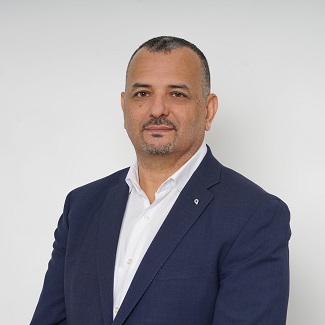
Dr. Sherif Moussa is a Professor and Dean at the Faculty of Engineering, Applied Science and Technology, Canadian University Dubai. He holds a PhD in Electrical and Computer Engineering from the University of Quebec and an MSc from the University of Waterloo, both in Canada. Before joining CUD in 2007, he served as a lecturer at Centennial College in Toronto. His research focuses on: Wireless Communication Computer Networks Machine Learning Digital Circuit Design His recent publications explore machine learning applications in cybersecurity, MIMO-OFDM systems, FPGA implementations, and routing protocols, reflecting a consistent emphasis on optimizing wireless and network technologies. Trends show increasing work in AI-driven solutions and intrusion detection since 2018. He received the 2015 CUD Research Excellence Award and founded the university's first robotics club. He actively contributes as a reviewer and technical committee member for international conferences.
Minseok Kwon is a Professor and Associate Chair in the Department of Computer Science at Rochester Institute of Technology (RIT), part of the Golisano College of Computing and Information Sciences. He holds a Ph.D. and M.S. from Purdue University and a B.S. from Seoul National University. His research focuses on network systems and protocols (including programmable networks, P4 software testing, SDN, and in-network security) as well as machine learning systems (especially workload prediction). He is a member of the RIT Center for Cybersecurity. Professional Contributions Technical committee member for Computer Communications Journal and multiple IEEE conference program committees (e.g., HPCC 2021, ICC 2021-2021). Publicity Chair for ICNP 2008 and NPSec 2005. Research Highlights Recent work emphasizes programmable data planes for green data centers, security in wireless server networks, and efficient packet processing using P4. Notable projects include P4Kube (in-network Kubernetes load balancing) and CuVPP (filter-based routing optimization). His publications span topics from network latency measurement tutorials to cutting-edge SDN implementations. Awards & Recognition Recipient of the Best Paper Award at IEEE Cluster 2020 for CuVPP . Teaching & Advising Current courses include CSCI-261 (Algorithms), CSCI-788 (MS Project), and supervising graduate co-op placements. His advising focuses on advanced network systems and cloud computing.
Anantha P. Chandrakasan is MIT's Provost and Vannevar Bush Professor of Electrical Engineering and Computer Science. He leads strategic initiatives such as the MIT Climate and Sustainability Consortium, MIT AI Hardware Program, and MIT-IBM Watson AI Lab. As Chief Innovation and Strategy Officer, he oversees MIT HEALS, MGAIC, and MITHIC. Previously, he served as MIT School of Engineering Dean (2011-2025) and director of MIT Microsystems Technology Laboratories (2006-2011). He earned all degrees (B.S., M.S., Ph.D.) in EECS from UC Berkeley (1989-1994). His research focuses on energy-efficient circuits, low-power wireless sensors, and emerging technologies. Key projects include implantable medical devices, secure AI hardware, and THz communication systems. He pioneered the Schwarzman College of Computing, reshaping MIT’s academic structure. Recipient of the 2022 IEEE Mildred Dresselhaus Medal, he holds leadership roles in multiple MIT-industry partnerships. Notable collaborations include Ericsson (5G networks), Takeda (healthcare), and Accenture (industry-technology convergence). His academic advising includes fostering interdisciplinary programs like the MIT Quest for Intelligence and postdoctoral fellowships. He champions diversity through initiatives like the Faculty Gender Equity Committee and Daniel J. Riccio Graduate Engineering Leadership Program. Labs/Teams: Leads MIT's Office of Innovation & Strategy, oversees Microsystems Technology Laboratories, and co-chairs the MIT-GE Vernova Energy & Climate Alliance. Key hardware projects include conformable ultrasound patches and battery-free IoT devices.
Athanasios G. Kanatas is a Professor at the Department of Digital Systems, University of Piraeus, Greece, and Director of the Telecommunication Systems Laboratory. He holds a Ph.D. in Mobile Satellite Communications from NTUA (1997), and has held roles such as Dean of the School of Information & Communication Technologies (2013–2017) and IEEE Communications Society Chairperson (1999). Education: Diploma in Electrical Engineering (NTUA, 1991), M.Sc. in Satellite Communication Engineering (University of Surrey, 1992), Ph.D. in Mobile Satellite Communications (NTUA, 1997). Research focuses on V2X communications, UAV-assisted networks, antenna design, stochastic geometry, and cybersecurity. He has published over 200 papers and authored 6 books, and leads projects in 5G/6G systems and integrated sensing-communication networks. His work includes pioneering contributions to aerial relay placement, fluid antenna systems, and hybrid beamforming techniques. He serves as Editor of IEEE Transactions on Wireless Communications, Associate Editor of IEEE Transactions on Antennas and Propagation, and is a Senior IEEE Member since 2002. Recent activities include extending the deadline for M.Sc. program applications and promoting internships for students. Labs/Teams: Directs the Telecommunication Systems Laboratory, collaborating on projects like ARGOS RFI monitoring and UAV corridor-assisted IoT networks. His research emphasizes practical implementation through prototyping and experimentation, with applications in aerospace, IoT, and intelligent transport systems.
Geert Heijenk is a Full Professor at the Digital Society Institute, specializing in the Design and Analysis of Communication Systems. His research focuses on Intelligent Transport Systems, Autonomous Vehicles, and vehicular networking. He has been actively publishing since 1990, with over 220 research outputs, including peer-reviewed articles, conference contributions, and books. Key research interests include adaptive cruise control algorithms, vehicular network protocols, energy efficiency in communication systems, and cooperative driving systems. His work bridges theoretical contributions (e.g., network scheduling algorithms) with practical applications (e.g., smart traffic systems). Awards: 6 Best Paper Awards (2021, 2016, 2011, 2008, etc.) Grants/Advising: Supervised 10 academic works, including PhD/Master’s theses. He is actively involved in collaborative projects and has delivered invited talks on topics like infrastructure support for vehicular networks and geocast scheduling in mmWave systems. Labs/Teams: Leads research groups exploring vehicular communication, green networking, and intelligent transport systems integration.
Nuno Manuel Branco Souto is an Associate Professor (with Habilitation) at the Department of Information Science and Technology, School of Technologies and Architecture, ISCTE - University Institute of Lisbon. He also holds leadership roles as Deputy Director of both the School of Technologies and Architecture and the Institute of Telecommunications - IUL, where he is an Integrated Researcher in the Radio Systems Group. Aggregation in Information Sciences and Technologies, ISCTE-University Institute of Lisbon, 2021 PhD in Electrical and Computer Engineering, Higher Technical Institute - UTL, 2006 Bachelor's degree in Aerospace Engineering, Higher Technical Institute - UTL, 2000 His research focuses on signal processing for communications , MIMO systems , channel estimation , reconfigurable intelligent surfaces (RIS) , and optimization in wireless communications . He explores advanced techniques in hybrid precoding , index modulation , and energy-efficient 5G/6G network design , contributing significantly to next-generation wireless technologies. His recent publications (2020–2024) reveal a strong trend toward reconfigurable intelligent surfaces (RIS) , millimeter-wave and THz communications , molecular communication with deep learning , and anti-UAV systems using SDR-based jamming and spoofing . These works appear in high-impact journals such as IEEE Transactions, Sensors, and Applied Sciences, reflecting his leadership in cutting-edge wireless communication research. Dr. Souto has no scientific awards explicitly listed in the provided text. He has been actively involved in teaching, research supervision, and academic leadership. His collaborations span multiple institutions and include prominent researchers such as Pavia, Velez, Correia, Sebastião, and Dinis. He contributes to both theoretical advancements and practical implementations in wireless systems, including software-defined radio (SDR) applications for UAV security and scalable video broadcasting in cellular networks. Dr. Souto is affiliated with the Radio Systems Group at the Institute of Telecommunications - IUL, where his team conducts research on next-generation wireless networks, signal processing algorithms, and communication system optimization.
K.C. Chang is a Professor in the Department of Systems Engineering and Operations Research at George Mason University's Volgenau School of Engineering. He is the Director of the Sensor Fusion Lab and the coordinator of the Financial Engineering Program at GMU, reflecting his interdisciplinary research focus on data fusion and probabilistic reasoning. Education: PhD, Electrical Engineering, University of Connecticut MS, Electrical Engineering, University of Connecticut BS, Communication Engineering, National Chiao-Tung University Dr. Chang's research centers on distributed data fusion, Bayesian networks, and decision-making under uncertainty, with applications in sensor networks, wireless communications, satellite systems, and financial engineering. His work integrates statistical modeling, machine learning, and systems engineering principles to solve complex, real-world problems involving uncertainty and large-scale information processing. The recent publications reflect a strong trend in applying probabilistic reasoning to dynamic spectrum access, satellite communication, and electronic warfare. His research leverages copula functions and information genealogy to enhance fusion accuracy in non-Gaussian and dependent environments. Applications span defense, aerospace, and finance, demonstrating the versatility of his methodological contributions. Scientific Awards: IEEE Fellow (2010) for contributions to sensor data fusion and Bayesian probabilistic inference Dr. Chang has advised numerous graduate students and led major research initiatives funded by the Office of Naval Research (ONR), National Science Foundation (NSF), Army Research Office (ARO), Air Force Office of Scientific Research (AFOSR), and industry partners like Intelligent Fusion Technology Inc. and Impact Technologies, LLC. His editorial roles include serving as Editor for Tracking/Navigation Systems and Large Scale Systems in IEEE Transactions on Aerospace and Electronic Systems, and as Associate Editor for IEEE Transactions on Systems, Man, and Cybernetics. He was also Technical Program Co-Chair of the 2009 International Conference on Information Fusion. He leads the Sensor Fusion Lab at George Mason University, a research group focused on advancing the theory and application of multi-sensor, multi-source information fusion. The lab works on foundational algorithms as well as real-world implementations in defense, communication, and financial systems. The lab collaborates with government agencies and private sector organizations to translate theoretical advances into operational technologies.
Eva LAGUNAS is an Assistant Professor and Deputy-Head of the SIGCOM research group at the Interdisciplinary Centre for Security, Reliability and Trust (SnT) , University of Luxembourg. Her expertise lies in Non-Terrestrial Communication Systems , focusing on radio resource management and wireless networks optimization. She holds a Ph.D. and M.Sc. in Telecommunications Engineering from the Polytechnic University of Catalonia (UPC), Barcelona. Key Affiliations & Roles: Principal Investigator (PI) of the FNR CORE project VARRAY-5G (Vehicular Phase Array Antennas for 5G) PI of the CHIST-ERA project SHIELD (Secure Distributed Learning & Smart Contract Ecosystems) Co-PI in the ESA ARTES-funded NeuroSat project (Neuromorphic Processors for SatCom) Deputy-Head of SIGCOM group and active contributor to the TelecomAI-Lab (AI-driven satellite communication) Event organizer: Special Session on ML for NTN at IEEE ICMLCN 2025, Track Chair at EUCNC 2025 Research Interests: Non-Terrestrial Networks (NTN), 6G integration, satellite-ground network convergence, AI-driven optimization, reconfigurable intelligent surfaces (RIS), and neuromorphic computing for onboard processing. She also leads efforts in vehicular communications and energy-efficient satellite payloads. Recent Achievements: 2025: Elected to the EURASIP Board of Directors 2024: Listed in the 100 Brilliant and Inspiring Women in 6G list 2023: Co-authored NeuroSat project's IEEE publication on neuromorphic computing for SatCom Labs & Projects: TelecomAI-Lab : Developing neuromorphic hardware (e.g., Intel Loihi2, BrainChip AKIDA) for satellite applications ESA NeuroSat : Pioneering neuromorphic processors for onboard SatCom resource management Grants & Funding: Secured Luxembourg National Research Fund (FNR) and CHIST-ERA grants for projects like VARRAY-5G and SHIELD, totaling over €2M in research investment.
Raghav Sampangi is a Senior Instructor in the Faculty of Computer Science at Dalhousie University, where he teaches courses in web development, server-side scripting, and usable security and privacy. He is also a Faculty Associate at the Centre for Learning and Teaching and actively contributes to pedagogical innovation and inclusive academic practices. Education: PhD, Dalhousie University, Canada (2015) M.Tech, University of Mysore, India (2011) B.Engg, VTU, Belgaum, India (2007) Raghav's research focuses on usable security and privacy , context-aware authentication , and innovations in computer science education , particularly compassionate teaching, ungrading, and student support. He is deeply committed to equity, diversity, and inclusion in computing and advocates for mental health and belonging in academia. His recent publications center on security in resource-constrained systems, including IoT, RFID, and wireless body area networks, often using bio-inspired cryptographic techniques. The work demonstrates a strong trend toward lightweight, adaptive, and context-sensitive security solutions. Scientific Awards: The Srini Award for Teaching Excellence (2021, 2018) Best Paper Award at Q2SWinet 2014 Best Paper in General Conference Program at SoftCOM 2014 Dalhousie Impact Leadership Award (2014) Faculty Appreciation Award (2015) Parvathamma Subbaraya Gold Medal (University of Mysore) Raghav advises students through community outreach courses and research projects. He leads multiple educational initiatives, including ungrading research and first-year student support. He is co-lead of the D-LITE Belong Cluster and the Halifax Chapter of Canada Learning Code, and is a Cultural Competence in Computing (3C) Fellow at Duke University. His service includes advocacy with Dragonfly Mental Health and the READI Group, promoting compassionate and inclusive academia. He is actively involved in lab and team-based research on usable security and CS education, collaborating with industry, alumni, and students to revise curricula and develop inclusive learning environments.
Jawad Ahmad is a Lecturer in the School of Computing, Engineering and the Built Environment at Edinburgh Napier University . His work is closely associated with the Centre for Cybersecurity, IoT and Cyberphysical Systems and the Centre for Distributed Computing, Networking and Security , where he contributes to cutting-edge research in secure and intelligent systems. His research interests are centered on cybersecurity , artificial intelligence , and Internet of Things (IoT) technologies. He focuses on developing advanced intrusion detection systems, privacy-preserving frameworks using federated learning and homomorphic encryption, and secure data transmission mechanisms leveraging chaos-based and quantum-inspired encryption. His interdisciplinary work extends to healthcare, smart agriculture, and environmental monitoring, demonstrating the broad applicability of his research. The analysis of his recent publications reveals a strong trend toward AI-driven security solutions, particularly using deep learning models like transformers and attention mechanisms for network intrusion detection. He also explores the integration of machine learning with blockchain and distributed ledgers for trusted threat intelligence sharing. His work consistently emphasizes real-world deployment, performance optimization, and resilience against cyber threats in industrial and healthcare settings. Funded Research Projects: Data Sharing in Highly Secure Environments (Innovate UK, £273,181) PhD Studentship on Homomorphic Encryption (6G Health Institute GmbH, £35,082) TrustShare: Privacy-Preserving Threat Intelligence Sharing (Innovate UK, £31,386) Cyber Hunt: Automated Cyberthreat Hunting (Norway Research Council, £37,500) AI Dashboard for COVID-19 Sentiment Analysis (Chief Scientists Office, £135,104) Dr Ahmad actively supervises postgraduate research, currently serving as Director of Studies for Hisham Ali and as second supervisor for other PhD candidates. He is involved in multiple collaborative research teams focusing on cybersecurity, AI, and IoT, often working with Prof Bill Buchanan and other leading researchers in the field. His research is published in high-impact journals such as IEEE Access , Frontiers in Computational Neuroscience , and Sensors , and presented at international conferences.
Nitin H. Vaidya is the Robert L. McDevitt, K.S.G., K.C.H.S. and Catherine H. McDevitt L.C.H.S. Chair Professor in the Department of Computer Science at Georgetown University, where he also served as Department Chair from 2018 to 2024. He has previously held faculty positions at the University of Illinois at Urbana-Champaign and Texas A&M University, reflecting a long and distinguished academic career in computer science. His research focuses on distributed computing , distributed learning , fault-tolerant algorithms , and wireless networking . His work bridges theoretical foundations with practical applications in resilient and scalable systems. He has made significant contributions to the design and analysis of algorithms for distributed environments under adversarial and unreliable conditions. Nitin Vaidya has received multiple honors, including being named a Fellow of the IEEE and co-authoring award-winning papers at premier conferences such as ACM MobiCom , ACM MobiHoc , SSS , and ICDCN . He has held major leadership roles in the research community, including serving as Chair of the Steering Committee for ACM PODC , Editor-in-Chief of IEEE Transactions on Mobile Computing , and Editor-in-Chief of ACM SIGMOBILE's MC2R . These roles highlight his influence and service to the broader computer science community. He completed his education at prestigious institutions: a Ph.D. from the University of Massachusetts at Amherst , a Master's from the Indian Institute of Science, Bangalore , and a Bachelor's from the Birla Institute of Technology and Science, Pilani .
Dr. Paul Cross is a Senior Lecturer in the Environment and Senior Tutor at the School of Environmental and Natural Sciences, Bangor University, UK. He is actively involved in research, teaching, and public engagement, with a strong focus on environmental science, pollinator conservation, and sustainable agriculture. His work bridges ecology, engineering, and socio-economic modeling, contributing significantly to understanding pollinator health and agricultural sustainability. His research interests include UAV-based tracking of insect pollinators, beekeeping as a tool for poverty alleviation, zoonotic diseases (particularly E. coli O157), bee morphometrics, and socio-economic methodologies for estimating disease and illegal behaviors. He employs advanced technologies such as radar, machine learning, and UAVs to study pollinator behavior and environmental impacts. His recent publications highlight a strong trend in integrating engineering and ecological sciences, particularly through the development of energy-harvesting bee tracking devices and radar-based monitoring systems. His work spans disciplines from entomology and soil science to public health and climate change, reflecting a highly interdisciplinary approach to environmental challenges. Senior Lecturer in the Environment, Bangor University Senior Tutor Course Director for MSc Conservation and Land Management Member of SENRGy Teaching and Ethics Committees Dr. Cross has supervised multiple PhD students on topics ranging from beekeeping in Tanzania to UAV-based bee tracking and neonicotinoid impacts. He has led or contributed to numerous research projects funded by the Welsh Government, RCUK, and the British Academy, focusing on pesticide hazards, greenhouse gas emissions, and food safety. He is actively involved in public outreach, with media appearances on BBC Countryfile and contributions to The Conversation. His work contributes to UN Sustainable Development Goals related to poverty reduction, climate action, and life on land.
Furat Al-Obaidy is a Lecturer in the Department of Electrical and Computer Engineering at the University of Michigan-Dearborn's College of Engineering and Computer Science. His expertise spans machine learning, intelligent systems, VLSI circuits, multi-core systems, FPGA architecture, and deep learning applications. PhD in Electrical & Computer Engineering from Ryerson University (2021) MSc in Electrical & Computer Engineering from Ryerson University (2016) MSc in Control & Instrumentation Engineering from University of Technology, Baghdad (1999) BSc in Control & Systems Engineering from University of Technology, Baghdad (1996) His research focuses on power-aware computing systems, thermal imaging for IC testing, hybrid cache architectures, and AI-driven network optimization. He has published extensively on topics including GPGPU power management, 3D NoC routing, and wireless sensor networks. His recent publications highlight applications of neural networks in cache optimization, FPGA architecture, and thermal imaging for hardware diagnostics. Earlier work includes control system simulations for wind turbines and power factor analysis in electrical circuits. Ryerson Graduate Development Award (2021) Ontario Graduate Scholarship Award (OGS) (2020) Ryerson Graduate Fellowship (2018) Graduate Research Excellence Award (2017) Queen Elizabeth II Graduate Scholarship in Science and Technology (2017)
Mohammed Ismail is a Professor and Chair of the Electrical and Computer Engineering Department at Wayne State University, where he also serves as Founding Director of the WINCAS Center of Excellence. He has held academic positions at institutions including Ohio State University, KTH (Sweden), Aalto University (Finland), and Tokyo Institute of Technology (Japan). A pioneer in CMOS design, his research spans analog/mixed-signal/RF ICs, 5G/6G wireless chipsets, IoTs, and machine learning for wearable medical devices. Education : Ph.D. in Electrical Engineering from University of Manitoba, M.S. and B.S. from Cairo University Leadership : Founder of Springer Journal of Analog Integrated Circuits and Signal Processing; Founder of IEEE ICECS and ISQED conferences His research focuses on CMOS analog/RF/mm-wave ICs , IoT systems , automotive electronics , and RF energy harvesting . He has developed groundbreaking technologies including the first CMOS Wi-Fi Radio chip and a self-powered wearable heart attack prediction device. Scientific Awards : US Presidential Young Investigator Award Ohio State Lumley Research Award (x4) SRC Inventor Recognition Award (x2) 2018 UNESCO Medal SRC Board Special Recognition IEEE Fellow Mohammed Ismail has founded multiple startups including Spirea AB, Firstpass Technologies, and ANACAD (acquired by Siemens). He has authored 23 books, over 200 journal papers, and holds 17 US patents. At Wayne State, he teaches advanced courses like ECE7566 (Advanced Mixed Signal Integrated Circuits) and ECE9997 (Doctoral Seminar).
Nancy Varshney is a Part-Time Lecturer at the Department of Electronics and Telecommunications (DET) at Politecnico di Torino. She contributes to the College of Electronic Engineering, Telecommunications, and Physics, as well as the College of Mechanical, Aerospace, and Automotive Engineering within the university. Her academic work focuses on telecommunications technologies, particularly in the context of 5G and beyond. Research Interests : Nancy Varshney's research spans key areas such as millimeter-wave (mmWave) communication systems, beamforming strategies, UAV (drone)-assisted networks, and backscatter sensor technologies. Her work addresses critical challenges in optimizing data collection, energy efficiency, and network performance for next-generation wireless systems. Recent Publications : Her recent publications highlight advancements in mmWave beamforming, UAV-aided communication, and resource allocation for 5G+. These studies explore low-complexity algorithms, wideband mmWave systems, and beam squint effects to enhance network performance. The research contributes to the evolution of telecommunications infrastructure and wireless signal processing. Teaching Contributions : She collaborates on courses including 'Software-defined communication systems,' '5G and next-generation mobile computing,' and 'Communication and network systems,' particularly focusing on computer network design and control. Her teaching roles span multiple academic years and programs at Politecnico di Torino.