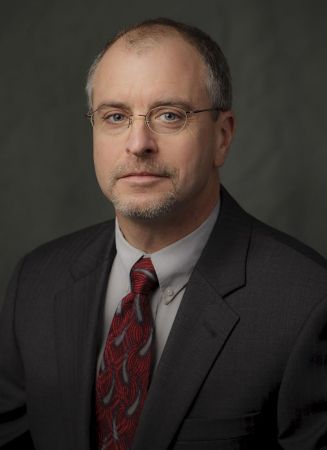
Professor David Airey is a faculty member in the School of Civil Engineering at The University of Sydney. He earned a BA, MSc, and PhD in Engineering from the University of Cambridge. His research focuses on improving understanding of soil and rock behavior to enhance infrastructure safety and sustainability. Key areas include geotechnical engineering, soil mechanics, offshore structures, and ground improvement methods. He has served as Acting Head of School (2016) and is involved in editorial roles for journals like the Geotechnical Testing Journal . Research Interests: His work addresses risks in construction excavation, ground improvement, and offshore platform foundations. He develops models to predict soil behavior and mitigate hazards like soil liquefaction. Recent studies include transparent soil observations for fines migration and cyclic mobility in sands. Publications Trends: Over 200+ peer-reviewed articles (2025-2021) span topics like constitutive models for cemented materials, bio-cemented sands, and submarine landslide hazards. Recent work emphasizes unsaturated soil dynamics and self-healing clay mechanisms. Students: Supervises PhD/Master’s research on soil stabilization, microplastic contamination, and foundation engineering challenges. Current advisees include Hamed Faizi and Yifei Gao. Labs/Teams: Affiliated with the Net Zero Institute, SciGEM, and Centre for Wind, Waves and Water. Engages in collaborative projects on carbon sequestration and geomechanical modeling.
Dr. Amir Keshmiri is an Associate Professor/Reader in Computational Fluid Dynamics (CFD) and Head of Business Engagement & Innovation in the Faculty of Science & Engineering at the University of Manchester. He leads the ManchesterCFD research group and has founded multiple companies including Helical Ridge Graft and Affordable Health Technologies. His expertise spans CFD, biomedical engineering, turbulence modeling, and energy systems. Keshmiri holds a PhD in CFD from the University of Manchester and has secured over £2m in research funding since 2010. Education: BEng in Mechanical Engineering (2005, University of Manchester) MSc in Thermal Power & Fluids Engineering (2006, University of Manchester) PhD in Computational Fluid Dynamics (2010, University of Manchester) Professional Qualification in Entrepreneurship & Innovation (2016, LSE) Research Interests: His work focuses on CFD applications in biomedical devices, energy systems, and fluid-structure interaction. Notable contributions include breakthroughs in vascular prostheses (Helical Ridge Graft) and aerodynamic optimization of winglet designs. He also explores turbulence modeling impacts on energy sectors and hydrogen storage innovations. Key Awards: EPSRC Doctoral Prize (2010) IMechE Thomas Common Award (2013) RAEng Making a Difference Award (2019) Collaborate to Innovate Award (2017) Grants & Projects: Principal Investigator (PI) on 85% of £2m+ research grants from EPSRC, MRC, and industry. Active in projects like 'Fluids Research Group' and 'Engineering Sustainable Solar Energy.' Labs & Teams: Leads the ManchesterCFD team, a CFD research and consultancy group, and collaborates with industry partners like AECOM. His work contributes to UN Sustainable Development Goals in healthcare and energy sustainability.
Dr. Spencer Quiel is an Associate Professor of Structural Engineering at Lehigh University's P.C. Rossin College of Engineering and Applied Science. His research focuses on structural resilience to extreme loads such as fire, blast, and progressive collapse, with particular emphasis on bridges, tunnels, and building systems. He has secured over $1.5 million in grants from NSF, USDOT, and others, and his work is published in leading journals like Engineering Structures and Fire Safety Journal. Prior to academia, he worked at Hinman Consulting Engineers, contributing to structural designs for hazard resistance. He holds a PhD from Princeton University (2009) and a BS from Notre Dame (2004), supported by a DHS Fellowship during his doctoral studies. Dr. Quiel teaches undergraduate courses in engineering statics and civil engineering design, as well as graduate-level structural fire engineering. He currently serves as Vice Chair of the PCI Blast Resistance and Structural Integrity Committee and contributed to ASCE standards on fire loads and structural fire engineering. His research group focuses on experimental testing, numerical modeling, and large-scale infrastructure resilience. Education: PhD, Civil Engineering, Princeton University (2009) Professional Affiliations: ASCE, AISC, PCI Licenses: Professional Engineer (PA, VA) Key Projects: World Trade Center collapse studies, tunnel liner resilience, thermal energy storage systems His research interests span structural fire effects, blast-resistant design, progressive collapse frameworks, and innovative cladding systems. Recent work includes developing fire-resistant tunnel liners and thermal energy storage solutions using concrete matrices. He also investigates multi-hazard simulation methods for tall buildings using real-time hybrid techniques.
Dr. Richard Sause is the Joseph T. Stuart Professor of Structural Engineering and Director of the Advanced Technology for Large Structural Systems (ATLSS) Center at Lehigh University's Civil & Environmental Engineering department. His research focuses on seismic-resistant steel/concrete structures, bridge systems, and passive damping technologies, with over 60 research projects totaling $50M+ and leadership of multi-million-dollar programs. As ATLSS Director, he oversees $6M annual expenditures and a 25-person team. Education: Ph.D. and M.S. in Civil Engineering from UC Berkeley; B.S. from Rensselaer Polytechnic Institute. Teaching includes Structural Dynamics, Steel Design, and Earthquake Engineering. He has supervised 23 Ph.D. and 39 M.S. students, many now faculty at top universities. Notable awards include the Raymond C. Reese Research Prize (2009), J. James R. Croes Medal (2007), and Charles C. Zollman Award (2006). His work includes demonstration bridges using high-performance steel and leadership in the NHERI Lehigh Experimental Facility. Recent grants include a $12M DOE initiative for marine energy and a $1M NSF grant for floating wind turbines. His research spans offshore energy systems, timber structures, and advanced testing methodologies, emphasizing resilience and sustainability.
Uwe Schichler is a Professor at the Institute of High Voltage Engineering and System Management at TU Graz. His research focuses on high voltage engineering, partial discharge monitoring, and the integration of renewable energy into power systems. He leads projects on MVDC cable systems, insulation materials, and grid modernization. His work bridges academic research with industrial applications, including contributions to CIGRE standards and eco-friendly alternative gases for gas-insulated systems. Research interests include high-voltage insulation materials (e.g., XLPE cables, 3D printed insulators), DC grid technologies, and advanced diagnostics for power equipment. He explores novel sensors for dynamic line rating and machine learning applications in partial discharge classification. His team investigates innovative propulsion systems like ionic wind for aircraft and addresses environmental challenges in power systems. Recent publications emphasize standardization of high-voltage testing, DC system qualification, and corona noise reduction in overhead lines. He collaborates with industry partners on projects like MVDC battery storage systems and hybrid AC/DC grids. His work supports the energy transition through improved grid efficiency and sustainability.
Lionel Soulhac is a Professor at INSA Lyon and serves as the Deputy Director of the Laboratoire de Mécanique des Fluides et d’Acoustique (LMFA) . He leads the AIR team (Atmospheric and Industrial Research) and is affiliated with the École Centrale de Lyon . His academic focus lies in the Department of Fluid Mechanics, Acoustics, and Energy (MFAE). Dr. Soulhac’s research emphasizes urban atmospheric dispersion , turbulent flows in complex environments , and numerical modeling of pollutant transport . He has contributed to developing operational models like SIRANE and BUILD , which address air quality and emergency response scenarios in urban and industrial settings. Teaching responsibilities include courses on fluid mechanics, environmental engineering, and pollution dynamics at École Centrale de Lyon and the University of Lyon. Research highlights include studies on concentration fluctuations , vegetation effects in urban canopies , and inverse modeling for source characterization . His work integrates experimental wind tunnel studies and computational fluid dynamics (CFD) to assess dispersion patterns and urban microclimates. Recent projects, such as the DIPLOS initiative, focus on pollutant dispersion in street networks and risk assessment methodologies. His contributions bridge academic research with practical applications in environmental safety and urban planning.
Rashid Ali is an Assistant Professor at CEES School of Engineering, specializing in Autonomous Systems and Control Theory with a focus on Unmanned Aerial Vehicles (UAVs). His research integrates advanced control systems, energy storage solutions, and aerodynamics to enhance UAV performance and safety. He holds a Doctorate in Aeronautical Engineering from Loughborough University and a Postgraduate Certificate in Teaching from the University of Hertfordshire. Education/Academic Qualifications: Doctorate in Aeronautical Engineering (1983–1987), Loughborough University Postgraduate Certificate in Teaching & Learning (2006), University of Hertfordshire Bachelor's in Aeronautical Engineering (1978–1982), Loughborough University Research Interests include: Autonomous Systems and UAV Flight Control Propulsion and Energy Storage for Unmanned Aircraft Advanced Kalman Filter Applications in DSP Aerodynamics of Sniper Bullets and Wind Turbines His work emphasizes interdisciplinary collaboration across propulsion, avionics, and structural engineering to advance autonomous aviation technology. Key Research Trends: Recent articles focus on high-altitude UAV fuel systems, parametric cost models for aircraft design, and multi-point angle-of-attack sensing for flight safety. Collaborations span energy storage, environmental impact analysis, and mobile technology for rural applications. Scientific Awards: 2018 Faculty of Engineering and Computing & Maths Intellectual Property Competition Advising & Grants: Currently accepting PhD students and leading projects like the Skyfarer IUK Project (2020) on UAV technology. Active in the IMechE UAS Steering Committee, promoting standards for unmanned aerial systems. Labs/Teams: Engaged in cross-disciplinary research groups focusing on UAV design, control systems, and renewable energy integration. His work bridges academic innovation with industry applications in aerospace and energy sectors.
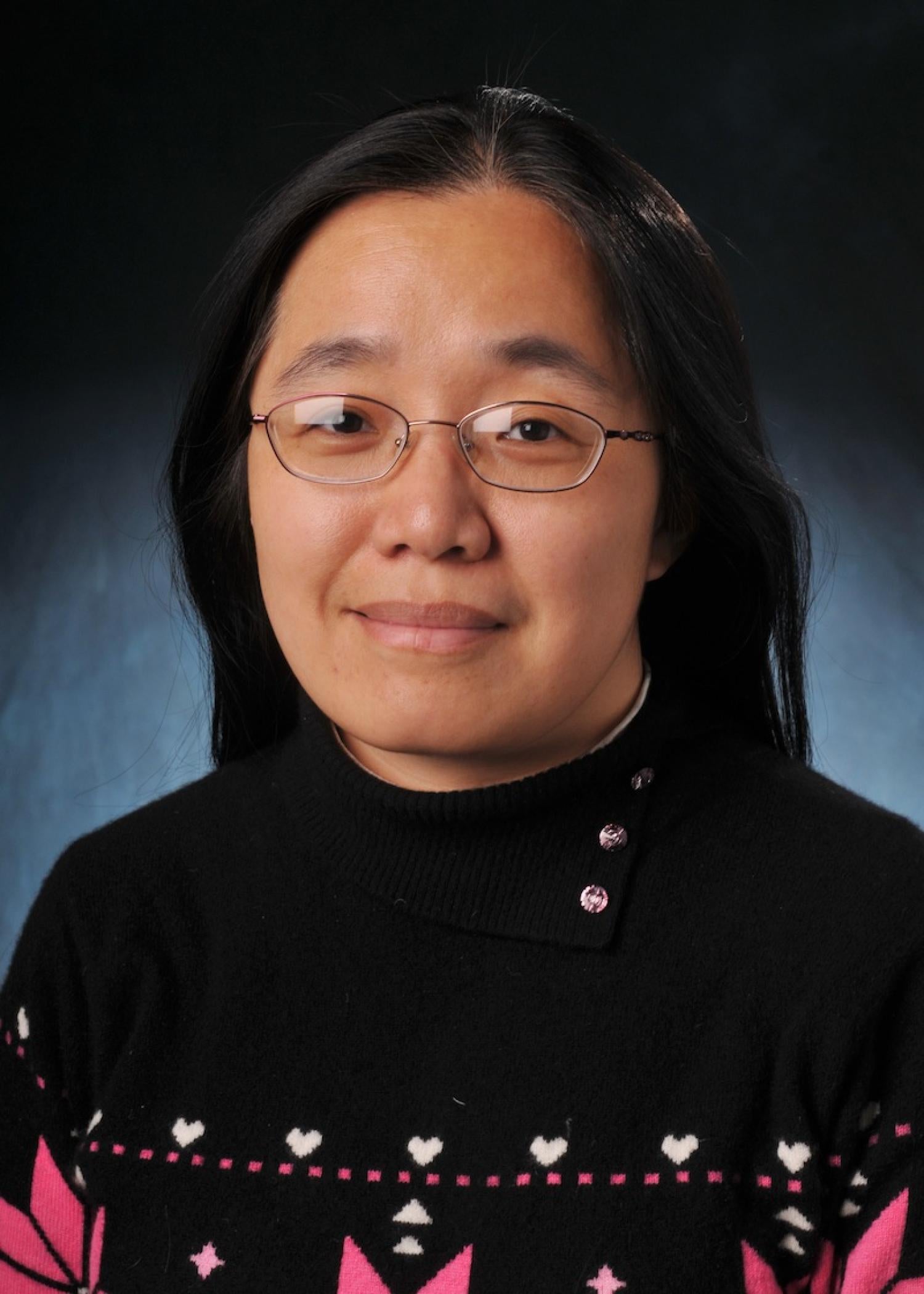
Dr. Xiaoyun Shao is a Professor of Civil and Construction Engineering at Western Michigan University (WMU), serving as faculty advisor and director of the Laboratory of Earthquake Structural Simulation. Her expertise spans structural engineering, seismic analysis, real-time hybrid simulation, and natural hazard mitigation. She holds a Ph.D. from the University of Buffalo and M.S./B.S. degrees from Tongji University. As a Professional Engineer (PE) in Michigan, she focuses on advancing experimental methods for infrastructure resilience. Education: Ph.D. in Structural Engineering, University at Buffalo, SUNY (2004) M.S. in Structural Engineering, Tongji University, China (2001) B.S. in Structural Engineering, Tongji University, China (1998) Research Interests: Real-time hybrid simulation techniques for coupled systems (e.g., vehicle-bridge, train-bridge) Seismic response of soft-story wood-frame buildings and retrofit strategies Dynamic behavior of offshore wind turbines and floating structures Advanced materials in construction (elastomeric adhesives, SMA devices) BIM interoperability and digital twin applications Her lab develops innovative testing platforms, including distributed real-time hybrid systems for floating wind turbines and full-scale seismic experiments. Recent work includes interdisciplinary collaborations on adhesive roof construction and computational methods for NHERI projects. Awards and Recognition: Not explicitly listed in provided text. Advising and Grants: Leads the LESS lab’s Ph.D. recruitment for 2025, focusing on natural hazard engineering. Collaborates with teams on NSF-funded projects involving hybrid testing and energy systems. Labs/Teams: Director of WMU’s Laboratory of Earthquake Structural Simulation; member of interdisciplinary teams analyzing floating offshore wind turbines and seismic retrofits.
Prof. Victor Grigoras is a faculty member at the Technical University of Iași, holding the rank of Professor. He specializes in electrical engineering and computer science, focusing on signal processing, parallel architectures, and nonlinear dynamics in power systems. His research interests include smart grid technologies, renewable energy integration, and data-driven methodologies for grid optimization. He teaches courses such as 'Semnale, Circuite și Sisteme' and 'Algoritmi și Structuri Paralele de Calcul.' His research spans over 15 recent articles (2021–2025), emphasizing advancements in smart grid automation, machine learning applications in voltage quality analysis, and optimal power flow solutions for renewable integration. Notable trends include SCADA system improvements, energy storage strategies for prosumer grids, and IoT-based energy management. His work addresses challenges in grid reliability, power quality, and future urban grid resilience under high EV adoption scenarios. Prof. Grigoras has contributed to frameworks for electric vehicle charging station placement, hydropower plant optimization via data mining, and demand response mechanisms using smart metering. His methodologies often combine clustering techniques with fuzzy logic or metaheuristic algorithms to solve complex grid problems.
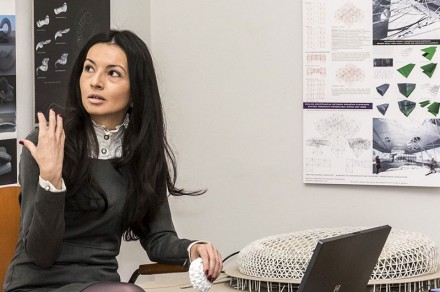
Jelena Milošević is an Assistant Professor at the Department of Architectural Technologies, University of Belgrade - Faculty of Architecture. She serves as Vice-Dean for Teaching and Student Affairs and specializes in structural systems, spatial structures, morphology, and optimization of structures. Her research combines computational design, digital fabrication, and sustainable construction methods. Education: Graduated in Architecture, University of Belgrade (2006) Enrolled in doctoral studies (2009) Her research focuses on generative design approaches for architectural structures, performance-based optimization, and applications of 3D printing in construction. She investigates biomimetic pattern applications in structural design and develops parametric workflows for complex geometries. Recent work explores circular economy potentials in architectural production through recycled materials and additive manufacturing. Publications demonstrate a strong focus on digital fabrication technologies in architectural education and practice. Recent articles examine hybrid pedagogical approaches integrating 3D printing technologies into design studios, material efficiency in additive-manufactured structural systems, and sustainable applications of recycled materials in digital fabrication. She has participated in research projects including 'Development and application of scientific methods in design and construction of highly economical structural systems using new technologies' funded by the Ministry of Education, Science and Technological Development of Serbia.
Cary D. Troy is a Professor of Civil Engineering at Purdue University's Lyles School of Civil and Construction Engineering. He specializes in environmental fluid mechanics, with a focus on hydrodynamic processes in lakes and coastal systems, particularly Lake Michigan. His research integrates field experiments, numerical modeling (e.g., SUNTANS), and analytical methods to study circulation, thermal structure, and mixing in aquatic environments. Education: Ph.D. (2003), M.S. (1997), and B.S. (1995) in Civil Engineering from Stanford University, University of Illinois Urbana-Champaign, and Purdue University, respectively. Research interests include benthic boundary layer processes, river plume characterization, and the impacts of invasive species (e.g., quagga mussels) on water quality. His pedagogical work emphasizes active learning in engineering education, including flipped classrooms and writing-to-learn strategies. He has mentored over a dozen graduate students and received multiple teaching awards, including the Purdue University Bravo Award (2015) and Exceptional Early Career Teaching Award (2014). Awards include the Roy E. & Myrna G. Wansik Teaching Leadership Award (2016) and the American Society of Civil Engineers ExCEED Teaching Fellow designation (2009). His lab, the Burke Hydraulics and Hydrology Lab, focuses on advancing understanding of coastal and limnological systems through interdisciplinary approaches.
Xinzhao Chu is a Professor of Aerospace Engineering Sciences at the University of Colorado Boulder and a Fellow at the Cooperative Institute for Research in Environmental Sciences (CIRES). He holds a Ph.D. and B.S. in Physics and Electrical Engineering from Peking University (1996 and 1991). His research focuses on lidar remote sensing, atmospheric and space sciences, and the dynamics of the mesosphere and lower thermosphere. Chu’s work includes developing novel lidar technologies, studying gravity waves, and exploring space-atmosphere interactions. Affiliations: CIRES Fellow, Department of Aerospace Engineering Sciences Key Roles: Director of the NSF Lidar Consortium, Principal Investigator of multiple grants Research Interests: Lidar instrumentation, atmospheric dynamics, metal layer formation in thermosphere, and climate variability studies. His group has pioneered Antarctic lidar campaigns, including record-breaking 174-hour observations and discoveries of thermospheric Fe layers. Awards & Recognition: CEDAR Prize Lecture Award (2019), MRI and CAREER Awards (2007), and Antarctic Service Medal (2001). His team has consistently won CEDAR Student Poster Competitions. Advisees: Notable students include Zhibin Yu, Weichun Fong, and Cao Chen, who have contributed to groundbreaking lidar data and numerical models. Labs & Projects: Leads the Chu Research Group, developing advanced lidar systems (e.g., OASIS Initiative) and collaborating globally on atmospheric observations. The group operates facilities like the McMurdo Station lidar in Antarctica.
Vladimir V. Terzija is a prominent researcher specializing in power systems engineering with a focus on smart grid technologies, synchronized measurement systems, and power system protection. His extensive publication record spans over two decades, demonstrating continuous contributions to the field of electrical power engineering across numerous IEEE journals and conferences. Terzija's research primarily centers on advanced power system monitoring, protection, and control methodologies. His work has significantly contributed to the development of synchronized measurement technology applications, fault analysis algorithms, and state estimation techniques for modern power systems. He has pioneered approaches for wide-area monitoring systems, transmission line fault analysis, and integrating renewable energy resources into power grids while maintaining stability and reliability. His research spans from fundamental power system theory to practical implementations addressing contemporary challenges in grid operation. Analysis of his recent publications reveals a strong focus on integrating artificial intelligence and machine learning techniques into power system applications, particularly for condition monitoring, anomaly detection, and predictive maintenance. His work increasingly addresses challenges posed by the energy transition, including grid stability with high renewable penetration, multi-energy system integration, and advanced control strategies for low-inertia power systems. The interdisciplinary nature of his research connects power engineering with data science, optimization theory, and cybersecurity. Throughout his career, Terzija has collaborated extensively with researchers across Europe and internationally, as evidenced by his numerous co-authored publications with institutions worldwide. His work appears consistently in top-tier IEEE publications, indicating recognition by the power engineering community. While specific awards aren't documented in the available publication records, his sustained research productivity and influence in the field suggest significant professional recognition. Terzija has supervised numerous research projects focused on power system monitoring and control, with particular emphasis on practical implementations that bridge theoretical developments with real-world grid applications. His work on WAMS (Wide Area Monitoring Systems), fault location algorithms, and state estimation techniques has contributed to advancing grid operational capabilities. The research trajectory shows increasing focus on addressing challenges associated with renewable energy integration, grid digitalization, and maintaining stability in modern power systems. His research group appears to focus on developing advanced monitoring and control systems for power networks, with particular expertise in synchrophasor technology applications. The collaborative nature of his work suggests involvement in international research consortia addressing contemporary power system challenges, particularly those related to grid stability in systems with high renewable penetration and the development of intelligent monitoring solutions for power infrastructure.
Dr. Yew Weng Kean is an Assistant Professor in the Department of Electrical Engineering at Heriot-Watt University Malaysia, part of the School of Engineering & Physical Sciences. He holds a Ph.D. in Electrical Engineering from Universiti Tenaga Nasional, where his doctoral work focused on "Design of an AC-coupled stand-alone hybrid renewable energy system with an improved control strategy". His research expertise encompasses microgrids, renewable energy systems, smart grids, and AI-driven solutions for energy management. He actively contributes to interdisciplinary projects involving material science, computer vision, and sustainable technologies. His research interests span microgrid optimization, stand-alone hybrid systems, solar PV integration, energy storage technologies, and artificial intelligence applications in energy sectors. He has authored over 24 peer-reviewed publications, with recent work focusing on defect detection in wind turbine blades, advanced control mechanisms for multi-agent systems, and sustainable bio-hydrogen production. Dr. Yew’s articles highlight trends in combining AI with renewable energy systems, such as deep learning models for fault diagnosis in photovoltaic arrays and novel approaches to wind turbine blade inspection via aerial imagery. His work also addresses challenges in material science, including heat treatment effects on aluminum alloys and acoustic properties of natural fibers. He currently supervises research in energy systems, smart grids, and sustainable materials, and collaborates on global energy education initiatives. His affiliations include roles in university-led sustainability projects and contributions to IEEE-related conferences.
Mahdi Abolghasemi is a Senior Lecturer in Statistical Data Science at Queensland University of Technology (QUT), within the School of Mathematical Sciences, Faculty of Science. He previously held academic positions at Monash University and The University of Queensland. He serves on the editorial board of the International Journal of Forecasting and reviews for journals like Scientific Reports , International Journal of Production Research , and Applied Energy . Education: PhD in Statistics (University of Newcastle). Research Interests: Time series forecasting, decision optimization, and machine learning applications in retail and energy sectors. His work focuses on hierarchical structures, systematic events, and volatility in time series data, with funded projects exceeding $900k. Notable areas include demand forecasting in supply chains, renewable energy forecasting, and decision-focused predictive analytics. His research has been recognized by awards from the International Institute of Forecasters, Australian Mathematical Society, and IEEE Computational Intelligence Society. Awards: International Institute of Forecasters Award Australian Mathematical Society Award IEEE Computational Intelligence Society Award Australian Mathematical Sciences Institute Recognition Teaching: A Fellow of the Higher Education Academy (FHEA), he emphasizes bridging theory with industry-relevant projects. Courses taught include data science, business analytics, time series forecasting, and statistical machine learning. Received the Faculty of Science Highly Regarded Early Career Teaching Excellence Award at The University of Queensland. Grants & Funding: Over $900k from national/international organizations supporting his research in forecasting and optimization. Supervision: Currently accepting research students in areas such as hierarchical forecasting, Bayesian-focused learning, inventory optimization, and energy supply chain decision-making. Research Centres: Energy Transition Centre and Centre for Data Science at QUT. Collaborations with industry partners like Sanitarium, Coles, Woolworths, Australian Energy Market Operator (AEMO), and Australian Renewable Energy Agency (ARENA).