Dwayne Breger is an Extension Professor at the Department of Environmental Conservation , University of Massachusetts. He serves as the Director of the UMass Clean Energy Extension , focusing on renewable energy and climate mitigation economics and policy. His work centers on applied research to address clean energy barriers, supporting community-based energy markets and equitable distribution of distributed energy resources. Research Areas : Renewable energy systems, grid integration of wind/solar, energy policy modeling, and climate mitigation economics. Publications : Recent work includes system dynamics modeling of SREC markets (2010) and utility-scale energy storage solutions (2018). Extension Role : Leads technical assistance for Massachusetts municipalities, businesses, and farms, and collaborates with state agencies to advance clean energy adoption.
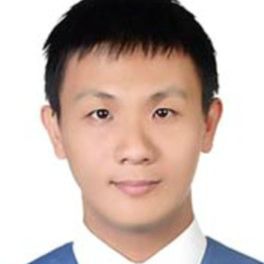
Yi-Hsun Hsieh is a Researcher at the Center for Power Electronics Systems (CPES) at Virginia Tech. His work focuses on advanced power electronics systems, including resonant converters, solid-state transformers, and modular multilevel converters. He specializes in high-frequency transformer design, power quality optimization, and high-power conversion technologies. His research addresses challenges in energy distribution, renewable energy integration, and high-efficiency power conversion. Key research areas include resonant converter modeling, insulation techniques for high-voltage applications, and control strategies for modular systems. Hsieh contributes to the development of efficient power electronics solutions for industries such as renewable energy systems, electric vehicles, and smart grids. His publications emphasize rigorous analysis of converter dynamics, small-signal modeling, and practical implementation of high-density power electronics. Hsieh collaborates with CPES's industry consortium to advance technologies like Global Intergrid and Power Management Modeling.
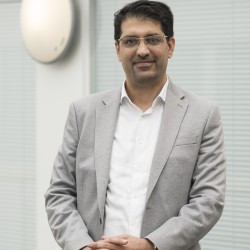
Professor James Flint is a Professor of Wireless Systems Engineering at Loughborough University, serving as Associate Dean for Education & Student Experience. He leads the Electronic Communications Research Unit and holds academic qualifications including a PhD in Computational Electromagnetics (2000). His research focuses on wireless systems, electromagnetics, acoustics, biomimetics, and metamaterials, with notable projects in wearable antennas, energy harvesting, and acoustic signal processing for infrastructure monitoring. Prof. Flint’s expertise spans biomimetic engineering solutions, ultrasonic technology, and numerical modeling using Transmission Line Matrix techniques. His work on acoustic emission monitoring has applications in geotechnical testing, landslide预警 systems, and wind turbine blade condition monitoring. Professional affiliations include Fellow of the IET and Senior Member of IEEE. Recent articles highlight advancements in energy harvesters for industrial digitization, textile-based antenna innovations, and cybersecurity for LTE networks. His research demonstrates interdisciplinary impact across biomedical engineering, aerospace systems, and smart manufacturing. Ongoing projects include vibration energy harvesting for self-powered sensors and metamaterial antenna design for wearable applications. Prof. Flint actively contributes to educational technology through studies on digital learning tools like Microsoft OneNote. Professional Accolades: FIET, SMIEEE, SFHEA Key Labs: Electronic Communications Research Unit Notable Projects: Wearable antennas, bioacoustic bandgap structures, textile manufacturing for RF devices
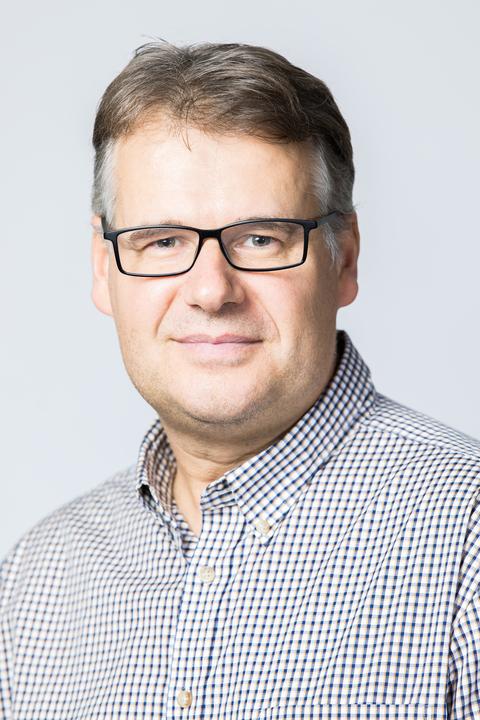
John Barton is a Researcher at the Centre for Renewable Energy Systems Technology (CREST). His work focuses on wind power integration, energy storage systems, and low-carbon hydrogen production. He developed the Future Energy Scenario Analysis (FESA) tool to model energy systems with high renewable penetration. Current research includes wind turbine condition monitoring and socio-technical transition pathways for energy systems. His research spans smart grids, distributed energy generation, and the socio-technical challenges of transitioning to low-carbon systems. He has collaborated with companies like Bryte Energy and Air Fuel Synthesis on hydrogen and carbon-neutral fuel technologies. Notable contributions include studies on energy storage optimization, solar integration barriers, and humanitarian portable power solutions. Key projects include the Supergen Wind project for turbine monitoring and the Realising Transition Pathways initiative exploring energy security and emissions reductions. His work links technical modeling with societal engagement, addressing both engineering and behavioral aspects of energy transitions.
Danial Hamedi Jamali is a doctoral researcher at the Max Planck Institute for Dynamics of Complex Technical Systems in Magdeburg, Germany, affiliated with the Process Systems Engineering group under Prof. Kai Sundmacher. He holds an M.Sc. from the University of Tehran and was awarded scholarships for his bachelor’s and master’s studies, along with the Dean’s Scholarship from the University of Saskatchewan. His research focuses on topology optimization of pipeline networks using mixed-integer nonlinear programming (MINLP), with recent emphasis on hydrogen infrastructure design and retrofitting of natural gas grids. His expertise spans MINLP optimization, energy-exergy analysis, and sustainable system design. He has authored over ten peer-reviewed publications (over 1,000 citations) and serves as a reviewer for Elsevier and Springer journals. Collaborations include international research teams addressing renewable energy systems and low-temperature solar technologies. Research highlights include work on hydrogen pipeline networks, biogas utilization frameworks, and solar-based multi-generation systems. Awards include scholarships for academic excellence and the prestigious Dean’s Scholarship. His contributions bridge theoretical optimization with practical applications in energy transition and infrastructure sustainability.
Simon Hogg is a Professor in the Department of Engineering at Durham University, holding the Ørsted Chair in Renewable Energy. He serves as Executive Director of the Durham Energy Institute (DEI) and leads key national research initiatives including the EPSRC Future Conventional Power Research Consortium and the Supergen Wind Hub. His research focuses on power generation systems, wind energy, and turbine efficiency improvements. Hogg holds a BSc and PhD from the University of Manchester, with prior roles at Oxford, Leicester Universities, and Alstom Power. Education: BSc in Mechanical Engineering, University of Manchester PhD in Computational Fluid Dynamics (Gas Turbine Combustors), University of Manchester Research Interests: Steam and gas turbine performance optimization Wind turbine dynamics and offshore systems Waste heat recovery via Organic Rankine Cycles Energy system integration challenges Publications highlight advancements in turbine sealing technologies, offshore wind farm reliability, and exhaust flow modeling. His work bridges academic research with industrial applications, particularly in retrofitting legacy power infrastructure. Advising & Grants: Lead Durham's EPSRC-funded Future Conventional Power Consortium Supervises PhD students in electrical power and fluid mechanics Manages DEI's strategic energy research portfolio Labs/Teams: Active leadership in the Durham Energy Institute (DEI) and collaboration with UK universities through Supergen Wind Hub and other consortia.
Michael Chajes is a Professor and Dean of the Honors College at the University of Delaware (UD), with prior leadership roles as Chair of Civil and Environmental Engineering and Dean of the College of Engineering. Holding a Ph.D. in Civil Engineering from UC Davis and a Professional Engineer license in Delaware, his career spans over 30 years at UD. Bachelor’s: University of Massachusetts, 1984 Master’s & Ph.D.: University of California, Davis, 1987 & 1990 His research focuses on structural engineering , structural health monitoring of bridges , and sustainability applications in civil infrastructure. Current projects include monitoring the Indian River Inlet bridge, energy harvesting from long-span bridges, and urban solar power feasibility studies. Recent publications highlight advancements in cable-stayed bridge damage detection, load testing methodologies, and SHM software evaluation. He has secured over $5M in research grants and authored 100+ papers. Delaware’s Engineer of the Year (2010) UC Davis Distinguished Alum (2010) Trabant Award for Women’s Equity (2012) UMass Distinguished Alumni (2016) Chajes has supervised 46 master’s and 8 Ph.D. students, alongside mentoring 60+ undergraduates in bridge engineering. His service includes roles on Delaware’s Professional Engineering Board, UD’s Sustainability Council, and national ASCE committees.
Ane Eriksen is an Associate Professor at the University of Inland Norway, affiliated with the Faculty of Applied Ecology, Agricultural Sciences and Biotechnology and the Department of Forestry and Wildlife Management. Her research focuses on large carnivore ecology, predator-prey dynamics, and wildlife conservation in boreal ecosystems. Key research interests include wolf behavior, moose population dynamics, and the impacts of human activities on wildlife. She leads projects like CarniForeGraze and Elg i Endring , exploring grazing practices in carnivore habitats and moose migration patterns. Collaborations involve SKANDULV (Scandinavian Wolf Research) and GRENSEVILT (cross-border wildlife management). Her work integrates GPS tracking, accelerometer data, and ecological modeling to address conservation challenges. Recent studies investigate wind power development impacts on wolves, drone-based wildlife monitoring, and carnivore guild behavior around hunter-provided food sources. Publications span topics like wolf territory density effects on moose quotas, predator-prey interactions in boreal forests, and endangered species conservation strategies. Eriksen's interdisciplinary approach bridges ecology, technology, and policy to advance sustainable wildlife management.
Joris Morbée is a Lecturer at KU Leuven , with a focus on energy economics and infrastructure policy. His research centers on electricity market dynamics, carbon capture and storage (CCS) infrastructure, and risk management frameworks. Core Research Areas: Energy taxation policies, CO2 transport networks, wind power integration, and strategic gas import reliability. His publications analyze the economic implications of nuclear taxation, the viability of EU-wide CCS pipelines, and the role of market completeness in electricity sector investments. Morbée's work highlights the trade-offs between short-term revenue and long-term investment incentives, as well as the strategic importance of EU energy diversification. Key methodologies include stylized electricity sector modeling, Shapley value-based cost allocation, and equilibrium analysis of risk-averse firms. His findings emphasize the need for cross-border coordination in energy infrastructure development.
Professor Mahmoud Shafiee is a globally recognized academic and researcher at the University of Surrey , holding the Chair in Resilient Energy at the School of Mechanical Engineering Sciences. He directs the Energy Resilience Centre and leads the REF 2029 Engineering Unit of Assessment . His career spans leadership roles at Cranfield University, University of Kent, and University of Sheffield, alongside research fellowships in Sweden and Canada. He is a Fellow of the Institute for Sustainability and serves on committees for Institution of Mechanical Engineers (IMechE) , European Safety & Reliability Association (ESRA) , and Engineering Integrity Society (EIS) . Education : PhD, Chartered Engineer (CEng), Postgraduate Certificate in Higher Education (PGCHE), Senior Fellow of the Higher Education Academy (SFHEA) Professional Memberships : Fellow of IMechE, Member of IET, BINDT, Energy Institute, and advisory roles at RenewableUK, WindEurope, and GWEC His research focuses on Energy Systems Resilience , Structural Health Monitoring , Digital Twins , Machine Learning , and Circular Economy applications in renewable energy. Recent work integrates Industry 4.0/5.0 technologies into offshore wind and hydrogen systems. His 15 most recent articles emphasize machine learning for energy consumption prediction, digital twins for structural monitoring, and circular economy strategies in wind turbine recycling. Scientific Awards : Best Paper Award 2025 (Energies), Fellow of Institute for Sustainability (IfS) Grants & Collaborations : Principal Investigator for UK-Brazil Smart Wind Monitoring Project; Co-Investigator in €5.3M Horizon Europe Digital Twins for Wind Power; lead in £20M UK Clean Maritime Programme and £1.3M Hydrogen Transportation Project Supervision : Supervised 22 PhD, 80 MSc/MRes, and 200 BEng/MEng students. Highlights include advising on offshore wind life performance, structural monitoring, and PEM Fuel Cell modeling. Editorial Roles : Associated Editor and Editorial Board member for journals in Resilience Engineering, Renewable Energy, and Prognostics & Health Management (PHM). Conferences : Plenary speaker at international events on topics like hydrogen refueling resilience and remanufacturing strategies for renewable assets.
Lingkang Jin is a postdoctoral researcher in the Electrical Engineering department at Eindhoven University of Technology (TU/e), specializing within the Electrical Energy Systems research group. His expertise centers on system-level integration of chemical (power-to-hydrogen) and electrochemical (Li-ion batteries) energy storage solutions for optimizing planning and scheduling in multi-energy carrier communities. Dr. Jin holds a Master's degree in Mechanical Engineering with thesis research on offshore wind farm development in the Mediterranean Sea, followed by a Ph.D. in Energy Systems from Università Politecnica delle Marche (UnivPM), Italy. His doctoral dissertation focused on Energy storage in multi-energy carrier communities: Li-ion batteries and hydrogen multi-physical details for integration into the planning stage . His research spans critical domains including green hydrogen production, hybrid energy storage systems, multi-energy hub optimization, and grid flexibility solutions. He develops advanced modeling frameworks for thermo-electrochemical systems, GIS-based residential energy planning, and dynamic control strategies for hydrogen storage. His work directly contributes to UN Sustainable Development Goals through sustainable energy system design and renewable integration. Analysis of his 20 recent publications reveals a concentrated focus on hybrid storage solutions for residential applications, with significant contributions in alkaline electrolysis modeling, multi-energy hub design under high renewable penetration, and grid congestion management through heat pump flexibility. His research demonstrates strong interdisciplinary connections between electrochemical engineering, energy system optimization, and practical implementation frameworks. Dr. Jin actively participates in two major research initiatives: DACS-HW (2023-2025) focused on digital aggregation of hybrid heat pumps for grid congestion management, and NO-GIZMOS (2022-2026) addressing large-scale renewable integration through storage and software solutions. He has supervised one research project and maintains active collaborations across European institutions. As a core member of TU/e's Electrical Energy Systems group, he contributes to cutting-edge research on sustainable energy conversion, storage technologies, and grid integration strategies essential for the carbon-neutral transition.
Corsini Alessandro is a Full Professor at the Department of Engineering, Sapienza University of Rome, specializing in renewable energy systems, computational fluid dynamics, and turbomachinery. His research focuses on optimizing offshore wind energy systems, hydrogen storage, and sustainable energy communities. He leads projects on wind turbine aerodynamics, fluid-structure interaction, and machine learning applications in engineering. Key research areas include wake dynamics in offshore wind farms, adaptive turbine blade design, and the integration of renewable energy technologies into urban and island systems. His work addresses challenges in energy efficiency, environmental impact mitigation, and innovative solutions for sustainable power generation. Recent studies explore technology roadmaps for energy sectors, desalination in renewable energy communities, and predictive modeling of material erosion in turbines. He collaborates on experimental testing of wave energy converters and machine learning-driven analysis of energy systems. Corsini has contributed to advancements in computational fluid dynamics, including variational multiscale methods and surrogate modeling for noise prediction. His interdisciplinary approach bridges engineering, environmental science, and data-driven innovation.
Prof. Gaudenzi Paolo is a Full Professor at the Department of Mechanical and Aerospace Engineering of Sapienza University of Rome. His work focuses on advanced aerospace technologies, smart manufacturing, and energy harvesting systems. He leads research in satellite systems design, composite materials, and space exploration challenges. His contributions include innovative methodologies for space manufacturing, structural health monitoring, and AI-driven solutions for aerospace systems. Research interests span across aerospace engineering, composite materials, additive manufacturing, and space resource utilization. He explores applications such as lunar propellant mining, 4D printing, and cyber-physical systems for aerospace components. His work also addresses biomedical challenges in space missions and pandemic response systems leveraging Earth observation data. Recent publications highlight advancements in smart factory concepts for space systems, AI-based maintenance technologies, and energy harvesting for IoT devices. His projects include designing small satellite constellations and CubeSat structures using additive manufacturing, emphasizing user-centric mission requirements. No scientific awards are explicitly mentioned in the provided texts. His advising and grants details are not disclosed here. He is involved in developing labs focused on structural dynamics, materials testing, and space system engineering.
Dr Darryl Biggar is an Adjunct Associate Professor (Research) at Monash University , affiliated with Impact Labs. His research focuses on energy policy, electricity markets, and regulatory frameworks, with contributions to the UN Sustainable Development Goals. He examines market design, transmission networks, and regulatory policies to enhance efficiency and sustainability in energy systems. Key research areas include capacity markets, renewable energy integration, and the economic implications of price caps. His work bridges theoretical models and practical regulatory challenges, addressing topics like market failures, transmission investment, and consumer welfare. He has published extensively on energy network regulation, dispatch mechanisms, and policy analysis, contributing to academic and policy debates globally. Recent articles explore emerging issues such as energy communities, multi-interval markets, and welfare-maximising dispatch systems. While no scientific awards are listed, his impactful contributions to regulatory economics and energy policy are evident through his prolific publications. No advising or grant details are provided, but his affiliation with Impact Labs highlights engagement with applied research initiatives.
Professor Henry F Jeffrey is the Personal Chair of Renewable Energy Technology and Policy Innovation at the University of Edinburgh's School of Engineering. His research focuses on advancing marine and offshore renewable energy technologies, including wave and tidal energy systems, with emphasis on cost reduction, commercialization pathways, and policy frameworks. He leads and collaborates on high-impact projects addressing energy system integration, lifecycle assessments, and socio-economic impacts of renewable energy deployments. His expertise spans technical innovation in power converters, device design optimization, and grid integration strategies. Notable contributions include evaluating the economic viability of tidal energy in the UK, analyzing the temporal complementarity of marine renewables with wind/solar, and developing frameworks for multi-criteria project assessment. He actively engages in international initiatives like the Ocean Energy Systems Implementing Agreement, where he serves as Vice-Chair. Professor Jeffrey's work integrates engineering solutions with policy analysis, aiming to accelerate the transition to net-zero energy systems. He has secured significant research funding for projects such as the EU-funded EURO-TIDES and Supergen ORE Impact Hub, demonstrating leadership in both academic and applied research contexts.