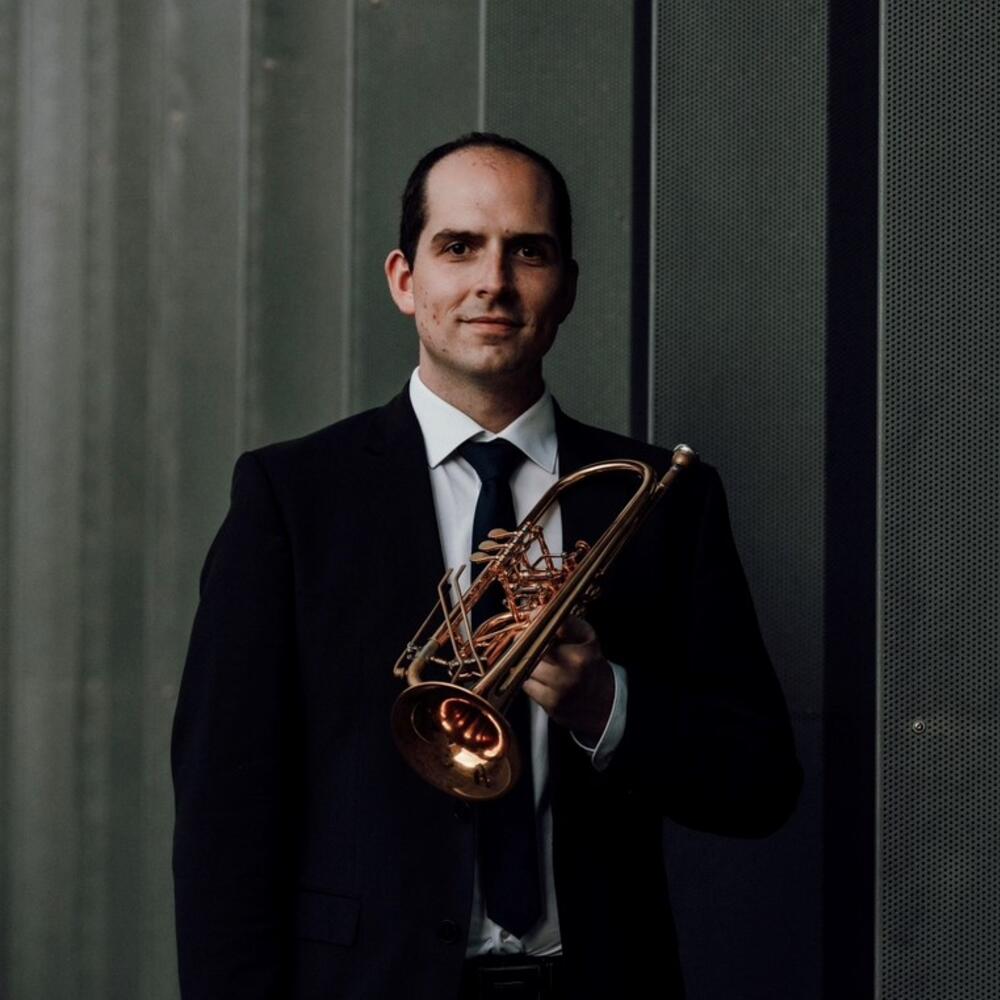
Wolfgang Gaisböck serves as Lecturer for natural trumpet at the Department of Wind & Percussion Instruments, Mozarteum University, since 2013. He concurrently teaches historical trumpet at the Anton Bruckner Private University in Linz (since 2005) and modern trumpet at the Upper Austrian Music School. A leading specialist in Baroque trumpet performance, Gaisböck is renowned for his expertise in the Second Brandenburg Concerto and J.S. Bach's cantatas. His research focuses on historical performance practices within early music traditions, emphasizing technical authenticity and stylistic precision in trumpet repertoire from the Baroque era. Performance interests include: Historical brass instrument techniques Baroque orchestral repertoire Authentic interpretation of Bach's works Natural trumpet acoustics Period performance practice Ensemble collaboration in early music Scientific Awards: No awards documented in source material. Advising and Grants: No graduate students or research grants explicitly referenced in available documentation. Ensemble Affiliations: Co-founder of Schwanthaler Trompeten Consort Member of Camerata Salzburg (since 1996) Collaborations with Concentus Musicus Wien, Il Giardino Armonico, Concerto Köln, and The Bach Ensemble
Patrik Hofer serves as Senior Lecturer for Trumpet at Mozarteum University Salzburg's Department of Wind & Percussion Instruments (Pre-College) since 2022. Concurrently, he holds a permanent position with the Berlin Radio Symphony Orchestra (RSB) since 2015 and maintains an active guest performance schedule with major European orchestras including the Berlin Philharmonic, Vienna Symphony, and Munich Philharmonic. His academic training includes: Diploma in teaching music education/instrumental music education from Mozarteum Innsbruck (2017) Bachelor's degree in concert trumpet from Mozarteum Salzburg (2021) Hofer's professional focus centers on trumpet performance across diverse musical contexts, with particular dedication to orchestral repertoire, chamber music collaboration (notably with Musicbanda Franui and Pro Brass), and Austrian folk traditions through his ensemble "Die Inntaler". His pedagogical approach emphasizes technical development and artistic expression for pre-college trumpet students. He demonstrates exceptional versatility through simultaneous engagement in classical orchestral performances, contemporary projects, and traditional folk music, reflecting a comprehensive mastery of trumpet artistry across multiple genres and performance settings.
Lore Abart-Heriszt is a researcher at the Institute of Spatial Planning, Environmental Planning and Land Rearrangement, part of the Department of Landscape, Water and Infrastructure at the University of Natural Resources and Life Sciences, Vienna (BOKU). She is actively involved in spatial energy planning, climate strategy development, and municipal energy assessments across Austria. Her research interests center on spatial planning for energy transition, renewable energy potential mapping, greenhouse gas emissions analysis, and sustainable urban and regional development. She employs geographic information systems (GIS) and spatial modeling to support evidence-based policy and planning decisions. Her work emphasizes municipal-level data integration and cross-sectoral coordination. The recent articles and presentations highlight a strong trend in energy spatial planning, with a focus on municipal and regional energy concepts, stakeholder engagement, and climate action. Her contributions include developing technical foundations for energy and climate strategies in regions like Styria, Upper Austria, and Lower Austria, as well as updating national guidelines for energy sector planning. Dipl.-Ing. Dr. in relevant field (exact degree not specified, but implied by title) Lore Abart-Heriszt has supervised multiple theses on topics including renewable energy supply, photovoltaic site analysis, regional resilience, and landscape development. She has been involved in knowledge transfer through numerous workshops and public presentations, often in collaboration with regional governments and municipalities. Her work supports capacity building for small and medium-sized communities in delivering sustainable energy strategies. She is associated with research initiatives focused on energy transition and climate action, particularly through BOKU’s engagement in national and regional projects. Her role involves bridging technical research with practical planning applications, fostering science-society interactions in the field of sustainable development.
Wilfried Kausel is a faculty member at the University of Music and Performing Arts Vienna, associated with the Department of Music. He serves as Dean of Scientific Studies (Studiendekanat für wissenschaftliche Studien) and leads the Graduate Center. His work bridges musical acoustics and computational physics, with a focus on brass instruments and structural vibrations. Academic Rank: Professor Key Institutions: University of Music and Performing Arts Vienna Research Labs: Acoustic Laboratory, Performance Science Lab Research interests center on the physics of musical instruments, particularly: Computational modeling of brass instruments Wall vibrations and their acoustical influence Directivity patterns and power efficiency Time-resolved interferometry for vibration analysis Bore reconstruction and impedance measurements Stick-slip simulations for lip oscillators The 15 most recent publications (2002-2021) reveal expertise in: Brass instrument mechanics (walls, bells, bores) Wave propagation and coupling Electronic speckle pattern interferometry Computational simulations for acoustics Material properties in instrument design Wind instrument intonation and sensory evaluation Labs and infrastructure include: Acoustic Laboratory with anechoic chamber Performance Science Lab Slow Motion Lab Computer Wing for simulations Motion Capture and Eye Tracking networks
Stefan Balke is a Researcher at the AudioLabs Erlangen, Friedrich-Alexander-Universität Erlangen-Nürnberg (FAU), focusing on wind music research and Music Information Retrieval (MIR). Previously, he held a PostDoc position at the Institute of Computational Perception, JKU Linz (2018–2019) and later worked as a Data Scientist and Team Lead in industry. He temporarily served as a professor at Hochschule Weserbergland in 2023/24. Education: PhD (Dr.-Ing.) in MIR from FAU (2018), Electrical Engineering studies at Leibniz Universität Hannover (2008–2013). Research Interests: Music Information Retrieval, Deep Learning, Jazz and Wind Music Analysis, Dataset Development. His work includes creating datasets like ChoraleBricks (wind music) and JSD (jazz structure analysis), and tools like trackswitch.js for audio visualization. Grants & Projects: Secured 35k€ funding for his orchestra through the 'Engagiertes Land' program (2024). Collaborated on exhibits such as 'The Listening Machine' (Ars Electronica) and 'Con Espressione!' (mathematics of music exhibition). Contributions: Active on GitHub with repositories for datasets (choralebricks, jsd) and tools. Co-developed web-based audio tools and contributed to open-source projects like Sonic Visualiser and librosa.
Monika Ciernia Sorondo is a University Professor for Media Music at the Faculty of Music, JAM MUSIC LAB Private University for Jazz and Popular Music Vienna. She serves as Dean of Studies and Head of Wind Instruments at JAM since 2018. Additionally, she is a lecturer at the Friedrich Gulda School of Music. Currently on maternity leave, Professor Sorondo maintains an active presence in both academic and artistic spheres as a saxophonist, composer, and producer specializing in jazz, funk, fusion, soul, lounge, pop, and classical music. Educational Background: PhD studies on "Development and Management of Music Schools" at University of Music and Performing Arts, Vienna Mag.art. in Media composition from MDW Vienna (2015) Mag.art. in IGP Popular Music Saxophone from MDW Vienna Diploma in Jazz saxophone from University of Music Munich Professor Sorondo's research interests span media music composition, cultural management, and music education administration. Her scholarly work focuses on the development and management of music schools, with particular attention to organizational structures and educational methodologies in music institutions. She also investigates the integration of jazz within orchestral contexts and analyzes film music composition techniques, particularly examining John Williams' work on the Harry Potter series. Her artistic research explores electronic music production and the fusion of world music elements with contemporary jazz and popular music forms. Professor Sorondo's publications demonstrate a consistent focus on bridging academic music theory with practical artistic application. Her work spans film scoring, electronic music production, and the analysis of musical traditions from diverse cultures including Polish folk influences on Chopin and Algerian musical elements. She shows particular interest in how traditional musical forms can be adapted to contemporary contexts while maintaining cultural authenticity. Professional Experience: Lecturer at JAM MUSIC LAB and Friedrich Gulda School of Music since 2016 Dean of Studies and Head of Wind Instruments at JAM since 2018 Lecturer at Vienna Conservatory, Division Pop (2012-2016) Teacher at Musikschule Ohrwurm/Jazzschool, Munich (2005-2006) Managing director of the artist agency "ArtSonic" since 2015 Editor and author at Bayerischer Rundfunk (2005-2006) Assistant Booker at NuCoast Entertainment (2012) Professor Sorondo leads several artistic projects including The Cat Pack (Jazz & Kabaret), Melotronic (Electronic), Funky Ladies (Pop), Saxophisticated (Saxophone quartet), and various chamber ensembles. She has collaborated with notable artists including Erwin Schrott, Stefanie Werger, Wolfgang Ambros, and the BR Rundfunkorchester, contributing compositions and arrangements for film, television, and live performance.
Helga Arias, MA, is a Lecturer at the Music and Arts University of the City of Vienna, affiliated with the Faculty of Music since September 2024. Her roles span diverse disciplines, including Piano Accompaniment, Jazz-Piano, Jazz-Bass, and Early Music instruments such as Harpsichord and Historical Violin. She contributes to academic diploma programs like Classical Operetta and the Certificate of Ensemble Playing. Her teaching areas include Jazz, Early Music, and various keyboard and wind instruments. She is involved in the university's international programs, including Erasmus+ exchanges and collaborative initiatives with partner institutions. While no specific doctoral supervision or grants are detailed, her expertise aligns with the university's focus on artistic-scholarly research and performance excellence. Helga Arias actively participates in the university’s pedagogical study programs, such as Music Education and the Master of Arts Education (MAE). Her work emphasizes interdisciplinary approaches to music performance, historic instrument techniques, and contemporary jazz practices.
Benjamin Schmid is a Professor of Violin at the Mozarteum University in Salzburg, Austria. He holds the title of University Professor (Univ.-Prof.) and specializes in violin performance, chamber music, and jazz improvisation. His affiliations include the Strings Department and roles as Artistic Director of the Salzburg Orchestra Soloists (SAOS) and the Chamber Orchestra Musica Vitae. Notable achievements include winning the International Prize for Art and Culture (2019), Echo Klassik, and Opus Klassik awards. His research focuses on Mozart's violin works, historically informed performance practices, and cross-genre collaborations between classical and jazz traditions. Prof. Schmid's career spans over 3,000 performances with renowned orchestras like the Vienna Philharmonic and Amsterdam Concertgebouw. He is recognized for his technical mastery, improvisational skills, and championing overlooked works such as Korngold's Violin Concerto. As a recording artist, his discography includes over 60 albums, many award-winning, such as the 20-CD box set celebrating his 50th birthday. He serves on juries for competitions like the International Mozart Competition and leads the ClassixKempten music festival. His artistry bridges classical traditions with modern innovations, exemplified by his work with jazz trios and experimental chamber ensembles.
Marko Mecina serves as a Researcher in the Department of Astrophysics within the Faculty of Earth Sciences, Geography and Astronomy, focusing on stellar evolution and exoplanetary systems. His work bridges observational astronomy with space instrumentation development for major ESA missions. His research centers on Asymptotic Giant Branch stars and carbon star phenomena , alongside pioneering studies of ultra-hot Jupiter exoplanets like WASP-76b. Current instrumentation work supports the ARIEL and Athena missions , emphasizing electrical systems for space-based telescopes. Recent publications reveal a dual trajectory: atmospheric characterization of extreme exoplanets using high-resolution spectroscopy, and engineering contributions to next-generation space observatories. This reflects growing interdisciplinary convergence between astrophysical research and aerospace engineering. Mecina actively participates in international consortia including the ARIEL FGS Instrument Application Software project (2023-2029), demonstrating sustained research funding. His collaborative work spans institutions across Europe as evidenced by co-authorship in large-team publications. He presents findings at major events like the SMILE SXI FM Integration meetings (Spain/Netherlands 2024) and public outreach initiatives including the Lange Nacht der Forschung, indicating strong engagement with both academic and public communities.
Ingrid Reiweger is an Associate Professor at the University of Natural Resources and Life Sciences, Vienna (BOKU), where she conducts research at the Institute of Mountain Risk Engineering within the Department of Civil Engineering and Natural Hazards. Her work focuses on snow physics, avalanche dynamics, and mountain risk management, bridging fundamental research with practical safety applications. Dr. Reiweger's research spans snow mechanics, glaciology, and cryospheric sciences, emphasizing both theoretical modeling and field applications. Her work combines physics-based approaches with innovative measurement techniques to understand snowpack stability, avalanche formation mechanisms, and risk assessment methodologies. Recent projects highlight her expertise in developing sensor technologies for snow monitoring and analyzing the impacts of changing snow conditions on avalanche hazards. Analysis of her recent publications reveals a strong emphasis on practical applications of snow science, particularly in developing monitoring systems using drones and sensor arrays, optimizing avalanche simulation parameters, and addressing specific challenges like glide-snow avalanches in construction sites. Her research demonstrates a clear trajectory from fundamental snow physics toward increasingly applied studies that directly inform mountain safety practices. International Snow Science Workshop (ISSW) Avalanche Divas Award (2018) Marie Heim-Vögtlin Grant of the Swiss National Science Foundation (2014) Multiple ISSW Avalanche Divas travel grants (2016, 2010) Young Scientists Award at Swiss Geoscience Meeting (2009) Dr. Reiweger actively supervises graduate students and leads multiple research projects funded by national companies and federal ministries. Her work often involves transdisciplinary collaboration with practitioners in avalanche control, mountain rescue services, and winter tourism. She maintains a strong international research network, evidenced by her ongoing summer research visits to the WSL Institute for Snow and Avalanche Research SLF in Davos.
Margarethe Barbara Willim-Burnecki serves as a contract teacher and accompanist at Mozarteum University in Salzburg, Austria, specializing in compulsory piano instruction within the Department of Wind & Percussion Instruments. Her professional focus centers on collaborative piano performance, particularly in support of wind and percussion instrumentalists. As an accompanist, she plays a critical role in ensemble training, chamber music development, and performance preparation for instrumental students across various proficiency levels. Her teaching responsibilities include providing compulsory piano instruction to students whose primary instruments are wind or percussion, ensuring they develop essential keyboard skills and musical collaboration abilities required in professional music settings. She maintains professional contact through her institutional email address and appears to be actively engaged in the university's music education mission.
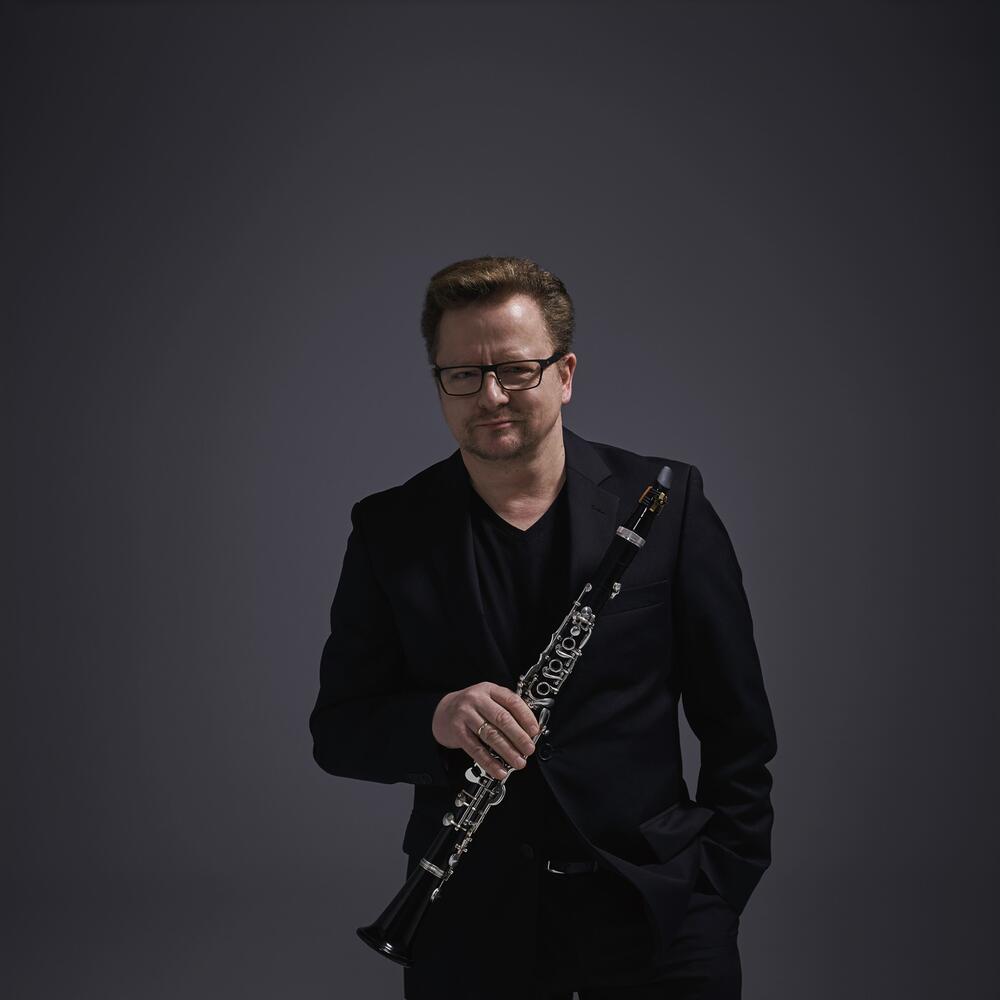
Wenzel Fuchs is a Professor of Clarinet at the Mozarteum University (since 2015), concurrently serving as a professor at the Berlin Philharmonic Orchestra's Orchestra Academy. He holds visiting professorships at Geidai University (Tokyo) and the Shanghai Conservatory (honorary), with prior roles at the Hanns Eisler Academy of Music Berlin (2008–2012). His professional career includes principal clarinet positions in the Vienna Volksoper Orchestra, ORF Symphony Orchestra, and Berliner Philharmoniker since 1993. Education: Vienna Academy of Music (graduated with unanimous distinction) Research interests focus on clarinet performance, orchestral techniques, and pedagogy. As a soloist and chamber musician, he collaborates with renowned artists like Yefim Bronfman and András Schiff, performing with orchestras such as the Berlin Philharmonic and Tokyo Philharmonic. Active in master classes globally, he is a member of ensembles like the Berlin Philharmonic Wind Ensemble. Awards include the Ministry of Science and Art's recognition and distinctions from 'Jugend musiziert'. His teaching spans academic and orchestral training, emphasizing both performance excellence and educational methodologies.
Maximilian Volbers is a Senior Lecturer and Deputy Head of Mozart:Forum at the Mozarteum University Salzburg, specializing in Early Music. He is a multi-instrumentalist recorder player, harpsichordist, and ensemble leader, known for his work in 17th- and 18th-century repertoire as well as contemporary compositions. His teaching roles include positions at the Mozarteum University and masterclasses. Education: Studied at Mozarteum University Salzburg under Dorothee Oberlinger, Walter van Hauwe, Reinhard Goebel, and Florian Birsak. Research/Performance Focus: Bridges historical performance practices with contemporary music, collaborating with ensembles like Concerto Köln, La Cetra, and modern orchestras such as the Stuttgart Chamber Orchestra. His 2022 debut album Whispers of Tradition earned the OPUS KLASSIK 2023 award. Awards: OPUS KLASSIK 2023 (Young Artists) GWK Münster Music Promotion Prize 2013 GWK Cordes Scholarship Performance Highlights: Regular appearances at festivals including Verbier, Heidelberger Frühling, and Menuhin Festival Gstaad. Performed at venues like Berlin Philharmonie, Elbphilharmonie, and Vienna Konzerthaus.
Norbert Przybilla is a Full Professor in the Institute for Astro- and Particle Physics at the University of Innsbruck, Austria, where he leads the Galactic Astrophysics research group. He holds a permanent faculty position and is actively engaged in research, teaching, and instrument development for next-generation telescopes. His primary research interests include stellar astrophysics , with a focus on quantitative spectroscopy of massive stars , chemical abundances , non-LTE atmospheric modeling , stellar evolution , and the diffuse interstellar medium . He applies high-resolution spectroscopic data to understand the life cycles of massive stars and their role in galactic chemical evolution. Przybilla’s recent publications reveal a strong focus on OB-type and supergiant stars , Be stars , and diffuse interstellar bands (DIBs) . His work often involves non-LTE spectral analysis , abundance determination , and the use of advanced instrumentation like MUSE , CRIRES , and future ELT instruments such as MICADO and METIS . He is also involved in major observational surveys such as the EDIBLES and Gaia-ESO projects. Presentations: He regularly delivers invited talks at international conferences on topics such as stellar abundances, blue supergiants, and instrumentation for the ELT. Instrumentation: He is a key contributor to the development of spectroscopic pipelines for MICADO and METIS, indicating deep involvement in future observational capabilities. Public Outreach: He actively participates in public lectures and events such as the 'Lange Nacht der Forschung' and 'Astronacht' at the University of Innsbruck, discussing exoplanets and astronomical observations. He mentors several early-career researchers and PhD students, including David Weßmayer, Patrick Aschenbrenner, and Alexander Ebenbichler, who frequently appear as co-authors on his publications. His collaborative network is extensive, involving institutions across Europe and beyond.
Reinhard Nolz is an Associate Professor at the University of Natural Resources and Life Sciences, Vienna (BOKU) , affiliated with the Institute of Soil Physics and Rural Water Management . His work focuses on optimizing irrigation strategies, soil water monitoring, and hydrological modeling to ensure sustainable water use in agriculture. Research Highlights Developed climate-resilient irrigation frameworks Advanced lysimeter-based water balance studies Integrated sensor networks for real-time soil moisture Validated evapotranspiration models Conducted international agricultural hydrology collaborations Publications 20+ peer-reviewed articles (2009-2024) on irrigation technology Key contributions to Acta Hydrologica Slovaca and Die Bodenkultur Service Editorial Board Member: Acta Hydrologica Slovaca (2017-2020) Peer reviewer for Geoderma , Journal of Hydrology