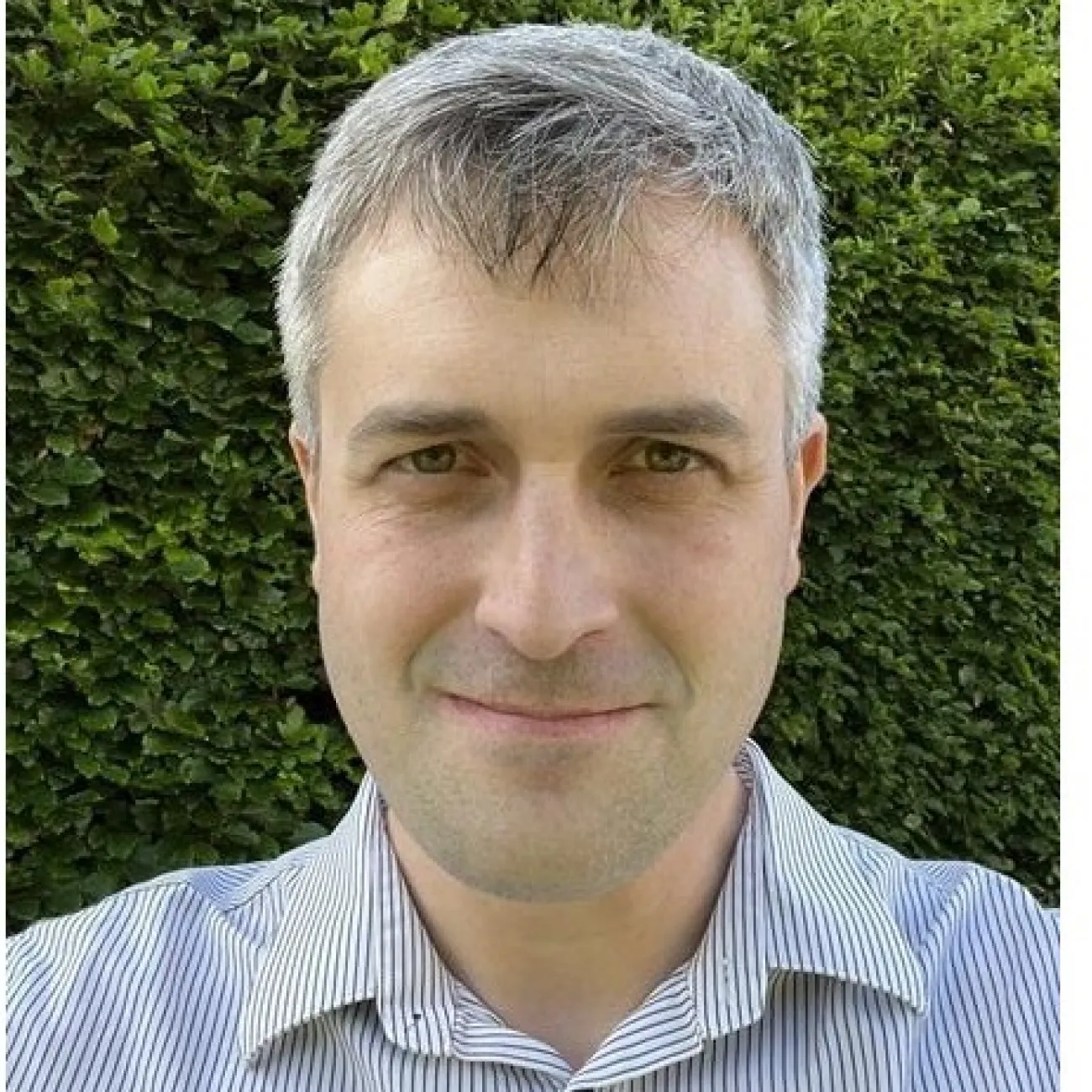
Barry Lehane is a Winthrop Professor in the Department of Civil, Environmental and Mining Engineering at the University of Western Australia (UWA). He also serves as Director of Opifex Geotechnics Pty Ltd and has held academic roles at Trinity College Dublin (1993–2002) and Imperial College London (1988–1992). His expertise spans geotechnical engineering, foundation design, and soil mechanics. Lehane holds degrees including a BE (Hons 1) from University College Cork and a PhD from Imperial College London, alongside professional certifications like CPEng and FIEAust. His research focuses on pile aging, offshore wind turbine foundations, and soil-structure interaction. Notable projects include advising on offshore projects such as Yolla (Bass Strait) and Maari (New Zealand), and designing foundations for major infrastructure like the Perth-Mandurah rail line and Gorgon breakwaters. Lehane has led over 35 grants, including studies on pile behavior in layered deposits and suction caisson performance for offshore wind farms. Lehane’s work contributes to UN Sustainable Development Goals related to sustainable infrastructure and climate action. His teaching includes courses on applied geomechanics and numerical modeling, reflecting his commitment to both academia and industry.
Juan Martinez Sykora is an Associate Professor at the University of Oslo's Rosseland Centre for Solar Physics. His primary affiliation is with the Faculty of Mathematics and Natural Sciences. His research focuses on solar atmospheric dynamics, including magnetic reconnection, chromospheric and coronal heating, plasma physics, and multifluid effects. Key interests include the solar atmosphere's thermal and magnetic structure, ionization dynamics, and numerical simulations of solar phenomena like spicules and nanoflares. Recent work emphasizes thermal conduction in the solar atmosphere, multifluid simulations of magnetic reconnection, and the role of ambipolar diffusion in chromospheric heating. He has contributed to missions like IRIS and MUSE, advancing observational and diagnostic techniques for solar studies. Juan collaborates extensively with international teams, publishing in top journals such as Astronomy and Astrophysics, The Astrophysical Journal, and Science. His work bridges theoretical models with observational data to understand fundamental solar processes.
Professor Matthew Middleton is a faculty member at the University of Southampton, affiliated with the Southampton Theory Astrophysics and Gravity (STAG) Research Centre. His research focuses on high-energy astrophysical phenomena, including black hole and neutron star accretion processes, X-ray binaries, and relativistic astrophysics. He leads and participates in multiple research projects funded by institutions like the Science and Technology Facilities Council. Recent projects include studies on hidden compact objects in the Milky Way and supermassive black hole growth mechanisms. Middleton supervises four PhD students and collaborates with international teams on observational and theoretical work. His contributions span advanced data analysis techniques and numerical simulations of extreme astrophysical environments. Education: Not explicitly stated in available text. Key Research Groups: STAG Research Centre. Research interests emphasize accretion physics, relativistic astrophysics, and multi-messenger astronomy. His publications in 2024-2025 highlight breakthroughs in understanding neutron star pulsations, X-ray burst dynamics, and super-Eddington accretion flows. Middleton’s work bridges observational data from facilities like JWST and NuSTAR with theoretical models, advancing our understanding of compact objects and their environments.
Robert Kristoffer Nilssen is a Professor at the Department of Electric Energy at the Norwegian University of Science and Technology (NTNU). His research focuses on advanced electrical machines, renewable energy systems, and fault diagnosis in power systems. He specializes in topics such as synchronous generators, superconducting technologies, and magnetic field analysis. His work addresses challenges in energy conversion efficiency, fault detection methodologies, and high-performance motor design. Dr. Nilssen has published extensively in top-tier journals and conferences, including IEEE Transactions and international symposiums on electrical machines and systems. His research explores cutting-edge applications such as superconducting propulsion systems for aircraft and wind power generators. He has contributed to the development of analytical models for magnetic field analysis and loss computation in electric machines. Collaborations with industry and academia highlight his role in bridging theoretical advancements with practical engineering solutions. Dr. Nilssen’s recent work emphasizes sustainable energy systems, including studies on fractional-slot winding configurations, HTS (High-Temperature Superconductor) armature windings, and multiphase superconducting topologies for wind turbines. His publications reflect expertise in electromagnetic design, fault monitoring techniques, and multi-physics simulation frameworks.
Dr. Veerle Jasmin Sterken is a Lecturer at the Department of Physics at ETH Zürich, leading the ERC-funded ASTRODUST group since 2020. Her research focuses on interstellar dust dynamics, heliospheric science, and space instrumentation. She has contributed to missions like Ulysses, Cassini, and Stardust, and currently advises the L4 mission and Lunar Gateway dust package initiatives. Sterken holds an ERC Starting Grant (2020-2026) and has authored 55 refereed publications (H-index=20). Research interests include cosmic dust trajectories, solar wind interactions, space debris mitigation, and mission concept design. Key achievements include modeling heliospheric filtering effects on interstellar dust and identifying low-density ISD particles from Stardust mission data. Collaborations span ESA, NASA, and international research networks. ERC Starting Grant ASTRODUST (2020-2026) ESA Consultant (2024) Principal Investigator for DOLPHIN mission concept L4 Mission Science Lead Advising includes supervision of PhD/MS students and mentorship in interdisciplinary teams. Current lab activities involve dust charging simulations, bulk density retrieval methodologies, and data analysis from Wind and Ulysses missions. Future work emphasizes Interstellar Probe mission synergies and exoplanetary dust studies. Labs/Teams: ASTRODUST Group (ETHZ), COST Action member, NCCR PlanetS collaborator.
Overview Professor Paul D. Williams is a Professor of Atmospheric Science at the University of Reading's Department of Meteorology, leading the Weather Research Division. He specializes in atmospheric turbulence, jet streams, fluid dynamics, and climate change impacts on aviation. His research includes groundbreaking work on clear-air turbulence trends and climate model improvements. He has developed aviation turbulence forecasting algorithms and invented a numerical time integration scheme widely adopted in climate models. Research Interests Key areas include small-scale atmospheric/ocean features, clear-air turbulence dynamics, aviation meteorology, numerical modeling techniques, and stochastic parameterization. His work emphasizes the intersection of climate change and aviation safety, with a focus on turbulence prediction and jet stream behavior. Scientific Contributions Williams has published over 70 peer-reviewed articles, including in Nature and Geophysical Research Letters . He leads projects funded by Royal Society grants, NERC, and Leverhulme. Notable achievements include discovering climate change could triple severe turbulence and co-developing an award-winning turbulence forecasting algorithm. Awards & Editorial Roles Philip Leverhulme Prize in Earth Sciences (2017) Times Higher Education STEM Research Project of the Year (2020) Editor of Meteorology and Advances in Atmospheric Sciences Advising & Grants Supervised multiple postdoctoral researchers and graduate students. Active in securing grants totaling ~£3M annually for the Weather Research Division. Collaborates internationally on projects like improving climate models through stochastic ocean eddy parameterization. Labs & Teams Leads the Weather Research Division at Reading, collaborating with teams on volcanic plume measurements (VolcLab) and turbulence detection via balloon-borne instruments.
Hannah Gough is a researcher with a PhD from the University of Reading, specializing in urban meteorology, environmental engineering, and building ventilation. Her work focuses on understanding airflow dynamics in urban environments, air quality, and the impacts of meteorological conditions on building design. She has contributed to interdisciplinary studies involving fluid dynamics, computational modeling, and field measurements. Education: PhD in Environmental Science, University of Reading (2017) Research Interests: Urban microclimate dynamics and pollutant dispersion Natural ventilation strategies in buildings Impact of wind patterns on urban structures Indoor environmental quality and health effects Key Research Themes: Her publications analyze topics such as tall building wake characteristics, cross-ventilation potential, and the variability of local winds in urban settings. She has collaborated on studies using computational fluid dynamics (CFD) and field experiments to validate ventilation models. Grants and Collaborations: Participated in interdisciplinary projects with institutions like the Royal Berkshire Hospital for applied studies on thermal comfort. Contributed to the Silsoe field campaign, investigating urban airflow dynamics. Labs/Teams: While not explicitly stated, her work aligns with research groups focusing on urban meteorology and sustainable building design.
Dr. Sean Walton is a Senior Lecturer in Computer Science at Swansea University's School of Mathematics and Computer Science within the Faculty of Science and Engineering. He holds the Sêr Cymru II Research Fellowship and is the Founding Director of Pill Bug Interactive, a BAFTA Cymru-nominated game development studio. His research spans evolutionary optimization in engineering, educational technology, and procedural game content generation. Previously, he taught physics at Rhymney Comprehensive School and received the 2016 Swansea University Excellence in Learning and Teaching Award. Research interests include computational fluid dynamics, mesh generation, and applying evolutionary algorithms in industry and education. Notable projects include developing biofeedback systems for sprint starts and investigating AR adoption in education. He has supervised numerous PhD/MSc students on topics like aerodynamic optimization and human-AI collaboration in design. Key achievements include £130k Sêr Cymru II funding for aerodynamic component optimization research and organizing international climate change game jams covered by Wired and PNAS. His work bridges engineering, education, and gaming through innovative applications of optimization techniques and immersive technologies.
Christian Mai is a Research Fellow at Aalborg University (AAU) in the Faculty of Engineering and Science, Esbjerg Energy Section, specializing in robotics and sensing technologies for terrestrial and underwater environments. He contributes to AAU BLUE – Marine & Maritime Research with expertise in low-cost hardware, open-source software, and digital twin simulations for offshore applications. Education: PhD in Engineering (Cyberphysical Systems) from University of Southern Denmark (2016-2019, awarded 2020) MSc in Information Technology (Intelligent Reliable Systems) from Aalborg University (2012-2014) BSc in Electronics and Data-technology from Aalborg University (2009-2012) Mai's research integrates robotics, computer vision, and digital twins to solve marine challenges including underwater vehicle localization, marine growth monitoring, and offshore fault detection. His work emphasizes cost-effective solutions using consumer hardware and open-source frameworks, directly supporting UN Sustainable Development Goals for clean energy and sustainable infrastructure through innovations in offshore wind farm maintenance. Recent publications (2024-2025) reveal strong trends in underwater AI-driven sensing , with hyperspectral imaging for object segmentation and synthetic data generation for marine-growth analysis dominating his output. Key focus areas include thruster propeller diagnostics, marine-fouling composition estimation, and acoustic simulation for underwater navigation, reflecting his dual emphasis on theoretical algorithms and field-deployable systems. Scientific Awards: MSCA Certificate of Excellence (2025) Innovation Project of the Year (2024) Best Session Paper Award (2022) Esbjerg University Price (2016) Mai serves as Principal Investigator for AAU-funded projects including Virtual acoustic underwater simulations (2024) and Virtual underwater environments (2023), while participating in EU/national grants like ACOMAR (EUDP-funded marine growth removal) and DIN-ECO (EIT DIGITAL digital innovation). His grant portfolio demonstrates strong industry-academia collaboration in offshore robotics, with funding spanning simulation tools, sensor development, and autonomous systems for renewable energy infrastructure. Within AAU BLUE, Mai collaborates in interdisciplinary teams developing next-generation underwater robotics for offshore wind farm inspection and maintenance. His lab work combines hardware prototyping, sensor fusion, and digital twin validation, with current efforts focused on acoustic simulation environments and cost-effective marine-fouling monitoring systems for operational deployment.
John Coxon is an STFC Ernest Rutherford Fellow at Northumbria University, based in the Mathematics, Physics and Electrical Engineering department. Previously, he held positions at the University of Southampton from 2015–2022. He earned a PhD in Physics (2015) and first-class MPhys in Astrophysics (2011) from the University of Leicester, focusing on Birkeland currents in the Dungey cycle. His research centers on Birkeland currents' role in space weather, particularly their impact on Earth's infrastructure. He pioneered the discovery of interhemispheric asymmetries in Birkeland currents using the AMPERE dataset, contributing to AGU monographs and international conferences. His work also involves Cluster spacecraft data to study substorms, magnetotail plasma dynamics, and flux transfer events. Key achievements include identifying Birkeland current density distributions and their timescales linked to interplanetary magnetic field (IMF) dynamics. He collaborates globally on projects like the STFC Consolidated Grant for Northumbria's Solar and Space Physics Group. Public engagement includes leading the Southampton Planeterrella project and chairing MIST Council (2019–2021). Grants: STFC Consolidated Grant (2023–2026), leading magnetosphere-ionosphere research. Awards: STFC Ernest Rutherford Fellowship. Service: STFC PEER Forum review panel member. His research contributes to UN Sustainable Development Goals by enhancing understanding of space weather risks to infrastructure and advancing equitable practices in the scientific community through initiatives like Equitable Letters for Space Physics .
Prof. Torsten Schlurmann holds the position of Executive Director at the Ludwig-Franzius-Institute of Hydraulics, Estuarine and Coastal Engineering at Leibniz University Hannover. He is also a member of the Coastal Research Centre Board of Directors and the Leibniz Research Centre Energy 2050 Executive Board . His academic roles include serving on the Faculty Council of Civil Engineering and Geodetic Science and advising on academic programs such as Water Management, Environmental and Coastal Engineering . University: Leibniz University Hannover School: Faculty of Civil Engineering and Geodetic Science Institute: Ludwig-Franzius Institute Key Affiliations: Coastal Research Centre, Leibniz Energy 2050 Research focuses on coastal and hydraulic engineering , including wave dynamics, sediment transport, offshore renewable energy systems, and climate adaptation strategies. He leads experimental studies using facilities like the GWK+ large wave flume and applies innovative methods such as UAV monitoring and machine learning. Recent work addresses challenges like microplastic transport in marine environments, eco-engineering solutions for coastal protection, and long-term morphodynamic changes in the Wadden Sea and Baltic coasts. His publications span experimental benchmarking of coastal structures, biogenic reef impacts, and offshore wind farm scour dynamics. He actively participates in collaborative research initiatives such as the Collaborative Research Centre 1463 , advancing integrated design methodologies for offshore megastructures. Professional service roles include advising on academic governance and distance education programs.
Cemal Baykara is a Professor at Istanbul Technical University, Department of Mechanical Engineering. His research spans mechanical systems, automotive engineering, and materials science, focusing on innovative design and performance optimization. Research Interests: Mechanical Engineering, Automotive Systems, Unmanned Aerial Vehicles, Nonlinear Elasticity His recent work analyzes mechanical systems like camshaft designs, gearboxes, and UAVs under dynamic conditions. Publications emphasize computational modeling, experimental validation, and environmental impact reduction in engine systems. Key trends include functionally graded materials for structural applications, fuel efficiency in diesel engines, and magnetic field effects on wave propagation in viscoelastic media. Projects led by Baykara include vibration-based quality control systems, functional railway lifting equipment, and CVT designs for tractors. He has contributed to 18 research outputs and supervised numerous students.
Han Cui is an Adjunct Assistant Professor in the Department of Electrical Engineering and Computer Science at the University of Tennessee, Knoxville (UT). She holds a PhD in Electrical Engineering from Virginia Tech (2017), an MS from the same university (2013), and a BS from Tianjin University, China (2011). Her research focuses on high-efficiency power converters, magnetic components for power electronics and microwave applications, high-density integration, and micromagnetic physics. She previously conducted postdoctoral research at UCLA (2017-2019), specializing in magnetics modeling for ultra-high-frequency applications. Education: PhD in Electrical Engineering, Virginia Tech, 2017 MS in Electrical Engineering, Virginia Tech, 2013 BS in Electrical Engineering, Tianjin University, 2011 Her research interests emphasize innovative solutions for power electronics, including advanced packaging techniques, EMI mitigation, and material characterization. Recent work highlights include high-density GaN power modules, Rogowski coils for current sensing, and physics-based magnetic modeling. She actively contributes to interdisciplinary projects at the intersection of materials science and electrical engineering. Grants & Advising: While specific grants are not detailed, her active research program indicates involvement in funded projects. No advisees are listed, but her role suggests mentorship in graduate studies. Labs & Teams: Affiliated with UT’s EECS department labs focused on power electronics and magnetic components.
Dr. Jahrul Alam is a Professor of Mathematics at Memorial University's Department of Mathematics and Statistics. He holds a PhD in Applied Mathematics from McMaster University (2006) and completed postdoctoral research at the University of Waterloo. His research focuses on computational fluid dynamics (CFD), turbulence modeling, and large eddy simulation (LES), with applications to environmental, aeronautical, and industrial problems. He specializes in developing adaptive mesh refinement techniques to improve understanding of global warming and climate change. His work integrates mathematical tools like wavelet theory and machine learning to model turbulent flows efficiently. Key research areas include atmospheric and geophysical fluid dynamics, wind farm turbulence, wellbore-reservoir modeling, and multiphase flow. His recent articles highlight advancements in LES methodologies, machine learning integration for turbulence prediction, and adaptive subgrid-scale modeling. While no awards are explicitly mentioned, his extensive publication record reflects significant contributions to CFD and environmental fluid dynamics. His work often addresses complex terrain effects on wind farms, vortex dynamics, and energy systems optimization. No information is provided on grants, advising students, or laboratory affiliations. His research spans from fundamental turbulence theory to applied projects in renewable energy and petroleum engineering, emphasizing computational innovation for real-world challenges.
Professor Atilla Incecik is a leading academic in Offshore Engineering at the University of Strathclyde's Faculty of Engineering. He has held senior administrative roles including Head of the Department of Naval Architecture, Ocean and Marine Engineering, Acting Dean, and Executive Dean of Engineering. His research focuses on hydrodynamic design, marine renewable energy systems, and computational fluid dynamics (CFD). He chairs Zhejiang University's Offshore Engineering program and was Editor-in-Chief of the Ocean Engineering Journal until 2023. Professor Incecik's expertise spans wave energy converters, floating offshore wind turbines, and ship hydrodynamics. He has pioneered tools for analyzing marine systems under extreme conditions and contributed to green shipping initiatives. His work aligns with UN Sustainable Development Goals for clean energy and environmental sustainability. Key achievements include an Honorary Doctorate from Chalmers University (2019) and the Royal Institution of Naval Architects' prestigious William Froude Medal (2022). He leads high-impact projects like the Industrial Doctoral Centre for Offshore Renewable Energy (IDCORE) and Strathclyde Inspire Gate, focusing on innovation in marine technology. Research Interests: Hydrodynamic modeling and simulation Wave energy harvesting systems Offshore wind turbine dynamics Structural health monitoring CFD applications in confined waters His 217+ publications and 34 projects demonstrate leadership in advancing offshore renewable energy and marine safety. Recent work includes digital twin models for offshore platforms and machine learning-driven structural analysis.