Manuel Crespo-Ballesteros is a Research Fellow at the Aston Institute of Photonic Technologies (AiPT) within the College of Engineering and Physical Sciences at Aston University. He holds a BEng in Electronics and Automation Engineering from the Technical University of Cartagena (2007), an MSc in Theoretical Physics from the University of Murcia (2012), and a PhD in Radar Systems from the University of Birmingham (2016). His research focuses on Surface Nanoscale Axial Photonics (SNAP) technology, particularly microresonators, nonlinear optics, and optical frequency combs. He has contributed to advancements in microresonator fabrication, resonant tunneling phenomena, light-by-light transportation, and parametrically modulated frequency combs. His work bridges quantum mechanics and photonics, with applications in sensing, communications, and optical computing. Education: BEng in Electronics and Automation Engineering, Technical University of Cartagena, Spain (2007) MSc in Theoretical Physics, University of Murcia, Spain (2012) PhD in Radar Systems, University of Birmingham, UK (2016) Research Interests: Crespo-Ballesteros investigates microresonators created via SNAP technology, emphasizing their picometer precision and quantum-mechanical analogies. Key areas include resonant tunneling, nonlinear soliton-based light transport, and parametric frequency comb generation. His work explores applications ranging from high-speed communications to quantum physics simulations, such as black hole analogues using time-dependent potentials. Grants and Labs: Active in AiPT’s advanced photonics research, his lab develops cutting-edge SNAP microresonators with applications in precision spectroscopy and sensing. Collaborations include projects on fiber-optic bending-induced tunability and soliton-based transportation systems.
Dr. Abdessattar Abdelkefi is a Professor in the Department of Mechanical & Aerospace Engineering at New Mexico State University's College of Engineering. He directs the Nonlinear Dynamics & Energy Harvesting Laboratory (NDEHL) and holds a Ph.D. from Virginia Tech (2012). His research bridges dynamics, fluid-structure interactions, and renewable energy, with applications in drones, MEMS, and energy harvesting. Research Focus Dr. Abdelkefi's work spans Dynamics & Vibrations , Aeroelasticity , and Robotics & Controls , emphasizing nonlinear phenomena and energy conversion. Key areas include: Vortex-induced vibrations for renewable energy harvesting Bio-inspired drone design and aerodynamic optimization Nanoscale sensors and microgyroscopes Flexoelectric and piezoelectric material applications Publication Trends Recent articles (2019-2020) focus on experimental/theoretical synergy in energy harvesting (galloping, vortex-induced, piezoelectric) and bio-inspired UAV design. Over 70% involve computational modeling validated with wind tunnel/field tests, highlighting innovations in broadband energy capture and nano/microsystem efficiency. Awards & Honors 2020: Outstanding Research Professor (MAE Academy) & Teaching-Research-Service Synergy Award (College of Engineering) 2019: Early Career Award (NMSU Research Council), Outstanding Research Professor, Los Alamos NMC Faculty Appointee 2013: Best Paper Award from Theoretical & Applied Mechanics Letters 2011–2012: Graduate Scholarships (Virginia Tech) Laboratory & Advising NDEHL researches vibration-based energy harvesting, nonlinear dynamics, and drone aerodynamics. Dr. Abdelkefi mentors graduate students in experimental/computational projects, though specific advisees are unnamed in available data.
Jukka Tuhkuri is a Professor at Aalto University's Department of Energy and Mechanical Engineering, specializing in ice mechanics and arctic marine technology . He serves as Editor-in-Chief of Cold Regions Science and Technology and became an Honorary Professor at University College London (Department of Earth Sciences) in 2023. His work spans numerical simulations using the Discrete Element Method (DEM) and experimental research in the Aalto Ice and Wave Tank, with fieldwork in both Arctic and Antarctic regions. Research Focus : Understanding ice fracture mechanics, sea ice ridge formation, and ice-structure interaction processes. He investigates how global warming alters ice conditions and affects loads on ships/marine structures, addressing risks from increased Arctic shipping activity. Scientific Awards 2023 POAC Founders Lifetime Achievement Award Teacher of the Year 2003 Espoo Ambassador 2012 1996 Best Dissertation Stipend from Helsinki University of Technology Collaborative Impact : His research directly informs offshore wind engineering and Arctic risk management frameworks through publications like Challenges with sea ice action on structures for Offshore wind (2023) and A comprehensive approach to scenario-based risk management for Arctic waters (2022).
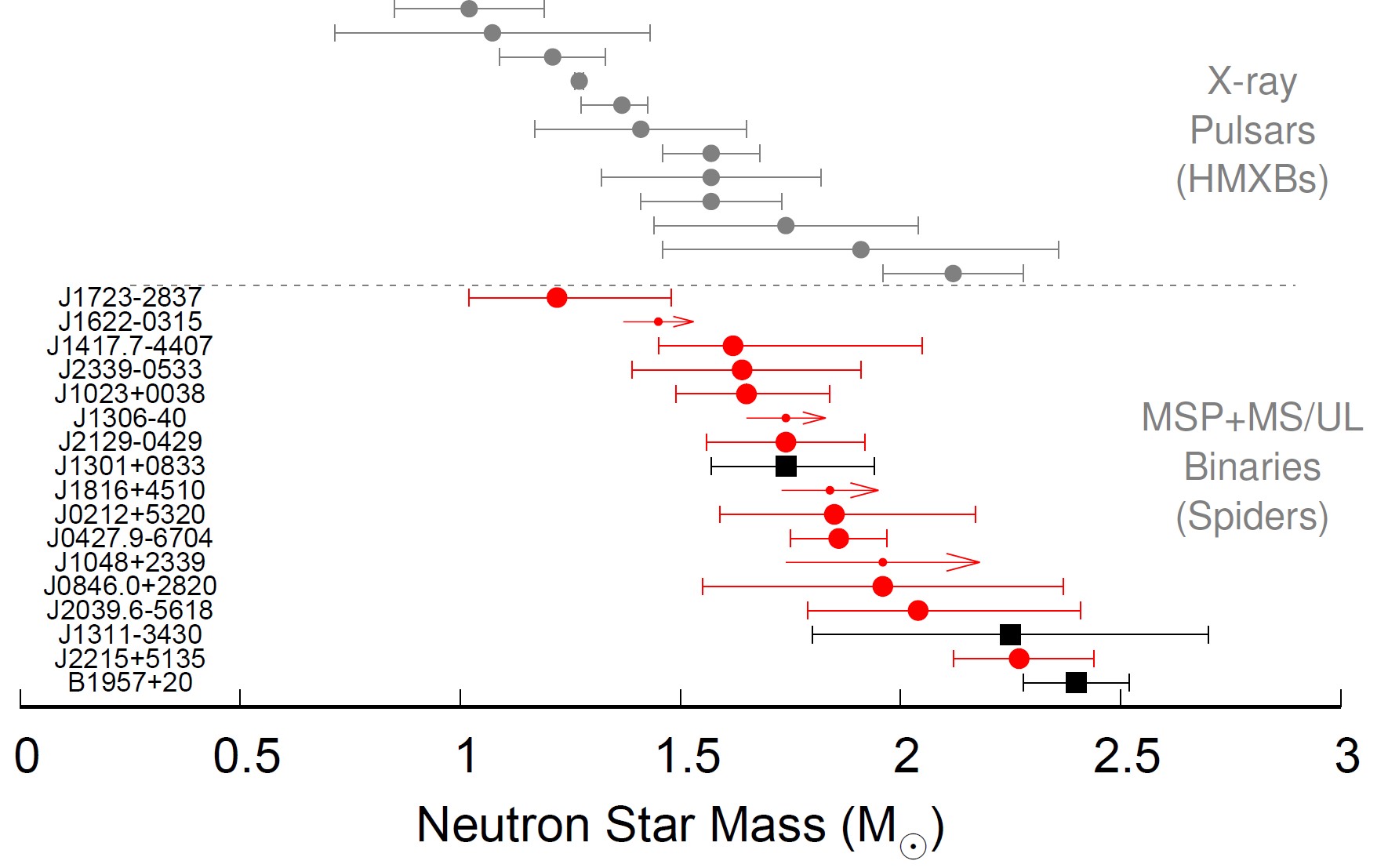
Manuel Linares Alegret is a Professor in the Department of Physics at the Norwegian University of Science and Technology (NTNU) in Trondheim, Norway, where he has been employed since September 2021. He also holds an Associate Professor position at the Polytechnic University of Catalonia (UPC) in Barcelona, Spain, since 2018. His research focuses on high-energy astrophysics with particular emphasis on neutron stars, black holes, white dwarfs, and compact objects in binary systems. Dr. Linares earned his Physics Degree from Universitat de Barcelona (1998-2004) followed by a PhD in Astronomy from Universiteit van Amsterdam (2004-2009). His subsequent career includes prestigious fellowships including Rubicon Fellow at MIT (2009-2012), IAC Fellow (2012-2017), and Marie Curie Fellow at UPC (2017-2018). His research interests primarily center on compact binary systems, particularly millisecond pulsars known as 'spiders' (including black widows and redbacks), neutron star physics, accretion flows, thermonuclear bursts, and the search for super-massive neutron stars. His work combines observational astronomy with theoretical modeling to understand extreme physics in these systems. He leads the LOVE-NEST project, which investigates compact binary millisecond pulsars to find the most massive neutron stars and understand the interaction between accretion flows, pulsar winds, and neutron star magnetospheres. An analysis of his recent publications reveals a strong focus on spider pulsar systems, with particular attention to mass measurements, orbital dynamics, irradiation effects, and the relationship between accretion and rotation-powered states. His work spans multiple observational wavelengths including optical, X-ray, and radio, often utilizing data from major telescopes and space observatories. ERC Consolidator Grant for LOVE-NEST project Marie Curie Fellow IAC Fellow Rubicon Fellow Dr. Linares has supervised numerous students at various levels, including PhD candidates, Master's students, and undergraduate research projects. He currently leads a substantial research team under the LOVE-NEST project, which has received 2M EUR in funding. His group includes multiple postdoctoral fellows and PhD candidates working on various aspects of compact object astrophysics. He teaches Observational Astrophysics (FY3215) at NTNU and has previously taught Quantum Physics and Physics I at UPC. He is the principal investigator of the LOVE-NEST (Looking for Super-Massive Neutron Stars) research group at NTNU, which focuses on compact binary millisecond pulsars. This team conducts research using multiple observational facilities worldwide and collaborates with international groups including those at the Instituto de Astrofísica de Canarias and the University of Manchester.
Alessandro Battaglia is an Associate Professor at the Department of Environmental, Land and Infrastructure Engineering (DIATI) at the Polytechnic University of Turin. He specializes in microwave remote sensing of clouds and precipitation, with expertise in Doppler radar, cloud and snow microphysics, and microwave radiometer technology. His research spans atmospheric physics, meteorology, and climate science with applications in Earth observation from space. Dr. Battaglia's research interests focus on remote sensing of atmospheric phenomena, particularly using advanced radar technologies. His work encompasses cloud microphysics, precipitation measurement, and wind observation from space. He is particularly known for his contributions to the development of spaceborne Doppler radar systems for measuring in-cloud winds, which represents a significant advancement in atmospheric observation capabilities. His research bridges engineering, physics, and meteorology to improve our understanding of Earth's atmospheric processes and climate systems. His recent publications demonstrate a strong focus on the WIVERN (Wind Velocity Radar Nephoscope) mission, with research spanning cloud microphysics, snowfall measurement, wind field reconstruction, and innovative radar signal processing techniques. These works highlight the interdisciplinary nature of his research, connecting atmospheric science, engineering, and computational methods to advance space-based Earth observation capabilities. NASA Group Achievement Award (2015) Fellow of the National Center for Earth Observation, UK (2014-present) Dr. Battaglia actively mentors several PhD students including Marco Coppola, Francesco Manconi, Riccardo Rabino, Susmitha Sasikumar, Aida Galfione, and Paolo Martire across Civil and Environmental Engineering and Aerospace Engineering programs. He serves as Principal Investigator for multiple research projects funded by ESA (3 projects), UK-NERC (1 project), UK-NCEO (1 project), and the US Department of Energy (1 project). His current research focuses on the WIVERN mission, EarthCARE mission, and NASA's INCUS mission, with particular emphasis on developing algorithms for spaceborne Doppler radar systems. He leads research teams working on cutting-edge remote sensing technologies for atmospheric observation, with particular focus on developing the next generation of spaceborne instruments capable of measuring in-cloud winds—a capability that has been missing from Earth observation systems until now.
David Schlipf is a Professor at the Fachbereich Energy and Life Science, Hochschule Flensburg, leading the Wind Energy Technology Institute. His expertise spans lidar-assisted control systems, floating offshore wind turbines, and aeroelastic modeling. He actively collaborates with international initiatives like IEA Wind Task 32 and contributes to projects such as the 'Lidar Knowledge Europe (LIKE)' network. His research focuses on enhancing wind turbine efficiency through advanced control strategies and sensor technology integration. He has been instrumental in developing the TorqTwin open-source framework for multibody modeling and has published extensively on topics including wind field reconstruction, load mitigation, and floating platform dynamics. His work bridges academic research with industrial applications, emphasizing practical solutions for offshore wind energy challenges. Notable projects include the evaluation of lidar-assisted control performance, optimization of floating turbine designs, and contributions to wind energy education's role in climate resilience. His research outputs span over 200 publications, highlighting his global impact in advancing renewable energy systems.
Assoc. Prof. Dr. Ayhan Gün is an Associate Professor in the Department of Electrical and Electronics Engineering at Kütahya Dumlupınar University's Faculty of Engineering. With a career spanning over two decades, he has held various academic positions including Research Assistant, Assistant Professor, and currently Associate Professor since 2024. His extensive administrative experience includes serving as Head of the Control and Command Systems Department (2007-2021) and various leadership roles in university-industry collaboration initiatives. Dr. Gün completed his Bachelor's degree at Near East University (1991-1996), Master's at Dumlupınar University (1998-2001), and PhD at Eskişehir Osmangazi University (2001-2007). His research focuses on control systems, mathematical modeling, artificial neural networks, robotics, SCADA, PLC programming, electromechanical systems, nonlinear control, fuzzy logic, optimization techniques, automation, biomechanics, and mechatronics. His recent publications demonstrate a consistent research trajectory in control engineering, with particular emphasis on optimization algorithms applied to quadrotor control, inverted pendulum systems, and electrical motor design. His work bridges theoretical control concepts with practical implementations in robotics and power systems. A significant portion of his research involves applying swarm intelligence and evolutionary algorithms to solve complex control problems. Bilim, Sanayi ve Teknoloji Bakanlığı Kurumsal Kapasitenin Arttırılması (2016) BİLİM SANAYİ VE TEKNOLOJİ BAKANLIĞI Çift Beslemeli İndüksiyon Generatörü Tasarımı ve İmalatı (2016) Dr. Gün has supervised multiple graduate students and managed numerous research projects, including the current 'Robotic Arm Design and Implementation for Patients with Hemiparetic Arms' project. His external roles include serving as an expert witness for judicial institutions, project referee for TÜBİTAK, and publication reviewer for IEEE Transactions. He has also contributed to regional development through his work with Kütahya Governorship's Planning and Development Board.
Rainald Loehner is a Distinguished Professor of Fluid Dynamics at George Mason University's Center for Computational Fluid Dynamics. Since 2003, he has led the Center for Computational Fluid Dynamics at George Mason University. He is currently a Hans Fischer Senior Fellow at the Technical University of Munich's Institute for Advanced Study (TUM-IAS) for 2023, hosted by Professors Kai-Uwe Bletzinger and Roland Wüchner in the 'Adjoint-Based System Identification of Large-Scale Structures' Focus Group. Loehner received his Diplom Ingenieur (Maschinenbau) degree from the Technical University of Braunschweig, and his PhD and a DSc in civil engineering from the University College of Swansea, Wales. After teaching at Swansea for a year, he worked at the Naval Research Laboratory in Washington, DC, followed by a research professorship at George Washington University. He joined George Mason University as an associate professor and was promoted to full professor in 1995 and distinguished professor in 2004. With over 35 years of experience, Professor Loehner's research spans the complete pipeline of numerical solvers and simulation tools. His expertise includes pre-processing, grid generation, numerical methods, field solvers, parallel computing, adaptive mesh refinement, fluid-structure interaction, shape optimization, system identification, and computational crowd dynamics. His current work focuses on developing advanced field solvers for compressible and incompressible flows, acoustics, electromagnetic wave propagation, heat and mass transfer, structural mechanics, and fluid-structure interaction. Key application areas include blast mitigation, ship hydrodynamics, blood flow, contaminant transport, and pedestrian safety. Loehner's recent research output (2020-2024) shows a strong trend toward digital twin technology and adjoint-based methods for structural analysis and optimization. His publications focus on high-fidelity digital twins for detecting structural weaknesses, risk assessment in engineering systems, and optimization of sensor placement. His work bridges computational mechanics with machine learning approaches, particularly in system identification and inverse problems, demonstrating how computational methods can solve complex real-world engineering challenges. 2020: Ranked #15119 in the Stanford List of Most Influential Scientists of the World; #8 in Aerospace and Aeronautics 2010: Distinguished International Career Award, Argentine Association of Computational Mechanics 2008: Fellow, International Association for Computational Mechanics 2006: Associate Fellow, AIAA 2005: Honorary Professor, University of Wales Swansea 2005: Advisory Professor, Shanghai Jiao Tong University 2004: Distinguished Professor of Fluid Dynamics, George Mason University 1999: Computational Mechanics Achievements Award, Japan Society of Mechanical Engineering 1993: Doctor of Science in Civil Engineering, University College of Swansea 1979-1983: Studienstiftung des Deutschen Volkes (Top 1% of German Students) Professor Loehner has mentored numerous students through his work at George Mason University and has supervised research in computational fluid dynamics, structural mechanics, and related fields. His research has been supported by various grants from government agencies and industry partners, enabling the development of advanced simulation tools applied in aerodynamics, hydrodynamics, shock-structure interaction, and medical applications. His codes and methods have been widely adopted in industry and academia for applications ranging from aircraft and ship design to medical simulations and urban pathogen transmission modeling. Loehner leads the Center for Computational Fluid Dynamics at George Mason University, which focuses on developing cutting-edge computational methods for fluid dynamics and related multiphysics problems. The center works on strategic application areas including blast mitigation, ship hydrodynamics, blood flow simulation, and pedestrian movement modeling. As a TUM-IAS Fellow, he collaborates with the Chair of Computational Modeling and Simulation at TUM on adjoint-based system identification of large-scale structures, bringing together expertise in computational mechanics and digital twin technology to address complex engineering challenges.
Susan T. Lepri is a Professor in the Department of Climate and Space Sciences and Engineering at the University of Michigan's College of Engineering, where she serves as Director of the Space Physics Research Laboratory. Her work focuses on heliospheric physics, utilizing spacecraft data from missions like ACE, WIND, and Solar Orbiter to investigate solar wind origins and coronal mass ejections. Her educational background includes: Ph.D. in Atmospheric and Space Sciences, University of Michigan M.S. in Atmospheric and Space Sciences, University of Michigan B.S. in Physics, Astronomy and Astrophysics, University of Michigan Lepri's research centers on tracing charged particles in the heliosphere using heavy ion measurements to study solar wind sources, coronal mass ejection physics, and particle acceleration mechanisms. She develops space-based ion mass spectrometers for missions including the European Space Agency's Solar Orbiter (Heavy Ion Sensor) and the Interstellar Mapping and Acceleration Probe. Her work integrates statistical analysis of solar wind composition with magnetohydrodynamic model validation to unravel plasma behavior in space environments. Analysis of her 15 most recent publications (2015-2017) reveals consistent focus on solar wind composition dynamics, particularly charge state evolution and elemental fractionation. Key themes include magnetic reconnection signatures in slow solar wind formation, anomalous composition in depleted interplanetary coronal mass ejections, and solar wind charge exchange contributions to X-ray backgrounds. Her instrumentation work bridges observational gaps in inner heliospheric measurements. Major recognitions include: 2018 Claudia Joan Alexander Trailblazer Award (University of Michigan) 2012-2013 Kenneth M. Reese Outstanding Research Scientist Award 2008 JGR-Space Physics Excellence in Refereeing Citation NASA Graduate Fellowship (2001-2003) Lepri actively mentors through outreach programs including K-12 initiatives with the Michigan Space Grant Consortium and Detroit Area Pre-College Engineering Program. She has coordinated Rochester Adams High School STEAM fairs and elementary science outreach while developing educational content like MConnex videos. Her research is supported by NASA grants enabling instrument development for Solar Orbiter and IMAP missions, with collaborations spanning international space agencies and academic institutions. As Director of the Space Physics Research Laboratory, she leads teams developing next-generation space instrumentation, particularly ion mass spectrometers for heliospheric exploration. Current projects include the Heavy Ion Sensor for Solar Orbiter (measuring inner heliospheric composition) and innovative sensors for IMAP, advancing capabilities to trace solar wind sources and particle acceleration mechanisms.
Jef Poortmans is a Visiting Professor at KU Leuven, Belgium, specializing in photovoltaic technologies and solar energy systems. His research spans multiple applications including conventional solar installations, agrivoltaics, vehicle-integrated photovoltaics, and tandem solar cell configurations. Affiliated with the Electa department at KU Leuven, he maintains an active research profile with numerous publications extending into 2025. His research interests focus on advancing photovoltaic technology across multiple dimensions. Poortmans investigates thermal modeling to improve energy yield predictions, develops lightweight PV modules for vehicle integration, explores agrivoltaic systems that combine agriculture with solar energy production, and works on next-generation perovskite and tandem solar cell technologies. His work often addresses practical implementation challenges including reliability under various environmental conditions, mechanical integration requirements, and performance optimization for specific applications. Analysis of his recent publications reveals a strong emphasis on practical implementation challenges of photovoltaic systems. His work spans fundamental materials science (particularly for perovskite and thin-film technologies), system integration challenges (especially for vehicle applications), and innovative approaches to land use optimization through agrivoltaics. A recurring theme is addressing reliability and performance issues under real-world operating conditions rather than ideal laboratory settings. Poortmans frequently collaborates with researchers across multiple institutions, indicating strong industry and academic connections within the photovoltaics community. His work appears in high-impact journals including Solar Energy Materials and Solar Cells, Scientific Reports, and Advanced Functional Materials, demonstrating recognition within the field. While specific grant information isn't detailed in the provided materials, his extensive publication record across diverse photovoltaic applications suggests successful funding acquisition for multiple research projects. His involvement in PhD theses supervision indicates active mentorship of next-generation researchers in the photovoltaics field. His research group appears to focus on bridging fundamental photovoltaic science with practical engineering applications, particularly addressing the reliability and integration challenges that prevent wider adoption of solar technologies in non-traditional applications like vehicles and agricultural settings.
Professor Rukmi Dutta is a faculty member in the School of Electrical Engineering and Telecommunications at UNSW, specializing in Energy Systems research. Her academic rank is Professor, and she is actively contributing to the academic community as the Chair of the IEEE IAS Electric Machine Committee and an editor for IEEE Transactions. Education: PhD in Electrical Engineering (UNSW, 2007), BE in Electrical Engineering (Assam Engineering College, 1996). Research focuses on Electric Machines, Drive Systems, Renewable Energy, and Power Electronics, with expertise in high-speed permanent magnet machines and fault-tolerant drives. Notable grants include ARC Discovery Projects (e.g., Lightweight Permanent Magnet Motors for Defence, High-Speed IPMSM Design) and industry partnerships like the CRC-P for HVAC systems. Major projects include grid power quality analysis, fault-tolerant control systems, and high-speed machine prototyping. Awards include IEEE PELS Distinguished Lecturer (2021), UNSW Student Choice Award (2018), and best paper recognitions at multiple conferences. Supervised prominent students including Guoyu Chu and Alireza Pouramin. Labs/Infrastructure: Involved with facilities like the Mark Wainwright Analytical Centre and collaborates with global institutions like CSIRO and University of Wisconsin-Madison. Active in advancing sustainable energy technologies through interdisciplinary research.
Philip Cardiff is a Professor in Computational Mechanics at the School of Mechanical and Materials Engineering, University College Dublin. He holds a BE (2008) and PhD (2012) in Mechanical Engineering from UCD. His research focuses on computational mechanics, machine learning, and their integration, with expertise in finite volume methods, fluid-solid interaction, and biomechanics. He leads the Bekaert University Technology Centre and contributes to editorial roles in the Journal of Open Source Software and OpenFOAM Journal . Cardiff has secured grants from ERC, I-Form, and the UCD Energy Institute, addressing challenges in offshore energy, advanced manufacturing, and cardiac xenotransplantation. Education: BE in Mechanical Engineering, University College Dublin (2008) PhD in Development of the Finite Volume Method for Hip Joint Analysis, University College Dublin (2012) Professional Diploma in University Teaching & Learning, University College Dublin Research Interests: Computational mechanics, finite volume methods, and machine learning integration Fluid-solid interaction, biomechanics, and materials science Applications in additive manufacturing, energy systems, and biomedical engineering Grants & Awards: ERC Consolidator Grant (2020–2025) Funded Investigator in I-Form and UCD Energy Institute Principal Investigator in UCD Centre for Biomedical Engineering Teaching & Leadership: Programme Director for MEngSc in Materials Science and Engineering (2018–2023) Coordinates modules in computational mechanics and advanced materials processing Advocates constructivist teaching approaches with active learning strategies Labs & Collaborations: UCD Centre for Mechanics Bekaert University Technology Centre MaREI and I-Form Research Centres
Steven Greybush is an Associate Professor in the Department of Meteorology and Atmospheric Science at Pennsylvania State University, College of Earth and Mineral Sciences. He is based in University Park, PA, and his research bridges atmospheric science, climate modeling, and interdisciplinary applications. He leads and contributes to major research initiatives involving AI-enhanced weather forecasting, planetary meteorology, and climate impacts on water and health systems. His research interests include Atmospheric Science , Climate Modeling , Data Assimilation , Planetary Meteorology (especially Mars) , Lake-Effect Snowbands , Tropical Cyclones , and Climate-Health Interactions . His work applies advanced techniques such as the Ensemble Kalman Filter (EnKF), Local Ensemble Transform Kalman Filter (LETKF), and AI-driven models to improve predictions of weather and climate phenomena. His recent publications (2021–2025) reveal a strong trend in integrating satellite and radar data into numerical models, enhancing forecasts of convection, hurricanes, and snowstorms. He also explores Martian atmospheric dynamics and the impact of climate variability on public health in Africa. His work is supported by major grants from NASA and NSF, including a $1.23 million NASA grant to improve AI satellite weather forecasting and an NSF grant for AI-powered weather pattern understanding. $1.23 million NASA grant for AI satellite weather forecasting NSF grant for AI-powered weather pattern understanding Penn State part of $6.6M consortium to improve weather forecasting Reducing Uncertainty in River System Forecasts to Maximize Nuclear and Hydro Generation Greybush collaborates with interdisciplinary teams and participates in field campaigns such as IMPACTS (Investigation of Microphysics and Precipitation for Atlantic Coast-Threatening Snowstorms). He advises or co-advises graduate students and researchers, though specific advisees are not listed. His work is published in top journals including Journal of Geophysical Research , Monthly Weather Review , JAMA Network Open , and PNAS .
Lynn Kistler is a Professor in the Department of Physics & Astronomy at the University of New Hampshire (UNH), part of the College of Engineering and Physical Sciences. Her research focuses on plasma physics, space weather, and magnetospheric dynamics, particularly investigating the interactions between the solar wind and Earth's magnetosphere-ionosphere system. She holds a Ph.D. in Physics from the University of Maryland, along with a B.S. from Harvey Mudd College. Dr. Kistler's work emphasizes understanding plasma processes such as ion outflow from the ionosphere, magnetic reconnection, and storm-time magnetospheric evolution. She has led studies using data from missions like the Van Allen Probes, Solar Orbiter, and Cluster, contributing to advancements in instrumentation (e.g., the SWA suite) and computational modeling. Her research bridges observational analysis, theoretical frameworks, and machine learning to address challenges in space weather prediction and plasma dynamics. Key areas of her research include the role of ionospheric ions (O⁺, H⁺) in plasma sheet dynamics, the effects of geomagnetic storms on ring current formation, and the behavior of heavy ions in near-Earth space. She has authored or co-authored over 260 publications, spanning journals like Nature Communications , Geophysical Research Letters , and Journal of Geophysical Research . Dr. Kistler has secured grants and collaborations through initiatives like the NASA Interstellar Mapping and Acceleration Probe (IMAP) and has served as a co-investigator on multiple missions. Her work emphasizes interdisciplinary approaches, combining spacecraft observations with ground-based data and numerical simulations to unravel the complexities of Earth's space environment.
Professor Bharath Ganapathisubramani is a faculty member in the Department of Aeronautics and Astronautics at the University of Southampton. He holds the title of Professor of Experimental Fluid Mechanics and leads research on aerodynamic/hydrodynamic phenomena relevant to transportation, energy, and autonomous systems. His work is supported by funding from EPSRC, EU programs, and industry partners like Rolls-Royce and Huawei. He is affiliated with the National Wind Tunnel Facility and serves as an Associate Editor for Experiments in Fluids and Flow . Education: B.Tech in Naval Architecture (IIT Madras, 1999), M.S. and Ph.D. in Aerospace Engineering (University of Minnesota, 2004), followed by postdoctoral research at the University of Texas at Austin. Administrative Roles: Head of Aero/Astro Department (2019–2022), Deputy Head of School for Research (2018–2019). Research focuses on experimental methods to predict/control fluid flows, including boundary layer manipulation, flow control for aerodynamics/aeroacoustics, and data-driven approaches using machine learning. Current projects explore rough wall turbulence, flapping foil energy harvesting, and advanced diagnostics like FoRMS facilities. Awards include the ERC Starting Grant (2012) and Fellowships from the Royal Aeronautical Society/AIAA. He advises ~6–7 PhD/undergraduate projects annually, emphasizing experimental design (wind/water tunnels) and CFD modeling in aerospace/energy sectors. External engagements include invited speaking roles at conferences like the International Symposium on PIV (2013) and advisory roles in international research boards.