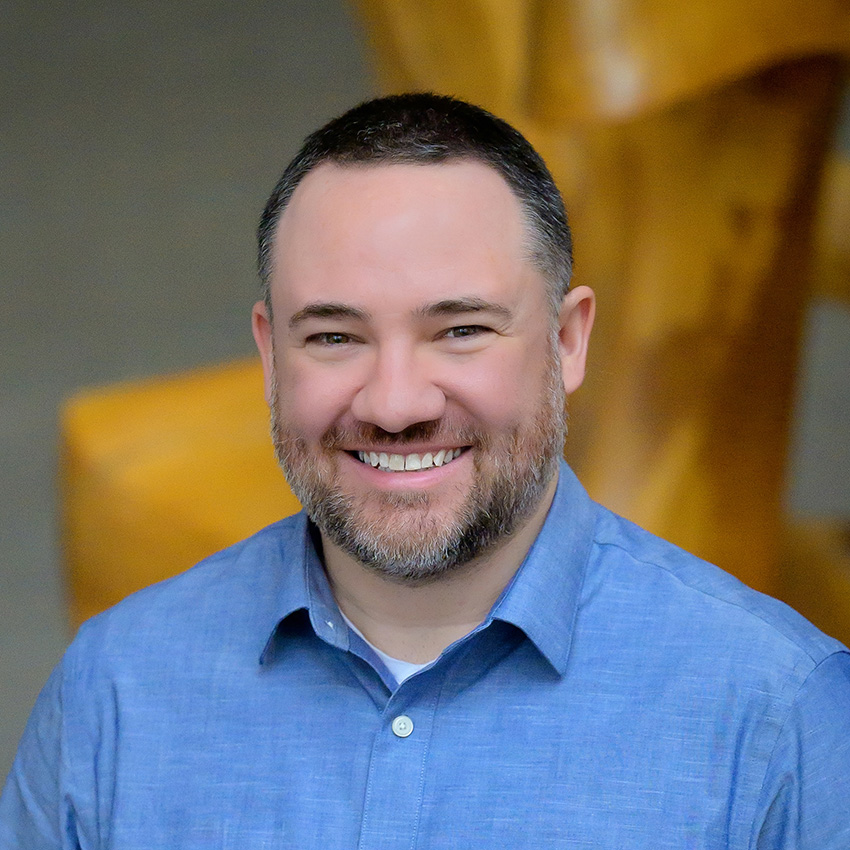
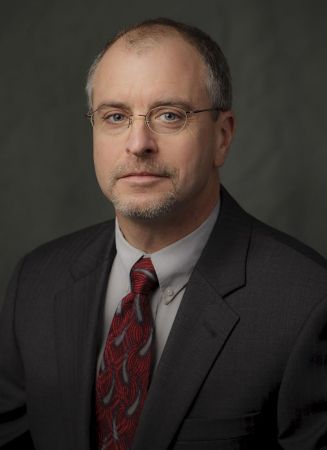
Jeffrey Erochko is an Assistant Professor in the Department of Civil and Environmental Engineering at Carleton University, Ottawa, Canada. His research and teaching focus on structural engineering, particularly seismic-resistant and self-centering systems for timber and hybrid structures, as well as innovative pedagogical techniques in engineering education. B.A.Sc. Engineering Science, University of Toronto Ph.D., Civil Engineering, University of Toronto Prof. Erochko’s research spans advanced seismic design for timber buildings, hybrid simulation methods, fire performance of structural systems, and nonlinear dynamic analysis of multi-hazard scenarios. His work integrates experimental testing with computational models to enhance resilience in civil infrastructure. Key trends in his publications include hybrid timber-steel/concrete systems, self-centering dampers, nonlinear modeling of seismic responses, and fire safety engineering. His pedagogical contributions emphasize technology-driven assessment tools like micro-video projects and weighted rubrics. He leads the Carleton Hybrid Simulation Research Group and collaborates with the university’s multi-hazard infrastructure protection facility, which explores integrated experimental and computational approaches to natural hazards such as earthquakes, fire, blast, and wind.
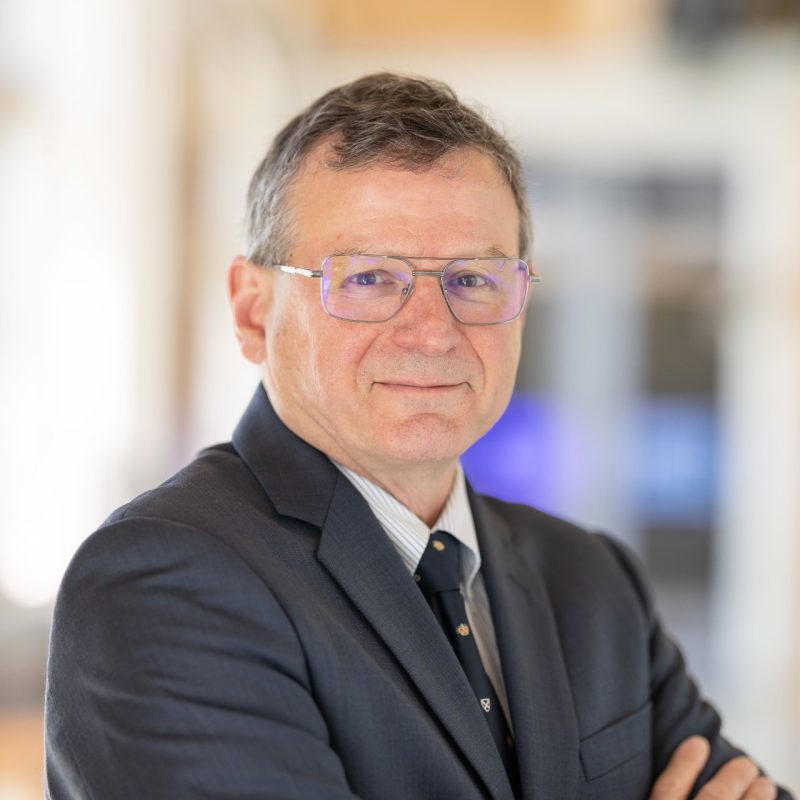
Professor Rhona Flin is a distinguished academic at Robert Gordon University's Aberdeen Business School, where she conducts groundbreaking research on human performance in high-risk work settings. Her expertise spans safety culture, organizational psychology, and non-technical skills development across various high-stakes industries including oil and gas, emergency management, and healthcare. Professor Flin earned her Bachelor's degree in Psychology from the University of Aberdeen in 1977, followed by a PhD in Psychology from the same institution in 1983. Her academic journey has positioned her as a leading expert in understanding how psychological factors influence safety, decision-making, and technology adoption in complex work environments. Professor Flin's research primarily focuses on human performance in high-risk settings, examining safety culture, organizational dynamics, and critical non-technical skills including situation awareness, decision making, teamwork, leadership, and coping with stress and fatigue. Her work bridges psychological theory with practical applications in industries where human error can have catastrophic consequences. A significant portion of her recent research investigates the psychological factors that influence the adoption of new technologies, particularly in the energy sector, where she has conducted innovative benchmarking studies on organizational innovation culture. Analysis of Professor Flin's recent publication record reveals several key trends. Her work increasingly focuses on emergency management decision-making, with multiple 2024 publications examining cognitive challenges in crisis situations and the training methods needed to improve performance. She has also expanded her research into renewable energy sectors, particularly wind power, where she investigates human factors in both onshore and offshore operations. Another significant thread in her recent work involves the development of behavioral marker systems for assessing non-technical skills across various domains, from helicopter operations to surgical settings. Professor Flin has contributed to professional guidelines such as those developed with the Difficult Airway Society and the Association of Anaesthetists on implementing human factors in anesthesia, demonstrating the practical impact of her research. As an academic supervisor, Professor Flin has guided numerous doctoral candidates through their research journeys. Her current and recent supervisees are investigating diverse topics including implementation of ISO 45003 in UK HEIs, sustainable business practices in the oil and gas industry, challenges facing Omani citizens in logistics, and decision-making competence in health supply chains. Her supervision portfolio demonstrates her ability to mentor research across multiple disciplines while maintaining focus on core themes of human performance, safety, and organizational culture. Professor Flin is actively involved in the Energy, Sustainability & Society Research Group at Robert Gordon University. Her collaborative approach is evident in her numerous multi-institutional projects that bring together experts from psychology, business, engineering, and healthcare to address complex human factors challenges in high-risk environments.
J. Michael Ruohoniemi is a Professor in the Bradley Department of Electrical and Computer Engineering at Virginia Tech. His research focuses on space physics, ionospheric dynamics, and HF radar technology. He leads the Virginia Tech SuperDARN group, managing radar sites like Blackstone and Fort Hays to study magnetosphere-ionosphere coupling. His work contributes to understanding space weather phenomena like geomagnetic storms and traveling ionospheric disturbances. Education: Ph.D., University of Western Ontario (1986); B.S., University of King's College and Dalhousie University (1981). Research Interests: Ionospheric physics, HF radar development, magnetosphere-ionosphere coupling, space weather monitoring, and MSTID dynamics. His group collaborates internationally via the SuperDARN network funded by NSF. Recent Research Trends: Recent articles emphasize MSTID analysis, solar flare impacts, geomagnetic storm effects, and machine learning applications. Key topics include ionospheric conductivity, Joule heating, and global circulation models. Affiliations: Virginia Tech SuperDARN Group, HamSCI collaboration, and international radar networks. Operates radar sites in North America and Antarctica.
Professor Keith Worden is a Professor of Mechanical Engineering at the University of Sheffield's School of Mechanical, Aerospace and Civil Engineering. His research focuses on applications of advanced signal processing and machine learning to structural dynamics, particularly in aerospace systems. He has held this position since 1995 and has contributed significantly to the field of structural health monitoring (SHM), including work on nonlinear system analysis and damage detection. His work emphasizes pragmatic engineering solutions and collaboration with industries like aerospace and offshore sectors. Education: Holds a degree from York University and a PhD in Mechanical Engineering from Heriot-Watt University. Career highlights include research at Manchester University before joining Sheffield. Research Interests: Specializes in structural dynamics, SHM using machine learning, nonlinear systems, and vibration analysis. Key themes include population-based SHM frameworks, damage prognosis, and environmental adaptation in monitoring systems. His group develops algorithms for automated inspection and diagnosis, leveraging neural networks, genetic algorithms, and other biological-inspired methods. Articles Trends: Recent publications focus on population-based SHM methodologies, transfer learning applications, and algorithm development for novelty detection, damage localization, and risk-informed decision frameworks. His work bridges theoretical advancements with practical engineering challenges. Grants & Advising: Extensive grants and collaborations in SHM, wind turbine monitoring, and aerospace structures. Advises on projects involving machine learning in structural dynamics and probabilistic modeling. Labs & Teams: Leads research groups exploring computational tools for SHM, including the application of Gaussian processes, Bayesian methods, and data-driven models. Collaborates internationally on projects such as the RAPTOR telescope system and offshore wind farm monitoring.
Tyler Van Buren is an Assistant Professor in the Department of Mechanical Engineering at the University of Delaware, part of the College of Engineering. He holds a Ph.D., M.S., and B.S. in Aerospace and Mechanical Engineering from Rensselaer Polytechnic Institute (2008–2013). Previously, he served as a Research Scientist at Princeton University (2014–2019), focusing on bio-inspired propulsion, turbulence, and flow control. His research emphasizes unsteady flows and coherent structures, with a focus on fluid-structure interaction, bioinspired systems, and practical applications in energy efficiency and robotics. Key areas include vortex dynamics, synthetic jet actuation, and turbulent boundary layer control. Recent work explores optimal parameters for oscillating fins, vortex generator emulation, and eddy self-similarity in pipe flows. His studies bridge fundamental fluid mechanics with real-world impacts, such as improving vehicle design and energy-saving technologies. Lab activities concentrate on experimental methods for analyzing unsteady flows, including flapping propulsion systems and turbulence-induced phenomena. Collaborative projects address challenges in wind energy harvesting and biomedical fluid dynamics.
Professor Nikolaos Dervilis is a faculty member in the Department of Mechanical Engineering at the University of Sheffield, serving as Director of Research and Innovation for the School of Mechanical, Aerospace and Civil Engineering. He holds a BSc from the National and Kapodistrian University of Athens, an MSc in Sustainable and Renewable Energy Systems from the University of Edinburgh, and a PhD from the University of Sheffield in Mechanical Engineering with a focus on machine learning for Structural Health Monitoring (SHM). His research emphasizes SHM, renewable energy systems (particularly wind turbines), data analysis, nonlinear dynamics, and advanced signal processing. His work spans population-based SHM (PBSHM), machine learning applications in structural dynamics, and probabilistic modeling. Recent publications focus on active learning frameworks, Bayesian methods, and generative models for damage prognosis. He collaborates with industry on wind energy and has contributed to datasets for experimental bridges and aerospace components. Notably, he leads efforts in transfer learning and domain adaptation for heterogeneous structural populations. Research highlights include developing frameworks for risk-informed decision support, model selection via approximate Bayesian computation, and digital twin tools for engineering systems. His lab, part of the Dynamics Research Group, addresses challenges in energy systems, composite materials, and condition monitoring of critical infrastructure.
Professor Eduardo Alonso is Director of the Artificial Intelligence Research Centre (CitAI) and Department Research Director at City St George's, University of London. His research bridges novel AI techniques with Explainable AI and Artificial General Intelligence, with significant focus on legal and ethical implications. Research spans: Computational neuroscience and evolutionary biology modeling Deep learning architectures for reinforcement learning Mathematical models of emergence in complex systems Industrial AI applications with societal impact Professor Alonso has secured over £1M in funding from Innovate UK, EU EIT-Digital, and US NSF grants. He currently supervises 13 PhD students working on ethical AI, reinforcement learning, and cybersecurity. Recent publications focus on transformer architectures for multi-agent systems, power grid optimization via GNNs, and adversarial robustness in security systems. Awarded the IEEE Computational Intelligence Society Spotlight Paper Award in 2013.
Stella Kapodistria is an Associate Professor at Eindhoven University of Technology's Department of Mathematics and Computer Science, specializing in Stochastic Operations Research. She holds roles as EAISI High Tech Systems Associate Professor and editorial board member of journals like MCAP and PEIS. Her research focuses on data-driven decision-making, stochastic systems optimization, and maintenance policies, with applications in renewable energy, critical infrastructure, and cryptocurrency networks. She has secured grants including NWA-ORC, NWO Big Data, and TKI WoZ, and collaborates with industry partners in the Brainport region. Education: BSc (2003), MSc (2006, Hons.), and PhD (2009, summa cum laude) in Mathematics from the University of Athens. Postdoc at TU/e, followed by roles at Groningen University and TU/e's Stochastic Operations Research group. Teaching includes courses on Optimal Decision Making, Stochastic Performance Modeling, and Financial Mathematics. Research interests emphasize real-time learning, system resilience, and scalable algorithms for complex networks. Recent work addresses maintenance logistics, blockchain confirmation times, and wind energy prediction. She has published over 40 peer-reviewed articles and contributed to the 4TU Resilience Engineering Center. Awards include editorial leadership roles and grant funding. Advised 32 academic works and oversees industrial projects bridging theory and practice. Her labs and collaborations focus on adaptive systems, predictive analytics, and sustainable engineering solutions.
Dr. Wei Sun is a Chancellor's Fellow (equivalent to Assistant Professor) in Energy Systems Integration at the University of Edinburgh's School of Engineering. His research specializes in low-carbon energy systems with high renewable penetration, utilizing data science and optimization techniques. He contributes to major initiatives like the National Centre for Energy Systems Integration (CESI) and Hydrogen’s Value in Energy Systems (HYVE). Research encompasses network integration of distributed energy resources, climate impacts on renewables, and multi-vector energy systems. Recent publications focus on hybrid energy storage, hydrogen integration, and machine learning applications for system optimization. He holds professional credentials as a Chartered Engineer (CEng) with memberships in IET and IEEE. Teaching includes Hydropower Design Projects and Renewable Energy Fundamentals. Visiting research affiliations include University College London, enhancing collaborative networks in energy systems research.
Noor Ahmad Akhundzadah is a Visiting Professor in the Department of Natural Resources and the Environment at Cornell University's College of Agriculture and Life Sciences (CALS). His research focuses on climate change impacts on water resources, renewable energy applications, groundwater modeling, and disaster risk management in Afghanistan and Central Asia. He holds a PhD in Geotechnical Engineering from Tokyo University of Agriculture and Technology (2009), an MSc in Agriculture (2006), and a BSc in Geology from Kabul University (2002). Education: PhD in Geotechnical Engineering, Tokyo University of Agriculture and Technology, 2009 MSc in Agriculture, Tokyo University of Agriculture and Technology, 2006 BSc in Geology, Kabul University, 2002 Research Interests: Climate change adaptation strategies for water resources management, renewable energy integration in developing regions, groundwater exploration using geophysical methods (e.g., Vertical Electrical Sounding), and interdisciplinary approaches linking environmental science with peacebuilding and migration studies. He employs tools like ArcGIS, COMSOL Multiphysics, and remote sensing for his analyses. Recent Work Trends: His publications from 2020 onward emphasize Afghanistan's vulnerability to climate-induced disasters, including river basin hydrology under climate change, earthquake risk assessment, and renewable energy mitigation pathways. Earlier work (2012–2017) concentrated on groundwater flow dynamics and thermal imaging applications. Awards & Honors: Institute of International Education's Scholar Rescue Fund Fellow (2023–2024) MEXT Government Scholarship for Japanese Graduate Studies (2003–2009) Teaching & Outreach: Teaches hydrology and geology courses at Kabul University's Faculty of Environment. Active in community-based disaster preparedness training and policy advocacy for sustainable water governance in Afghanistan. Labs & Collaborations: Collaborates with international teams on climate modeling (e.g., CORDEX framework) and has led field studies in the Kunduz, Ghorband-Panjshir, and Helmand river basins. Uses interdisciplinary methods combining geology, hydrology, and social science perspectives.
Yeqing Wang is an Assistant Professor at Syracuse University, affiliated with the Syracuse University Composite Materials Lab (SU-CML). His research focuses on composite materials' mechanics, durability, advanced manufacturing, and multiphysics modeling. He holds a Ph.D. from the University of Iowa. Research Interests: Dr. Wang investigates composite materials' failure mechanisms under extreme conditions (e.g., lightning strike, laser ablation) using mathematical and experimental approaches. His work aims to develop durable, bioinspired multifunctional composites and optimize manufacturing processes. Awards: Ralph E. Powe Junior Faculty Enhancement Award (2020) Graduate & Professional Student Government Travel Award (2016) IWEA Conference Research Poster Competition Second Place (2014) James F. Jakobsen Graduate Conference First Place (2013) Iowa EPSCoR Poster Competition First Place (2013) ASC Technical Conference Best Paper Award (2012) Labs & Teams: A core member of SU-CML, founded in 1990, which explores composites for aerospace, energy, and infrastructure applications. Research emphasizes both fundamental science and engineering solutions for advanced composite structures.
Professor David Airey is a faculty member in the School of Civil Engineering at The University of Sydney. He earned a BA, MSc, and PhD in Engineering from the University of Cambridge. His research focuses on improving understanding of soil and rock behavior to enhance infrastructure safety and sustainability. Key areas include geotechnical engineering, soil mechanics, offshore structures, and ground improvement methods. He has served as Acting Head of School (2016) and is involved in editorial roles for journals like the Geotechnical Testing Journal . Research Interests: His work addresses risks in construction excavation, ground improvement, and offshore platform foundations. He develops models to predict soil behavior and mitigate hazards like soil liquefaction. Recent studies include transparent soil observations for fines migration and cyclic mobility in sands. Publications Trends: Over 200+ peer-reviewed articles (2025-2021) span topics like constitutive models for cemented materials, bio-cemented sands, and submarine landslide hazards. Recent work emphasizes unsaturated soil dynamics and self-healing clay mechanisms. Students: Supervises PhD/Master’s research on soil stabilization, microplastic contamination, and foundation engineering challenges. Current advisees include Hamed Faizi and Yifei Gao. Labs/Teams: Affiliated with the Net Zero Institute, SciGEM, and Centre for Wind, Waves and Water. Engages in collaborative projects on carbon sequestration and geomechanical modeling.
Dr. Amir Keshmiri is an Associate Professor/Reader in Computational Fluid Dynamics (CFD) and Head of Business Engagement & Innovation in the Faculty of Science & Engineering at the University of Manchester. He leads the ManchesterCFD research group and has founded multiple companies including Helical Ridge Graft and Affordable Health Technologies. His expertise spans CFD, biomedical engineering, turbulence modeling, and energy systems. Keshmiri holds a PhD in CFD from the University of Manchester and has secured over £2m in research funding since 2010. Education: BEng in Mechanical Engineering (2005, University of Manchester) MSc in Thermal Power & Fluids Engineering (2006, University of Manchester) PhD in Computational Fluid Dynamics (2010, University of Manchester) Professional Qualification in Entrepreneurship & Innovation (2016, LSE) Research Interests: His work focuses on CFD applications in biomedical devices, energy systems, and fluid-structure interaction. Notable contributions include breakthroughs in vascular prostheses (Helical Ridge Graft) and aerodynamic optimization of winglet designs. He also explores turbulence modeling impacts on energy sectors and hydrogen storage innovations. Key Awards: EPSRC Doctoral Prize (2010) IMechE Thomas Common Award (2013) RAEng Making a Difference Award (2019) Collaborate to Innovate Award (2017) Grants & Projects: Principal Investigator (PI) on 85% of £2m+ research grants from EPSRC, MRC, and industry. Active in projects like 'Fluids Research Group' and 'Engineering Sustainable Solar Energy.' Labs & Teams: Leads the ManchesterCFD team, a CFD research and consultancy group, and collaborates with industry partners like AECOM. His work contributes to UN Sustainable Development Goals in healthcare and energy sustainability.
Dr. Spencer Quiel is an Associate Professor of Structural Engineering at Lehigh University's P.C. Rossin College of Engineering and Applied Science. His research focuses on structural resilience to extreme loads such as fire, blast, and progressive collapse, with particular emphasis on bridges, tunnels, and building systems. He has secured over $1.5 million in grants from NSF, USDOT, and others, and his work is published in leading journals like Engineering Structures and Fire Safety Journal. Prior to academia, he worked at Hinman Consulting Engineers, contributing to structural designs for hazard resistance. He holds a PhD from Princeton University (2009) and a BS from Notre Dame (2004), supported by a DHS Fellowship during his doctoral studies. Dr. Quiel teaches undergraduate courses in engineering statics and civil engineering design, as well as graduate-level structural fire engineering. He currently serves as Vice Chair of the PCI Blast Resistance and Structural Integrity Committee and contributed to ASCE standards on fire loads and structural fire engineering. His research group focuses on experimental testing, numerical modeling, and large-scale infrastructure resilience. Education: PhD, Civil Engineering, Princeton University (2009) Professional Affiliations: ASCE, AISC, PCI Licenses: Professional Engineer (PA, VA) Key Projects: World Trade Center collapse studies, tunnel liner resilience, thermal energy storage systems His research interests span structural fire effects, blast-resistant design, progressive collapse frameworks, and innovative cladding systems. Recent work includes developing fire-resistant tunnel liners and thermal energy storage solutions using concrete matrices. He also investigates multi-hazard simulation methods for tall buildings using real-time hybrid techniques.
Dr. Richard Sause is the Joseph T. Stuart Professor of Structural Engineering and Director of the Advanced Technology for Large Structural Systems (ATLSS) Center at Lehigh University's Civil & Environmental Engineering department. His research focuses on seismic-resistant steel/concrete structures, bridge systems, and passive damping technologies, with over 60 research projects totaling $50M+ and leadership of multi-million-dollar programs. As ATLSS Director, he oversees $6M annual expenditures and a 25-person team. Education: Ph.D. and M.S. in Civil Engineering from UC Berkeley; B.S. from Rensselaer Polytechnic Institute. Teaching includes Structural Dynamics, Steel Design, and Earthquake Engineering. He has supervised 23 Ph.D. and 39 M.S. students, many now faculty at top universities. Notable awards include the Raymond C. Reese Research Prize (2009), J. James R. Croes Medal (2007), and Charles C. Zollman Award (2006). His work includes demonstration bridges using high-performance steel and leadership in the NHERI Lehigh Experimental Facility. Recent grants include a $12M DOE initiative for marine energy and a $1M NSF grant for floating wind turbines. His research spans offshore energy systems, timber structures, and advanced testing methodologies, emphasizing resilience and sustainability.