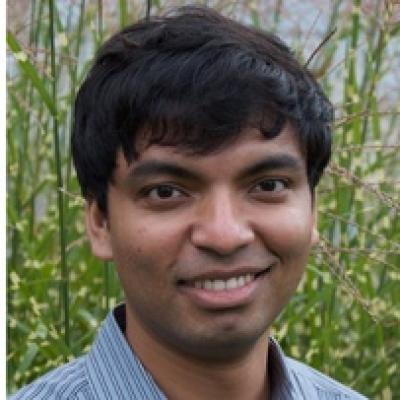
Subhransu Maji is an Associate Professor in the Manning College of Information and Computer Sciences at the University of Massachusetts Amherst, and the co-director of the Computer Vision Lab. He is also affiliated with the Center for Data Science and holds a part-time role as an Amazon Scholar. His research focuses on high-level visual recognition algorithms and interdisciplinary applications in ecology and astronomy. He has received prestigious awards including the NSF CAREER Award (2018), Best Paper at WACV 2015, and the Google Graduate Fellowship (2008). Education: PhD in Computer Science from UC Berkeley (2011), BTech from IIT Kanpur (2006). Prior roles include Research Assistant Professor at Toyota Technological Institute at Chicago (2012-2014). Research Interests: Computer Vision Machine Learning AI Applications in Ecology and Astronomy 3D Shape Understanding Climate Science Grants and Funding: Supported by NSF, NASA, Climate Change AI, and industry grants from Facebook, NVIDIA, Adobe, and Dolby. Current projects include satellite imagery analysis for ecology and material science applications using deep learning. Labs and Teams: Leads the Computer Vision Lab, collaborates with interdisciplinary teams on ecological monitoring (e.g., bird migration tracking via radar data) and material property prediction (e.g., zeolite adsorption modeling).
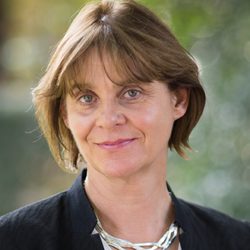
Craig Davis is a Professor and holds the Bollenbach Chair in Wildlife Management at Oklahoma State University's Department of Natural Resource Ecology & Management. He has been a faculty member since 2001, advancing from Assistant Professor (2001-2007) to Associate Professor (2007-2012), and has served as Bollenbach Chair since 2014. Davis earned his PhD in Wildlife Science from Texas Tech University (1996), an MS from Iowa State University (1991), and a BS from Ohio State University (1988). He is also a Certified Wildlife Biologist through The Wildlife Society. His research focuses on avian ecology, wetland restoration, and gamebird management, with specific interests in fire-grazing interactions, invertebrate communities, and climate change impacts on ecosystems. Key areas include grassland bird survival, wetland classification systems, and the effects of anthropogenic development on wildlife habitats. Davis actively collaborates with conservation organizations and agencies, addressing challenges like invasive species management and water infrastructure resilience. Teaching responsibilities include undergraduate courses on Wildlife Management Techniques and Wetland Ecology, as well as graduate courses like Advanced Wetland Ecology. His grants emphasize wetland restoration outreach, climate adaptation strategies, and studies on northern bobwhite and wild turkey populations. Notable projects include evaluating cellular transmission technology in wildlife monitoring and assessing the impact of extreme weather on gamebird survival. Grants (Selected): Expansion of potential wetland restoration opportunities in Oklahoma (2024-2027) Linking Research and Stakeholder Engagement for Wetland Conservation (2024-2026) Effects of Extreme Weather and Hunting on Northern Bobwhite (2023-2025) Research Themes: Aligns with UN Sustainable Development Goals 15 (Life on Land), 13 (Climate Action), 6 (Clean Water), 11 (Sustainable Cities), 14 (Life Below Water), and 9 (Industry/Infrastructure).
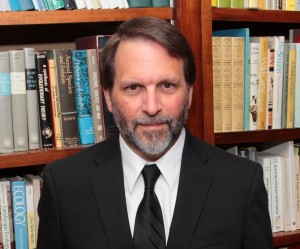
Christopher Turbill is an Associate Professor in Animal Science at Western Sydney University's School of Science, where he maintains an active research program focused on animal physiological ecology. He is affiliated with the Hawkesbury Institute for the Environment and serves as a Principal Investigator on multiple research projects while accepting HDR candidates for supervision. PhD from University of New England (2006) Thesis: Thermoregulatory Ecology of Tree-roosting Bats Supervised by Prof. Fritz Geiser Postdoctoral fellowships from Austrian Science Fund and Australian Research Council (DECRA) Former ecologist with NSW Government Professor Turbill's research integrates thermal and metabolic physiology with behavioral ecology to understand animal-environment interactions. His work has revealed significant ecological consequences of controlled body temperature variation in mammals and birds, linking these processes with metabolic energy expenditure, activity patterns, and life-history strategies. He specializes in bat biology and investigates conflicts between human environmental change and animal conservation requirements. His research keywords include ecophysiology, thermoregulation, energy expenditure, life-history ecology, body temperature, torpor, hibernation, and wildlife conservation. Analysis of Turbill's recent publications reveals a strong focus on thermal biology and conservation physiology, particularly regarding bats and birds. His work examines how animals manage energy through torpor, respond to climate change through thermal regulation, and adapt to anthropogenic disturbances. The research spans field studies of flying-foxes, microbats, and passerine birds across Australian ecosystems, with increasing emphasis on conservation applications related to white-nose syndrome, fire impacts, and wind energy development. Turbill leads significant research projects including the Ecology of the eastern horseshoe bat and its sensitivity to fire impacts (2024-2027), Vulnerability of Australian bats to white-nose syndrome (2021-2026), and Torpor use and burrowing behaviour in an arid zone passerine (2024). His work attracts funding from diverse sources including the Australian Research Council, Department of Planning and Environment, and various conservation organizations. Professor Turbill directs the BatsLab research group, which maintains a virtual hub for bat research at Western Sydney University. His team employs advanced methodologies including thermal imaging, GPS tracking, and physiological monitoring to study animal responses to environmental challenges. Current work focuses on developing conservation interventions for heat-stressed flying-foxes and assessing vulnerabilities of Australian bat species to emerging diseases.
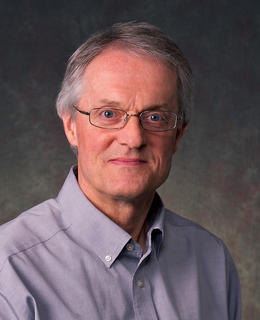
Jenny Ouyang is an Associate Professor in the Department of Biology at the University of Nevada, Reno , where she also serves as Director of the Ecology, Evolution and Conservation Biology graduate program. She earned her B.S. and B.A. from the University of California, Irvine (2007), followed by M.A. and Ph.D. in Ecology and Evolutionary Biology from Princeton University (2009, 2012). Her research focuses on the ecology and evolution of physiological systems , particularly how hormonally regulated traits enable organismal adaptation to environmental changes like urbanization , light pollution , and endocrine stress responses . Education: Ph.D., Ecology and Evolutionary Biology, Princeton University (2012) M.A., Ecology and Evolutionary Biology, Princeton University (2009) B.S., Biology, University of California, Irvine (2007) B.A., French, University of California, Irvine (2007) Her work integrates neuroendocrine mechanisms with ecological contexts to understand phenotypic flexibility and epigenetic adaptation in birds. Recent projects examine how artificial light at night disrupts circadian rhythms, hormonal profiles, and parental behaviors across urban-rural gradients. She has secured major grants including the NSF CAREER award (2022) for studying urbanization and NIH COBRE funding (2017) as part of a neuroscience team. Key collaborations include Dr. Maria Echeverry at Universidad Pontificia Javeriana in Colombia through her 2023 Fulbright award . The Ouyang Lab combines natural and laboratory experiments to investigate stress physiology, with recent papers analyzing glucocorticoid responses to urbanization, gene expression patterns under light pollution, and epigenetic reorganization in response to environmental stressors. Her publications span top journals like Proceedings of the Royal Society B , Biology Letters , and Ecology Applications , where her 2022 paper on lead pollution and reproduction was highlighted by ESA and Swedish Radio. Scientific Awards & Recognition: US Fulbright Scholars Award (2023) NSF CAREER grant (2022) NIH COBRE grant (2017) as team member Advising students like Valentina Alaasam (NSF GRFP awardee) and Ivan Celso Carvalho Provinciato (Dean's Merit Fellowship)
Clio Andris is an Associate Professor at Georgia Tech, jointly appointed in the School of City and Regional Planning and the School of Interactive Computing. She directs the Friendly Cities Lab, focusing on mathematical models of social networks applied to urban planning, transportation, and geography. Her work integrates spatial analysis with visualization, emphasizing interdisciplinary collaboration. Education and Career: Andris earned a PhD in Urban Information Systems from MIT (2011), where she was an NDSEG Fellow. She held postdoctoral positions at Singapore-MIT Alliance for Research and Technology and the Santa Fe Institute. Prior to Georgia Tech, she was a faculty member at Penn State’s Department of Geography, affiliated with the GeoVISTA Center. Research Focus: Her research bridges social networks, geovisualization, and urban informatics. Key areas include spatial social network analysis, GIS applications for urban policy, and the impact of digital tools on civic engagement. She has developed innovative visual analytics tools like SNoMaN and ROBIN to democratize spatial data exploration. Awards: She received the NSF CAREER Award (2021) and NDSEG Fellowship (2011). Her lab is affiliated with the Center for Spatial Planning Analytics and Visualization (CSPAV) and the Information Visualization Lab. Labs and Collaborations: The Friendly Cities Lab focuses on socially just urban design through computational methods. Her work addresses issues like food security networks, pandemic impacts on biodiversity, and community mapping for activism. Grants and Outreach: Her NSF-funded projects emphasize public good applications, such as real-time pandemic risk communication and educational tools for migration data. She actively collaborates with non-profits and policymakers to translate research into actionable urban strategies.
Matthew D. Potts is the S.J. Hall Chair in Forest Economics and Professor at UC Berkeley's Department of Environmental Science, Policy, & Management. He also serves as Associate Director for Sustainable Development at the Blum Center for Developing Economies. With interdisciplinary training in mathematics, ecology, and economics, his research focuses on nature-based climate solutions and ecosystem service co-production. Research addresses carbon sequestration through forest management, biodiversity conservation, land use planning, and sustainable development in tropical ecosystems. Recent work examines cost-effectiveness of reforestation, climate-driven migration patterns, and plantation carbon modeling. Publications demonstrate strong focus on quantitative analysis of land-use impacts, with methodological innovations in remote sensing applications and spatial modeling for carbon accounting. Awards include recognition for young faculty research and leadership in international environmental assessments. Leads the Potts Research Group, mentoring graduate students working on tropical ecology, restoration, and climate adaptation projects.
Prof. Dr. Oliver Krüger is a behavioral ecologist and evolutionary biologist at Bielefeld University 's Faculty of Biology , where he leads the Department of Animal Behaviour since 2013. His research spans avian and marine mammal systems, focusing on life history strategies, parasite-host interactions, and environmental adaptation. Education: Biology studies at Bielefeld University (1994-1996) MSc in Oxford (1996-1997) PhD at Bielefeld University with Fritz Trillmich and Jan Lindström (1998-2000) Research Themes: Behavioral ecology, evolutionary biology, and population dynamics across tropical and temperate ecosystems. Key projects include NC³ (Niche Choice/Construction) and studies on Galápagos sea lions, common buzzards, and pinniped species. Scientific Leadership: Spokesperson, SFB TRR 212 "NC³" (2018-2025) Advisory Board member: German Ornithologists Union, IUCN SSC pinniped group, German Primate Centre Peer review roles: Humboldt Foundation, DFG, HFSP, NSF Awards: Leopoldina Prize (2001) Niko Tinbergen Award (2008) DFG Heisenberg Professorship (2010-2015)
Sarah Harper is the Clore Professor of Gerontology at the University of Oxford and Director of the Oxford Institute of Population Ageing. She was appointed a CBE in 2018 for services to Demography and serves as Chair of HelpAge International. Professor Harper has held numerous influential positions including serving on the Prime Minister's Council for Science and Technology and as Director of the Royal Institution of Great Britain. Her educational background includes an MA from Cambridge and a DPhil from Oxford. Prior to her academic career, she trained with the BBC as a News and Current Affairs Reporter and Producer. She subsequently held academic positions at the University of London and the University of Chicago before returning to Oxford to found the Oxford Institute of Population Ageing. Professor Harper's research focuses on demographic change, particularly the implications of falling fertility and increasing life expectancy. Her work examines life course factors in healthy ageing, social and economic drivers of health and well-being, with emphasis on life transitions. She has conducted significant research on eldercare in China, fertility patterns in sub-Saharan Africa (revealing that ideal family size remains high despite girls' education), and demographic changes in Vietnam and Myanmar affecting agricultural production and food security. Her publication record demonstrates consistent focus on global demographic trends, with recent work increasingly addressing the intersection of population change with environmental challenges. She has authored influential books including 'How Population Change Will Transform Our World' (Oxford University Press, 2016) and is working on a new book for Cambridge University Press on Population and Environmental Change. Scientific Awards and Honors CBE (Commander of the Order of the British Empire) in 2018 for services to Demography Royal Society for Public Health: Arts and Health Research Award (2011) Fellow of the Academy of Medical Sciences Fellow of the Royal Anthropology Institute Professor Harper has supervised numerous PhD students across diverse topics from biodiversity conservation in Southeast Asia to intergenerational solidarity in Turkey. Her advisory work extends globally, having served on the Scientific Advisory Board of Natural England, the Royal Society's Working Group on Population and Environment, and as an advisor to governments including the UK, Malaysia, Singapore, and the European Commission. She has received research funding from organizations including the US National Institutes of Health, which supported the founding of the Oxford Institute of Population Ageing. As Director of the Oxford Institute of Population Ageing, Professor Harper leads a multidisciplinary team examining demographic trends and their societal implications. The Institute serves as a hub for international collaboration on ageing research, working with organizations including Population Europe and the International Association of Research Universities. She also serves as founding editor of the Journal of Population Ageing and editor of the Handbook of Ageing and Public Policy.
Prof. Dagmar Haase is a Full Professor in Landscape and Urban Ecology at Humboldt Universität zu Berlin, serving as Deputy Director of the Geographical Institute. She holds affiliations with the Helmholtz Centre for Environmental Research (UFZ) and has earned honorary professorships in Sweden and Romania. Her academic journey includes a PhD from the University of Leipzig (1999) and Habilitation from Martin-Luther-University Halle-Wittenberg (2009). Her research focuses on urban ecosystem services, social-ecological systems, and nature-based solutions to urban challenges. Key projects include EU-funded initiatives on green infrastructure (e.g., Horizon Europe’s NaturaConnect) and climate resilience. Awards include the AXA Research Fund Award (2014) and Honorary Wallenberg Professorship (2016). Haase’s work integrates remote sensing, citizen science, and participatory modeling to address urban sustainability. Over 250+ publications and an h-index of 77 reflect her prolific contributions. She advises numerous PhD candidates exploring urban dynamics, biodiversity, and governance. Current grants span climate adaptation, urban densification, and ecological networks.
Gregory Keller is the Dean of the School of Science and Health and Professor of Biology at Gordon College. He holds a Ph.D. in Ecology with a Conservation Biology emphasis from The Pennsylvania State University, an M.A. from The College of William and Mary, and a B.S. from Alma College. He joined Gordon College in 2007 after serving as an Assistant Professor of Wildlife Ecology at Eastern New Mexico University. B.S.: Alma College M.A.: The College of William and Mary Ph.D.: The Pennsylvania State University (Ecology with Conservation Biology Emphasis) Dr. Keller's research centers on conservation biology, habitat use, and the effects of human-altered landscapes on wildlife, particularly birds and small mammals. His work spans multiple ecosystems in Belize, Massachusetts, New Hampshire, and Iceland. He employs Geographic Information Systems (GIS) and field studies to analyze migratory bird behavior, forest fragmentation, climate change impacts, and Lyme disease vectors. His research integrates landscape ecology with practical conservation strategies. His recent scholarly and public writings, such as 'Denizens of the Autumn Air' and 'Corridors of Abundance,' reflect a strong commitment to science communication and ecological awareness. These works, along with news features on his fieldwork, highlight his role in mentoring students and advancing conservation science. Fulbright Scholarship recipient Dr. Keller actively involves undergraduate students in research, guiding projects on warbler ecology, bat habitat use, sea ducks, and shorebird distribution. He teaches key courses including Conservation Biology, Landscape Ecology & GIS, Environmental Science, and Field Ornithology. His lab focuses on field-based ecological studies in human-dominated landscapes, with ongoing collaborations in international and local ecosystems.
Robert Fletcher is a Researcher at the University of Cambridge, affiliated with the Department of Zoology and the C-CLEAR Doctoral Training Partnership . His work focuses on applied ecology and conservation science, utilizing landscape and population ecology to address biodiversity challenges globally. Research Areas : Conservation biology, population ecology, landscape ecology, environmental informatics Collaborations : Partners in North America, Europe, Africa, and Southeast Asia Key Themes : Species extinction prevention, landscape conservation prioritization, and rapid biodiversity data delivery Email : rf497@cam.ac.uk Fletcher's interdisciplinary approach integrates fieldwork (e.g., Everglades endangered species, African elephants) with advanced modeling of habitat loss, fragmentation, invasive species, and climate change impacts. His recent work emphasizes: Drivers of species decline and recovery strategies Landscape management and restoration techniques Interdisciplinary collaborations with engineers, social scientists, and computer scientists His publications span topics like savanna ecosystem dynamics, community science applications, and conservation forecasting, reflecting a commitment to actionable science for global biodiversity preservation.
Bryan Watts is the Director of the Center for Conservation Biology and holds the Mitchell A. Byrd Research Professorship in Conservation Biology at William & Mary. He has a B.S. in Biology from Virginia Tech, an M.A. in Biology from William & Mary, and a Ph.D. in Ecology from the University of Georgia. His research focuses on avian conservation, wetland ecosystems, and the impacts of environmental changes on bird populations, particularly in coastal regions. He leads long-term monitoring programs for species like ospreys, red knots, and black rails, emphasizing habitat conservation and population dynamics. His work integrates citizen science, toxicology assessments, and climate adaptation strategies for vulnerable species. Watts collaborates with federal agencies and NGOs to inform policy decisions and habitat management. His projects include the Virginia Marshbird Survey, Whimbrel migration tracking, and assessments of contaminants in apex predators like peregrine falcons and bald eagles. Key areas of focus include the demographic responses of birds to fluctuating fish stocks, the effects of human activity on nocturnal roosting behaviors, and the development of conservation strategies for coastal wetlands under climate change. His research outputs span over three decades, addressing both applied and theoretical questions in conservation biology. Watts also advises on wildlife management policies, such as landfill use by bald eagles and wind energy siting to minimize bird collisions.
Robert Barclay is a Professor Emeritus in the Department of Biological Sciences at the University of Calgary, Faculty of Science. He holds a PhD (Carleton University, 1981), MSc (Carleton University, 1978), and BSc (Trent University, 1976). His research focuses on the behavioral and physiological ecology of mammals and birds, particularly bats, investigating roosting behavior, thermoregulation, and responses to environmental disturbances like wind energy, urbanization, and wildfires. He has contributed to understanding bat migration, torpor physiology, and conservation challenges. Key awards include the Order of the University of Calgary (2024), Faculty of Science Excellence in Research Award (2021), and multiple teaching awards. His work spans bat-habitat interactions, climate impacts, and wildlife management. Retired since 2021, he no longer advises students but retains a legacy of influential research and mentorship. Education: PhD Biological Sciences, Carleton University, 1981 MSc Biological Sciences, Carleton University, 1978 BSc Biological Sciences, Trent University, 1976 Research highlights include studies on bat responses to wind turbines, urbanization effects on prairie bats, and Yukon bat ecology. His publications address topics like bat diet, roost selection, and population dynamics. Collaborative projects include investigating bat fatalities at wind facilities and the impact of forest disturbances on bat communities.
Philippe Christe is an Associate Professor in the Department of Ecology and Evolution at the University of Lausanne (UNIL), Faculty of Biology and Medicine. His research centers on host-parasite interactions, with a focus on bats, birds, and their ectoparasites, integrating behavioral, physiological, and genetic approaches. He leads the Christe Group, which investigates evolutionary and ecological dynamics in host-parasite systems, particularly avian malaria and bat-mite relationships. He is actively involved in conservation initiatives, including the Jorat Peri-Urban Nature Park, and collaborates with KORA on human-wildlife interactions. Bachelor's degree in biology, UNIL (1989) PhD in Zoology and Animal Ecology, UNIL (1994) Philippe Christe’s research interests lie at the intersection of parasitology, evolutionary ecology, and conservation biology. He investigates how host defenses evolve in response to parasitic pressures, examining trade-offs between immunity and life history traits such as reproduction and survival. His work often integrates field studies with experimental and molecular techniques. Key model systems include Parus major (great tit) and Culex pipiens in avian malaria, and bat species with their ectoparasitic mites. He also explores broader ecological interactions, including predator-prey dynamics and wildlife conservation in human-modified landscapes. His recent publications reflect a strong emphasis on disease ecology, wildlife conservation, and molecular methods. Articles span topics such as avian malaria transmission, lynx population dynamics, snow leopard behavior, and habitat fragmentation effects on insects. These works employ advanced techniques like DNA metabarcoding, spatial modeling, and long-term monitoring, demonstrating a trend toward interdisciplinary, data-driven ecological research with direct conservation applications. Dubois Foundation Prize for an educational CD-Rom on bats (2004) Communication Award from the Faculty of Biology and Medicine of UNIL (2017) Philippe Christe has supervised numerous PhD and Master’s students, contributing significantly to training the next generation of ecologists and evolutionary biologists. His group collaborates widely with institutions such as the Museum of Zoology in Lausanne and KORA, and participates in large-scale conservation projects involving snow leopards, lynx, and bats. He has been involved in research grants related to host-parasite coevolution, wildlife monitoring, and conservation strategies. His leadership in establishing the Jorat Peri-Urban Nature Park and involvement in the UNIL Interdisciplinary Center for Mountain Research highlight his commitment to applied science and environmental stewardship. He leads the Christe Group, which conducts research on host-parasite coevolution, with a focus on bats and their ectoparasites, and birds affected by avian malaria. The group combines fieldwork, laboratory experiments, and molecular analyses, and includes post-docs, PhD students, and technical staff. Collaborations extend to researchers in Bern, Paris, and Spain, fostering an international and interdisciplinary research environment.
Rachel Sippy is a Research Fellow at the University of Cambridge , specializing in epidemiology and infectious disease dynamics within the Department of Psychiatry . Her work bridges public health, climate science, and computational methods.