Matthew Jones is a NERC Independent Research Fellow at the University of East Anglia's School of Environmental Sciences, specializing in wildfire-climate interactions and carbon cycle dynamics. His research focuses on quantifying wildfire impacts under climate change, mitigating fire risks, and advancing global carbon budget monitoring. Co-leading the State of Wildfires Report, he evaluates extreme fire events' causes and future risks. As part of the Global Carbon Project, he tracks human-driven climate impacts through emissions and land-use data. Jones holds a PhD in Physical Geography from the University of Exeter (2018) and has conducted postdoctoral research at Swansea University and UEA. He has secured NERC funding to study wildfire geography and leads projects on lightning fires, prescribed burns, and fire management strategies. Key research areas include fire emissions modeling, climate mitigation strategies, and interdisciplinary fire science. His work has been recognized with awards like the NERC Fellowship and CarbonBrief's Top Climate Paper. Jones actively collaborates internationally, contributing to UN Sustainable Development Goals focused on climate action and ecosystem protection.
Dr. Anne-Marie Nicol is an Associate Professor of Professional Practice in Health Sciences at Simon Fraser University. Her multidisciplinary research spans health communication, toxicology, social marketing, risk perception, and risk assessment, with emphasis on environmental and occupational health exposures. She leads CAREX Canada, a national carcinogen surveillance program, and has developed public health campaigns including Wash with Care and Tick Talk. Her work focuses on translating scientific information about carcinogens to policymakers and cancer prevention stakeholders. She teaches Human Health Risk Assessment, Toxicology for Public Health, and Health Communication. Her research has been funded by CIHR, Michael Smith Foundation, and Canadian Cancer Society. Current projects include studies on radon exposure, infodemic communication strategies, and community resilience to wildfire smoke. She holds a BA from SFU, MES from York University, and PhD from UBC.
Robert Berrens is a Regents Professor in the Department of Economics at the University of New Mexico since 1994. He has held roles including Department Chair (2008-2012 and 2016-present), Special Assistant to the Dean of Arts & Sciences (2012-2013), and Director of the Water Resources Program (2013-2016). His research focuses on environmental economics, water resources, ecosystem services, and climate policy. He has advised over 50 graduate students and published extensively in journals like Ecological Economics and Environmental Management . Awards include the Regents Lecturer title and leadership roles in academic governance. Education: PhD in Economics (not explicitly stated but implied by academic rank). Affiliations: Nepal Study Center, Science Impact Lab, Water Resources Program, and multiple UNM institutes. Research interests include non-market valuation, wildfire risk mitigation, and sustainable development. His work addresses policy challenges in energy, environmental health, and natural resource management. Over 150 publications and grants from NSF, EPA, and others highlight his impact. Grants/Awards: National Science Foundation US Environmental Protection Agency UNM Budget Leadership Team member since 2012 His interdisciplinary approach bridges economics with environmental science, addressing real-world issues like Bitcoin’s environmental costs, fracking impacts, and wildfire smoke health effects.
Keunhyun (Keun) Park is an Assistant Professor of Urban Forestry at the University of British Columbia (UBC), affiliated with the Department of Forest Resources Management . He also holds an Adjunct Professor position at Utah State University in the Department of Landscape Architecture and Environmental Planning. Education: BSc and MSc in Landscape Architecture from Seoul National University; PhD in Urban Planning and Design from the University of Utah Research Lab: Faculty lead of the Urban Nature Design Research Lab ( under_lab ) His research focuses on designing healthy, just, and resilient cities through urban nature , with particular emphasis on: Environmental justice and equitable access to urban green spaces Human behavior in public spaces using drone/sensor/VR technology Smart growth urban design impacts on public health and ecological systems Recent publications demonstrate expertise in GIS applications , pedestrian behavior analysis , and urban planning across 20+ studies from 2013-2025. Collaborations include the Vancouver Park Board , Metro Vancouver , and Wasatch Front Regional Council .
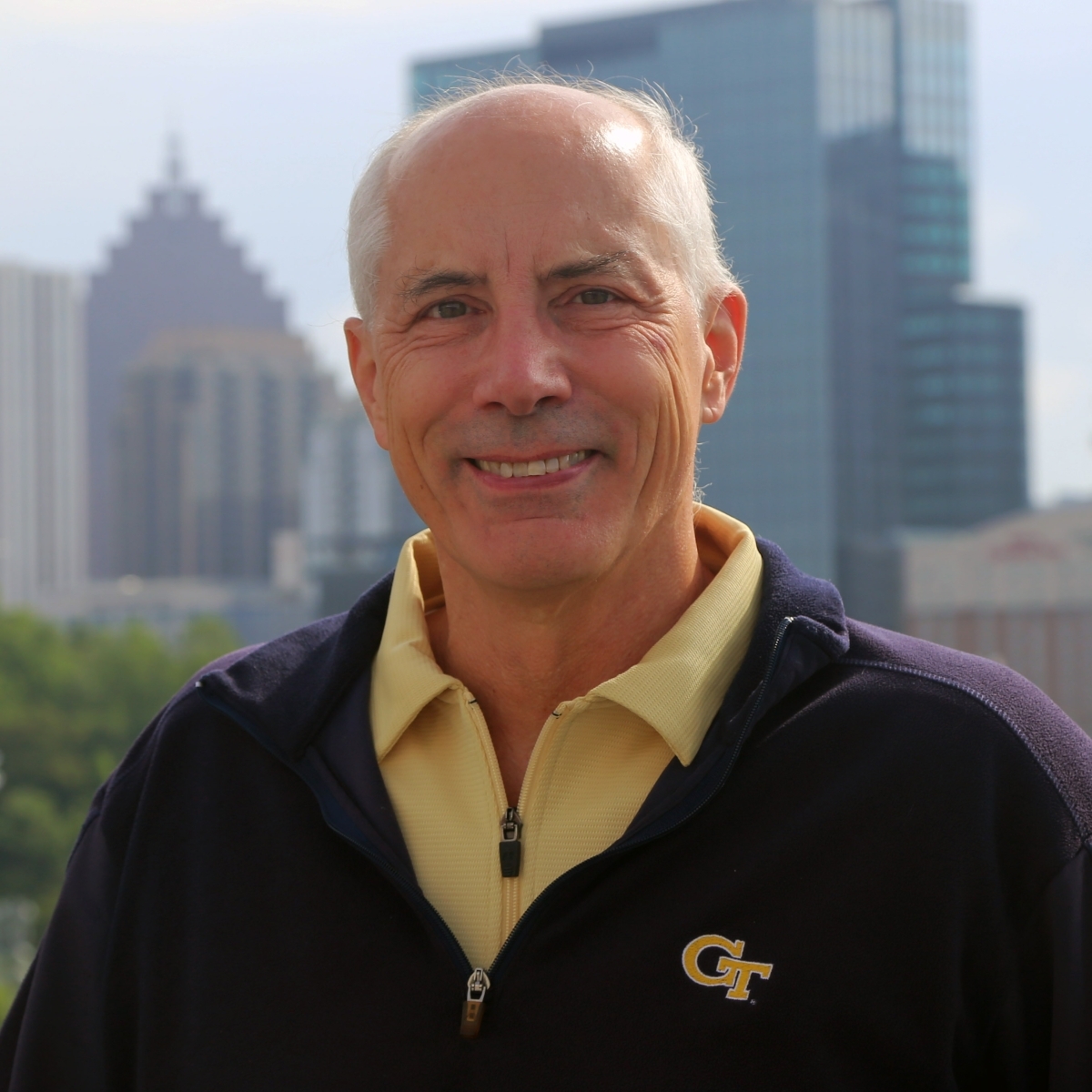
Armistead (Ted) Russell is the Howard T. Tellepsen Chair and Regents' Professor in the Department of Civil and Environmental Engineering at the Georgia Institute of Technology's College of Engineering. He co-directs the Southeastern Center for Air Pollution and Epidemiology and the NSF Sustainability Research Network 'Environmentally Sustainable, Healthy and Livable Cities' project. Dr. Russell earned his B.S. from Washington State University and his M.S. and Ph.D. in Mechanical Engineering from the California Institute of Technology, where he conducted research at Caltech's Environmental Quality Laboratory. Russell's research focuses on air pollution modeling, health effects of air pollutants, aerosol dynamics, environmental economics, atmospheric chemistry, and CO2 capture technologies. His group works to understand air pollutant dynamics at urban and regional scales and assess their impacts on health and the environment to develop effective air quality improvement strategies. His work integrates satellite and ground-based observations with air quality models and assesses climate-air quality strategy interactions. His recent publications reveal a strong focus on urban air quality issues, health impacts of pollution, sustainable city development, and pollution control technologies. His work spans from local Atlanta air quality improvements to global issues like pollution in India and China, demonstrating a comprehensive approach to environmental challenges across different scales and contexts. Howard T. Tellepsen Chair Regents' Professor Russell has advised numerous students who have gone on to prominent positions at institutions worldwide, including UC-Berkeley, Rice University, and Peking University. His research has been funded by major organizations including the National Science Foundation, NASA, EPA, CDC, NIH, and industry partners like Phillips 66 and Southern Company. His work is used in policy and regulatory decision-making at local-to-international levels and is highly cited in scientific literature. Russell's research group (Lambda) operates from the Ford Environmental Science and Technology building at Georgia Tech, which houses extensive air quality research facilities including a state-of-the-art smog chamber and numerous laboratories. The group collaborates extensively with researchers from Earth and Atmospheric Sciences, Chemical and Biomolecular Engineering, City & Regional Planning, and Emory University's Rollins School of Public Health.
Charity Nyelele is an Assistant Professor in the Environmental Sciences department at the University of Virginia. Her research bridges human well-being and environmental systems, focusing on biodiversity, climate change, and ecosystem services through the lens of environmental justice and equity. Specializes in urban forestry and socio-ecological synthesis Active in climate justice, carbon sequestration, and stormwater management Nyelele's recent work integrates machine learning and social media data to map recreational ecosystem services and optimize tree planting frameworks. She has developed multi-objective decision support tools to address urban ecosystem service trade-offs and leads research in fire-driven ecosystem restoration across Western US forests. She teaches courses on Environmental and Climate Justice , Management of Forest Ecosystems , and co-instructs Politics, Science, and Values . Contact: hbt3mb@virginia.edu
Susan Anenberg is a Professor and Chair of the Environmental and Occupational Health department at the George Washington University Milken Institute School of Public Health. She directs the GW Climate and Health Institute and serves as President of the AGU GeoHealth Section (2023-2024). Her research integrates epidemiology, atmospheric modeling, and policy analysis to quantify health impacts of air pollution and climate change. PhD in Environmental Science and Engineering from UNC (2011) Former EPA environmental scientist and U.S. Chemical Safety Board deputy director Key research themes include: Global air pollution burden of disease estimation Climate change health co-benefits analysis Satellite remote sensing for exposure assessment Environmental justice and exposure disparities GeoHealth policy frameworks Her recent work leverages geospatial datasets to reveal racial/ethnic disparities in NO2 exposure and develops decision-support tools for urban climate action plans. She has contributed to major publications in Lancet Planetary Health , Science , and Nature , and serves on advisory boards for EPA, WHO, and the U.S. National Academy of Sciences. Scientific engagement includes: Co-founding Environmental Health Analytics, LLC Technical advisory roles for Clean Air Act and climate policy Development of multi-modal vehicle electrification health impact models
Professor Donna Green is an internationally recognized environmental scientist at the University of New South Wales (UNSW), affiliated with the School of Biological, Earth & Environmental Sciences. She holds a PhD from the University of California, Berkeley (2004) and leads multidisciplinary research at the intersection of climate change, energy policy, and air pollution. Her work focuses on balancing improvements in indoor air quality against outdoor pollution sources such as traffic, bushfires, and industry, while addressing increasingly recognized risks from indoor air contaminants including airborne diseases. PhD, University of California, Berkeley (2004) Professor Green's research spans environmental science, climate change impacts, air pollution health effects, renewable energy policy, and environmental justice. Her work demonstrates particular expertise in the health impacts of climate change, with emphasis on vulnerable populations including Indigenous communities. She investigates the synergistic impacts of urban air pollution compounding climate emergencies, and has published extensively on environmental injustice in resource-rich Aboriginal Australia. Her research often bridges scientific findings with practical policy solutions, working collaboratively with engineers, legal practitioners, and public health experts to design evidence-based approaches to environmental challenges. The most recent publications reveal a strong focus on wildfire smoke impacts on health, indoor air quality in educational settings, climate litigation trends, and the intersection of renewable energy development with Indigenous rights. Her work shows increasing attention to the health consequences of climate change, particularly through the MJA-Lancet Countdown reports which document Australia's preparedness (or lack thereof) for climate-related health challenges. There's also a clear trend toward interdisciplinary collaboration, with publications spanning environmental science, public health, engineering, and social justice perspectives. Clean Air Society Australia & New Zealand Innovation & Excellence in Air Quality Award for CleanAir Schools program Professor Green leads the CleanAir Schools program and is currently implementing Fresh Air Innovators in 100 NSW school classrooms. She has secured significant research funding through collaborations with multiple institutions and has supervised numerous students, though specific advisees aren't listed in the provided text. Her research has informed policy discussions on air quality standards, climate adaptation strategies, and environmental justice frameworks. Professor Green directs research teams investigating indoor air quality solutions, climate-health interactions, and renewable energy policy frameworks. Her CleanAir Schools initiative represents a major practical application of her research, translating scientific findings into classroom interventions that protect children from air pollution. She collaborates extensively with engineers, public health experts, and policy practitioners to develop evidence-based solutions to environmental challenges.
Nina Schwarz is Assistant Professor of human-environment interactions in cities at the Department of Urban and Regional Planning and Geo-Information Management, ITC—University of Twente. Holding a Diploma in Environmental Sciences (University of Lüneburg, 2003) and a PhD in Social and Economic Sciences (University of Kassel, 2007), she spent a decade as senior scientist at the Helmholtz Centre for Environmental Research – UFZ before joining ITC. Her interdisciplinary research integrates urban land-use science, ecosystem-service evaluation and advanced modelling techniques—especially agent-based models—to explore sustainable urban development under global change. Research interests revolve around three interconnected themes: (i) urban land-use change —understanding how residential, commercial and green-space dynamics co-evolve; (ii) urban ecosystem services —quantifying both supply and demand of services such as local climate regulation, recreation and biodiversity; and (iii) behavioural modelling —formalising human decision-making to simulate policy scenarios ranging from slum-upgrading to vineyard management. She actively links these themes to UN Sustainable Development Goals, notably SDG 11 (Sustainable Cities) and SDG 15 (Life on Land). Recent publications (2022-2025) reveal a methodological breadth spanning citizen-science impact assessment in Suriname, cooling effects of urban water bodies in Chinese mega-cities, European wine-growers’ adaptive behaviour, and methodological advances in upscaling and validating agent-based land-use models. Across these studies, Schwarz consistently combines empirical field data, geospatial analytics and participatory approaches to produce policy-relevant insights for cities in both the Global North and South. She has (co-)authored >80 peer-reviewed works, accumulating c. 5 900 citations and an h-index of 28 (Scopus). While specific honours are not itemised in the supplied text, her sustained citation impact and invited contributions to major conferences (e.g., iEMSs 2020, IAHR 2025) underscore scientific recognition. Schwarz frequently engages with societal stakeholders: her projects have generated open datasets on urban green-space monitoring in Paramaribo, e-learning modules for Latin-American universities, and interactive dashboards for sustainable water management. Within ITC she contributes to capacity-building programmes for emerging economies, supervises graduate researchers and maintains active collaborations across Europe, Latin America, Africa and Asia. No explicit lists of PhD students or personal grants are provided in the current corpus, but her leadership of externally funded projects (e.g., citizen-science evaluation, vineyard decision-making database) indicates ongoing acquisition of research funding.
Destenie Nock is an Assistant Professor in Civil and Environmental Engineering (CEE) and Engineering and Public Policy (EPP) at Carnegie Mellon University. Her research focuses on energy justice, sustainable energy transitions, and equitable infrastructure planning. She develops mathematical models to address societal challenges in energy systems, particularly for vulnerable communities. Nock co-founded Peoples Energy Analytics , using algorithms to identify energy poverty and connect households with assistance programs. Education: PhD in Industrial Engineering and Operations Research (UMass Amherst, 2019); BS in Electrical Engineering and Applied Mathematics (North Carolina A&T State University). Research Interests: Energy equity, decarbonization impacts, transportation electrification, and policy analysis. She investigates how energy systems disproportionately affect marginalized groups and designs solutions to mitigate disparities. Awards: 2024 Science Defender (Union of Concerned Scientists), 2025 Outstanding Alumni Award (UMass Amherst). Grants & Funding: Six National Science Foundation grants, Sloan Foundation, and EPA support for projects on energy justice and equity metrics. Labs/Teams: Leads research groups in energy modeling and policy at CMU, collaborating with utilities and policymakers to implement equitable energy solutions.
Yulia Gel is a Professor in the Department of Statistics at Virginia Tech and serves as a Part-Time Program Director-Expert at the National Science Foundation (NSF). She holds a MSc (summa cum laude) and PhD in Mathematics from Saint Petersburg State University (Russia) and completed a postdoc in Statistics at the University of Washington. Her research focuses on uncertainty quantification in AI, statistical foundations of data science, spatio-temporal processes, and applications in climate science, healthcare, and blockchain analytics. She has received prestigious awards including the NSF Director’s Award (2023), ASA Distinguished Achievement Medal (2018), and TIES Abdel El-Shaarawi Award (2014). Gel has led grants on wildfire prediction, climate informatics, and blockchain data science. She serves on editorial boards of Statistica Sinica, Electronic Journal of Statistics, and Technometrics, and organizes workshops on AI for climate sustainability and fragile Earth systems. Her research group develops topological and geometric methods for graph neural networks, with applications to digital twins, environmental justice, and public health. Education: MSc (1997), PhD (2000) in Mathematics from Saint Petersburg State University; Postdoc in Statistics at University of Washington (2001–2003). Past roles include Professor at University of Texas at Dallas (2015–2024) and Associate Professor at University of Waterloo (2004–2014). Selected visiting positions include NASA Jet Propulsion Lab (2016–2017) and Isaac Newton Institute (2016–2017). She has pioneered statistical software packages like snowboot and funtimes for network inference and time-series analysis. Awards highlight her contributions to environmetrics and statistical methodologies. Current projects include NSF-funded research on AI-driven wildfire prediction and blockchain analytics for climate resilience. Her lab’s recent work emphasizes topological methods (e.g., zigzag persistence) for graph-based forecasting and adversarial robustness.
Jack Baker is the William Alden Campbell and Martha Campbell Professor of Engineering and Associate Dean for Faculty Affairs in the Stanford Doerr School of Sustainability at Stanford University. He is a Professor of Civil & Environmental Engineering with expertise in probabilistic and statistical tools for quantifying and managing disaster risk and resilience. His work has significantly influenced building codes, performance-based engineering guidelines, and catastrophe risk models. Dr. Baker's educational background includes: Ph.D. in Civil & Environmental Engineering from Stanford University (2005) M.A. in Statistics from Stanford University (2004) M.S. in Civil & Environmental Engineering from Stanford University (2002) B.A. in Mathematics/Physics from Whitman College (2000) His research focuses on disaster risk and resilience, particularly in earthquake engineering and seismic hazard analysis. Baker uses probabilistic and statistical approaches to analyze risk in spatially distributed systems, characterize earthquake ground motions, and simulate post-disaster recovery processes. His work bridges theoretical frameworks with practical applications in building codes and risk management strategies. He has made significant contributions to understanding the relationship between ground motion characteristics and structural response, while also expanding into climate-related hazards like atmospheric rivers and their compound effects. His recent publications demonstrate a growing focus on interdisciplinary research that connects engineering with socioeconomic factors in disaster contexts. There's a clear trend toward integrating machine learning techniques with traditional engineering approaches, particularly in modeling household displacement, economic recovery, and flood damage prediction. His work increasingly addresses the human dimension of disasters, examining how physical damage translates to social impacts and recovery timelines. Dr. Baker has received numerous prestigious awards recognizing his contributions to the field: William B. Joyner Lecture Award from the Seismological Society of America and Earthquake Engineering Research Institute (2023) PROSE Awards finalist for Seismic Hazard and Risk Analysis textbook (2022) Thorpe Medal from the European Council on Computing in Construction (2022) Walter L. Huber Civil Engineering Research Prize from the American Society of Civil Engineers (2018) CAREER Award from the National Science Foundation (2010) As an educator and mentor, Baker advises numerous doctoral and master's students while serving as Associate Dean for Faculty Affairs. His research group has secured significant funding for projects related to seismic risk, disaster recovery modeling, and infrastructure resilience. He has directed major initiatives like the Stanford Urban Resilience Initiative and co-founded the Haselton Baker Risk Group, demonstrating strong leadership in translating research into practical applications. Dr. Baker leads the Baker Research Group, which focuses on probabilistic approaches to disaster risk assessment and management. The group maintains active collaborations with government agencies, industry partners, and international research institutions to advance the state of knowledge in earthquake engineering and broader disaster resilience fields. Their work often involves developing innovative computational tools and frameworks that are made publicly available through GitHub repositories.
Dr. M.Z. Naser is an Assistant Professor in the Glenn Department of Civil Engineering at Clemson University. His research focuses on causal and explainable machine learning methodologies applied to structural engineering, materials science, and fire safety. He holds a PhD from Michigan State University and an M.S. from the American University of Sharjah. Naser teaches courses such as Machine Learning for Civil Engineers and Structural Fire Engineering, emphasizing interdisciplinary innovation. His work bridges data-driven analysis with domain-specific knowledge to address challenges in resilient infrastructure design, including fire-resistant materials, structural retrofits, and AI-driven decision-making. Education: PhD, Michigan State University; M.S., American University of Sharjah Research Themes: Explainable AI, Fire Engineering, Structural Materials, Causal Inference Key Projects: Developing SPINEX framework, wildfire classification models, and cognitive infrastructure systems Recent publications analyze over 1000 fire tests to uncover spalling mechanisms, explore synthetic fire tests via GANs, and benchmark automated ML platforms. His work on causal diagrams for civil engineers and firefighter algorithms highlights contributions to both theory and practical applications. Naser also advocates for integrating AI into engineering education, emphasizing ethical and transparent model deployment.
Lidia Morawska is a Distinguished Professor and Australian Laureate Fellow at Queensland University of Technology (QUT), leading the International Laboratory for Air Quality and Health (ILAQH), a WHO Collaborating Centre. She specializes in air quality science and its health impacts, particularly particulate matter research. Her roles include Director of ILAQH, Co-Director of the Australia-China Centre for Air Quality Science and Management, and Adjunct Professorships at Jinan University and the University of Surrey. Education: PhD (Physics) and MSc from Jagiellonian University, Kraków, Poland. Early career included research in Canada and Poland before joining QUT in 1991, where she was promoted to Professor in 2003. Established the Environmental Aerosol Laboratory (now ILAQH) in 1992. Research interests focus on aerosol science, air pollution, and policy guidance for WHO guidelines since 1990. Awards include the 2023 L'Oréal-UNESCO International Award, 2022 AAAR Susanne V. Herring Award, and 2021 TIME100 recognition. She is a Fellow of the Australian Academy of Science and Queensland Academy of Arts and Sciences. Grants and projects include leadership of the ARC Training Centre for Advanced Building Systems Against Airborne Infection Transmission (THRIVE). Collaborates globally on clean air initiatives and indoor/outdoor exposure risks. Active in policy advising, including co-chairing WHO guideline development.
Maria Papathoma-Köhle is an Associate Professor at the Institute of Alpine Natural Hazards , University of Natural Resources and Life Sciences, Vienna. She holds a PhD in Tsunami Vulnerability Assessment from Coventry University (UK) and has held roles as Academic Coordinator of the MSc 'Risk Prevention and Disaster Management' at University of Vienna. Her research focuses on natural hazard vulnerability , particularly wildfire and flood risks in alpine regions, with methodological expertise in indicator-based vulnerability assessment and physical vulnerability indices . Education: PhD in Natural Hazards (Coventry University, UK) MSc in Environmental Management (University of Durham, UK) Geology Degree (University of Athens, Greece) Research: Specializes in wildfire vulnerability indices, flood risk modeling, and climate change adaptation frameworks. Developed the Physical Vulnerability Index (PVI) for buildings and contributed to EU-funded projects like FLOODLABEL and EXTEND. Awards: Elise Richter Scholarship (2016) Back to Research Grant (2012) Young European Scientist Award (2002) Projects: Led FWF-funded research on physical vulnerability indicators and collaborated on EU programs for wildfire preparedness. Current work includes climate change adaptation tools for Austrian infrastructure. Advising: Supervised 6 Master's/PhD students on wildfire and flood vulnerability topics. Publications: Over 106 peer-reviewed works; recent articles focus on wildfire indices, IPCC risk diagrams, and dynamic flooding assessment.